
0 ITEMS

Exploring the Benefits of a Rental Property Excel Spreadsheet

A rental property Excel spreadsheet is an essential tool for managing real estate investments efficiently.
- It helps track income, expenses, and cash flow to improve financial decision-making.
- Property details, occupancy, maintenance, and tenant information can be organized for quick reference.
- Analyzing metrics like ROI, Cap Rate, and GRM supports accurate property valuation and performance evaluation.
- Customizing templates ensures that specific property management needs are met while maintaining proper records.
- Regular updates keep financial data accurate, helping landlords maximize profitability and streamline operations.
Using a well-structured spreadsheet encourages better organization and smarter investment choices.
What is a Rental Property Excel Spreadsheet?
A rental property investment refers to purchasing a real estate property to generate rental income and potential capital appreciation. Investors acquire properties such as apartments, commercial spaces, or houses and rent them out to tenants, who pay regular rental fees. The goal is to earn steady passive income from the rental payments. Over time, they also benefit from the property’s appreciation in value, which may result in potential profits upon selling the property in the future.
Rental property investments can offer financial stability, tax advantages, and the opportunity to build wealth through long-term ownership and rental income. However, they also come with responsibilities such as property management, maintenance, and tenant-related issues. Successful rental property investments involve careful market research, financial analysis, and effective property management to maximize returns and mitigate risks. A rental property Excel spreadsheet comes in handy to make it easier to perform such tasks.
A rental property Excel spreadsheet is a pre-designed digital template used to organize and manage information related to rental properties. It is commonly created using spreadsheet software like Microsoft Excel or Google Sheets. This template allows property owners, landlords, or property managers to track various aspects of their rental business, making monitoring financials, occupancy, maintenance, and other relevant data easier.
Basic Elements of a Rental Property Excel Spreadsheet
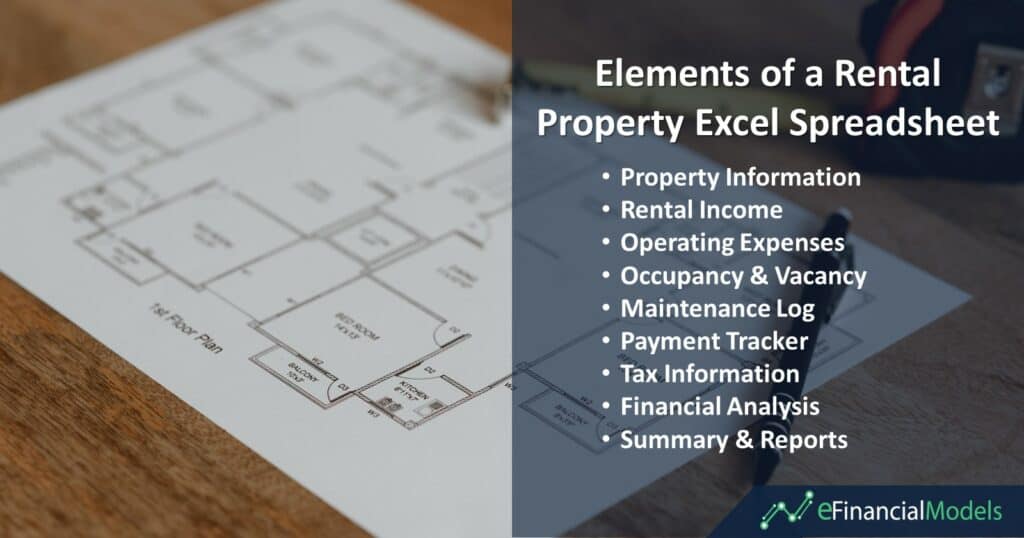
Here are some common components found in a rental property spreadsheet template:
- Property Information: This section includes details about each rental property, such as property address, type (apartment, house, condo), number of units, and property manager’s contact information. On the financial side, it should also include the cost of ownership, the original purchase price, and the property’s current market value.
- Rental Income: In this part, you can track rental income from each unit, including rent collected, security deposits, and any additional fees or charges. This section is very useful in accurately calculating the net operating income for real estate. It is also needed for a cash flow statement purpose.
- Operating Expenses: This section helps you keep track of various expenses associated with the rental property, such as mortgage payments, property taxes, insurance, maintenance costs, utilities, property management fees, and more. Knowing the operating expenses ratio is vital to a rental property cash flow analysis.
- Occupancy & Vacancy: You can use this section to monitor the occupancy status of each unit, including lease start and end dates, tenant names, and rental renewal dates.
- Maintenance Log: Record maintenance requests, repairs, and associated costs to ensure the property is well-maintained and compliant with regulations.
- Payment Tracker: This section logs rent payments received and tracks any outstanding or late payments. Such information is also vital to calculate the net operating income for real estate.
- Tax Information: You may include a section to record relevant tax details, such as deductible expenses, depreciation, and other tax-related data.
- Financial Analysis: This part allows you to analyze the financial performance of your rental properties, including cash flow reports, average cash on cash return real estate, and net operating income (NOI).
- Summary & Reports: A summary page or dashboard overviews the rental property portfolio, highlighting key financial metrics and performance summaries.
Using a rental property spreadsheet template can save time and help you maintain organized records for your rental business. Many pre-made templates are available online, or you can customize one to fit your specific needs. However, keeping the template updated regularly and accurately is essential to benefit from it most.
How Do Rental Property Investors Make Money
Rental property investors can make money through various avenues, with equity appreciation and cash flow being two key sources of income.
Equity Appreciation
Equity appreciation refers to the increase in the value of the rental property over time. The investor’s equity also grows as the property’s market value rises.
Several factors can contribute to equity appreciation:
- Market Demand: If the real estate market in the area experiences strong demand, property values tend to rise due to increased competition among buyers.
- Inflation: The increasing costs of goods & services can lead to higher property prices over time, which benefits property owners.
- Improvements and Upgrades: Investors who make strategic renovations and improvements to the property can enhance its value, leading to equity appreciation.
- Economic Growth: Positive economic developments in the region, such as job growth and infrastructure improvements, can positively impact property values.
While equity appreciation doesn’t provide immediate cash flow, it can be a profitable long-term strategy. Investors can realize these gains by selling the property or refinancing to access the increased equity.
Cash Flow
Cash flow is the income generated from the rental property after deducting all operating expenses, mortgage payments, and maintenance costs. Positive cash flow occurs when the rental income exceeds the property’s expenses, resulting in a net profit for the investor.
Here are the common factors affecting the net operating income for real estate
- Rental Income: The primary source of cash flow is the rental income from tenants. Investors aim to set rental rates at a level that covers their expenses and generates a profit.
- Mortgage Payments: If the investor has a mortgage on the property, a portion of the monthly rental income goes towards paying off the loan.
- Operating Expenses: These include property taxes, insurance, property management fees, maintenance, repairs, utilities, and other costs associated with running the rental property.
- Vacancy Rate: The percentage of time the property remains unoccupied impacts cash flow. Lower vacancy rates lead to more consistent cash flow.
Positive cash flow is vital for rental property investors as it provides ongoing income, helps cover expenses, and can be reinvested to acquire additional properties. However, ensuring the rental income is sufficient to cover all costs and leave room for contingencies is essential.
























































How to Conduct a Rental Property Evaluation
A Rental Property Analysis, also known as a Real Estate Investment Analysis or Rental Property Evaluation, is the process of assessing the financial viability and potential returns of a rental property investment. It is crucial for real estate investors to determine if a property is a good investment opportunity and if it aligns with their investment goals. The purpose of rental property analysis is to make an informed decision by considering various financial and market-related factors.
Here’s a step-by-step guide to help you with the process:
Step 1 – Assess the Rental Property Market Value
The 1% Rule is a general guideline real estate investors use to assess a rental property’s potential profitability quickly. According to this rule, the monthly rental income should be at least 1% of the property’s total acquisition cost (purchase price + acquisition expenses). The property is potentially profitable if the monthly rental income meets or exceeds 1% of the total cost. However, this is just a preliminary test and should not be the sole factor in your decision.
Financial ratios analysis can better help you understand rental property investment’s bankability, liquidity, and profitability. It is the main cash flow statement purpose. A rental property cash flow analysis should include calculating the Capitalization Rate, Cash on Cash Return, and Gross Rent Multiplier (GRM) to accurately determine the rental property market value.
- Capitalization Rate or Cap Rate is the property’s net operating income (NOI) ratio to its current market value. It helps evaluate the property’s potential return on investment (ROI). To calculate the cap rate, use the formula: “Cap Rate = (Net Operating Income / Current Market Value) * 100.”
- Cash on Cash Return compares the cash invested in the property to the net operating income for real estate, the cash flow it generates after expenses. The Cash on Cash Return formula is “Cash on Cash Return = (Net Operating Income / Total Cash Invested) * 100.”
- Gross Rent Multiplier (GRM) helps estimate the property’s value based on its gross rental income. To calculate the GRM, divide the property’s market value by its gross annual rental income. A common rule of thumb is that a GRM between 8 to 12 is often considered reasonable.
Comparable Market Analysis (CMA) is another way to identify a rental property’s market value. It involves researching similar rental properties in the area to determine their market values and rental rates. It will give you a benchmark for evaluating your property’s potential and market positioning.
Pro-Tips: A Real Estate Portfolio Template can assist in organizing and calculating the data you need for a rental property market value assessment. The structured template can be valuable for tracking property appreciation and market trends.
Step 2 – Calculate Operating Expenses
Estimate all the expenses associated with the property. Include fixed and variable expenses to accurately understand the property’s cash flow potential. Common operating expenses usually considered in this calculation include property taxes, insurance, property management fees, repairs and maintenance, utilities, vacancy rate, and other miscellaneous expenses related to the property’s operation.
The 50% rule is a common guideline used in real estate investing to estimate the operating expenses of a property. According to this rule, a profitable rental property’s operating expenses (excluding the mortgage principal and interest payment) should be roughly 50% of the property’s gross income.
It’s important to note that the 50% rule is general and may only be accurate for some properties. Operating expenses vary significantly based on property type, location, age, condition, and management efficiency. Therefore, conducting a thorough analysis and considering individual factors is essential for a more precise estimate of operating expenses.
Pro-Tips: An Airbnb Rental Units Business Plan can be a valuable tool in helping you calculate and estimate operating expenses for your rental property business. It provides a structured approach to understanding your costs and forecasting potential expenses.
Step 3 – Conduct a Rental Market Analysis
Using the rental market analysis by zip code, you can utilize online real estate databases, local real estate agents, property management companies, and rental listing websites to gather information on rental rates, vacancy rates, and demand for rental properties in the neighborhood. Understanding the local rental market will help you set competitive rental rates and assess the potential demand for your property.
Conducting a rental market analysis by zip code helps evaluate a real estate investment for several reasons:
- It gives localized insights into the demand and supply dynamics specific to that area. Such data allows you to make more accurate predictions and avoid generalizations that might not hold true for the entire city or region.
- Rental market analysis by zip code helps you understand the rental rates prevailing in the area. To determine potential cash flow and profitability, you can compare these rates with the property’s purchase price. Factors like proximity to amenities, schools, transportation, and job centers can influence rental rates.
- Furthermore, the analysis can provide information about the vacancy and occupancy rates in the zip code. High occupancy rates suggest strong demand for rental properties, which can favor investors as it reduces the risk of prolonged vacancies.
Pro-Tips: A quick rental market analysis technique uses a Buy and Rent Real Estate Analysis template. The model will display anticipated yearly cash flows based on the property’s asking price and rental revenue.
Step 4 – Estimate Maintenance & Upgrade Costs
Consider the property’s current condition and age and estimate the maintenance and repair costs required to keep it in good shape. Additionally, estimate the renovation costs if you plan to renovate the property to increase its value or appeal to potential tenants. Be realistic in your estimations to avoid unexpected expenses later on.
Estimating maintenance and upgrade costs in a rental property is crucial for several reasons:
- Accurate estimates help property owners plan their budgets effectively. By knowing the potential maintenance and upgrade expenses, landlords can set aside appropriate funds to cover these costs when they arise, preventing financial strain.
- Addressing problems early on can prevent expensive repairs down the line. Regular maintenance helps identify minor issues before they become major problems and costly repairs.
- Local or state regulations require some maintenance tasks. Estimating costs for these tasks ensures that the property remains compliant with safety and building codes, reducing the risk of fines or legal issues.
- Property value also increases through regular maintenance, and timely upgrades can help preserve or even increase the property’s value over time. Neglecting maintenance can lead to the property’s deterioration, which may result in a lower value when it’s time to sell or refinance.
- Regular maintenance and upgrades are essential for keeping tenants satisfied. A well-maintained property is more likely to attract and retain tenants, leading to lower vacancy rates and a steady rental income.
By following these steps and conducting a thorough rental property analysis, you can make informed decisions and determine if the rental property is a viable investment opportunity for you. Remember that real estate investing involves risks, so it’s essential to do your due diligence and consult with experienced professionals if needed.
Pro-Tips: Real Estate Financial Modeling in Excel can be a powerful tool to estimate maintenance and upgrade costs for a rental property. By creating a detailed financial model, you can estimate the annual maintenance costs based on the property’s age, size, location, and condition.




The Benefits of Using a Rental Property Template
A rental property Excel spreadsheet can provide numerous benefits for landlords and property managers. Excel is a versatile tool that allows you to organize, analyze, and track various aspects of your rental business.
Here are some of the key benefits:
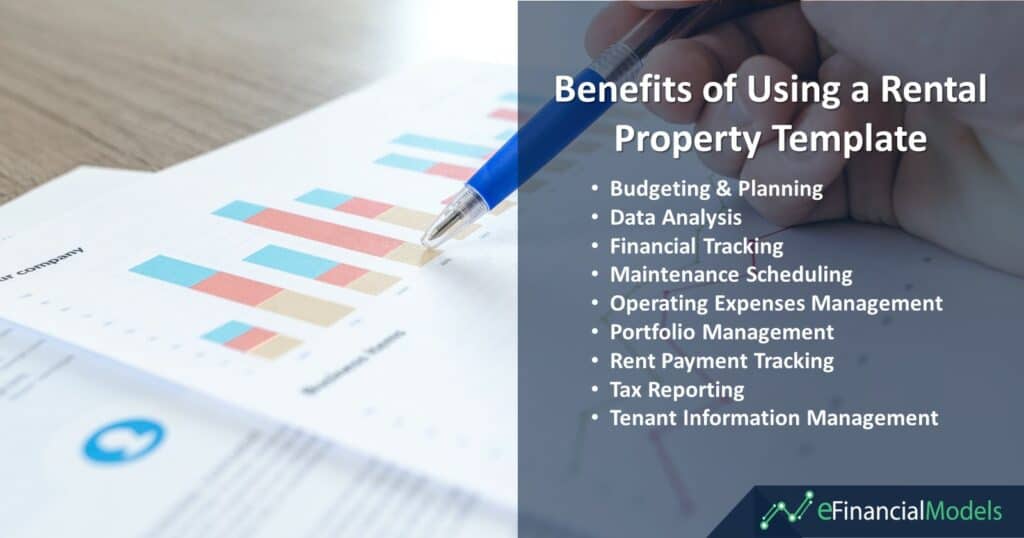
- Budgeting & Planning: With Excel, you can create detailed budgets for each property, projecting future income and expenses. It helps you make informed decisions about rent adjustments, property improvements, or other investments.
- Data Analysis: Excel’s built-in formulas and functions enable you to analyze data effectively. You can calculate metrics like Return on Investment (ROI), Gross Rent Multiplier (GRM), and Cap Rate to assess the financial performance of your properties.
- Financial Tracking: Excel spreadsheets enable you to track income and expenses associated with each rental property. You can create separate tabs or sheets for different properties, making monitoring cash flow, rental income, property taxes, maintenance costs, and other financial metrics easy.
- Maintenance Scheduling: Excel can help you schedule and track property maintenance tasks. By setting routine inspections or repair reminders, you can ensure that your properties are well-maintained, leading to higher tenant satisfaction and retention.
- Operating Expenses Management: Managing expenses is crucial in rental property ownership. An Excel spreadsheet enables you to categorize and monitor expenses, making it easier to identify areas where cost-saving measures can be implemented.
- Portfolio Management: Excel can help you manage your entire portfolio efficiently if you own multiple rental properties. You can easily create summary sheets to view overall financial performance and compare properties’ metrics.
- Rent Payment Tracking: Excel allows you to record and monitor tenant rent payments. You can create a payment history for each tenant, ensuring a clear transaction record.
- Tax Reporting: Excel simplifies tax reporting by organizing income and expenses in a structured manner. During tax season, you can easily access the necessary financial data for each property, streamlining the tax filing process.
- Tenant Information Management: You can create a tenant information database using Excel, including contact details, lease terms, move-in/move-out dates, and more. It makes communication and lease management more efficient.
Overall, using a rental property Excel spreadsheet enhances your ability to make informed decisions, saves time on administrative tasks, and contributes to the overall success of your rental business.
Maximize Profits & Efficiency in Your Rental Property Business
An Excel spreadsheet can maximize profits and efficiency in your rental property business through careful financial analysis, tracking, and organization.
Create a sheet to track prospective tenants and their application status. Develop a budget sheet that projects income and expenses for each property over the next year or more. Set up a maintenance schedule to track routine and preventive maintenance tasks. Furthermore, you can analyze expense data to identify areas where you can reduce costs.
From tracking income and expenses to forecasting property performance, a rental property Excel spreadsheet can be a valuable tool to streamline operations and make informed decisions contributing to your success.











































You might also like:
- 10 Tips to Develop a First Class Business Valuation Report
- 10-Step Financial Planning Checklist for Smart Executives
- 10 Main Elements of a Business Plan
- 14 Best Practices in Financial Modeling
- Best in Class Property Appraisal Methods and What to Look Out for
- Financial Modeling for Startups and Small Businesses
- Finding Fair Market Value: A Quick Guide to Real Estate Valuation
- A Step-By-Step Guide to Ammonia Plant Analysis
- Understanding the Essential Elements of an Income Statement
- Cash Flow Analysis in Excel
- How to Prepare a Financial Feasibility Study?
- How Do Startup Funding Rounds Work?
- How to Build a Capitalization Table
- Real Estate Financial Modeling in Excel
- Business Plan Models – Using Business Models as Examples
- Financial Model Templates Easy to Use
- How to Value a Business Using a Discounted Cash Flow Model
- Financial Statements – Definition, Uses, Contents and Templates
- Examples of Result-Oriented Financial Modeling in Excel
- Simple Budget Planner Template