
0 ITEMS

What Are Key Business Value Drivers?

Business success depends on understanding what drives growth, profitability, and efficiency within your industry.
- Key business value drivers include both financial elements like revenue growth, profit margins, and cost management, as well as non-financial factors such as brand reputation and customer satisfaction.
- Tracking these drivers helps identify areas for improvement and aligns resources with your strategic goals.
- The most impactful drivers are actionable, meaning they lead to specific decisions and measurable results.
- Industry-specific drivers vary—for example, retail focuses on foot traffic, while SaaS prioritizes customer retention and user experience.
- These drivers are interconnected; changes in one area can influence others, so a holistic approach is essential.
By focusing on these factors, businesses can better forecast performance, adapt to market shifts, and support long-term growth.
Key Business Value Drivers Explained
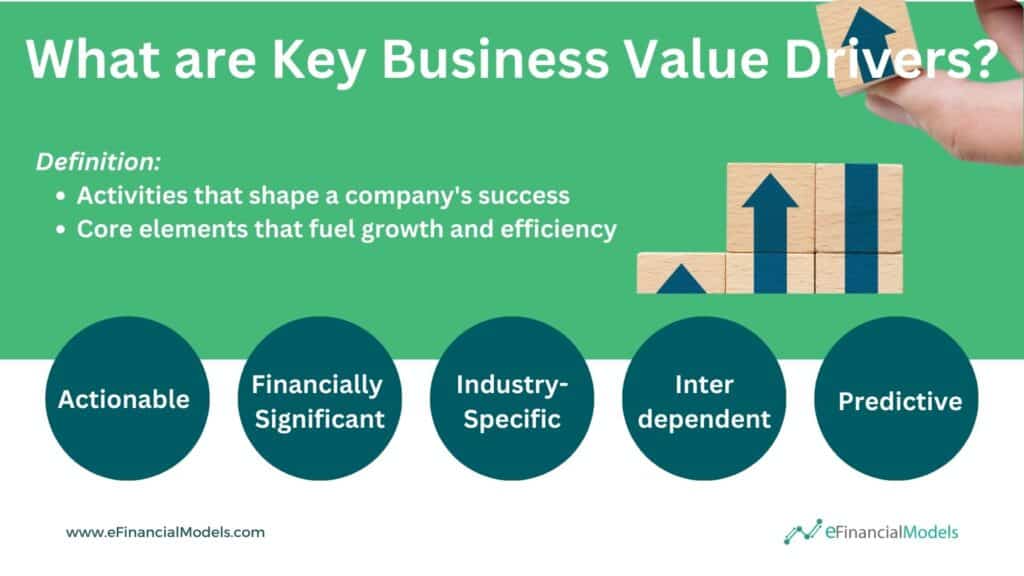
Key business value drivers are activities that shape a company’s success and therefore its financial value. They influence revenue, costs, and overall performance. These activities ensure smooth operations and financial stability. Key business value drivers are the core elements that fuel growth and efficiency. Each driver directly impacts business outcomes. Strong drivers help companies adapt, scale, and achieve goals. Key business value drivers determine whether a company thrives or struggles. These elements sustain growth and keep businesses resilient. Companies must track and refine these drivers to stay ahead. A strong focus on them ensures long-term stability and profitability.

Examples of Value Drivers
Key business or value drivers fall into two main categories: financial and non-financial. Financial business drivers directly influence monetary performance. In contrast, non-financial drivers indirectly contribute to financial outcomes but remain crucial for long-term sustainability. Identifying and tracking examples of value drivers enables leaders to allocate resources effectively, forecast future trends, and optimize performance.
Some of the most critical financial value drivers include:
- Volume Growth: Increasing sales leads to higher revenue and greater economies of scale, allowing businesses to optimize production and reduce per-unit costs.
- Price Growth: Adjusting pricing strategies can significantly impact revenue and profit margins. Businesses must balance competitive pricing with value-based pricing to maximize returns.
- EBITDA Margin: Earnings Before Interest, Taxes, Depreciation, and Amortization (EBITDA) margin measures operational profitability. Improving EBITDA margins enhances business sustainability and investor appeal.
- Tax Rate: Tax rates affect net income and cash flow. Companies engage in strategic tax planning to optimize tax liabilities while ensuring compliance with regulations.
- Debt/Equity Ratio: This ratio reflects a company’s financial leverage and risk exposure. A balanced debt-to-equity ratio ensures financial stability and investor confidence.
- Days Receivables: This metric measures how long a company takes to collect customer payments. A shorter days receivables cycle improves cash flow and working capital efficiency.
- Inventory Turnover: High inventory turnover indicates efficient stock management, reducing carrying costs and minimizing obsolescence risks.
- Cash Conversion Cycle: This measures how quickly a company turns investments in inventory and other resources into cash flows. A shorter cycle means greater liquidity.
- Asset Turnover: This ratio evaluates how effectively a company uses its assets to generate revenue. Higher asset turnover suggests better efficiency and utilization.
- Exit Valuation Multiple: Investors use exit valuation multiples when analying new investment opportunities. A higher exit valuation multiple will lead to a higher exit value, therefore improving an investor’s return. There are various Exit Valuation Multiples that can be used such as the Price-to-Earnings (P/E) and Enterprise Value to EBITDA (EV/EBITDA) multiple derived from the analysis of similar companies and applied to estimate a company’s market value compared to its earnings and cash flow potential.
Non-financial drivers impact a company’s long-term growth and stability by influencing brand perception, customer loyalty, and operational efficiency. Some of the most critical non-financial examples of value drivers include:
- Brand Reputation: A strong brand builds trust and enables premium pricing, customer loyalty, and competitive advantage.
- Customer Satisfaction: Happy customers translate to repeat business and referrals. High satisfaction levels also reduce churn rates and boost lifetime value.
- Human Capital: Employee skills, motivation, and engagement drive innovation and productivity. Investing in talent development enhances business resilience and adaptability.
- Products & Services: A company’s product or service portfolio determines market demand, competitive differentiation, and revenue potential.
- Technology: Technological advancements enhance operational efficiency, scalability, and customer experience. Businesses that adopt innovative technologies gain a market advantage.

























































Business Drivers of Value: Top Characteristics
Business drivers of value shape a company’s success by influencing growth, market position, and profitability. It provides clear insights that help businesses make smarter decisions and improve performance. Understanding its characteristics ensures businesses focus on what truly impacts success.
Actionable – A Business Driver of Value Must Lead To Actions
Business drivers of value must be clear and controllable so businesses can take action to improve performance. It provides direct insights that guide decision-making and help companies adjust strategies in real-time. Without actionable drivers, businesses struggle to respond to challenges effectively. For example, a retail store tracking price growth as a key business driver of value can adjust pricing strategies to maximize profits. If data shows that customers continue buying despite price increases, the store can gradually raise prices to improve margins. However, the store can offer promotions or adjust pricing to stay competitive if sales drop. The business makes informed decisions that balance profitability and demand by monitoring price growth.
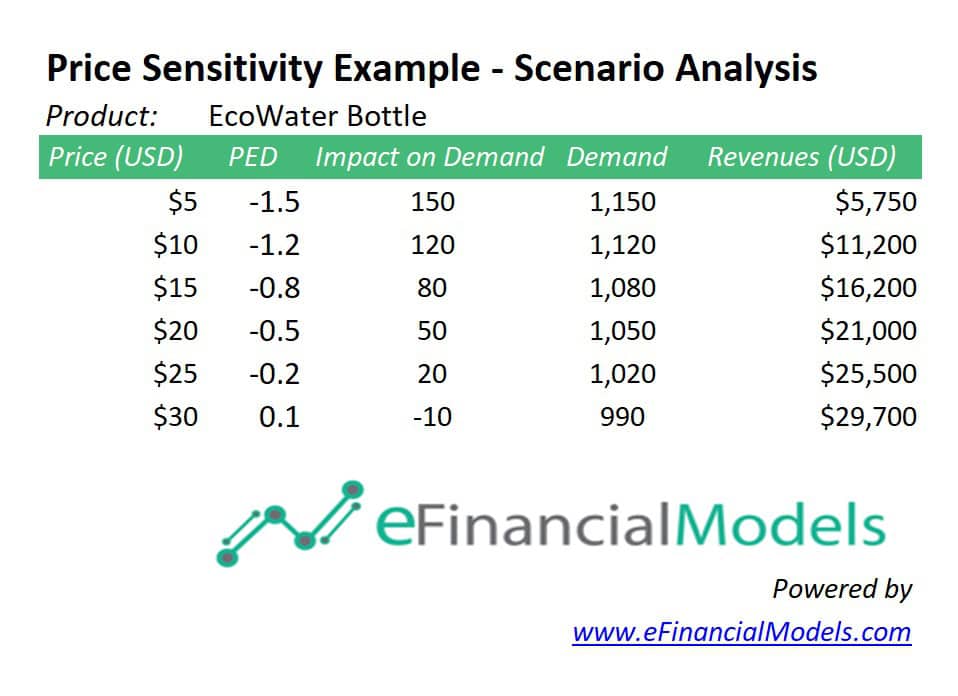
The chart above shows a price sensitivity analysis. It highlights price changes impact demand and revenue for the EcoWater Bottle. As prices increase, demand decreases, but total revenue continues to rise until reaching a peak at $30, where demand starts to decline.
Financially Significant – Leads to a Significant Different Financial Result
Business drivers of value directly or indirectly impact revenue, costs, or profitability. It influences financial outcomes and helps businesses allocate resources wisely. If a driver has little financial effect, it may not be worth tracking or optimizing. For instance, a manufacturing company’s EV/EBITDA multiple depends heavily on operational efficiency, a key business value driver that directly impacts costs and profitability. Efficient production reduces waste, lowers material costs, and minimizes downtime, boosting EBITDA. Higher margins make the company more attractive to investors, increasing its valuation multiple. Conversely, inefficient operations raise expenses, squeezing profits and dragging down the EV/EBITDA ratio. Businesses must track efficiency metrics, like machine uptime and production yield, to optimize resources and improve financial outcomes. Focusing elsewhere may be wiser if efficiency has little effect on costs or margins.
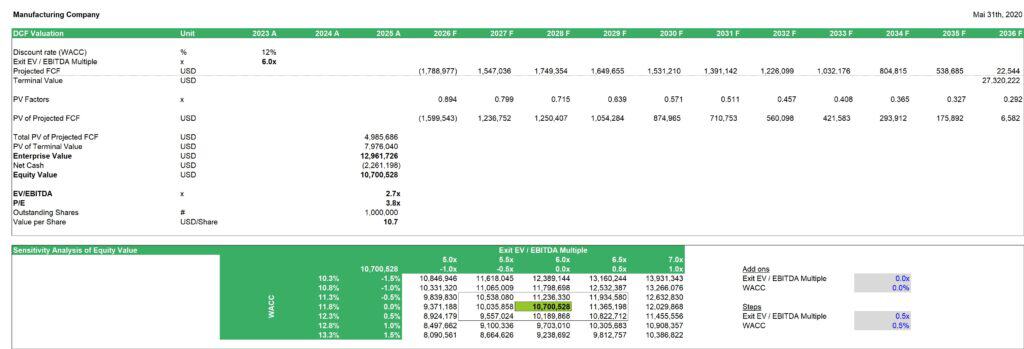
The EV/EBITDA multiple in the Manufacturing Company Financial Model chart above drives the equity value of the manufacturing company, directly influencing investor perception and valuation. A higher multiple increases enterprise value, while a lower multiple reduces it, making efficient cost management and revenue growth crucial for maximizing shareholder returns.
Industry-Specific – Every Industry Has Its Own Value Drivers
Business drivers of value may vary across industries based on unique market conditions. A retail business focuses on foot traffic, while a SaaS company tracks customer churn. Understanding industry-specific drivers helps businesses stay competitive and adapt to market trends. Let’s take the case of a SaaS company that relies on customer satisfaction to reduce churn and increase recurring revenue. Happy customers stay longer, upgrade plans, and refer others, boosting growth. Poor satisfaction leads to cancellations, hurting cash flow and valuation. Tracking metrics like Net Promoter Score (NPS) and support response times helps improve service. Unlike retail, where foot traffic matters, SaaS success depends on retention and user experience.
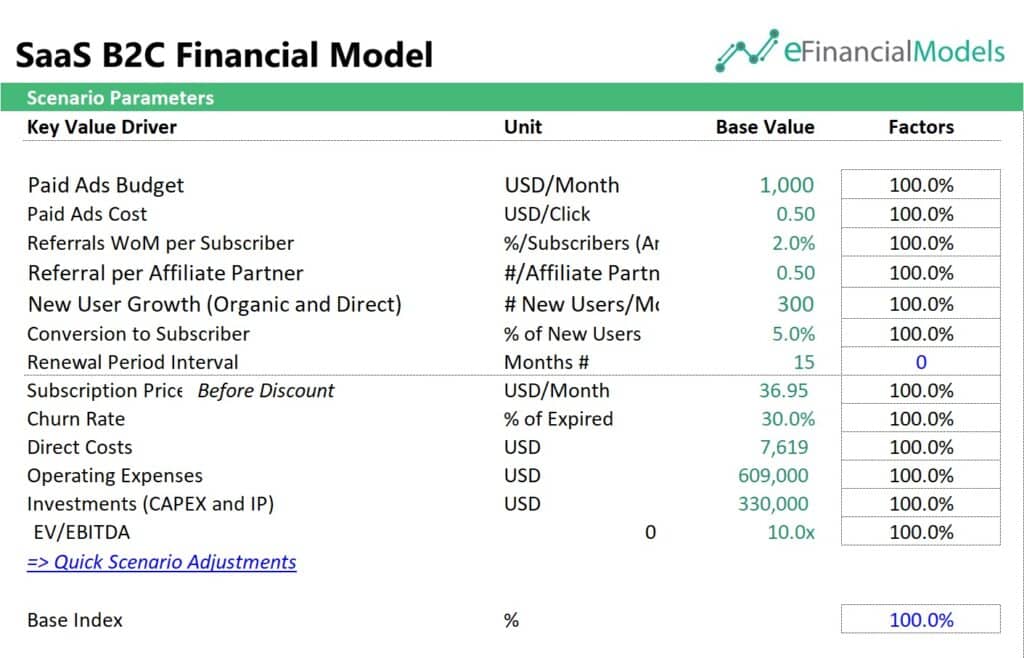
In the SaaS B2C Financial Model above, higher customer satisfaction reduces the churn rate, leading to longer subscription durations and higher lifetime value per user. This boosts recurring revenue, improves profitability, and increases the EV/EBITDA multiple, making the business more valuable to investors.
Interdependent – Value Drivers Impact Each Other
Business drivers of value do not work alone because every factor in a business connects to others. Revenue, costs, customer retention, and market trends influence each other. If one driver changes, it affects the rest. For example, cutting costs might impact product quality, which can reduce customer loyalty. Businesses must analyze how each driver interacts to make smart decisions. Ignoring these connections can lead to unexpected risks. A strong strategy considers the bigger picture, ensuring that every decision supports overall growth and stability.

The key value drivers in the Construction Machinery Rental Company Financial Model above are interdependent. Faster receivables collection, efficient inventory turnover, and extended payables improve cash flow, shortening the cash conversion cycle. Together, these factors optimize cash flow, efficiency, and growth.
Predictive – Estimating Changes in Value Drivers Can Be Used to Predict the Future
Business drivers of value provides forward-looking insights to anticipate future performance. By tracking the right metrics, businesses can spot trends early, reduce risks, and make proactive decisions. Predictive drivers help businesses stay ahead of market shifts and competition. For example, a brandy distillery tracks monthly bottle sales to monitor volume growth. Data reveals a 20% spike in demand during the holiday season. The company increases production and launches festive packaging to capitalize on this trend. By anticipating demand, the distillery avoids stock shortages, maximizes revenue, and strengthens its market position.
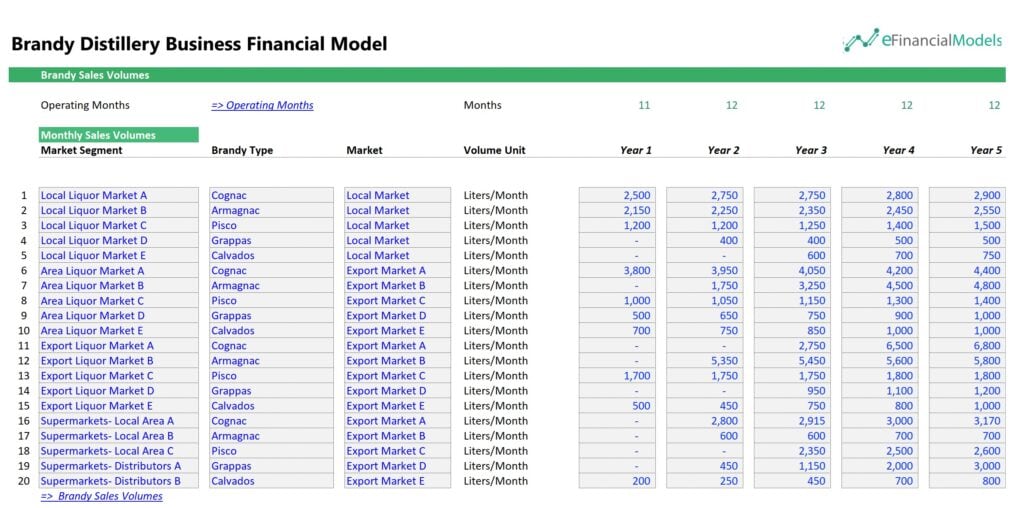
The above chart shows forecasted volume growth for a Brandy Distillery Business Financial Model. Higher sales volumes drive revenue growth, increasing the brandy distillery’s overall business value. Expanding into export markets strengthens market reach, enhancing profitability and long-term investor confidence.
Plan Success: Track Key Business Value Drivers with Financial Modeling
Key business value drivers are the forces that push a company forward. They impact growth, profitability, and efficiency. Strong drivers are actionable, financially significant, and tailored to the industry. They also connect with other factors and help predict future performance. Businesses that track and optimize these drivers can improve decision-making and resource allocation. A clear focus on key drivers leads to sustainable success and long-term growth.
Financial modeling helps you plan for success by accurately tracking key business value drivers. It gives you clear insights into revenue, costs, and cash flow, helping you make smarter decisions. With the right model, you can test different scenarios and stay ahead of risks. Don’t leave growth to chance—use financial modeling to guide your strategy. Start building a data-driven plan today!













You might also like:
- 10 Main Elements of a Business Plan
- 10 Tips to Develop a First Class Business Valuation Report
- 5 Best Practices for Managing Days Receivables
- 5 Practical Tips to Help Raise Funds For Startups
- 5 Ways COVID-19 Impacts Financial Plans For Retirement & What To Do About It
- Achieve Financial Success By Knowing Your Business Plan Model
- Financial Model Templates Easy to Use
- Financial Planning for Small Business Owners – Taking an SBA Loan
- 10 Funding Sources for Businesses and Startups
- How to Make Smart Decisions with 6 Key Financial Metrics?
- Business Valuation
- Cash Flow Analysis in Excel
- Scenario Analysis
- Financial Planning Retirement Tips
- Average Revenue per User (ARPU)
- 10 Ideas to Increase Average Revenue Per User
- 5 Smart Ways To Manage Personal Finances In A Pandemic
- Financial Forecasting Models by eFinancialModels
- Capital Structure & Risk Management