
0 ITEMS

Price Sensitivity Analysis: Get More Revenue by Changing Your Prices
Table of Content
- What Does Pricing Sensitivity Analysis Mean?
- Timing Your Pricing: When to Conduct Price Sensitivity Analysis
- A Structured Approach to Conduct Price Sensitivity Analysis
- Real-Life Insights: Price Sensitivity Examples Explained
- Financial Models Transform Data into Profitable Pricing

Understanding price sensitivity is essential for setting profitable and competitive prices.
- Price sensitivity analysis helps identify how consumers react to different price points and demand variations.
- Calculating price elasticity of demand reveals whether demand is elastic or inelastic, guiding pricing adjustments.
- Conducting scenario analysis on potential price changes shows their impact on revenue and market share.
- Timing and market conditions, such as product launches or economic shifts, influence when to adjust prices.
- A structured approach involves data collection, model development, elasticity calculation, and ongoing adjustments.
Continuing, this article covers practical methods to analyze and act on price sensitivity to maximize profitability.
What Does Pricing Sensitivity Analysis Mean?
Pricing sensitivity analysis is a strategic tool businesses use to evaluate how price changes affect the demand for a product or service. Companies can better understand the relationship between price and sales volume by analyzing customer reactions to different pricing levels. This analysis helps identify the price point that maximizes profits while remaining competitive in the market.
Pricing sensitivity analysis seeks to determine the optimal pricing strategy by answering a critical question: Can we increase revenues if we change the price? The study evaluates the potential impact on overall revenue, whether by lowering or raising prices. By adjusting prices, businesses aim to find a balance between a price that is high enough to maximize profits but not so high that it significantly reduces demand. The effectiveness of pricing sensitivity analysis is influenced by two primary factors: demand (the volume of units sold) and revenue (income generated from business activities). The basic revenue formula guiding this analysis is:

For instance, a company sells a product at $50 per unit, with a monthly sales volume of 1,000 units, resulting in revenues of $50,000 (Revenues = $50 × 1,000). To explore potential revenue increases, the company conducts a pricing sensitivity analysis and experiments with lowering the price to $45. As a result, the sales volume increases to 1,200 units, resulting in revenues of $54,000 (Revenues = $40 × 1,200). This demonstrates that the increased volume leads to higher overall revenue despite the lower price.
Another example would be a company that sells a luxury item at $200 per unit, with a monthly sales volume of 500 units, generating revenues of $100,000 (Revenues = $200 × 500). The company decides to conduct a pricing sensitivity analysis by increasing the price to $220 per unit. While the price increase causes the sales volume to drop slightly to 480 units, the new revenue becomes $105,600 (Revenues = $220 × 480). This example highlights the market’s resilience, showing that, even with a slight decrease in volume, the higher price results in more revenue.
By assessing how different price levels affect these variables, businesses can make informed decisions on pricing strategies that align with their financial goals, ensuring profitability.
Timing Your Pricing: When to Conduct Price Sensitivity Analysis
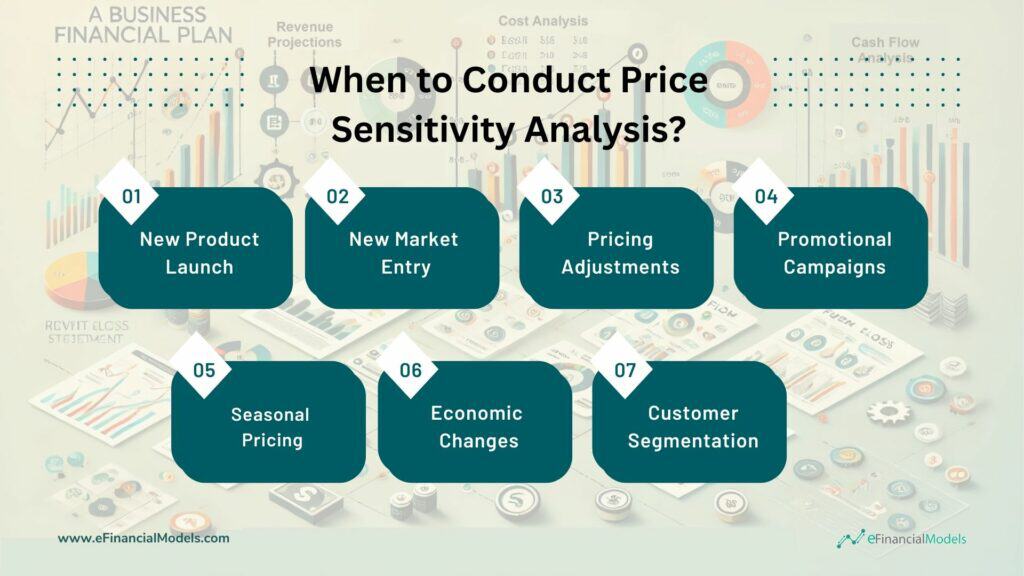
Conducting a price sensitivity analysis helps businesses understand the relationship between price points and customer purchasing behavior, enabling them to make informed pricing decisions. Companies can identify optimal pricing strategies that maximize revenue and profitability by assessing customer reactions to various price levels. Understanding when to conduct a price sensitivity analysis is essential for strategic pricing decisions that align with business objectives and market conditions.
- New Product Launch: When launching a new product, it is crucial to determine the optimal price point that will attract customers while maximizing revenue. The analysis helps to identify how potential customers perceive the value of the new product and their willingness to pay different prices. By understanding price sensitivity before the product hits the market, companies can set a competitive and profitable price that balances customer demand with business goals.
- New Market Entry: Entering a new market involves understanding its unique dynamics and consumer behavior. A sensitivity analysis on pricing helps businesses gauge how new customers in an unfamiliar market might respond to various price points. This information is vital for setting a competitive price that appeals to local consumers while aligning with the company’s pricing strategy. It allows businesses to adapt pricing to fit local economic conditions and consumer expectations.
- Pricing Adjustments: Adjusting prices for existing products requires a clear understanding of how price changes affect customer demand and overall sales. Conducting a pricing sensitivity analysis provides insights into the potential impact of price increases or decreases. It helps businesses predict how customers react to these changes, ensuring the adjustments achieve desired financial outcomes without significantly harming customer loyalty or demand.
- Promotional Campaigns: Promotional campaigns often involve temporary price changes designed to boost sales or attract new customers. The analysis helps inform the optimal discount levels and promotional pricing strategies that will maximize the effectiveness of these campaigns. By understanding how customers respond to different promotional prices, businesses can design campaigns that drive significant sales increases without eroding long-term profitability.
- Seasonal Pricing: Seasonal pricing strategies leverage the fluctuating demand for products at different times of the year. Conducting a price sensitivity analysis helps businesses understand how price elasticity varies with seasons and how customers might respond to seasonal price changes. This information is critical for setting prices that capitalize on peak demand periods while managing sales during off-peak times, ensuring steady revenue throughout the year.
- Economic Changes: Economic shifts, such as inflation, recession, or changes in consumer purchasing power, can significantly impact customer price sensitivity. Analyzing price sensitivity during such times allows businesses to adapt their pricing strategies to current economic conditions. It ensures that prices remain attractive to customers even when their financial circumstances change, helping companies maintain sales volumes and customer loyalty despite economic fluctuations.
Customer Segmentation: Different customer segments may have varying sensitivities to price changes. Conducting a pricing sensitivity analysis by customer segment allows businesses to tailor their pricing strategies to different groups’ unique needs and behaviors. By understanding the price elasticity of each segment, companies can offer targeted pricing that maximizes revenue from each group, enhancing overall profitability and customer satisfaction.



























































A Structured Approach to Conduct Price Sensitivity Analysis
A structured approach to conducting price sensitivity analysis involves systematically assessing how changes in price influence consumer demand for a product or service. This analysis is crucial for businesses to understand the optimal pricing strategy that maximizes revenue and profit while maintaining market competitiveness. By examining consumer reactions to different price points, companies can identify price thresholds, gauge the elasticity of demand, and make informed decisions about pricing adjustments. This systematic approach enables companies to align their pricing strategies with market dynamics and consumer preferences, ultimately enhancing their overall financial performance.
Step 1: Data Collection
The first step is data collection. It involves gathering relevant data on sales, prices, costs, and other market factors that could influence consumer behavior. Businesses typically use historical sales data, market research surveys, and competitive pricing information to build a comprehensive dataset. The accuracy and completeness of this data are crucial, as they form the foundation for the subsequent steps in the analysis. Collecting qualitative data, such as customer feedback and preferences, can also provide valuable insights into how consumers perceive different price points.
After data collection, we can identify customers with high and low price sensitivity. High-price-sensitivity customers are those whose purchasing decisions are heavily influenced by price changes; they tend to seek out the best deals and may switch brands or delay purchases if prices rise. In contrast, low-price sensitivity customers are less affected by price fluctuations and are more likely to prioritize factors such as brand loyalty, product quality, or convenience over price. Understanding the distinctions between these groups allows for targeted pricing strategies and marketing efforts. These strategies, when implemented effectively, can significantly optimize sales and enhance customer satisfaction, thereby reaping potential benefits for the business.
Step 2: Model Development
Once the data is collected, the next step is model development. This involves creating a financial model representing the price-demand relationship. The model should consider demand variables, including seasonality, promotional activities, and economic conditions. The goal is to develop a robust model that accurately captures how changes in price influence consumer purchasing decisions.
Developing a robust financial model is not just a step, it’s a necessity. It requires leveraging various pricing analysis methods to accurately understand consumer behavior and market dynamics. The end goal is to have a robust model that accurately captures how changes in price influence consumer purchasing decisions. Historical sales data analysis and competitive benchmarking also provide valuable insights into pricing strategies and market positioning. By integrating pricing analysis methods, businesses can build robust models that inform optimal pricing decisions, enhance competitiveness, and drive profitability.
Pricing Analysis Methods
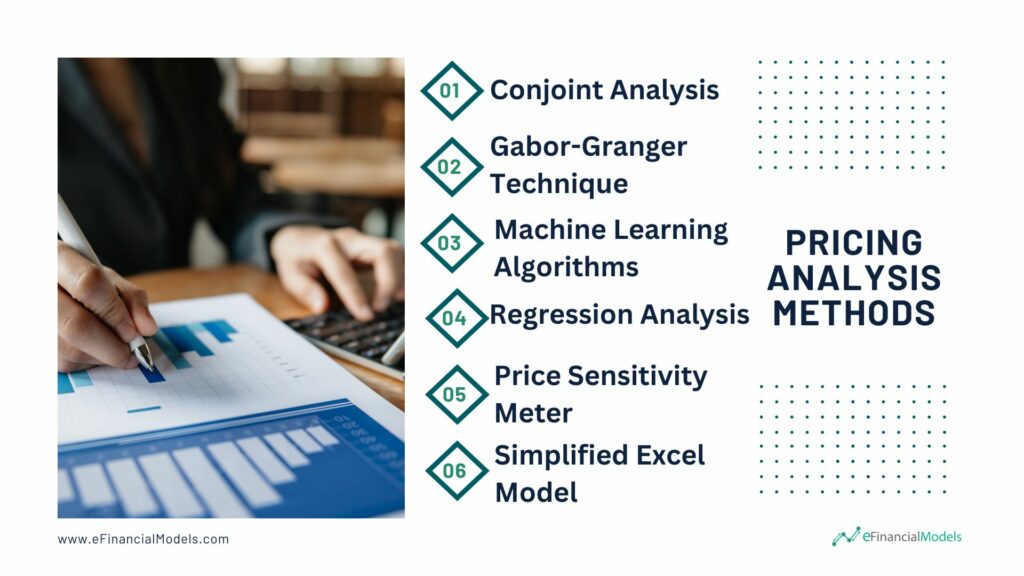
Some essential pricing analysis methods are:
- Conjoint analysis is a survey-based statistical technique used in market research to determine how consumers value different product or service attributes. Presenting respondents with a series of hypothetical products or services with varying characteristics captures the trade-offs consumers make. This is the best among pricing analysis methods forecasting how product features or pricing changes might impact consumer choices and market share.
- The Gabor-Granger technique is one of the pricing research methods used to estimate the price elasticity of demand for a product or service. Respondents are asked questions about their willingness to purchase a product at different prices. The technique helps identify the highest price at which a significant proportion of the target market is willing to buy the product. Researchers can determine the optimal price point that maximizes revenue or profit by analyzing the responses.
- Machine learning algorithms, including decision trees and neural networks, are increasingly used in pricing analysis due to their ability to handle complex and large datasets. Decision trees create models that predict pricing outcomes based on various input variables, clearly visualizing the decision-making process. On the other hand, neural networks are adept at capturing non-linear relationships in data and can model intricate interactions between pricing factors. These algorithms help businesses predict optimal prices, understand customer behavior, and effectively segment markets by leveraging advanced computational power and data analysis techniques.
- Regression analysis is a statistical method used to understand the relationship between a dependent variable (sales or revenue) and one or more independent variables (such as price, features, or marketing spending). By fitting a regression model to historical data, analysts can estimate the impact of different pricing strategies on sales performance. This method helps identify key pricing determinants, forecast future trends, and optimize pricing decisions.
- The Van Westendorp Price Sensitivity Meter (PSA) is a survey-based technique for determining consumer price preferences and perceptions. Respondents are asked to indicate the price at which they consider a product to be too cheap, a bargain, expensive, or too expensive. The responses are plotted to create a series of curves that reveal the acceptable price range and the optimal price point where consumers are most likely to make a purchase. It is one of the best pricing analysis methods to understand consumer price sensitivity, set competitive prices, and identify potential pricing thresholds that could affect demand.
- Building a Simplified Excel Model for pricing sensitivity analysis involves creating a dynamic tool that leverages gathered data points to simulate the impact of price changes on revenue. The model allows users to adjust price levels and immediately see the effects on sales volumes and overall revenue. By incorporating demand elasticity into the calculations, the model helps predict whether increasing or decreasing prices will lead to higher or lower revenues. This method provides a straightforward way to understand and anticipate the financial implications of pricing decisions, empowering businesses to make informed, data-driven choices.
Step 3: Price Sensitivity Formula
With the model in place, the next step is to calculate the price elasticity of demand using the price sensitivity formula. Price elasticity gauges the responsiveness of the quantity demanded of a product to variations in its price. A high elasticity indicates that demand is highly responsive to price changes, while a low elasticity suggests that demand is relatively insensitive to price changes. Understanding the elasticity helps businesses predict how price adjustments impact sales volumes and revenues.
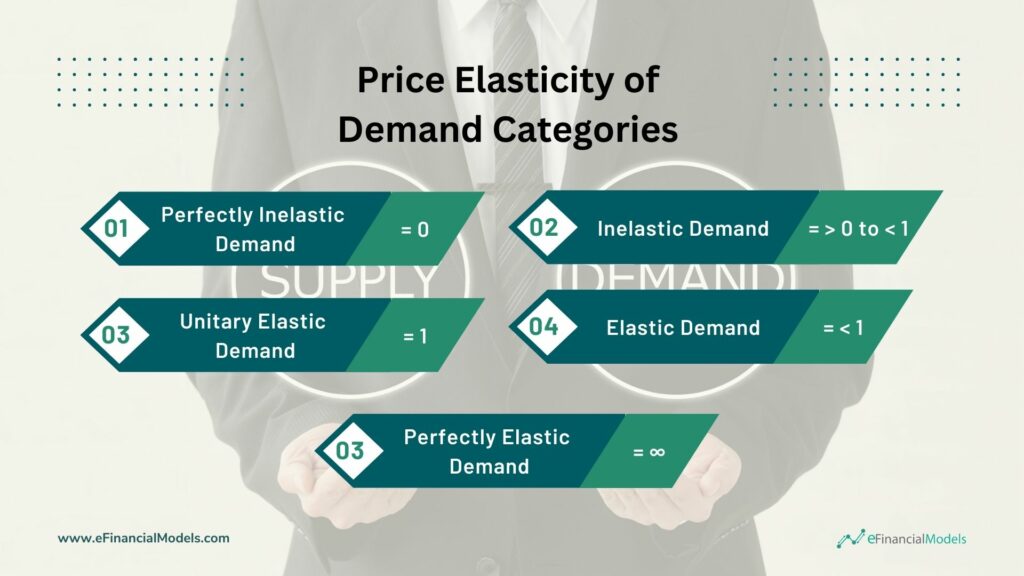
The price sensitivity formula is used to measure how responsive the quantity demanded of a good is to a change in its price. It is typically called the price elasticity of demand (PED). It is essential to note the five categories under the price elasticity of demand:
- Perfectly inelastic demand equals zero; the quantity demanded does not change when the price changes.
- Inelastic demand equals more than zero but less than one; the quantity demanded changes by a smaller percentage than the percentage change in price.
- Unitary elastic demand equals one; it’s like a perfect balance between the price and the quantity demanded, just like when you find the perfect amount of toppings for your pizza.
- Elastic demand equals a value greater than one; the quantity demanded changes by a larger percentage than the percentage change in price.
- Perfectly elastic demand is when any price increase will cause the quantity demanded to drop to zero.
The price sensitivity formula is:

The price sensitivity formula can be broken down into the following steps:
- Calculate the percentage change in quantity demanded:

2. Calculate the percentage change in price:

3. Divide the percentage change in quantity demanded by the percentage change in price. It means applying the price sensitivity formula.
Sample Calculation
Let’s have a sample price sensitivity formula calculation using the following assumptions:
- Old Price: $10
- New Price: $12
- Old Quantity Demanded: 100 units
- New Quantity Demanded: 90 units
First, we calculate the percentage change in quantity demanded:

Second, we calculate the percentage change in price:

Now, we can use the price sensitivity formula:

The resulting PED is -0.5. This means the quantity demanded changes by a smaller percentage than the price change. The demand is inelastic since the absolute value of PED is less than 1. Businesses often prefer inelastic demand because price increases lead to higher revenue without a significant drop in quantity demanded.
Step 4: Scenario Analysis
Scenario analysis, a powerful tool, uses the developed model and elasticity calculations to simulate different pricing scenarios. By adjusting the price variable within the model, businesses can project the potential outcomes of various pricing strategies. This step allows companies to explore the effects of different price points on demand, revenue, and profit. More importantly, scenario analysis plays a key role in identifying the optimal price that maximizes financial performance while considering market conditions and consumer behavior.
Identify critical pricing variables and develop a range of plausible scenarios for these variables, considering best-case, worst-case, and most likely-case situations. For each scenario, analyze how changes in these variables affect the price sensitivity of your product or service, focusing on customer response to different price points. Use data analysis and modeling techniques to simulate the impact of these scenarios on sales volume, revenue, and profitability, helping to identify the optimal pricing strategy under varying market conditions.
Price Sensitivity Example – Scenario Analysis
In this example scenario, we’ll explore the practical application of price sensitivity analysis using an Excel financial model to simulate various pricing strategies. This price sensitivity example – scenario analysis will demonstrate how to use data-driven decision-making to navigate complex market dynamics and achieve sustainable growth.
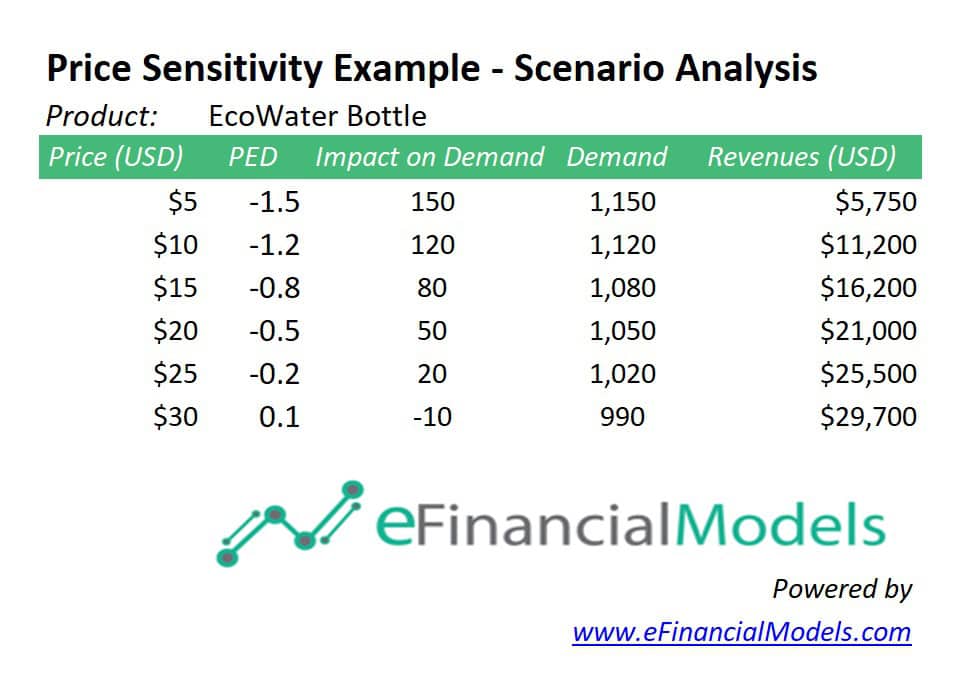
The above price sensitivity example is a scenario analysis for the EcoWater Bottle, showing how different price points affect demand and revenue. The table displays six price points, ranging from $5 to $30 per unit, along with the corresponding price elasticity of demand (PED), which measures how sensitive demand is to price changes. The model calculates the impact on demand in the third row, adjusting the base demand to reflect how different prices influence the quantity sold. After considering this impact, the fourth row displays the actual demand volumes, and the fifth row calculates the resulting revenues by multiplying the price per unit by the demand volume.
The best price point in the attached price sensitivity example – scenario analysis for the EcoWater Bottle is $30 per unit. It is because, despite a slight decrease in demand (990 units), the revenue generated at this price point is the highest at $29,700. The model demonstrates that as the price increases, the impact on demand becomes less harmful, and the price elasticity of demand even turns inelastic or positive, indicating that the decrease in demand does not outweigh the revenue gained from the higher price. It leads to the maximum revenue, showing that a higher price point is optimal for maximizing total revenue.
Factors Influencing Price Sensitivity
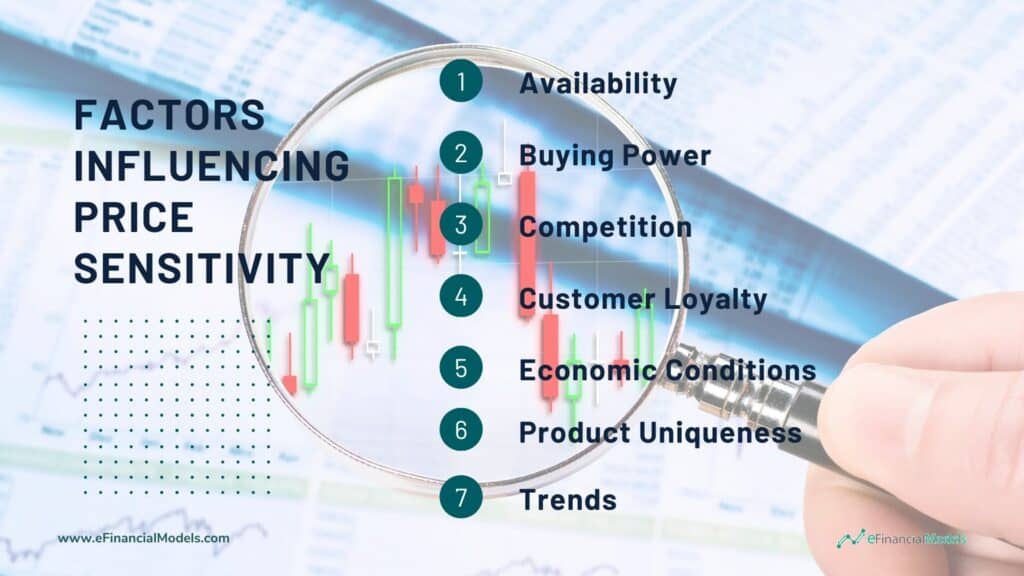
When conducting a scenario analysis, it is essential to understand the following factors influencing price sensitivity:
- Availability: When a product is readily available in the market, customers are more likely to be price-sensitive because they can easily switch to a different seller offering a better price. Conversely, if a product is scarce or hard to find, customers may be willing to pay a higher price due to the difficulty of obtaining it elsewhere. Availability affects how much leverage a seller has in pricing their products, with greater availability typically leading to increased competition and lower prices.
- Buying Power: Consumers with higher disposable incomes are generally less sensitive to price changes because they can afford to pay more for products and services. On the other hand, consumers with limited financial resources are more price-sensitive and tend to look for the best deals or discounts. The overall economic environment, including wage levels and employment rates, also impacts buying power and price sensitivity.
- Competition: In a highly competitive market, where multiple businesses offer similar products or services, consumers can easily compare prices and choose the most cost-effective option. This forces companies to keep their prices competitive to attract and retain customers. Conversely, in markets with little to no competition, businesses can set higher prices without losing customers.
- Customer Loyalty: Loyal customers are often willing to pay a premium for products or services from a brand they trust and prefer. These customers value the relationship and benefits they receive, such as quality, service, or rewards, over lower prices. However, building and maintaining customer loyalty requires consistent effort and can be influenced by product quality, customer service, and brand reputation.
- Economic Conditions: During economic downturns, consumers become more price-conscious and prioritize essential over discretionary spending, increasing price sensitivity. Conversely, consumers may be more willing to spend on premium products and services in a booming economy, reducing their sensitivity to price changes. To remain competitive, businesses need to adapt their pricing strategies based on the prevailing economic conditions.
- Product Uniqueness: Unique products that offer distinct features, superior quality, or innovative benefits can command higher prices because consumers perceive them as more valuable and harder to replace. Consumers are less likely to be price-sensitive when a product has no close substitutes. However, if a product is easily replicable and widely available from different brands, price sensitivity increases as consumers can choose alternatives based on price.
- Trends: When a product is trendy or in high demand due to current consumer preferences, people may be less sensitive to its price and more willing to pay a premium. Conversely, price sensitivity can increase as trends shift and demand for a product decreases. Businesses must stay attuned to market trends and adjust their pricing strategies to maximize profits and market share.
No Downloads found
Step 5: Crucial Price Changes Drive Sensitivity Success
The final step in a pricing sensitivity analysis process is decision-making. Businesses can make informed pricing decisions with insights from the data, model, elasticity calculations, and scenario analysis. It involves selecting a pricing strategy that aligns with the company’s objectives, whether maximizing profit, increasing market share, or positioning the brand competitively. Taking decision action should also consider external factors such as competitor pricing, market trends, and economic conditions to ensure the chosen strategy is viable and sustainable in the long term.
Implementing crucial price changes is a key driver of success in pricing sensitivity analysis, allowing businesses to fine-tune their pricing strategy for optimal results. By adjusting prices strategically, companies can better understand how consumers respond to different price points, enabling them to identify the sweet spot that maximizes revenue without sacrificing customer satisfaction. This approach helps capture the maximum value from each sale and ensures that the pricing strategy remains competitive in a dynamic market. The insights gained from these changes are essential for long-term profitability and market positioning.
Step 6: Check and Adjust Strategies to Ensure Revenue Growth
The final step in a structured approach to pricing sensitivity analysis is the critical phase of checking and adjusting strategies to ensure revenue growth. After gathering data, analyzing customer behavior, and testing various price points, you must revisit your pricing strategy to evaluate its effectiveness in the real market. It involves monitoring key performance indicators (KPIs), such as sales volume, customer acquisition, and profit margins, to identify discrepancies between projected and actual outcomes. By continuously refining your pricing model based on real-time feedback and market dynamics, you can optimize revenue streams, maintain competitive advantage, and ensure sustained growth in an ever-evolving marketplace.
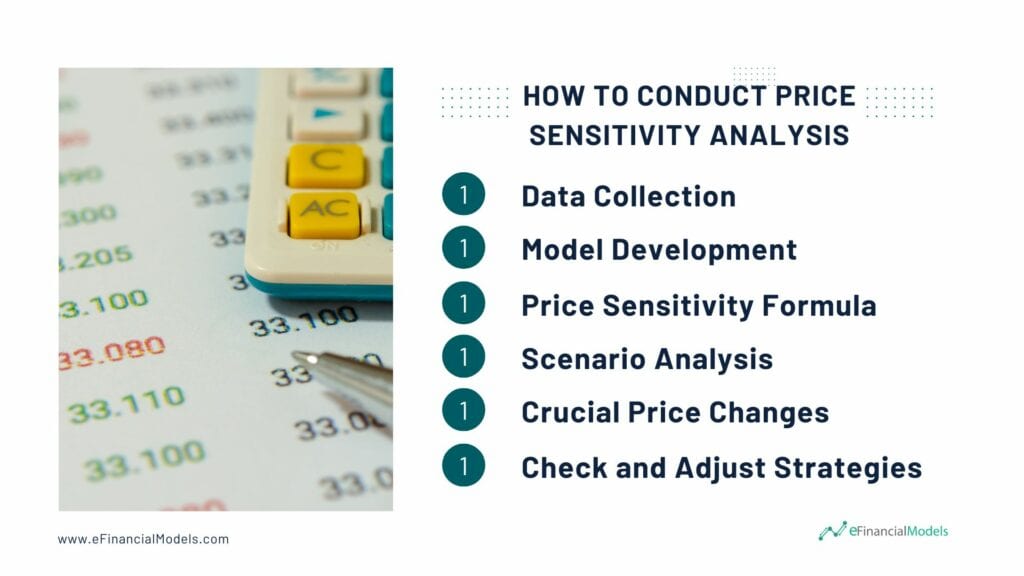
Companies can gain valuable insights into how price changes affect demand and consumer behavior by systematically identifying key variables, collecting relevant data, and applying appropriate analytical methods. This structured approach helps in making informed pricing decisions and understanding the broader market dynamics. Ultimately, a well-executed pricing sensitivity analysis enables businesses to balance competitive pricing and maintain healthy profit margins, ensuring long-term success and sustainability in the market.
Real-Life Insights: Price Sensitivity Examples Explained
Let’s explore the crucial concept of price sensitivity in everyday scenarios, demonstrating how consumers react to price changes in various contexts. Through vivid examples and practical insights, this exploration offers a comprehensive understanding of how price sensitivity shapes purchasing decisions.
Amazon, a global e-commerce giant, is a dynamic price sensitivity example in the retail sector. Leveraging advanced algorithms and data analytics, Amazon continuously adjusts prices based on demand, competition, and inventory levels to ensure competitive pricing. This approach appeals to price-sensitive consumers who frequently compare prices online to find the best deals. Additionally, Amazon Prime members benefit from exclusive discounts and free shipping, further enhancing the value proposition for budget-conscious shoppers. By maintaining a reputation for offering competitive prices and seamless shopping experiences, Amazon, as a dynamic price sensitivity example in the retail sector, effectively captures and retains a large customer base, demonstrating the critical role of price sensitivity in retail success.
Southwest Airlines, a major U.S. airline, is a prime price sensitivity example in the service industry. Known for its low-cost carrier model, Southwest appeals to budget-conscious travelers by offering consistently lower fares than traditional airlines. By implementing strategies such as point-to-point routing and no-frills service and focusing on operational efficiency, Southwest minimizes costs and passes these savings on to customers. The airline’s transparent pricing, which avoids hidden fees and includes benefits like free checked bags, further strengthens its appeal to price-sensitive customers. This focus on affordability has enabled Southwest to maintain a loyal customer base and remain competitive in the highly price-sensitive airline industry.
Xiaomi, a leading technology company, illustrates a compelling price sensitivity example by offering high-quality smartphones and electronic devices at significantly lower prices than its competitors. By adopting a cost-efficient production process, leveraging online sales channels, and maintaining thin profit margins, Xiaomi provides advanced technology at affordable prices, making it highly attractive to budget-conscious consumers. This strategy disrupts the market, particularly in emerging economies where price sensitivity is paramount. Xiaomi’s ability to deliver value-for-money products without compromising quality has garnered a large, loyal customer base. It has enabled the company to expand its global footprint rapidly, showcasing the critical importance of price sensitivity in the tech industry.
Examining the following price sensitivity examples of Amazon, Southwest Airlines, and Xiaomi provides valuable insights into how companies can effectively navigate different market dynamics. Amazon’s dynamic pricing model leverages real-time data to adjust prices, ensuring competitiveness while maximizing profit. Southwest Airlines’ focus on low-cost fares and flexibility appeals to budget-conscious travelers, maintaining high occupancy rates. Meanwhile, Xiaomi’s approach of offering feature-rich products at competitive prices enables it to capture significant market share in the highly price-sensitive consumer electronics market. These examples highlight the importance of understanding and adapting to consumer price sensitivity, allowing businesses to enhance customer satisfaction and drive growth.
Financial Models Transform Data into Profitable Pricing
Price sensitivity analysis is a crucial tool for understanding how changes in price impact consumer demand for a product or service. By identifying the optimal pricing points, businesses can maximize their revenue and market share. A structured approach to conducting a pricing sensitivity analysis provides a systematic method for gathering and analyzing data, ensuring accuracy and reliability in the results. This approach helps businesses make informed pricing decisions, adapt to market trends, and ultimately drive profitability.
Price sensitivity analysis can significantly transform your pricing strategy by providing critical insights into consumer behavior and demand elasticity. By understanding how different price points affect customer purchasing decisions, businesses can identify the optimal pricing that maximizes revenue and market share. This analysis helps pinpoint price thresholds that attract or deter customers, allowing companies to fine-tune their pricing models to align with market dynamics and consumer expectations. Consequently, incorporating price sensitivity analysis into your pricing strategy ensures that pricing decisions are data-driven, enhancing competitiveness, profitability, and customer satisfaction in the long term.
Integrating financial modeling with price sensitivity analysis is a game-changer for any business. It empowers you to transform raw data into actionable insights, allowing for smarter pricing strategies that maximize revenue and profitability. Understanding how pricing levels affect consumer demand will enable you to make informed decisions that turn data into dollars.
Unlock the power of your financial data by integrating financial modeling into your pricing sensitivity analysis. Transform insights into actionable strategies that boost profitability and drive business growth. Don’t just gather data—turn it into dollars today!












































You might also like:
- 10 Ideas to Increase Average Revenue Per User
- How to Optimize the Average Selling Price: Strategies for Higher Profits
- 5 Practical Tips to Help Raise Funds For Startups
- Business Valuation
- Understanding the Importance of Pricing Strategies
- How to Calculate the Compound Annual Growth Rate (CAGR)
- Pricing Analysis
- Understanding What is Yield to Maturity and Why It Matters
- How to Prepare a Financial Plan for a Chicken Egg Farm?
- Revenue Projections
- Financial Modeling for Startups and Small Businesses
- How to Calculate Net Present Value?
- Price Sensitivity Analysis: Get More Revenue by Changing Your Prices
- 10-year Financial Projections
- The Purpose of a Financial Model
- Business Plans
- Top 5 Tips For a Good Financial Due Diligence
- Agriculture
- Simple Budget Planner Template