
0 ITEMS

Is Mini Storage a Good Investment?

Mini storage offers a flexible, low-cost way to earn steady rental income by renting out secure units for personal or business use.
- Demand for storage units continues to grow as urban density increases and households downsize.
- Investing options include buying existing facilities, developing new properties, or purchasing stocks and REITs.
- The business model involves recurring monthly revenue with minimal maintenance and operational costs.
- Key challenges include market saturation, high upfront costs, and fluctuating demand.
- A detailed financial model can help assess profitability, plan budgets, and reduce investment risks.
Keep reading to understand how mini storage investments can fit into your financial strategy.
Mini Storage Facilities: What Are They and How Do They Work?
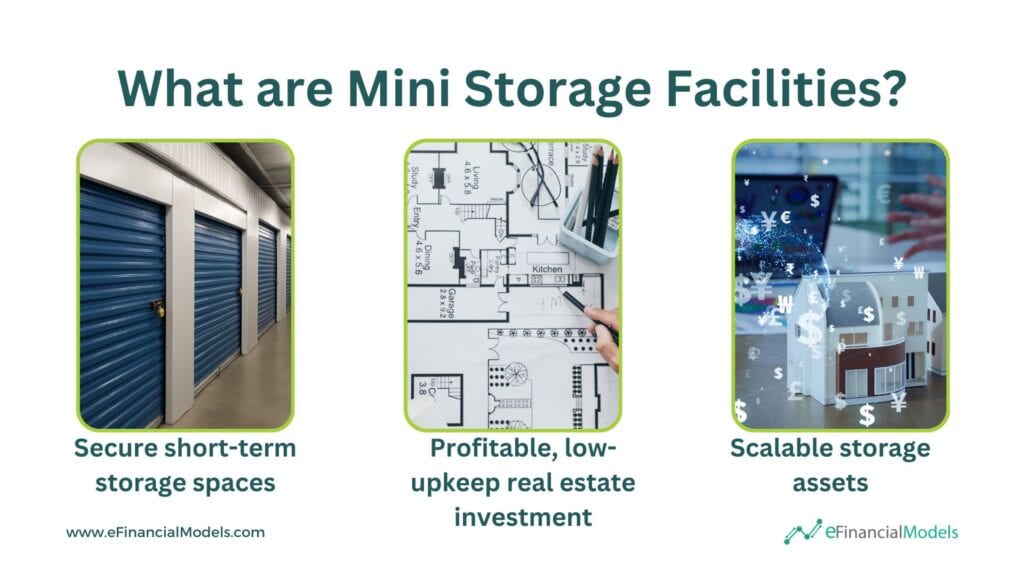
Mini storage facilities offer a secure, short-term solution for storing your belongings. They’re perfect when moving, downsizing, or needing extra space. You rent a unit, lock it, and access it when needed. These self-storage spaces come in different sizes to fit everything from boxes to furniture. They’re clean, easy to access and help keep your move or renovation stress-free.
Mini storage facilities are a growing real estate investment. They generate steady income with lower upkeep than other property types. The industry is booming. It’s worth $63.58 billion in 2024 and is set to hit $68.75 billion by 2025, growing at a steady compound annual growth rate (CAGR) of 8.1%—investors like them for their high demand and low tenant turnover. As cities grow, so does the need for storage, making this asset class a smart, scalable option.
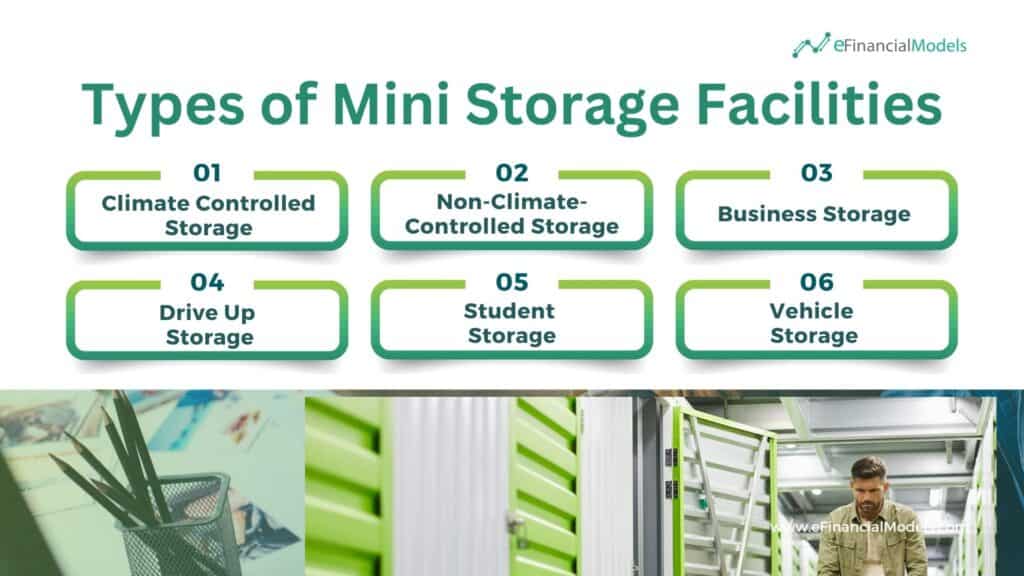
Types of Mini Storage Facilities
Several mini storage facilities—self-storage—are designed to cater to various customer needs. Here’s a breakdown of the main types:
- Climate-Controlled Storage: Climate-controlled storage keeps temperature and humidity steady. It protects items like electronics, furniture, or documents from heat, cold, and moisture. Great for long-term storage or delicate belongings.
- Non-Climate-Controlled Storage: Non-climate-controlled storage is a basic, budget-friendly option. It’s like a garage—no temperature control. Best for items that can handle weather changes, like tools or outdoor gear.
- Business Storage: Business storage gives companies extra space for files, supplies, or inventory. It’s ideal for growing businesses that need storage without high office rent. Secure, flexible, and easy to scale.
- Drive-Up Storage: Drive-up storage lets you park right next to your unit. Load and unload fast, with no stairs or elevators. Perfect for heavy or bulky items you need frequent access to.
- Student Storage: Student storage solves the hassle of moving during breaks. It’s short-term, affordable, and close to campus—a smart fix for storing dorm stuff without dragging it home.
- Vehicle Storage: Vehicle storage protects cars, boats, and RVs when not in use. Options range from outdoor parking to covered or indoor units. Keeps your ride safe and out of the way.
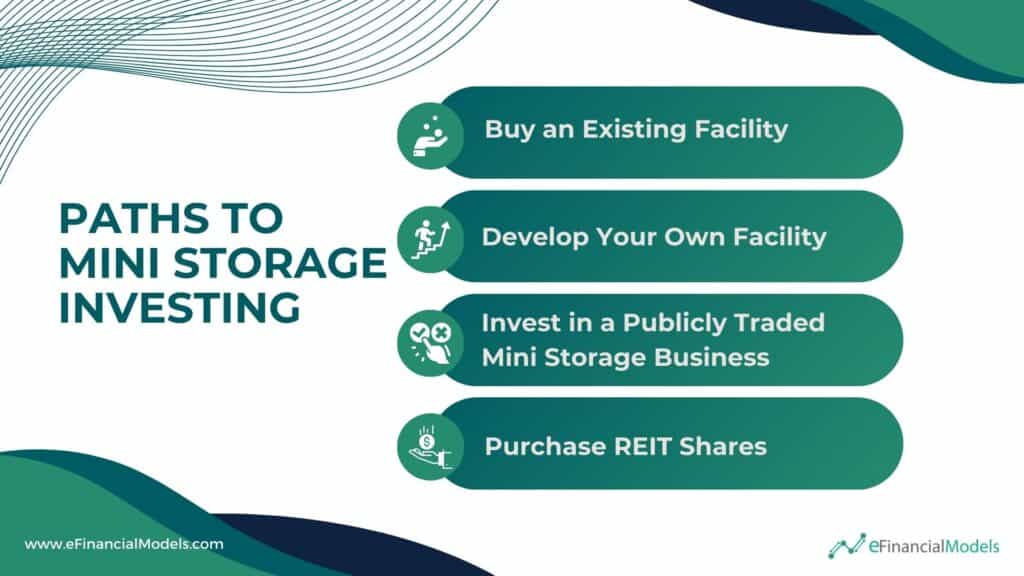
Paths to Mini Storage Investing
Mini storage investing offers a smart way to build wealth with steady income and low overhead. As demand for storage units keeps rising, more investors are exploring this niche for its potential returns and stability. There are different ways to start mini storage investing to find the path that fits your goals.
- Buy an Existing Facility: Buying an existing mini storage facility gives you immediate cash flow and a proven location. You avoid the hassle of construction and permits. It’s easier to analyze performance using past financials. You can also spot areas to improve and raise profits. This path is ideal if you want faster return on investment and less risk. Mini storage investing typically costs between $500,000 and $5 million when you buy an existing facility, depending on size, location, and cash flow.
- Develop Your Own Facility: Building a new facility lets you choose the location and design. You can meet modern demand with better layouts and tech features. It takes more time, permits, and money up front. But you get full control and higher potential profits long term. This route suits investors ready to play the long game. Developing your own mini storage facility can cost $1 million to $10 million, based on land, size, and construction needs.
- Invest in a Publicly Traded Mini Storage Business: Buying stock in a storage company is the simplest way to invest. It’s low effort, liquid, and fits small budgets. You don’t manage tenants or properties. Returns depend on company performance and market conditions. It’s a good fit for hands-off investors. Investing in a publicly traded mini storage company can start with just a few hundred dollars through stocks.
- Purchase Real Estate Investment Trust (REIT) Shares: Mini storage REITs offer regular income and property diversification. They’re easy to buy and sell like stocks. You get exposure to storage real estate without owning property. REITs must pay out most profits as dividends. This path works well for income-focused investors. You can invest in mini storage REIT shares for as little as $100 through most brokerage accounts.















































The Benefits of a Mini Storage Business Model
A mini storage business model involves renting out secure, individual storage units to customers—typically every month—for personal or business use, generating recurring revenue from space utilization. Clients can be individuals and small or medium-sized businesses. It can be smart for entrepreneurs looking for a steady rental income and low overhead. This model has gained popularity as people and businesses seek more flexible, secure, and accessible storage options.
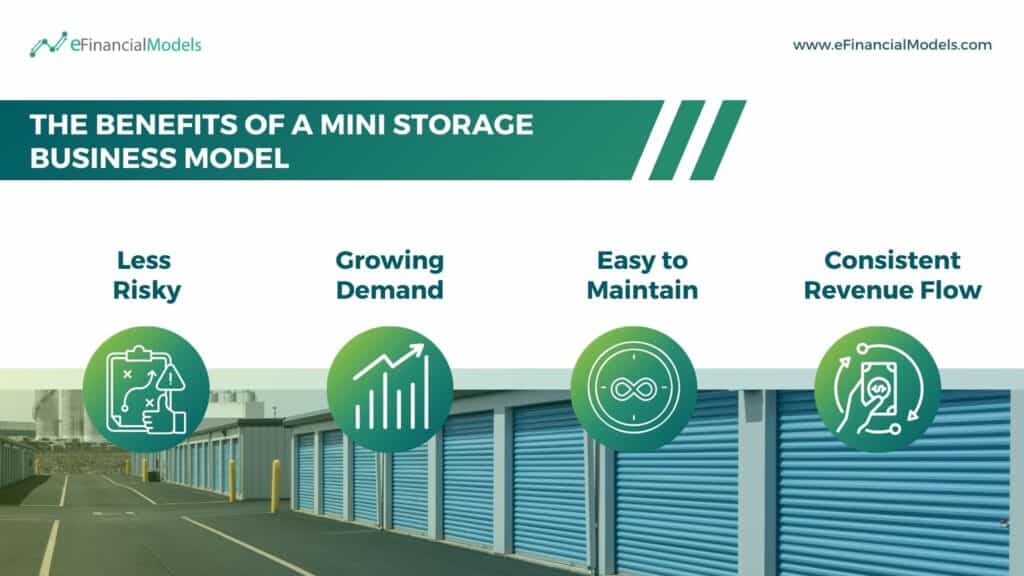
- Less Risky: A mini storage business model faces fewer risks than other ventures. It doesn’t rely on trends or daily customer traffic. You rent space, not products. That means fewer moving parts, lower overhead, and reduced chances of major losses.
- Growing Demand: People need more space. Cities are getting crowded, and homes are getting smaller. This drives constant demand for storage units. From families to businesses, more customers need extra room to store things safely.
- Easy to Maintain: Mini storage units are simple structures without fancy equipment or complex systems. With basic upkeep and security, you can keep them running smoothly. This reduces your time, effort, and repair costs.
- Consistent Revenue Flow: Most mini storage business model renters sign monthly contracts. This creates a monthly recurring revenue (MRR) you can count on. Unlike seasonal businesses, storage units generate cash year-round with minimal disruptions.
Common Challenges in Mini Storage Investing
Investing in mini storage facilities can seem like a smart and simple way to build wealth, but it’s not always smooth sailing. Various unexpected hurdles lie behind the promise of steady rental income and low maintenance.
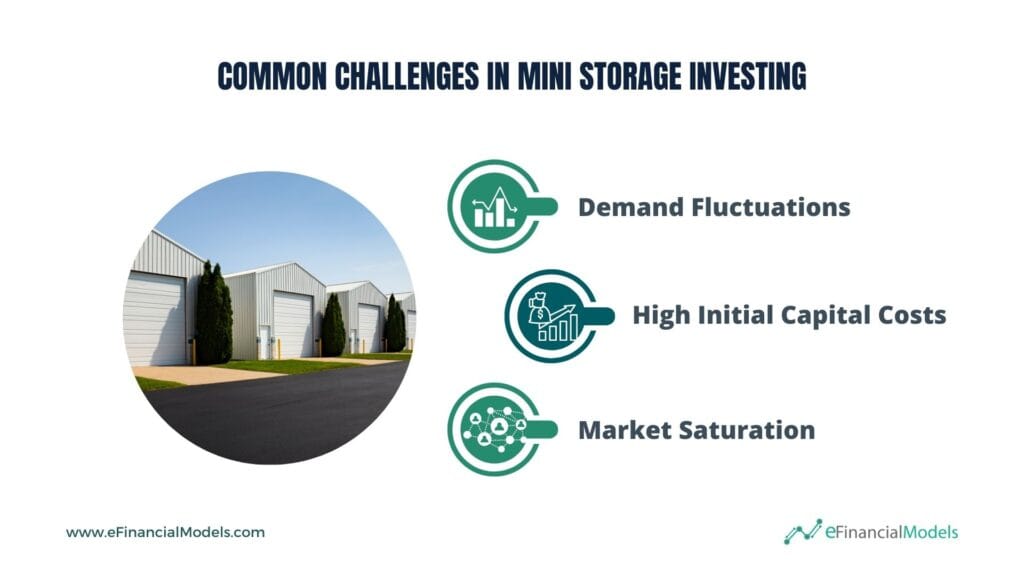
- Demand Fluctuations: Customer demand for mini storage facilities can rise and fall without warning. Seasonal changes, economic shifts, or local events may affect how many people need storage. When demand drops, so does your income. You must plan for slow periods and adapt your pricing or marketing fast to stay profitable.
- High Initial Capital Costs: Starting a mini storage business takes a lot of upfront capital investment. Land, construction, permits, and security systems all add up quickly. Even buying an existing facility can cost more than expected. If you don’t plan your budget carefully, these high costs can delay profits and strain your cash flow.
- Market Saturation: Too many storage facilities in one area can make it hard to fill your units. When supply is high, competition drives prices down. You may need to offer discounts or spend more on marketing to stay visible. Researching your local market before investing is key to avoiding oversupply.
Why a Mini Storage Financial Model Secures Smarter Investments?
Is mini storage a good investment? Mini storage investing is often considered smart because it’s less risky than many other ventures. A mini storage business model is simple to run, offers stable income, and responds well to growing consumer demand for extra space. Even though there are challenges like market saturation and high startup costs, the steady revenue flow and low maintenance needs help reduce long-term risk. If you’re looking for a dependable investment with fewer operational headaches, mini storage stands out as a strong choice.
A Mini Storage Financial Model helps investors make smarter choices by clearly mapping out costs, revenue, and growth potential. It highlights steady cash flow and low risk, making the investment easier to trust. With clear demand trends and simple operations, the plan shows how to avoid common pitfalls like market saturation. It also prepares you for upfront costs, reducing surprises. In short, a solid business plan turns a good idea into a smarter, more secure investment.
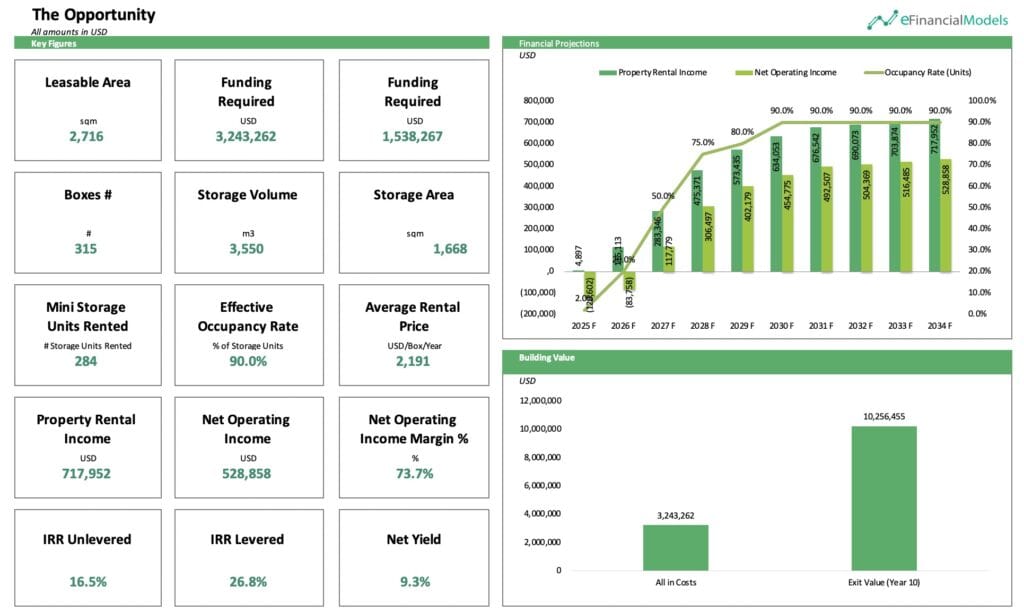
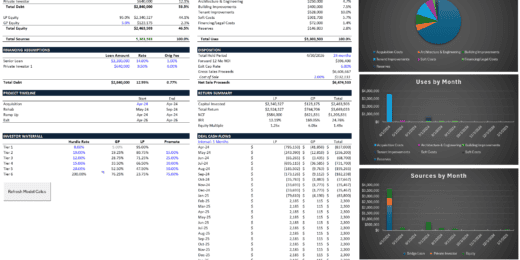
You may want to check our Mini Storage Financial Model if you want clear insights before moving. The chart above shows how much space you can lease, the income potential, and even how much funding you’ll need—with or without debt. With strong numbers like a 90% occupancy rate, 73.7% net operating margin, and up to 26.8% IRR, the model makes it easy to see why this business is profitable. You also get forecasts, cost breakdowns, and exit value projections. It’s a smart tool that confidently helps entrepreneurs and investors plan, pitch, and profit.

















































You might also like:
- 10 Tips to Develop a First Class Business Valuation Report
- 10 Main Elements of a Business Plan
- Commercial Real Estate Valuation Methods: Helping Investors in Taking Informed Decisions
- Financial Modeling for Startups and Small Businesses
- Forecasting Sales Using Product Life Cycle
- Financial Ratios Analysis and Its Importance
- Self-Storage Financial Model and Opportunity Analysis
- Understanding the Levelized Cost of Energy Formula
- Why Financial Forecasting Models Are Vital for Your Business
- Finding Fair Market Value: A Quick Guide to Real Estate Valuation
- Investment
- Mini Storage
- Financial Planning for Small Business Owners – Taking an SBA Loan
- Top 5 Principles of Corporate Finance
- Why Should You Use Excel for Financial Modeling?
- How to Prepare a Financial Feasibility Study?
- 5 Practical Tips to Help Raise Funds For Startups
- Rental Income
- How Can You Make Your Startup Successful?
- Understanding What is Yield to Maturity and Why It Matters