
0 ITEMS

How to Stay Ahead of the Curve in the Car Rental Industry

A solid financial plan is essential for success in the competitive car rental industry.
- It helps predict revenue, costs, and cash flows to make informed business decisions.
- Accurate forecasting of fleet management, maintenance, and marketing expenses can boost profitability.
- Strategic budgeting for fleet replacement and technological upgrades reduces operational risks.
- Understanding profit margins by location, seasonality, and operational efficiency supports growth.
- A detailed business plan provides a clear roadmap, attracting investors and guiding resource allocation.
Keep reading to see how thorough financial planning lays the foundation for long-term success.
Analysis of the Car Rental Industry
The car rental industry operates straightforwardly. Customers reserve vehicles online or via other platforms, present required documentation and payment information upon arrival, receive the rented vehicle, use it for the agreed period, and return it after inspection. Car rental is crucial due to its flexibility, catering to diverse needs such as business, travel, and special occasions. It provides an alternative to ownership, allowing individuals access to vehicles without the associated responsibilities.
Starting a car rental company offers several options. Entrepreneurs can build a new brand, involving substantial investments in establishing a fleet and infrastructure. Alternatively, purchasing an existing car rental business provides a quicker entry into the market, often with an established customer base. Franchising offers a middle ground, leveraging an established brand’s model with adherence to specific guidelines. Another option is to partner with car dealerships, tapping into an existing fleet with arrangements for revenue-sharing or fixed rental fees.
Today, the annual car rental revenue is estimated at $99.27 Billion. The profitability of a car rental business depends on various factors, including location, competition, and operational efficiency. While the industry is competitive, successful management, strategic marketing, and a well-maintained fleet can contribute to profitability. Additional revenue streams, such as insurance and supplementary services, also play a role. However, challenges such as depreciation, maintenance costs, and fluctuations in demand necessitate a comprehensive business strategy for sustained profitability in the dynamic car-rental landscape.






















































What are the Challenges of Car Rental Companies?
Car rental companies are pivotal in facilitating convenient and flexible transportation solutions for a diverse clientele. However, beneath this seemingly straightforward service lies various challenges that demand strategic financial planning and risk management.
The car rental industry is at a crossroads, with global dynamics posing significant challenges. Customers from overseas expand the market but bring complexities; regulations vary by region; fleet maintenance is capital-intensive; disposing of used cars impacts profitability; competition is fierce; pricing and booking require finesse; service excellence is non-negotiable; and technological advancement is a double-edged sword. Addressing these requires innovative financial strategies.

Customers from Overseas
Customers from overseas who need to become more familiar with local traffic rules might be at a higher risk of being involved in accidents. When people from other countries visit a new place, they may need to be more accustomed to the local traffic regulations, road signs, and driving norms. This lack of familiarity can lead to misunderstandings or mistakes while driving, increasing the risk of accidents.
Suggested Solution: Car rental companies can give customers a comprehensive welcome packet about local traffic rules, road signs, and driving etiquette. It can be shown in print and digital form and should be available in multiple languages to accommodate international customers.
Driving Laws & Regulations
Different regions and countries have distinct driving rules and regulations, including speed limits, seat belt laws, child safety seat requirements, and specific road rules. Driving rules and regulations can change frequently due to new legislation or amendments. Staying updated on these changes is crucial for car rental companies to avoid fines, legal actions, or disruptions in their services. They must comply with these regulations to ensure the safety of their customers and avoid legal issues.
Suggested Solution: Car rental companies can implement compliance cost forecasting to address these challenges. Regularly assess and forecast the costs associated with compliance with driving rules and regulations in different regions. A bottom-up estimation like a discounted cash flow analysis can help them allocate specific budgets to train staff on new regulations, update rental agreements, and ensure the fleet meets the required standards.
Fleet Maintenance
A modern and well-maintained fleet enhances customer satisfaction. Customers are more likely to have a positive experience if they receive a car in good condition, equipped with modern features, and meets their expectations regarding comfort and safety. Yet, maintaining a modern, reliable fleet is a significant expenditure among car rental companies. Older vehicles often require frequent repairs and maintenance, increasing operational costs. Investing in a modern fleet with the latest technologies and more efficient engines can reduce maintenance expenses over the long term but needs upfront investment.
Suggested Solution: A rolling reserve financial model can provide stability by setting aside a portion of rental income specifically for maintenance. It ensures funds are readily available when maintenance needs arise, preventing sudden financial strains. By allocating a fixed percentage of revenue to the maintenance fund, car rental companies can create a more predictable budget for fleet maintenance.
Getting Rid of Used Cars
Getting rid of used cars poses a significant challenge in the car rental industry, primarily due to factors like depreciation and fluctuations in resale value. Cars depreciate rapidly, and this depreciation directly impacts the value of the rental fleet. Resale values can be volatile and influenced by market trends, economic conditions, and changes in consumer preferences. Determining the optimal time to retire a vehicle from the fleet can be challenging. Keeping a vehicle too long may increase maintenance costs and reduce customer satisfaction.
Suggested Solution: The rental car retirement plan usually includes four possibilities: selling to consumers, repurchasing by the manufacturer, wholesale auctioning, or selling for parts. A residual value-based leasing model can shift the depreciation risk and provide a more predictable exit strategy for fleet vehicles.
Market Competition
The car rental industry is saturated with numerous competitors, ranging from large international companies to local providers. This saturation leads to fierce competition for market share and makes it challenging for any single company to distinguish itself. Intense competition often results in price wars, where companies continuously lower their prices to attract customers. While this may benefit consumers in the short term, it can negatively impact the profitability and sustainability of rental companies.
Suggested Solution: Financial modeling plays a crucial role in addressing the challenges in the car rental market, especially when considering investments in customer relationship management (CRM) systems. It shows the costs associated with implementing a CRM system, including software licensing, implementation costs, training, and ongoing maintenance. It can clearly communicate the expected benefits and risks, enabling informed decision-making.
Pricing & Booking Management
Price optimization is critical in a highly competitive environment. The car rental industry is highly dynamic, with fluctuating supply and demand, and it often varies seasonally. The demand for rental cars can vary significantly based on seasonality, holidays, events, and local happenings. A car rental company’s operational costs can fluctuate due to changes in fuel prices, maintenance costs, insurance premiums, and other factors. Adapting pricing to reflect these changes while maintaining profitability requires careful monitoring and adjustment. Besides, its complex pricing structure involves base rental fees, mileage charges, fuel charges, insurance, and additional services.
Suggested Solution: Analyzing historical data, competitor pricing, and market trends can help set competitive yet profitable prices. Dynamic pricing algorithms can also help optimize prices in real time based on demand, seasonality, and availability. A predictive revenue and expense forecast financial model can dynamically adjust prices based on demand patterns. It can significantly help in competitive market profit maximization.
Recent Technological Advancement
Recent technological advancements present both opportunities and challenges for the car rental industry. While embracing new technologies can enhance operational efficiency, customer experience, and business growth, it also poses challenges that require investment and strategic planning. Implementing new technologies often involves significant upfront costs for acquiring hardware, software, and infrastructure. To stay competitive, car rental companies must invest in advanced reservation systems, fleet management software, customer relationship management (CRM) tools, and other technologies. Legacy systems may need to be more easily compatible with the latest advancements, leading to integration challenges that require careful planning and execution.
Suggested Solution: Strategic partnerships with tech companies, financed through venture capital or strategic investment funds, can allow rental companies to adopt new technologies with less financial strain.
Securing Funds
For several reasons, securing funds can be a significant challenge in the car rental industry. Establishing a car rental business requires a substantial initial investment in purchasing or leasing a fleet of vehicles. This capital outlay includes not only the cost of the vehicles but also expenses related to insurance, maintenance, and storage facilities. Vehicles in a car rental fleet depreciate over time, and maintenance costs can increase. During economic downturns, people may reduce discretionary spending, such as renting cars for leisure or business travel. Reduced revenue can make it difficult for car rental companies to meet their financial obligations. All these costs can be unpredictable, making it challenging to budget accurately. In summary, the car rental industry’s capital-intensive nature, coupled with factors like economic conditions, competition, and technological advancements, makes securing funds a persistent challenge for businesses in this sector.
Suggested Solution: Effective financial management and strategic planning are crucial for overcoming these challenges and ensuring the long-term success of a car rental company. Financial modeling provides a structured framework for analyzing and understanding the business’s financial dynamics, aiding in short-term and long-term planning. Financial models help create budgets and forecasts by projecting future revenue, expenses, and cash flows based on historical data and various assumptions. It allows car rental companies to allocate resources effectively, plan for contingencies, and set realistic financial goals.










































Understanding the Car Rental Business Profit Margin
Before starting the business, you will need to identify the car rental business profit margin, which will show whether starting a car rental business is profitable. A car rental business profit margin indicates how much percentage the business earns for every dollar of sale.
A standard benchmark for a healthy car rental business profit margin is approximately 10%. This metric, however, is not a one-size-fits-all and can fluctuate significantly based on a myriad of factors. Location plays a critical role; urban settings with higher demand for rental cars might offer more favorable margins than rural areas. Market conditions, including competition intensity and consumer preferences, also impact this number. During peak tourist seasons or major events, for instance, demand spikes can temporarily boost profit margins.
Moreover, operational aspects such as fleet management, maintenance costs, insurance, and employee salaries contribute to the business’s overall financial health. The initial investment, which encompasses acquiring diverse vehicles to cater to different customer needs, also plays a fundamental role in shaping the profit margin. Additionally, embracing technology for efficient booking systems and customer service can streamline operations and potentially enhance profitability.
It is also essential to keep abreast of regulatory changes and environmental considerations, as these can influence operational costs and customer preferences. For instance, the increasing focus on eco-friendly practices and vehicles may necessitate investment in electric or hybrid cars, impacting initial costs but potentially offering long-term benefits through customer loyalty and reduced fuel expenses.
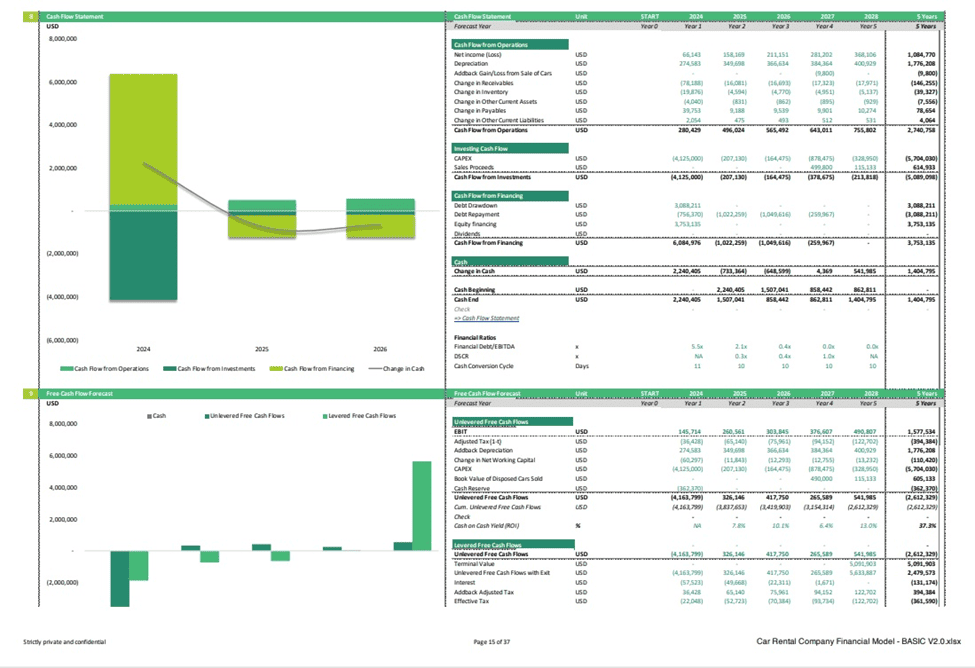
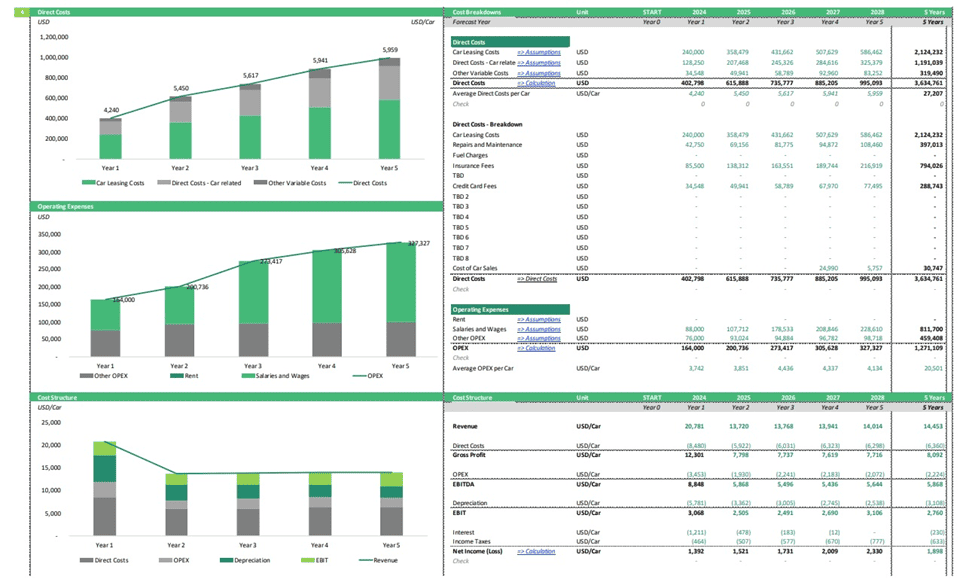
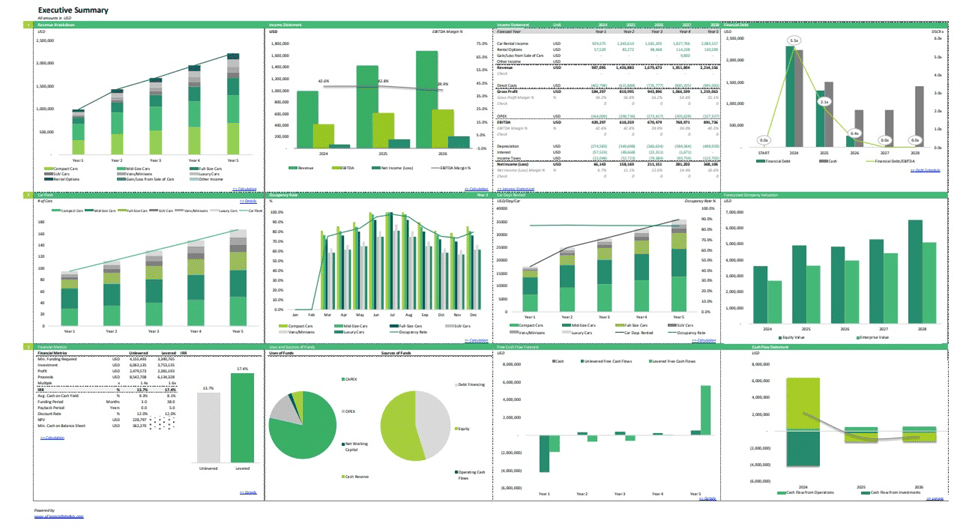
For those looking to explore this venture further, our car rental business financial model offers valuable insights and can assist in making informed decisions. Use this expertly crafted model to analyze the financial feasibility of your car rental business.
Car Rental Business Plan: The Key to Stay Ahead
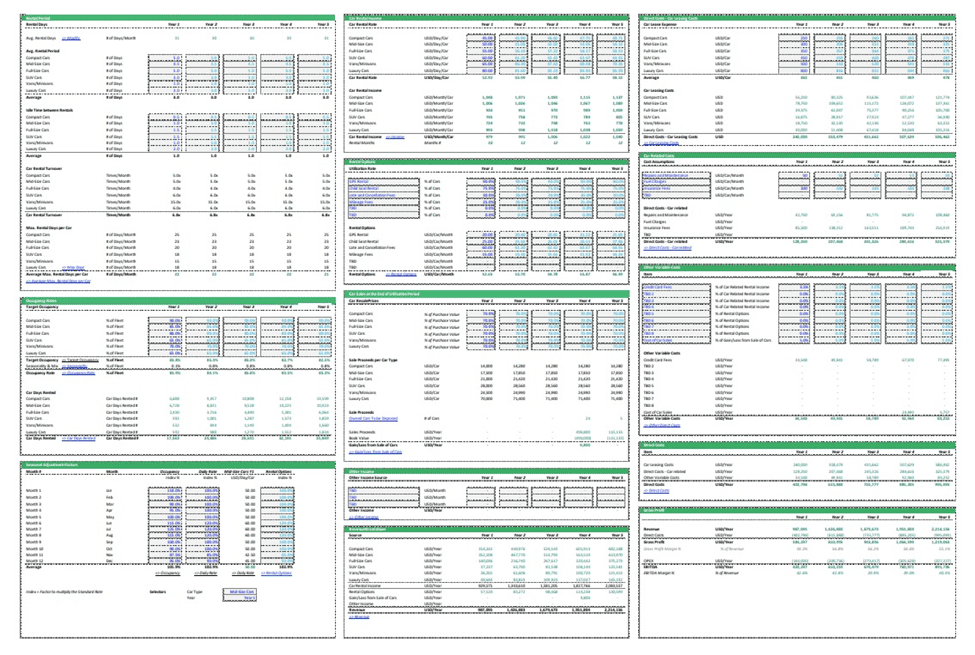
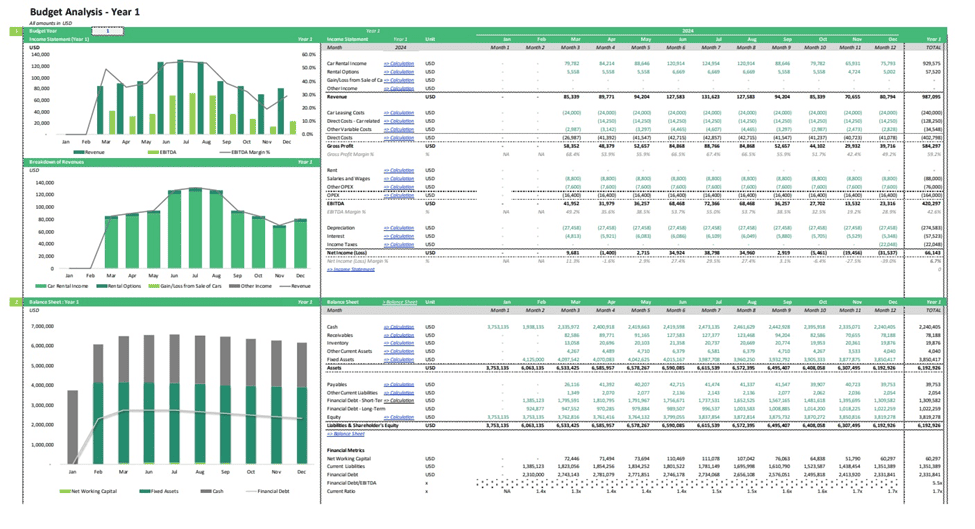
A car rental business plan provides a perfect starting point for creating a business plan for a car rental firm. The template presents a projected revenue and profit calculation of a car rental company model built using bottom-up estimation. It also thoroughly predicts the vehicle fleet schedule, anticipated cost structure, occupancy, and rental rates. As a result, a detailed financial forecast spanning several years and a thorough financial analysis of a proposed vehicle rental firm are produced. This analysis provides a thorough understanding of the factors that influence the automobile rental business model and can be used to create a business strategy for the company or as a foundation for obtaining bank or investor funding.
In summary, a well-structured car rental business plan is indispensable for a car rental business striving to stay ahead in a competitive market. By meticulously forecasting revenues, costs, and cash flows, this plan becomes a strategic roadmap, enabling informed decision-making and efficient allocation of resources. It is a powerful tool for entrepreneurs, investors, and finance professionals, guiding them through the industry’s complexities. Ultimately, a thorough and adaptable financial plan is the cornerstone of success in the dynamic world of car rentals, driving the business toward long-term profitability and resilience.
You might also like:
- 10 Tips to Develop a First Class Business Valuation Report
- Boost Your Business’s Financial Management with this Excel Budget Template
- How to Start a Distillery Business: What You Need to Know?
- How to Set up a Car Rental Business: A Roadmap to Success
- How to Calculate Annual Recurring (ARR) Revenue for Sustainable Growth
- 10 Ideas to Increase Average Revenue Per User
- How to Prepare a Financial Feasibility Study?
- Car Rental Business
- Financial Modeling for Startups and Small Businesses
- Are EV Charging Stations Profitable?
- Top 10 Mistakes in DCF Valuation Models
- Understanding the Debt Service Coverage Ratio: An Essential Metric for Financial Analysis
- Financial Forecasting Models by eFinancialModels
- Understanding What is Yield to Maturity and Why It Matters
- 10-Step Financial Planning Checklist for Smart Executives
- How to Build a Thriving Taxi Company?
- Mastering the Art of IRR Calculation: A Comprehensive Guide for Investors
- Startup Model Templates in Excel that can help your Business Grow
- Car Rental Business Financial Model