
0 ITEMS

Car Rental Business
Harnessing the power of a well-crafted financial model is pivotal to navigating the complexities of the car rental landscape and establishing a competitive edge in this lucrative market.
This category contains financial model templates that are built for car rental businesses and related business sectors.


🚘 Premium Autonomous Vehicle / Robotaxi Fleet Operations Financial Model…


A professional Excel and Google Sheets financial model built for…


This financial model is specifically built for EV Charging Solutions…


Unlock financial clarity with our customizable 3-Statement Excel Template, designed…


This professional and user-friendly 10-Year Financial Model Template is designed…


Boost your car rental business's financial success with our Excel-based…


The Car Subscription Service Financial Model with a 10+ Years…


Financial model providing a dynamic 10-Year Financial Plan for a…

This Charter Boat Rental Financial Model Template has been built…


A comprehensive editable, MS Excel spreadsheet for tracking car hire…



This Car Rental Business Financial Model Template in Excel offers…

Financial Model providing an advanced 5-year financial plan for a…

This model is to provide users with an integrated and…

Financial model providing a dynamic 10-Year Financial Plan for a…


Lifetime access to all future templates as well! Here is…


Online Car Rental Platform Business Plan Model is a perfect…

Plan out the assumptions and the resulting financials that show…


The Car Rental Financial Model helps entrepreneurs, founders, business owners,…


User-friendly 3 statement 5 year rolling financial projection Excel model…
Mastering the Car Rental Business: A Definitive Guide for Entrepreneurs
In the dynamic landscape of travel and transportation, the car rental industry holds a pivotal role, presenting itself as a cornerstone service for a wide spectrum of clients. For entrepreneurs and business innovators eyeing this sector, it is crucial to recognize the inherent value and versatility of car rentals. This service is not just about providing vehicles; it’s about offering tailored mobility solutions. From enabling tourists to traverse new cities with ease to catering to the temporary vehicle needs of businesses, car rentals represent a strategic blend of convenience, flexibility, and efficiency. This versatility makes car rentals an attractive option for a variety of needs, ranging from personal leisure to professional requirements.An Overview of the Car Rental Business
In today's fast-paced and interconnected world, the car rental business stands out as a dynamic and profitable venture in the travel and transportation industry. This sector offers entrepreneurs and business-minded individuals a unique opportunity to tap into a market driven by mobility needs and travel trends. With its potential for scalability, diverse customer base, and integrating technological advancements, starting a car rental business not only promises financial returns but also a chance to be at the forefront of a constantly evolving service industry. This section delves into the foundational aspects of the car rental business, illuminating what it entails and why it represents a compelling opportunity for aspiring entrepreneurs.What Is a Car Rental Business?
A car rental business operates on the model of providing vehicles on a temporary basis to customers, typically ranging from a few hours to a few weeks. This service caters to a diverse clientele, including tourists, individuals who require a temporary vehicle, and businesses in need of transport solutions for corporate travel or logistics. The essence of this business model lies in its operational flexibility, allowing it to adapt to varied customer demands and car rental market trends. It involves a fleet of vehicles, which can range from budget-friendly cars to luxury vehicles, depending on the target market and business goals. Starting a car rental business is not only a lucrative venture but also a strategically sound investment when examined through the lens of financial modeling and analysis. Here's a breakdown of why this industry is a compelling choice for entrepreneurs, backed by specific financial considerations:- Growing Demand: The global car rental market is projected to grow from $92.92 billion in 2021 to $214.04 billion by 2027, at a CAGR of 15.2%. This indicates a robust market potential for new businesses.
- Diversified Revenue Streams: Car rental businesses can expand beyond vehicle rentals to include leasing and corporate partnerships.
- Scalability and Revenue Growth: As the business grows, it can diversify into different market segments, enhancing the Average Revenue Per User (ARPU).
- Technological Integration: Implementing technologies like online booking and telematics can increase operational efficiency. Telematics can cut fleet management costs by 15%-20%, and online systems can boost sales by 20-30%.
- Economic Contribution: A car rental business not only profits directly but also boosts the local economy.
How to Set Up a Car Rental Business
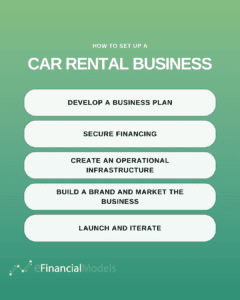 Establishing a car rental business requires a strategic approach, here’s how to set up a car rental business:
- Develop a Business Plan: This should include car rental market analysis, a financial plan, marketing strategies, and an operational plan. A well-thought-out car rental business plan serves as a roadmap for the business and is vital for securing financing.
- Secure Financing: Depending on the scale of the operation, financing might be necessary to cover initial costs such as vehicle purchase, location setup, and operational expenses. Options include loans, investors, or personal savings.
- Create an Operational Infrastructure: This involves setting up the physical location, acquiring vehicles, and implementing systems for reservations, customer management, and vehicle maintenance.
- Build a Brand and Market the Business: Developing a strong brand identity and a strategic marketing plan is crucial for attracting customers. This includes creating a professional website, leveraging social media, and considering partnerships with travel agencies or hotels.
- Launch and Iterate: After launching, continuously gather feedback and analyze business performance. Being adaptable and responsive to market changes is key to long-term success.
How Car Rental Works
Navigating the car rental process can be a crucial aspect for entrepreneurs and business professionals who frequently travel or require transportation solutions for their ventures. Understanding the mechanics of car rental is pivotal in ensuring a seamless experience, whether it’s for personal travel or corporate needs. This overview sheds light on the key components of the car rental process, including booking and reservation systems, rental policies and procedures, and the importance of customer experience and service.Booking and Reservation Systems
In the digital age, car rental companies leverage online platforms for bookings and reservations, featuring user-friendly websites and apps for vehicle selection and service customization. This digital shift ensures efficiency and customization to meet diverse business needs. The systems enable advanced bookings, essential for availability during peak times, and often include loyalty programs for frequent business travelers, offering rewards and benefits.Rental Policies and Procedures
Key to car rental is understanding the company's rental policies and procedures, which cover age requirements, documentation, insurance options, and fuel policies. For entrepreneurs, selecting appropriate insurance coverage is critical for financial protection against accidents or damages. Additionally, being aware of the company's fuel policy, such as options for refueling, is vital for cost-effectiveness and convenience.Customer Experience and Service
Exceptional customer service is vital in the car rental industry, especially for business travelers who may encounter tight schedules and changes. Top rental companies provide 24/7 support, roadside assistance, and flexible pick-up and drop-off services, ensuring reliability and peace of mind. A focus on customer feedback and continual service improvement is crucial to cater to the evolving needs of entrepreneurs and business professionals. Having introduced the fundamental aspects and enticing opportunities of the car rental business, it's essential to transition into the next critical phase: conducting thorough market research and strategic planning. This step is crucial for understanding the competitive landscape and tailoring your business model to meet the unique demands and opportunities of the market.Market Research and Planning
In the ever-evolving landscape of entrepreneurship, thorough market research and strategic planning form the cornerstone of any successful business venture. This is particularly true for those aiming to establish a foothold in the competitive car rental industry. By meticulously assessing the market, identifying the target audience, and crafting a comprehensive business plan for car rental, entrepreneurs can lay a strong foundation for a prosperous car rental venture.Assessing the Car Rental Market
To launch a car rental business, a comprehensive market analysis is essential. Key focus areas include market size, growth trends, and competitive landscape. Important factors include identifying high-demand geographical areas, understanding peak seasons, and preferences for vehicle types, including the growing interest in electric vehicles and online booking systems. It's also critical to understand the regulatory, insurance, and safety standards in the industry.Identifying Your Target Audience
Understanding the diverse customer base of the car rental market is crucial for service customization. This includes tourists, business travelers, locals in need of temporary vehicles, and companies needing fleet services. Tailoring services require insights into each segment's unique needs, such as convenience for tourists, and luxury vehicles for business travelers. Developing customer personas based on age, income, travel habits, and preferences can guide fleet composition, pricing, and targeted marketing strategies.Creating a Business Plan for Your Car Rental Venture
In the journey of launching a car rental venture, crafting a detailed business plan for car rental stands as a pivotal and defining step. This comprehensive plan should serve as a blueprint, encapsulating all dimensions of your enterprise - from market insights and customer targeting to the nitty-gritty of daily operations and financial foresight.- Vision, Mission, and Objectives: Begin by articulating the overarching goals and ethos of your venture. This section should define the business's purpose, its core values, and the long-term objectives you aim to achieve.
- Fleet Composition and Pricing Strategy: Detail the types of vehicles you intend to offer, considering factors like market demand and sustainability. Also, outline your pricing structure, ensuring it's competitive yet profitable.
- Marketing and Customer Acquisition Plans: Describe the strategies to market your services and attract customers. This should include both digital and traditional marketing tactics, customer loyalty programs, and partnerships.
- Operational Strategies: Delve into the operational aspects such as vehicle maintenance, staff recruitment and training, and customer service protocols. This section is crucial for ensuring smooth day-to-day functioning.
- Financial Projections and Management: Present a clear financial plan encompassing car rental business startup costs, revenue forecasts, cash flow analysis, and break-even points. This is vital not just for internal management but also for attracting investors and securing loans.
- Risk Assessment and Contingency Planning: Identify potential risks and challenges your business might face and outline strategies to mitigate them. This might include diversification tactics, insurance policies, and adaptability plans to stay resilient in a fluctuating market.
Setting Up Your Car Rental Business
Embarking on the journey of establishing a car rental business can be a lucrative endeavor for aspiring entrepreneurs. This sector offers a unique opportunity to tap into the ever-growing demand for flexible transportation solutions. To ensure a smooth start and sustainable growth, it's crucial to pay attention to several key aspects.Legal Requirements and Regulations
Setting up a car rental business begins with understanding and complying with legal requirements. Entrepreneurs must secure necessary permits and licenses, including registering the business and obtaining a car rental license. Vehicle insurance and adherence to safety standards are also mandatory. Familiarizing oneself with rental agreement laws, customer liabilities, and insurance necessities is critical. It’s advisable to consult legal counsel to ensure all legal aspects are thoroughly covered.Choosing a Location for Your Car Rental Business
Location greatly influences the success of a car rental business. Optimal sites are usually near airports, hotels, tourist spots, or business areas, where rental demand is high. Consider factors like accessibility, visibility, space for vehicle storage, and security. Researching competition and customer trends in various locations can aid in making a strategic decision.Fleet Acquisition and Maintenance
The fleet is central to a car rental business. Selection of vehicles should align with target market needs and budget constraints, considering options from economy to luxury cars. Vehicles can be acquired through purchase or lease, each with distinct financial impacts. Effective fleet management, including regular maintenance, is crucial for customer satisfaction and safety, with fleet management software being a useful tool for tracking and optimizing operations.Revenue Streams in the Car Rental Industry
The car rental industry presents a multitude of revenue-generating avenues for entrepreneurs and business owners. By understanding and effectively leveraging these streams, one can significantly enhance the profitability and sustainability of their car rental venture.Rental Fees and Pricing Strategies
Rental fees are at the heart of a car rental business's revenue. Effective pricing strategies consider market demand, seasonality, and customer segments. Implementing tiered pricing for different customer needs, such as premium rates for high-end models or packages for extended rentals, is beneficial. Flexible pricing that adjusts for peak seasons or booking times, possibly using AI-powered dynamic pricing systems, can optimize occupancy and profitability.Additional Services and Upselling Opportunities
Offering additional services like insurance, GPS systems, or child seats can significantly increase revenue. Tailoring these services to customer preferences and training staff in upselling techniques can enhance sales. Bundling services in discounted packages also boosts the average transaction value and customer satisfaction.Partnerships and Corporate Contracts
Strategic partnerships with airlines, hotels, and travel agencies, and securing corporate contracts, offer lucrative revenue streams. These alliances provide a steady customer flow and enhance the overall travel experience. Offering services tailored to corporate clients, such as flexible billing and dedicated account management, can attract stable, long-term business contracts. Active engagement in local business networks and industry events can also open new corporate opportunities. In summary, leveraging diverse revenue streams through smart pricing, additional services, and strategic partnerships can significantly enhance the growth and profitability of a car rental business. Entrepreneurs skilled in market analysis, customer understanding, and digital technologies can effectively capitalize on these opportunities.Managing Expenses and Profitability
In the dynamic and competitive realm of car rental businesses, managing expenses while ensuring profitability is a critical balancing act. Entrepreneurs and business starters venturing into this industry must develop a keen understanding of the intricate financial landscape to thrive.Operating Costs in Car Rental
Operating costs are crucial for a car rental business, including vehicle procurement and administrative expenses. Fleet acquisition, a major expense, should focus on vehicles with high fuel efficiency, reliability, and good resale value. Other significant costs involve insurance, licensing fees, and taxes, which vary by location and fleet size. Administrative costs such as office rent, utilities, and staff salaries also play a role. Employing digital tools for operations can enhance efficiency and reduce expenses.Fleet Management and Maintenance Costs
Effective fleet management and maintenance are key to a car rental business. Regular vehicle maintenance ensures safety and longevity, requiring routine inspections, servicing, and repairs. A proactive maintenance approach, using telematics to monitor vehicle performance, can cut long-term costs. Staff training in basic vehicle care aids in early problem detection. Choosing durable, low-maintenance vehicle models and negotiating favorable maintenance contracts can lead to significant savings.Car Rental Insurance
In the dynamic world of car rental businesses, securing robust insurance coverage is not just a legal necessity but also a critical component for safeguarding your investment. As an entrepreneur or business owner venturing into the car rental industry, understanding the nuances of car rental insurance is fundamental to protecting your fleet and ensuring the longevity of your business.Types of Insurance Needed for Your Fleet
The foundation of a resilient car rental business lies in the comprehensiveness of its insurance policies. Several car rental insurance types are essential for a car rental fleet:- Liability Insurance: This is mandatory in most regions and covers damages to third parties caused by your vehicles. It's vital to ensure your policy covers both bodily injury and property damage to others.
- Collision Damage Waiver (CDW): Often offered to renters, CDW covers damage to the rental vehicle. It's important to clarify that this is not traditional insurance but a waiver that shifts the financial responsibility from the renter to the rental company.
- Comprehensive Insurance: This policy covers damage to your vehicles from non-collision incidents like theft, vandalism, or natural disasters. Given the value of your fleet, comprehensive coverage is indispensable.
- Personal Accident Insurance: While optional, this insurance offers coverage to the driver and passengers for medical costs resulting from an accident.
- Uninsured/Underinsured Motorist Protection: This coverage is crucial if an accident occurs with a motorist who has insufficient or no insurance.
Costs and Considerations for Insurance
When budgeting for car rental insurance, several factors influence the cost:- Fleet Size and Value: Larger fleets with high-value vehicles typically incur higher premiums.
- Coverage Limits and Deductibles: Higher coverage limits offer better protection but come with increased premiums. Opting for a higher deductible can reduce your premium but means greater out-of-pocket costs in the event of a claim.
- Location and Usage: Areas with higher traffic or accident rates might attract higher insurance costs. Similarly, the intended use of the vehicles (e.g., luxury rentals, everyday use) impacts the insurance rates.
- Driver Demographics: Policies may be influenced by the age and driving records of the typical renters.
Handling Insurance Claims and Liability
- Efficient Claim Processing: Implement clear procedures for reporting accidents and damages. Train staff for prompt and accurate reporting to streamline insurance claims.
- Liability Awareness: Clearly communicate the extent of liability to customers, ensuring they understand their responsibilities and insurance coverage under the rental agreement.
- Accident Documentation: Maintain a well-documented process for accident assessment and claim filing. This approach speeds up claims, promotes clarity, and minimizes disputes.
Marketing and Attracting Customers
As an entrepreneur or business owner, the cornerstone of building a successful venture lies in effective marketing and attracting the right customer base. This journey encompasses a range of strategies, from establishing a robust online presence to managing customer reviews and reputation.Building an Online Presence and Website
In the digital era, a strong online presence is essential. Your website, acting as your digital storefront, must be visually appealing, user-friendly, and easily navigable. It's crucial for the site to be responsive on various devices, especially smartphones and tablets. SEO optimization is key for increasing visibility in search engine results. Additionally, integrating social media and a blog can further enhance your online presence, offering engagement and valuable content to your audience.Advertising and Promotion Strategies
Choosing the right advertising channels is crucial for reaching your target audience. Options include online platforms like Google Ads, social media for targeted ads, and content marketing through blogs or videos to establish industry authority and improve search rankings. Email marketing is effective for updates and promotions, while influencer partnerships can boost brand visibility and credibility.Customer Reviews and Reputation Management
Online reviews are influential in shaping your business's reputation. Encouraging positive reviews on platforms like Google and Yelp enhances credibility. Responding to all reviews, positive or negative, demonstrates your commitment to customer experience and helps manage your reputation effectively.Maximizing Profit Margins
Maximizing profit margins in the car rental business is about more than just increasing revenue; it's about optimizing every aspect of the business to ensure financial efficiency. Dynamic pricing strategies can be employed to adjust rental rates based on demand, seasonality, and market trends, thereby maximizing revenue potential. Diversifying the fleet to cater to different customer segments, such as luxury cars, family vehicles, or eco-friendly options, can tap into various revenue streams. Additionally, offering ancillary services like GPS rentals, child seats, or insurance upgrades can significantly boost profits. Cost control is equally important. Regularly reviewing and optimizing operational processes can help in identifying areas where expenses can be cut without compromising on quality or customer satisfaction. Leveraging technology for tasks such as booking management, vehicle tracking, and customer service can also lead to operational efficiencies and cost reductions.Key Strategies for Profitable Operations
To ensure profitability in the competitive car rental market, businesses must adopt several key strategies:- Optimizing Fleet Utilization: Efficient management of the vehicle fleet is paramount. This involves maintaining an optimal number of cars, ensuring they are in good condition, and minimizing downtime. Efficient fleet utilization directly impacts revenue and profitability.
- Technology Integration: Leveraging technology for better fleet management, improved customer service, and efficient operations is essential. Online booking systems, mobile apps, and fleet management software can enhance operational efficiency and customer experience.
- Cost Management: Keeping operational costs in check, such as maintenance expenses, office rentals, and staff salaries, is vital for maintaining profitability. Effective cost management also includes strategies for fuel efficiency and reducing insurance premiums.
- Market Analysis and Customer Targeting: Understanding market trends and customer preferences allows for tailored services and marketing strategies. Focusing on niche markets or specializing in certain types of rentals can differentiate a business from its competitors.
- Building Customer Loyalty: Establishing a loyal customer base through excellent service, loyalty programs, and consistent customer engagement can lead to repeat business and word-of-mouth referrals, which are invaluable for long-term success.
Factors Affecting the Profitability of Car Rental Companies
Understanding the profitability of car rental companies involves examining various factors that influence their financial success. These factors range from operational aspects to market dynamics.- Market Demand and Location: The success of a car rental business is heavily dependent on its location and the corresponding market demand. Companies situated in tourist hotspots, airports, and urban centers typically experience higher demand.
- Fleet Management and Maintenance: The cost of acquiring, maintaining, and managing a fleet significantly impacts profitability. Efficient fleet management, including the choice of vehicles and maintenance schedules, can reduce costs and enhance customer satisfaction.
- Operational Efficiency: Implementing efficient operational strategies, such as streamlined booking processes, effective customer service, and the use of technology for fleet tracking and management, can significantly reduce overhead costs.
- Pricing Strategies: Competitive and dynamic pricing strategies, which consider factors like seasonality, competition, and demand patterns, are crucial for maximizing revenue.
- Technological Adoption: Embracing technology, such as online booking platforms, mobile applications, and digital payment systems, can enhance customer experience and operational efficiency.
- Insurance and Legal Compliance: Proper insurance coverage and adherence to legal regulations are essential for mitigating risks and avoiding costly legal issues.
- Customer Service and Brand Reputation: Exceptional customer service and a strong brand reputation are vital for repeat business and word-of-mouth referrals, which are key drivers of profitability in this industry.
Success Stories and Case Studies
Examining the success stories and case studies of prominent car rental companies provides valuable insights into the strategies and practices that drive profitability.- Enterprise Rent-A-Car: Known for its exceptional customer service and extensive network, Enterprise has consistently ranked high in customer satisfaction. Their focus on local markets and diverse vehicle offerings cater to a wide range of customer needs.
- Hertz Corporation: Hertz's global presence and brand reputation, coupled with innovative offerings like the Hertz Gold Plus Rewards program, demonstrate the importance of customer loyalty programs and international market penetration.
- Avis Budget Group: Avis Budget Group's strategic acquisitions and partnerships, such as their collaboration with Amazon and integration of digital technology, highlight the significance of strategic alliances and digital transformation in driving growth.
Exploring the Revenue Model of Car Rental Businesses
The fundamental revenue model of car rental businesses hinges on the renting of vehicles for a predetermined period. This model encompasses various aspects:- Short-Term and Long-Term Rentals: Car rental companies cater to a diverse clientele, ranging from tourists needing a vehicle for a few days to businesses requiring fleets for longer periods. This flexibility in rental duration broadens the customer base and ensures a steady revenue stream.
- Diverse Fleet Types: Offering a range of vehicles, from economy models for budget-conscious customers to luxury cars for high-end clients, ensures that a car rental company can cater to a wide range of preferences and needs.
- Pricing Strategies: Effective pricing strategies are crucial. Companies often employ dynamic pricing, adjusting rates based on demand, seasonality, and market competition. This approach helps maximize revenue, particularly during peak travel seasons.
- Additional Services and Upsells: Car rental companies often boost their income through additional services such as insurance, GPS navigation systems, child seats, and one-way rental options. These extras, while optional for customers, contribute significantly to the company's overall revenue.
- Partnerships and Corporate Contracts: Establishing partnerships with airlines, hotels, and travel agencies can lead to a steady flow of customers. Additionally, securing corporate contracts for employee travel can provide a reliable and consistent revenue source.
Do Car Rental Companies Make Money?
The car rental industry, a vital component of the global travel and tourism sector, presents intriguing opportunities for entrepreneurs and business owners. This industry, propelled by increasing travel demands, digital advancements, and evolving consumer preferences, offers a lucrative avenue for investment and growth. But the critical question remains: Do car rental companies make money?Financial Modeling – The Key to Mastering the Complexities of Car Rentals
In conclusion, the success and sustainability of a car rental business are deeply rooted in the effectiveness of financial modeling. As the backbone of strategic planning and decision-making, financial modeling provides entrepreneurs with a clear roadmap to navigate the complexities of this dynamic industry. Financial modeling enables business owners to simulate various scenarios, assess profitability, manage cash flows, and plan for future growth. It's a tool that transforms raw data into actionable insights, helping you understand market dynamics, customer behaviors, and the financial implications of your business decisions. This foresight is invaluable in optimizing pricing strategies, fleet management, and operational expenditures. Moreover, in a sector where capital investments and operational costs are significant, financial modeling aids in identifying the most financially viable options, whether it's in fleet expansion, technology integration, or exploring new market segments. It also plays a pivotal role in risk management, allowing for the assessment and mitigation of financial risks through informed strategies. For entrepreneurs aiming to secure funding or attract investors, a well-crafted financial model is essential. It demonstrates the business's potential for profitability and growth, showcasing a clear picture of the return on investment. In essence, financial modeling is not just a planning tool; it's a strategic asset that empowers car rental business owners to make informed, data-driven decisions, ultimately steering their ventures toward long-term success and profitability.You might also like: