
0 ITEMS

How Does Small Business Factoring Work?
Table of Content
- What is Small Business Factoring?
- Types of Invoice Factoring Services
- How Much Do Factoring Companies Charge?
- Benefits of Small Business Factoring
- How Does Invoice Factoring Work?
- Potential Risks and Considerations of Invoice Factoring Services
- Financial Modeling in Factoring: Smarter Cash Flow Management
Managing cash flow is a critical challenge for small businesses, especially when customers have long payment cycles or seasonal fluctuations.
- Invoice factoring turns unpaid invoices into immediate cash, helping cover expenses without taking on extra debt.
- The process involves selling invoices to a factoring company at a discount, with most of the invoice value advanced upfront.
- Factoring fees generally range from 1% to 5% of the invoice, depending on customer creditworthiness and industry.
- Different types of factoring services, such as recourse, non-recourse, and spot factoring, offer flexible solutions based on risk and cash flow needs.
- Understanding the costs, risks, and contractual terms enables businesses to use factoring effectively for smarter cash flow management.
This article provides clear insights into how small business factoring works and how to leverage it for growth.
What is Small Business Factoring?
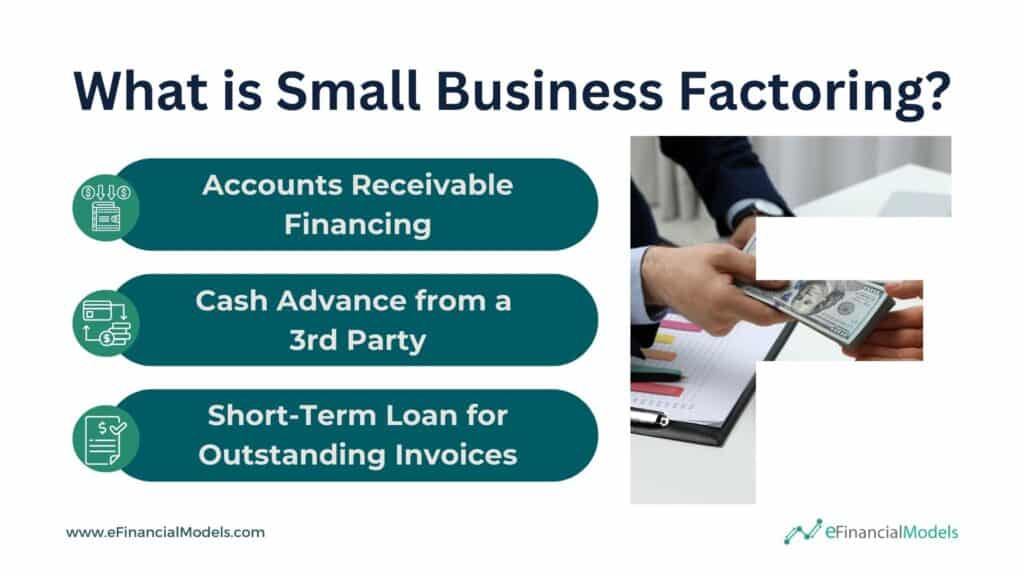
Small business factoring is when a company sells its unpaid invoices to another company. Instead of waiting for customers to pay, the business gets cash immediately. It helps businesses avoid cash flow problems. Factoring works like a cash advance. A third-party company called a factor gives the business most of the invoice amount upfront. When the customer pays, the factor takes a small fee and gives the rest of the money to the business. It’s like a short-term loan, but businesses use their unpaid invoices instead of borrowing money as collateral. This helps businesses get fast cash without taking on new debt.
The mechanics of factoring are quite straightforward. Once a business sells its invoices to a factor, it typically receives a significant percentage of the invoice value upfront, usually from 70% to 90%. The factor then takes on the responsibility of collecting the outstanding payments from the customers. Once the customers pay, the factor remits the remaining balance to the business minus a factoring fee. This fee can vary based on factors such as the volume of invoices factored in, the customer’s creditworthiness, and the receivables’ duration.
Factoring is ideal for businesses that:
- Have long payment cycles but need immediate cash
- Experience seasonal fluctuations in cash flow
- Growing rapidly and need working capital
- Have strong invoicing practices and creditworthy customers
Types of Invoice Factoring Services
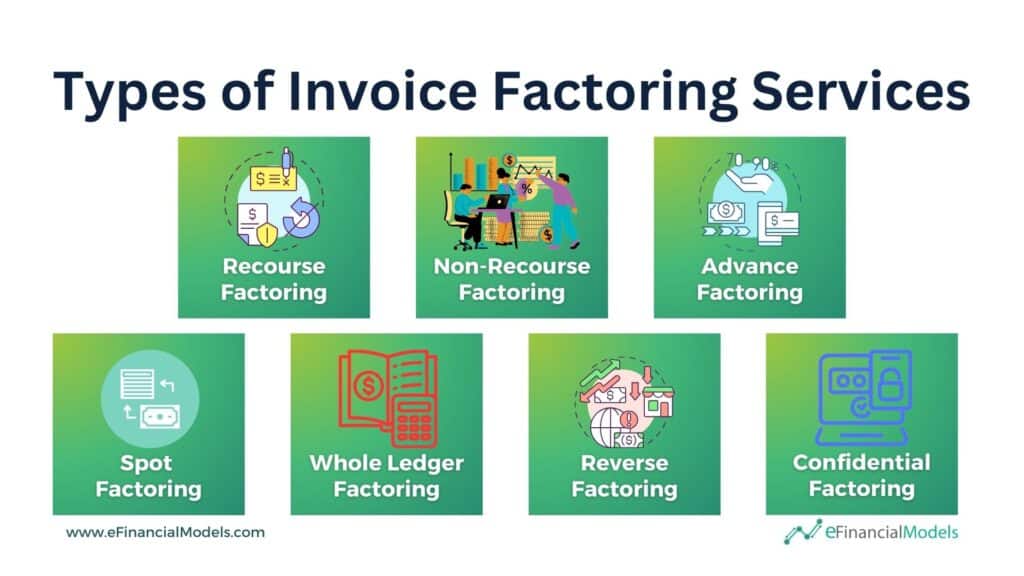
Invoice factoring services come in various forms, catering to different business needs. Here are the main types of invoice factoring services:
- Recourse Factoring: A business sells its invoices to a factoring company but still holds responsibility if the customer doesn’t pay. If the invoice remains unpaid, the business must buy it back. This invoice factoring service has lower fees since the factoring company takes less risk. It’s useful for businesses to be confident their customers will pay.
- Non-Recourse Factoring: The factoring company takes on the risk of unpaid invoices. If a customer fails to pay, the business does not have to buy back the invoice. Because the factor assumes the risk, they charge higher fees. They also check customer creditworthiness more carefully before agreeing to fund invoices.
- Advance Factoring: The factoring company pays a business most of the invoice value upfront, typically 70-90%. Once the customer pays, the factor sends the remaining balance after deducting fees. This helps businesses get cash quickly instead of waiting for customers to pay.
- Spot Factoring (Single Invoice Factoring): Businesses can sell invoices one at a time instead of committing to a long-term agreement. This is helpful when cash flow is tight for a short period. It allows businesses to get quick funding without factoring all their invoices.
- Whole Ledger Factoring: A business sells its entire accounts receivable instead of individual invoices. This ensures steady cash flow since all incoming payments are factored in. It’s useful for companies that need consistent working capital rather than occasional financing.
- Reverse Factoring (Supply Chain Financing): Instead of a supplier selling invoices, the buyer arranges for a factor to pay the supplier early. This helps suppliers get their money faster while allowing buyers to extend their own payment deadlines. It benefits both parties by improving cash flow.
- Confidential Factoring: The factoring company funds invoices, but customers don’t know about it. The business still collects payments and passes them to the factor. This setup allows businesses to access cash without alerting customers that they’re using a financing service.
Invoice factoring services are designed to solve different cash flow challenges for businesses. Whether a company needs immediate cash, protection against bad debts, or a steady flow of funds, there’s a solution. Some businesses prefer flexibility, while others want discreet financing. Choosing the right type of invoice factoring service depends on risk tolerance, cash flow needs, and customer reliability.
How Much Do Factoring Companies Charge?
Factoring companies charge fees to provide businesses quick cash from their unpaid invoices. These fees, known as factoring rates, typically range from 1% to 5% of the invoice value. The exact rate depends on factors like the creditworthiness of the business’s customers, the volume of invoices being factored in, and the industry involved. Businesses need to understand these rates and any additional fees to determine the total cost of factoring.
- A company with reliable customers and a high volume of invoices might receive a lower rate, while a business with higher-risk customers or fewer invoices could face a higher rate.
- Furthermore, it is essential to note that some companies charge a flat rate, while others increase fees the longer an invoice remains unpaid. For example, if a factoring company charges 3% per month, a $10,000 invoice could cost $300 in fees for the first 30 days. If the customer takes 60 days to pay, the cost could double.
Many business owners focus on lowering the rate. A low factoring rate may seem like a great deal, but businesses should also look at the full picture of how much do factoring companies charge – the factoring costs. Factoring cost is the total amount a business pays to get cash from its invoices. It includes the factoring rate plus extra fees like processing, wire transfers, and monthly minimums. Think of it like buying a concert ticket—there’s the base price, but taxes and service fees make it more expensive.
How Large is Your Advance?
Besides how much do factoring companies charge, it is also essential to know how large your cash advance is when availing of different invoice factoring services. Most small businesses want the highest cash advance possible from their factored invoices. Some factoring companies use advanced technology to reduce risk, allowing them to offer larger advances. They use AI and machine learning to predict which invoices will likely be paid on time. Automated systems flag risky transactions, helping the factor avoid bad debts. With better risk management, these companies feel confident offering higher advance rates while keeping their losses low. This means businesses can access more cash upfront without paying excessive fees.
Determining the factoring costs and advance percentage is important to get the best value. Here’s a List of Average Factoring Rates and Advances for 2024 from eCapital, a leading global financial services company, for your reference.
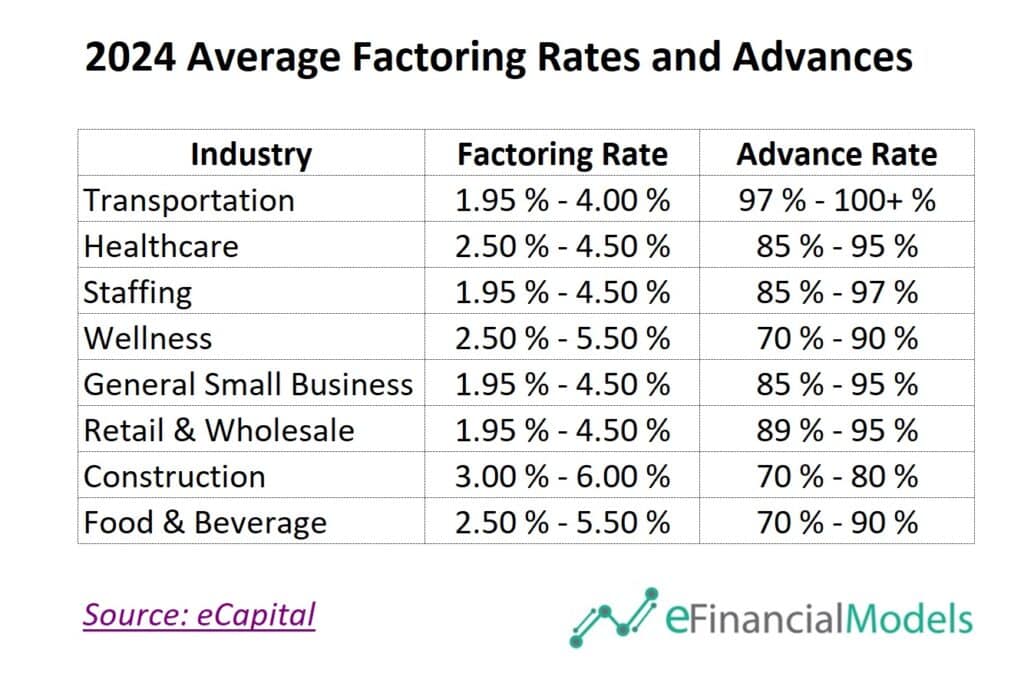
Factoring and advance rates in 2024 vary by industry, showing how businesses get quick cash by selling unpaid invoices. For example, transportation companies have the lowest factoring rates (1.95% to 4.00%) and the highest advances (up to 100% of the invoice). Healthcare and staffing companies pay slightly more (up to 4.50%), while wellness, food, and construction businesses see higher rates (up to 5.50% or 6.00%) but smaller advances (70% to 90%). This table helps businesses compare costs and decide if factoring is a good way to manage cash flow quickly and easily.












































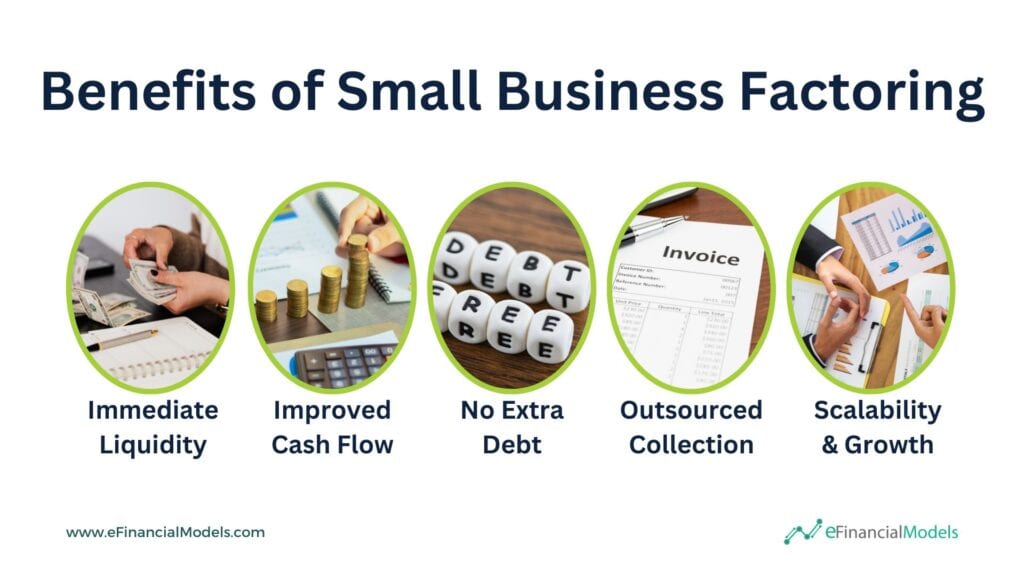
Benefits of Small Business Factoring
Small business factoring is a smart way to get cash fast when customers take a long time to pay their invoices. Instead of waiting weeks or months, businesses can sell those unpaid invoices to a factoring company and immediately receive most of the money. This helps them cover daily expenses, pay employees, or invest in growth without stressing over delayed payments. Factoring is like turning waiting time into working time, making it easier for small businesses to stay on track and thrive.
- Immediate Liquidity: Factoring gives small businesses quick cash without waiting for customers to pay invoices. Companies can get most of their money immediately instead of waiting 30, 60, or even 90 days. This means they can cover payroll, buy supplies, or invest in growth without delays.
- No Extra Debt: Small business factoring is not a loan. Businesses sell their unpaid invoices so they don’t owe money or have to make monthly payments. This keeps the balance sheet clean and avoids the risk of taking on too much debt.
- Improved Cash Flow Management: A steady cash flow keeps a business running smoothly. Factoring ensures companies have money to cover rent, utilities, and salaries. It helps prevent cash shortages that could slow down operations.
- Outsourced Collection Efforts: Chasing unpaid invoices takes time and effort. Factoring companies handle collections, so businesses don’t have to. This frees up staff to focus on sales, customer service, and other important tasks.
- Scalability: As a business grows, so do its cash needs. Small business factoring expands with sales, providing more funds as invoices increase. This makes it easier to take on larger orders, hire more staff, and scale operations without financial strain.
How Does Invoice Factoring Work?
Small business factoring involves three key players: the seller (the business needing cash), the debtor (the customer who owes money), and the factor (the company that buys the invoice and advances funds). The seller provides goods or services and issues an invoice but needs cash before the customer pays. Instead of waiting, they sell the invoice to the factor at a discount. The factor advances most of the invoice amount upfront and then collects full payment from the debtor. Once the debtor pays, the factor deducts fees and sends the remaining balance to the seller.
How does invoice factoring work is simple. However, there are key details to consider. While the process itself is simple—selling invoices for immediate cash—businesses must evaluate costs, contract terms, and customer creditworthiness. Additionally, customer relationships matter, as factoring companies may take over collections. Understanding these factors ensures businesses make informed decisions and maximize the benefits of invoice factoring.
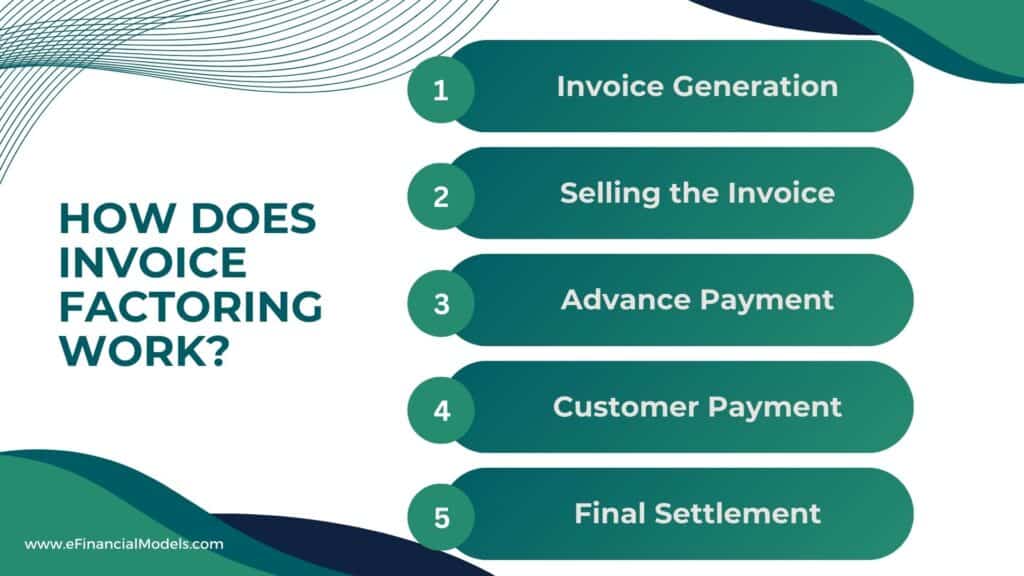
Step 1 – Invoice Generation
A business sells a product or service and sends an invoice to the customer. The invoice includes the amount owed and the due date, often 30, 60, or 90 days later. While waiting for payment, the business may need cash to cover expenses like rent, payroll, or supplies. The factoring process typically begins with the business submitting its outstanding invoices to the factoring company. It can be done easily through an online portal or direct communication with the factor. Once the invoices are submitted, the factor will conduct a quick review to assess the creditworthiness of the business’s customers. This step is crucial, as it helps the factor determine the risk involved in purchasing the invoices.
How does invoice factoring work involve the seller carefully assessing the debtor’s creditworthiness. The approach minimizes risks and ensures smooth transactions before factoring in the invoice. Here’s how the seller evaluates the creditworthiness of the debtor:
- Reviewing Credit Reports: The seller can obtain business credit reports from agencies. These reports provide insights into payment history, credit scores, public records (bankruptcies, liens, judgments), and trade references.
- Checking Payment History: The seller should review the customer’s payment history with their own business. Red flags include frequent late payments, partial payments, or requests for extended terms.
- Trade References: The seller can request trade references from other suppliers who have done business with the customer. Contacting these suppliers provides real-world insights into how promptly the customer pays invoices. Checking for UCC filings, tax liens, lawsuits, or judgments that may indicate financial distress. This information is often available via state business registries, court records, and credit reporting agencies.
- Analyzing Financial Statements: If possible, the seller can request financial statements (balance sheet, income statement, cash flow statement) to evaluate the customer’s liquidity and solvency. Key indicators include the current ratio, quick ratio, and debt-to-equity ratio.
- Reviewing Business Stability and Reputation: Evaluating how long the company has been in business and its industry reputation. How does invoice factoring work also involve searching for customer complaints, negative news, or declining industry trends. Some businesses use trade credit insurance to protect against non-payment.
Step 2 – Selling the Invoice
Instead of waiting for the debtor’s payment, the business sells the invoice to a factoring company at a discount. This means they receive less than the full invoice value but get cash immediately. After a satisfactory evaluation, the factor will extend an advance payment to the business, usually ranging from 70% to 90% of the invoice total, depending on various factors, including the industry and the reliability of the customers. This upfront cash infusion can be a game changer for small businesses, allowing them to stabilize their cash flow.
Step 3 – Advance Payment
Once the factor buys the invoice, they pay the seller a portion upfront—usually 70% to 90% of the invoice total. This step on how does invoice factoring work gives the seller quick access to cash, helping them keep operations running smoothly without waiting for customers to pay. As a seller, the factor quickly gives you most of the money from your invoice. This advance helps you pay bills, buy supplies, or cover payroll without waiting for your customer to pay. Think of it like getting an early paycheck for work you’ve already done. The factor holds the rest until your customer pays the full amount.
Step 4 – Customer Payment
The customer pays the factor instead of the business. Once the invoice is due, the customer sends the full payment directly to the factoring company. This step ensures the factor recovers the advance it gave earlier. If the customer pays on time, the process runs smoothly. However, if they delay, the factor may charge fees.
The business/factor should communicate well with the customer/debtor and the factor to avoid issues. The factor informs the customer about the payment change. When the business sells an invoice, the factor sends a notice of assignment. This document tells the customer to pay the factor directly instead of the business. The invoice may also include clear instructions showing the factor’s payment details. Some factoring companies follow up with reminders to ensure the customer understands. This process helps prevent confusion and delays.
Step 5 – Final Payment
The factor will release the remaining balance to the seller minus a factoring fee upon receiving payment. The factoring company takes its fees from the collected invoice amount. These fees cover their service and the risk they take. After that, they send the remaining money to the business. This final payment is called the “reserve release.” It ensures the business gets the full value of the invoice minus costs. Once this step is done, the transaction is complete. Again, please note that small business factoring comes with costs. The main fee is a percentage of the invoice, usually 1% to 5%. Some factors charge extra for quick payments or handling many invoices. There may also be fees for late customer payments or early contract cancellations. These charges add up, so businesses must check the terms before signing.
Overall, factoring can be a straightforward and effective way for small businesses to enhance cash flow and ensure they have the necessary funds to keep operations running smoothly. By understanding the steps involved in the factoring process, business owners can make informed decisions about whether this financial solution fits their needs.
Potential Risks and Considerations of Invoice Factoring Services
While invoice factoring services provide immediate relief, it’s not always the best long-term solution. Understanding the risks helps businesses decide if it’s a smart move or a costly habit.
Invoice factoring gives businesses quick cash, but it isn’t free. Factoring companies charge fees between 1% and 5% of the invoice amount. That might not sound like much, but the costs increase over time. A business that relies too much on factoring can lose much of its revenue. Instead of keeping all the money customers owe, they end up paying for the convenience of getting paid faster.
Bringing a factoring company into the mix can change how customers see a business. Some clients prefer dealing directly with the company they buy from, not a third party collecting payments. If a factoring company applies too much pressure, customers may feel uncomfortable or take their business elsewhere. Trust and strong relationships matter, so businesses must consider how factoring might affect those connections.
Not every business can use invoice factoring. Factoring companies don’t just look at the business itself—they check the creditworthiness of their customers. If customers have a history of late payments or financial struggles, the factoring company may reject the application or charge higher fees. A business with unreliable clients may find it harder to get approved, limiting its options.
Financial Modeling in Factoring: Smarter Cash Flow Management
Small business factoring turns unpaid invoices into quick cash, helping businesses manage cash flow without taking on debt. It provides immediate liquidity, allowing companies to cover expenses, invest in growth, and avoid financial strain caused by slow-paying customers. Factoring companies advance most of the invoice value upfront and collect payments from customers, deducting a small fee before releasing the remaining balance. While factoring improves cash flow, businesses must consider costs, customer relationships, and contract terms.
Financial modeling helps businesses use factoring wisely by forecasting cash flow, calculating costs, and comparing financing options. It shows how factoring impacts profitability and helps avoid over-reliance on short-term funding. Businesses can choose the best factoring strategy by analyzing different scenarios while keeping expenses low. Clear financial models also improve decision-making, ensuring companies maintain steady cash flow without unnecessary risks. Smart cash flow management through financial modeling makes factoring a more effective tool for growth.
Optimize cash flow with smart factoring!










































You might also like:
- 10 Ideas to Increase Average Revenue Per User
- 12 Funding Sources for Businesses and Startups
- 5 Practical Tips to Help Raise Funds For Startups
- Boost Your Business’s Financial Management with this Excel Budget Template
- Cash Flow Statement: Streamline Financial Success
- How Does the Equity Accounting Method Work?
- How to Build a Capitalization Table
- 5-year Financial Projections
- Cash Flow Analysis
- E-Commerce & Web Shops
- Financial Planning for Small Business Owners – Taking an SBA Loan
- Finding the Balance in Your Optimal Capital Structure
- How to Secure Seed Financing?
- How to Start a Construction Machinery Rental
- How to Prepare a Financial Feasibility Study?
- Financial Ratios Cheat Sheet
- Top 5 Principles of Corporate Finance
- The Purpose of a Financial Model
- Why Should You Use Excel for Financial Modeling?
- Financial Services
Tags: Debt Financing