0 ITEMS

Streamlining Your Accounts Payable Process Flow: Best Practices for Efficiency

As a business owner, managing your accounts payable process flow can be challenging. It takes time, effort, and attention to detail to ensure that all your bills are paid on time and accurately. But with some best practices in place, you can streamline your accounts payable process flow and make it more efficient. Nevertheless, understanding, optimizing, and streamlining your accounts payable process can be a game-changer for your organization. This article will delve deep into accounts payable (AP), exploring what it is, why it’s essential to manage it efficiently, and how to streamline the AP process through best practices.
Understanding Accounts Payable
Accounts payable, often abbreviated as AP, is a fundamental component of a company’s financial framework. It refers to the money a business owes to its suppliers, vendors, and creditors for goods and services received but still needs to be paid for. Essentially, it represents a company’s short-term liabilities in the balance sheet.
Here is a brief list of items that we can find under Accounts Payable:
- Accruals: Estimated expenses that have not been billed yet but are recognized as liabilities, such as warranty obligations.
- Accrued Expenses: Costs incurred but not billed, such as salaries, taxes, or interest.
- Bills: Various bills, such as utility bills, rent, and lease payments, are due but still need to be paid.
- Credit Memos: Any credit notes or supplier refunds for returned or damaged goods.
- Expense Reports: Reimbursements owed to employees for expenses they’ve incurred on behalf of the company.
- Interest Payable: Interest that has accrued on outstanding loans or credit lines.
- Outstanding Loans: Amounts owed to lenders or financial institutions for loans or lines of credit.
- Purchase Orders: Amounts associated with outstanding purchase orders that the supplier still needs to invoice.
- Supplier Invoices: Unpaid invoices from suppliers for goods or services delivered to the company.
- Taxes Payable: Unpaid taxes owed to government authorities, such as sales or payroll taxes.
- Trade Payables: The total outstanding balance for regular business transactions with suppliers.
- Unapplied Cash: Payments received from customers or made to suppliers must still be matched to specific invoices or bills.
These are some everyday items you might find under Accounts Payable, but the specific items can vary depending on the nature of the business and its financial activities.

Why is It Important to Manage Accounts Payable?
Managing accounts payable is crucial for the financial health and operational efficiency of a business for several reasons:
- Cash Flow Forecasting: Accounts payable data is valuable for cash flow forecasting. It allows a business to predict when and how much it needs to pay its bills, which is essential for short-term and long-term financial planning.
- Cash Flow Management: Effective accounts payable management helps a company optimize its cash flow. By paying bills on time and negotiating favorable payment terms, a business can ensure it has enough cash on hand to cover its expenses and take advantage of growth opportunities.
- Compliance: Proper accounts payable management ensures compliance with tax regulations, accounting standards, and contractual obligations. Failure to comply can result in fines, legal issues, or damage to the company’s reputation.
- Cost Control: Tracking and analyzing accounts payable can reveal cost control and savings opportunities. A business can take corrective actions to reduce costs by identifying areas of overspending or inefficiencies. Furthermore, managing accounts payable helps prevent late payments and the associated late fees and penalties.
- Creditworthiness: Consistently managing accounts payable demonstrates a company’s creditworthiness to creditors and lenders. It can help secure loans or credit lines at favorable interest rates and terms.
- Supplier Relationships: Timely and accurate supplier payments build trust and strong relationships. Good relationships with suppliers can lead to better terms, discounts, and preferential treatment, ultimately reducing costs and improving the availability of goods and services.

The Accounts Payable Process Flow
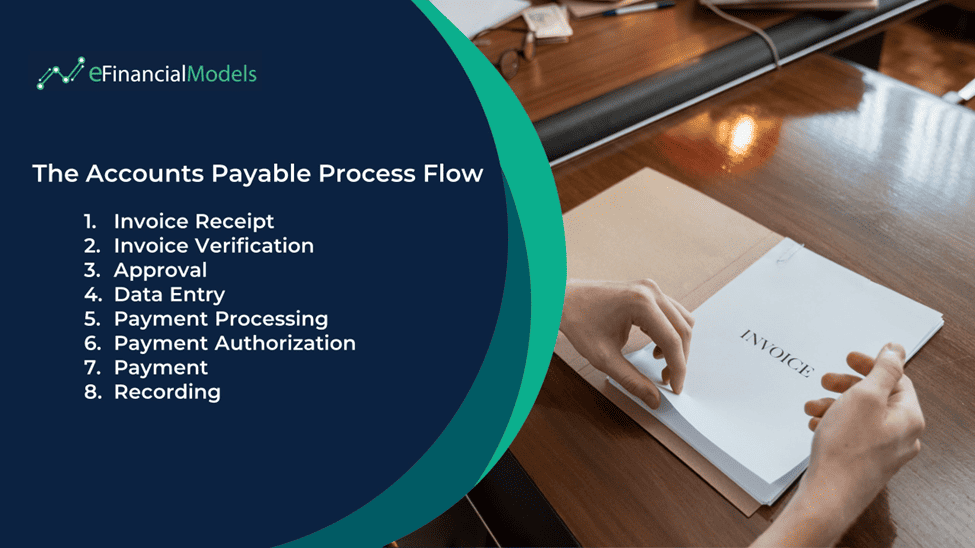
The accounts payable process flow involves several steps, from receiving an invoice to payment. Here’s a simplified overview of the typical AP process flow:
- Invoice Receipt: The process begins when a business receives an invoice from a supplier. It can be a physical document or an electronic invoice.
- Invoice Verification: Accounts payable personnel review the invoice to ensure its accuracy. It includes checking for discrepancies, matching them with purchase orders and receipts, and confirming that the goods or services were received as specified.
- Approval: Once the invoice is verified, it may need approval from relevant departments or individuals within the organization. This step helps ensure the expenditure aligns with the company’s budget and policies.
- Data Entry: The invoice details are entered into the accounting system after approval. It includes recording the invoice date, amount, payment terms, and other relevant information.
- Payment Processing: The AP team schedules the payment based on the payment terms. It can involve issuing a check, initiating a bank transfer, or using electronic payment methods.
- Payment Authorization: Some organizations require additional authorization before making payments. This step may involve cross-checking invoices and ensuring all necessary approvals are in place.
- Payment: The payment is made to the supplier per the agreed terms. It could be a one-time payment or part of a recurring payment schedule.
- Recording: All documentation related to the invoice and payment is filed for future reference. It includes copies of invoices, receipts, and payment confirmations.
Accounts Payable Process Improvement: Best Practices
Accounts payable process improvement can increase efficiency, reduce costs, and improve supplier relationships. Here are eight best practices for your accounts payable process improvement:
Consolidate Data in a Central Repository
One of the primary challenges in AP management is scattered data. Invoices, receipts, and approvals can end up in various departments or folders, leading to inefficiencies and errors. Establish a central repository or an electronic document management system to streamline the process. It allows easy access to all AP-related documents, ensuring everything is noticed.
Chase Early Payment Discounts
Many suppliers offer discounts for early payments to encourage prompt settlement of invoices. Take advantage of these discounts whenever possible. Monitor your payment terms and due dates closely, and make payments early when it makes financial sense. It not only saves money but also strengthens your relationship with suppliers.
Negotiate Better Payment Terms with Suppliers
Feel free to negotiate payment terms with your suppliers. Longer payment terms can give you more time to manage your cash flow effectively. However, be cautious not to strain your supplier relationships in the process. Effective communication and mutual understanding are key to successful negotiations.
Prioritize Invoices by Due Dates & Payment Terms
Not all invoices are created equal. Prioritize payments based on due dates and payment terms. Focus on settling invoices with early payment discounts or those with shorter payment terms to optimize cash flow. Automated AP software can help you set up reminders for payment deadlines.
Reduce the Number of Check Runs
Processing paper checks can be time-consuming and costly. Whenever possible, transition to electronic payments. Electronic funds transfers (EFTs) and automated clearing house (ACH) payments are faster and more cost-effective than writing and mailing paper checks. It reduces processing time and minimizes the risk of errors.
Set Up Reminders
Late payments can lead to penalties and strained supplier relationships. Implement a system of reminders for due dates and approval processes. Automation can help you alert relevant personnel, ensuring that invoices are paid on time.
Standardize Payment Authorization
Establish transparent and standardized procedures for payment authorization. Define who has the authority to approve payments and under what conditions. It helps prevent unauthorized payments and ensures compliance with internal controls and regulations.
Track Your Invoices
Comprehensive invoice tracking is essential for AP management. Utilize software or tools that allow you to monitor the status of invoices throughout the approval and payment process. This transparency helps you identify bottlenecks and take corrective actions promptly.

Final Thoughts
In conclusion, aiming for accounts payable process improvement is not just a matter of efficiency; it’s a strategic move that can positively impact your company’s financial health and relationships with suppliers. By understanding the importance of AP management, comprehending the AP process flow, and implementing best practices, you can optimize your AP operations and reap the benefits of improved cash flow, cost savings, and enhanced supplier relationships.
Financial modeling can be a powerful tool in streamlining your accounts payable process flow. By leveraging data-driven insights and predictive analytics, organizations can gain a deeper understanding of their cash flows, vendor relationships, and payment patterns. It allows for more efficient allocation of resources, optimized payment schedules, and enhanced cash management. As businesses evolve in an increasingly competitive landscape, adopting financial modeling can prove instrumental in ensuring financial stability and success.