
0 ITEMS

Understanding Insurance Policies: A Beginner’s Guide


Understanding insurance policies is essential for making informed decisions about financial protection.
- Insurance acts as a legal agreement to protect against potential financial losses from risks like damage, theft, or liability.
- It involves three main parties: the insurer, the policyholder, and the insured, each with distinct roles and responsibilities.
- Key components of an insurance policy include declarations, coverage, conditions, premiums, deductibles, and policy limits.
- There are many types of insurance, such as auto, health, property, life, and cyber attack insurance, each tailored to specific risks.
- Using an insurance cost worksheet helps compare policies effectively, balancing coverage features and costs.
Continue reading to understand how different policies work and how to choose the right coverage for your needs.
What is an Insurance Policy?
An insurance policy is a legal method of safeguarding against financial loss. Essentially, it is a protective tool that helps individuals and organizations manage the risk of financial uncertainty. By transferring the financial risk of potential losses from an individual to a larger entity, typically an insurance company, the policyholder gains security and peace of mind, knowing that they are protected under the terms of the law. The essence of an insurance policy is that it is a contract between the policyholder and the insurance company. This contract, referred to as the policy, outlines the conditions under which the insurer agrees to protect the policyholder financially. In return for paying premiums, the policyholder receives assurances of financial reimbursement or compensation against specific losses. These can range from minor incidents to significant financial burdens, depending on the terms specified within the policy.
Insurance also functions as a financial intermediary within the broader financial services industry. As a commercial enterprise, insurance companies collect premiums from a vast pool of insured parties, known as exposures. This pool of funds is then utilized to cover the losses of the insured entities that actually experience the insured events. This process allows the risk of loss to be spread across a large group, thereby reducing the financial impact on any single entity when a loss does occur. This model of pooling risk is fundamental to the insurance business, enabling it to operate sustainably and effectively.
Parties Involved in Insurance Agreements
In insurance policies, three main parties are involved: the insurer, the policyholder, and the insured. Each plays a distinct role in the agreement, with the insurer providing the coverage, the policyholder purchasing the policy, and the insured being the entity covered by the policy.
- An insurer, insurance company, insurance carrier, or underwriter is the one that offers insurance coverage. They are typically corporations licensed and regulated by governmental bodies to provide insurance products. The insurer assesses risk, determines the pricing of policies, writes the terms of the insurance contracts, and assumes the financial risk associated with the policies issued. In return for taking on this risk, the insurer receives premiums from the policyholders.
- The policyholder is the individual or entity that purchases the insurance policy. Policyholders pay premiums to the insurer in exchange for the coverage stipulated in the insurance contract. This party is responsible for ensuring that the premiums are paid on time and for complying with the insurance policy terms. The policyholder can be an individual, a company, or an organization that seeks to mitigate financial risks through insurance.
- The insured is the person or entity covered by the insurance policy. Sometimes, the policyholder and the insured can be the same person or entity, but not always. For example, a business might purchase health care insurance for its employees; the company is the policyholder, and the employees are the insured. The insured benefits from the insurance coverage protection, which provides financial relief or compensation in case of specific losses or damages defined in the policy.






















































Primary Components of Insurance Policies
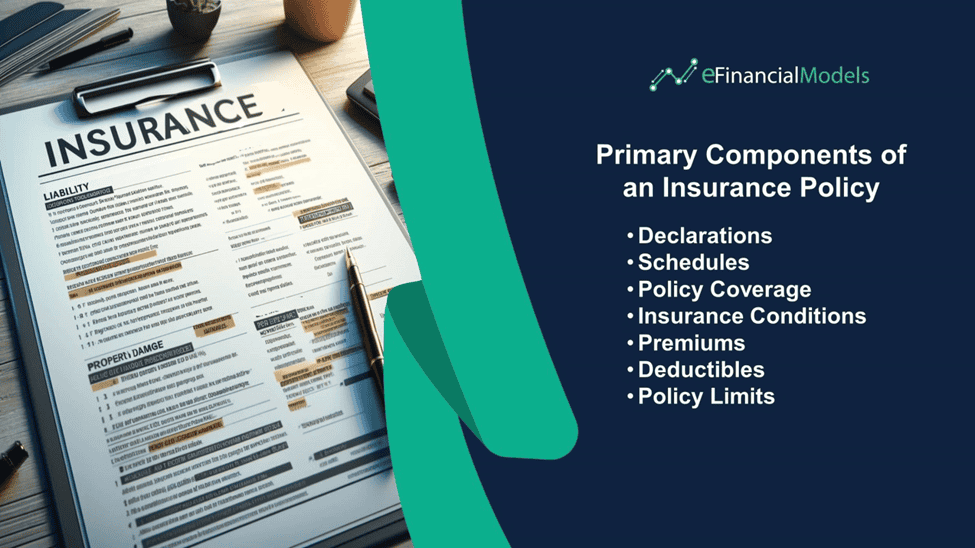
An insurance policy is a contract between an insured party and an insurer to provide financial protection against potential risks and losses. This document is structured through several key components that define and regulate the terms of coverage. The primary components of an insurance policy include the following:
- Declarations: The declarations page is often considered the first among the primary components of an insurance policy. It specifies the policy’s who, what, when, and where. It lists the insured’s name and address, the policy term (duration), the insurance company, what risks or properties are covered, the policy limits, and the premium amount. It provides a quick overview of the policy’s key elements explicitly tailored to the individual policyholder.
- Schedules: Schedules are used in insurance policies to provide detailed lists relevant to the coverage. These can include lists of insured properties, covered items, or specific conditions for particular policy sections. Schedules are critical in policies covering multiple assets or locations, as they clarify which particular items or properties are covered and often detail the types of coverage applicable to each.
- Policy Coverage is one of the most essential components of an insurance policy. It outlines what the insurance company agrees to cover in the case of loss. It defines the risks and perils insured against, such as fire, theft, or water damage. Policy coverage can be very broad or narrowly defined, depending on the insured’s needs and the policy type. This section is crucial as it states explicitly what is insured and often, by implication, what is excluded.
- Insurance Conditions: These stipulations within the policy specify the obligations of the insurer and the insured. Conditions may include providing proof of loss, protecting the property after damage to mitigate further loss, or reporting coverage changes. Compliance with these conditions is necessary for the coverage to be valid and for claims to be paid.
- Premiums: The premium is the amount the policyholder pays in exchange for insurance coverage. This section details how much is to be paid, how often, and the consequences of non-payment. Premiums can vary based on the level of coverage, the insured’s risk profile, the policy term, and other factors determined by the insurer. Payment of premiums on time is crucial to maintaining the validity of the insurance.
- Deductibles: A deductible is the amount the insured must pay out-of-pocket before the insurance coverage kicks in. This section describes the deductible amount and how it applies to various claims. Deductibles can vary greatly depending on the policy and the insured’s preferences; choosing a higher deductible can lower the premium cost but increase out-of-pocket expenses in case of a claim.
- Policy Limits: This part specifies the maximum amount the insurance company will pay in the event of a claim. Policy limits can be set per occurrence, per year, or other defined period and can differ by type of coverage within the policy. Understanding policy limits is crucial as it determines the potential out-of-pocket costs the insured might face if the damages exceed these limits.
Together, the primary components of an insurance policy form the backbone of the policy, each crucially delineating the scope and limitations of the coverage provided. Each plays a vital role in defining the insurance policy’s coverage, cost, conditions, and limitations, shaping the protection it offers and all parties’ obligations.
Different Types of Insurance Policies
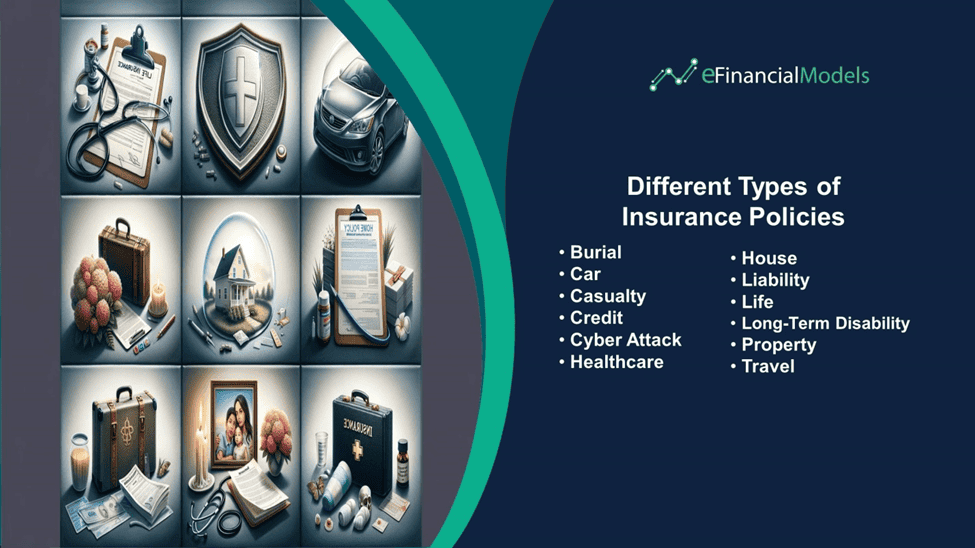
A diverse range of different types of insurance policies cater to the needs of both individuals and businesses. Consequently, while insurance is broadly accessible, the premiums charged by insurers reflect the complexity and likelihood of the risk they are undertaking. This system allows insurance companies to offer plans that provide financial protection and peace of mind, though at varying costs to the insured.
- Burial Insurance: Burial insurance, also known as funeral or final expense insurance, is designed to cover the specific costs associated with one’s funeral and burial services. This type of policy helps alleviate the financial burden on surviving family members by ensuring that the expenses related to a funeral, such as the service, casket, and burial plot, are pre-funded. These policies are generally small regarding the death benefit and often do not require a medical exam for qualification.
- Car Insurance: Car insurance is mandatory in most places and protects drivers from financial losses in the event of an accident or theft. Policies can cover various aspects, including liability for bodily injury and property damage, damage to the insured vehicle, and any medical expenses resulting from injuries. Premiums may vary based on the driver’s history, the type of car insured, and the level of coverage chosen.
- Casualty Insurance: Casualty insurance is a broad category primarily covering losses from accidents or mishaps, excluding those covered under life insurance. This type includes a variety of policies, such as workers’ compensation (covering workplace injury) and liability insurance. It protects individuals and businesses from high-cost legal liability implications and other accidental losses.
- Credit Insurance: Credit insurance protects creditors, such as banks or other financial institutions, against the risk of a borrower’s inability to repay loans and debts for various reasons, such as death, disability, or job loss. This insurance can benefit both the lender and the borrower, providing peace of mind and enhancing loan approval chances for higher-risk borrowers.
- Cyber Attack Insurance: In the digital age, cyber attack insurance has become essential for businesses. This policy covers losses from data breaches or IT systems and network attacks. Coverage can include data recovery costs, legal fees, and customer notification expenses, among other things. As cyber threats evolve, so do the policies designed to mitigate these risks.
- Healthcare Insurance: Healthcare insurance covers medical expenses associated with sickness or injury. Policies can offer a range of coverages, from routine visits to specialist consultations and emergency medical treatments. This insurance helps individuals manage high healthcare costs and often includes preventive care, which can mitigate long-term health expenses.
- House Insurance: House insurance, commonly called homeowners’ insurance, provides financial protection against disasters, theft, and accidents that may occur in and around the home. Coverage typically includes:
- The house structure.
- Personal belongings within the home.
- Liability protection against accidents in the home or on the property.
- Liability Insurance: Liability insurance is crucial for individuals and businesses as it covers legal liabilities towards third parties. This type of insurance helps cover legal costs and payouts for which the insured might be responsible if found legally liable. Examples include general liability insurance, professional liability insurance, and directors and officers liability insurance.
- Life Insurance: Life insurance offers financial support to the insured’s beneficiaries after their death. Policies can be term (covering a specific period) or permanent (offering lifelong coverage), and they can also provide a cash value component, which can be a source of savings or loan collateral.
- Long-Term Disability Insurance: Long-term disability insurance provides income replacement to individuals who become disabled and cannot work for an extended period. This type of insurance ensures financial stability by covering a portion of the insured’s earnings during the disability period.
- Property Insurance: Property insurance protects against risks to property, such as fire, theft, and weather damage. It includes specialized forms like flood or earthquake insurance and is essential for personal property, like homes, and commercial properties, like office buildings.
- Travel Insurance: Travel insurance covers the financial risks of traveling, such as trip cancellation, lost luggage, travel delays, and medical emergencies abroad. This insurance is precious for those traveling to foreign countries where they might need access to their usual medical services or their regular health insurance might not provide coverage.
The different types of insurance policies ensure that almost anyone can secure insurance coverage tailored to their risks and liabilities. However, the cost of these policies can vary significantly based on the level of risk involved, the amount of coverage desired, and the insurance company’s assessment of the potential for claims.
Simplify Decisions and Maximize Value Using an Insurance Cost Worksheet
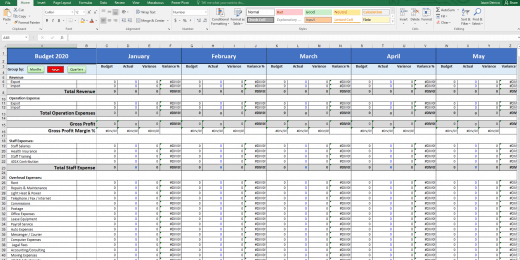
Understanding the nuances and ensuring you make the most informed decision is crucial for a beginner navigating the complex world of insurance policies. Financial modeling and tools like an insurance cost worksheet can be invaluable. An insurance cost worksheet is an effective way to pick the right insurance policy by providing a structured approach to compare different options. It typically includes columns for premiums, deductibles, coverage limits, and other relevant costs associated with each policy.
To use an insurance cost worksheet effectively, list potential insurance policies that meet your basic needs. Then, fill in the details for each policy in the corresponding columns. This visual representation allows you to compare each option’s financial aspects directly. Pay particular attention to the total cost of the policy’s life and any value-added features or exclusions that could impact your decision. By assessing these details, an insurance cost worksheet aids in making an informed choice that balances cost with coverage, ensuring you select the most suitable policy for your circumstances.
Together, this financial modeling tool makes the selection process more manageable and ensures that you maximize the value of your insurance investment, securing your financial future effectively.























You might also like:
- 5 Practical Tips to Help Raise Funds For Startups
- 10-Step Financial Planning Checklist for Smart Executives
- 12 Funding Sources for Businesses and Startups
- Calculating Revenue Growth Rate: A Key Metric for Business Success
- Financial Modeling for Startups and Small Businesses
- Funding
- 10-year Financial Projections
- Insurance
- Business Valuation
- Do You Need an Investment Proposal Template in Excel?
- How to Effectively Read a Company’s Annual Report
- Understanding the Debt Service Coverage Ratio: An Essential Metric for Financial Analysis
- Top 5 Tips For a Good Financial Due Diligence
- Creating a Business Plan for your Food Truck Business
- Streamline Your Project Management with Excel: Top 10 Templates to Boost Productivity
- How to Value a Business Using a Discounted Cash Flow Model
- Thinking Of Closing Down A Business? What Happens Next?
- Cash Flow Analysis
- Scenario Analysis
- Financial Ratios Cheat Sheet