
0 ITEMS

4 Best Strategies for Risk-Averse Investing

In 2008, during the global financial crisis, Procter & Gamble (P&G) avoided the worst losses by sticking to conservative investing. Instead of betting on volatile ventures, P&G focused on steady cash flows, low-risk bonds, and well-diversified funds. While others panicked, their stable returns kept investors confident. This real-world example shows how risk-averse investing shields capital during chaos. Risk-averse investing has become more important than ever for those seeking to protect their wealth while still achieving steady growth. Whether you’re a cautious beginner or a seasoned investor looking to minimize volatility, understanding the right strategies can make all the difference.
This comprehensive guide explores four key strategies that help you navigate the market safely and the essential formula that underpins successful risk-averse investing.
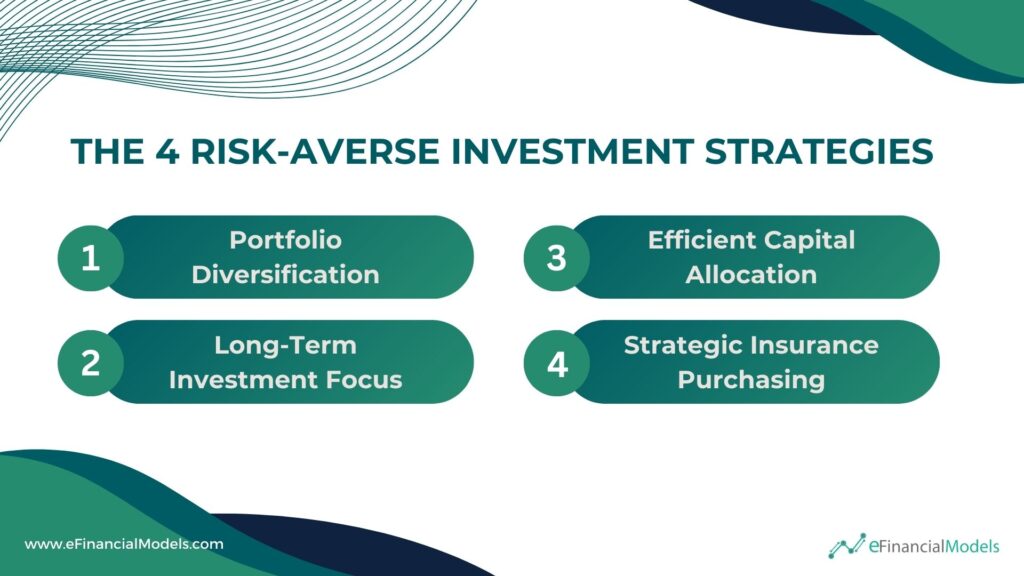
- Portfolio Diversification: Spreading investments across various asset classes helps reduce the impact of any single investment’s poor performance on the overall portfolio.
- Long-Term Investment Focus: Committing to long-term investments minimizes the emotional reaction to short-term market volatility and enhances the potential for stable returns.
- Insurance Purchasing: Buying insurance for investments or assets safeguards against unforeseen financial losses and provides peace of mind.
- Efficient Capital Allocation: Directing funds toward high-quality, low-risk opportunities ensures optimal use of resources while minimizing exposure to potential losses.
Get ready to build a resilient portfolio that balances safety and smart returns so you can invest with confidence no matter what the market throws your way.
What is Risk-Averse Investing?
Risk-averse investing is an investment approach centered around minimizing potential losses while aiming for steady, reliable returns. Unlike more aggressive investment approaches that seek higher gains through greater risk exposure, risk-averse investors prioritize the preservation of capital and long-term financial stability.
Risk-averse investing means choosing safer investments over high-risk, high-reward options. The goal is to protect the capital investment and avoid big losses. It doesn’t mean avoiding all risks—it means managing them wisely. It means recognizing the balance between risk and reward and making informed decisions aligning with your financial goals and risk tolerance.
Risk-verse investments may grow slowly, but they offer more stability. Their main goal is to grow wealth with as little risk as possible. By embracing this cautious approach, investors can navigate market uncertainties more confidently, reducing stress and enhancing the likelihood of preserving wealth across economic cycles.

Common Traits of Risk-Averse Investing
Risk-averse investing focuses on protecting money first. Investors who follow this approach avoid big risks and look for steady returns. They prefer stable assets that don’t swing wildly in value. This style aims to grow wealth slowly while keeping stress and losses low. It’s all about making careful choices that match long-term goals.
- Capital Preservation: Risk-averse investors aim to keep their money safe. They avoid choices that could cause big losses. The focus stays on protecting the original investment. Even if returns are smaller, safety comes first. It’s a cautious way to build wealth.
- Low-Volatility Assets: Investors choose assets that don’t change much in value. They favor stable options like bonds or index funds. These assets offer predictable returns with fewer surprises. This reduces the impact of market swings. It helps investors stay calm and steady.
- Long-Term Focus: Risk-averse investing plays the long game. The goal is slow, steady growth over time. Investors stick to a plan and avoid short-term noise. Patience matters more than chasing fast profits. This approach builds lasting financial security.

Risk Aversion Examples in Financial Decision-Making
Behind each risk-averse investment move is a desire to avoid losses rather than chase profits. Understanding this mindset helps explain market trends, cautious investment strategies, and why some avoid opportunities that seem too uncertain. Risk aversion isn’t just theory—it plays out daily in how individuals and businesses manage money and protect their futures. Below are some common risk-aversion examples:
- Financial Institutions: Banks often show risk aversion by tightening lending during uncertain times. Instead of approving loans to riskier borrowers, they raise standards and stick with safe bets. This risk-aversion example helps protect their capital and avoid defaults. It also shows how fear of loss shapes their day-to-day choices.
- Healthcare: Hospitals may delay adopting new treatments if the long-term outcomes are unclear. Even if a new method shows promise, they stick with proven ones to avoid potential patient harm. This cautious approach reflects a strong drive to reduce risk in life-or-death situations.
- Insurance Industry: Insurers rely on risk aversion when setting premiums. They collect data, assess potential losses, and charge more for uncertain policies. By doing so, they protect their funds and ensure claims don’t outweigh collected premiums.
- Pharmaceuticals: Drug companies often invest in treatments with predictable results rather than chasing unproven ideas. Even if innovation offers bigger rewards, they lean toward projects with known safety profiles and approval paths. It’s a strategy built on managing risk while staying profitable.
- Utilities Sector: Utility firms avoid high-risk tech upgrades unless benefits outweigh the costs. They prefer stable, long-term investments like infrastructure repair over experimental systems. This risk-aversion example helps maintain service reliability and reduce financial surprises.





















































The 4 Risk-Averse Investment Strategies
Playing it safe with your money doesn’t mean settling for less—it means investing smart. Risk-averse investors look for ways to grow wealth while keeping potential losses low. Whether markets are calm or volatile, these investors focus on steady returns, not quick wins. Their strategy leans on patience, discipline, and choosing options that protect their capital. It’s a thoughtful approach that helps them sleep better at night, knowing their money is working with caution and care.
Strategy 1 – Portfolio Diversification to Minimize Risk
One of the cornerstone risk-averse investment strategies is diversification. It involves spreading your investments across a variety of asset classes, industries, and geographic regions to reduce exposure to any single source of risk. Not putting all your eggs in one basket protects your portfolio from significant losses if one investment performs poorly.
For example, combining stocks, bonds, real estate, and even cash equivalents in your portfolio can balance potential risks and returns. While stocks offer growth potential, bonds typically provide more stability and income, helping to cushion your portfolio during market downturns. Additionally, investing across different sectors—like technology, healthcare, and consumer goods—and varying geographical markets can further minimize the impact of localized economic events or industry-specific setbacks.
Diversification doesn’t guarantee against loss, but it’s a powerful risk management tool that can help smooth out volatility and preserve your capital over the long term. When crafting a diversified portfolio, consider your investment goals, risk tolerance, and time horizon to find the right balance that fits your unique financial situation.
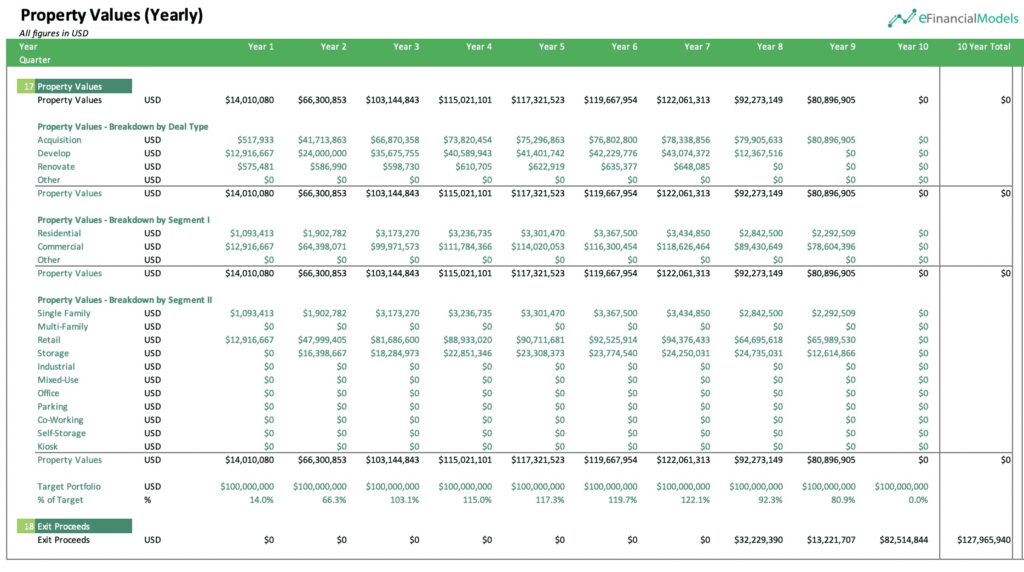
The table above is from our Real Estate Portfolio Financial Model. It helps risk-averse investors spread their money across different deal types, property segments, and asset classes. For example, in Year 1, $14M goes mostly to development and retail, while by Year 5, over $117M is more evenly spread across acquisitions, renovations, retail, and storage. It shows how investments shift yearly—minimizing risk by avoiding overexposure to one type. The target is a $100M portfolio, and by Year 7, it reaches 122.1% of that. This mix portfolio strategies, from early growth to long-term stability, makes the model a clear roadmap for safer, diversified investing.
Strategy 2 – Emphasizing Long-Term Investment Horizons
One of the most effective risk-averse investment strategies is to focus on long-term investment horizons. By adopting a long-term perspective, you can ride out short-term market fluctuations and reduce the impact of volatility on your portfolio. This approach allows your investments to benefit from the power of compound annual growth rate (CAGR), where returns are reinvested to generate their returns over time.
Long-term investing encourages patience and discipline, helping you avoid impulsive decisions driven by market noise or temporary downturns. It also aligns well with conservative assets such as bonds, dividend-paying stocks, and index funds, which tend to provide steady returns over extended periods. By staying committed to your investment plan and resisting the urge to react to daily market swings, you increase the likelihood of achieving stable, consistent growth while minimizing unnecessary risk.
Incorporating a long-term horizon into your risk-averse strategy means setting realistic goals, regularly reviewing your portfolio to ensure it remains aligned with your risk tolerance, and maintaining a diversified asset allocation. This steadfast approach preserves capital and builds wealth steadily, making it a cornerstone of prudent, risk-averse investing.
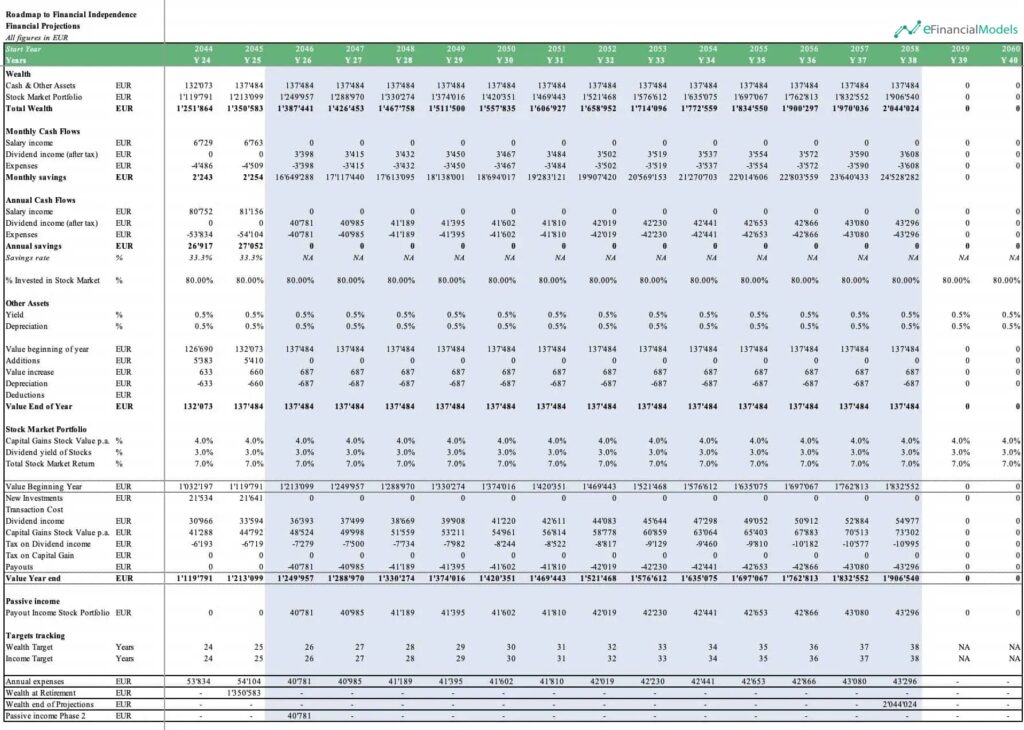
The financial projections table above is from our Dividend Passive Income Model. It visually emphasizes the benefits of a long-term investment horizon for risk-averse investments. This illustrates consistent wealth growth and steady income from dividends over decades. Starting with a stock portfolio of €1.1 million in 2044, the model projects to reach over €2 million by 2059—nearly doubling in value. Despite no new salary from 2047 onward, the portfolio continues to generate rising dividend income—from €36,393 in 2047 to €43,296 in 2059. This income covers increasing annual expenses and provides a stable, predictable cash flow stream without the need to sell assets. It reinforces a core principle of risk-averse investing: focus on safe, compounding returns from dividend-paying stocks and reinvestments to preserve capital while gradually building passive income.
Strategy 3 – Efficient Capital Allocation
Efficient capital allocation is a cornerstone of risk-averse investing. This strategy involves thoughtfully distributing your investment funds across various assets or projects to maximize returns while minimizing exposure to unnecessary risk. Efficient capital allocation cushions your portfolio against market volatility and positions you to capitalize on opportunities in different market areas.
To implement this risk-averse investment strategy effectively, it’s essential to assess each potential investment’s risk and return profile and allocate capital accordingly. Prioritize investments with stable returns, while maintaining a balanced portion in growth-oriented assets and projects for potential appreciation.
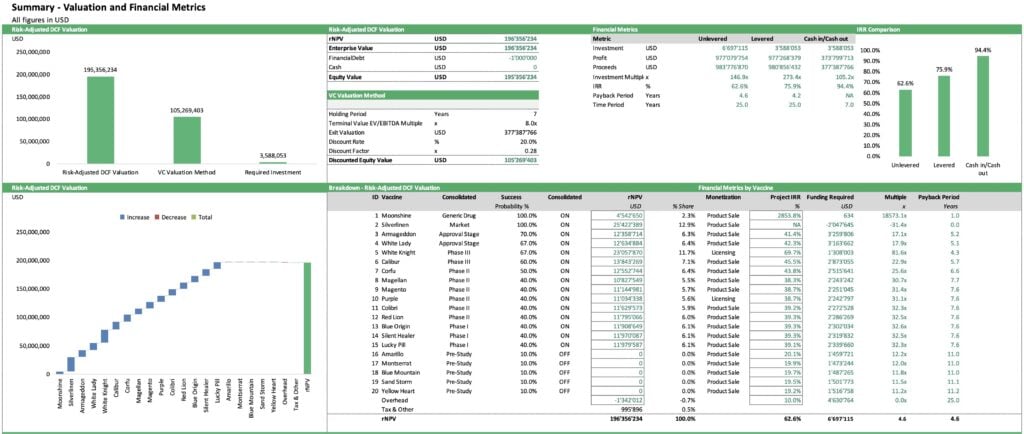
The table above is from our Pharma Biotech Valuation Model Template. It supports efficient capital allocation for risk aversion by assigning success probabilities to each vaccine project and funding only those with strong risk-adjusted returns. For example, “Moonshine” and “Silverinren,” with 100% success rates, receive full backing, while early-stage projects like “Blue Mountain” or “Sand Storm” (10% success) get no funding, preserving capital.
Strategy 4 – Strategic Insurance Purchasing
Strategic insurance purchasing is one of the most effective ways to manage risk in your investment portfolio. Insurance acts as a safety net, protecting your assets from unforeseen events that could otherwise lead to significant financial loss. By incorporating insurance products tailored to your specific needs—such as life insurance, disability insurance, or property insurance—you can safeguard your investments and personal wealth against unexpected setbacks.
For risk-averse investors, insurance provides peace of mind and ensures stability in long-term financial planning. For example, investment-linked insurance products combine growth potential with risk protection, offering a balanced approach suited for conservative investors. When selecting insurance policies, assessing your risk exposure, financial goals, and budget is crucial. Opt for coverage that fills gaps in your risk management strategy without overpaying for unnecessary protection. By thoughtfully integrating insurance purchasing into your investment plan, you create a robust defense against volatility and enhance your ability to preserve capital even in uncertain markets.
Secure Your Investments with Data-Driven Models
Risk-averse investing doesn’t mean avoiding growth—it means choosing smarter paths. Diversifying your portfolio spreads risk across different assets. Focusing on the long term helps you ride out short-term market dips. Allocating capital efficiently ensures your money goes where it matters most. And purchasing the right insurance adds a layer of safety. These four strategies protect your investments while keeping your goals in sight.
Financial models turn guesswork into strategy. Before committing capital, they help you test scenarios, forecast returns, and uncover hidden risks. With data guiding your choices, you can fine-tune investments, plan, and make decisions that align with your risk tolerance. It’s not just about numbers—it’s about using insights to protect and grow your wealth confidently.
You might also like:
- 10 Tips to Develop a First Class Business Valuation Report
- 10 Main Elements of a Business Plan
- 10 Ideas to Increase Average Revenue Per User
- 5 Best Practices for Managing Days Receivables
- Understanding the Debt Service Coverage Ratio: An Essential Metric for Financial Analysis
- 10-Step Financial Planning Checklist for Smart Executives
- Financial Planning for Small Business Owners – Taking an SBA Loan
- Investing
- Expense Management
- Scenario Analysis
- Financial Ratios
- Financial Modeling for Startups and Small Businesses
- Financial Forecasting Models by eFinancialModels
- The Top 5 Frameworks for Making Investment Decisions
- How to Use Inflation Projection to Your Advantage
- Risk-Adjusted NPV
- Investment Multiple
- Why Financial Forecasting Models Are Vital for Your Business
- Financial Model for Mobile App | Mobile App Business Plan
- Rooftop Solar Power Plant Template