

0 ITEMS

AI Data Center (Data Centre) Financial Model with Behind-the-Meter Gas Power: Colocation, GPU-as-a-Service, DSCR Debt Sculpting, Canada (Alberta) Levy, US Preset
Annual Excel project-finance model for an AI data center (data centre) with its own behind-the-meter gas power plant: grid, hybrid or off-grid supply, three generation technologies, colocation lease roll or GPU-as-a-Service, bitcoin mining fallback, itemized capital cost, debt sculpted to a target DSCR, DSRA, LLCR and PLCR, the Alberta data centre levy, three statements and live sensitivities. Presets for Canada (Alberta) and the United States (Texas). Two editions and a free PDF demo.
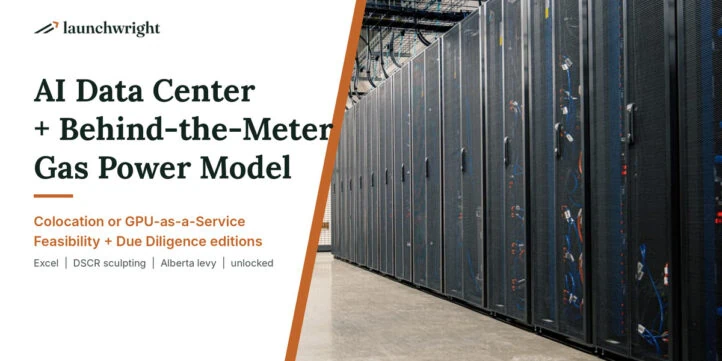
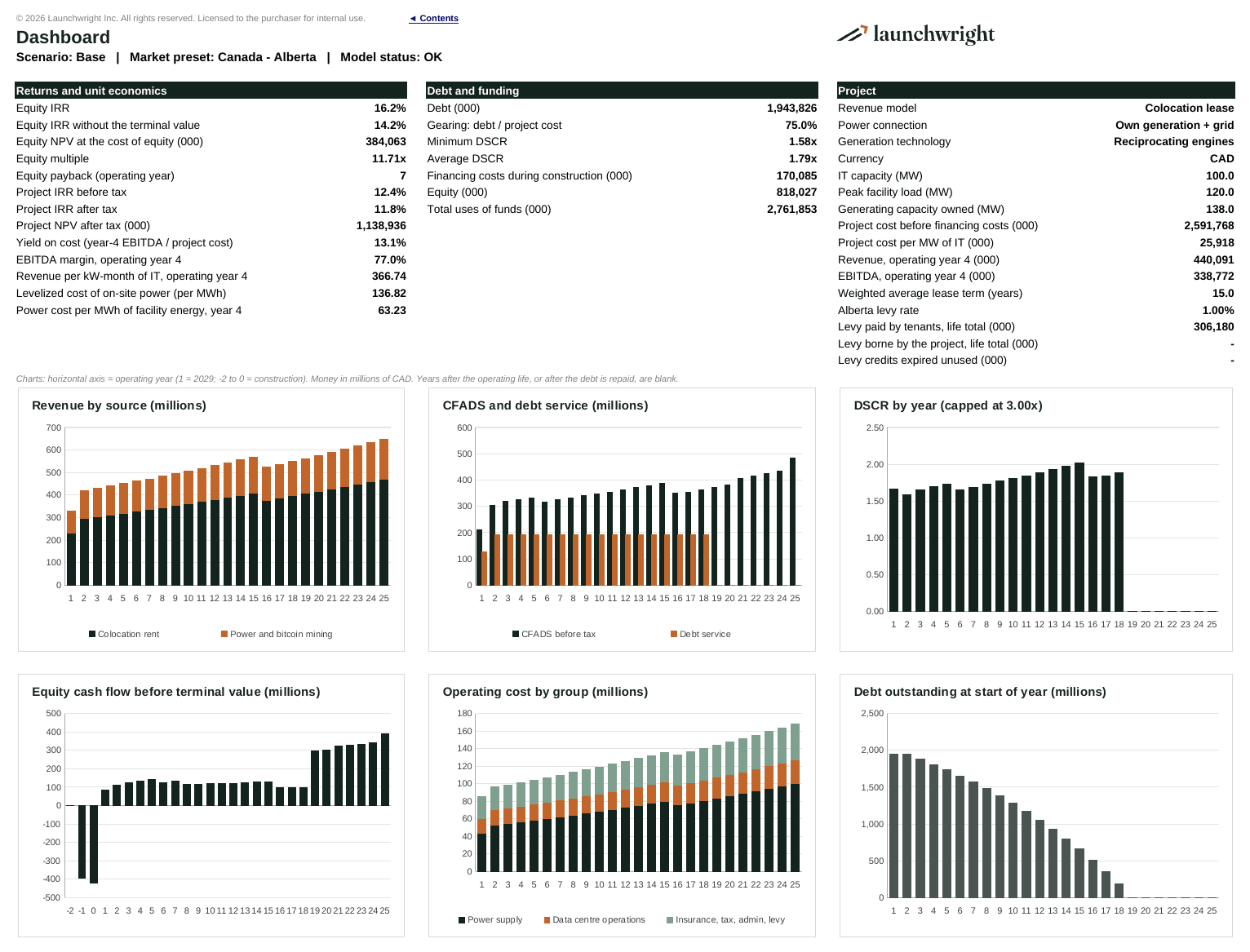
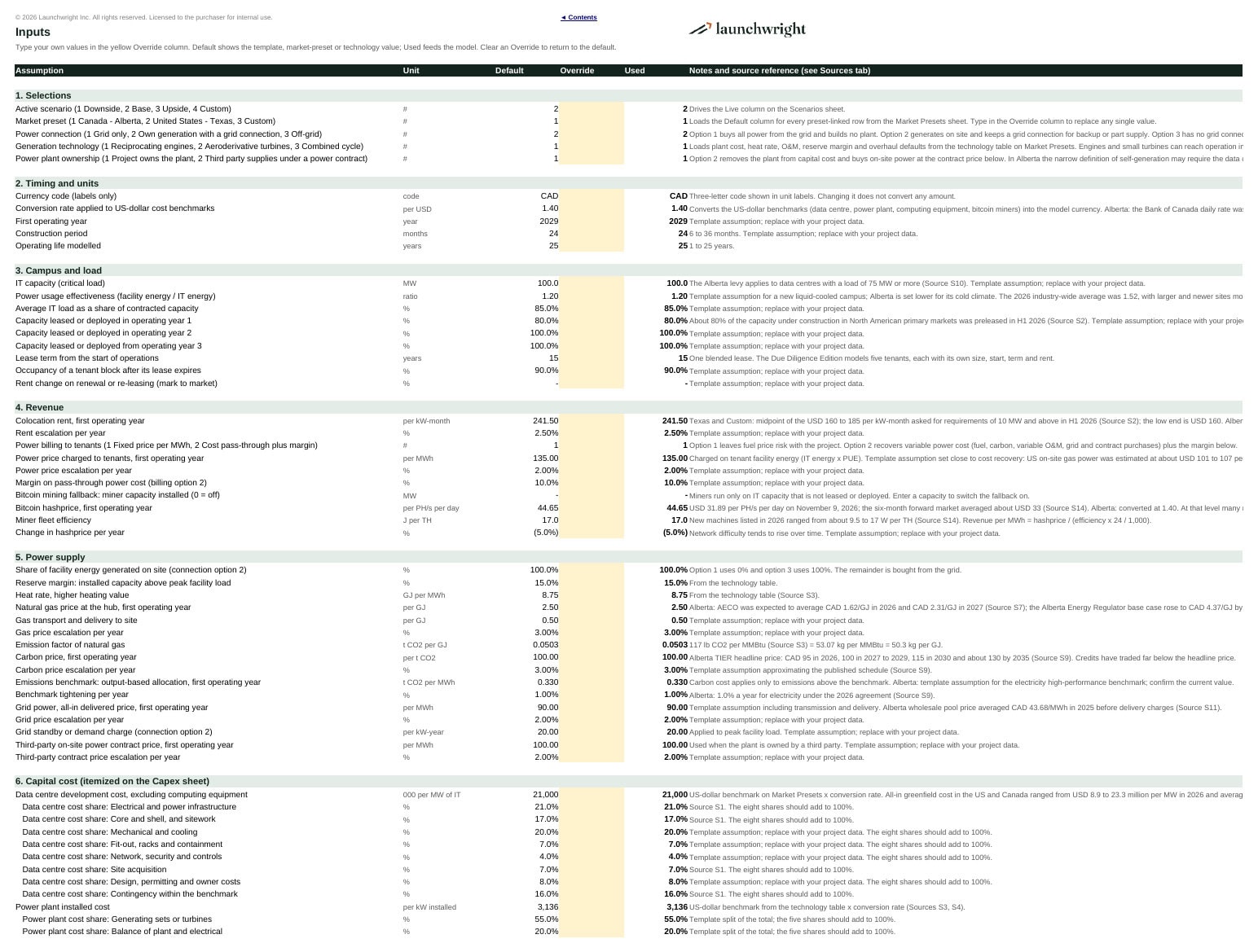
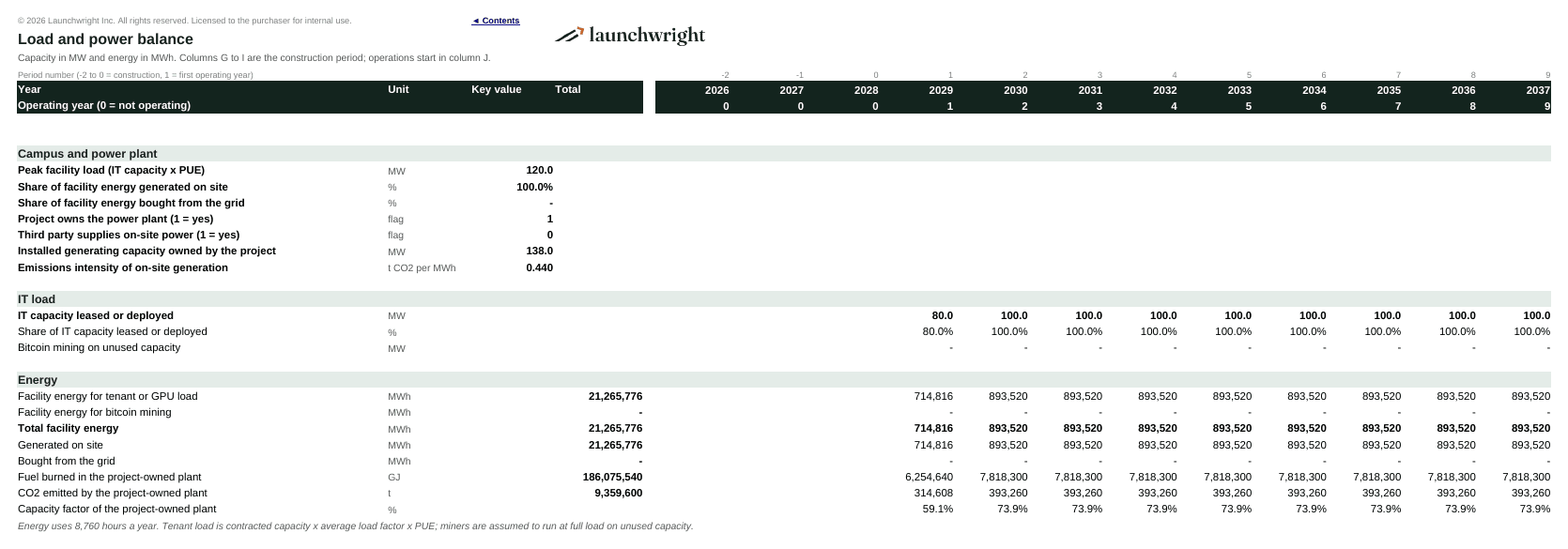
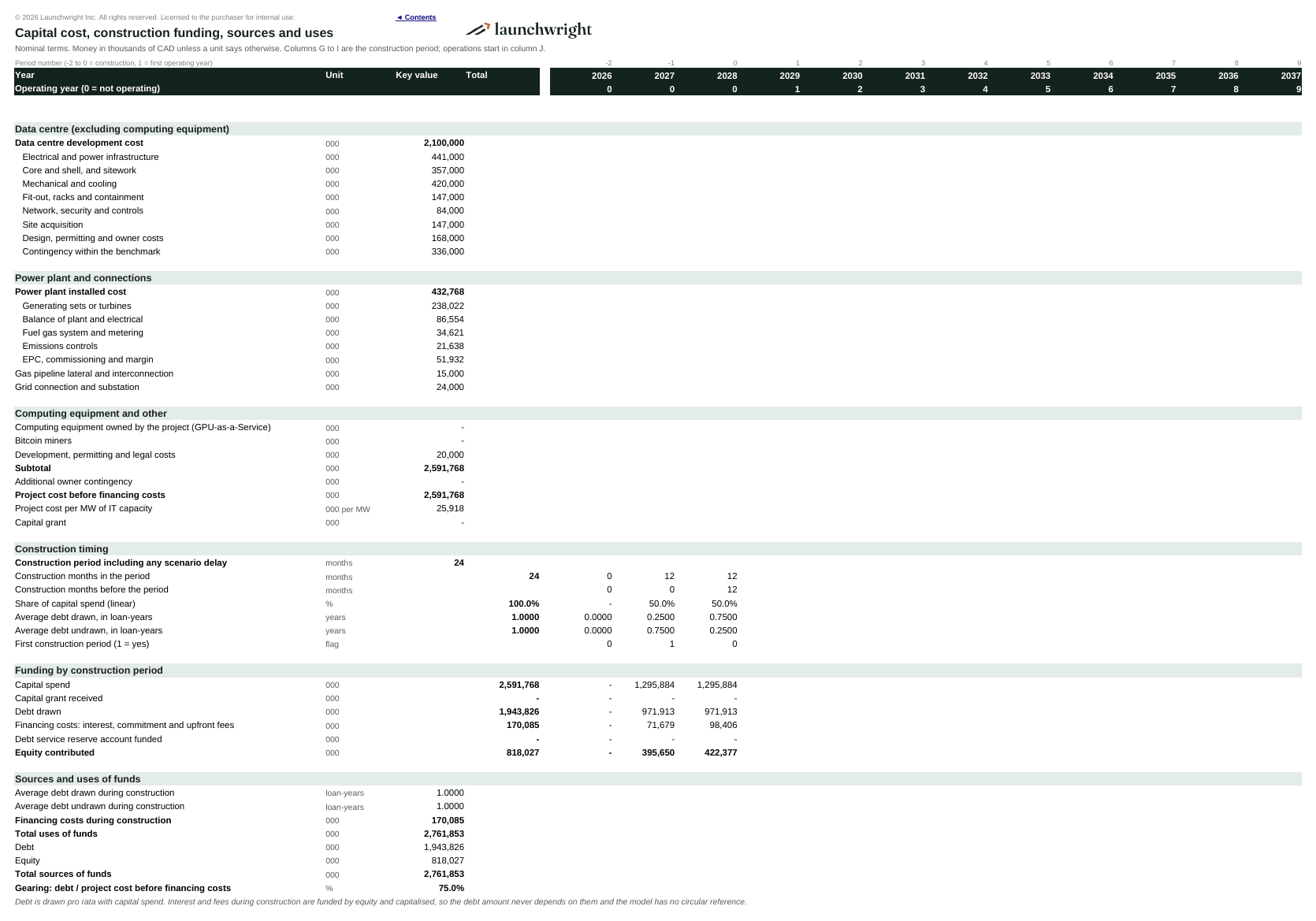
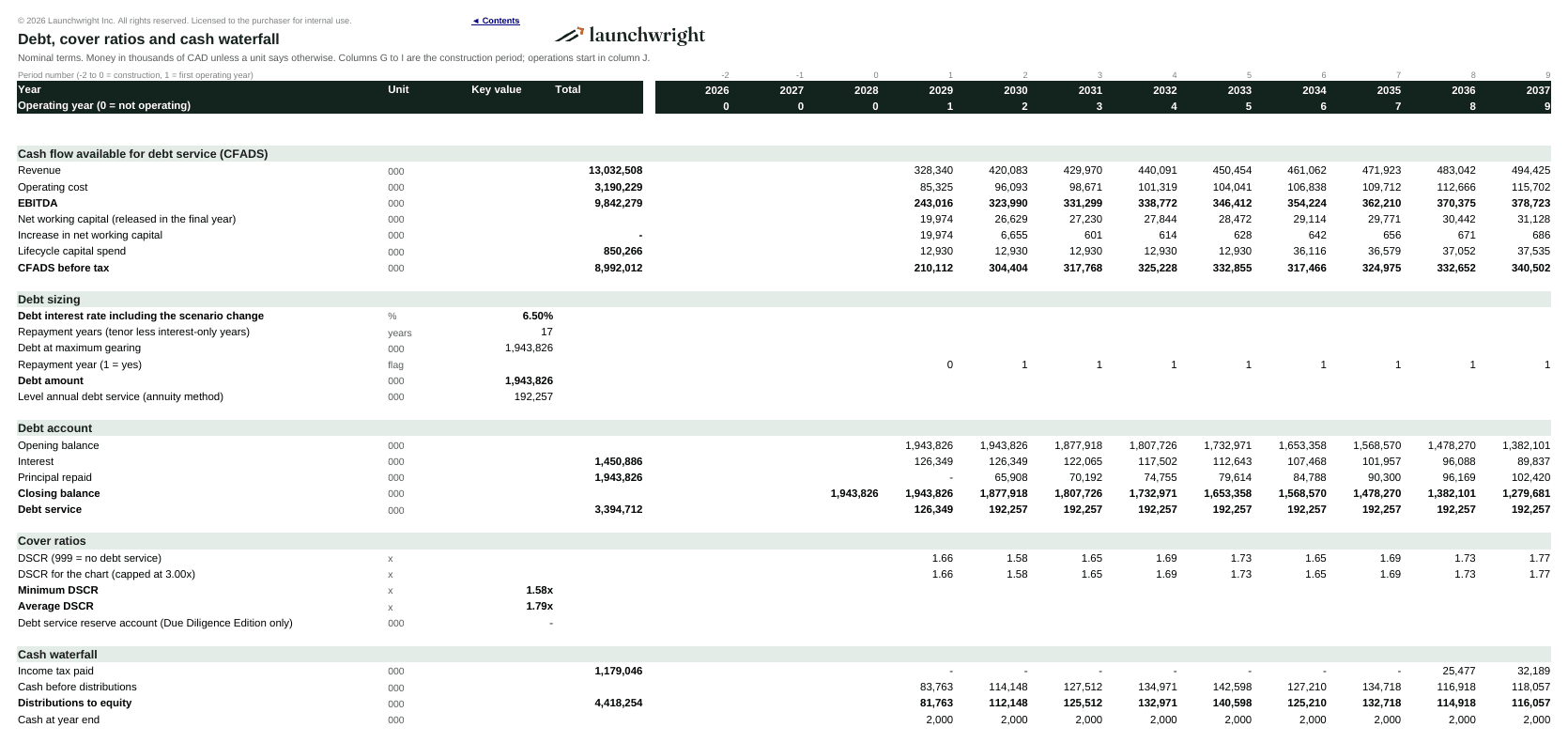
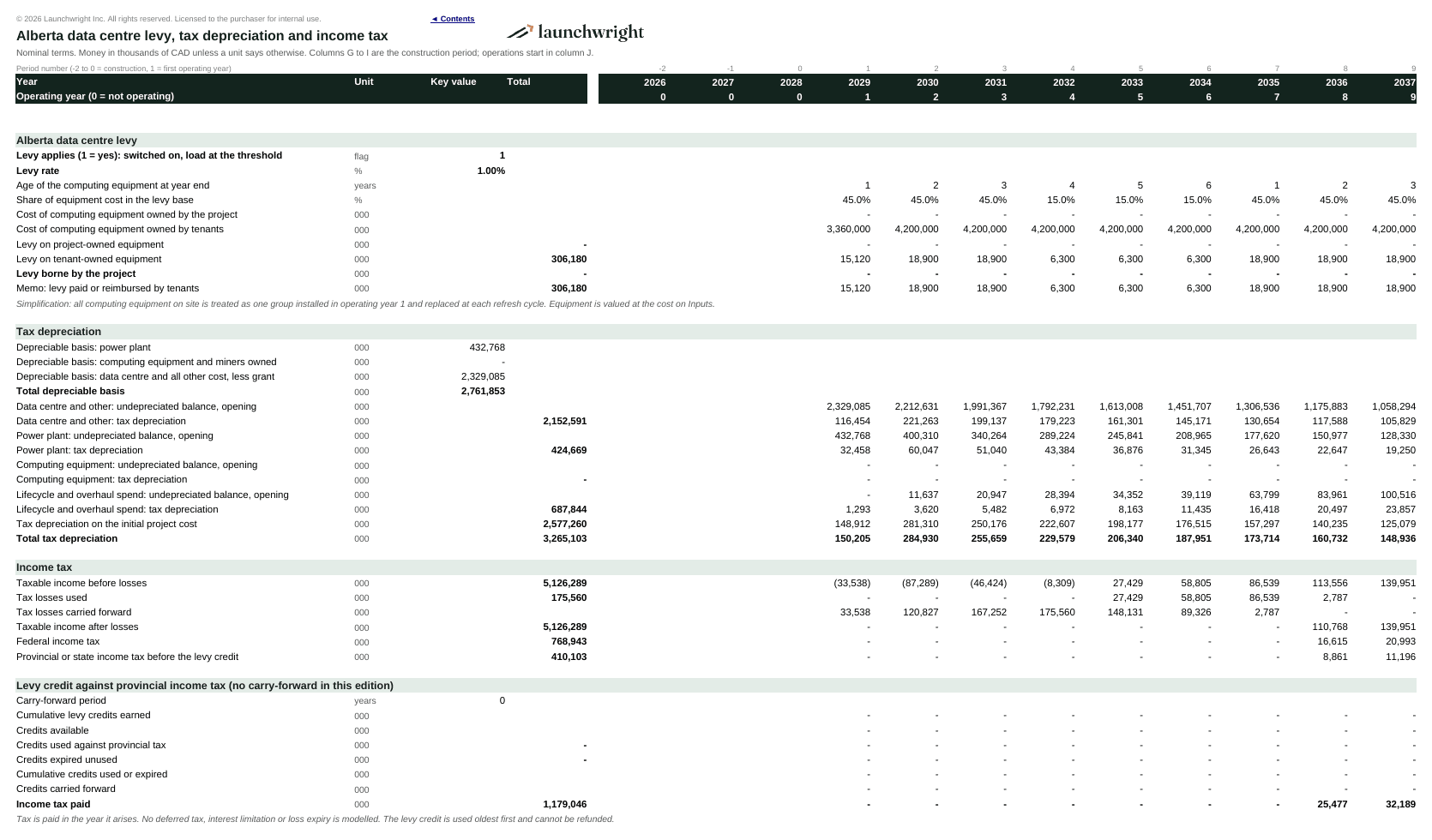
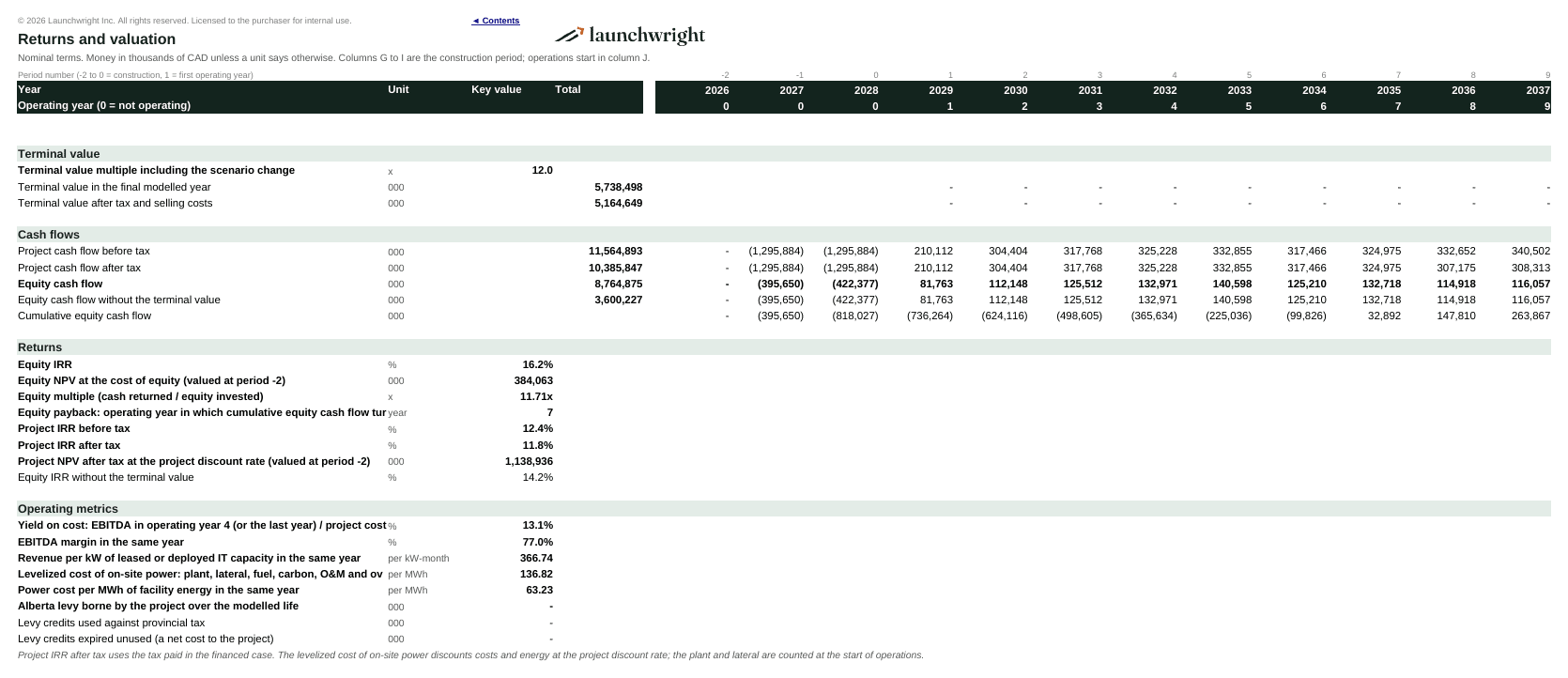
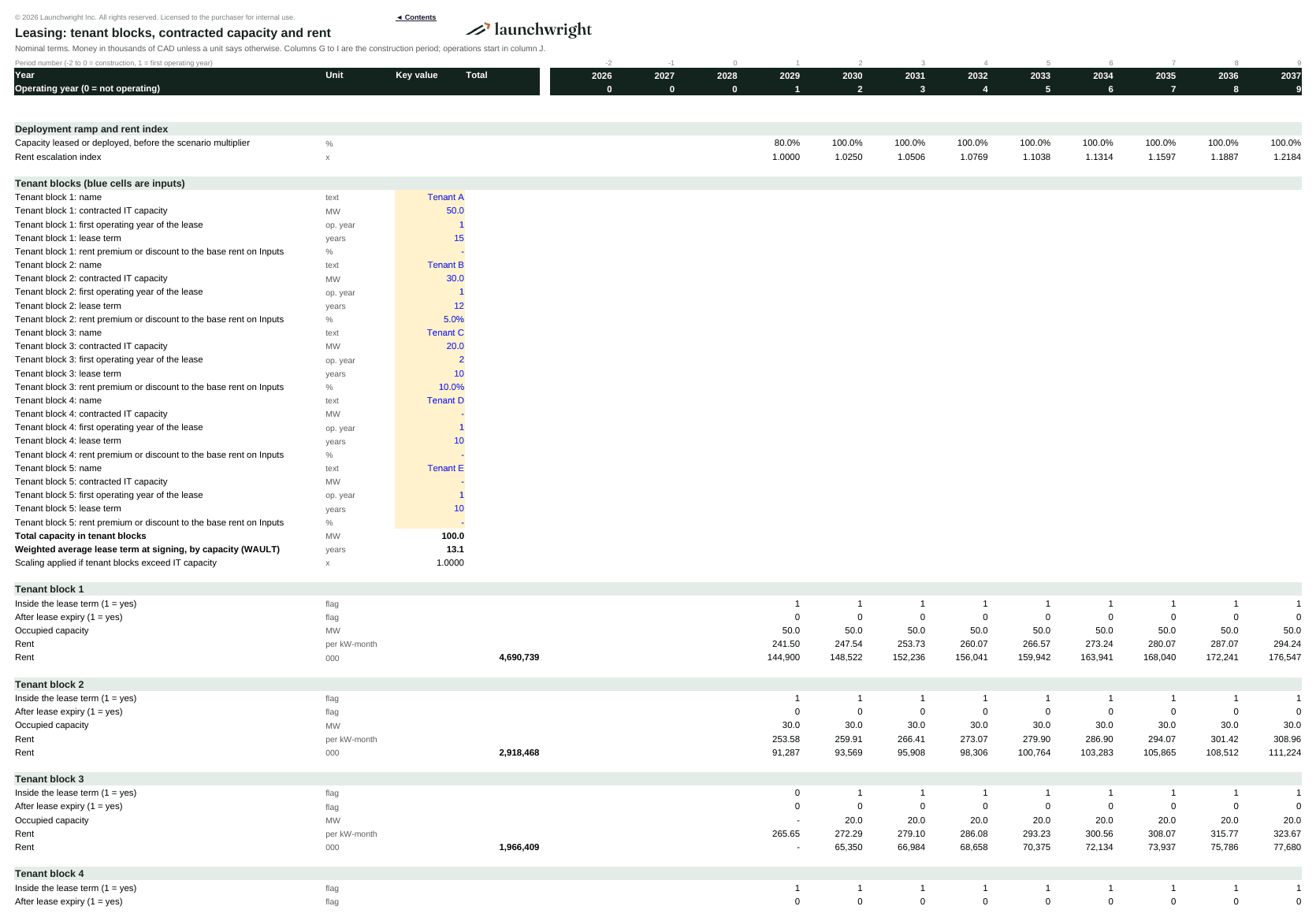
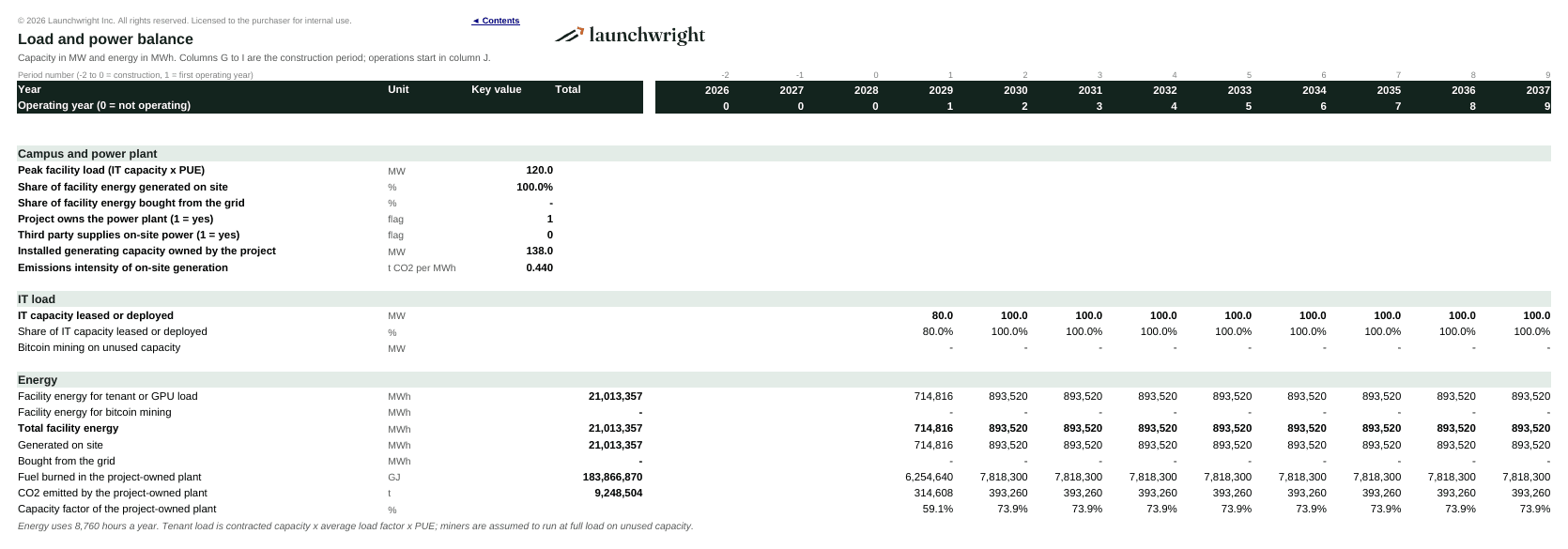
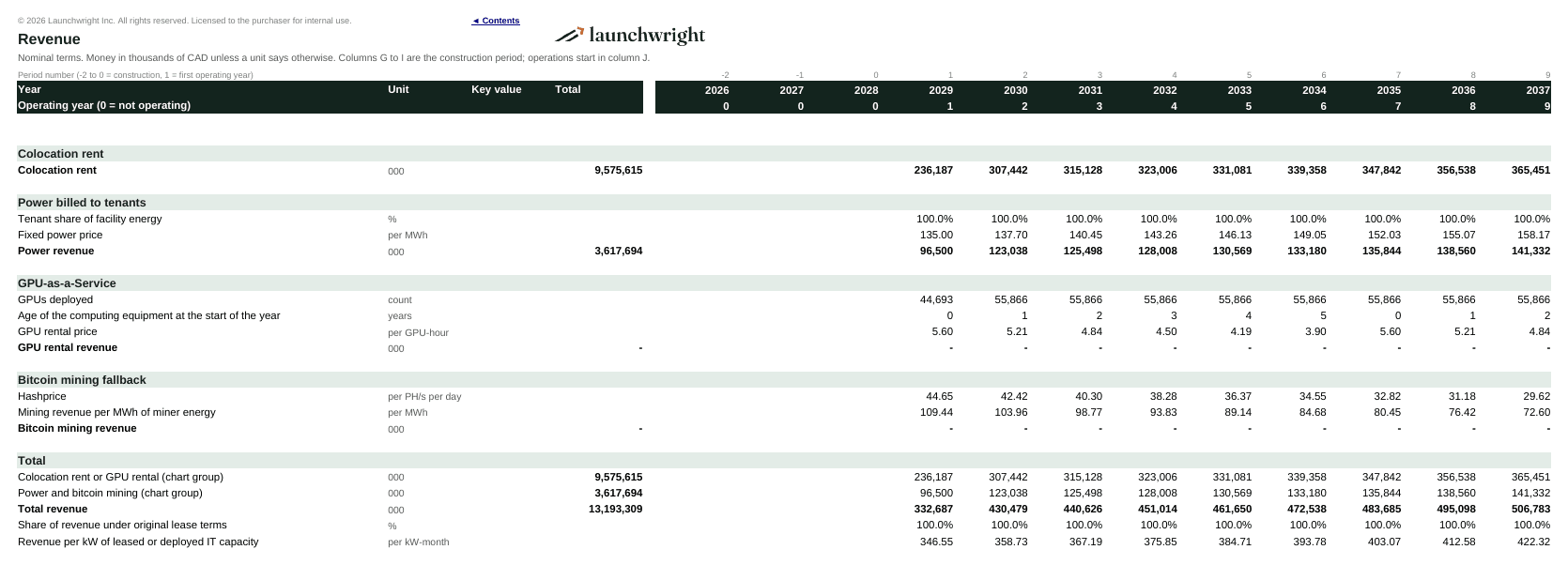
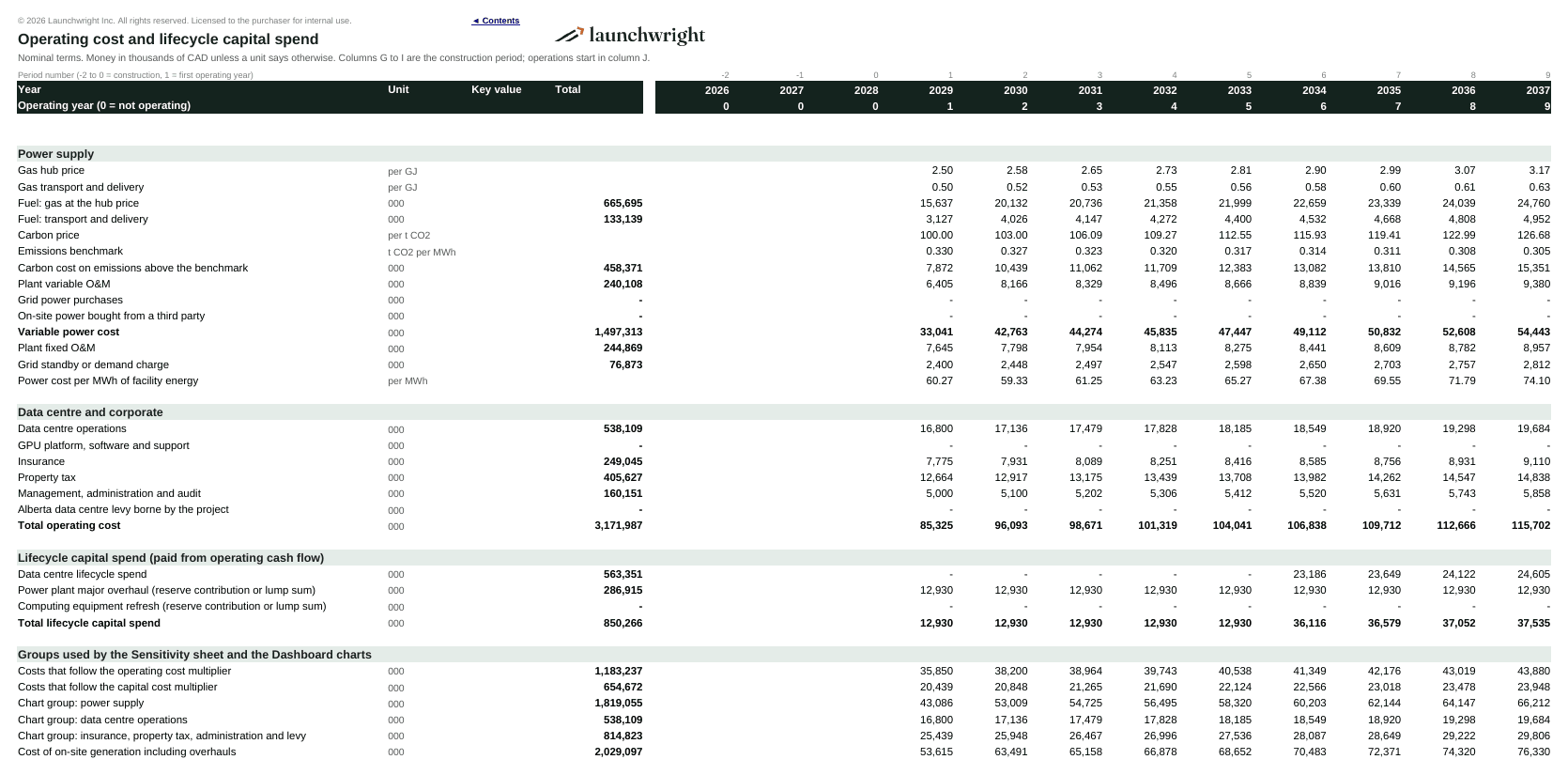
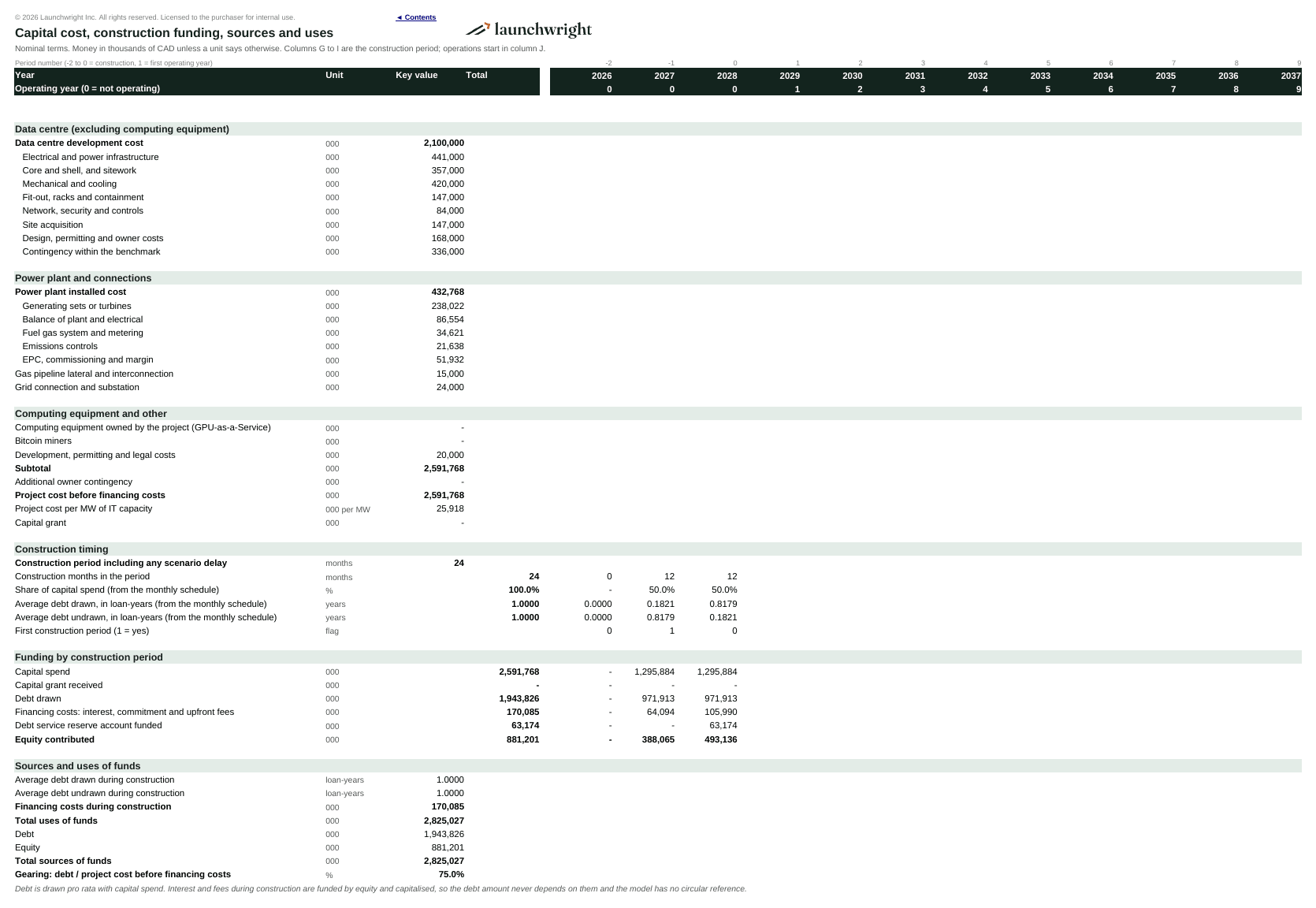
Planning an AI data center (data centre) that brings its own power? This Excel model puts the campus and its on-site gas plant in one file: leasing or GPU revenue, power supply, capital cost, debt, tax, returns and the cover ratios a lender asks for. Most templates model either the data center or the power. This one models both, so you can see what bringing your own power does to cost, debt capacity and equity returns.
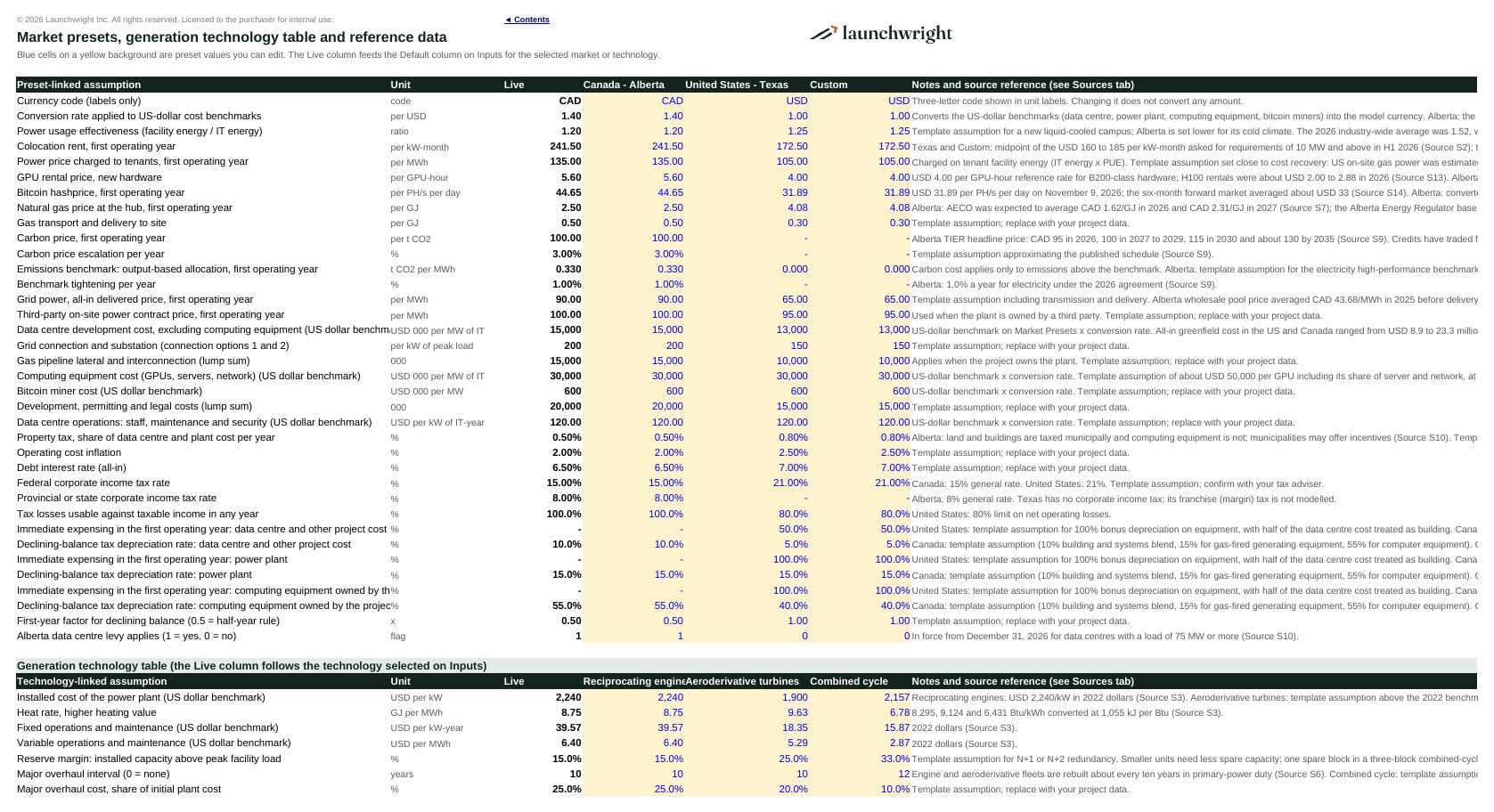
Three switches set the case. Power connection: grid only, own generation with a grid connection, or fully off-grid. Generation technology: reciprocating engines, aeroderivative turbines or combined cycle, each with its own cost, heat rate, O&M, reserve margin and overhaul cycle. Plant ownership: owned by the project, or supplied by a third party under a power contract. The model then reports the levelized cost of on-site power next to the price you charge tenants.
Market presets load defaults for Canada (Alberta) and the United States (Texas), and a Custom column holds your own market. The Alberta preset includes the data centre levy that starts on December 31, 2026: a 2% rate on grid power, 1% when self-supplied and nil off-grid, applied to 45% of the cost of computing equipment under four years old and 15% of older equipment, with the credit against provincial income tax. US-dollar cost benchmarks convert at a rate you set, so the same file works in CAD or USD.
Why this model
On eFinancialModels today you can buy a data center development model, or a power procurement model, but not one file that joins the campus, its own gas plant and project-finance debt. This model does that. It also handles the Alberta rules that general templates leave out, shows equity IRR with and without a terminal value so the result is not flattered, and cites every default to a public source or labels it as a template assumption. The file has no macros, no circular references and no locked cells.
Two editions
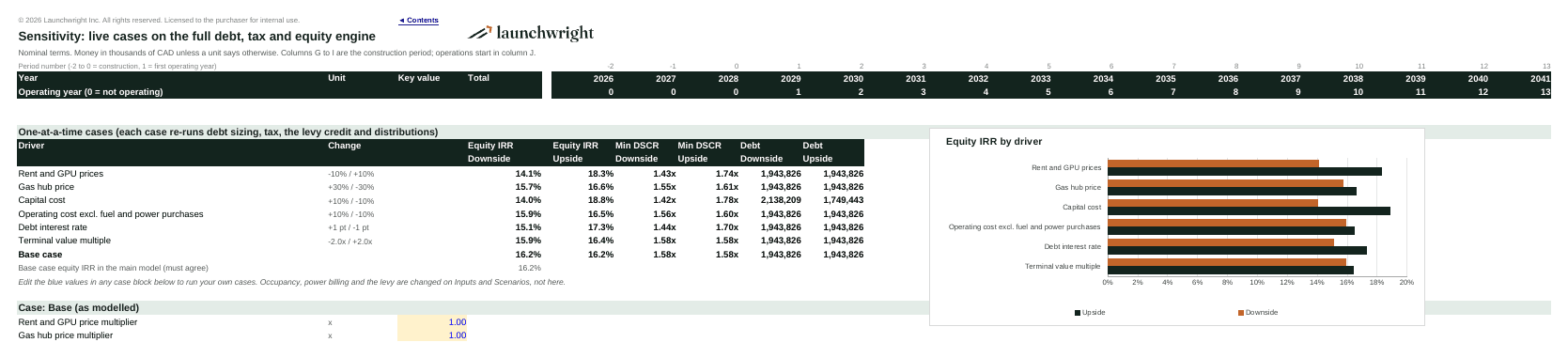
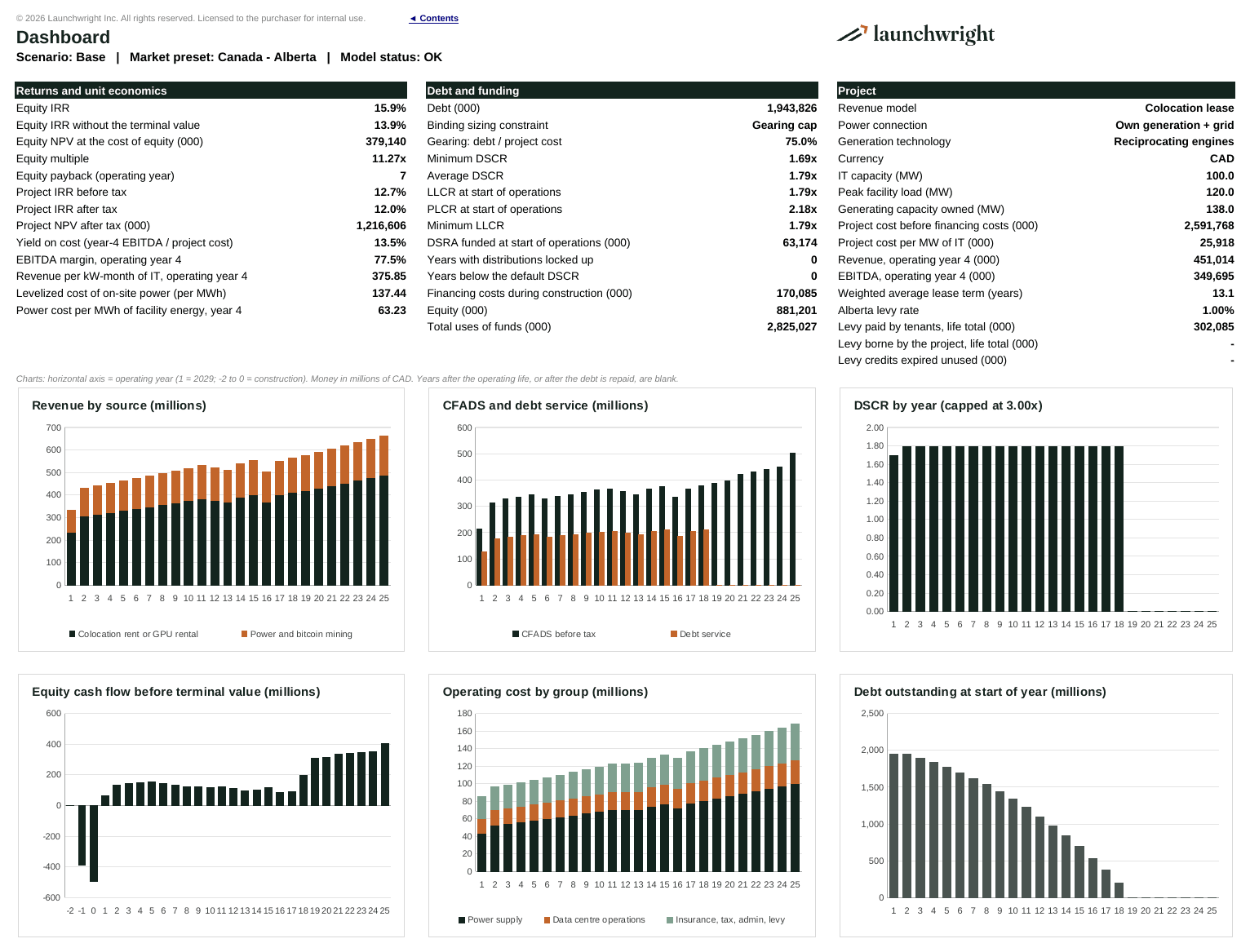
- Feasibility Edition: a fast annual model for screening, up to 25 operating years. All three power connection options, the generation technology table, plant ownership, the Alberta and Texas presets plus Custom, a blended colocation lease with a lease-up ramp, fixed-price or pass-through power billing, a bitcoin mining fallback, 8 data centre and 5 power plant capital cost components, plant overhaul reserve, debt at a set gearing, the Alberta levy, income statement and cash flow, terminal value, four scenarios, 13 live sensitivity cases and a dashboard with six charts.
- Due Diligence Edition: everything in the Feasibility Edition, plus:
- GPU-as-a-Service as a second revenue model: GPU count from IT capacity, utilization, a rental price that falls as hardware ages and resets at each refresh, and a refresh reserve
- a five-tenant lease roll with each block’s capacity, start year, term and rent, renewal probability, downtime, mark-to-market rent and the weighted average lease term (WAULT)
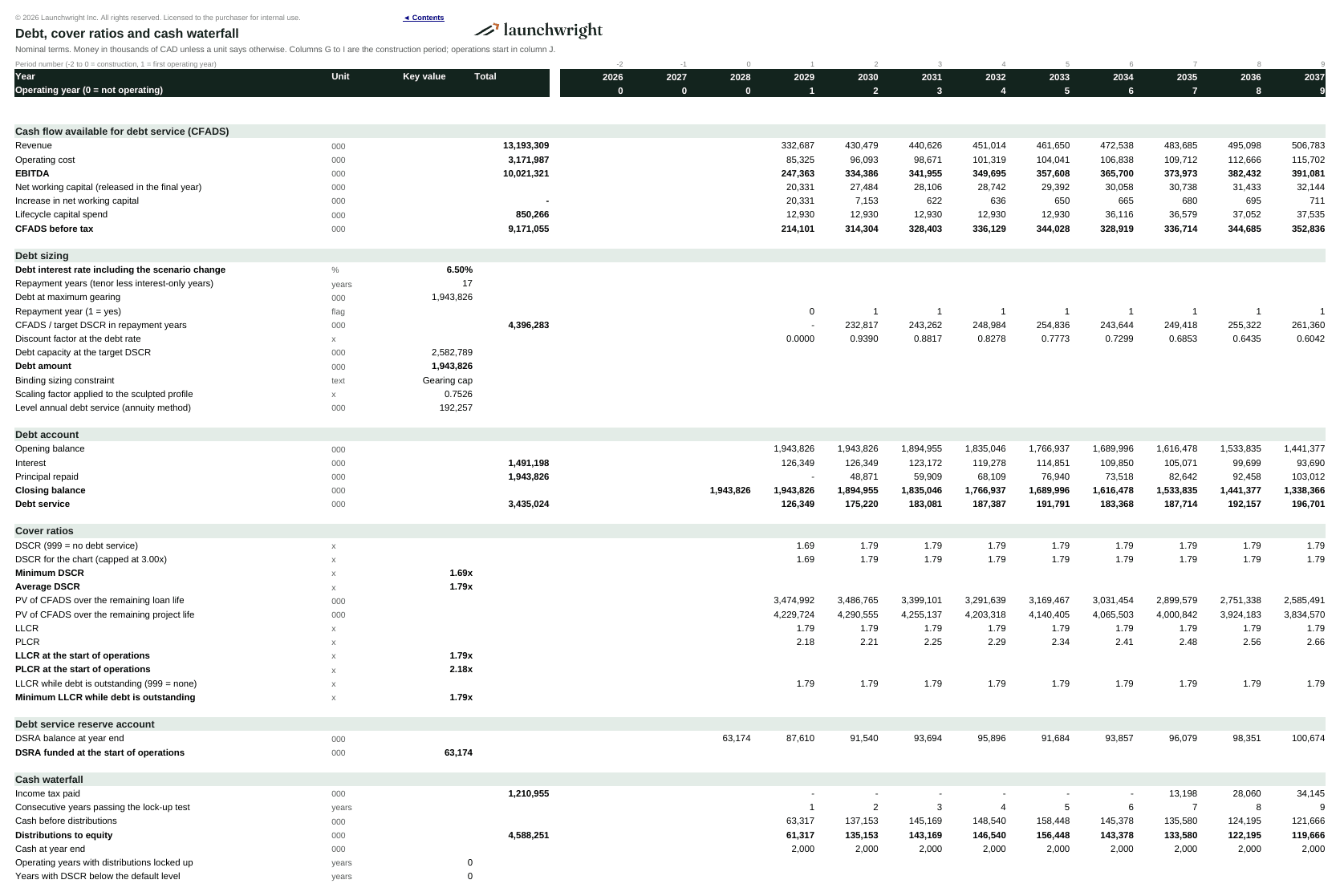
- debt sculpted to a target DSCR with a gearing cap, annuity and equal-principal alternatives, and interest-only years
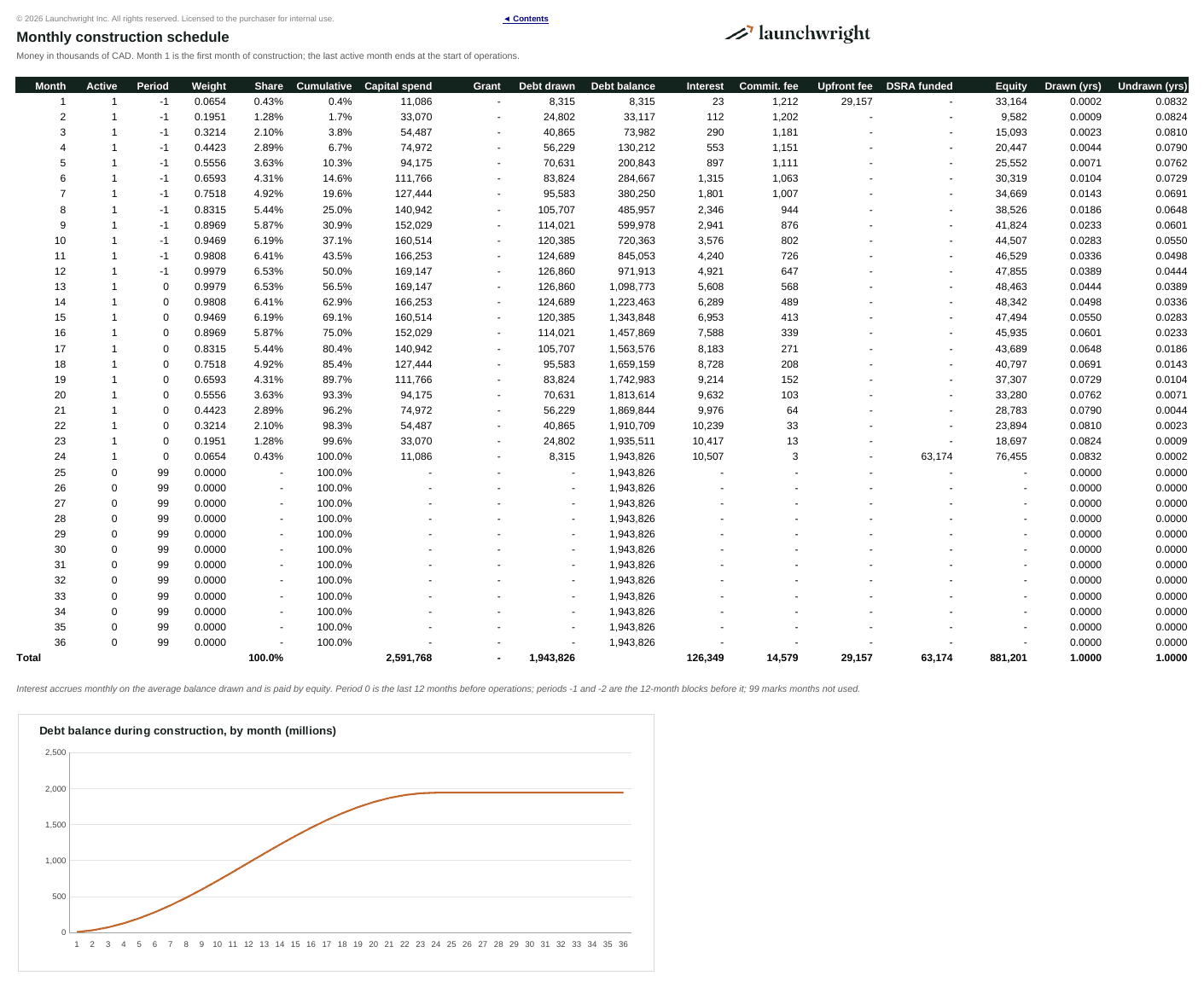
- a monthly construction schedule with an S-curve option, pro rata drawdown, interest during construction, upfront and commitment fees, and delay as a scenario driver
- a debt service reserve account, a distribution lock-up with a cure period, a default test, LLCR and PLCR
- the Alberta levy credit with its seven-year carry-forward and expiry, so you can see how much of the levy becomes a net cost
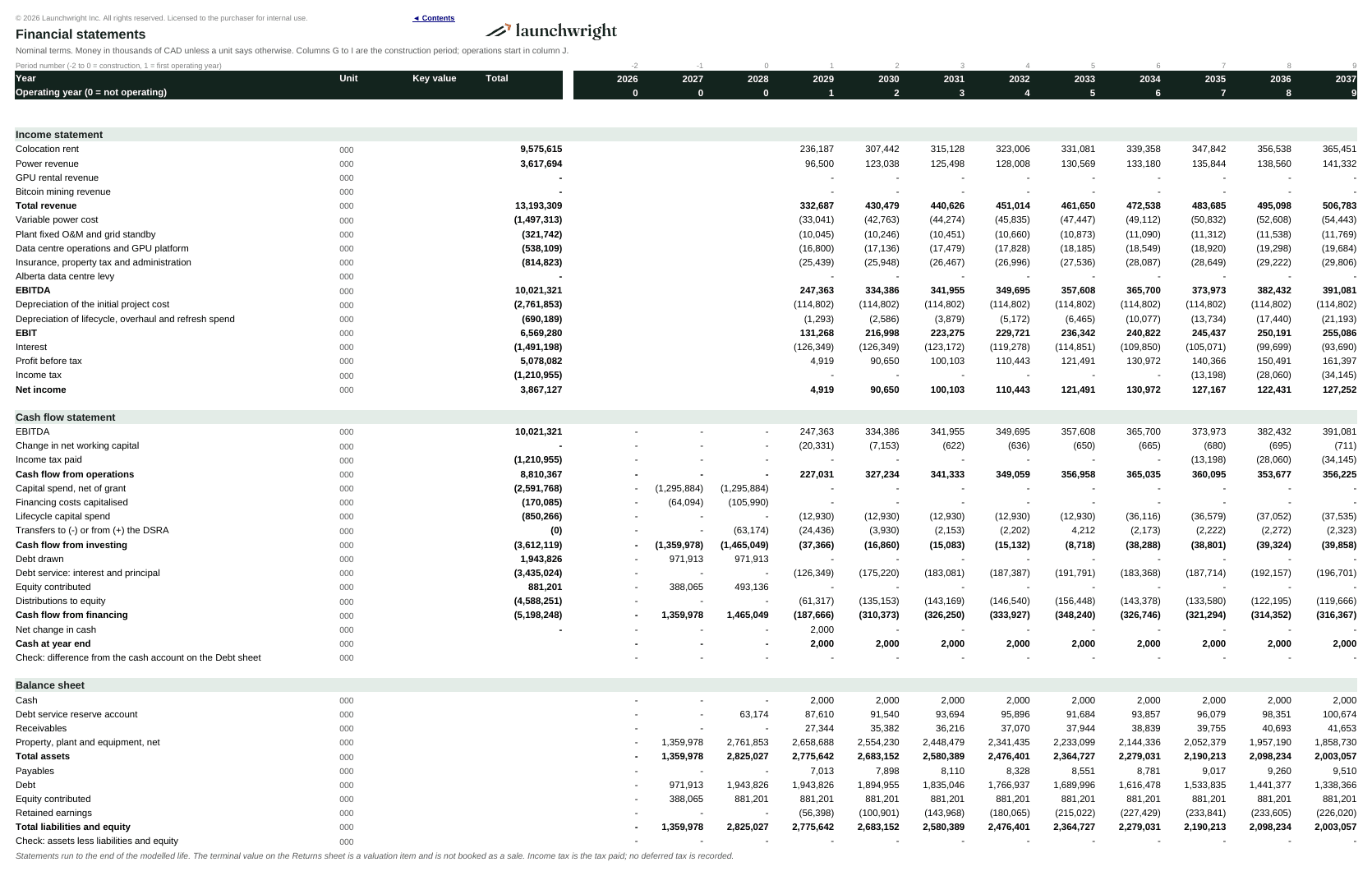
- book depreciation by asset class and three integrated statements with a balance check in every year
- 38 live sensitivity cases, including three two-way tables of rent against capital cost
Download options: compare the editions
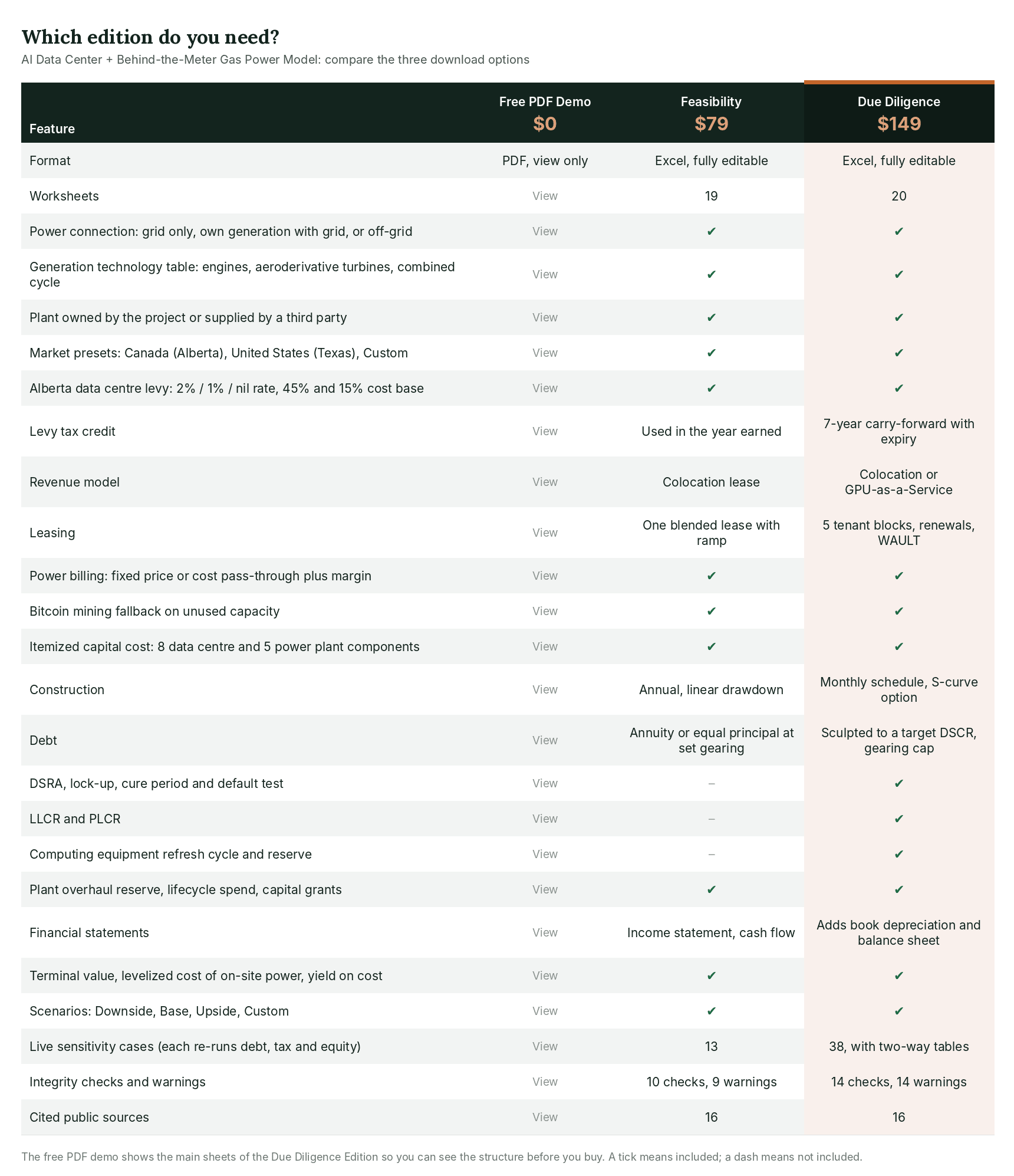
What is in the file
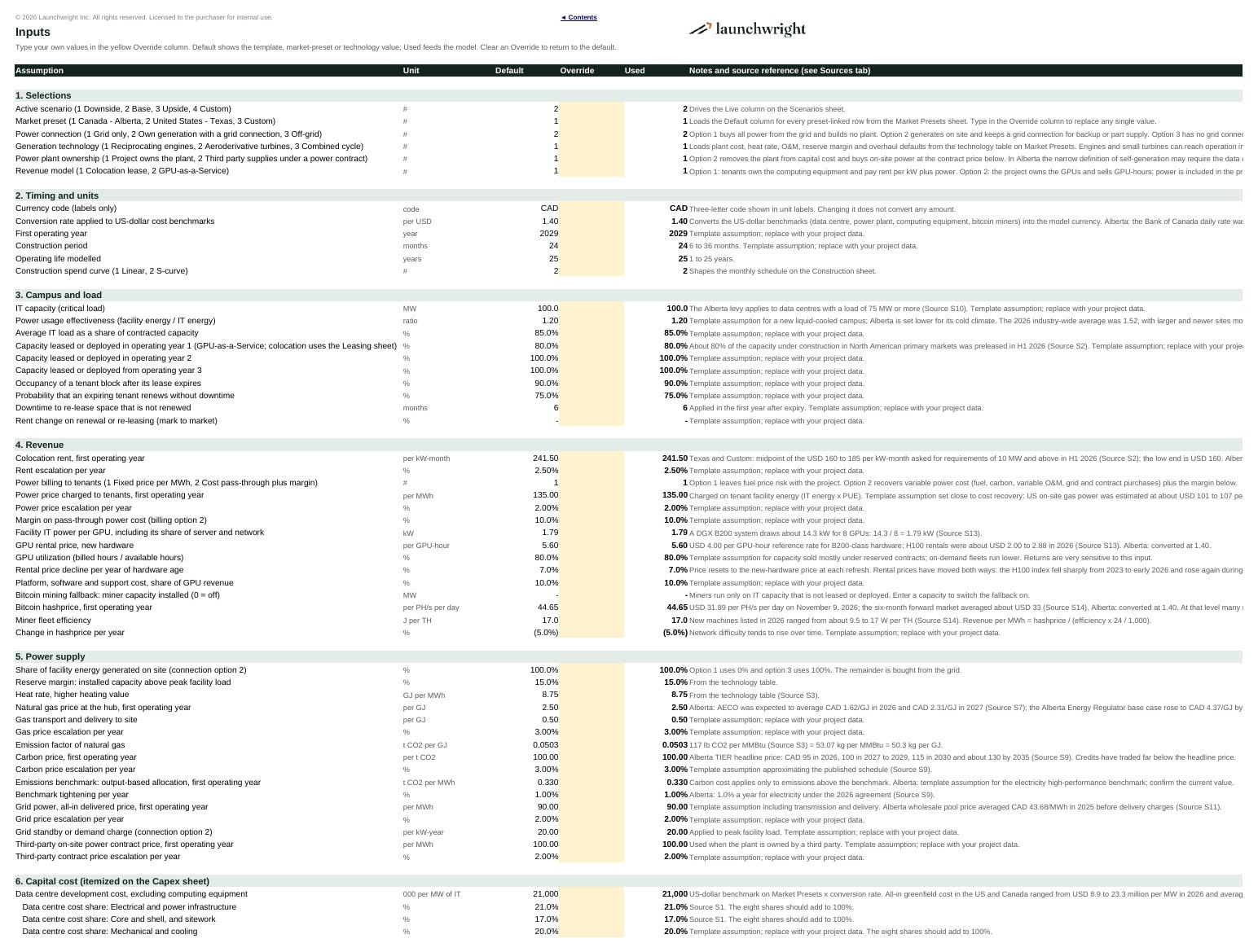
Contents, Instructions, Inputs, Market Presets with the generation technology table, Scenarios, Dashboard, Leasing, Load and Power, Revenue, Opex, Capex, Construction (Due Diligence), Debt, Levy and Tax, Financials, Returns, Sensitivity, Checks, Sources and Glossary. Inputs use Default, Override and Used columns, so you can always see the template value and return to it. Sheet tabs are colour-coded for setup, calculations and outputs.
Who it is for
Data center developers and landowners with gas access, power producers adding a data center load, investors and lenders screening a bring-your-own-power campus, and advisers who need a clear, editable starting point.
Frequently asked questions
Which Excel versions does it work in?
Excel 2010 or later on Windows or Mac. It uses only long-standing functions, with no macros, no dynamic arrays and no data tables. It was recalculated and tested in LibreOffice Calc. It has not been tested in Google Sheets.
Is it only for Alberta?
No. The Texas preset and the Custom column cover other markets, and every input can be overridden. Switch the levy off with one input. The Alberta preset is there because its levy and bring-your-own-power rules are not handled by general templates.
Does it model the power plant or just a power price?
It models the plant: installed capacity from peak load and reserve margin, fuel from the heat rate, gas price and delivery, carbon cost above a benchmark, fixed and variable O&M, major overhauls and itemized capital cost. You can also switch to grid power or a third-party supply contract and compare.
How is the debt sized?
In the Due Diligence Edition, debt is the lower of the amount supported by cash flow at your target DSCR and your maximum gearing. Interest during construction is funded by equity, so the model needs no circular reference or macro. The Feasibility Edition sizes debt at your gearing.
Who pays the Alberta levy in a colocation lease?
The tenant owns the computing equipment in a colocation lease, and the sources we read did not settle who bears the levy. The model makes it an input: set the share borne by the project from 0% to 100% and see the effect on returns and on the tax credit.
Does it include a terminal value?
Yes, as a multiple of final-year EBITDA that you can set to zero. The dashboard shows equity IRR with and without it. Debt sizing and cover ratios never use it.
Are the default numbers a forecast?
No. Defaults are published benchmarks and template assumptions, each cited on the Sources sheet or labelled. Rents, GPU prices, gas prices and plant costs move quickly; replace them with your own project data before relying on any result.
What is not modelled?
Later construction phases, hourly dispatch, export of surplus power, deferred tax and tax-equity structures are not modelled. The campus is built in one phase and leased up over time.
Is the file locked?
No. There are no locked cells, passwords, hidden sheets or macros. Every formula is visible.
Support
Questions about how the template works are answered via the Contact Author button or the support chat. For changes to the model, please use the eFinancialModels custom service.
Similar ProductsOther customers were also interested in...


 eFinancialModels
Electric Vehicle (EV) Charging Station Financial M...
With this comprehensive 5- or 10-year monthly tool, investors can assess the viability of setting up... Read more

Financial Model for Mobile App | Mobile App Busine...
The Mobile App Financial Plan Template in Excel allows you to develop financial projections when lau... Read more

 HenrySheykin
Food Truck Financial Model Excel Template
The Food Truck Financial Model helps entrepreneurs, founders, business owners, consultants, and anal... Read more

Green Hydrogen Production from Wind Energy Financi...
The Green Hydrogen from Wind Financial Model aims to comprehensively forecast a horizon of 40 years ... Read more

Simple Mutual Non-Disclosure Agreement Template
Protect your business secrets with ease using our Simple Mutual Non-Disclosure Agreement Template. S... Read more

Solar Energy Financial Model
The Solar Energy Financial Model Spreadsheet Template in Excel assists you in preparing a sophistica... Read more

 Peter Graf
The Customer-Centric Financial Model for Restauran...
Starting a restaurant without a financial plan is like driving a car blindfolded. You wouldn´t do i... Read more
You must log in to submit a review.