
0 ITEMS

How Does MACRS Impact Business Valuation?

Depreciation methods like MACRS and straight-line significantly impact a business’s tax savings, cash flow, and valuation.
- MACRS accelerates depreciation, allowing larger deductions in the early years, which boosts short-term cash flow.
- Straight-line depreciation spreads costs evenly, providing predictable expenses and stability over time.
- The choice of depreciation method affects book value, future tax liabilities, and business valuation metrics such as P/E ratios and EBITDA multiples.
- Using MACRS strategically, such as timing asset purchases, can maximize tax benefits and improve liquidity.
- Financial modeling helps compare depreciation impacts on cash flow, profitability, and long-term valuation strategies.
Understanding these differences can help optimize your asset management and tax planning—keep reading to see how to make the most of depreciation options.
The MARCS Depreciation Formula
The MACRS depreciation formula accelerates tax deductions by allowing businesses to write off more of an asset’s cost in the early years. This boosts cash flow by reducing taxable income sooner. It is a reverse accounting method of straight-line depreciation, which spreads the cost evenly over the asset’s useful life, providing steady but slower deductions. MACRS is the preferred method for tax purposes because it front-loads savings, while straight-line is often used in financial reporting for consistency. The key difference is timing—MACRS gives faster tax relief, while straight-line maintains a predictable expense pattern.
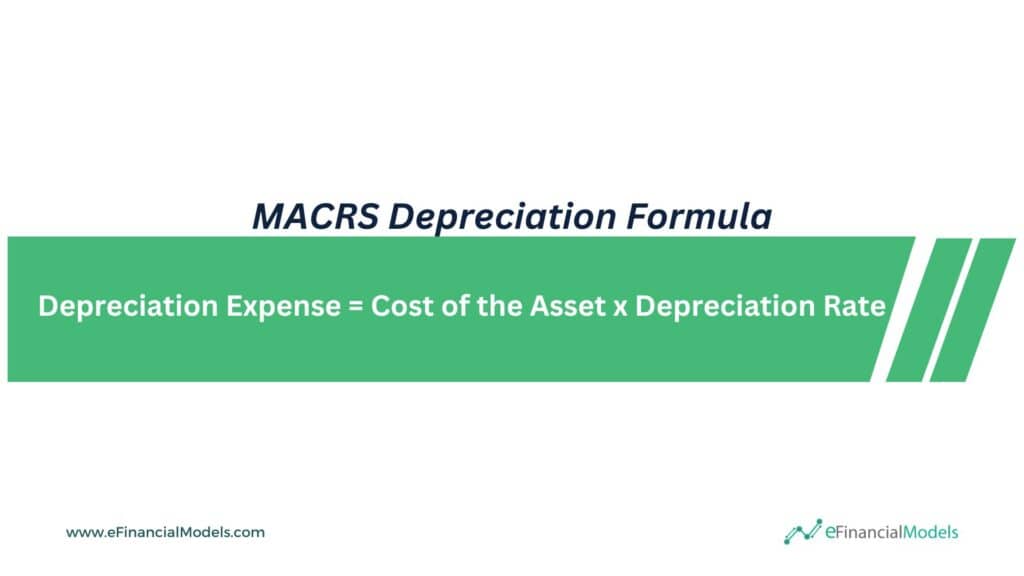
The MACRS depreciation formula is a tax depreciation calculation method used in the United States, It allows businesses to recover the cost of tangible assets over a specified period through accelerated depreciation. The MACRS depreciation formula is a crucial tool for calculating the MACRS depreciation for a specific year. It can be mathematically expressed as:
Where:
- The Cost of the Asset is its initial value or cost basis. It includes the purchase price, installation or setup costs, and all necessary expenses to put the asset into service.
- Depreciation Rate is the percentage applied to the asset’s depreciable cost each year based on its class life, using either the General Depreciation System (GDS) or the Alternative Depreciation System (ADS). You can derive the percentage using the IRS Publication 946.
Businesses using the MACRS depreciation formula must adhere to IRS guidelines, including correctly classifying assets and using the appropriate convention and depreciation method.
- Under IRS Publication 946, assets are categorized into different classes, such as 3, 5, 7, or 10 years, based on their expected useful life. Each asset class determines the applicable depreciation method. For example, the 5-year property typically includes assets such as automobiles and computers, often using the 200% Declining Balance method to accelerate depreciation in the early years. Meanwhile, the 7-year property might use the 150% Declining Balance method for assets like office furniture. For assets with a recovery period of 10 years or longer, only the 150% declining balance method is allowed. The choice of method affects how quickly the asset’s cost is recovered, impacting the business’s tax obligations in the initial years versus later years. However, when the declining balance depreciation falls below the equivalent straight-line depreciation amount, it typically shifts to the straight-line method for the remaining asset life.
- Conventions are used to standardize asset placement and disposition timing, ensuring a consistent method for calculating partial-year depreciation to prevent manipulation of tax deductions based on acquisition or disposal dates. The choice of convention depends on when and how many assets are placed into service during the year: the Half-Year convention is used by default unless more than 40% of assets (excluding real property) are placed in the last quarter, in which case the Mid-Quarter convention applies; for real estate property, the Mid-Month convention is mandatory.
- A set of IRS predetermined percentages is applied each year to write off the asset’s value more rapidly in the initial years than in the later ones.
Mastering these fundamentals is critical to ensuring compliance and maximizing financial outcomes.
MACRS Depreciation Example
A MACRS depreciation example involves calculating the depreciation expense of an asset over its useful life using accelerated rates specified by the Modified Accelerated Cost Recovery System. This system allows for higher depreciation in the initial years and lower amounts in later years to maximize early tax deductions.
Let us take a MACRS depreciation example for a property under the following assumptions:
- Cost of Asset: $1,000,000
- EBITDA: $4,000,000 per year
- Income Tax Rate: 25%
We will also compare the above MACRS depreciation example with the straight-line depreciation method.

In the MACRS schedule provided above, the depreciation percentages vary over the years, starting with higher rates (such as 20% and 32%) and then declining. This front-loaded depreciation allows for greater deductions in the earlier years, resulting in a lower taxable income initially. Over the first five years, this method results in an accumulated depreciation of $942,400, significantly reducing taxable income and yielding a net income of $1,012,440 in years 1-5, compared to straight-line depreciation.
The straight-line depreciation method, with its simplicity and ease of understanding, allocates the asset’s cost evenly over its useful life. In the example shown, a constant depreciation rate of 10% annually results in a consistent depreciation of $100,000 yearly. This straightforward approach means that the taxable income remains steady at $400,000 annually, resulting in a predictable tax amount and net income of $260,000 every year. While the straight-line method may not offer the same early tax savings as MACRS, its simplicity can help businesses feel at ease and less overwhelmed with tax planning.
Comparing the MACRS depreciation method with straight-line depreciation over Years 1-5 and Years 1-6, MACRS provides a significantly better tax benefit by offering higher depreciation deductions in the initial years, resulting in lower cumulative taxes and higher cumulative net income. Specifically, the total taxes saved through MACRS from Year 1-5 is $154,840 compared to the straight-line method. It makes MACRS more attractive for cash flow purposes, especially for businesses seeking to reinvest tax savings early on.
| Disclaimer: The MACRS depreciation and Straight-Line Depreciation schedules provided herein are for informational purposes only and should not be considered tax, legal, or accounting advice. Actual depreciation calculations can vary significantly depending on individual circumstances, such as asset classification, placement in service, and applicable tax regulations. Users are encouraged to consult with a qualified tax professional or accountant to ensure compliance with IRS guidelines and to apply these depreciation methods to their specific financial scenarios accurately. This material is provided “as is” without warranties regarding its accuracy or completeness. |



















































How Does the MACRS Depreciation Rate Impact Book Value?
When choosing a depreciation method for business assets, the Modified Accelerated Cost Recovery System (MACRS) is often favored due to its ability to accelerate tax savings in the early years of an asset’s life. However, there are several critical factors to consider before implementing the MACRS depreciation rate, as it impacts not just current tax liabilities but also long-term financial reporting, profitability analysis, and business valuation.
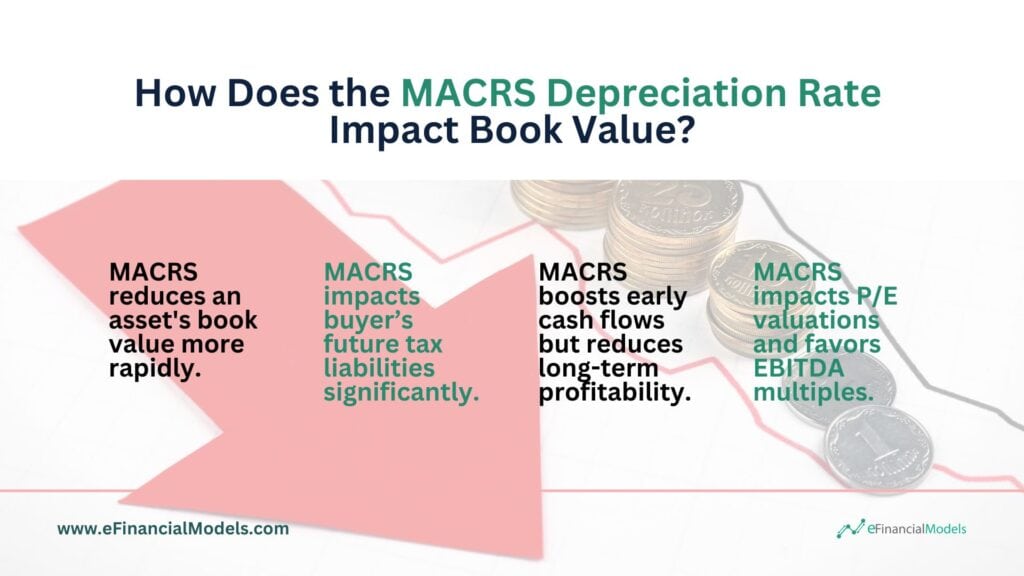
- Asset’s Book Value: MACRS depreciation rate affects an asset’s book value compared to straight-line depreciation. MACRS leads to a faster depreciation schedule in early years, resulting in a lower book value. It contrasts with the straight-line method, where the depreciation expense is evenly spread over the asset’s useful life, leading to a higher book value during the initial years. This accelerated depreciation can significantly reduce taxable income, creating early tax savings, but also means that less depreciation expense is available in the later years, affecting long-term financial reporting.
- Buying or Selling a Business: If a business that has been using the MACRS depreciation rate for its asset depreciation is purchased, the buyer may face higher taxes beyond the fifth year because many assets have already been heavily depreciated. This leaves little to no depreciation expense available to offset taxable income, thereby increasing tax liabilities. On the other hand, businesses that did not utilize MACRS may still have depreciation deductions remaining, which could be more attractive to potential buyers. Therefore, understanding the depreciation method used is critical when negotiating the purchase or sale of a business, as it can impact the future tax position and net profitability.
- Impact on Cash Flows: From a Net Present Value (NPV) perspective, the MACRS depreciation rate can create an illusion of higher profitability earlier in an asset’s life due to the larger depreciation expenses claimed in the early years. These early tax deductions initially improve cash flows, leading to a higher NPV than straight-line depreciation. However, this benefit is temporary as the tax shield diminishes over time, and future profits are subject to higher tax liabilities once the accelerated depreciation benefits are exhausted. Thus, leading to a lower net income. Consequently, this timing difference in tax savings should be carefully considered when using MACRS, especially in long-term financial planning.
- Valuation Implications: When valuing a business based on a net income multiple such as Price-to-Earnings (P/E), the MACRS depreciation rate can significantly influence the perceived profitability and, thus, the valuation multiple. In the sixth year of using MACRS, net income may be lower than under the straight-line method because the depreciation expenses are minimal. This leads to a lower P/E valuation despite the unchanged cash flows. For this reason, an EBITDA multiple might be a more appropriate valuation metric because EBITDA excludes depreciation and amortization, providing a clearer picture of the business’s operational profitability without the distortion of different depreciation methods. This distinction is crucial for investors and business owners when determining the most accurate valuation approach.
Strategies for Maximizing Tax Benefits with MACRS
Depreciation strategies are often overlooked in the pursuit of maximizing business returns, yet they play a crucial role in optimizing tax benefits and improving cash flow. The Modified Accelerated Cost Recovery System (MACRS) is a powerful tool. This tax depreciation method enables businesses to recover asset costs more rapidly than traditional straight-line depreciation. By front-loading depreciation expenses in the early years of an asset’s life, MACRS allows for larger tax deductions during the initial investment period, enhancing liquidity and providing businesses with additional funds to reinvest or reduce debt.
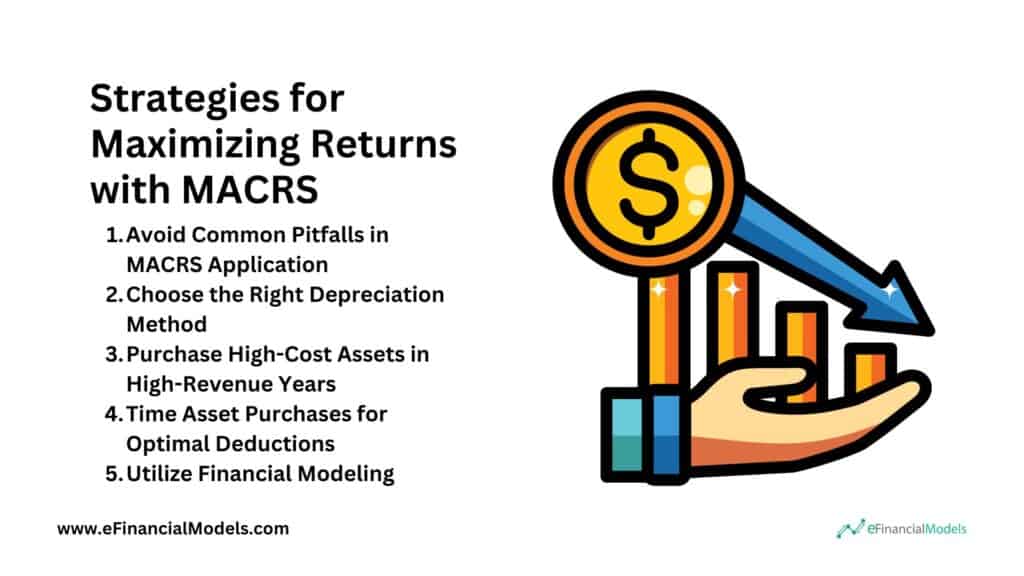
- Avoid Common Pitfalls in MACRS Application: Incorrectly applying MACRS can lead to audit risks and costly penalties. Common errors include misclassifying assets, using the wrong recovery period, and failing to adjust for partial-year conventions. To mitigate these risks, businesses should maintain detailed records and regularly review their depreciation schedules. Employing asset management software or working closely with a tax advisor can help streamline compliance. Businesses must also be aware of any changes to tax laws that may affect MACRS, such as modifications to asset class lives or bonus depreciation rules. Staying informed and proactive can prevent missteps and optimize long-term tax planning.
- Choose the Right Depreciation Method: Selecting the most advantageous depreciation method under MACRS is a critical decision that can significantly impact tax outcomes. Businesses should consider their current and projected profitability, cash flow needs, and long-term asset management strategies. For example, using the 200% declining balance method can maximize deductions early on, which is ideal for companies experiencing rapid growth. Alternatively, switching to the straight-line method may help stabilize tax liabilities in periods of lower profitability. Businesses should conduct a comprehensive financial analysis to determine which method aligns best with their strategic goals. Consulting with a tax professional can also uncover opportunities for method adjustments to enhance cash flow management.
- Purchase High-Cost Assets in High-Revenue Years: Purchasing high-cost assets during high-revenue years can be a strategic move to optimize the benefits of MACRS depreciation. Since the MACRS method allows for accelerated depreciation, businesses can front-load larger deductions in the initial years of an asset’s life. When these deductions are applied during high-revenue periods, they reduce taxable income and minimize the overall tax burden.
- Time Asset Purchases for Optimal Deductions: The timing of asset purchases can influence which MACRS convention is applied, and the total depreciation claimed in the first year. Strategic financial planning around the fiscal year can prevent triggering the mid-quarter convention, which typically results in lower initial depreciation deductions. By aligning asset acquisitions with the half-year convention, businesses can maximize early-year deductions, boosting short-term liquidity.
- Utilize Financial Modeling: Financial modeling can serve as a powerful strategy for maximizing returns with MACRS by providing a clear, quantitative framework to analyze and forecast the impact of accelerated depreciation on a company’s financials. By integrating MACRS into detailed financial models, businesses can simulate various scenarios to identify the optimal timing for asset acquisitions, calculate projected tax savings, and assess the effect on cash flow and net profitability. This approach allows decision-makers to plan strategically, ensuring they capture the highest possible tax benefits in periods of strong revenue while also evaluating how different depreciation schedules influence long-term financial performance.
Is MACRS Right for You? Financial Modeling Reveals the Answer
MACRS depreciation accelerates asset value reduction, boosting early cash flows but lowering long-term profitability. This impacts business valuation by influencing P/E ratios and favoring EBITDA multiples. While it provides tax advantages, it also affects future liabilities and financial health. Businesses must weigh short-term cash benefits against long-term valuation effects when choosing MACRS.
Financial modeling helps you see if MACRS fits your business. It shows how faster depreciation boosts cash flow but lowers book value and long-term profits. You can assess tax benefits, future liabilities, and valuation impacts. By running projections, you’ll know if MACRS supports your financial goals or creates risks. Use financial modeling to make the right choice and maximize your tax strategy.






































You might also like:
- 10 Tips to Develop a First Class Business Valuation Report
- Business Valuation
- What Are the Main Drivers of Business Valuations?
- 10 Main Elements of a Business Plan
- How to Value a Business Using a Discounted Cash Flow Model
- 12 BUSINESS VALUATION METHODS
- Finding a Valuation Model for Your Business
- Understanding the Debt Service Coverage Ratio: An Essential Metric for Financial Analysis
- How to Prepare a Financial Feasibility Study?
- 5 Steps to Create a Drop Down List Using Data Validation in Excel
- How to Calculate Net Present Value (NPV)?
- How Does MACRS Impact Business Valuation?
- Financial Modeling for Startups and Small Businesses
- Top 10 Mistakes in DCF Valuation Models
- Key Financial Ratios
- Understanding What is Yield to Maturity and Why It Matters
- Budget
- Financial Analysis
- 7 Key Tips: How to Best Work With a Financial Model Template
- Ten Ways to Estimate Terminal Value in DCF
- How to Make Smart Decisions with 6 Key Financial Metrics?