
0 ITEMS

4 Key Points to Master Straight-Line Depreciation

Straight-line depreciation is a simple yet widely used method to allocate the cost of an asset evenly over its useful life.
- It involves calculating annual depreciation expense based on the asset’s initial cost, salvage value, and useful life.
- This method results in consistent expense recognition each year, making financial planning more predictable.
- Straight-line depreciation helps with tax compliance and provides clear asset valuation in financial statements.
- It’s especially useful for capital expenditures like machinery, buildings, and vehicles.
- Understanding this method improves financial forecasting, asset management, and overall reporting accuracy.
Continuing through this article will give you practical insights into calculating and applying straight-line depreciation effectively.
1. What is Straight Line Depreciation?
Straight Line Depreciation is a method used in accounting to allocate the cost of an asset over its useful life. This formula allows businesses to systematically reduce the value of an asset on their financial statements, reflecting its usage and wear over time. Unlike other depreciation methods, straight-line depreciation is straightforward, making it a popular choice among companies for financial and tax reporting purposes.
2. Straight Line Depreciation Formula
Straight-line depreciation is a widely used method for calculating the depreciation of an asset over its useful life. This formula allows businesses to allocate the cost of an asset evenly across its lifespan, providing a consistent expense that can be easily projected in financial statements. Understanding the mechanics of straight-line depreciation is crucial for financial reporting, tax considerations, and easily predicting asset values over time.
The formula for calculating straight-line depreciation is straightforward and consists of three main components: the asset’s initial cost, salvage value, and useful life. The calculation can be performed using the following formula:
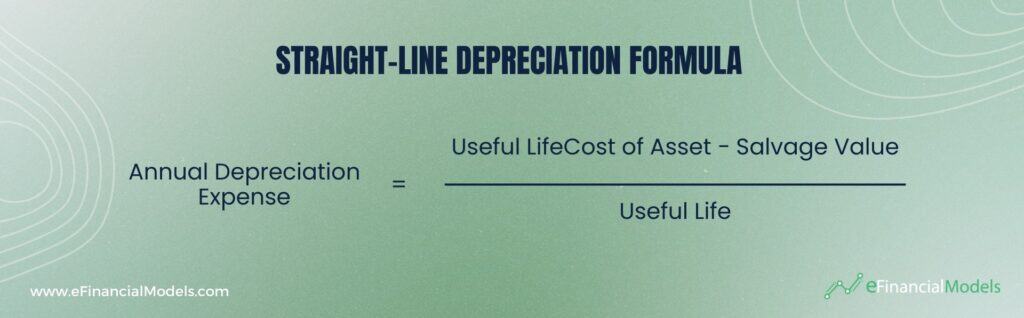
This formula provides a simple and effective way to calculate depreciation expense, making it easier for companies to manage their financial reporting and tax responsibilities.
Components of the Formula
Let us break down the components of the formula further for a deeper understanding:
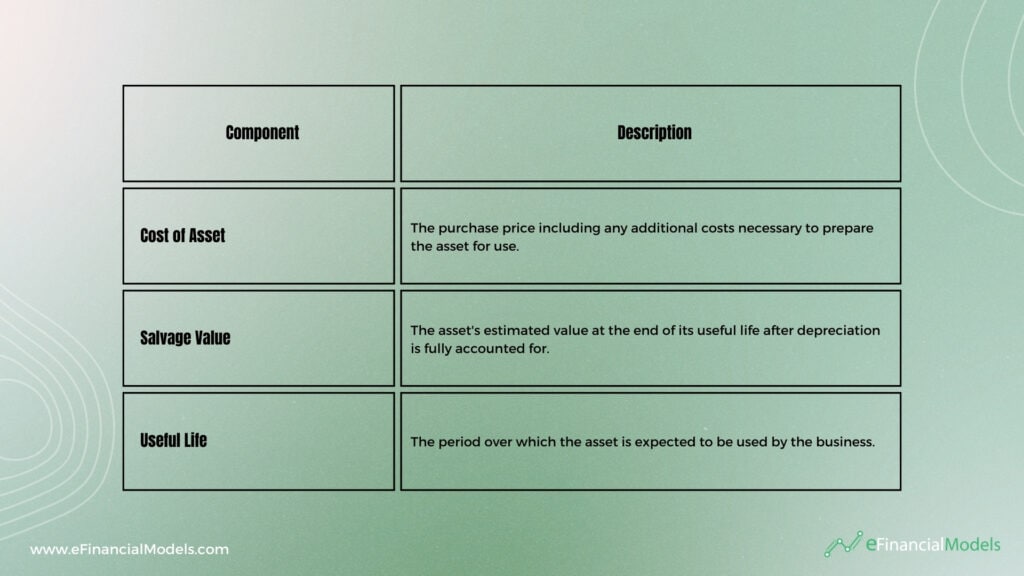
This table outlines the essential elements to understand when using the straight-line depreciation formula. By accurately determining these components, businesses can ensure they appropriately account for their assets over time. Depreciation is not just a matter of accounting; it also impacts cash flow and financial planning.
Applications of Straight Line Depreciation
Straight-line depreciation is widely applicable across various industries and can serve multiple purposes:
- Consistent Expense Recognition: It allows companies to recognize a uniform amount of depreciation expense each period, simplifying budgeting and forecasting efforts.
- Tax Benefits: Businesses often use straight-line depreciation to reduce taxable income, leading to potential tax savings.
- Asset Management: This method aids in determining when to replace or upgrade an asset, ensuring efficiency and cost-effectiveness.
- Clarity in Financial Reporting: It clearly represents asset valuation on financial statements, promoting transparency and comparability.
Understanding the applications of straight-line depreciation can enable businesses to utilize this accounting method strategically. Organizations can enhance their financial health and operational decision-making by leveraging its benefits.
In conclusion, straight-line depreciation is an essential financial management concept that is valuable for accurately allocating asset costs over time. By mastering this formula, businesses can improve their financial reporting, tax planning, and asset management practices, ultimately enhancing their decision-making processes.
3. How to Calculate Straight Line Depreciation
Calculating straight-line depreciation is a straightforward process, often employed by businesses to allocate the cost of a tangible asset over its useful life. This accounting method is favored for its simplicity and predictability, making it a staple in financial reporting. Understanding how to calculate straight-line depreciation is essential for accurate financial statements and effective asset management.
To calculate straight-line depreciation, you will need to know three key factors:
- Initial Cost of the Asset – The purchase price or the total cost incurred to acquire the asset.
- Salvage Value – The asset’s estimated residual value at the end of its useful life.
- Useful Life – The expected lifespan of the asset, typically measured in years.
For a clearer understanding, let’s illustrate this concept with an example:
Examples of Straight-Line Depreciation
Straight-line depreciation is a widely used method for allocating the cost of tangible assets over their useful lives. This method is simple and straightforward, making it popular in various industries. This section will explore examples demonstrating how straight-line depreciation works and its practical applications in different business contexts.
Capital Expenditures (CapEx) refer to the funds a business invests in acquiring, upgrading, or maintaining physical assets such as equipment, buildings, and machinery. Unlike operational expenses deducted in the period they occur, CapEx is capitalized and depreciated over the asset’s useful life. Straight-line depreciation spreads the total cost (minus salvage value) equally over the asset’s useful life, ensuring consistent expense recognition. This method simplifies financial planning by providing a predictable annual depreciation expense, impacting both income statements (as depreciation expense) and balance sheets (as accumulated depreciation reducing asset value).
The following screenshot presents a straight-line depreciation calculation based on key assumptions. It outlines the depreciation schedule over a fixed period, detailing how the asset’s cost is evenly allocated yearly.
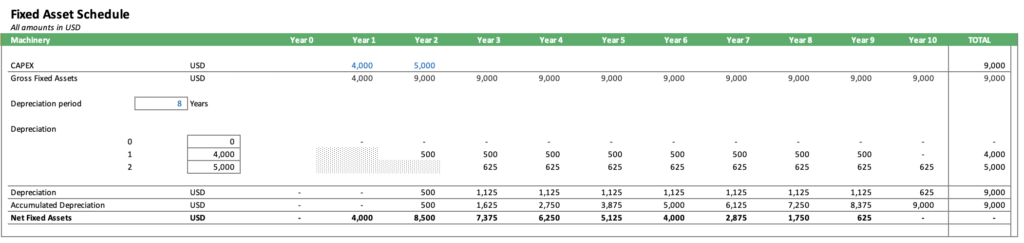
To illustrate the straight-line depreciation method, consider the following examples based on hypothetical assets:
Example 1: Machinery Purchased in Year 1
A manufacturing company purchases a machine in Year 1 with the following details:
- Initial Cost: $100,000
- Useful Life: 10 years
- Salvage Value: $10,000
Using the straight-line depreciation formula:
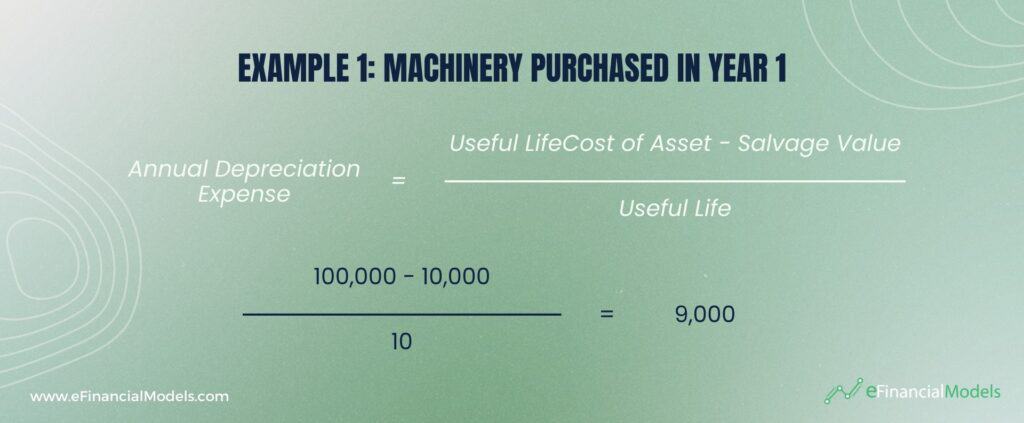
The company will record a depreciation expense of $9,000 per year for 10 years.
Example 2: Office Building Expansion
In Year 2, the company expands operations by constructing a new office building.
- Construction Cost: $500,000
- Useful Life: 25 years
- Salvage Value: $50,000

The $18,000 annual depreciation expense helps evenly distribute the cost of the building, preventing a one-time major expense that could disrupt financials.
Example 3: Vehicle Fleet for Logistics
In Year 3, the company purchases a fleet of delivery trucks to enhance distribution.
- Total Cost: $200,000
- Useful Life: 10 years
- Salvage Value: $20,000
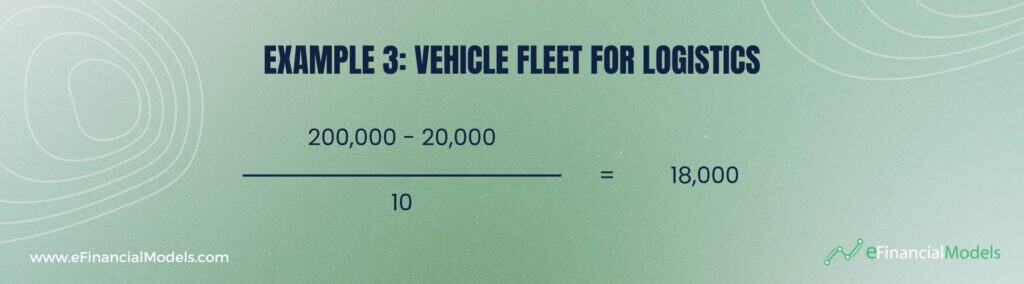
Since the trucks support logistics, depreciation expenses are allocated to transportation costs, ensuring profitability calculations accurately reflect asset wear and tear.
Straight-line depreciation is a fundamental accounting method enabling businesses to allocate asset costs over their useful lives systematically. Ensuring a consistent and predictable expense simplifies financial planning, tax calculations, and asset valuation. This method is particularly useful for capital expenditures (CapEx), as it provides a structured approach to managing long-term investments in machinery, buildings, and vehicles. Through real-world examples, we have illustrated how straight-line depreciation helps businesses accurately reflect asset usage in their financial statements. By mastering this calculation, companies can enhance their financial forecasting, budgeting, and overall asset management, leading to more informed investment decisions and sustained financial health.
4. Benefits of Straight-Line Depreciation in Financial Modeling
Straight-line depreciation is often the preferred method in financial modeling due to its simplicity and practical effectiveness. While more complex depreciation methods exist, the impact on cash flows primarily relates to taxes, making straight-line depreciation sufficient for most models. Instead of overcomplicating financial projections with accelerated or variable depreciation methods, straight-line depreciation provides a clear, predictable allocation of asset costs, ensuring consistency in financial statements. Below, we explore the key advantages of using this method and why it is often the best choice for streamlined and efficient financial modeling.
1. Simplicity and Ease of Calculation
One of the most significant advantages of the straight-line depreciation method is its straightforward calculation. This simplicity makes it accessible, especially to small business owners and individuals who may not possess advanced financial knowledge. The formula used is:
Annual Depreciation Expense = (Cost of the Asset – Salvage Value) / Useful Life of the Asset
The clarity of this formula allows companies to easily estimate how much value an asset will lose each year.
2. Predictability in Financial Planning
The uniformity of depreciation expenses across the useful life of an asset provides predictability, which can be advantageous for financial planning. Companies can budget more accurately by knowing how much depreciation will impact their financial statements over time. This consistency in expense allocation is beneficial for stakeholders.
3. Facilitates Tax Compliance
Utilizing the straight-line depreciation method can enhance business tax compliance. Since the method is simple and well-understood, tax authorities also recognize it, making it easier for entities to demonstrate compliance during audits. This can reduce disputes and streamline the tax assessment process.
4. Easier to Analyze Financial Performance
With Straight Line Depreciation, businesses can better analyze their financial performance over time. Businesses can effectively compare financial metrics year over year by having a consistent depreciation expense. This assists in evaluating actual performance against forecasts and offers insights into capital asset management.
Comparison Table of Depreciation Methods
The table below demonstrates a quick comparison between the Straight Line Depreciation method and other common depreciation methods:
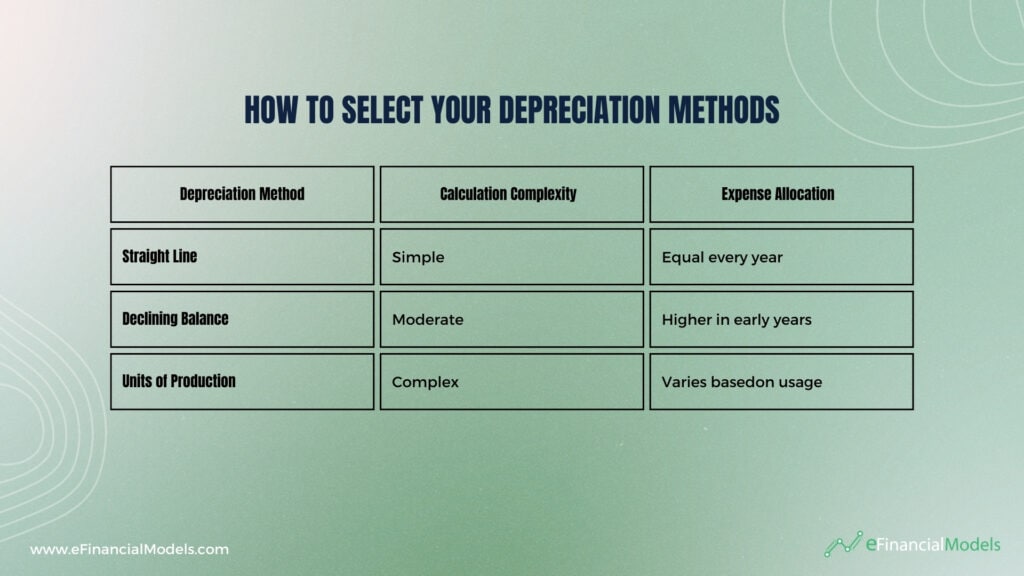
This comparison highlights the user-friendly nature of the Straight Line method compared to its counterparts. While more complex depreciation methods can offer varying benefits, such as accelerated depreciation benefits, they come with added complexity that may not be suitable for all businesses. The simplicity of the straight-line method remains appealing, especially for smaller operations or less complex asset structures. In conclusion, the Straight Line Depreciation method is advantageous for its simplicity, predictability, ease of tax compliance, and straightforward financial analysis. By implementing this method, businesses ensure a clear understanding of asset depreciation and facilitate smoother financial planning and reporting operations.
Conclusion: The Bottom Line on Straight Line Depreciation
Straight-line depreciation is one of the most straightforward accounting methods for allocating a tangible asset’s cost over its useful life. This method can significantly simplify financial reporting and make it easier for businesses to understand the actual cost associated with asset ownership. Additionally, it plays a vital role in financial planning, tax preparation, and investment analysis.
In conclusion, straight-line depreciation is beneficial for businesses seeking efficiency and clarity in asset management. Its consistent application of depreciation expense allows companies to predict financial outcomes better and plan for future expenses. Understanding the calculation elements and key characteristics can significantly aid in effective financial decision-making.




































You might also like:
- 8 Key Financial Metrics Every Business Owner Should Know
- 10 Tips to Develop a First Class Business Valuation Report
- Cash Flow Analysis in Excel
- Financial Statements – Definition, Uses, Contents and Templates
- How to Calculate Net Present Value (NPV)?
- 10 Main Elements of a Business Plan
- 10 Ideas to Increase Average Revenue Per User
- Financial Modeling for Startups and Small Businesses
- Business Valuation
- Calculating Revenue Growth Rate: A Key Metric for Business Success
- Master the Free Cash Flow Formula for Smarter Financial Decisions
- 5 Best Practices for Managing Days Receivables
- Understanding the Debt Service Coverage Ratio: An Essential Metric for Financial Analysis
- Financial Projections Templates – The Easy Way
- Understanding What is Yield to Maturity and Why It Matters
- Top 5 Principles of Corporate Finance
- 10-Step Financial Planning Checklist for Smart Executives
- Funding Strategies for Startups
- Understanding the Levelized Cost of Energy Formula
