
0 ITEMS

Surviving a Down Round: Fundraising Strategies for Startups in Crisis

Understanding down rounds is essential for startup founders and investors navigating funding challenges.
- A down round occurs when a startup raises capital at a lower valuation than its previous funding round.
- Down rounds can signal market or performance issues but also present opportunities for strategic investment at reduced prices.
- Recognizing the causes, such as market conditions or overvaluation, helps stakeholders prepare for valuation adjustments.
- The immediate and long-term impacts include dilution, investor sentiment shifts, and potential reputational damage.
- Effective mitigation involves strategic communication, operational efficiencies, and maintaining stakeholder relationships.
Knowing how to handle down rounds enables startups and investors to make informed decisions and plan for future growth.
These two points underscore the significance of grasping the concept of down rounds. By acknowledging the potential ramifications for both startups and investors, stakeholders can make informed decisions that may determine the trajectory of their ventures. To further illustrate the impact of down rounds on startups and investors, the following table summarizes key factors to consider:

Understanding these factors is imperative for both startups and investors. Startups must create strategies to mitigate negative impacts related to valuation, equity dilution, and future funding opportunities. On the other side, investors must gauge their sentiment and readiness to support a company facing such challenges. Consequently, awareness of down rounds fosters a culture of transparency and informed decision-making within the startup ecosystem. In summary, comprehending down rounds is vital to navigating the complex financial landscape in which startups operate. By internalizing the implications for founders and investors alike, stakeholders can proactively address potential pitfalls and strategize for a healthier business outlook.
Understanding Down Funding Rounds: Definition and Context
A down round occurs when a company raises its next financing round at a valuation lower than its previous round. This situation is often viewed negatively because it suggests that the company’s perceived value has decreased, which can raise concerns among current investors and potential investors about the business’s financial health and future prospects. Down rounds typically happen in start-ups and high-growth companies, where rapid fluctuations in market conditions can lead to significant shifts in valuation.
Several factors can contribute to a company experiencing a down round. Understanding these factors is crucial for investors, entrepreneurs, and stakeholders to navigate potential financial pitfalls effectively.
Down Rounds vs. Up Rounds: Key Differences
Understanding the distinction between down and up rounds is crucial for investors and startups. These concepts represent the valuation of companies during funding rounds and have significant implications on a startup’s existing equity and fundraising strategies. By grasping the differences between these terms, stakeholders can make more informed decisions that align with their long-term economic goals and risk tolerance. When a startup raises capital, the valuation it receives, whether higher or lower than previous rounds, indicates its perceived value in the market and influences investor confidence, equity distribution, and strategic planning. Recognizing the implications of down rounds versus up rounds can significantly enhance decision-making capabilities for both entrepreneurs and investors. To provide a clear comparison between the two concepts, we have summarized the key differences in the table below:

By examining the differences outlined in the table above, it is evident that down and up rounds dictate the immediate equity stakes of current shareholders and set the tone for future fundraising endeavors. Down rounds can lead to a lack of investor confidence and a possible fragile financial structure, while up rounds typically inspire excitement and a proactive market outlook. For startups, understanding these dynamics allows for proactive strategies in fundraising, valuation negotiations, and building investor relations. On the other hand, investors can better gauge the associated risks and rewards of investing in a startup based on its funding trajectory. Thus, awareness of whether a company is experiencing a down round or an up round can significantly impact strategic planning and long-term financial health for all parties involved.
Now let’s look at the causes of a Down Round
Causes of Down Rounds

Understanding the causes of down rounds is essential for entrepreneurs and investors alike, as they shed light on a company’s financial health and growth potential. A down round occurs when a company’s latest financing round values it less than its previous valuation, signaling potential concerns about its performance or market conditions. Identifying the underlying reasons can help stakeholders navigate these challenges and make informed decisions going forward. One way to conceptualize these causes is through the following key points:
Common Causes of Down Rounds
- Market Conditions: Adverse market conditions, such as economic downturns or shifts in industry trends, can lead to decreased investor confidence. For example, during the COVID-19 pandemic, many startups faced down rounds as consumer spending decreased and investor sentiment turned cautious.
- Poor Company Performance: If a business fails to meet its growth projections or operational targets, it may struggle to justify its previous valuation. A study indicated that companies recalibrating their revenue growth to 30% instead of the expected 50% in a competitive sector often faced subsequent down rounds.
- Increased Competition: Existing companies may struggle to maintain their growth trajectory as new entrants disrupt established markets. An example can be found in the ride-hailing industry, where companies that were once valued highly faced down rounds as competition intensified, compelling them to reconsider their operational strategies.
- Lack of Strategic Direction: Companies lacking a clear vision or direction often struggle to gain investor confidence. This can lead to perceptions of instability, which negatively impact valuations. In fact, a survey revealed that nearly 60% of investors view a lack of clear strategy as a significant reason to reconsider their funding decisions.
- Overvaluation in Previous Rounds: Correcting this misalignment in future rounds can naturally lead to down rounds if a company is overvalued in a prior round. For instance, if a tech startup is overhyped without significant product-market fit and later needs to raise more capital, it may face valuation cuts in subsequent rounds.
- Investor Sentiment and Risk Appetite: Changes in investor sentiment can greatly influence funding outcomes. For example, shifts towards more conservative investment strategies or concerns over economic stability can lead to less favorable terms for fundraising rounds.
By dissecting these causes of down rounds, stakeholders can better prepare for potential valuations and strategize their next steps to mitigate impending risks. For instance, companies should continuously evaluate their performance metrics and stay attuned to market trends to adjust their strategies proactively. Concurrently, investors must remain vigilant and understand how such factors can substantially affect the companies they choose to invest in. Being informed enhances dialogue and decision-making during funding discussions, subsequently improving overall investment outcomes.
The Impact of Down Rounds on Startup Funding and Beyond
When a startup experiences a down round, it means that the company is raising capital at a lower valuation than it had previously achieved. This scenario can substantially affect the startup’s operations and investor relationships. Understanding these impacts can help entrepreneurs navigate the challenging fundraising waters while maintaining investor confidence.
Immediate Impacts
The immediate effects of down rounds can be profound and often lead to a cascade of negative reactions. Here are some critical points to consider:
- Decreased Valuation: The most apparent effect is a company valuation reduction that can lead to negative perceptions among current and potential investors.
- Investor Sentiment: Existing investors may feel apprehensive, potentially losing trust and investment in future rounds.
- Employee Morale: Employees may become disheartened seeing the declining valuation, which can impact productivity and retention.
- Funding Pressures: Startups may face increased scrutiny and higher expectations from investors concerning performance and growth, further complicating their fundraising efforts.
These immediate impacts can set a challenging precedent for startups as they attempt to stabilize and attract new funding. In many instances, the immediate financial distress from a down round translates into longer-term challenges that may hinder the startup’s growth trajectory.
Long-term Consequences
The long-term implications of undergoing a down round can be equally significant and could shape the future landscape of the startup. Here are the key repercussions:
- Ownership Dilution: Existing shareholders will see their ownership stakes diluted, which could demotivate them and complicate capital structure.
- Difficulty Raising Future Funds: Down rounds may result in less favorable terms for future fundraising, leading to more stringent conditions for the next financing.
- Brand Reputation Damage: The public perception of the startup can be lasting and affect partnerships, customer acquisition, and investor attraction.
- Strategic Realignments: Startups may have to change their business strategies to focus on core competencies due to tighter financial constraints.
These long-term consequences illustrate how a single down round can transform market confidence into lasting challenges that persist long after the funding issues have been resolved. Startups must focus on long-term strategies to rebuild confidence and navigate the complexities that follow a down round.
Effects on Shareholder Equity vs. Potential Investor Interest
The following table illustrates the conflicting pressures that a startup may face during and after a down round, comparing the effects on shareholder equity and potential investor interest.
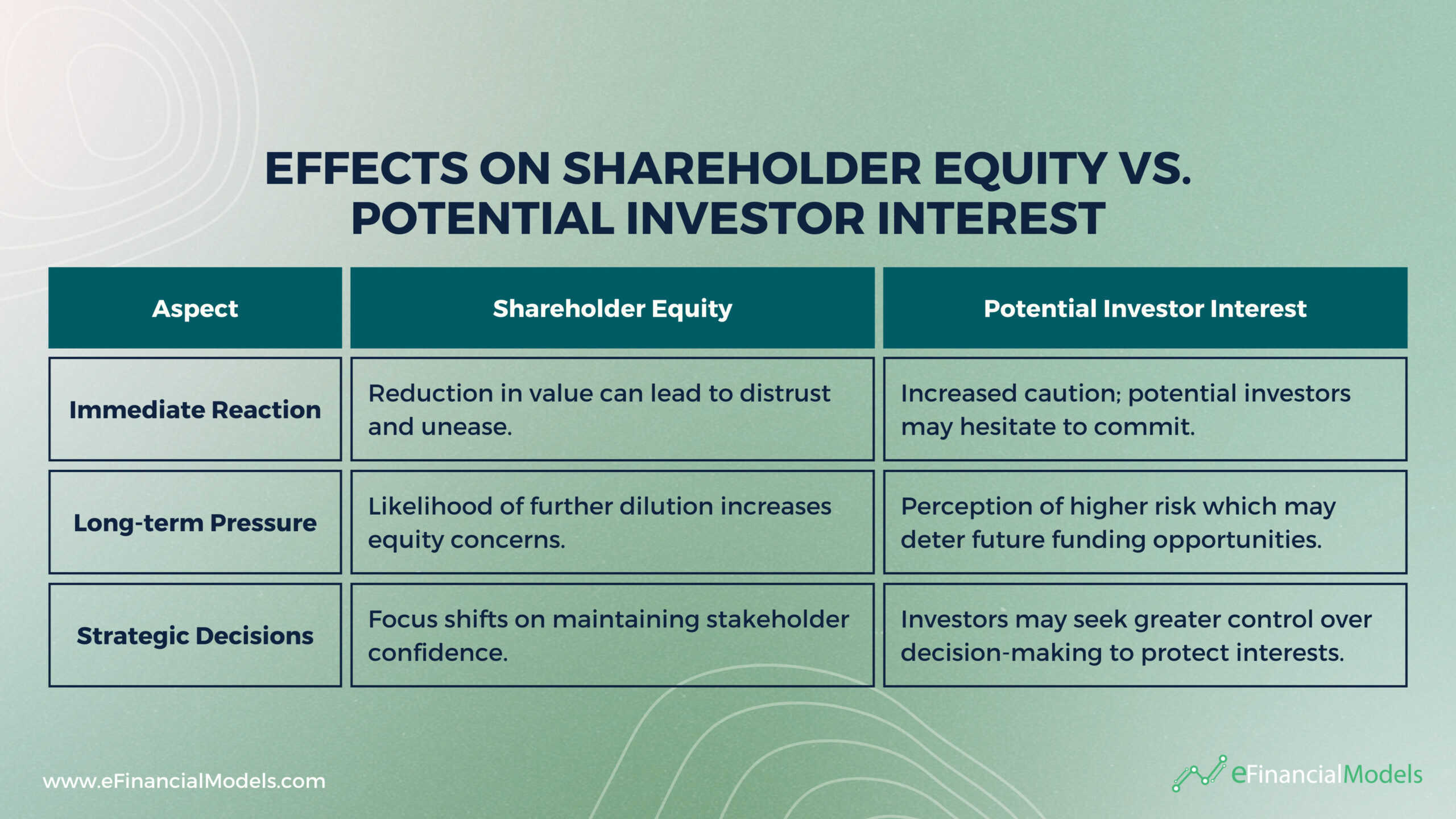
In conclusion, startups must carefully navigate the implications of a down round, weighing the impact on shareholder equity against the challenges of preserving investor interest. Recognizing these conflicts early on allows for more proactive strategies that can help to stabilize the organization and restore stakeholder confidence. Emphasizing transparent communication and strategic pivots is essential, not just for survival but for regaining momentum in future endeavors.
Investor Perspectives on Down Rounds for Startups
When it comes to down rounds, the perspectives among investors can vary significantly based on their risk tolerance and appetite for opportunity. Down rounds occur when a startup raises capital at a valuation lower than its previous round. This often creates a dilemma for investors who must weigh the risks associated with such an event against potential opportunities that could arise.
Investors may observe several unique opportunities during down rounds that could potentially yield high returns. The following points illustrate key opportunities that investors might consider:
- Lower entry valuations, allowing investors to acquire equity at a discount.
- Increased ownership percentages for the same investment amount, enhancing future upside potential.
- Gained insights into the startup’s response strategies and operational adjustments under challenging circumstances.
- Possibility of company recovery leading to substantial returns if the startup adjusts its business model successfully.
- Involvement in turnaround efforts, providing hands-on experience and influence in the company’s direction.
These opportunities position investors to capitalize on potentially lucrative situations. By investing during down rounds, they may benefit from the discounted valuations and a level of engagement that could influence the startup’s recovery strategy. However, it is essential to analyze such opportunities, as challenges persist carefully.
While down rounds offer enticing opportunities, they come with inherent risks that investors must acknowledge. Here are the significant risks to consider:
- Higher potential for company failure due to a lack of funding stability.
- The dilution of existing shareholders impacts previous investors’ equity unless they participate further.
- Loss of confidence in the market, which could limit future fundraising efforts.
- Possibility of existing investors opting out, signaling deeper issues within the company.
- Increased scrutiny of the startup’s operations and financial health during the due diligence process.
It is crucial to recognize these risks before making investment decisions. While potential upside exists, the possibility of a company failing to recover or further deteriorating must be weighed carefully. Awareness of these risks allows investors to approach down rounds strategically, balancing intuition with thorough analysis.
Due Diligence During Down Rounds
When evaluating startups involved in down rounds, investors do extensive due diligence to mitigate risk and identify viable opportunities. Due diligence practices typically include the following steps:
- Financial analysis of current and past performance metrics, focusing on revenue, profitability, and cash flow.
- Assessment of the management team’s capability to implement changes and lead the business effectively.
- Evaluation of the startup’s market position, competition, and potential for recovery.
- Review customer feedback and retention rates to ascertain the brand’s strength and market demand.
- Scrutiny of the startup’s operational strategy and its adaptability to market conditions.
Thorough due diligence equips investors with a clearer understanding of the risks and rewards of investing in down rounds. Investors can make more informed decisions that align with their investment goals by examining financial statements, management practices, and operational resilience. Engaging in this level of scrutiny helps mitigate risks and enhances the prospect of seizing profitable opportunities.
How Startups Can Mitigate the Effects of Down Rounds
Down rounds can significantly impact a startup’s valuation and employee morale. However, there are proactive measures that startups can implement to navigate these challenges successfully. The right strategies can help maintain investor confidence and engage the workforce. The following checklist outlines essential steps that startups can take to mitigate the effects of down rounds.
Implementing these strategies requires careful planning and execution. The steps outlined below will help startups prepare for potential down rounds and address the challenges that arise effectively.
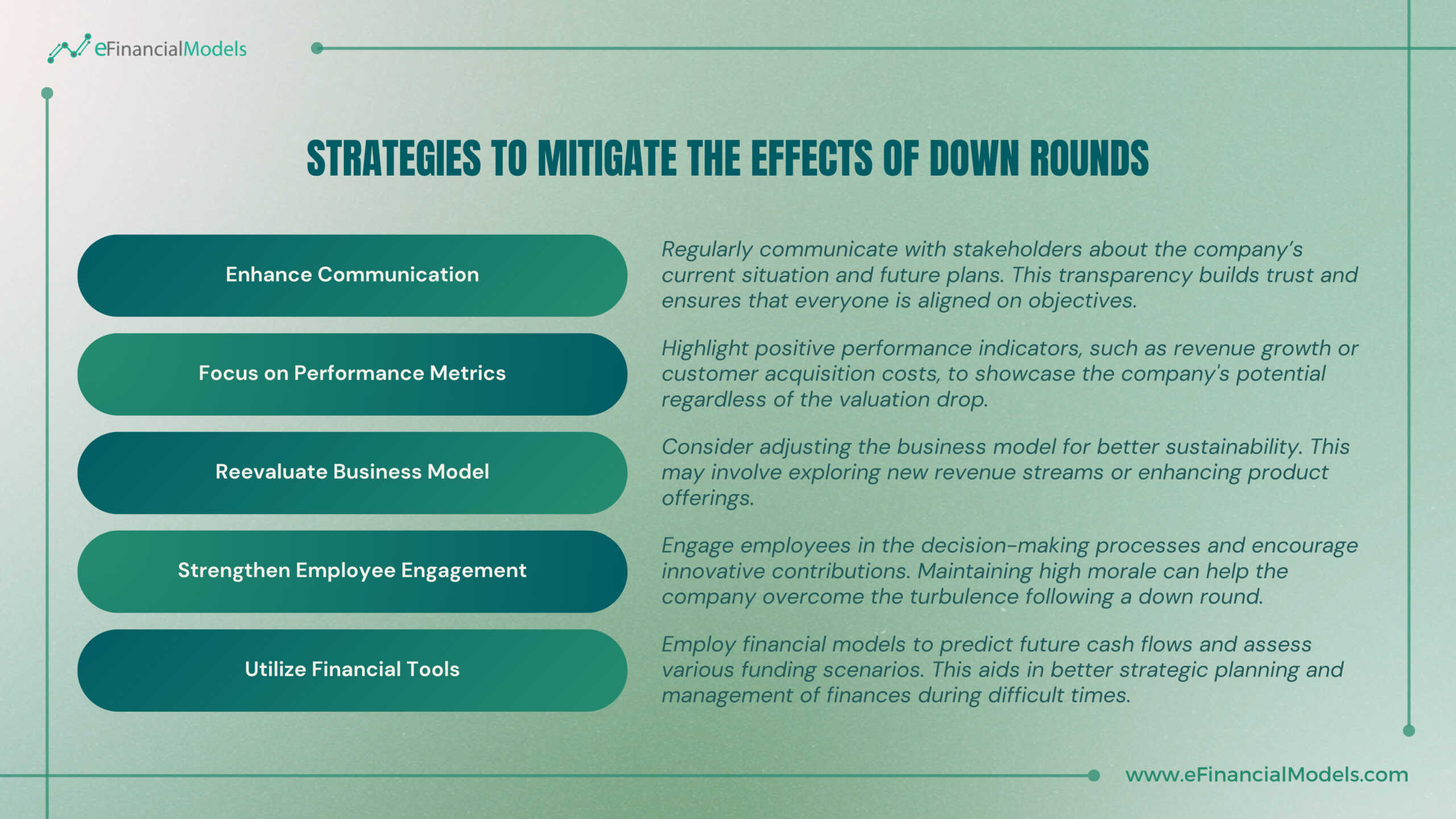
By strategically focusing on communication, operational adjustments, and leveraging data, startups can create a resilient groundwork for navigating down rounds. Each of the measures presented in the table plays a vital role in maintaining the startup’s relevance and strength in a challenging financial environment. Additionally, relying on advanced financial tools ensures that firms react to current economic hardships and prepare for a sustainable future.
Another important aspect of mitigating the detrimental effects of down rounds is evaluating stakeholder relationships. Startups should work on nurturing these relationships, focusing on investors who offer guidance and are vested in the company’s success. This can pave the way for potential recovery and new investor interest during subsequent fundraising efforts.
Startups must take an all-encompassing approach to sustain growth through challenging times, as every aspect of the business contributes to its overall resilience. By prioritizing transparency, innovative thinking, and effective planning, startups can survive and thrive during and after down rounds.
Exploring comprehensive templates that align with their industry can be a game-changer for startups looking to enhance their financial planning and modeling strategies.
Conclusion: Startups Need to Carefully Navigate Down Rounds
When faced with the reality of down rounds, it is crucial to approach the situation with a strategic mindset. Understanding how to navigate these challenging times helps mitigate the impacts and can serve as a profound learning experience. The key strategies for navigating down rounds often involve:
- Re-evaluating financial projections: Taking a fresh look at your financial outlook may help you adjust expectations based on the current market conditions.
- Communicating transparently: Open lines of communication with investors and stakeholders can foster trust and demonstrate that you are navigating the situation thoughtfully.
- Exploring new revenue streams: Diversifying your revenue sources can help stabilize your business during a down round and mitigate risk.
- Focusing on operational efficiencies: Streamlining processes can improve profitability and enhance your ability to weather financial storms.
- Adapting your business model: Be prepared to pivot your business model based on market demands and investor feedback.
These strategies are crucial for survival and open avenues for resilience and growth in the long run. While down rounds may evoke negative emotions, seeing them as opportunities for introspection and value creation is essential. The process of adapting to new circumstances fosters not only resilience but also innovative ways to engage with both your team and investors. Recognizing the importance of persistence and adaptive strategy is vital in overcoming the challenges accompanying down rounds. Here are some key areas to focus on that underline this importance:
- Resilience: Determining to move forward despite setbacks is invaluable in business.
- Learning Opportunities: Each challenge presents lessons that can inform future strategies and decision-making.
- Building Relationships: Strengthening relationships with investors and stakeholders can lead to better support during tough times.
- Agility: Cultivating an agile mindset allows for quicker pivots based on market feedback or internal assessments.
- Continuous Improvement: Regularly seeking metrics and feedback can drive improvements and help identify areas needing further enhancement.
In conclusion, navigating down rounds successfully is not just about immediate recovery but about laying the groundwork for long-term success. By remaining resilient, adopting adaptive strategies, and viewing these experiences as invaluable learning opportunities, businesses can emerge stronger post-challenges. This understanding paves the way for enhanced performance and innovative solutions that resonate well with market needs. Ultimately, resilience and adaptability can transform the future trajectory of a company, enabling it to thrive despite the immediate hurdles faced during a down round. For additional insights into effective financial planning strategies, consider exploring our Financial Model Templates, which can provide valuable tools to effectively assess scenario outcomes and business forecasts.
You might also like:
- 10 Steps to Create a Drop Down List Using Data Validation in Excel
- 10 Main Elements of a Business Plan
- 12 Funding Sources for Businesses and Startups
- 5 Practical Tips to Help Raise Funds For Startups
- How to Make a Startup Financial Plan for Fundraising?
- How to Raise Series A Funding?
- Startup Model Templates in Excel that can help your Business Grow
- Boost Your Business’s Financial Management with this Excel Budget Template
- Financial Modeling for Startups and Small Businesses
- Financial Ratios Analysis and Its Importance
- Finding a Valuation Model for Your Business
- Understanding the Debt Service Coverage Ratio: An Essential Metric for Financial Analysis
- How to Secure Seed Financing?
- Franchise Model
- Financial Planning for Small Business Owners – Taking an SBA Loan
- Startup Financial Models
- Simple Fundraising Model
- Fundraising Project Plan Template in Excel
- 10 Tips to Develop a First Class Business Valuation Report
- How to Optimize the Average Selling Price: Strategies for Higher Profits
