0 ITEMS

A Guide to Making Smarter Financial Decisions

The most successful investors understand that making smarter financial decisions is more than having all the answers. It’s about understanding how the pieces fit together. And for those looking for a roadmap to do just that, this guide to making smarter financial decisions is the perfect starting point.
The guide provides insights into making smart financial decisions using financial modeling techniques. It covers topics such as analyzing future cash flows, understanding financial statements, and using financial models to make informed decisions. Whether you are a business owner, investor, or individual looking to improve your financial decision-making skills, this guide provides practical tips and strategies to help you achieve your financial goals.
The Need for Financial Decision-Making
Financial decisions refer to individuals’ or businesses’ choices regarding their capital allocation and funding decisions. These decisions can include allocating funds, such as investing in new machinery or equipment, marketing initiatives, construction of new production facilities, etc. It means deciding the best way to finance these purchases, such as taking out a loan or issuing bonds. Financial decisions require thorough analysis such as:
- Analyzing financial statements.
- Determining the appropriate level of risk for investments.
- Developing budgets and financial plans to achieve specific goals.
Financial decisions are critical to the success of individuals and businesses and require careful consideration and analysis to ensure that the chosen strategies align with their financial objectives. The need for financial decision-making is even more critical to entrepreneurs than it is for individuals. Entrepreneurs must make decisions about financing, budgeting, investment, and cash flow management to ensure their business remains viable and profitable.
Here are some of the reasons why financial decision-making is crucial for entrepreneurs and investors:
Entrepreneurs
Financial decision-making is crucial for entrepreneurs in every aspect of their business, including starting a new business, budgeting, cash flow management, funding, and risk management. Here’s why:
- Starting a new business: Entrepreneurs need to make sound financial decisions when starting a new business to determine if it’s a good idea or not. They need to assess the financial feasibility of their business idea, estimate start-up costs, and determine how much capital they need to launch their business. Without proper financial planning and decision-making, the company may run out of money before establishing itself.
- Budgeting: Effective budgeting is critical to the success of any business. Entrepreneurs need to create and manage a budget that will allow them to allocate resources and plan for expenses. They must also make important financial decisions, such as setting prices for their products or services, determining necessary costs, how will the cash flows of the following months look like, and making strategic investments. They need to create a budget that ensures they can cover their expenses while investing in the growth of their business.
- Cash flow management: Cash flow is the lifeblood of any business. Entrepreneurs must make sound financial decisions to manage their cash flow effectively, such as operating expenses, promptly billing customers, and negotiating payment terms with suppliers. They must be able to anticipate cash inflows and outflows, maintain adequate working capital, and manage debt and credit lines.
- Funding: Entrepreneurs often need external financing to start or grow their businesses. They need to make important financial decisions such as choosing how to fund the business with the right type of financing, negotiating terms and conditions, and managing debt and equity financing.
- Risk management: Starting and running a business involves inherent risks. So, entrepreneurs need to make important financial decisions to manage risks effectively. They must assess and manage financial risks, such as market volatility or changes in interest rates, and mitigate other risks, such as legal or operational risks. It is to avoid having a blind eye when taking crucial actions.
Investors
Financial decision-making is crucial for investors because it can significantly impact their returns and overall success in the investment world. Here are some reasons why financial decision-making is vital for investors in specific areas:
- Board participation: When investors become a part of the board of directors of a company, they have a say in the company’s decision-making process, including financial decisions. It is essential because financial choices can significantly impact a company’s bottom line and future growth potential. For example, suppose the board makes poor financial decisions, such as investing in unprofitable projects or taking on too much debt. In that case, it can negatively affect the company’s financial health and, ultimately, the investor’s returns.
- Capital allocation decisions: Capital allocation refers to how a company invests resources to achieve its business objectives. Investors must make informed financial decisions regarding capital allocation because it can significantly impact the company’s growth potential and profitability. For example, if a company invests its capital in low-growth or unprofitable ventures, it can negatively impact its future earnings potential and, ultimately, the investor’s returns.
- Exit decisions: Exit decisions refer to when investors decide to sell their investments in a company. This decision is critical because it can significantly impact the investor’s returns. Investors must make informed financial decisions regarding exit decisions, such as timing the market correctly and assessing the company’s financial health and growth potential. For example, if an investor sells their investments too early, they may miss out on potential gains, while if they sell too late, they may suffer losses.
- Investments: Financial decision-making is crucial when selecting which investments to make. Investors must evaluate investment opportunities and determine which will provide the best returns. Before making investment decisions, investors must consider various financial factors, such as the company’s financial health, growth potential, and valuation. Poor financial decision-making in this area can result in investing in unprofitable or risky ventures, leading to losses for the investor. Conversely, good financial decision-making can lead to investments in profitable and growth-oriented ventures, resulting in high returns for the investor.

Types of Financial Decisions
Financial decisions refer to individuals, businesses, and organizations’ choices regarding allocating, managing, and utilizing their financial resources. The most common types of financial decisions are:
Investment Decisions
Investment decisions involve deciding which investments the company should make, such as acquiring new assets, developing new products or services, or expanding into new markets. These decisions require careful analysis of the potential return on investment and the associated risks. They can be taken for both the long and short term. Long-term investment decisions affect a business’ long-term earning capacity and profitability. For example, investment in a new building or machine, etc., are long-term investment decision. At the same time, short-term investment decisions affect a business’s day-to-day operations. For example, decisions regarding bill receivables or cash allocation are decisions on short-term investments.
Two essential elements of investment decisions are capital budgeting and liquidity.
- Capital budgeting is crucial to investment decisions because it helps companies allocate their financial resources effectively and decide which investments to pursue. It also plays a v role in the company’s financial planning and management. It helps management to set financial targets, establish budgets, and manage cash flow. Moreover, the capital budgeting process can help identify potential risks associated with an investment and develop contingency plans to mitigate those risks. The process involves:
- Analyzing the cash flows associated with a potential investment.
- Estimating the cost of capital.
- Using various financial techniques to evaluate the project’s financial viability.
- Liquidity refers to the ability of an individual or organization to convert their assets into cash quickly and easily without significant loss of value. In other words, liquidity is the ability to meet short-term financial obligations with readily available cash or cash equivalents. Several financial ratios serve as liquidity indicators:
- The current ratio compares a company’s existing assets to its current liabilities.
- The quick ratio only includes assets that can be easily converted into cash.
- The cash ratio only includes cash and cash equivalents.
Pro-tips: A liquidity ratios Excel template calculator can help you easily and quickly analyze and calculate these indicators.
Funding Decisions
Funding decisions involve how organizations or individuals raise capital to fund their operations or investments, such as debt, equity, or hybrid financing. They are a type of financial decision determining how a company finances its operations and growth. These decisions are important because they can significantly impact the company’s financial health and ability to achieve its strategic objectives. They affect the company’s cost of capital, risk, and financial flexibility. Overall, funding decisions are crucial for a company’s success and require careful consideration of various factors, including the company’s financial position, market conditions, and strategic objectives.
When making funding decisions, companies must consider various factors to ensure that they are obtaining funding at the lowest possible cost and with the least risk. Here are some of the critical factors that companies should consider when making funding decisions:
- The company’s financial position, including cash flow, profitability, and balance sheet strength. Companies with more powerful financial positions can obtain funding at lower costs than those with weaker financial positions.
- The cost of capital is obtaining funding from different sources, such as debt or equity. Companies should consider the cost of capital to ensure they get funding at the lowest possible cost.
- Different sources of funding come with varying levels of risk. Companies should consider the risks associated with each funding source when making funding decisions. For example, debt financing may come with higher risk due to the potential for default, while equity financing may come with higher risk due to the dilution of ownership.
Dividend Decisions
Dividend decisions involve the distribution of profits to shareholders or owners in the form of dividends or retained earnings. Dividend decisions are a type of financial decision that involves determining how much of a company’s profits should be distributed to its shareholders as dividends. They are essential because they can affect a company’s ability to retain earnings for future growth and its attractiveness to investors.
Dividend decisions include three primary considerations:
- The dividend payout ratio involves deciding what percentage of the company’s profits will be paid to shareholders as dividends. A higher payout ratio means more of the company’s earnings are distributed to shareholders, while a lower payout ratio means more earnings are retained for future growth.
- The dividend frequency involves deciding how often dividends will be paid to shareholders, such as quarterly or annually.
- The dividend yield is the dividends paid to shareholders relative to the company’s stock price. Companies with higher dividend yields may be more attractive to income-oriented investors.
Dividend decisions are influenced by various factors, including the company’s financial position, cash flow, profitability, growth prospects, and investor preferences. Companies must balance paying shareholders dividends and retaining earnings for future growth opportunities.
Pro-tip: A dividend discount model can help you accurately calculate the intrinsic value of an investment based on the present value of future dividends.



















































Crucial Elements in Financial Decision-Making
Financial decision-making is planning and executing decisions that effectively manage financial resources to meet your goals and objectives. It pays to practice due diligence to gather as much information as possible about potential investments and other financial commitments to make smarter financial decisions. Here are some essential elements to consider:
Cash Flow Analysis
Understanding how much cash flow is necessary for your long-term goals is essential. It can be challenging to calculate, especially if you have multiple sources of income or debt obligations. However, having a detailed understanding of your monthly budget can help you make informed decisions about budgeting for future goals.
Cash flow analysis is essential when making financial decisions because it provides insights into the inflows and outflows of cash within an organization. It helps to determine the amount of cash available for investments, debt repayment, and other expenses. This analysis is crucial for any business because it helps identify potential cash flow problems that could lead to financial distress. By analyzing cash flows, businesses can identify the sources of cash, which can be used to finance capital expenditures, pay off debt, or distribute to shareholders as dividends. It can also help businesses to identify areas where they can reduce expenses or increase revenue to improve cash flows.
A discounted cash flow analysis is particularly important for growing or expanding businesses, as they often require significant capital expenditures, research, development, or marketing investments to achieve their goals. By analyzing cash flows, these businesses can ensure sufficient cash to fund these investments without compromising their financial stability.
Cash yield is a financial ratio that measures the amount of cash a company generates with its market capitalization. It is calculated by dividing the company’s operating cash flow by market capitalization. Cash yield is a valuable metric for investors who want to perform cash flow analysis, as it clearly shows how much cash the company generates relative to its size.
Risk Tolerance
Risk tolerance is an essential aspect of any financial decision-making process. This variable helps you assess the willingness and ability to take on a degree of uncertainty regarding investment returns. To determine your risk tolerance level, consider your financial time horizon, income stability, and other factors.
Making responsible financial decisions isn’t just about predicting the future but understanding and managing risk. Risk can be defined as the possibility of losing money or not achieving a desired outcome. Identifying and assessing risk is vital to making wise financial decisions. To evaluate risk, one must first identify all possible outcomes. Once the range of possible effects has been determined, it’s essential to consider the probability of each outcome. Once the potential risks are identified and their possibilities assessed, decision-makers can better understand the implications of their decisions before making them.
When evaluating potential risks, it’s also important to consider potential opportunities. While some risks may limit potential gains, others may reveal opportunities to help increase returns or reduce costs. In any case, assessing the possible worst-case and best-case scenarios can lead to more informed decision-making. For instance, investment options are products or services to increase or conserve wealth. These investments range from stocks, bonds, mutual funds, and ETFs to commodities, derivatives, or real estate. A wise financial decision considers how different types of investments can best work together and fit into your financial plan.
Stocks generally offer the highest return potential but also carry the most significant risk, whereas bonds are more conservative but often yield less. Mutual funds and ETFs give you diversification with just one purchase, helping to spread the risk across different asset classes such as stocks, bonds, and cash. Commodities can add another layer of diversification, and real estate can help you build a tangible asset over time. The key to smart financial decision-making is understanding when each option may be appropriate to make the most informed choices and maximize your return on investment while managing your risk tolerance.
Use IRR & NPV to Assess Risk Tolerance
Analyzing the Internal Rate of Return versus the Net Present Value in the context of financial decision-making can be very helpful in assessing risk tolerance.
Net Present Value (NPV) represents the difference between cash inflows’ present value and cash outflows’ current value over a given period. A positive NPV suggests that an investment is less risky and highly profitable. In contrast, a negative NPV indicates that it is highly risky. By analyzing the NPV of an investment, investors can evaluate its potential risks and rewards. If an investment has a high NPV, it may be worth taking on more risk to reap the potential rewards.
Internal Rate of Return (IRR), on the other hand, represents the rate at which an investment’s cash inflows equal its cash outflows. A higher IRR indicates a higher potential return on investment, but it also shows a higher level of risk. Investors with an increased risk tolerance may be willing to invest in projects with a high IRR. In contrast, investors with a lower risk tolerance may prefer investments with a lower IRR and a more predictable return.
In summary, NPV and IRR can provide valuable insight into an investment’s potential profitability and risk. By analyzing these metrics, investors can determine the level of risk they are comfortable with and make investment decisions accordingly.
Time Horizon
Your time horizon is crucial when considering any investment or budgeting plan. Factors such as the time you expect to return your investment should be carefully considered. Time horizon refers to the length of time an investor plans to hold an investment or make financial decisions. It is crucial when making financial decisions because it helps determine the type of investment most suitable for the investor. The time horizon can be short-term, medium-term, or long-term, and it can vary depending on the investor’s investment goals, risk tolerance, and financial circumstances.
- A short-term horizon typically refers to less than one year. Investors with short-term time horizons usually have a low-risk tolerance and prefer investing in less volatile assets such as savings accounts, money market funds, or short-term bonds. These investments are considered low-risk but also have lower potential returns.
- A medium-term time horizon typically ranges from one to five years. Investors with a medium-term time horizon may be willing to take on a slightly higher level of risk for the potential for higher returns. They may choose to invest in stocks, mutual funds, or exchange-traded funds (ETFs) that offer a balance between risk and return.
- A long-term time horizon refers to more than five years of investment. Investors with long-term time horizons are typically more comfortable taking on higher levels of risk for the potential for higher returns. They may choose to invest in stocks, mutual funds, or ETFs that offer higher potential returns but have a higher risk.
The time horizon is essential when making financial decisions because it affects the risk-return trade-off. Investments that offer higher returns come with higher risk, and investments that provide lower returns come with lower risk. By understanding the investor’s time horizon, financial advisors can make suitable investment recommendations that align with the investor’s investment goals, risk tolerance, and financial circumstances. To understand the time horizon better, see how simple payback analysis can improve the quality of your financial decision-making.




















Strategies to Make Better Financial Decisions
Making smarter financial decisions requires both knowledge and the right strategies. Here are a few tips to help you get started:
1) Perform Financial Statement Analysis
When making financial decisions, financial statements are one of the most crucial tools at your disposal. You should be able to read them, comprehend them, and assess the information they contain. Financial statement analysis helps you understand your current financial situation by examining your cash flow and how much money you’re making or losing. This analysis can also reveal potential risks or opportunities that you may not be aware of and show you how to make better decisions in the future.
Knowing the figures on your company’s balance sheet can help you determine its present financial situation and whether it is headed for success or disaster. You may learn more about a company’s cash flow statement and how cash is created and used. You may assess your company’s performance in accordance with expectations by looking at its income statement.
2) Take Advantage of Financial Modeling Tools
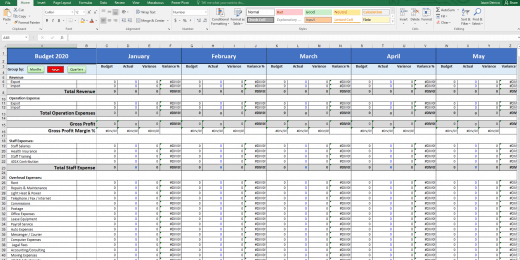
Financial modeling provides a powerful tool for considering financial decisions. It allows you to evaluate different scenarios and gain a better understanding of the potential consequences of your decisions. With the right tools and financial data, it’s possible to create an accurate picture of how different choices will impact your financial health.
Financial modeling is often used to analyze and optimize portfolios, develop capital budgeting strategies, examine overall company performance, and create forecasts for future earnings. By conducting a thorough financial analysis, you can gain deeper insight into how different options may affect your bottom line.
Using software such as Excel or other specialized programs can help streamline the process and make it easier to understand the results more quickly. Financial modeling also allows you to test assumptions and adjust them accordingly in order to gain the best outcome possible. This gives you greater control over your financial destiny and helps you stay ahead of any changes in the market.
3) Track Your Financial Performance
Making wise decisions requires being aware of your organization’s financial success in the past and the present. Monitoring financial KPIs, or key performance indicators, including gross profit margin, working capital, and return on equity, can help you get insight into the financial health of your business and the strategic contributions made by your team.
Financial metrics are quantitative measurements helpful for monitoring your company’s financial health and expansion, which can help you decide how to allocate personnel and resources to achieve your company’s objectives. Analysts, investors, and management can evaluate a company’s financial stability and profitability using these criteria. By analyzing these metrics, stakeholders can make informed decisions about budgeting, business strategy, and investments.

Summary – The Best Tool for Financial Decision-Making
Financial decision-making is a critical process that can make or break a business, whether making an investment, funding, or dividend decision. By understanding and applying financial modeling methods, organizations can gain insights into the forces that drive their business performance. With this insight, businesses can make smarter decisions that can have a lasting impact on their financial success.
Becoming an informed decision-maker allows you to position your business for future success in the ever-changing marketplace. Ultimately, the best tool for making wise financial decisions is knowledge. By educating themselves about financial concepts and strategies, individuals and businesses can develop the skills and confidence needed to make informed decisions that align with their goals and values.