
0 ITEMS

What Is the Cost Structure of Wind Energy Projects?
When considering renewable energy success stories, one cannot ignore the ambitious and ground-breaking London Array—one of the world’s largest offshore wind energy projects. Situated in the Thames Estuary, the London Array is a powerful example of how a well-structured cost plan can make a vision for clean energy a reality. With initial estimates soaring beyond $3 billion, the wind energy project attracted substantial investment and required careful financial planning to balance development costs, installation, and long-term operational expenses.
Understanding the intricacies of a wind energy project like the London Array can provide valuable insights into the cost structure of wind energy ventures. This article breaks down the cost structure of a wind energy project. From the cost of wind energy per kWh to grants for renewable energy, understanding the financial side is key to building a successful wind farm.
Introduction to Wind Energy Projects
Wind energy projects are large-scale undertakings designed to convert wind power into usable electricity. They transform the power of the wind into usable electricity. As the demand for renewable energy grows, these projects expand globally, reducing our reliance on fossil fuels. Yet, understanding the costs and how financing affects the success of renewable energy projects can be challenging.
Wind energy can be captured both onshore and offshore. Onshore wind turbines are built on land. Offshore turbines are installed in bodies of water, often far from the coast. Onshore projects have grown quickly over the past decade, while offshore wind farms are emerging as the next big opportunity. Offshore turbines take advantage of stronger, more consistent winds, achieving capacity factors over 50% compared to 35% for onshore. It means they generate significantly more energy. However, offshore projects also cost more due to marine construction, underwater transmission, and complex maintenance needs.
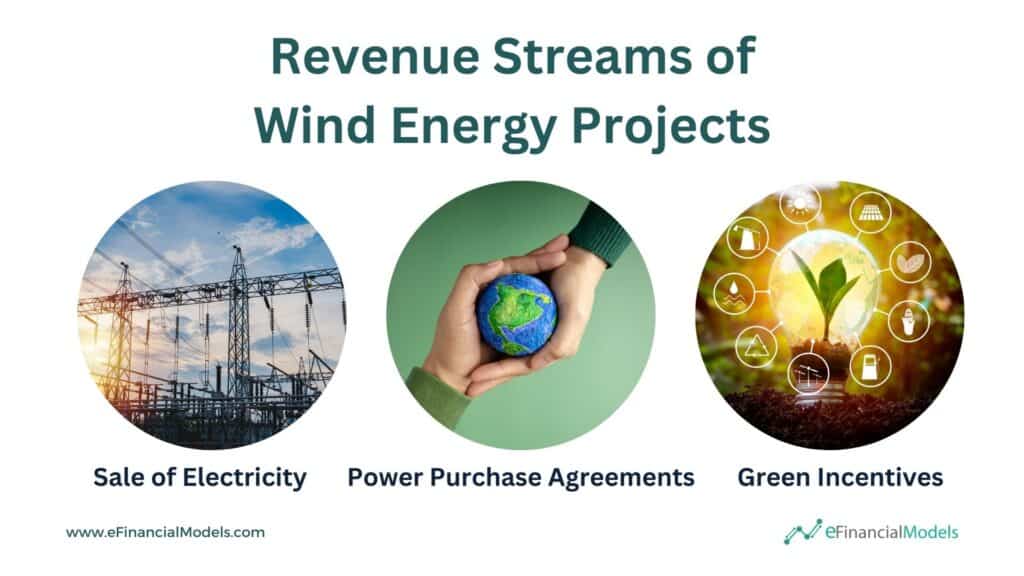
Understanding the revenue streams is essential for wind energy projects to be financially viable. Revenue comes from the sale of electricity, power purchase agreements (PPAs), and green incentives.
- Wind farms earn revenue by selling generated electricity to the grid through direct market sales or contracts with utilities.
- A PPA is an agreement between the wind farm developer and an electricity buyer. This contract ensures a steady revenue stream for the wind energy project and is often necessary to secure financing.
Green incentives often interact with Renewable Energy Certificates (RECs) to promote renewable energy adoption. RECs are issued for every megawatt-hour (MWh) of renewable electricity generated. They can be sold, providing additional income for the wind energy project. It’s important to note that while RECs themselves are not direct government incentives, they are integral to regulatory frameworks. Combining RECs and government incentives creates a supportive environment for expanding renewable energy generation.
Comparing Wind Energy Costs to Solar Power Plants
Wind energy costs often compete with solar power, making both renewable options attractive. Onshore wind energy costs tend to be cheaper per kWh than solar, while offshore wind energy costs can be more expensive due to higher installation expenses. Solar power, on the other hand, offers more predictable pricing with less maintenance. However, both wind and solar are key players in the renewable energy market, each with strengths. A comparison table of the onshore and offshore wind energy costs with solar shows how these clean energy sources stack up in affordability.

The chart shows how solar and wind energy costs have decreased from 2010 to 2023. Offshore wind started with the highest cost per kWh, followed by onshore wind, and then solar photovoltaic. Over the years, costs for all three sources dropped steadily. Solar energy saw the biggest reduction, reaching the lowest costs at approximately $0.05/kWh by 2023. Onshore wind remained cheaper at $0.04/kWh than offshore wind at $0.04/kWh, but both technologies demonstrated consistent cost declines, making renewable energy more affordable overall. This trend highlights how advancements in technology and efficiency drive down solar and wind energy costs, especially compared to the early 2010s.
Key Components of a Wind Energy Project
Building a wind energy project involves multiple cost components. To truly understand the cost of wind energy per kWh, we need to consider each aspect of the project. The major categories include capital expenditures, operating & maintenance costs, and financing costs.
Capital Expenditures (CapEx)
Capital costs are the up-front investments needed to get the project running. These are often the most significant portion of the total expenses for a wind energy project. They include:
- Land and Site Preparation: Land costs and site preparation include acquiring land rights or leasing fees and preparing the site for construction. This process involves clearing obstacles, leveling the ground, building access roads, and ensuring the site is suitable for heavy construction activities. Site preparation is key to ensuring smooth logistics during the construction phase.
- Engineering and Permitting: Engineering and permitting involve detailed project planning and obtaining government approvals. This covers environmental assessments, technical designs, and compliance with local regulations. These efforts ensure the project is legally sound and technically feasible before breaking ground.
- Turbines: Wind turbines are the largest cost component, covering 60-70% of the total capital expenditure. This includes the turbines’ price, transportation to the site, and installation. Each turbine consists of essential parts like the blades, tower, nacelle, and rotor. Their cost can vary based on size, capacity, and efficiency.
- Foundation: Turbine foundations ensure stability and are critical for safety, especially in harsh wind conditions. The foundation’s cost depends on the soil type, terrain, and turbine size. Offshore projects require even more robust foundations, like monopiles or jackets, which drive costs up.
- Electrical Infrastructure: Electrical infrastructure includes all components that connect turbines to the grid. This involves wiring within the wind farm, transformers, and substations. For offshore wind farms, underwater cables add significant cost. These elements are essential for transporting the electricity generated to consumers.
- Construction and Installation: Construction costs cover building roads, crane pads, and turbine assembly. Installation involves setting up the turbine and electrical components. Offshore wind farms require specialized vessels and heavy equipment to handle installation at sea, which significantly increases costs compared to onshore projects.
- Grid Connection: Grid connection connects the wind farm to the existing power network. Costs include equipment and work needed to hook the generated electricity to the main grid, often requiring negotiations with grid operators. This is a crucial component, as poor grid access can limit project profitability.
- Contingency Funds: Contingency costs are reserved for unforeseen expenses during construction. Issues like unexpected weather conditions or supply chain disruptions can lead to extra costs. A contingency budget helps ensure the project stays on track, even if challenges arise.
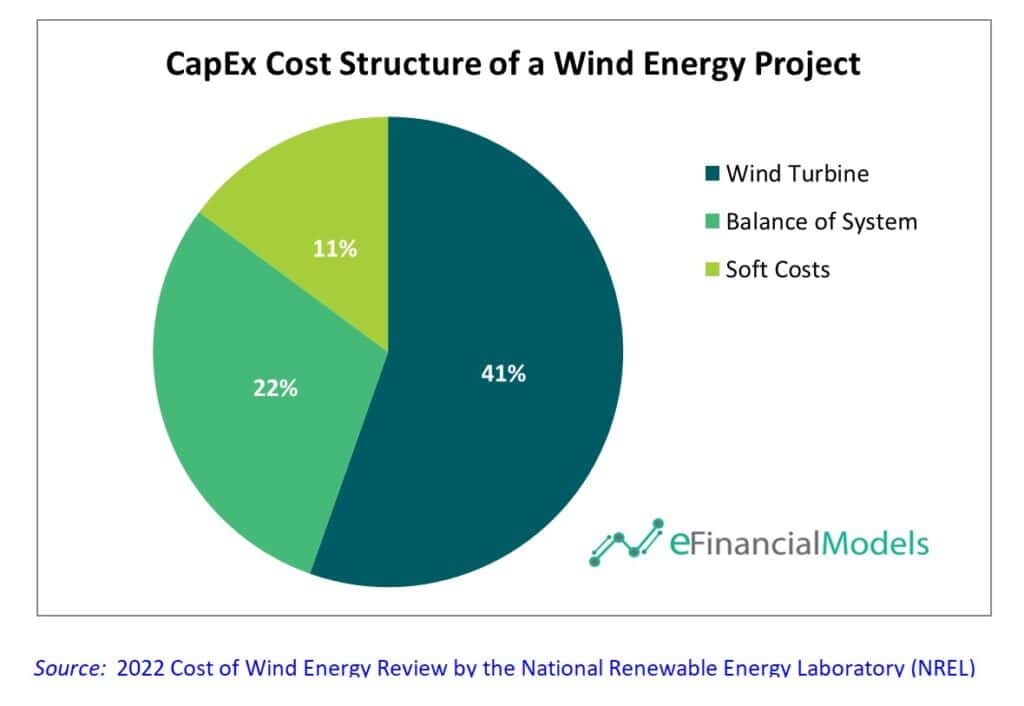
CapEx typically comprises about 70% to 80% of the LCOE. According to the 2022 Cost of Wind Energy Review by the National Renewable Energy Laboratory (NREL), the CapEx cost structure of a wind energy project breaks down as follows:
- Wind turbines account for 41% of the total, making them the largest expense.
- The Balance of the System, including foundations, electrical infrastructure, and installation, accounts for 22%.
- Soft costs, like grid connections and contingency funds, represent 11%.




























































Operating and Maintenance Costs (O&M)
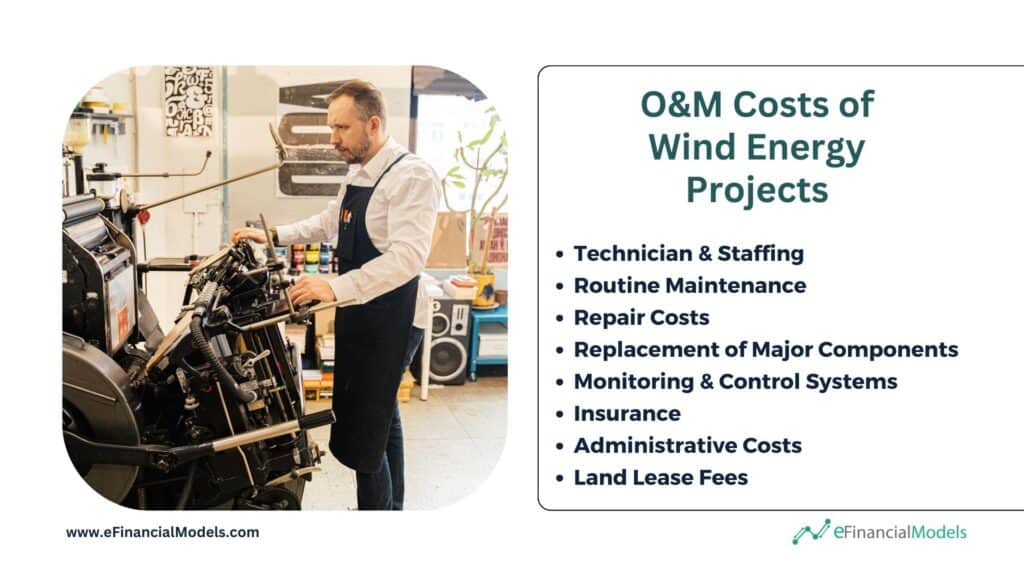
Once a wind energy project is operational, ongoing expenses are required to keep them functioning efficiently. Operating and maintenance (O&M) costs include:
- Technician and Staffing Costs: Staffing costs cover wages for skilled technicians who maintain and operate the wind farm. This includes not just physical maintenance but also remote monitoring and troubleshooting. Staffing is vital to keep the wind farm running smoothly and addressing issues promptly.
- Routine Maintenance: Routine maintenance involves regular inspections and servicing of turbines. Technicians perform tasks like lubricating moving parts, checking electrical systems, and tightening bolts. This work helps ensure that turbines operate efficiently and prevent small issues from becoming major problems.
- Repair Costs: Repairs are needed when components fail unexpectedly. These costs include replacing damaged parts like blades, gearboxes, or transformers. Quick response is crucial to minimize downtime. Repairs can be costly, especially if cranes are required for major turbine components.
- Replacement of Major Components: Major components like blades or gearboxes need replacement due to wear and tear over time. These replacements are expensive but vital to extending the lifespan of the turbines. Planning for these costs is important to ensure ongoing efficiency and power output.
- Monitoring and Control Systems: Monitoring costs include software and sensors that track turbine performance. These systems provide real-time data on energy output and detect potential problems early. Effective monitoring is key to optimizing power production and reducing downtime.
- Insurance: Insurance is necessary to protect the wind farm against damage from natural disasters, accidents, or mechanical failures. Premiums are based on location, turbine type, and weather risks. Insurance provides financial security, covering repairs or losses that may otherwise impact profitability.
- Administrative Costs: These include office expenses, licensing fees, and day-to-day management activities. They cover activities like accounting, legal support, and regulatory compliance. Though smaller than other expenses, these costs are necessary for smooth operations.
- Land Lease Fees: Land lease fees are ongoing payments to landowners for using their property. These fees are common in onshore projects where private land is leased. The cost depends on the location and the agreement with the landowner, which is an essential part of the operating expenses.
These operating and maintenance costs are crucial for ensuring wind energy projects’ continued efficiency and reliability.
The 2022 Cost of Wind Energy Review by the National Renewable Energy Laboratory (NREL) highlights that operating costs or OpEx comprise 26% of a wind energy farm’s annual expenses. It includes maintenance, repairs, and operational management. These recurring costs are crucial in long-term financial planning for wind energy projects. Keeping them low is essential to maximize profitability and ensure sustainable energy production.
What is the Cost of Wind Energy Per kWh?
While specific percentages can vary, our general approximation for the cost of wind energy per kWh is:
- CAPEX: Approximately 74% of total project costs.
- OPEX: Approximately 26% annually.
Again, let us take a look at the International Renewable Energy Agency’s Renewable Power Generation Costs Chart.
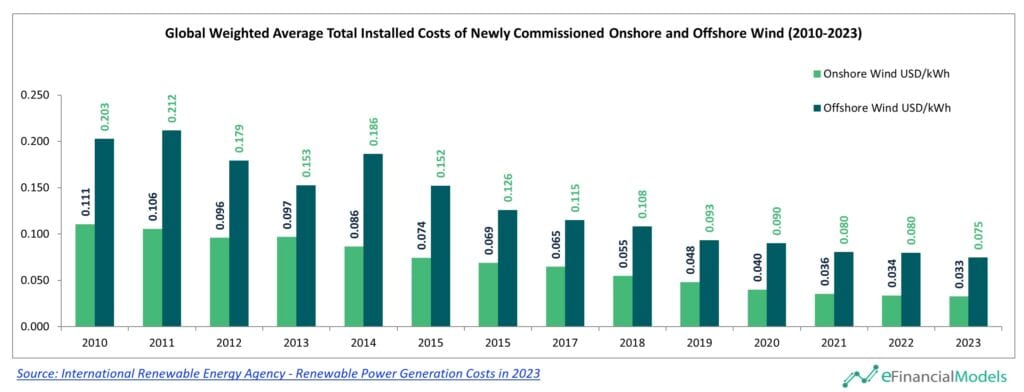
The cost of wind energy per kWh has significantly decreased from 2010 to 2023 for both onshore and offshore wind energy projects. In 2010, the cost for onshore wind was 0.111 USD/kWh, while offshore wind cost 0.203 USD/kWh. In 2023, the costs dropped to 0.033 USD/kWh for onshore and 0.075 USD/kWh for offshore wind.
The most significant decrease in the cost of wind energy per kWh likely comes from a reduction in CAPEX. Over the years, technological advancements have driven down the costs of wind turbine components, materials, and manufacturing. Larger, more efficient turbines have also been developed to generate more electricity at a lower unit cost, effectively reducing capital costs. Additionally, improvements in supply chain management, competition among manufacturers, and increased installation experience have all contributed to decreasing CAPEX.
While O&M and financing costs have also decreased, the drop in CAPEX has had the greatest impact. O&M costs have benefited from better predictive maintenance techniques and turbine reliability. In contrast, financing costs have decreased due to more favorable financing conditions, as investors see wind energy projects as lower risk. However, the steepest cost decline can be attributed to reduced capital costs.
Factors Influencing Cost of Wind Energy per kWh
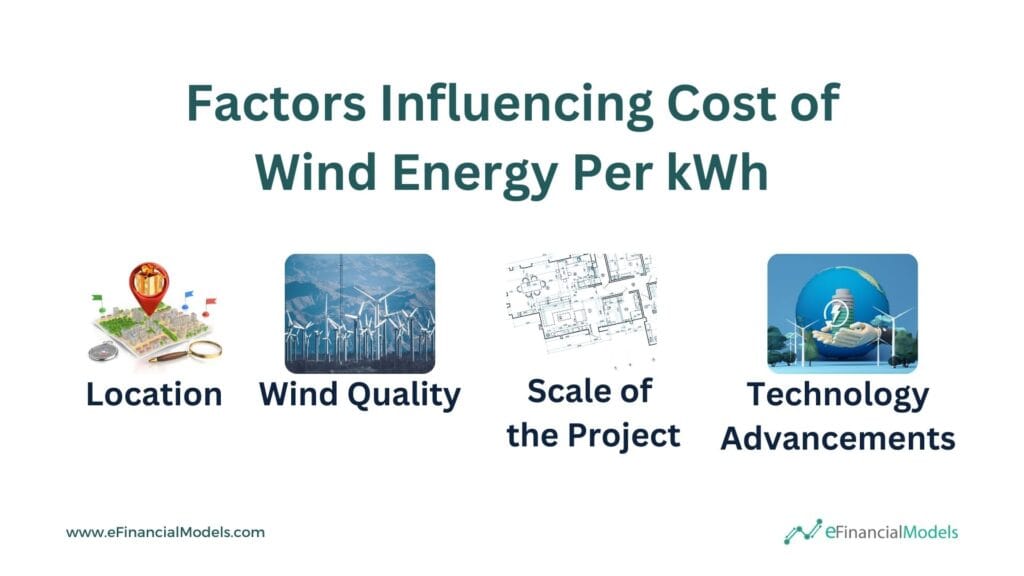
The cost of wind energy per kWh is an important metric for investors and consumers. The goal is to make wind energy cost-competitive with traditional energy sources. Let’s look at the factors that influence this cost.
- Location: The location of a wind farm greatly influences its energy costs. Wind farms in remote areas might have higher expenses due to transportation and grid connections. Proximity to infrastructure and energy demand centers helps reduce overall costs.
- Wind Quality: Better wind quality means more efficient energy production. Areas with consistent, strong winds produce more electricity per turbine, reducing the cost per kWh. Lower wind quality leads to less energy output and higher production costs.
- The Scale of the Project: Larger wind projects generally lower the cost per kWh. This is due to economies of scale. Building more turbines allows for more efficient use of labor, equipment, and infrastructure, spreading costs over greater energy production.
- Technology Advancements: Advancements in wind turbine technology lead to cost reductions. Improved turbine designs and materials increase efficiency and durability. This means more energy production for less, reducing the cost of wind energy per kWh over time.
Financial Models: Making Wind Energy Projects Work
Wind energy projects involve high upfront costs, with ongoing expenses crucial to operation. Key cost components include capital expenditures like land acquisition, turbine installation, and grid connection, representing the bulk of project costs. Operational and maintenance expenses, such as technician wages, routine maintenance, and major component replacements, ensure efficiency and reliability. Financing costs, including debt repayment and investor returns, add complexity but are vital for funding. Together, these factors shape the economic feasibility of wind projects, making it essential for developers to balance costs to ensure profitability and competitiveness in renewable energy markets.
Understanding the cost of wind energy per kWh requires a deep dive into capital costs, O&M costs, and financing aspects. Financial models help wind energy projects succeed by breaking down costs, revenues, and financing needs. They forecast expenses like construction, maintenance, and financing to ensure the project remains profitable. By simulating different scenarios, financial models identify risks and potential returns.
A Wind Energy Farm Financial Model makes a wind project work by optimizing key elements for success. It can help choose the best location and turbine types to maximize energy production and efficiency. The model also analyzes cash flow projections, ensuring revenues cover costs and deliver profits. By conducting an in-depth market analysis, it evaluates energy demand, pricing, and competition, helping to create a solid business model. This thorough approach guides decision-making, attracts investors, and boosts the financial viability of the wind energy project.















































You might also like:
- Understanding the Levelized Cost of Energy Formula
- Calculating Revenue Growth Rate: A Key Metric for Business Success
- Top 5 Risks of Wind Energy Parks
- How to Use Inflation Projection to Your Advantage
- Wind
- How to Raise Series A Funding?
- Are Wind Energy Farms Worth the High Initial Cost?
- How to Evaluate a New Solar Park for Investment?
- Mastering the Art of IRR Calculation: A Comprehensive Guide for Investors
- Financial Modeling for Startups and Small Businesses
- What are the Main Drivers of Business Valuations?
- Scenario Analysis
- The Essential Guide to Personal Finance 101
- How to Maximize Profits with Cost Per Click (CPC)
- Wind Energy Farm Financial Model
- Finding Fair Market Value: A Quick Guide to Real Estate Valuation
- Financial Modeling with Excel: Fundraising Plan Tactics
- Why Financial Forecasting Models Are Vital for Your Business
- The Key Differences Between Levered and Unlevered Free Cash Flow
- Financial Planning
Tags: Renewable Energy