
0 ITEMS

How Ship Chartering Companies Sail Towards Success?

Ship chartering involves negotiating complex contracts and managing fluctuating costs, making accurate financial planning essential for success.
- Different types of charter contracts, such as bareboat, time, and voyage charters, impact operational control and financial responsibilities.
- Key cost components include CAPEX for purchasing ships, OPEX for maintenance, fuel, and port charges, with fuel costs being highly unpredictable.
- Main industry players—ship owners, charterers, brokers, and agents—each contribute to the smooth operation of the shipping process.
- Challenges include limited market information, missed opportunities due to delays, and rising operational costs.
- Financial modeling helps companies simulate scenarios, forecast costs, and evaluate profitability, supporting strategic decision-making in a competitive industry.
Continuing on, this article highlights how precise financial analysis can help maritime businesses navigate challenges and maximize profitability.
What is a Charter Company for Shipping Vessels?
First, let us explain what is a charter company for shipping vessels. What is a charter company for shipping vessels falls within the maritime industry. It involves hiring or leasing a ship by a shipowner to a charterer. Such a business model allows shipowners to lease their vessels to charterers who require ships to transport goods but do not own vessels themselves.
So, what is a charter company for shipping vessels? It operates as a critical intermediary in the maritime industry, enabling the efficient allocation of shipping resources to meet the global demand for cargo transportation. This strategic role not only enhances the efficiency of international trade but also contributes to the stability of supply chains, ensuring that goods can be moved across the world’s oceans in a timely and cost-effective manner. Its adaptability is vital for managing the complexities of international trade, where demand can fluctuate based on seasonal trends, market demands, and geopolitical factors.
Main Players When Chartering a Ship
When chartering a ship, it’s essential to understand the leading players’ roles in this complex process. The transaction primarily involves the ship owner, the charterer, the ship broker, and the shipping agents. Each plays a distinct and critical role in ensuring the smooth facilitation of chartering a ship for transporting goods across the seas.

The Ship Owner is the individual or entity that legally owns the vessel. Their primary role is to offer their ship for charter, making it available for transporting goods. The ship owner is responsible for maintaining the vessel in good condition, ensuring it meets all safety and regulatory requirements. They aim to maximize the profitability of their asset by engaging in charter agreements that allow their ship to be used in exchange for a charter fee.
The Charterer is the person or company that rents the ship from the ship owner for a specified period or voyage. Charterers typically need to transport goods but do not own vessels themselves. They might be manufacturing companies, oil companies, or trading firms. The charterer negotiates the terms of chartering a ship, including the duration, rate, and specific route the ship will take. Their main interest lies in ensuring that their goods are transported efficiently and at a reasonable cost.
The Ship Broker is the intermediary between the ship owner and the charterer when chartering a ship. Their expertise in the shipping market facilitates negotiations, helping both parties reach a mutually beneficial agreement. Ship brokers are involved in various aspects of the deal, from finding available ships or cargoes and negotiating the terms of the charter party to finalizing the contract. They are pivotal in ensuring transparency and efficiency in the chartering process. Brokers typically earn a commission for their services, paid by either the ship owner, the charterer, or both.
Finally, the Shipping Agents, or ship’s agents, are locally based representatives who act on behalf of the ship owner or charterer in the port where the ship docks. Their responsibilities when chartering a ship include arranging the necessary port services, such as pilotage, loading and unloading cargo, and completing all required customs documentation and clearances. Shipping agents ensure that the vessel’s turnaround in port is as quick and smooth as possible, reducing port stay costs and aiding the overall efficiency of the shipping operation.
Together, these main players form the backbone of the ship chartering process, each contributing their expertise to ensure the successful transportation of goods across global waters.
















































Different Types of Charter Contracts for Shipping Vessels
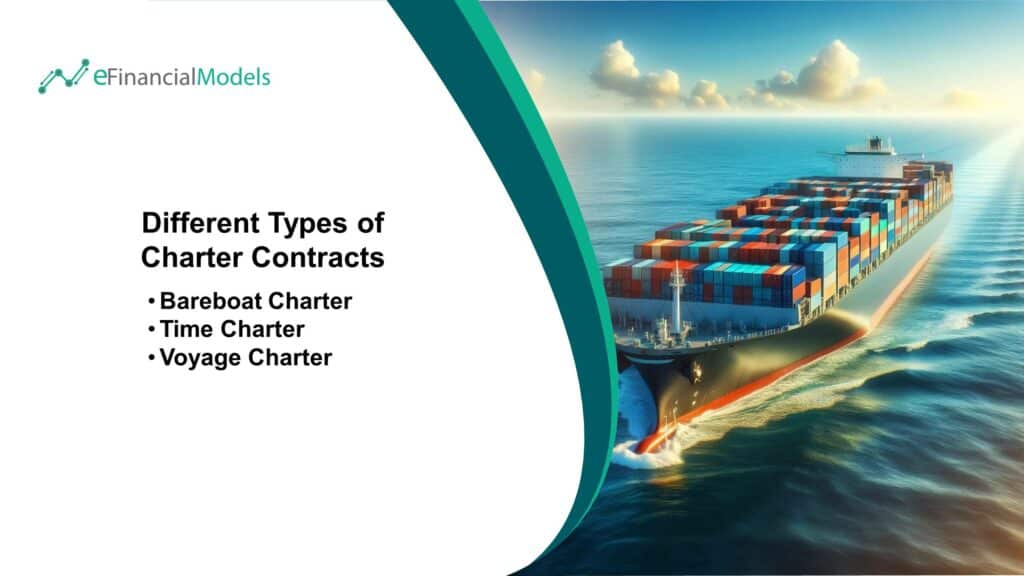
There are three primary types of charter contracts when chartering a ship, each offering distinct terms of engagement, operational control, and financial responsibility between the shipowner and the charterer.
A Bareboat Charter (also called Demise Charter) refers to an arrangement where the charterer takes on the lease of a vessel without any crew, provisions, or fuel. Essentially, the charterer has complete control of the vessel, including its operation, maintenance, and crew employment during the charter period. In maritime terms, the charterer acts as the vessel’s owner for the duration of the charter but does not take on the legal ownership. This arrangement is typical for longer-term projects or operations where the charterer prefers or requires complete operational control, often for specialized activities or in scenarios where the charterer wants to use the vessel as part of their fleet but without the capital expenditure of purchasing.
In a Time Charter, the vessel is leased to the charterer for a specific period, with the shipowner providing the crew, insurance, and other necessary services apart from the cargo handling. The charterer is responsible for paying a daily or monthly hire rate and typically covers the costs related to fuel and port charges. Such types of charter contracts offer flexibility to the charterer in terms of routes and cargo, allowing them to optimize the vessel’s use for their purposes. However, the shipowner remains responsible for the vessel’s operational aspects, including crew management and maintenance. Time Charters are types of charter contracts popular among companies that need ship capacity for a certain period but want to avoid the long-term commitment of a Bareboat Charter.
A Voyage Charter is an agreement where the charterer hires the vessel for a single voyage between specified ports, with the shipowner responsible for the vessel and crew. The charterer pays a rate based on the quantity and type of cargo transported. It can either be a lump sum or a per-ton rate. In this arrangement, the owner covers the voyage costs, including fuel, crew, and maintenance, while the charterer is responsible for loading and unloading the cargo within the agreed timeframe. Voyage Charters are standard for bulk cargo shipments, such as grains, coal, and ore, and are chosen for their simplicity and cost-effectiveness for single or infrequent shipments.
The abovementioned types of charter contracts serve different needs within the maritime industry, offering varying degrees of control, flexibility, and responsibility to the charterer based on their specific requirements and capabilities.
Cost Components of Chartering a Ship
The financial dynamics of chartering a ship are governed by a complex interplay of various cost components, each critical to the operation and profitability of maritime ventures. Depending on the types of charter agreements, these costs bear distinct implications for the owner and charterer.
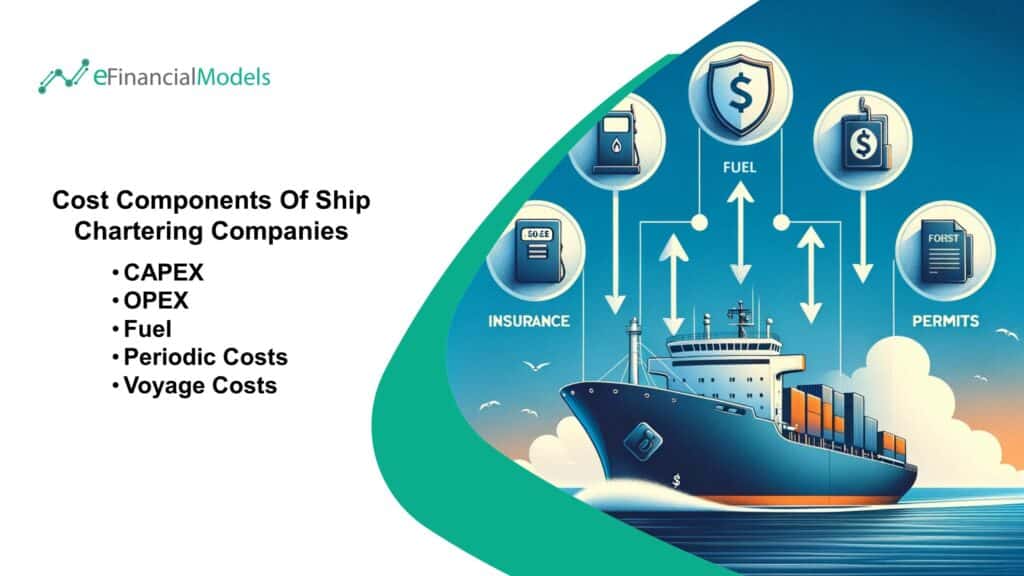
The fundamental financial responsibilities of the owners of ship chartering companies are divided into capital expenditure (CAPEX) and operating expenditure (OPEX). CAPEX refers to the initial costs involved in purchasing and outfitting a ship, which are always borne by the ship’s owner regardless of the charter type. OPEX includes the day-to-day expenses for chartering a ship, such as maintenance, compliance with regulations, and charterers’ liability insurance. While the ship’s owner covers these costs in voyage and time charters, the charterer is responsible for the operating expenses in a demise charter (where the charterer essentially takes over the ship).
Fuel costs are notably unpredictable due to their dependence on fluctuating economic conditions. Ships primarily use Heavy Fuel Oil (HFO), but alternatives like marine gasoil (DMA) and marine diesel oil (MDO) are also used. The cost of these fuels varies significantly over time, representing a considerable variable expense for shipping companies.
Periodic costs are expenses incurred at regular intervals. These are mainly associated with technical inspections and surveys needed for maintaining class classification — a standard of construction and maintenance. The responsibility for these costs falls on the ship owner in both time and voyage charters. However, the charterer bears these periodic costs in a demise charter, reflecting the more extensive responsibility taken on such types of charter agreements.
Voyage costs encompass all expenses directly related to a specific voyage, including fuel, passage dues (like canal fees), towage, piloting, and port agency fees. Additionally, cargo handling costs — expenses for loading and unloading cargo — are considered part of voyage costs. In time and demise charters, these costs are typically the charterer’s responsibility, highlighting the charterer’s role in managing voyage-related expenses. In contrast, during voyage charters, the ship’s owner takes on the cost burden, aligning with the owner’s vested interest in the specific journey’s operation and logistics.
Top Three Challenges of Chartering Ships
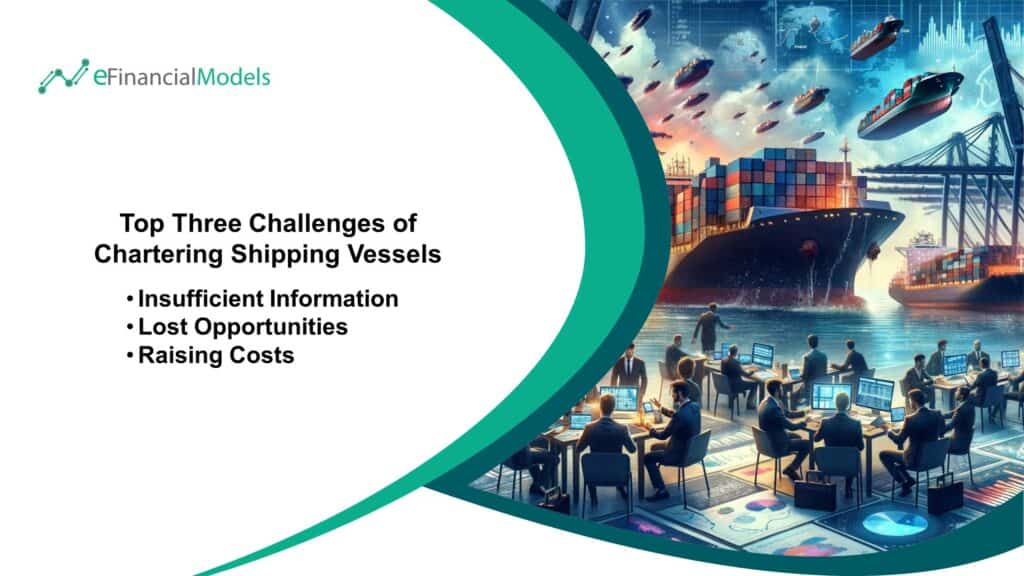
Chartering ships involves navigating a complex and dynamic global maritime industry, presenting several significant business challenges. The top three challenges include dealing with insufficient information, the risk of missing out on lucrative opportunities due to decision-making delays, and the burden of ever-increasing operational costs.
Insufficient Information: One of the primary challenges in chartering ships is the need for comprehensive data and insights. By its nature, the maritime industry is globally dispersed and involves complex logistics, making it difficult to gather accurate and timely information. This information gap can lead to suboptimal decision-making, as charterers may need access to crucial details about vessel availability, current market rates, or the reliability of different shipping lines. With a clear understanding of these factors, businesses may be able to optimize their shipping strategies, potentially affecting their competitiveness and bottom line.
Lost Opportunities: The second significant challenge is the potential for missed opportunities due to inefficiencies and delays in the decision-making process. In the fast-paced world of shipping, market conditions can change rapidly. Delays in obtaining or acting on information can result in missing out on favorable charter rates or the ideal vessel matching the cargo’s specific requirements. These missed opportunities affect the immediate cost and efficiency of shipping operations and can have longer-term impacts on client relationships and overall market positioning.
Raising Costs: Escalating expenses represent another major challenge in chartering ships. Costs can increase due to various factors, including fuel prices, port fees, and maintenance expenses. Additionally, market volatility can lead to fluctuating charter rates, making it difficult for businesses to predict and manage their shipping costs effectively. These rising costs necessitate careful financial planning and management to maintain profitability and ensure the sustainability of shipping operations.
Given these challenges, financial modeling becomes crucial for businesses chartering ships. It can help companies navigate the complexities of the shipping industry by allowing them to simulate different scenarios, forecast costs, and evaluate the financial impact of various chartering decisions. This strategic approach can lead to better financial outcomes, reduced risks, and enhanced competitive advantage in the global shipping market.
Navigate Success: Financial Modeling Steers Ship Chartering Companies
Ship chartering companies are pivotal components of the global maritime industry and involve renting a vessel and its crew to transport goods across the world’s oceans. This process is inherently complex, influenced by many factors, including fuel costs, port charges, crew wages, and the fluctuating demand for shipping space. Each component can significantly affect the cost and profitability of chartering operations. The pricing and contractual negotiations required in chartering vessels necessitate a deep understanding of these variable costs and market conditions to ensure profitability and operational efficiency.
Financial modeling emerges as an indispensable tool for ship chartering companies to navigate these complexities successfully. By simulating various scenarios and incorporating a wide range of variables such as market demand, charter rates, operational costs, and geopolitical influences, financial models allow these companies to forecast revenues, expenses, and profitability under different conditions. This predictive capability enables decision-makers to evaluate the financial viability of different chartering opportunities, optimize operational strategies, and manage risks more effectively.
Moreover, financial modeling supports strategic planning by providing insights into the potential impact of long-term investments and market developments. Using sophisticated financial models, ship chartering companies can make informed decisions that align with their financial goals and market dynamics, steering them toward tremendous success and competitiveness in the global shipping industry.















You might also like:
- 10 Tips to Develop a First Class Business Valuation Report
- 10 Step Financial Planning Checklist for Smart Executives
- 12 Funding Sources for Businesses and Startups
- 14 Best Practices in Financial Modeling
- How to Build a Capitalization Table
- How to Evaluate a New Solar Park for Investment?
- Real Estate Financial Modeling in Excel
- Financial Modeling for Startups and Small Businesses
- Financial Statements – Definition, Uses, Contents and Templates
- How to Optimize the Average Selling Price: Strategies for Higher Profits
- Transport
- Shipping
- Business Valuation
- Financial Model Templates Easy to Use
- Scenario Analysis
- Custom Financial Modeling Services
- Financial Planning for Small Business Owners – Taking an SBA Loan
- How Can You Make Your Startup Successful?
- Financial Model – Valuation of Tax Loss Carryforwards
- Private Equity vs. Venture Capital: Which is Right for You