

0 ITEMS

US Rental Property Financial Model: House Hack, Duplex to Fourplex, Small Multifamily, FHA, VA, DSCR Loan, BRRRR, After-Tax IRR
Monthly Excel model for buying, financing and renting a US property of one to four units. Six deal structures in one file: investor conventional loan, house hack with FHA, conventional or VA financing, DSCR loan and BRRRR. Built-in lender tests for 2026, and after-tax returns in the Due Diligence Edition.
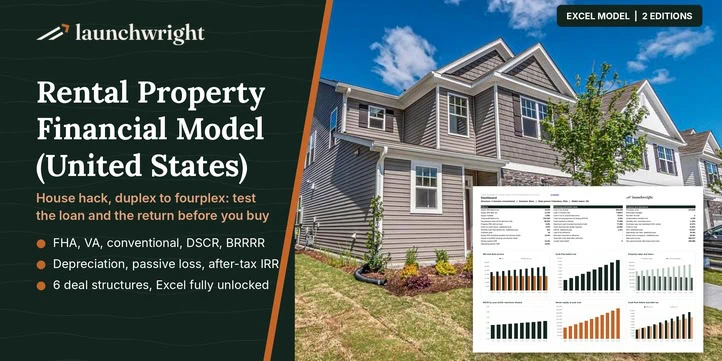
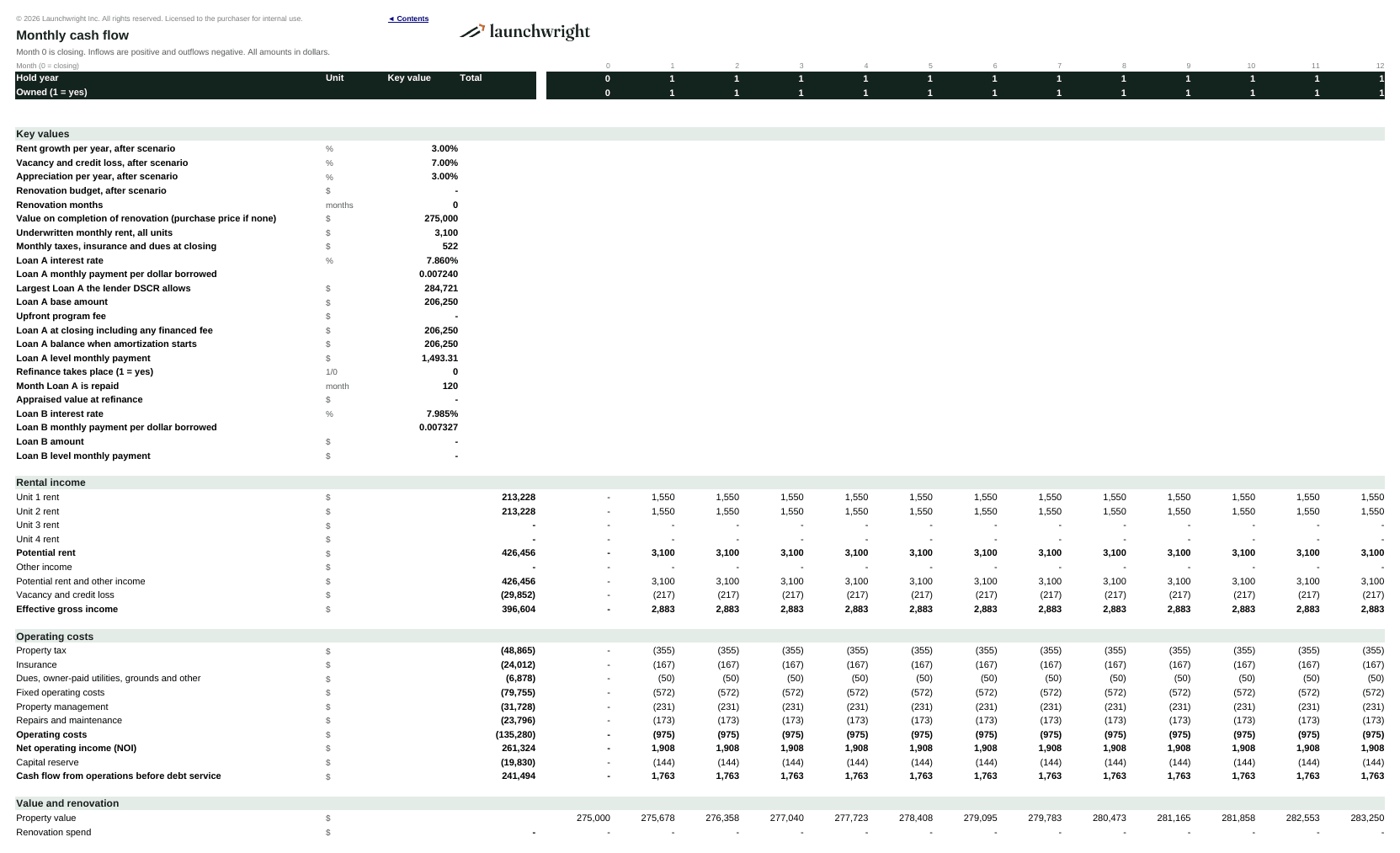
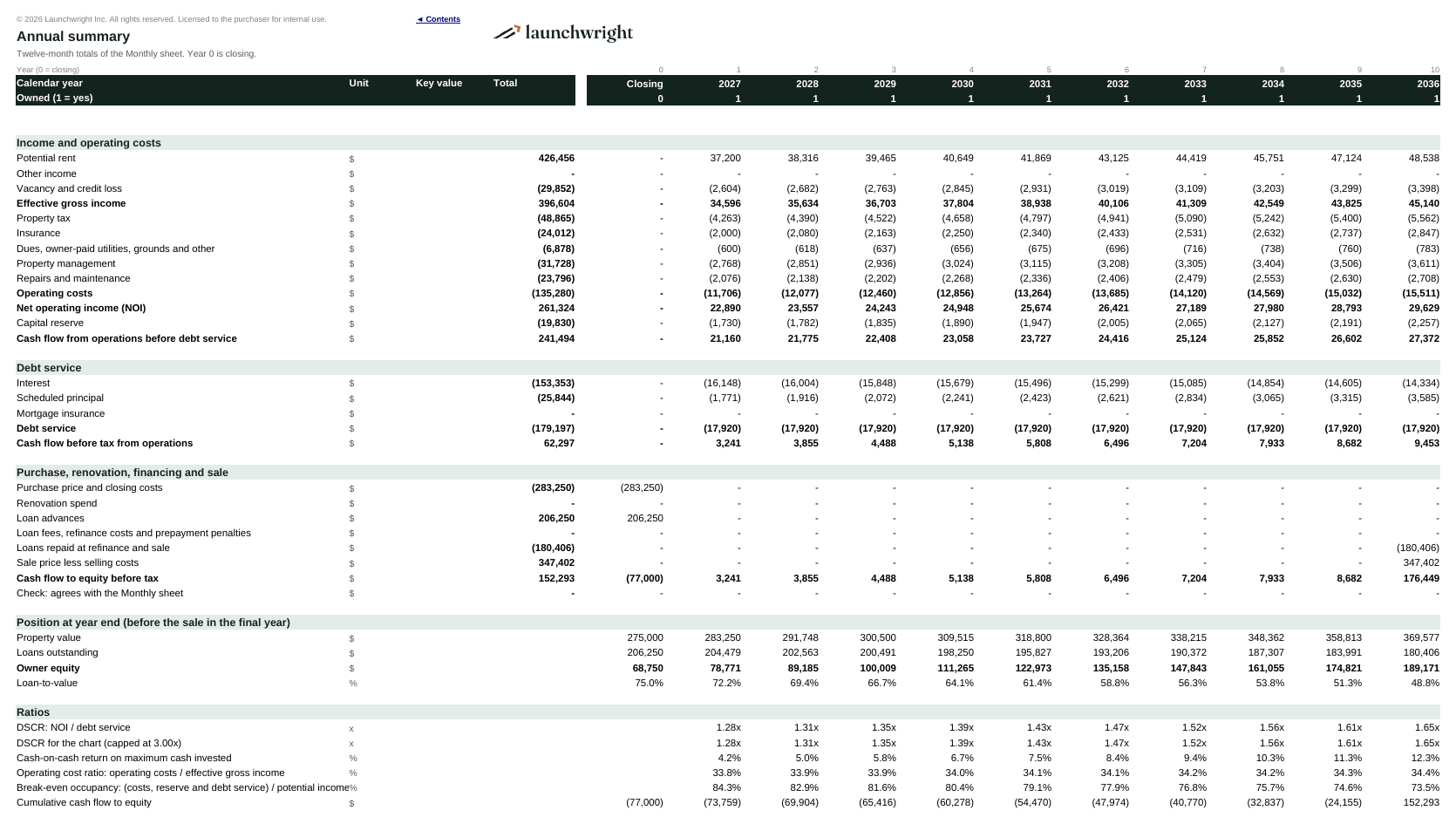
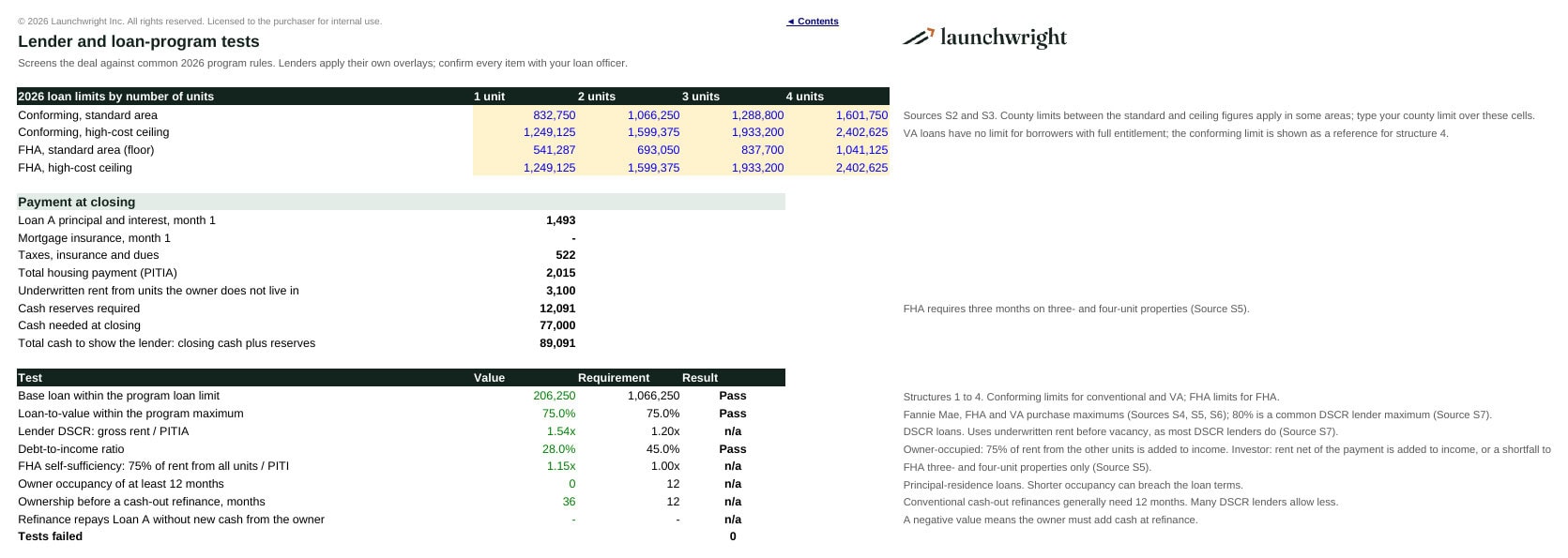
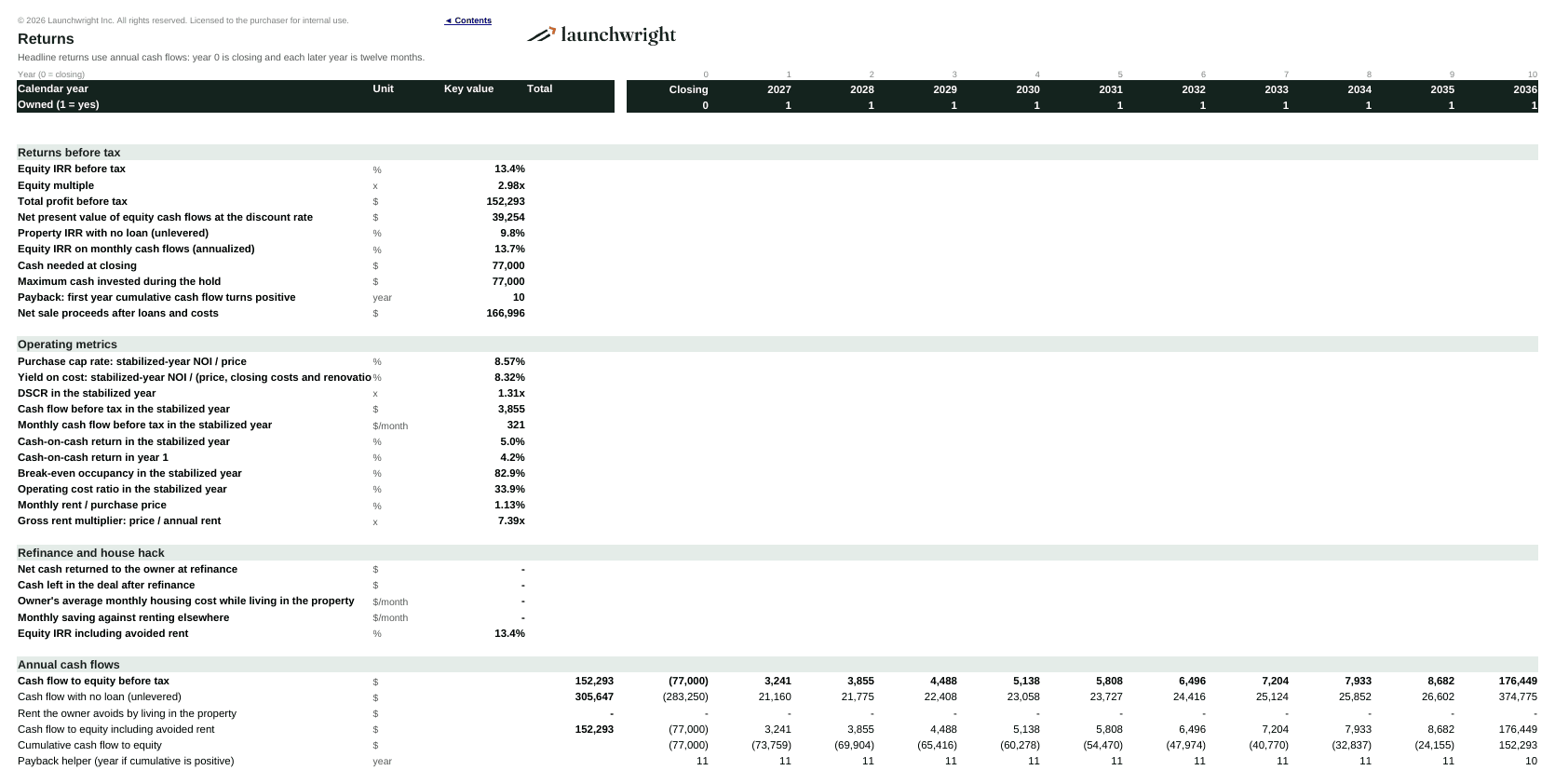
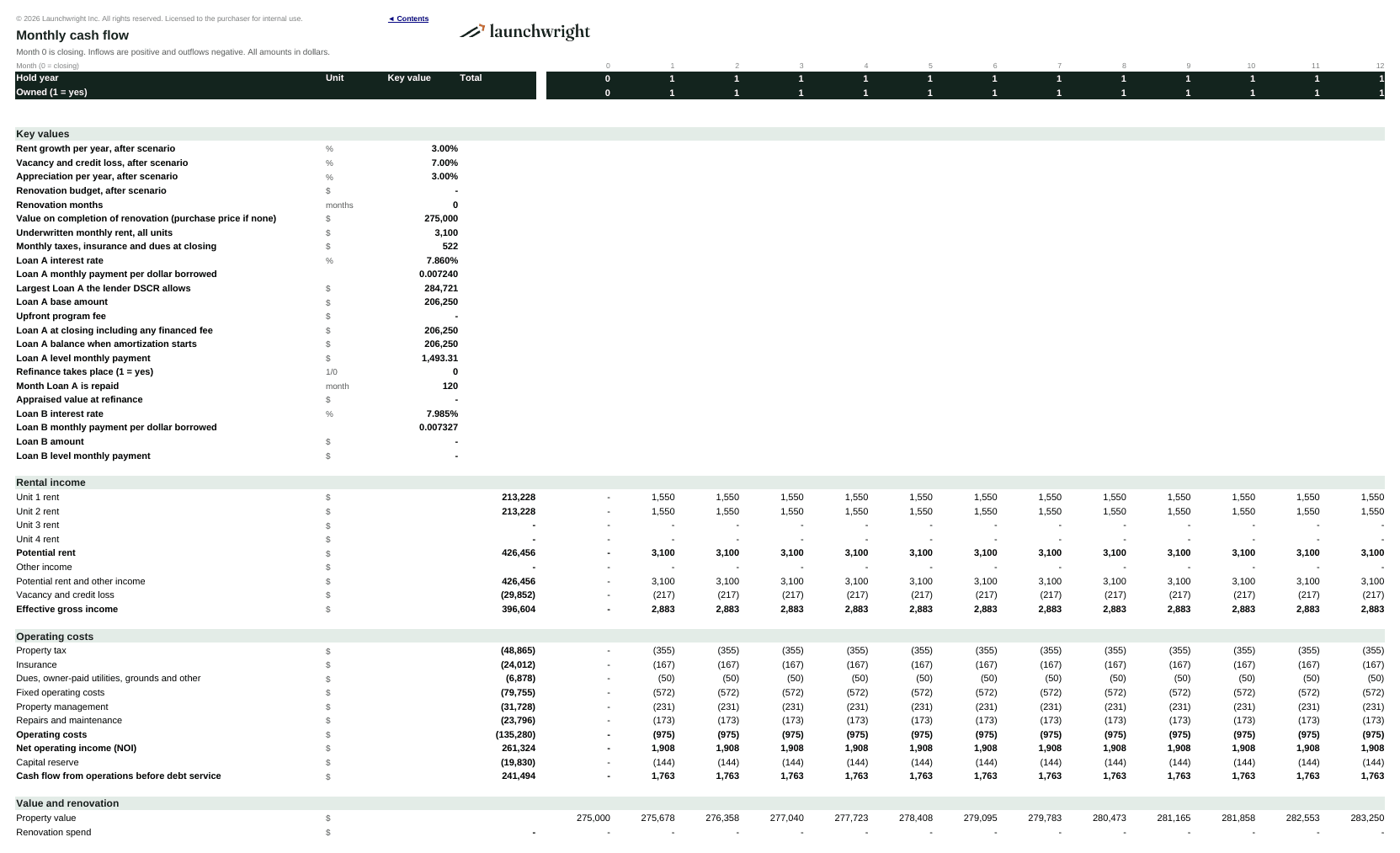
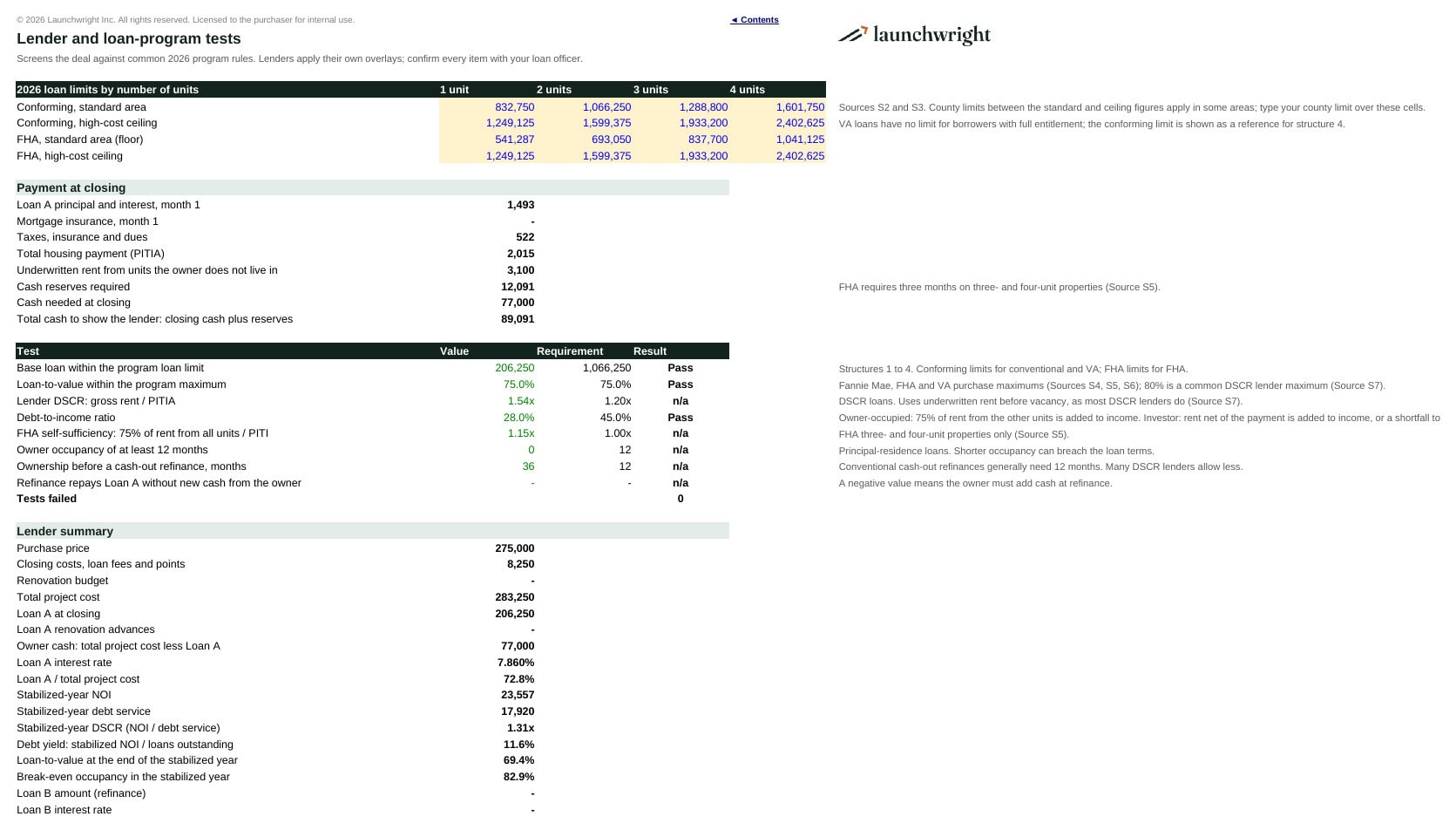
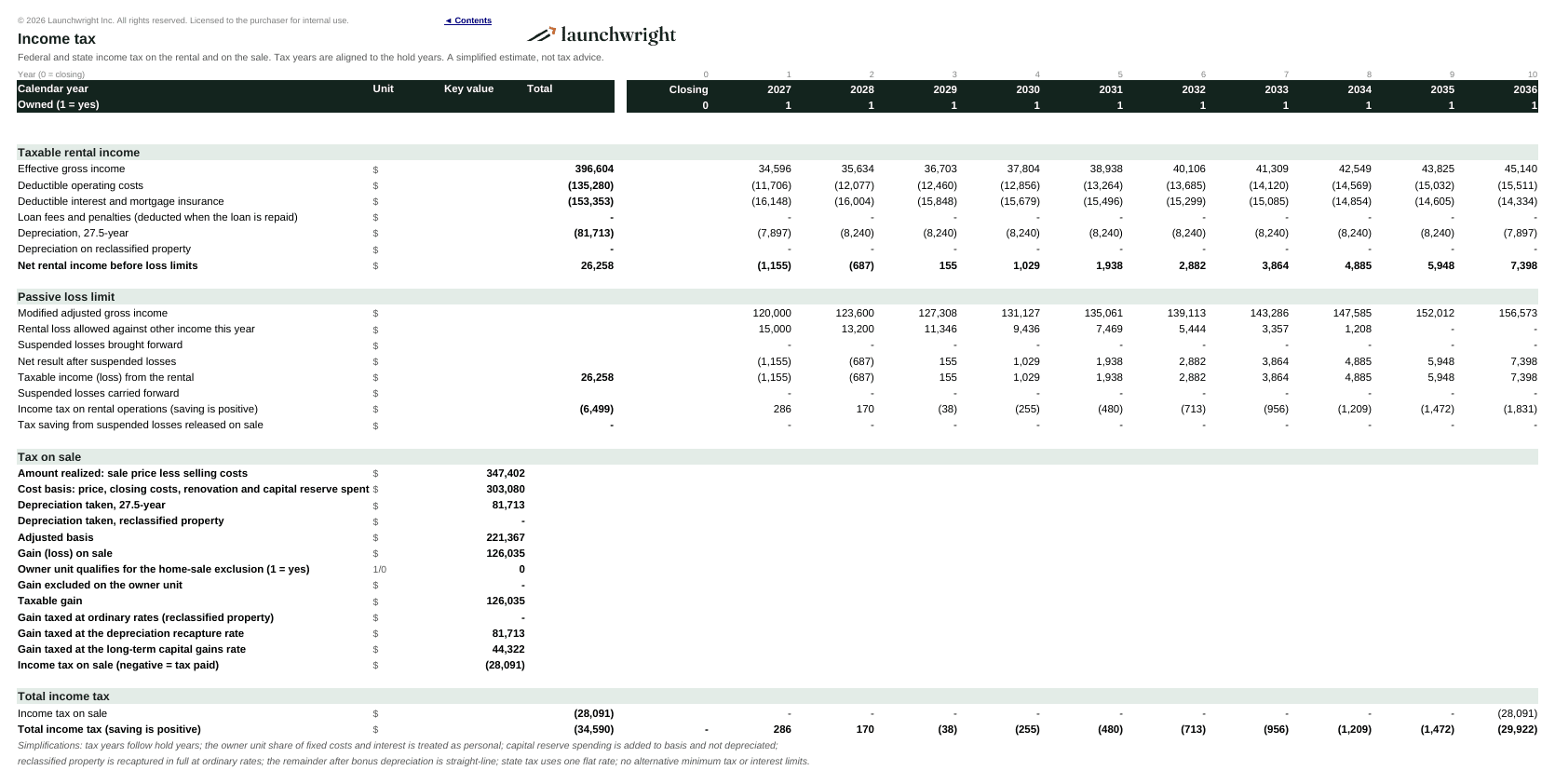
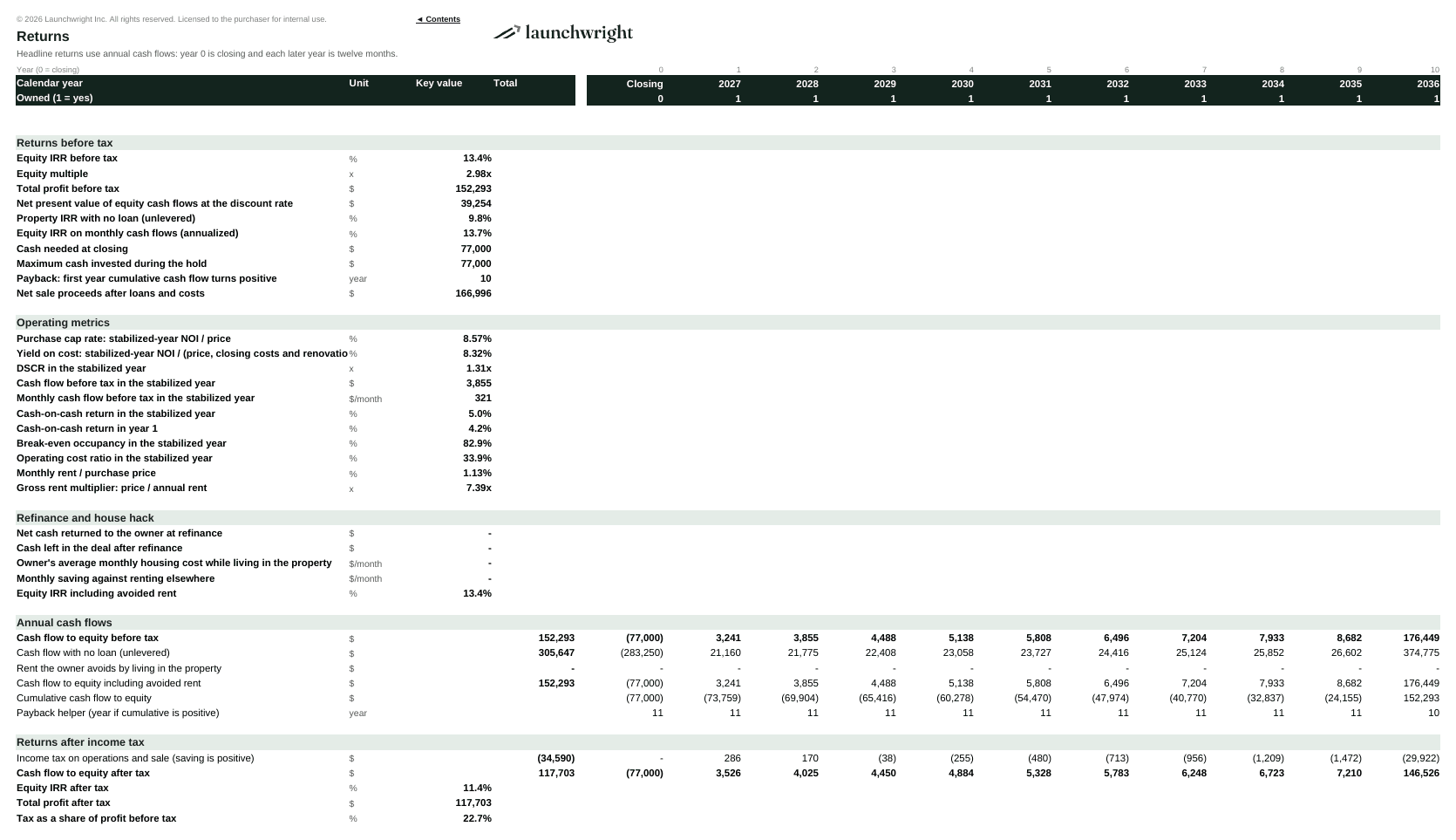
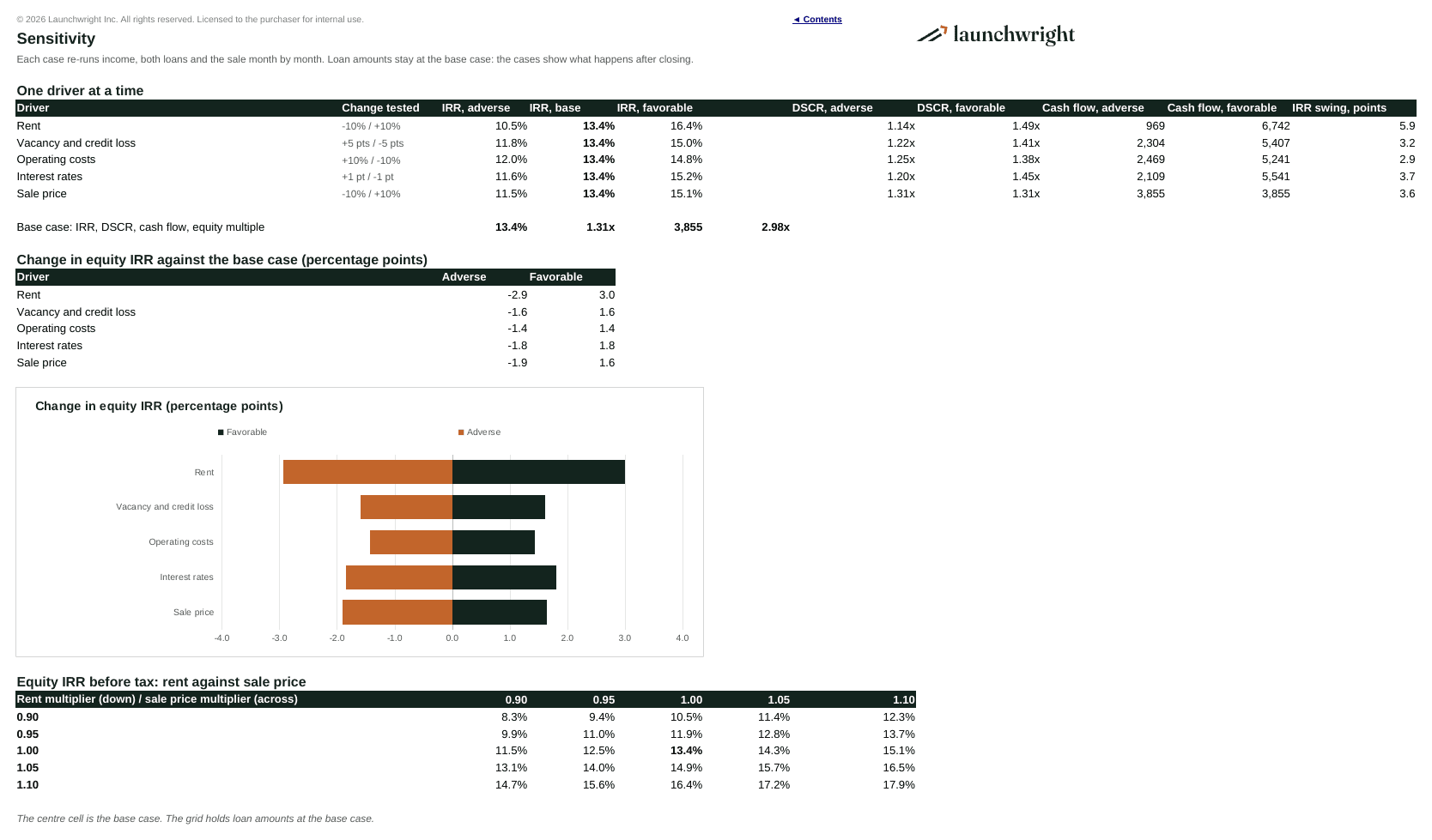
Most rental property spreadsheets stop at cap rate and cash-on-cash. They do not ask the two questions that decide a small US deal: will the loan be approved, and what is left after tax? This model answers both, month by month, for a property of one to four units.
Six deal structures in one file
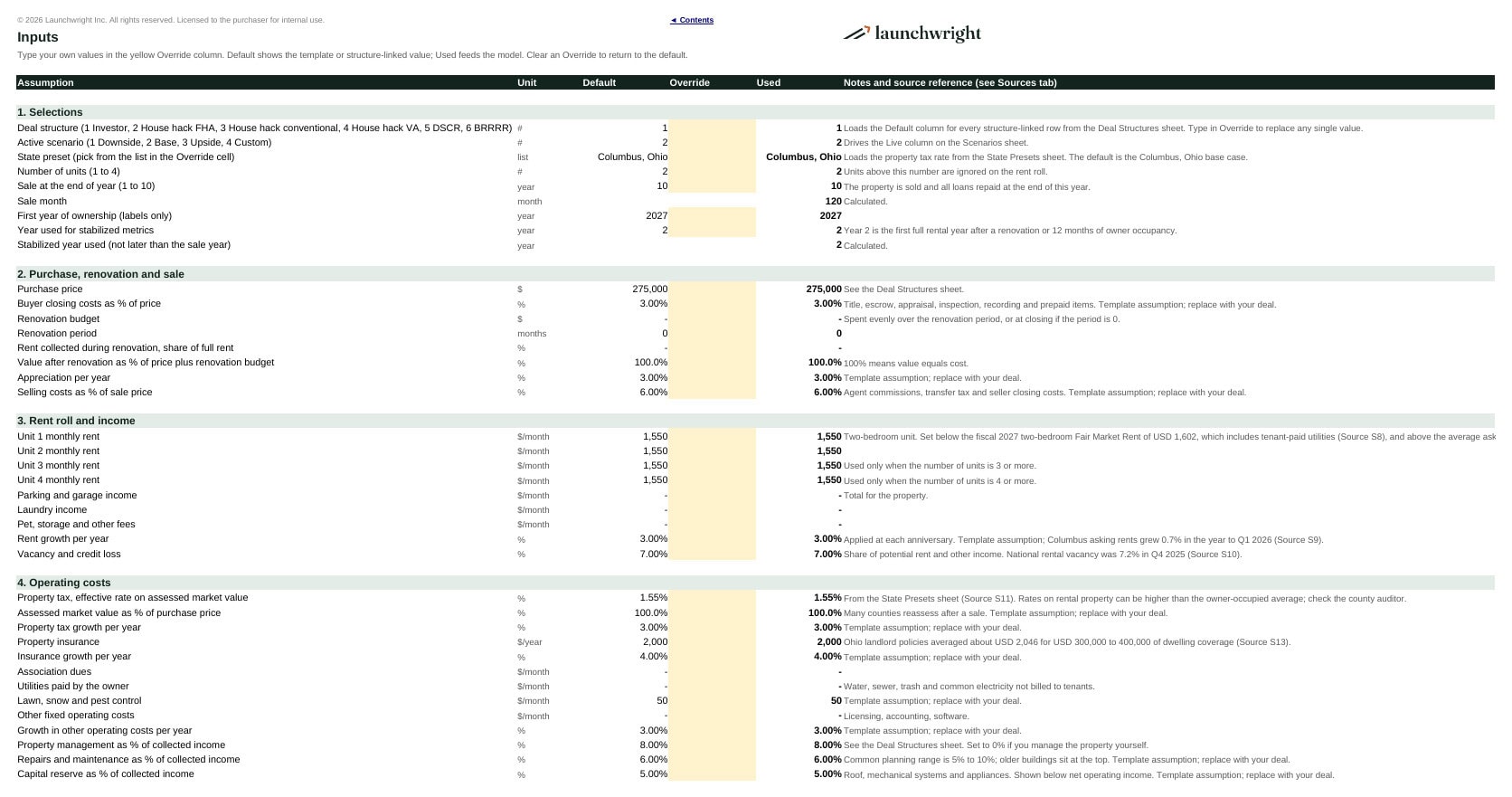
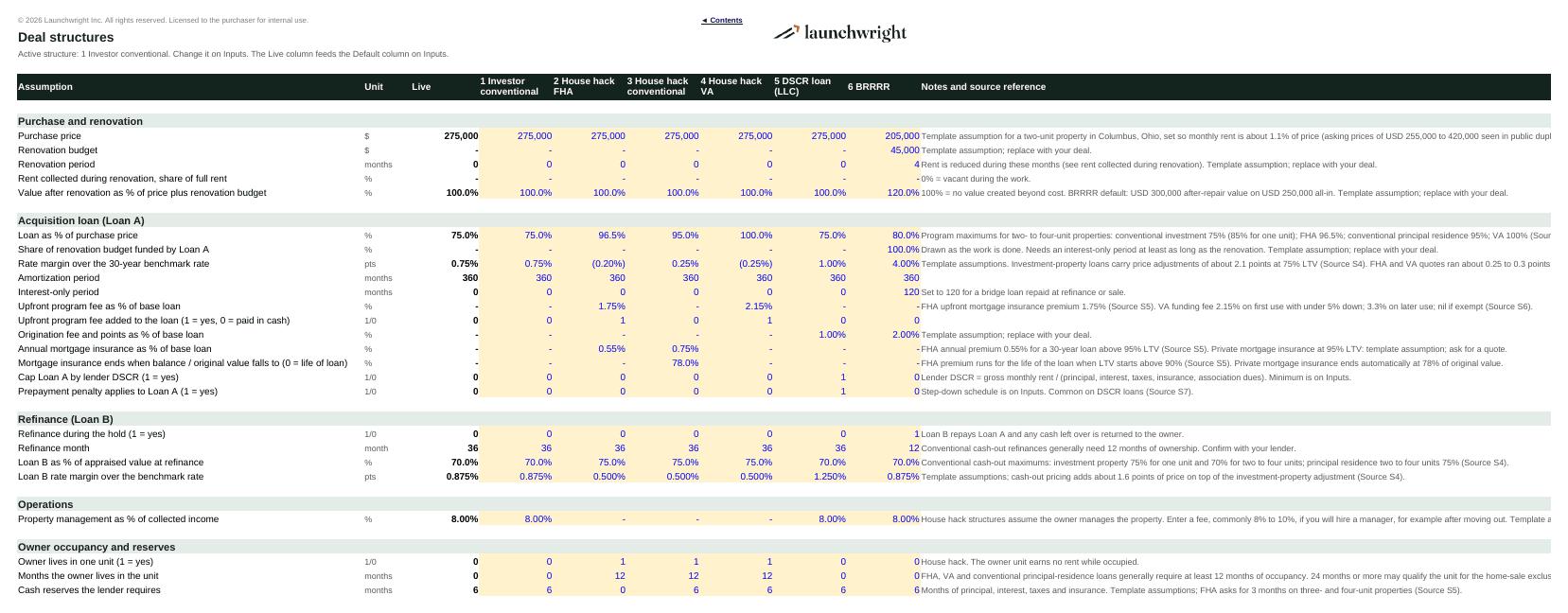
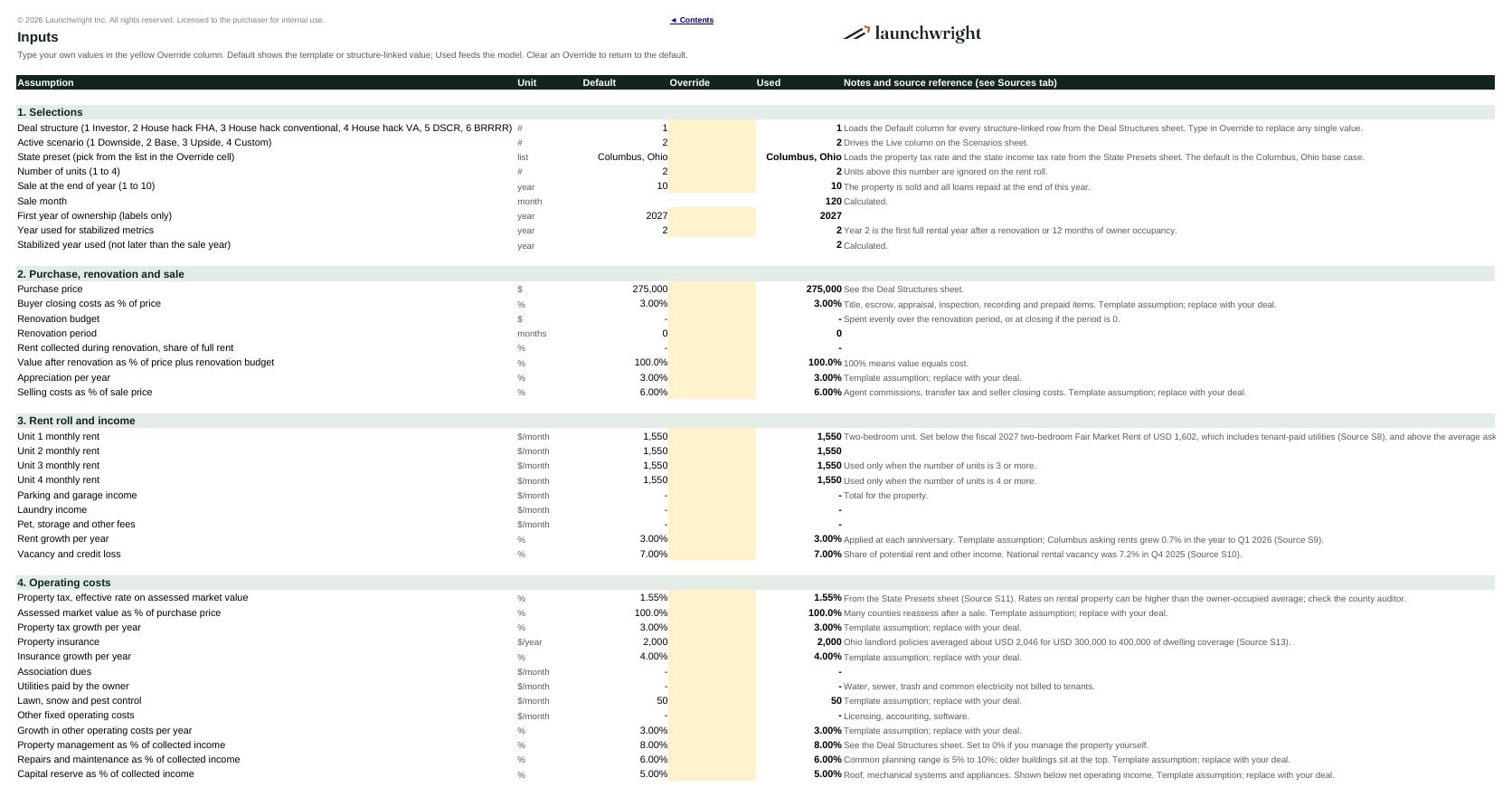
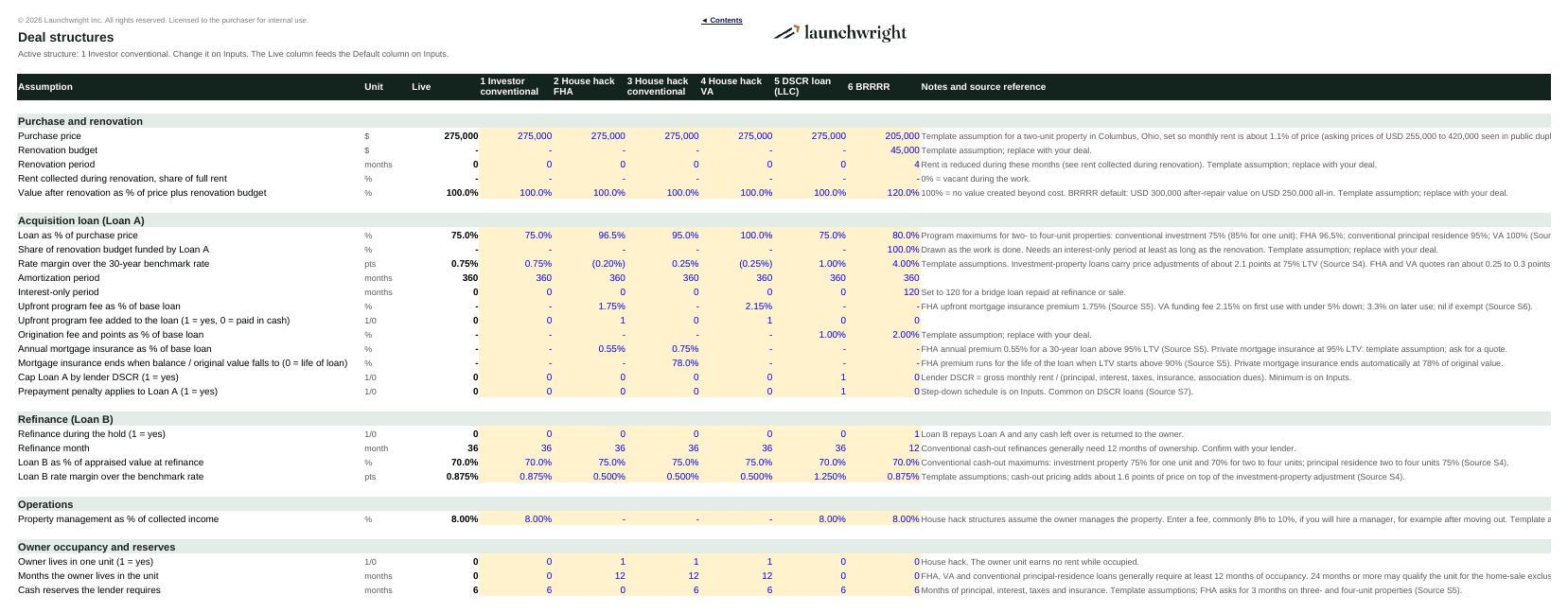
Pick a structure on the Inputs sheet and the financing defaults load from the Deal Structures sheet. Every default can be overridden.
- Investor purchase with a conventional loan.
- House hack with an FHA loan: 3.5% down, upfront and annual mortgage insurance.
- House hack with a conventional loan and private mortgage insurance that ends at 78% of original value.
- House hack with a VA loan and a financed funding fee.
- DSCR loan, with the loan capped by the lender DSCR and a step-down prepayment penalty.
- BRRRR: discounted purchase, renovation funded by an interest-only bridge loan, then a cash-out refinance.
What the model does
- Monthly cash flow for up to 120 months, with an annual summary and a sale in any year from 1 to 10.
- Unit-by-unit rents for up to four units, other income, vacancy, eight operating cost lines and a capital reserve.
- Two loans: an acquisition loan and an optional refinance, with interest-only periods, renovation draws, mortgage insurance, upfront program fees and prepayment penalties.
- Lender tests against 2026 rules: conforming and FHA loan limits, maximum loan-to-value, lender DSCR, debt-to-income with 75% rental income credit, the FHA self-sufficiency test for three- and four-unit homes, occupancy, refinance seasoning and cash reserves.
- House hack results: what the owner pays each month while living in the property, the saving against renting, and a return that counts the avoided rent.
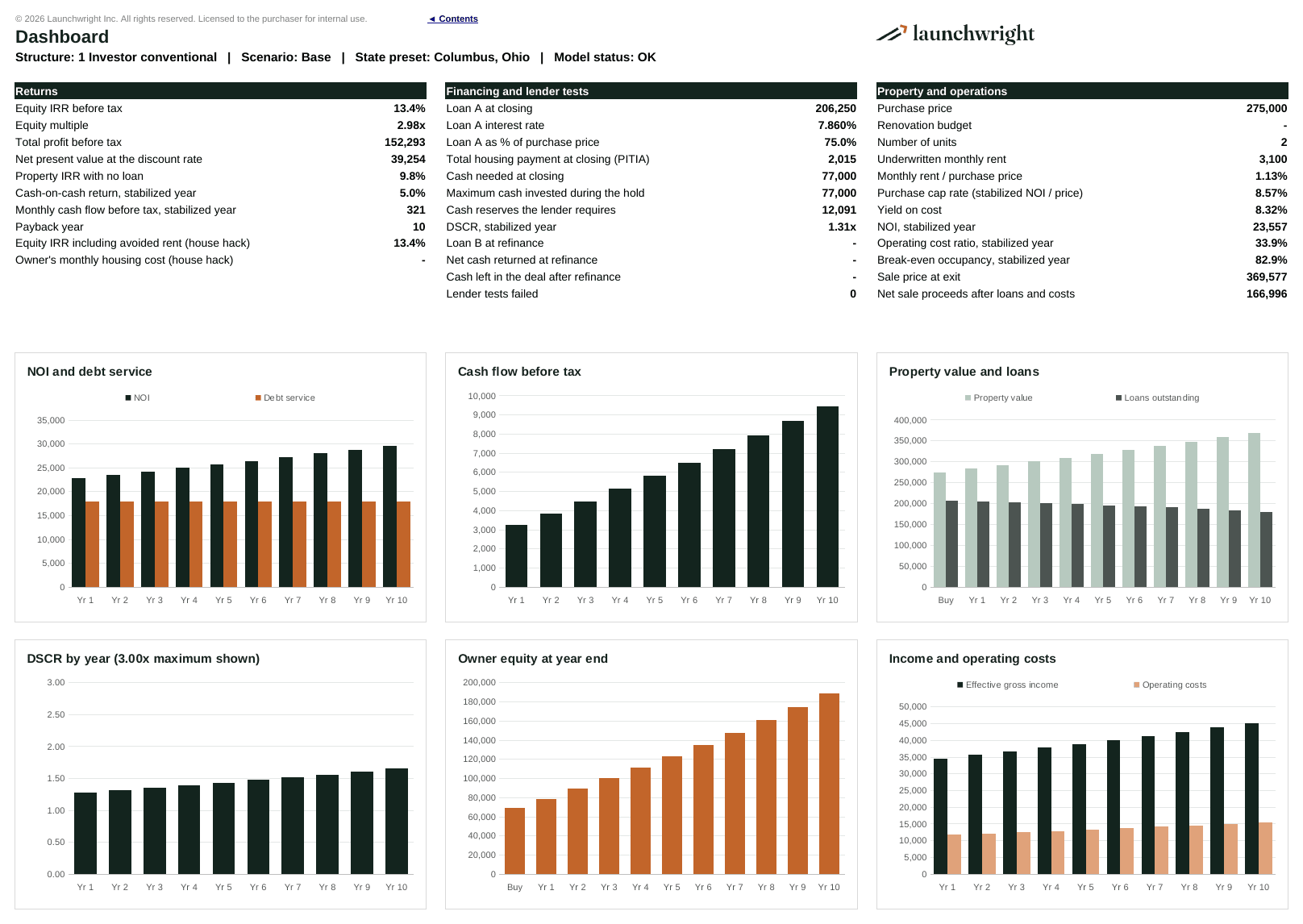
- Returns before tax: equity IRR, equity multiple, NPV, payback, cash-on-cash, DSCR, cap rate, yield on cost and break-even occupancy.
- Property tax presets for all 50 states, the District of Columbia and Columbus, Ohio, plus a custom row.
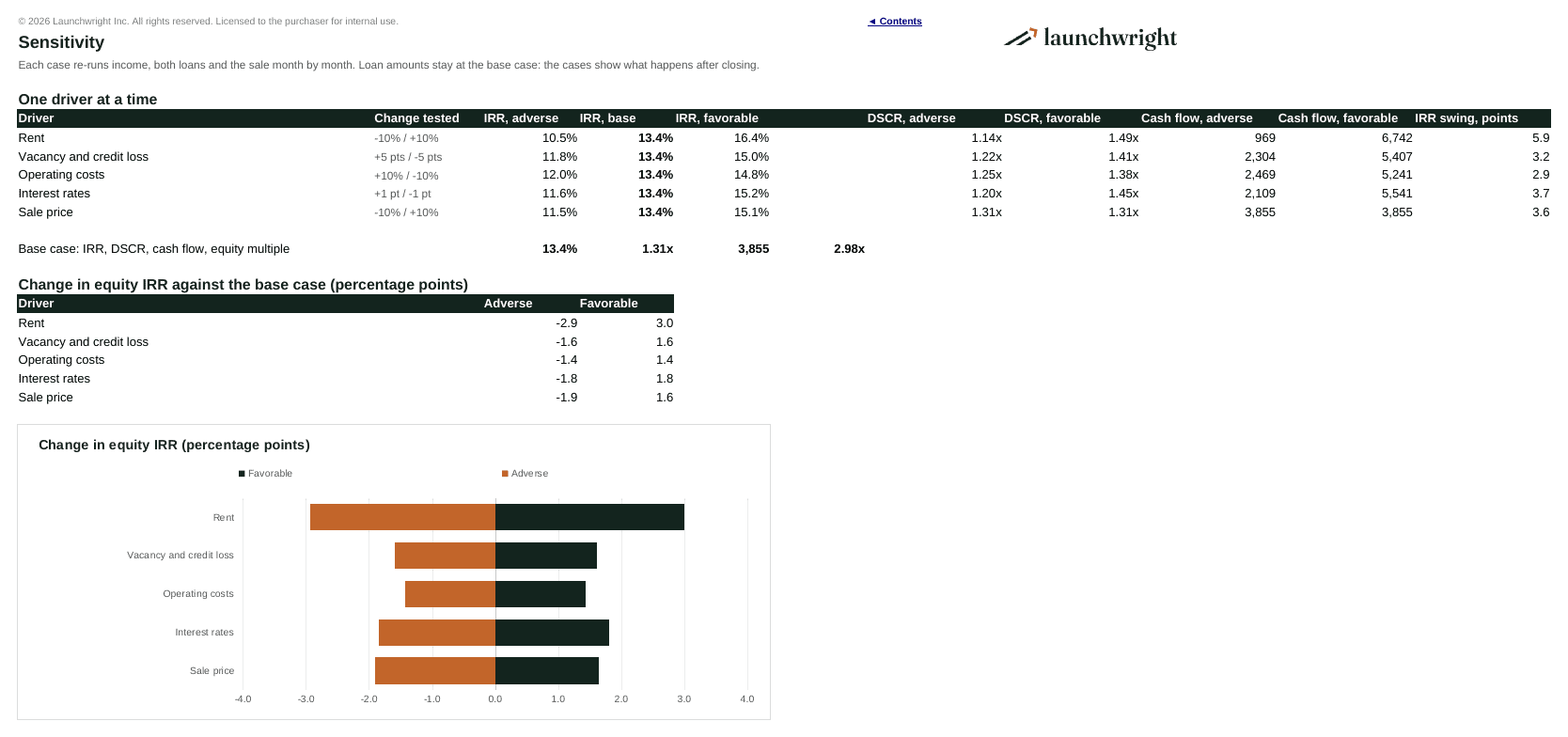
- Downside, Base, Upside and Custom scenarios, and live sensitivity cases that re-run both loans and the sale.
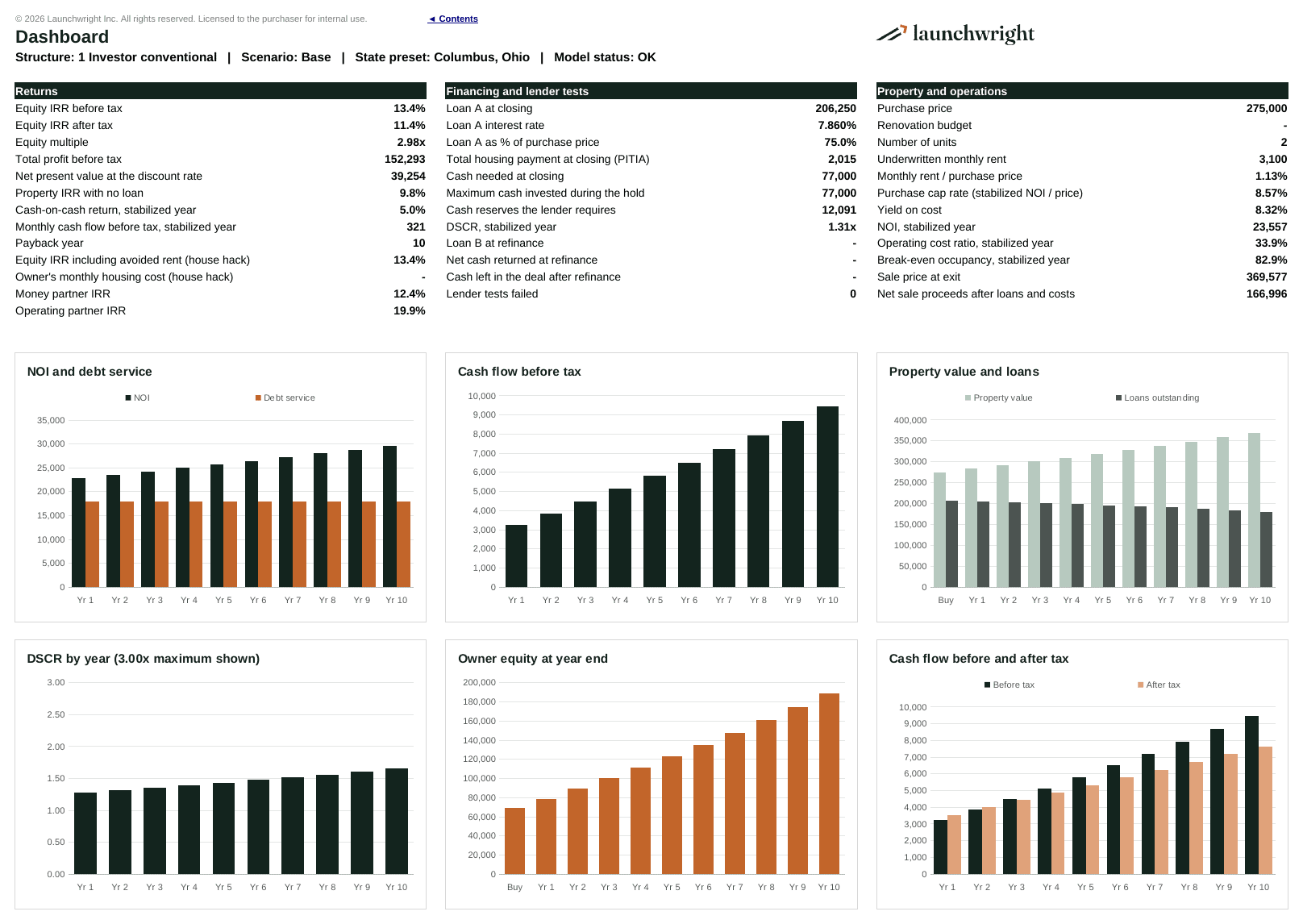
- A one-page Dashboard with six charts, integrity checks, warnings, a Sources sheet with 15 cited public sources and a glossary.
Due Diligence Edition adds
- Income tax: 27.5-year depreciation with the mid-month convention, an optional cost segregation share with bonus depreciation, and the passive loss rules with the $25,000 allowance, phase-out and carry-forward.
- Tax on sale: depreciation recapture, long-term capital gains, net investment income tax, state income tax, the home-sale exclusion for the owner unit and a like-kind (1031) exchange switch.
- After-tax cash flow and after-tax equity IRR.
- A money partner waterfall: capital and preferred return first, then a profit split.
- A lender summary with sources and uses, debt yield and stabilized ratios, and a two-way grid of rent against sale price.
Default base case
The file opens with a two-unit property in Columbus, Ohio bought for $275,000 with a 25% down conventional investor loan at 7.86%, based on the Freddie Mac average of 7.11% for November 12, 2026. On those template assumptions the model shows an equity IRR of 13.4% before tax (11.4% after tax in the Due Diligence Edition), a stabilized DSCR of 1.31x and cash flow of about $321 a month. Switch to the FHA house hack and the owner pays about $1,191 a month to live there, against $1,550 to rent elsewhere. Defaults are cited benchmarks and template assumptions. Replace them with your own deal.
Built to be trusted
No macros, no circular references, no external links, no hidden sheets and no locked cells. The file opens with all results and charts in place, including in Protected View. Inputs, calculations and outputs are kept apart, and inputs are blue on yellow. It uses long-standing Excel functions only: no dynamic arrays and no add-ins.
This template is for planning and illustration. It is not investment, tax, legal or lending advice. Loan program rules and tax law change; confirm them with a loan officer and a tax adviser.
Which edition do you need?
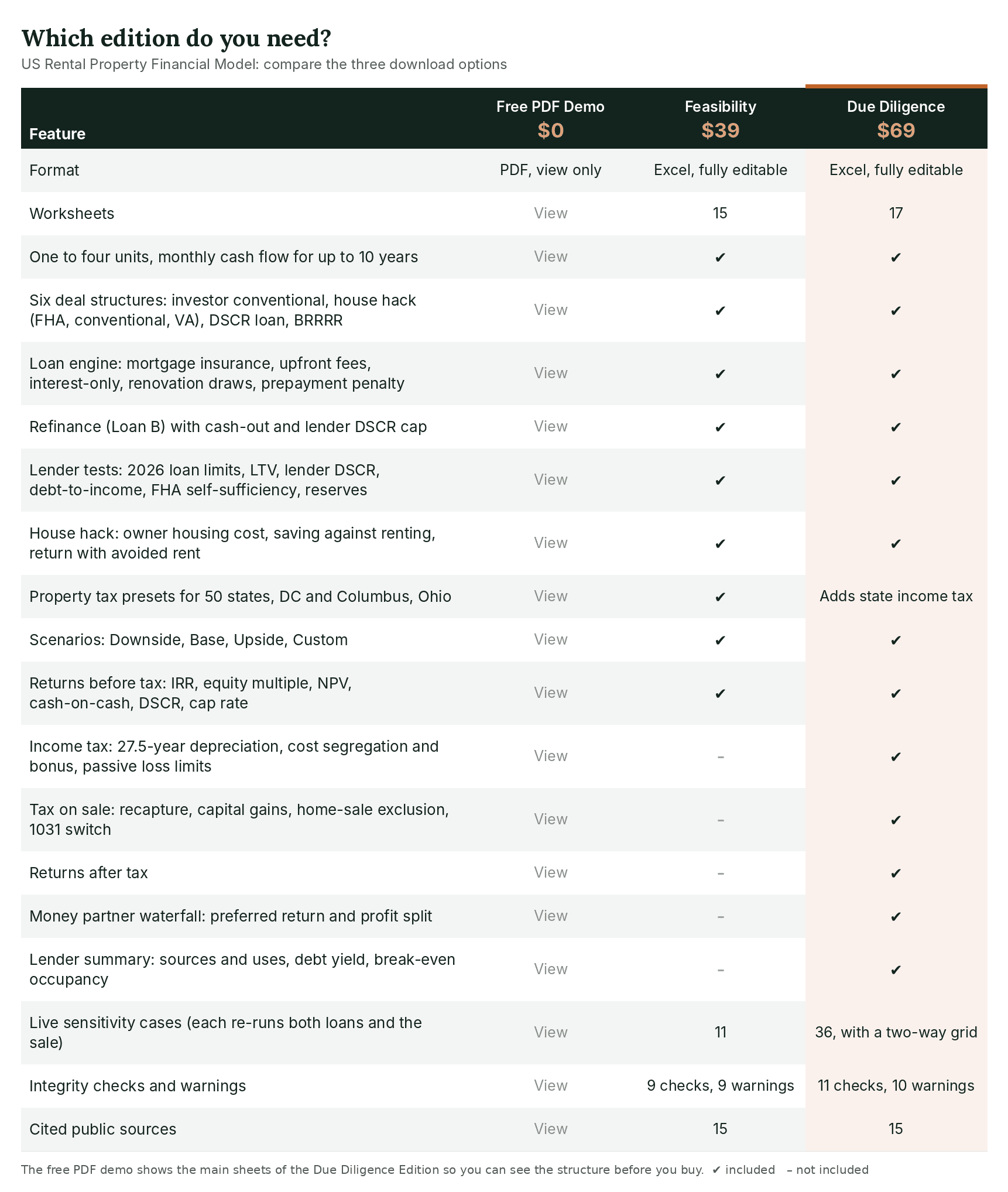
Free PDF Demo ($0): the main sheets of the Due Diligence Edition, view only. Feasibility Edition ($39): Excel, 15 worksheets. Due Diligence Edition ($69): Excel, 17 worksheets.
Both Excel editions
- One to four units, monthly cash flow for up to 10 years
- Six deal structures: investor conventional, house hack (FHA, conventional, VA), DSCR loan, BRRRR
- Loan engine: mortgage insurance, upfront fees, interest-only, renovation draws, prepayment penalty
- Refinance (Loan B) with cash-out and lender DSCR cap
- Lender tests: 2026 loan limits, LTV, lender DSCR, debt-to-income, FHA self-sufficiency, reserves
- House hack: owner housing cost, saving against renting, return with avoided rent
- Property tax presets for 50 states, DC and Columbus, Ohio
- Scenarios: Downside, Base, Upside, Custom
- Returns before tax: IRR, equity multiple, NPV, cash-on-cash, DSCR, cap rate
Due Diligence Edition only
- Income tax: 27.5-year depreciation, cost segregation and bonus, passive loss limits
- Tax on sale: recapture, capital gains, home-sale exclusion, 1031 switch
- Returns after tax
- Money partner waterfall: preferred return and profit split
- Lender summary: sources and uses, debt yield, break-even occupancy
- State income tax rates in the state presets
- 36 live sensitivity cases with a two-way grid (Feasibility: 11)
FAQs
Which Excel version do I need? Desktop Excel for Windows or Mac. The file has no macros and uses long-standing functions only. It has not been tested in Google Sheets.
Can I model a single-family rental? Yes. Set the number of units to 1. The lender tests switch to the one-unit limits and loan-to-value maximums.
Can I use it outside Ohio? Yes. Pick your state from the list on Inputs to load the property tax rate (and, in the Due Diligence Edition, the state income tax rate), then enter your own price, rents and costs. State rates are averages, so check your county.
Are the loan rules current? They reflect published 2026 rules and limits, each cited on the Sources sheet. Limits change every year and lenders add their own requirements, so every rule is an editable input.
Does the tax sheet replace a tax adviser? No. It is a simplified estimate that shows how depreciation, loss limits and tax on sale change the return. The simplifications are listed at the foot of the Tax sheet.
How does the house hack work? The owner unit earns no rent while the owner lives there. After the occupancy period the unit is rented. The model shows the monthly housing cost during occupancy and compares it with renting elsewhere.
What does the sensitivity analysis change? Rent, vacancy, operating costs, interest rates and the sale price. Each case re-runs both loans month by month. Loan amounts stay at the base case.
Is the file locked? No. Every cell and formula is visible and editable.
Do you offer support? Questions about how the template works can be sent via the Contact Author button or Chat Support. Customization requests go through the eFinancialModels custom service.
Similar ProductsOther customers were also interested in...



 eFinancialModels
Electric Vehicle (EV) Charging Station Financial M...
With this comprehensive 5- or 10-year monthly tool, investors can assess the viability of setting up... Read more

Financial Model for Mobile App | Mobile App Busine...
The Mobile App Financial Plan Template in Excel allows you to develop financial projections when lau... Read more

 HenrySheykin
Food Truck Financial Model Excel Template
The Food Truck Financial Model helps entrepreneurs, founders, business owners, consultants, and anal... Read more

Green Hydrogen Production from Wind Energy Financi...
The Green Hydrogen from Wind Financial Model aims to comprehensively forecast a horizon of 40 years ... Read more

Simple Mutual Non-Disclosure Agreement Template
Protect your business secrets with ease using our Simple Mutual Non-Disclosure Agreement Template. S... Read more

Solar Energy Financial Model
The Solar Energy Financial Model Spreadsheet Template in Excel assists you in preparing a sophistica... Read more

 Peter Graf
The Customer-Centric Financial Model for Restauran...
Starting a restaurant without a financial plan is like driving a car blindfolded. You wouldn´t do i... Read more
You must log in to submit a review.