

0 ITEMS

Commercial Solar + Battery Energy Storage (BESS) Financial Model | C&I Rooftop, Behind-the-Meter, Microgrid, Off-Grid Diesel Generator Hybrid, Lease & PPA
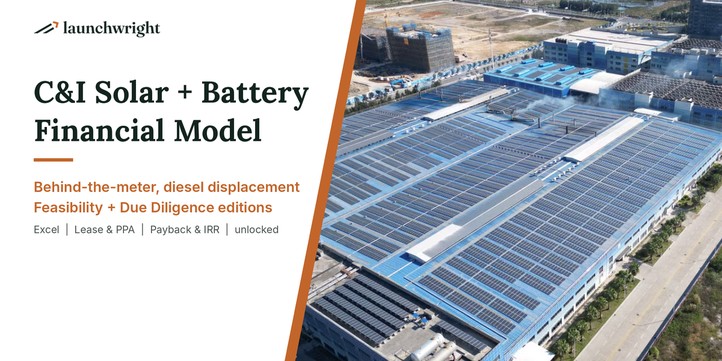
Excel model for commercial and industrial solar + battery behind the meter: 12 x 24 typical-day dispatch against the site load, grid outages and diesel displacement, time-of-use and demand charges, itemized capex in USD with FX, and customer-owned, loan, lease and third-party PPA structures. Presets for Nigeria, South Africa, Pakistan, Kenya and the United States. Two editions and a free PDF demo.
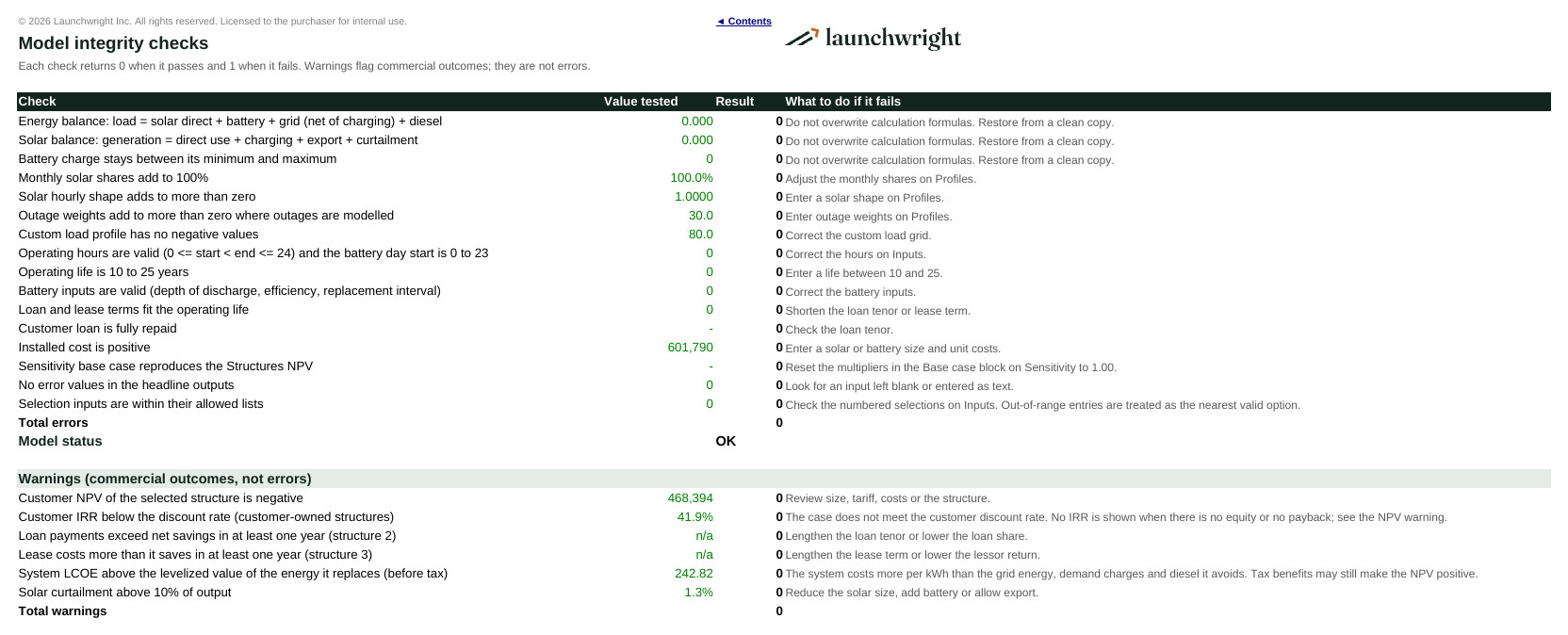
- See exactly how much grid and diesel cost a solar + battery system removes, hour by hour, before you buy, sell or finance one.
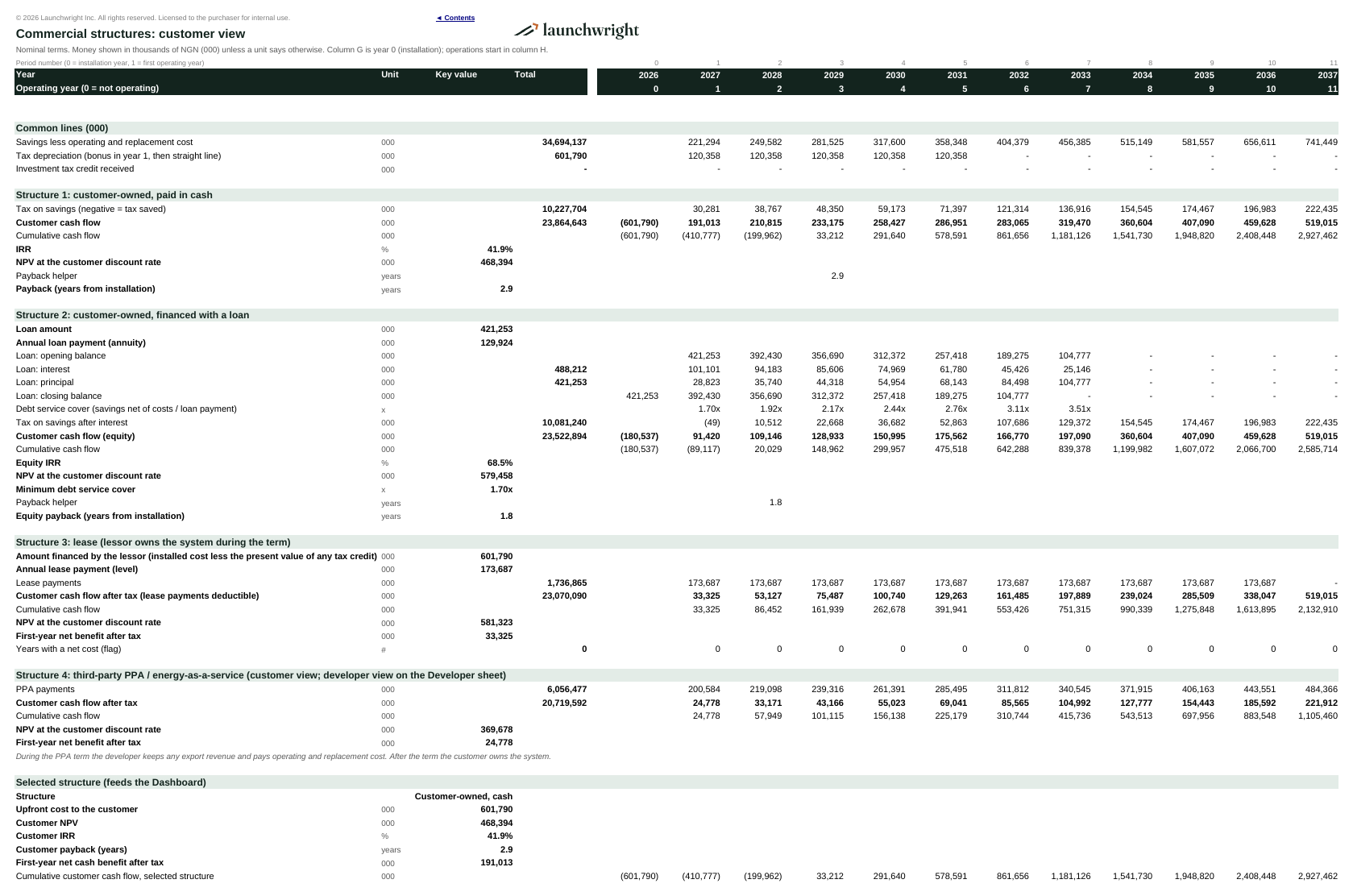
- Compare paying cash, borrowing, leasing and a third-party PPA side by side, with customer NPV, IRR and payback for each.
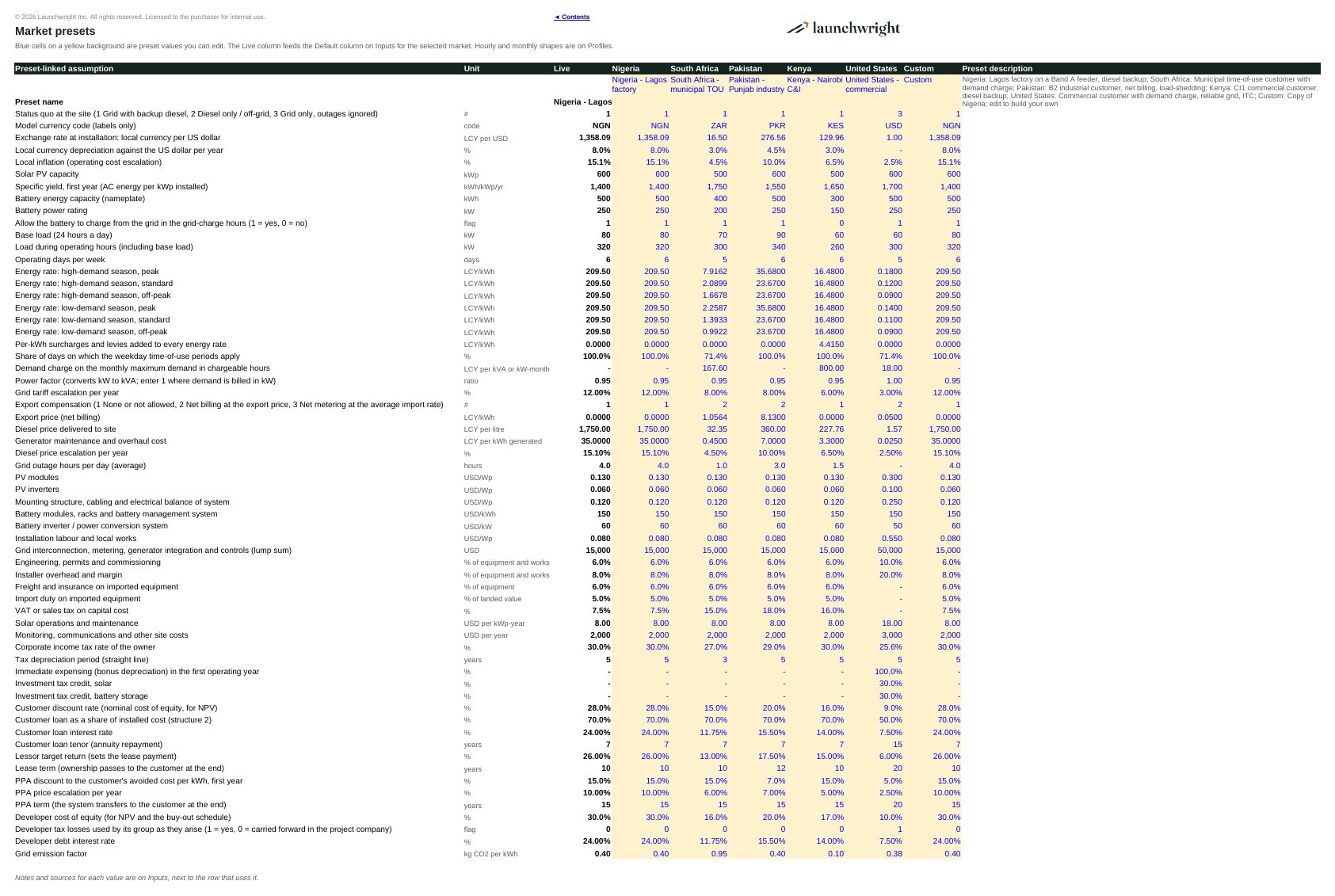
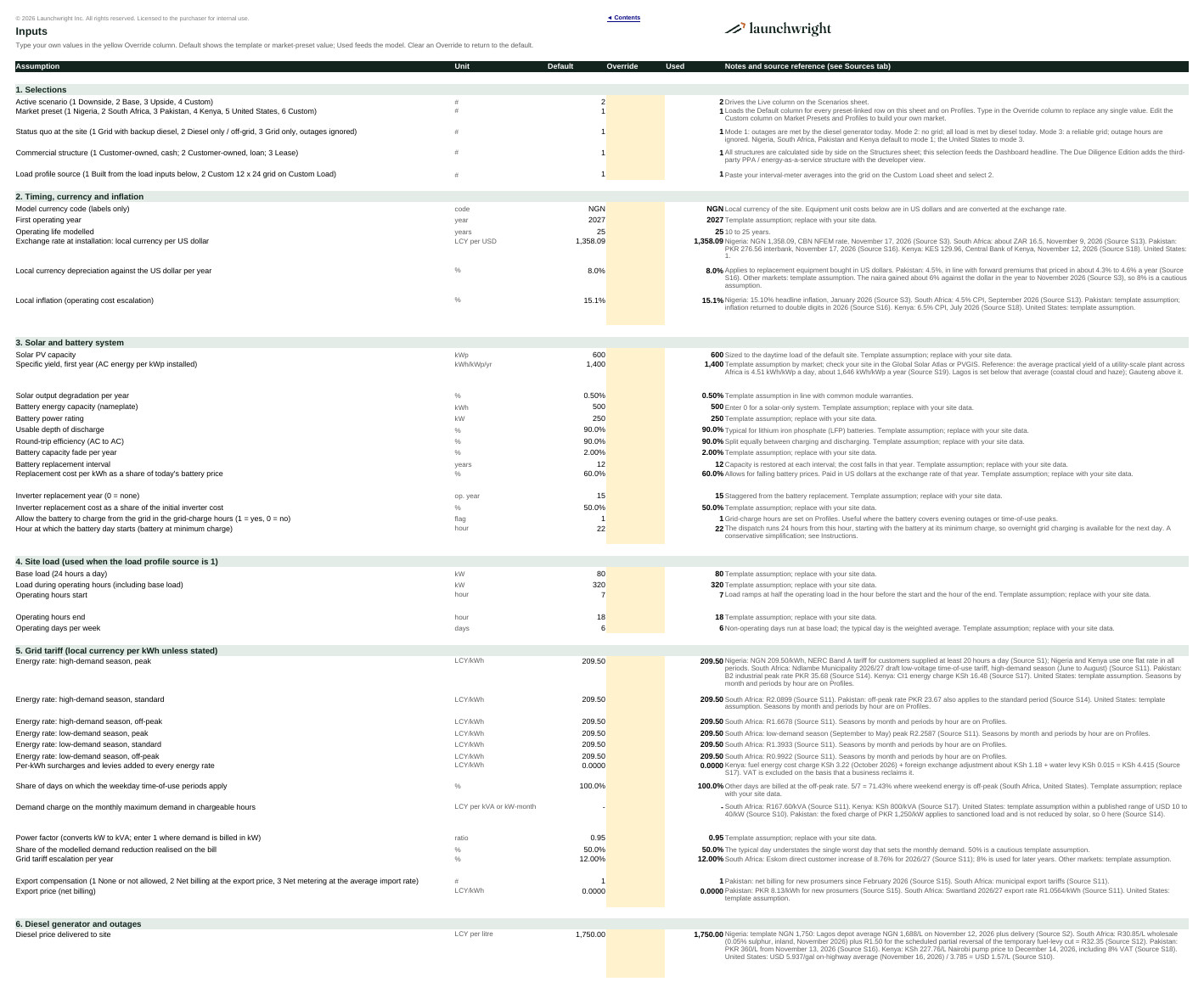
- Start from researched defaults for Nigeria, South Africa, Pakistan, Kenya or the United States, or build your own market.
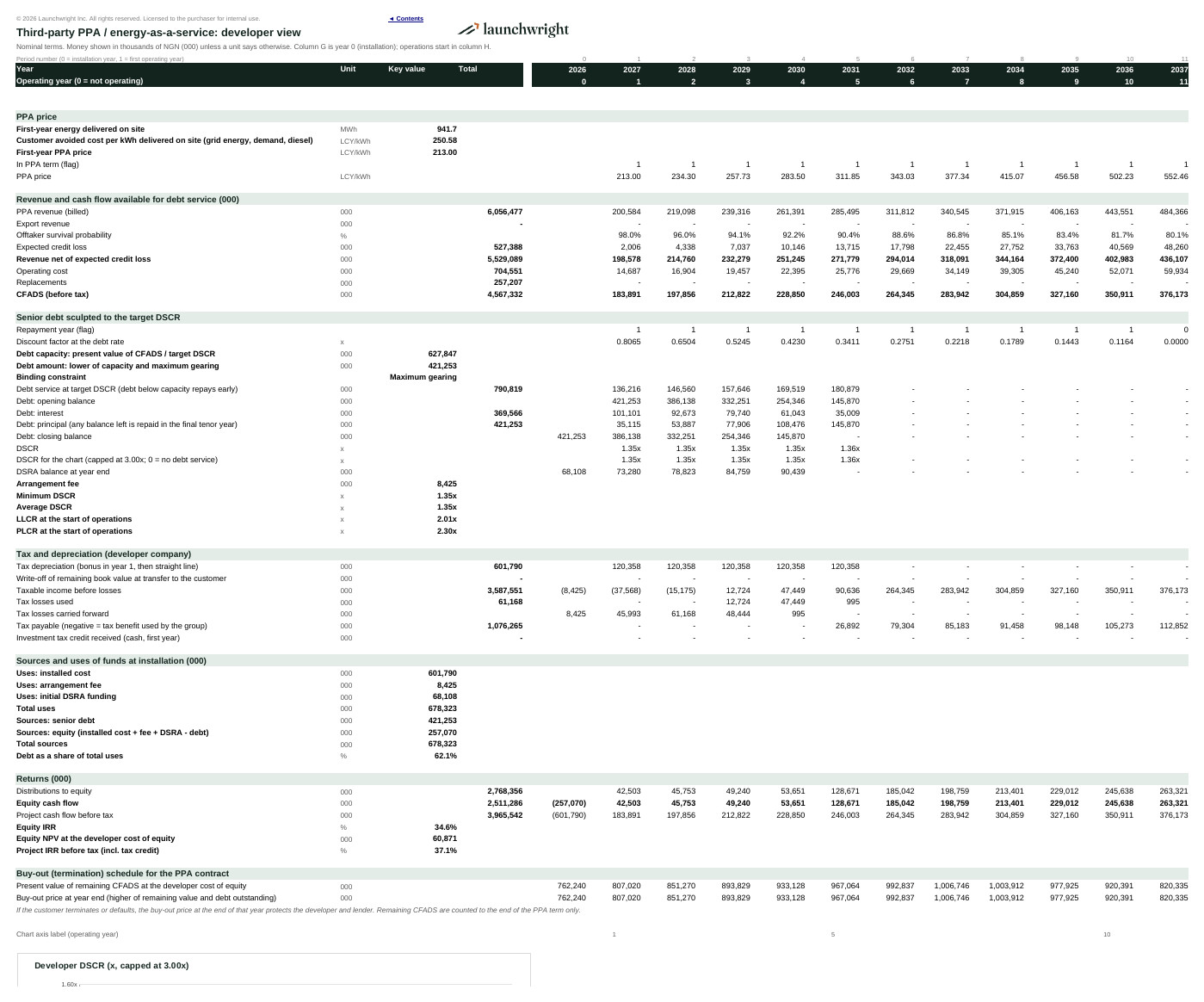
- Give a lender a developer case with debt sculpted to a target DSCR, DSRA, LLCR, sources and uses and three financial statements (Due Diligence Edition).
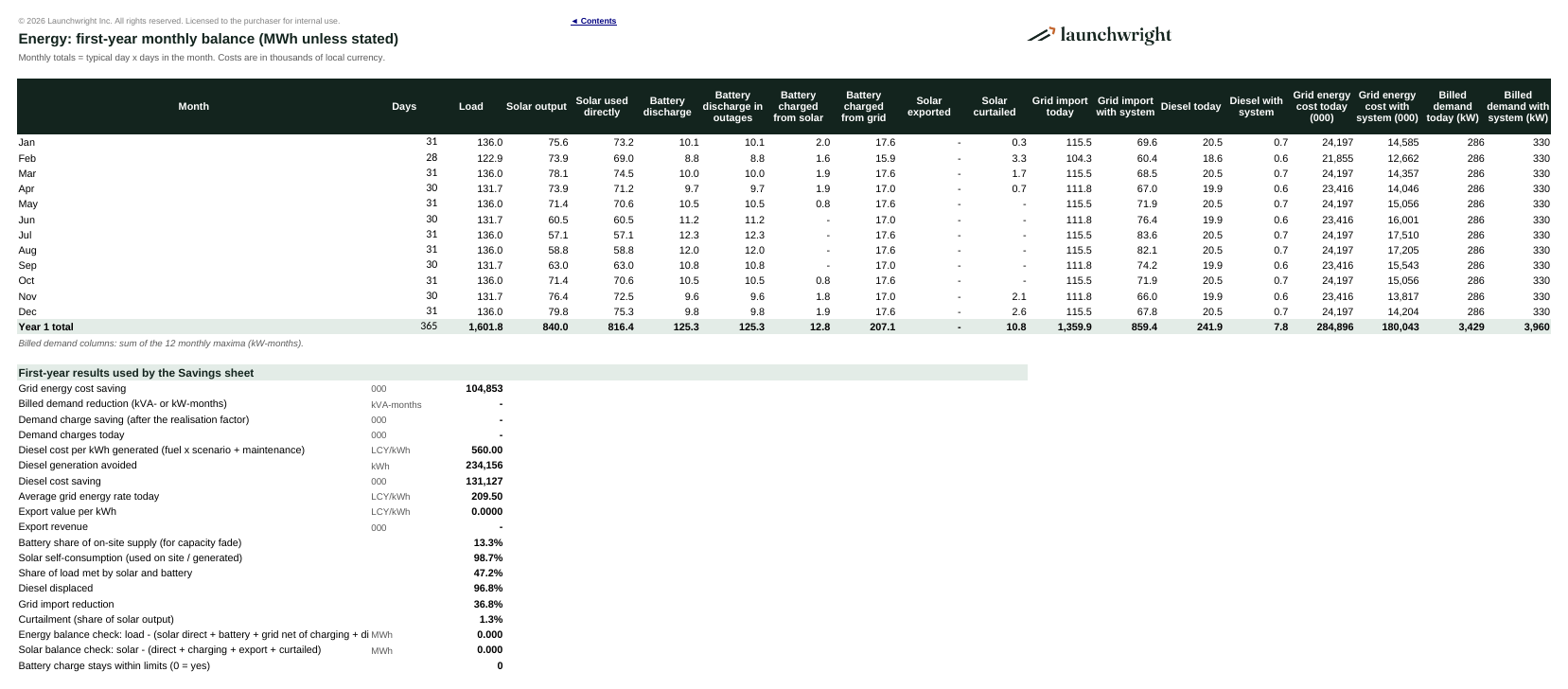
Selling, financing or buying solar and batteries for a factory, warehouse, mall, hospital, telecom site or farm? The question is not what a power plant earns but what the site stops paying for. This Excel model answers it. It matches the site load against solar output and a battery for a typical day of every month, hour by hour, and measures the savings against how the site is supplied today: a grid with a backup diesel generator, a diesel generator alone (off-grid), or a reliable grid.
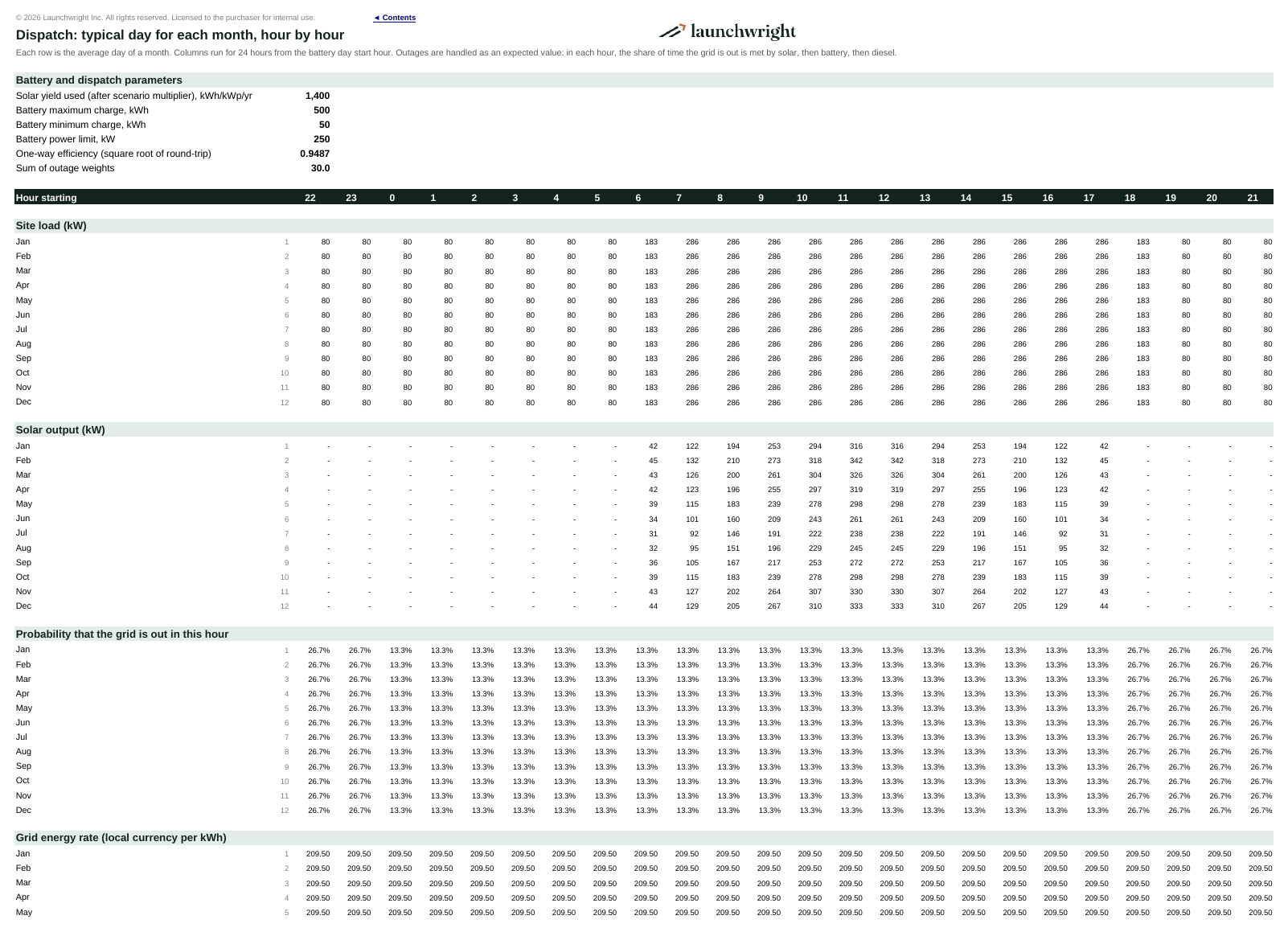
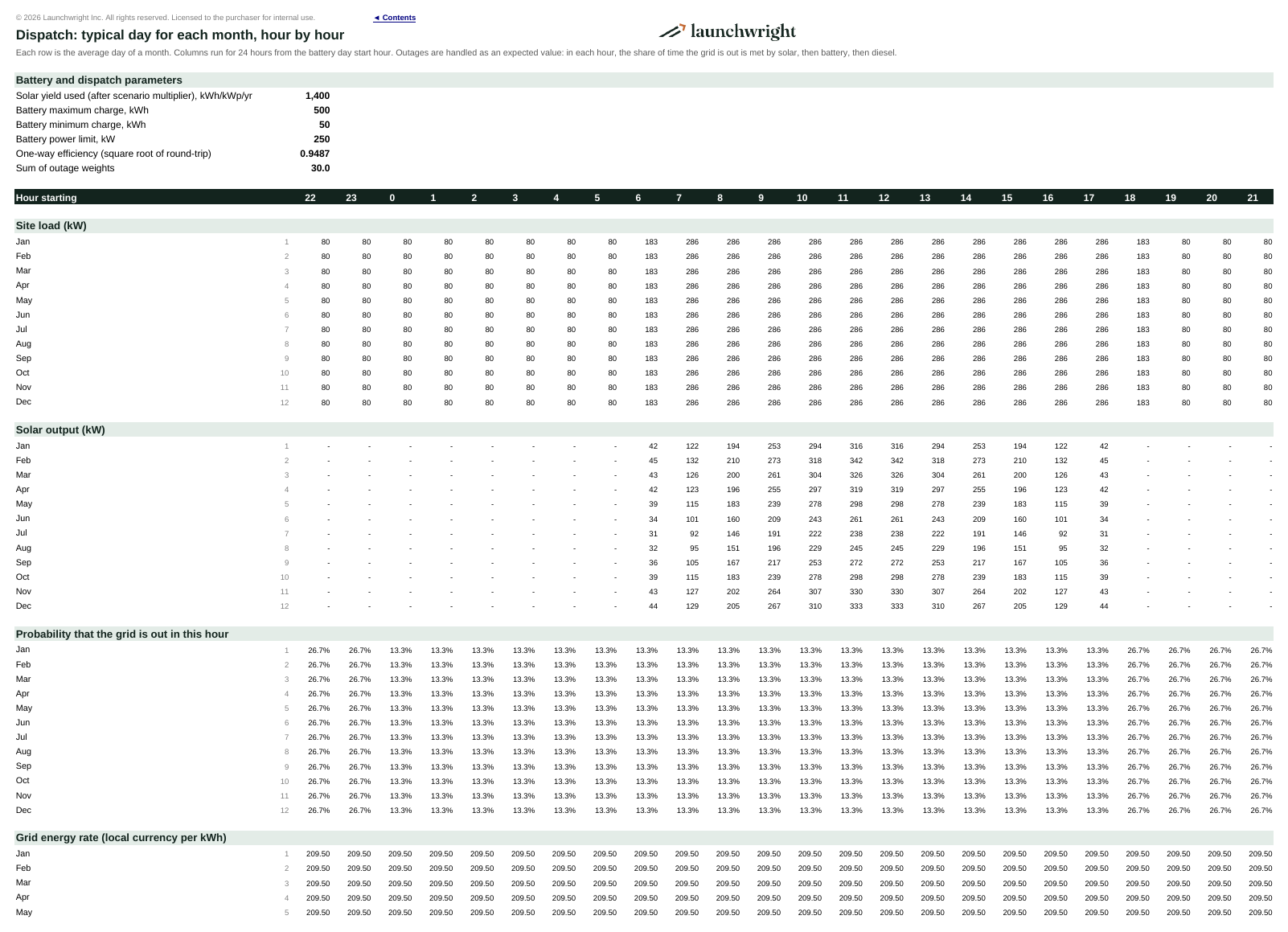
Grid outages and load-shedding are handled properly. In each hour, the share of time the grid is down is served by solar first, then the battery, then diesel, so the model shows how much diesel the system really displaces and what the generator still has to do. Time-of-use rates, demand charges, net billing or net metering, grid charging of the battery and the battery discharge window are all set on one Profiles sheet. You can paste your own interval-meter load into a 12 x 24 grid.
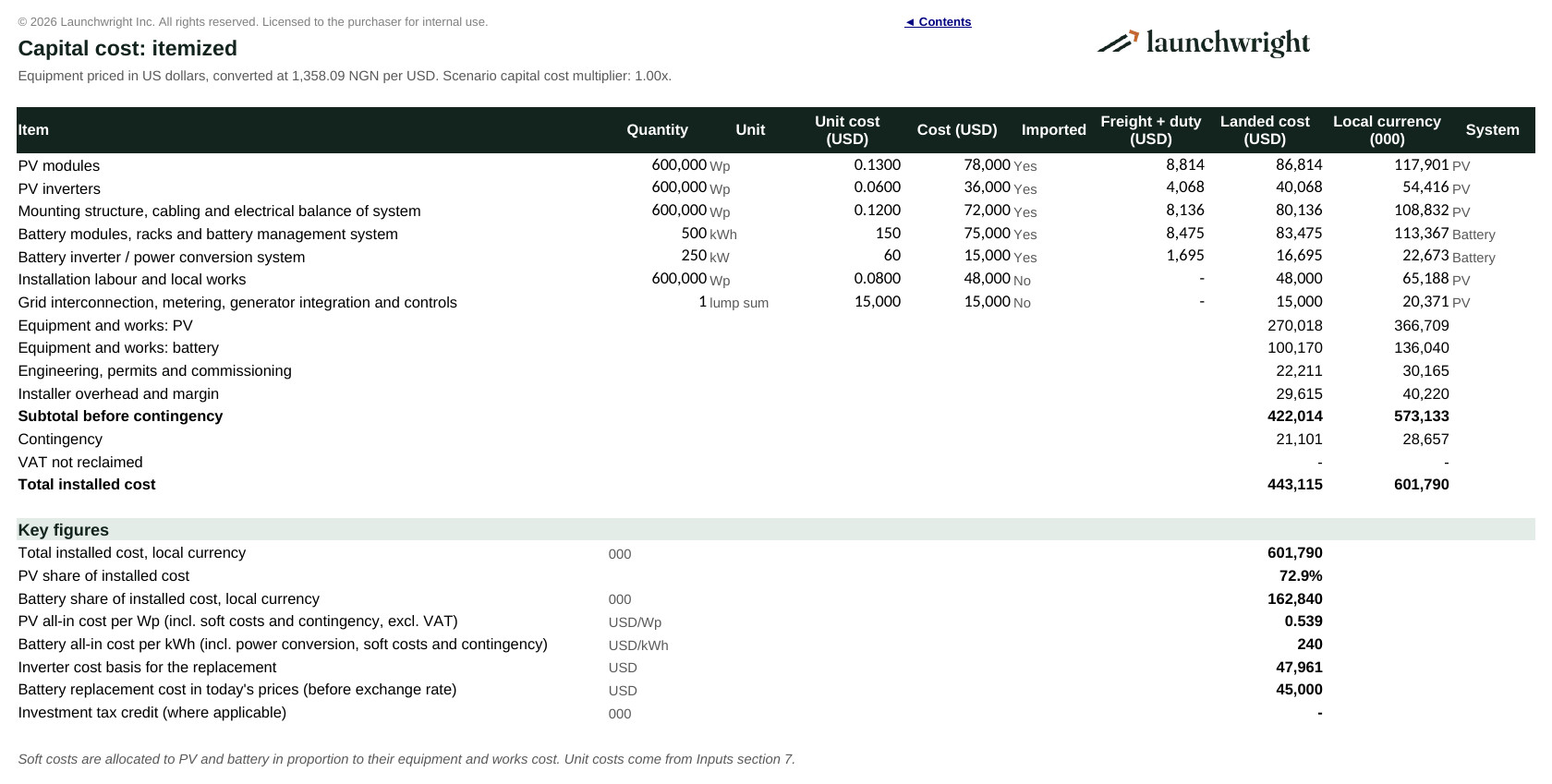
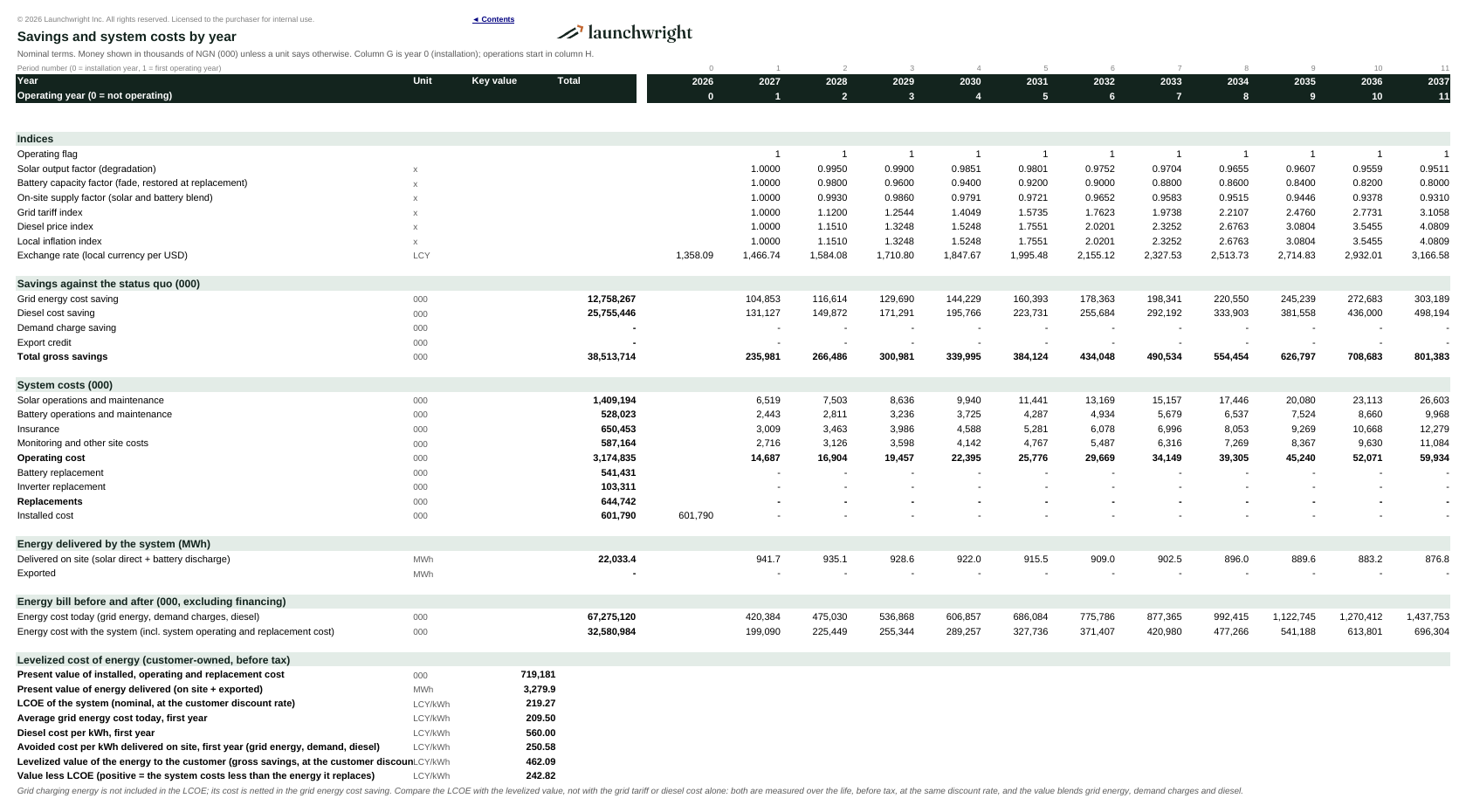
Equipment is priced in US dollars and converted to the local currency, with freight, import duty, VAT, engineering, installer margin and contingency itemized on the Capex sheet. Battery and inverter replacements are bought at the exchange rate of the year they fall due, so a weakening currency shows up where it hurts. Over a 25-year life the model follows solar degradation, battery fade and replacement, grid tariff and diesel escalation, and local inflation.
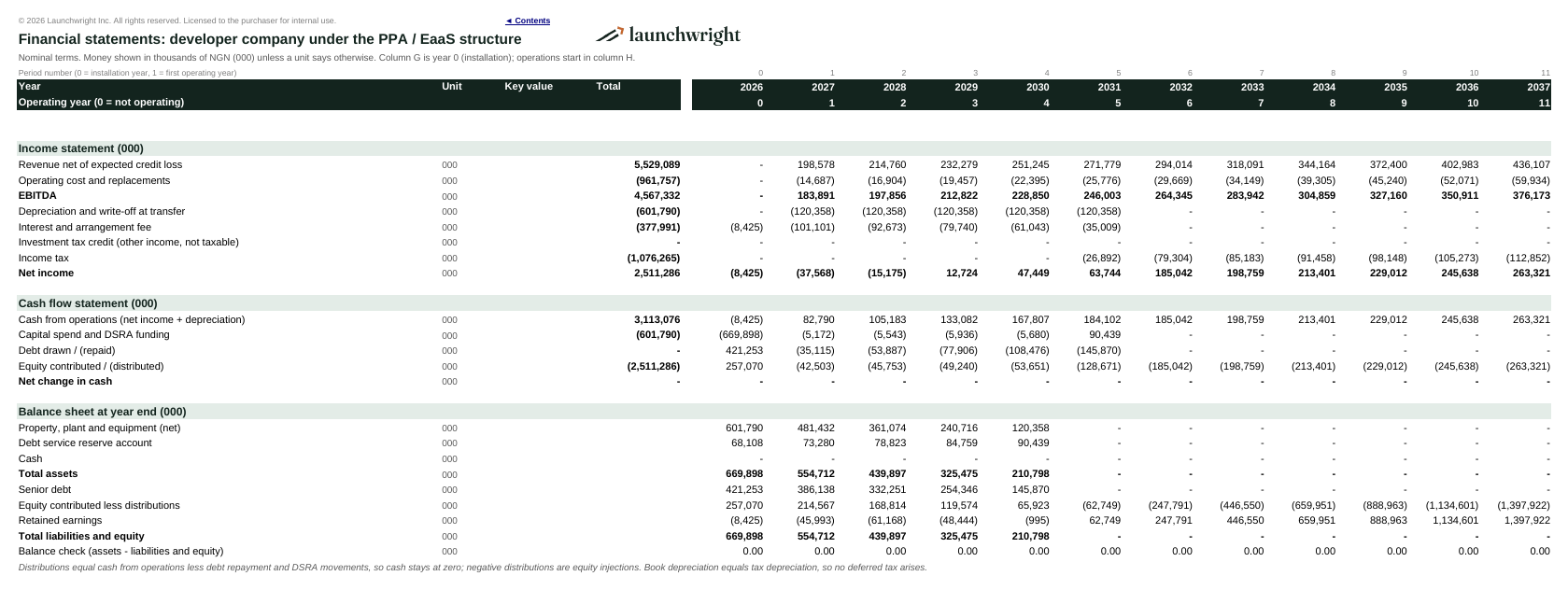
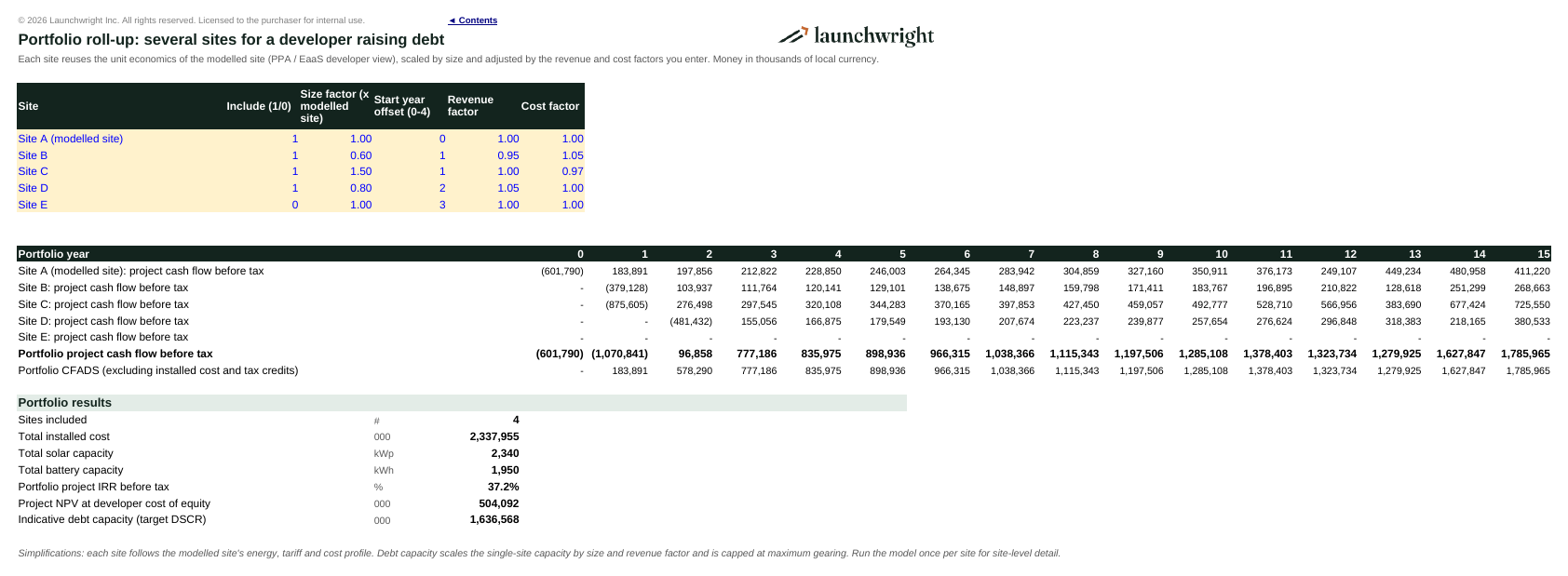
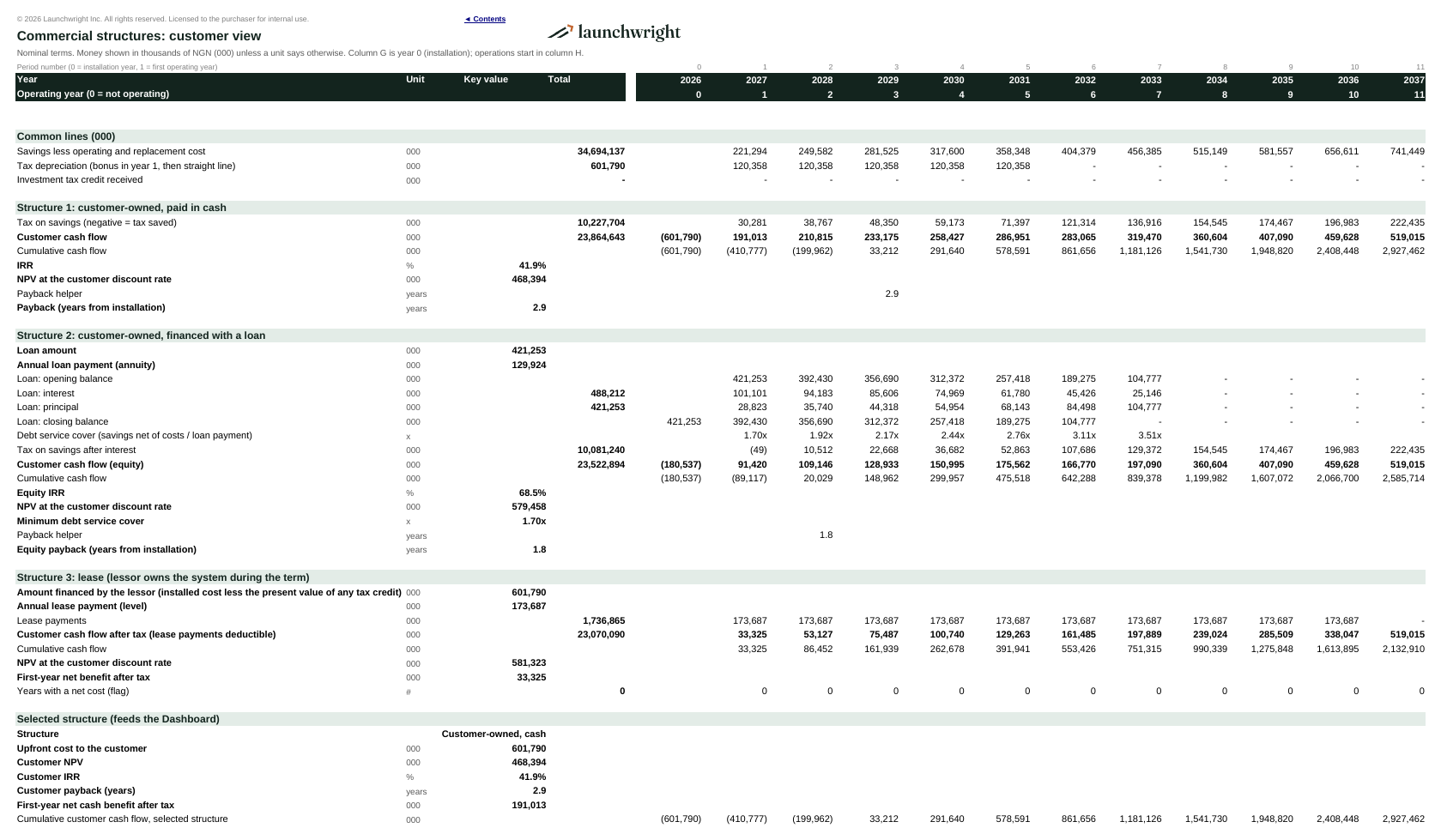
Every commercial structure a C&I sale actually uses is calculated at the same time, so you can see which one works for the customer: customer-owned with cash, customer-owned with a loan, and a lease. The Due Diligence Edition adds the third-party PPA or energy-as-a-service contract with both views. The customer sees the savings after PPA payments. The developer sees PPA revenue net of offtaker default risk, debt sculpted to a target DSCR with a DSRA, LLCR and PLCR, tax with loss carry-forward, sources and uses, a contract buy-out schedule, three integrated financial statements and a roll-up of up to five sites.
Who it is for
- Solar installers and EPC contractors preparing a proposal for a commercial or industrial client.
- Developers and energy-as-a-service providers pricing a PPA and sizing debt.
- Factory, mall, hospital and telecom energy managers replacing diesel generators or cutting demand charges.
- Lenders, development finance institutions, consultants and students reviewing a behind-the-meter case.
Why this model
Most solar templates treat the site like a small power plant: annual yield times a self-use percentage, or a PPA tariff paid by the grid. They do not model the load, the battery, outages, demand charges or diesel, which is where a commercial solar + battery case is won or lost. This model is built around the behind-the-meter decision, uses plain formulas with no macros, opens on Windows and Mac, and cites every default to a public source or labels it a template assumption. For utility-scale plants that sell to the grid, see the Launchwright Solar + BESS Project Finance Model.
What you get
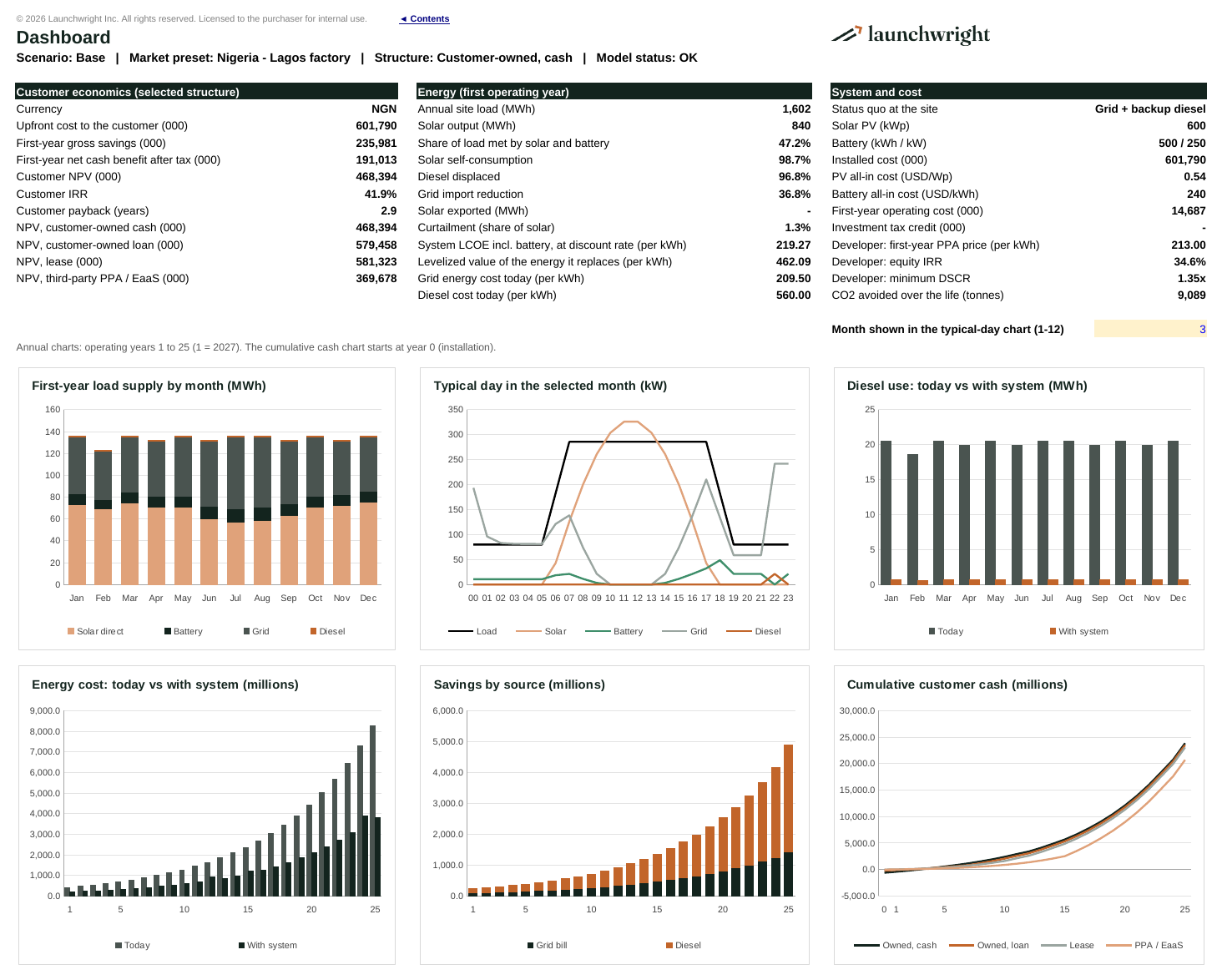
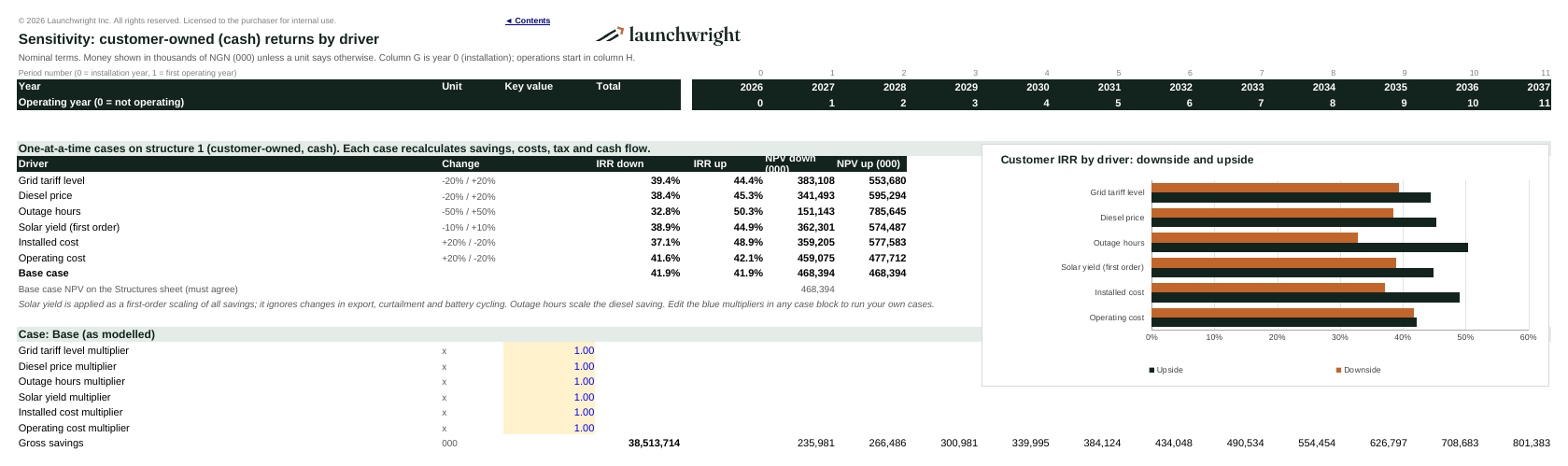
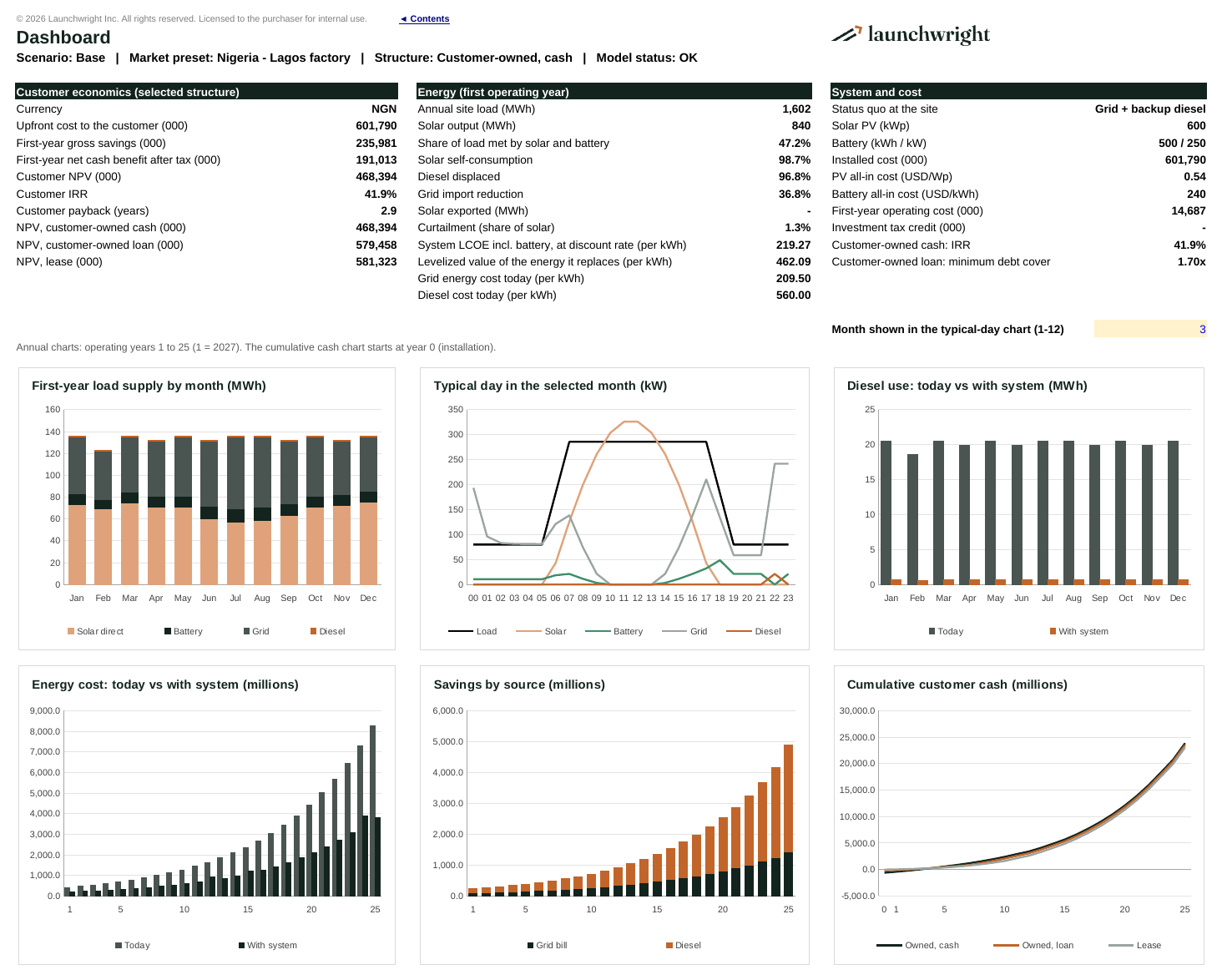
- Feasibility Edition ($69): 17 sheets. Five market presets plus Custom; three status-quo options (grid with backup diesel, diesel only, grid only); 12 x 24 typical-day dispatch of load, solar, battery, grid and diesel; time-of-use rates, demand charges, net billing and net metering; itemized capital cost in US dollars with exchange rate, freight, duty and VAT; battery and inverter replacement; customer-owned (cash and loan) and lease structures; system LCOE compared with the levelized value of the grid energy, demand charges and diesel it replaces; four scenarios; 12 sensitivity cases; Checks; and a dashboard with six charts.
- Due Diligence Edition ($129): 20 sheets. Everything in the Feasibility Edition, plus the third-party PPA / energy-as-a-service structure with customer and developer views, offtaker default risk, contract buy-out schedule, developer debt sculpted to a target DSCR, DSRA, LLCR and PLCR, sources and uses, tax with loss carry-forward, income statement, cash flow statement and balance sheet, a portfolio roll-up of up to five sites, CO2 avoided, a DSCR chart and a tornado chart.
- Free PDF demo: 20 pages of the Due Diligence Edition with the Nigeria base case.
Edition comparison
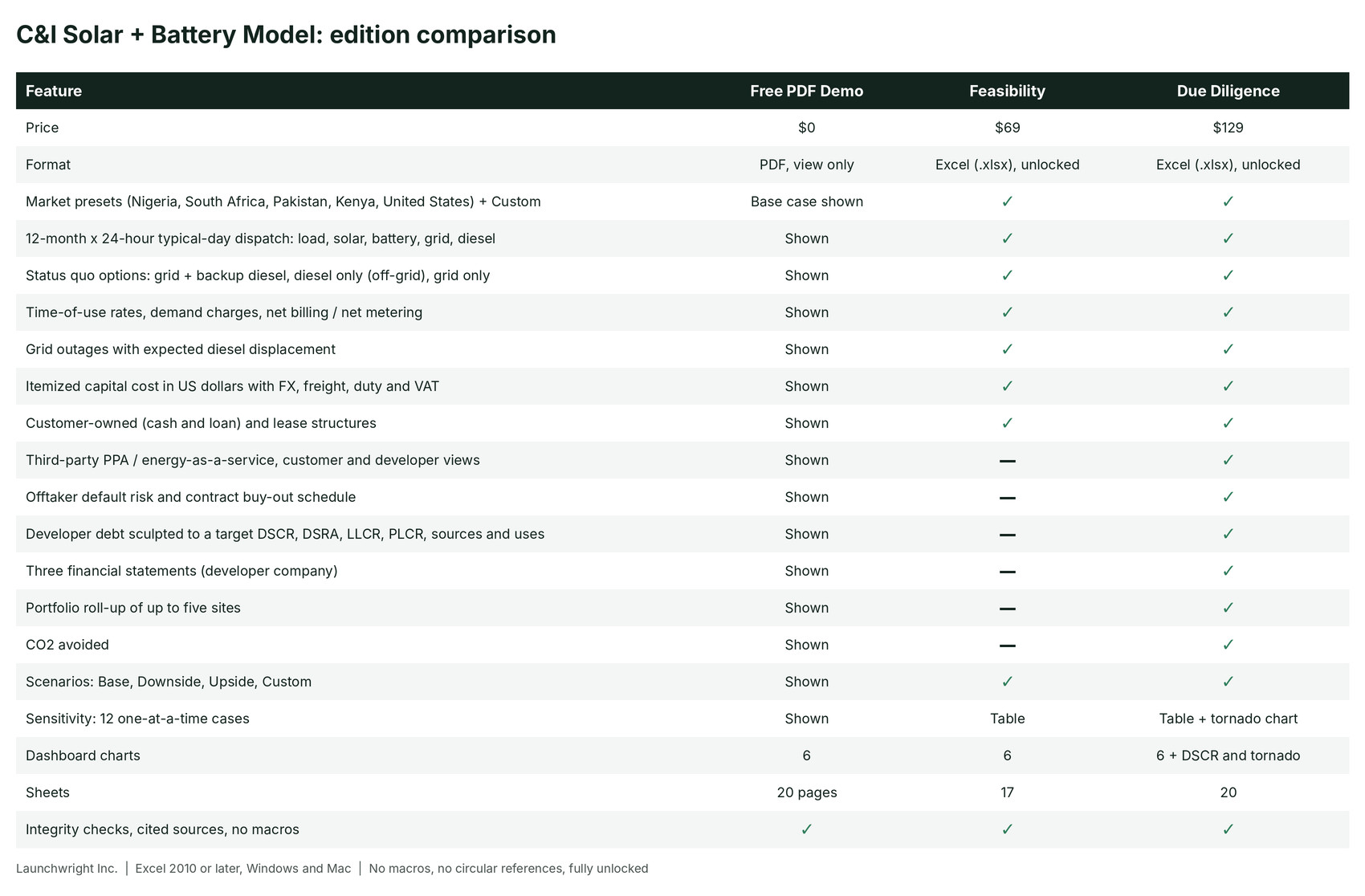
Default base case (Nigeria preset, illustration only)
A Lagos factory on a Band A feeder with 4 hours of daily outages and diesel backup installs 600 kWp of solar and a 500 kWh / 250 kW battery for about NGN 602 million (USD 0.54/Wp all-in PV, USD 240/kWh battery). First-year savings are about NGN 236 million, 96.8% of diesel generation is displaced, and the customer-owned cash case shows a 41.9% IRR in naira and a 2.9-year payback. These come from published November 2026 prices and template assumptions; your site will differ.
Frequently asked questions
Which Excel versions does it work in?
Excel 2010 or later on Windows or Mac. It uses only long-standing functions, with no macros, no dynamic arrays, no data tables and no circular references. It was recalculated and tested in LibreOffice Calc as well. It has not been tested in Google Sheets.
Is it a microgrid model?
It models a single-site microgrid behind the meter: solar, a battery and a diesel generator supplying one site, with the site running on solar and battery during grid outages. It is not a village mini-grid model with many customer connections and retail tariffs.
Is it an hourly 8,760 simulation?
No. It uses a typical day for each month (12 x 24 hours). Day-to-day variation in sun, load and outages is averaged, which can overstate self-consumption and demand savings; a demand realisation factor and a conservative battery start-of-day setting partly offset this. The Instructions sheet lists every simplification.
Can I use it for my country?
Yes. Five market presets are included (Nigeria, South Africa, Pakistan, Kenya, United States) and a Custom column for your own market. Every tariff, price, exchange rate and tax input can be overridden, and equipment costs convert from US dollars at your exchange rate.
Does it handle sites with no grid?
Yes. Choose the diesel-only (off-grid) status quo and savings are measured against running the generator for the whole load.
Can I model solar only, or a battery only?
Yes. Enter a battery size of 0 for solar only, or a solar size of 0 for a battery that charges from the grid in off-peak hours.
Which structures are in the Feasibility Edition?
Customer-owned with cash, customer-owned with a loan, and a lease. The third-party PPA / energy-as-a-service structure with the developer view is in the Due Diligence Edition.
How is the developer debt sized?
In the Due Diligence Edition, debt is the lower of the present value of cash flow at your target DSCR and maximum gearing; repayments follow cash flow at the target DSCR and finish early if gearing is the limit. No circular reference or iterative calculation is needed.
Are the default numbers a forecast?
No. Defaults are published figures from November 2026 and template assumptions, each cited on the Sources sheet or labelled. Replace them with your site data before relying on any result.
Why is the system cost per kWh higher than my grid tariff?
It can be, and the case can still pay. The system replaces a blend of grid energy, demand charges and diesel, and diesel usually costs far more per kWh than the grid. The Dashboard compares the system LCOE with the levelized value of that blend, both over the life and at the same discount rate. In the Nigeria base case the system costs about NGN 219 per kWh against a value of about NGN 462 per kWh. A Checks warning appears if the cost is ever above the value.
Is the file locked?
No. There are no locked cells, passwords, hidden sheets or macros. Every formula is visible.
Support
The support email is on the Contents sheet of the workbook; minor clarifications are included with your purchase. For custom work, use the eFinancialModels custom modeling service.
Similar ProductsOther customers were also interested in...


 eFinancialModels
Electric Vehicle (EV) Charging Station Financial M...
With this comprehensive 5- or 10-year monthly tool, investors can assess the viability of setting up... Read more

Financial Model for Mobile App | Mobile App Busine...
The Mobile App Financial Plan Template in Excel allows you to develop financial projections when lau... Read more

 HenrySheykin
Food Truck Financial Model Excel Template
The Food Truck Financial Model helps entrepreneurs, founders, business owners, consultants, and anal... Read more

Green Hydrogen Production from Wind Energy Financi...
The Green Hydrogen from Wind Financial Model aims to comprehensively forecast a horizon of 40 years ... Read more

Simple Mutual Non-Disclosure Agreement Template
Protect your business secrets with ease using our Simple Mutual Non-Disclosure Agreement Template. S... Read more

Solar Energy Financial Model
The Solar Energy Financial Model Spreadsheet Template in Excel assists you in preparing a sophistica... Read more

 Peter Graf
The Customer-Centric Financial Model for Restauran...
Starting a restaurant without a financial plan is like driving a car blindfolded. You wouldn´t do i... Read more
You must log in to submit a review.