
0 ITEMS

Plastic Pyrolysis Plant Financial Model: Chemical Recycling, Plastic to Oil, Waste to Energy, ISCC Circular Premium, DSCR Debt Sculpting, 3 Statements
Annual Excel model for a mixed-plastic pyrolysis (chemical recycling) plant: bale composition and rejects, polymer-by-polymer yields, crude oil or distilled fuels, gate fees, circular premium, debt sized to a target DSCR, three statements, IRR and NPV. Feasibility and Due Diligence editions, no macros, fully unlocked.
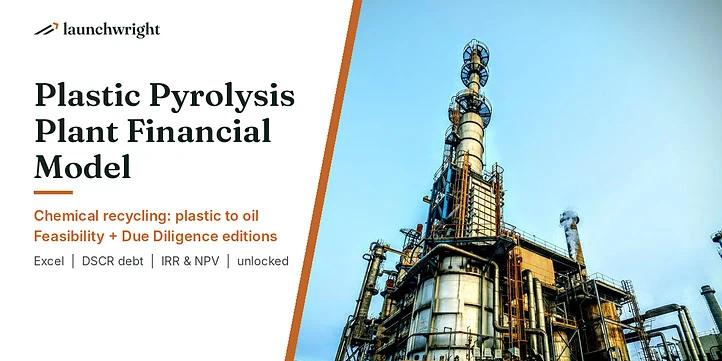
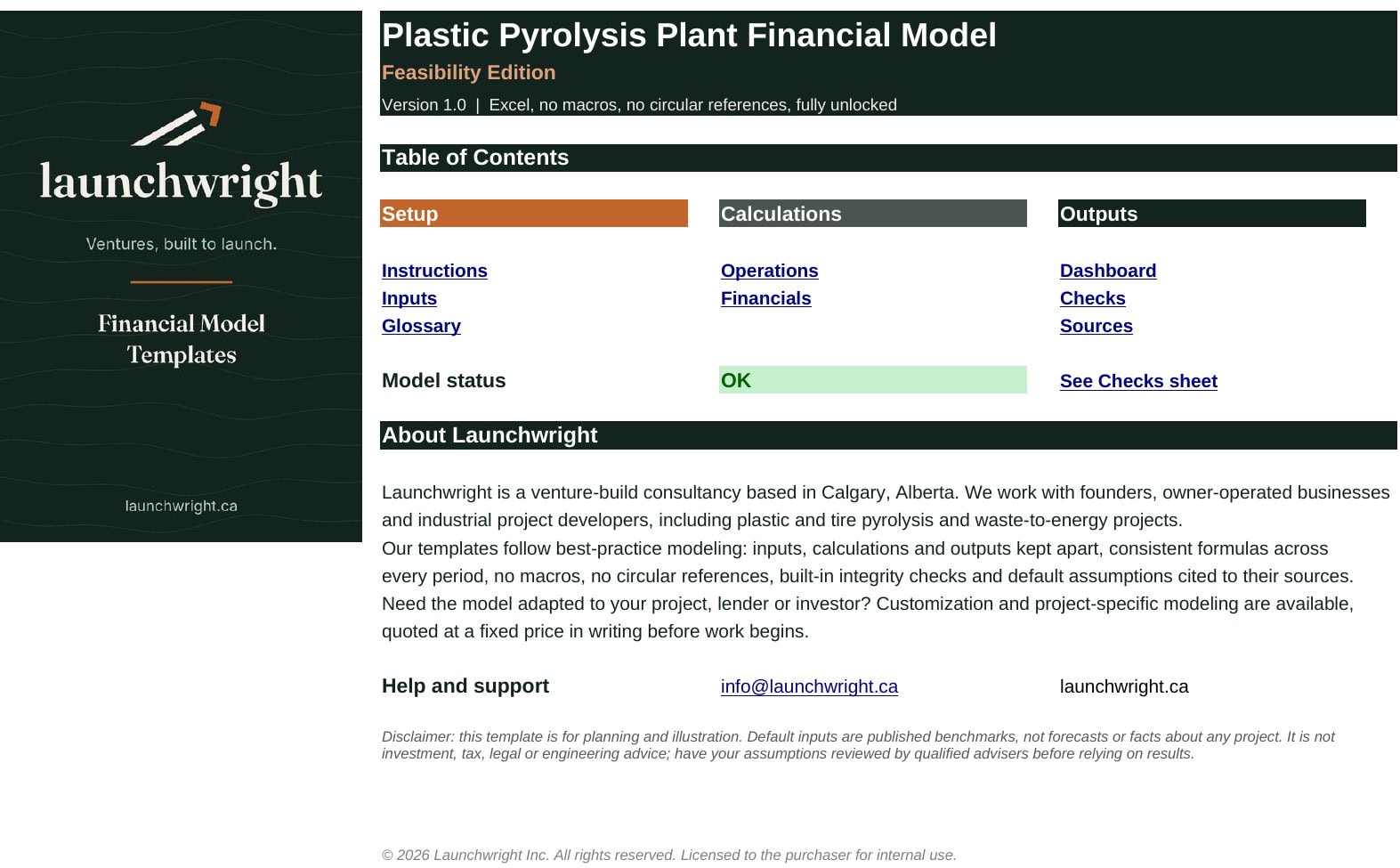
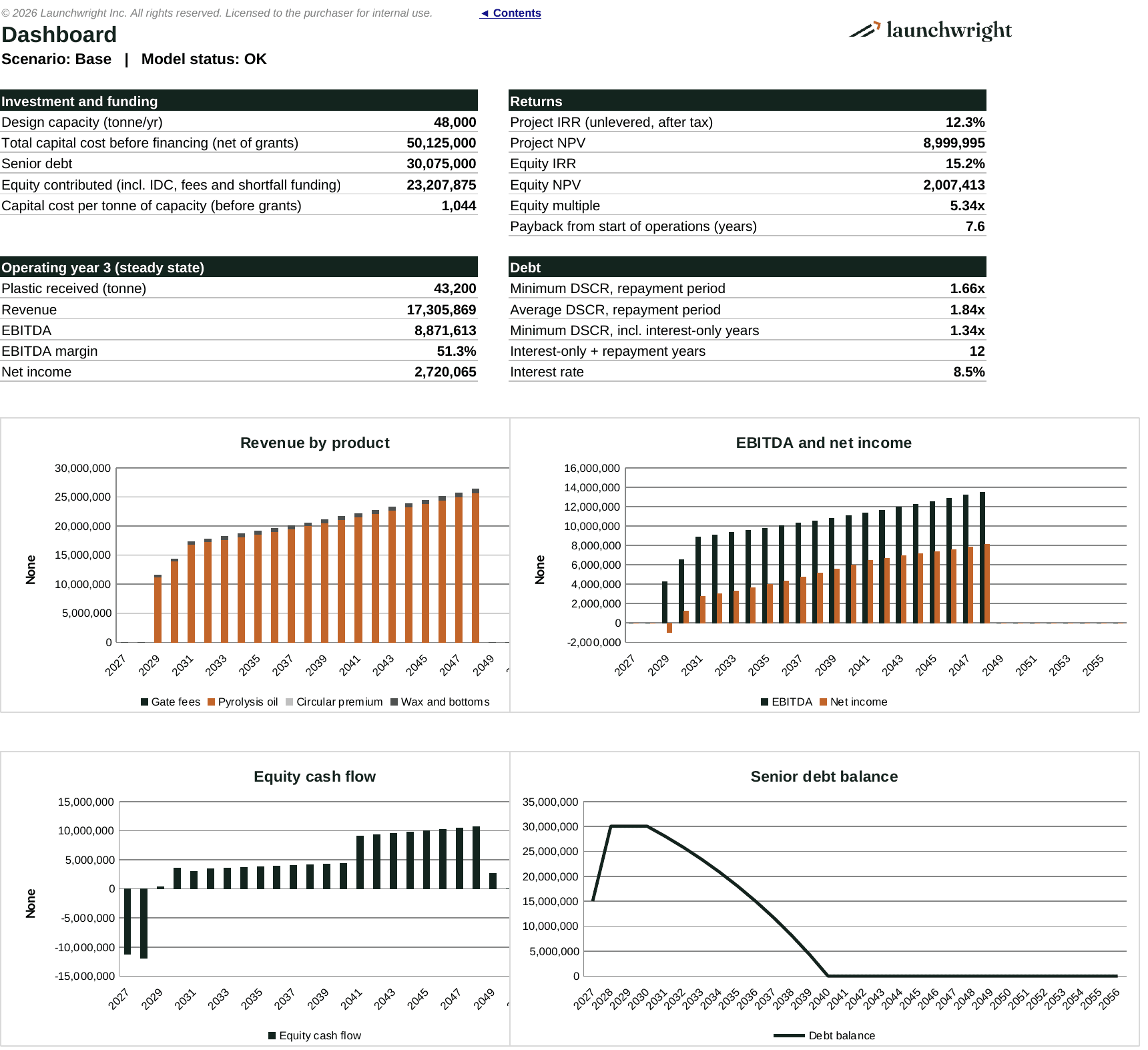
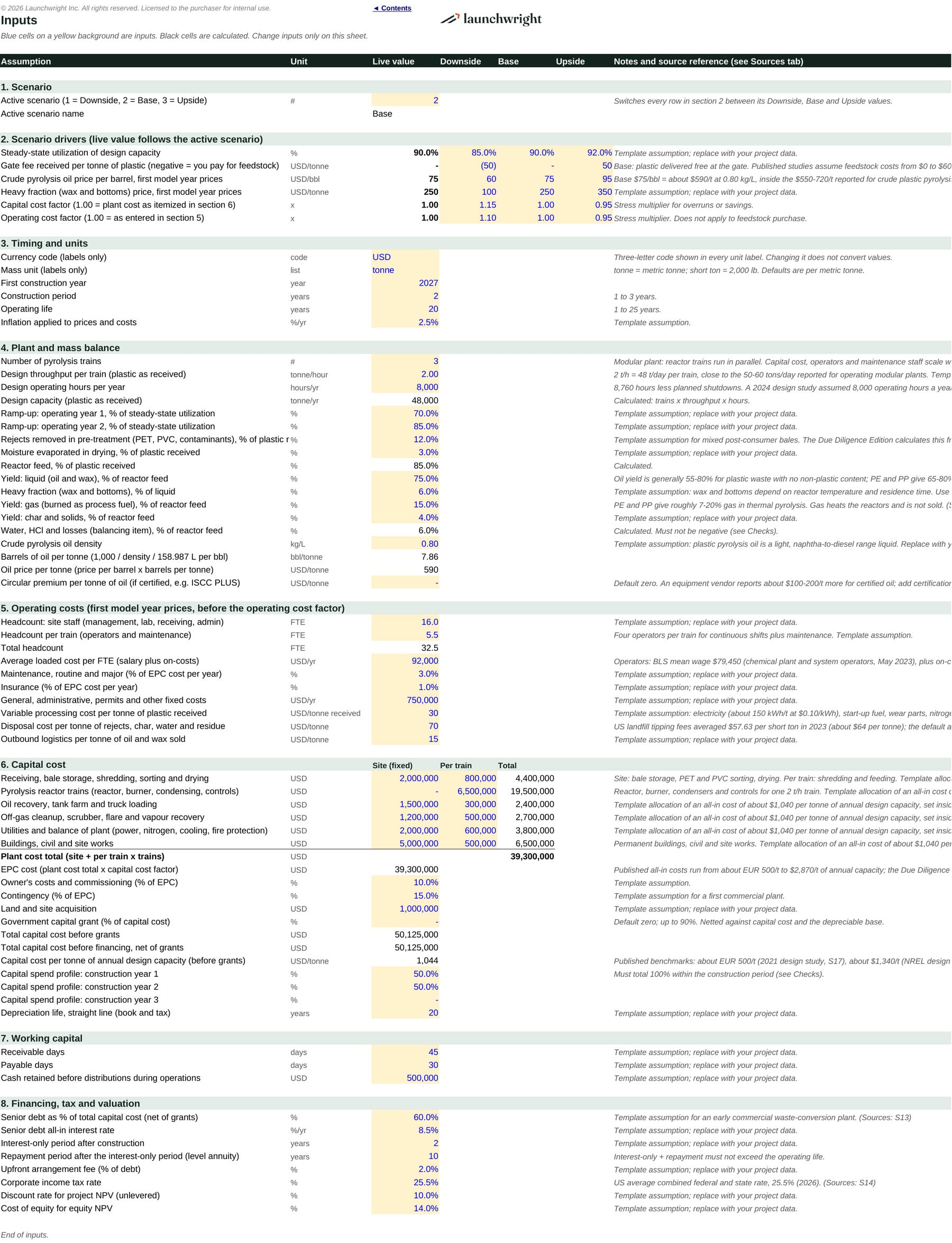
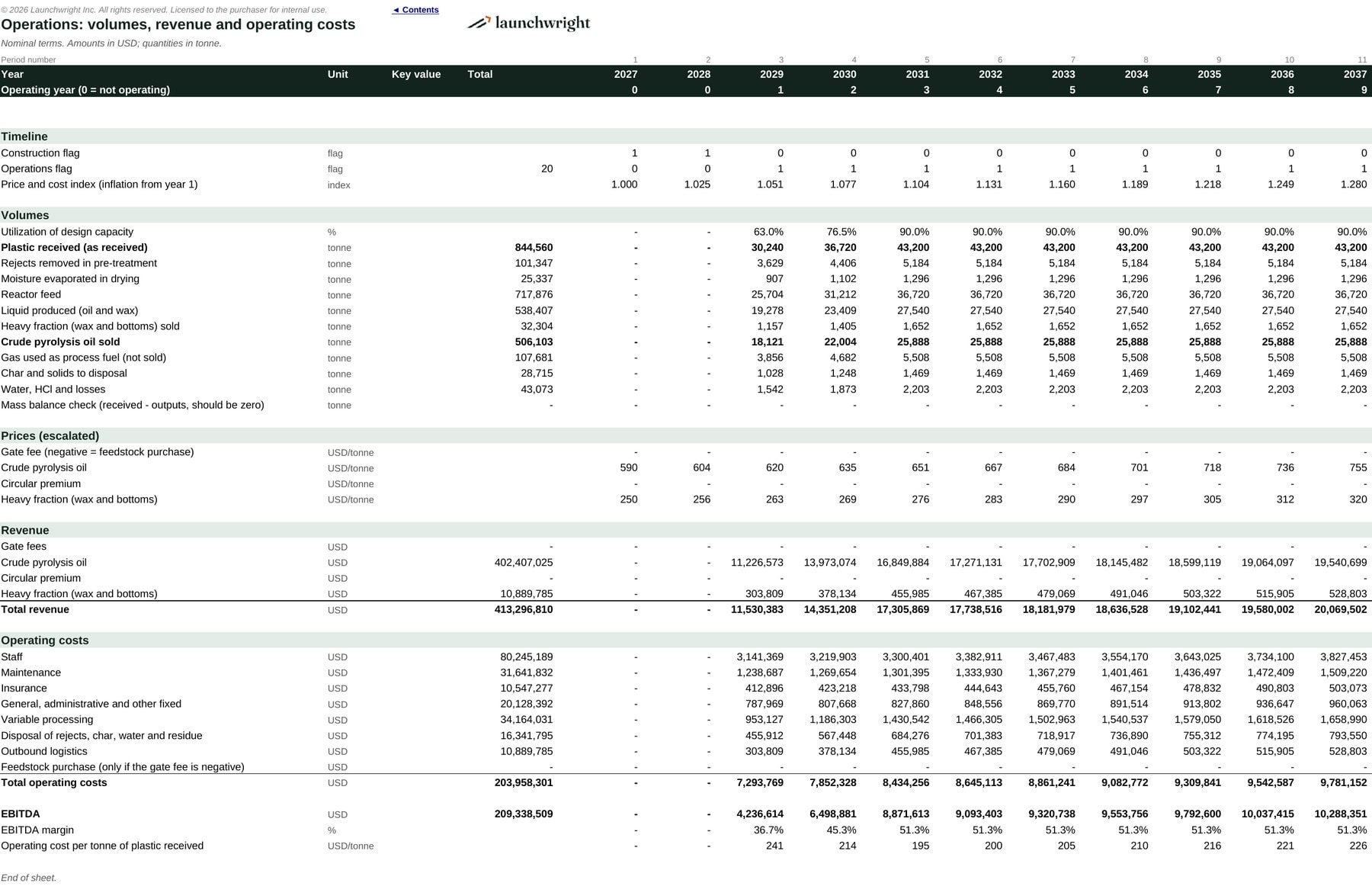
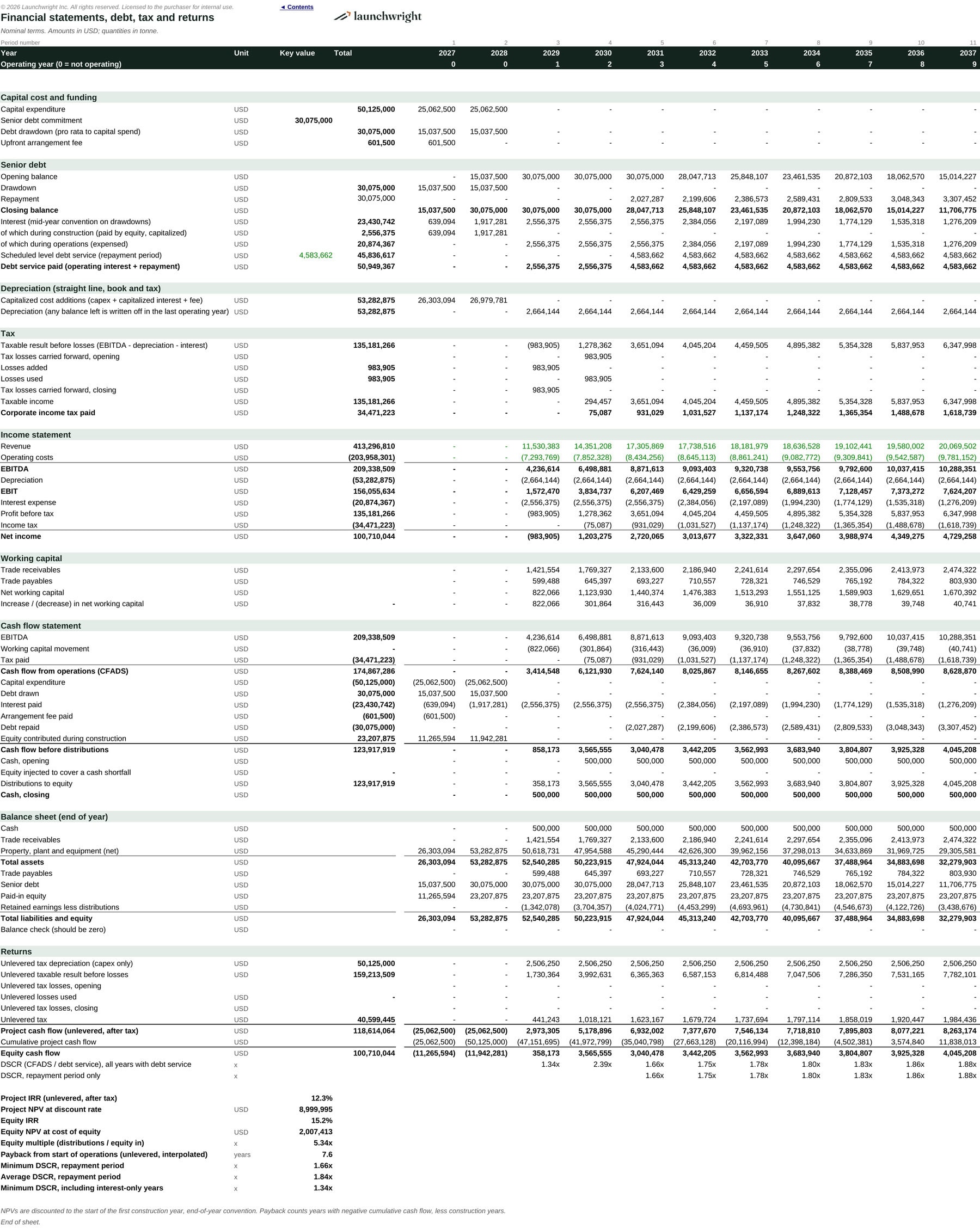
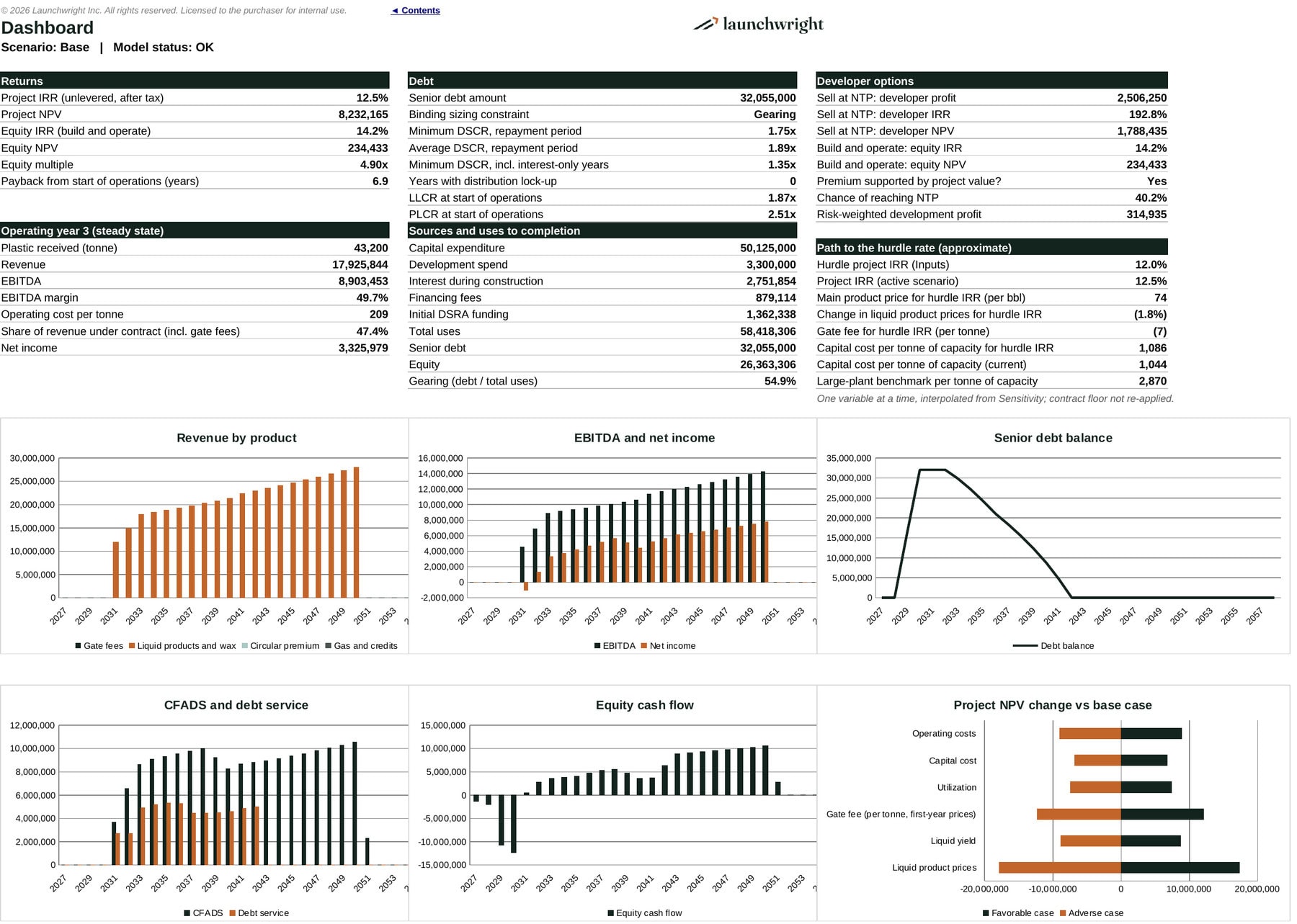
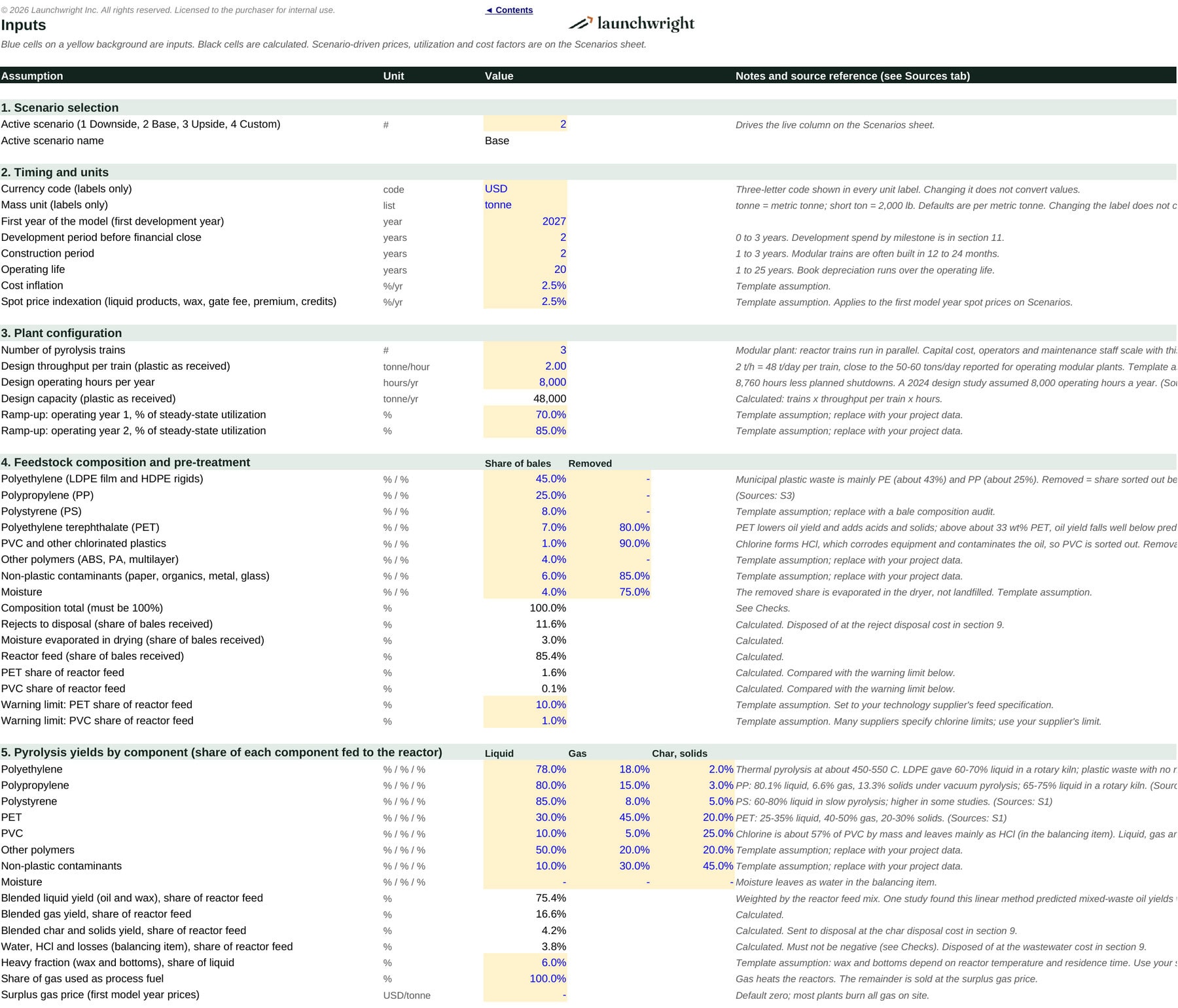
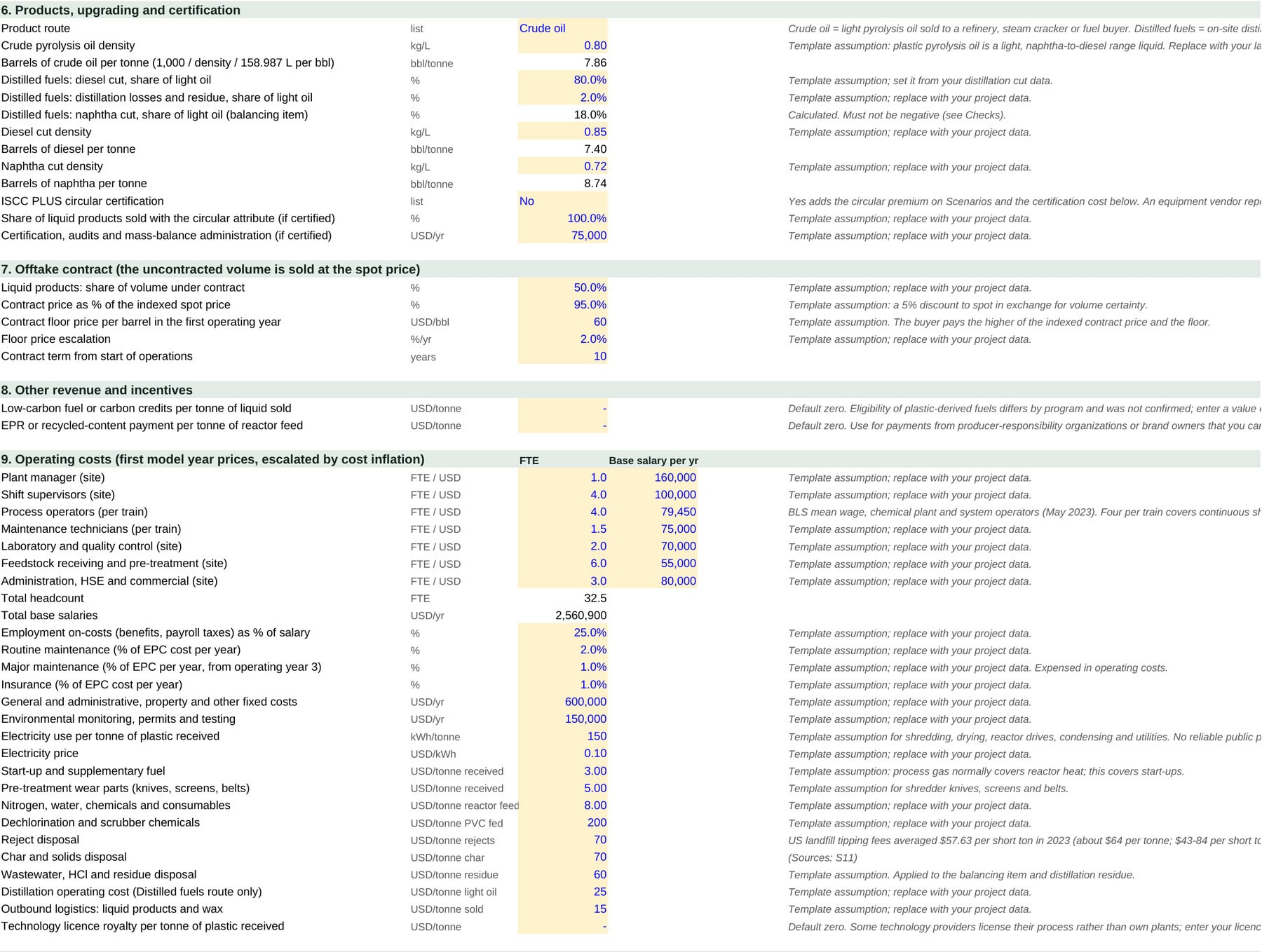
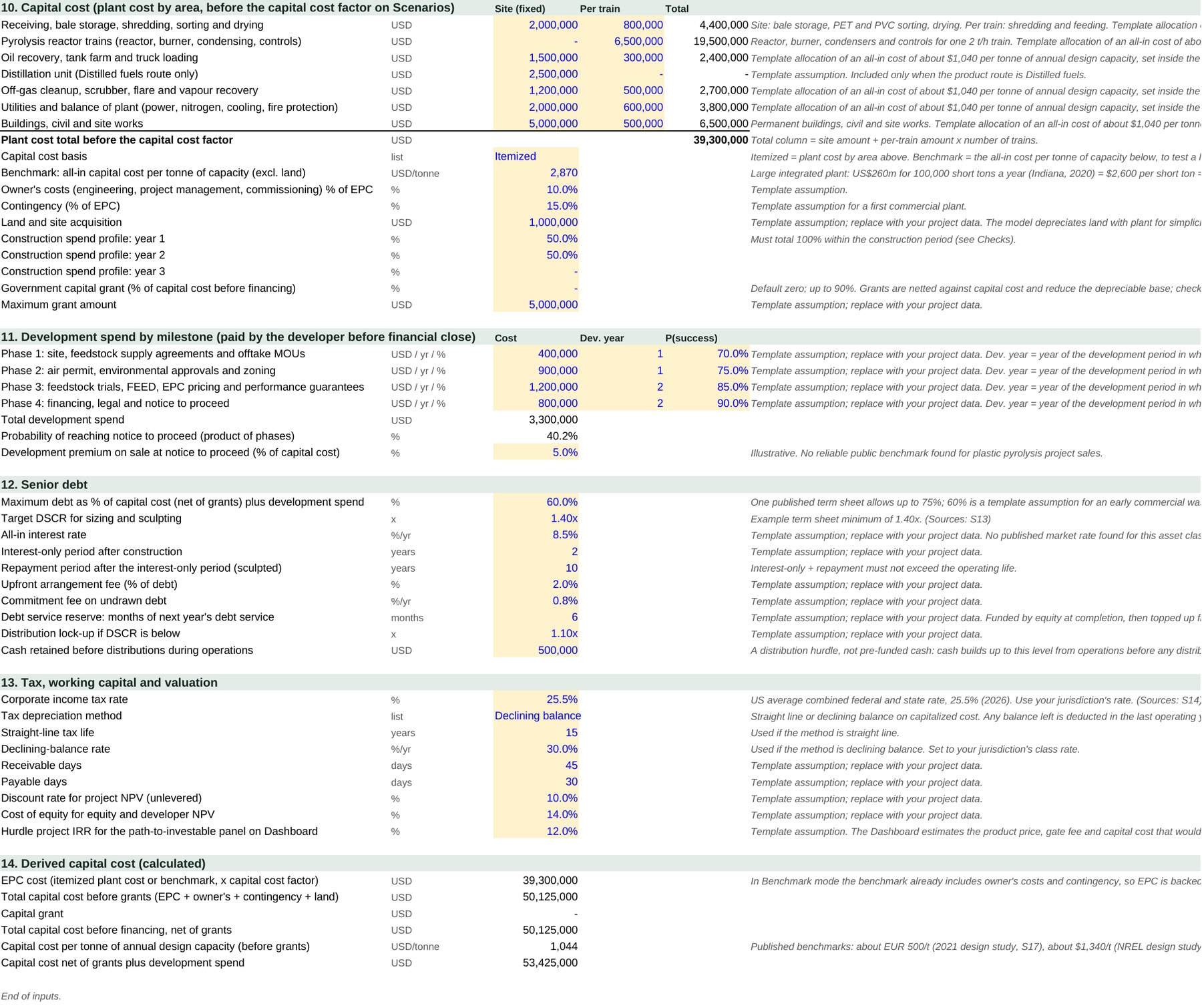
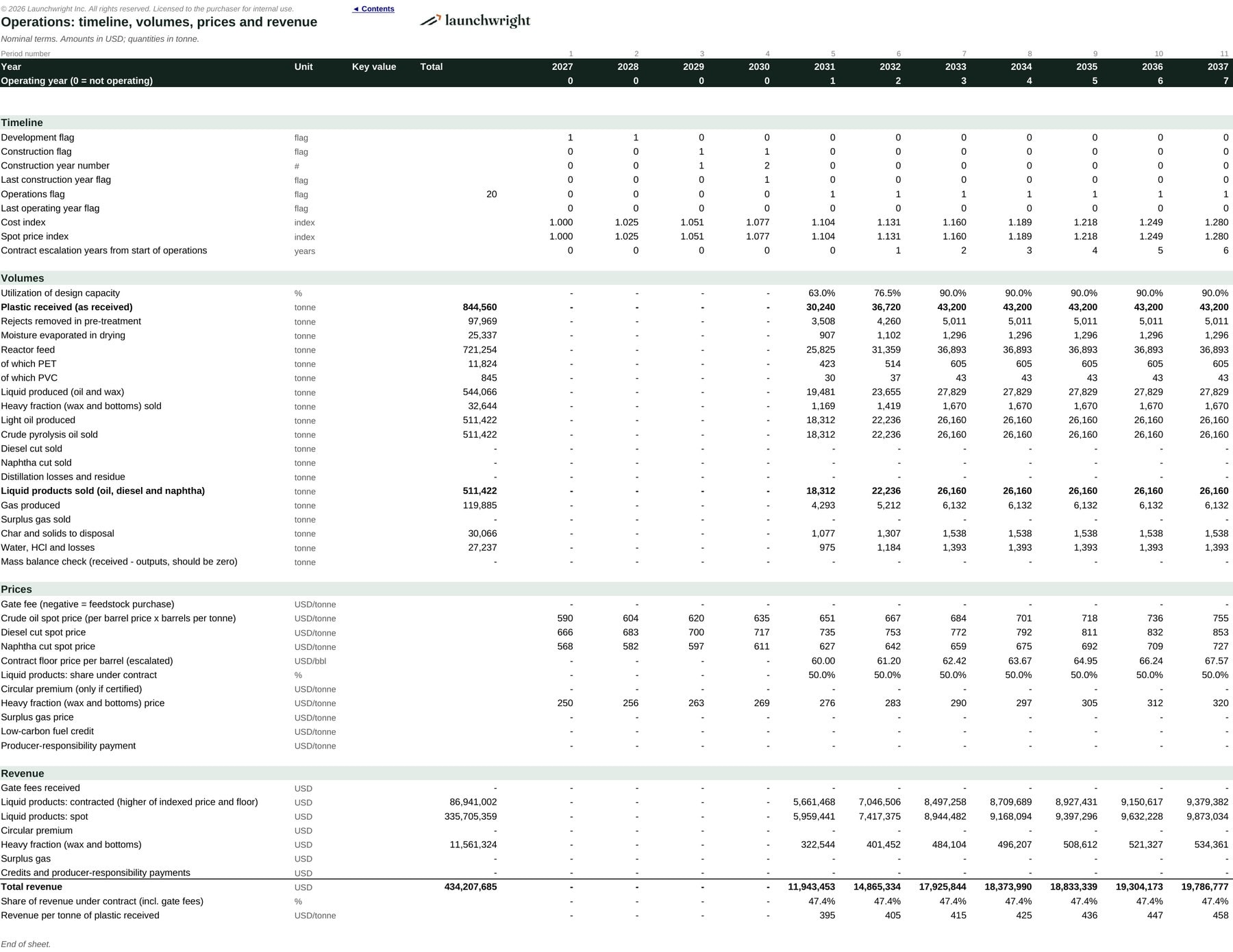
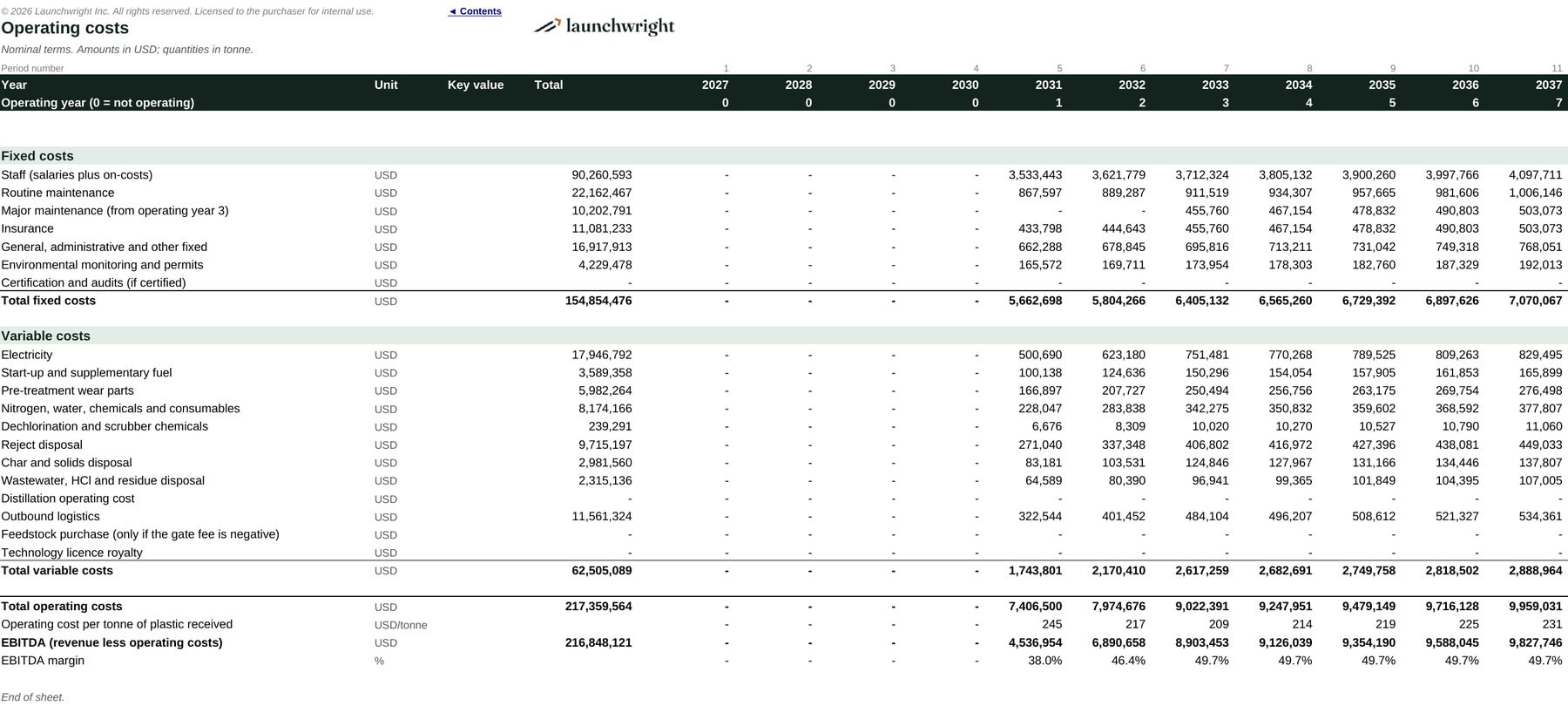
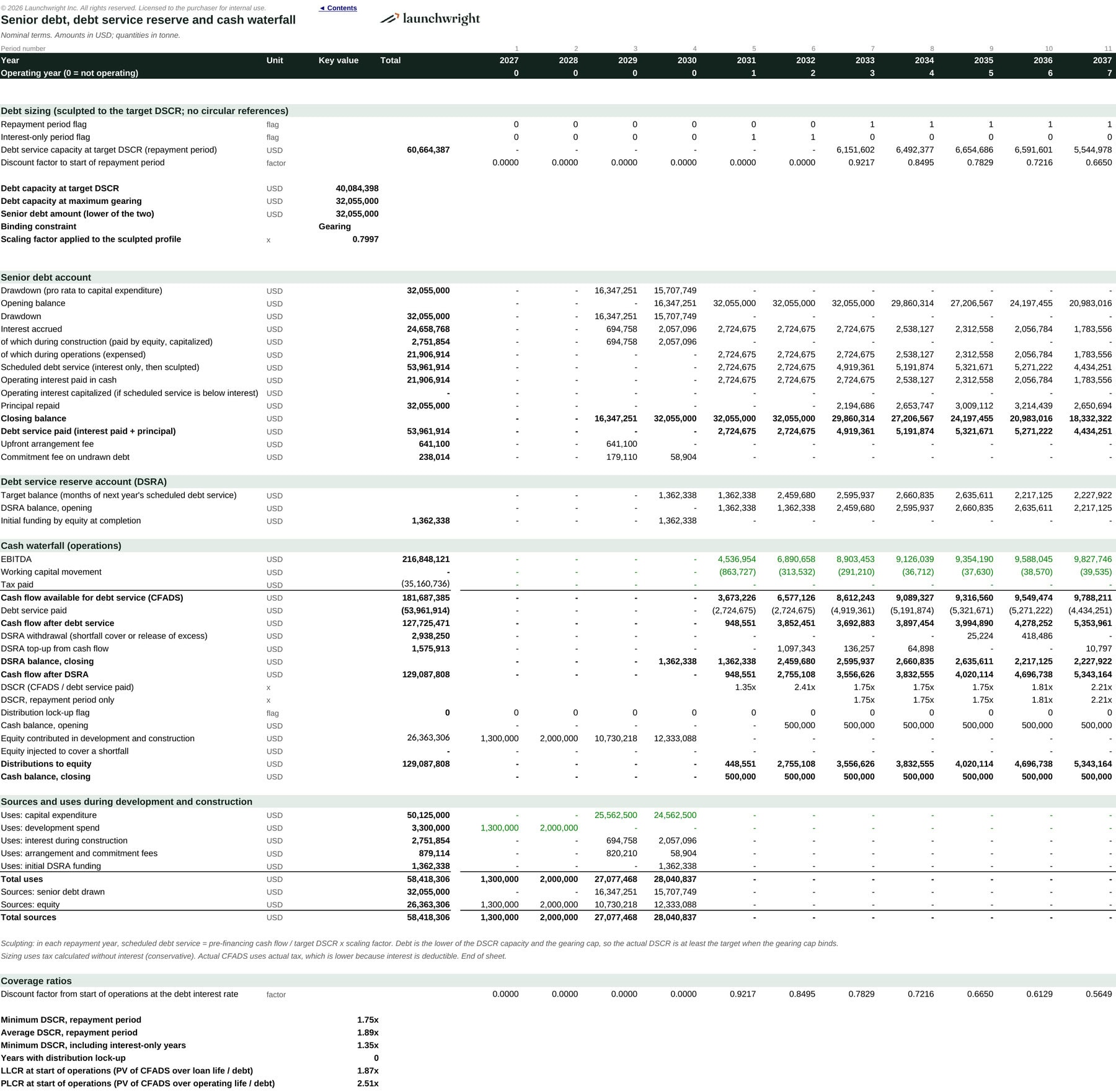
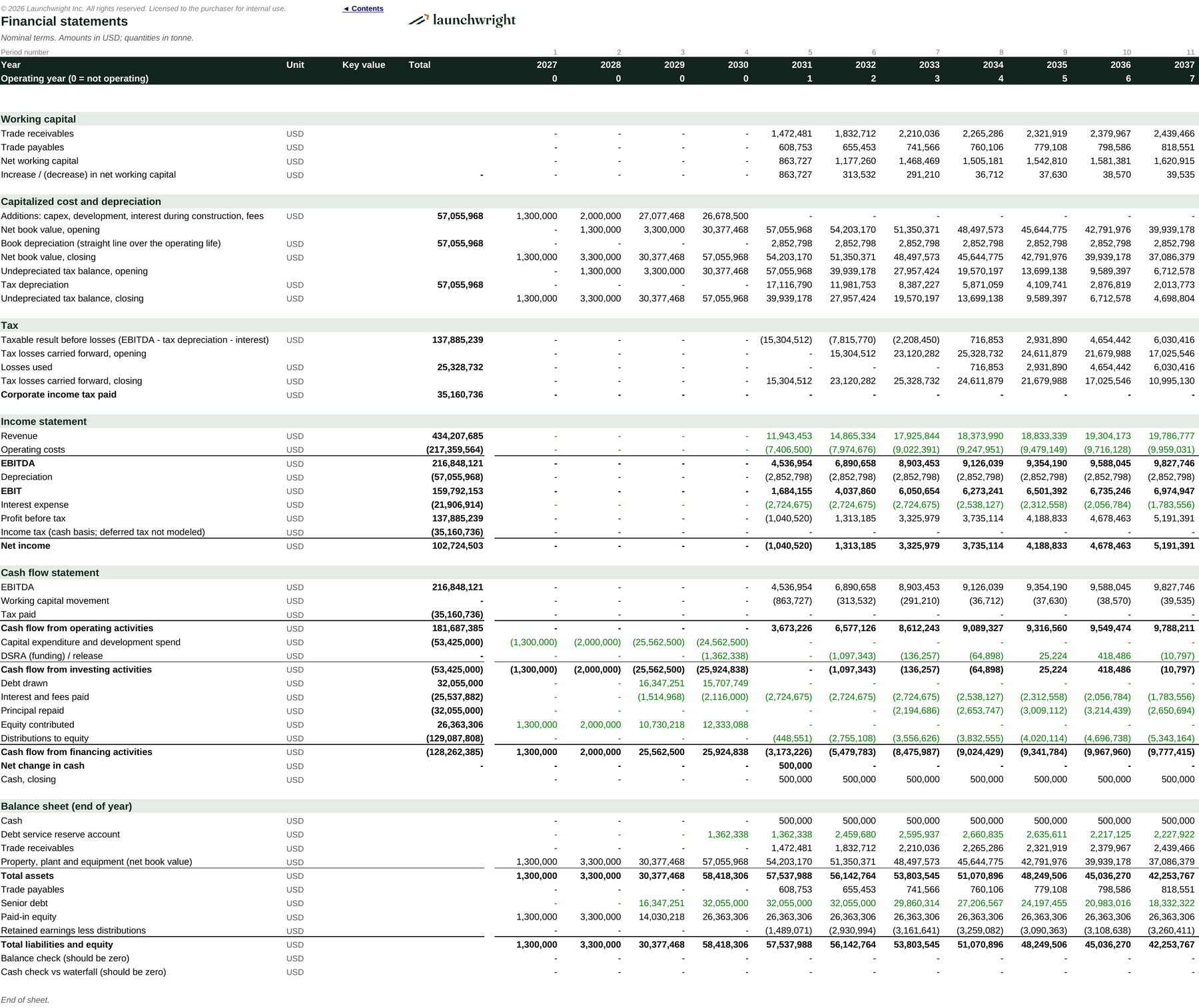
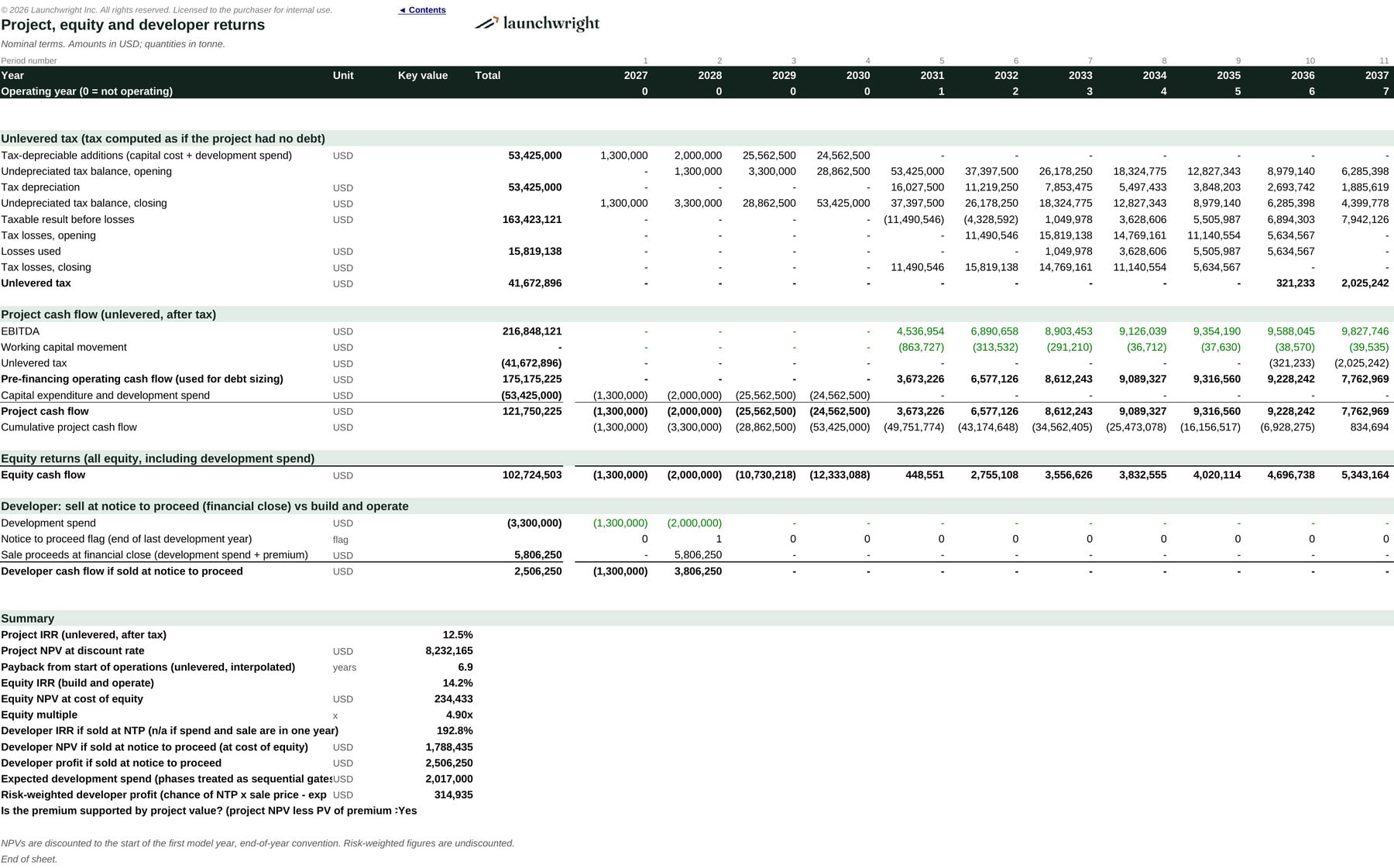
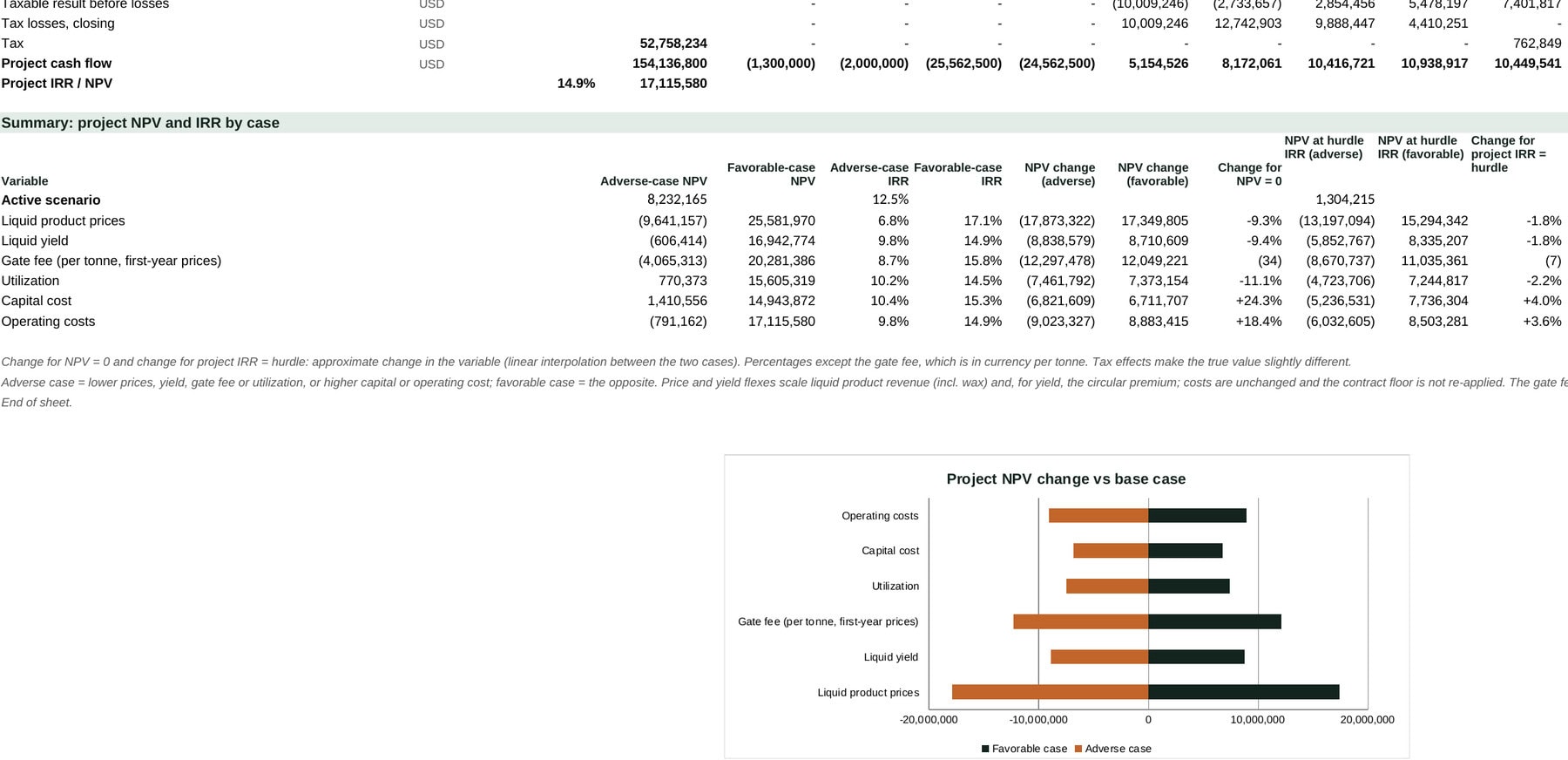
Planning a plastic pyrolysis plant, or assessing one for investors or lenders? This Excel model turns your plant assumptions into a full financial case. It follows mixed plastic bales through pre-treatment and the reactor into oil, wax, gas and char, then on to revenue, operating costs, debt service, tax, the three financial statements and project and equity returns. It is built for developers, investors, lenders, consultants and analysts working on chemical recycling and plastic-to-oil projects.
Why this model
Generic recycling templates treat plastic as one material at one price. Pyrolysis economics turn on things they leave out: how much PET, PVC and contamination is in the bales, how much of each polymer becomes oil, whether the oil is sold crude or distilled, whether it earns a certified circular premium, what the plant is paid (or pays) for its feedstock, and above all what the plant costs per tonne of capacity. This model handles each of them. Every default is referenced on a Sources tab, and the capital cost can be switched between an itemized modular build and a published large-plant benchmark, so you can see how much the result depends on that one number.
Two editions
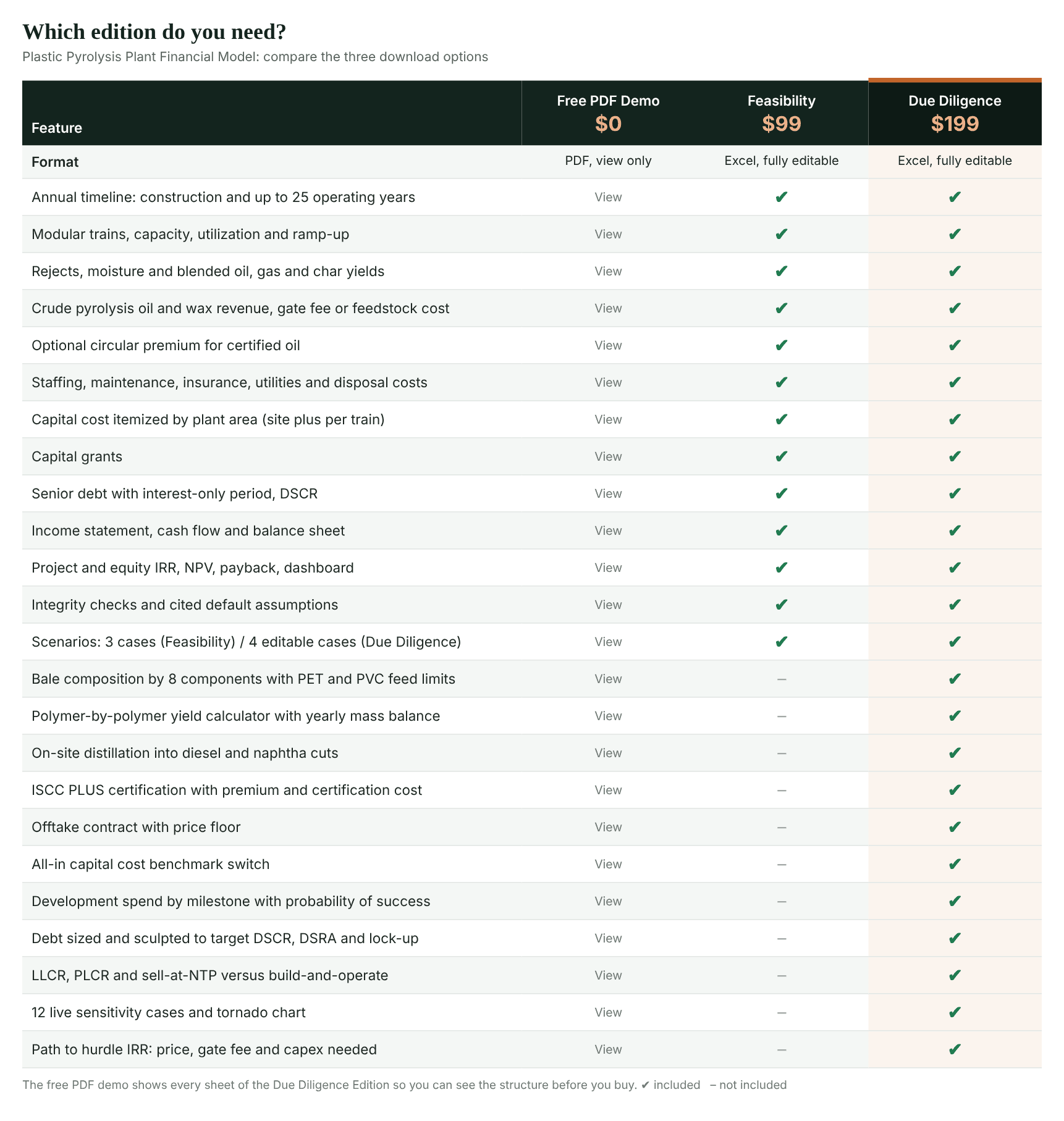
- Feasibility Edition: a fast annual model for early screening. Three-case scenario switch, modular trains and capacity, rejects and blended yields, oil, wax, gate-fee and premium revenue, a staffing and cost build, itemized capital cost by area with capital grants, level-annuity senior debt with an interest-only period, tax with loss carry-forward, income statement, cash flow and balance sheet, project and equity IRR, NPV, payback, DSCR, a dashboard and integrity checks.
- Due Diligence Edition: everything in the Feasibility Edition, plus:
- a bale composition and pre-treatment table (PE, PP, PS, PET, PVC, other polymers, contaminants, moisture) with PET and PVC warning limits
- a polymer-by-polymer yield calculator for liquid, gas, char and water/HCl, with a closing mass balance every year
- crude oil or on-site distillation into diesel and naphtha cuts, with product densities and per-barrel pricing
- optional ISCC PLUS certification with a circular premium and certification cost
- an offtake contract with a price floor, plus spot sales
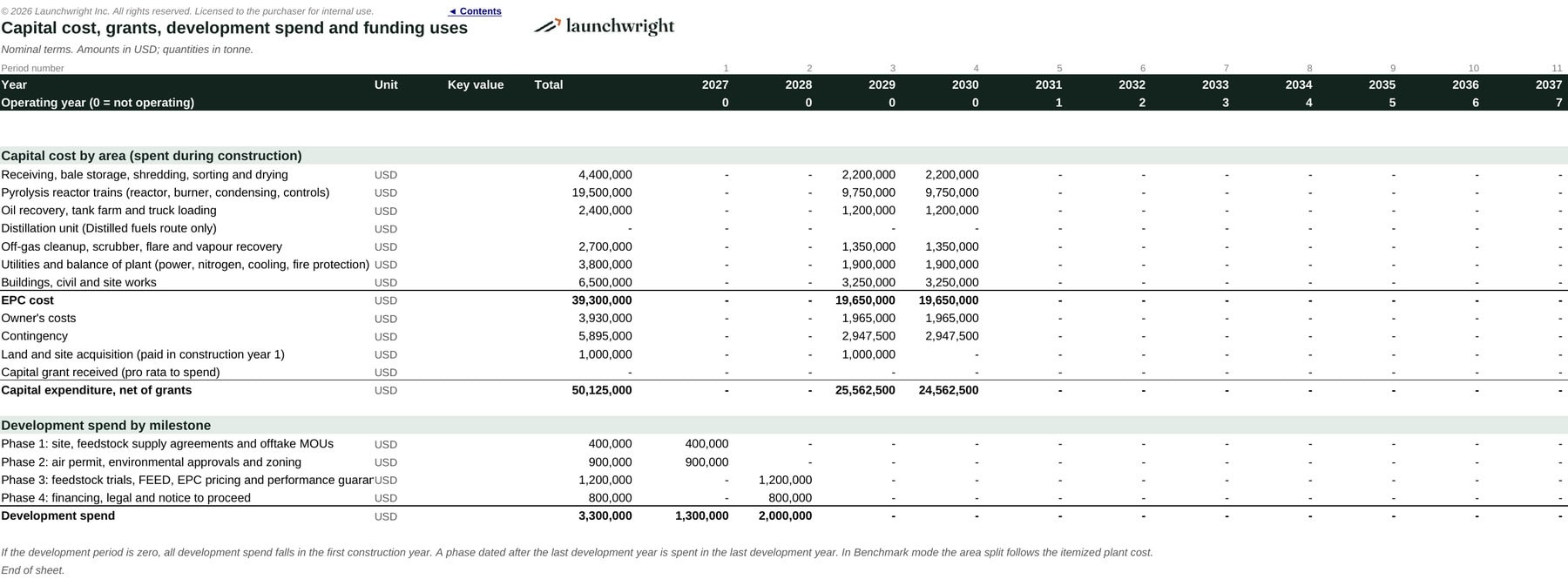
- capital cost by plant area as a site amount plus a per-train amount, with a switch to an all-in benchmark per tonne
- 1 to 3 development years with spend by permitting milestone and probability of success
- debt sized and sculpted to a target DSCR with no circular references, a debt service reserve account and a distribution lock-up
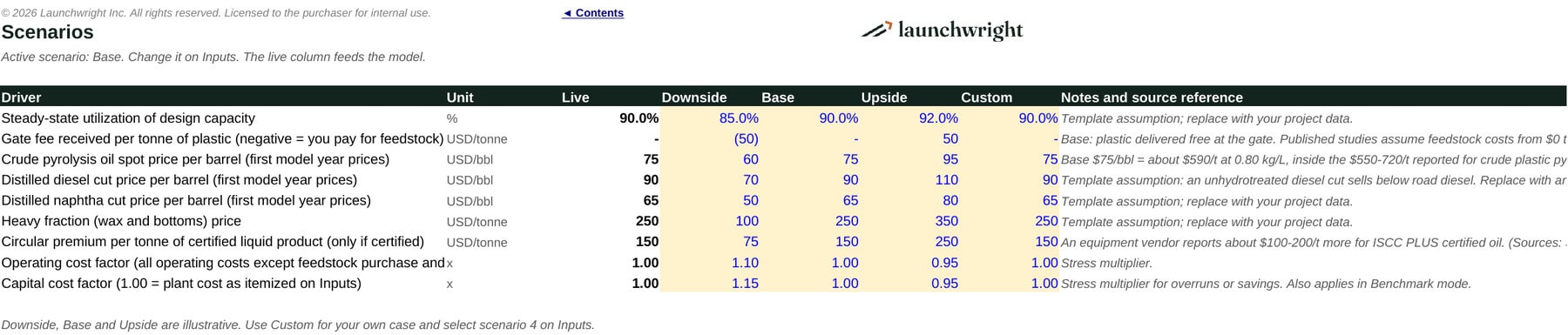
- four editable scenarios, 12 live sensitivity cases and a tornado chart
- a path-to-hurdle panel showing the product price, gate fee and capital cost per tonne that deliver your target project IRR
- a developer comparison of selling the project at notice to proceed against building and operating it
Key outputs
- Project IRR (unlevered, after tax), equity IRR, NPV, equity multiple and payback
- Senior debt amount, binding sizing constraint, minimum and average DSCR, LLCR and PLCR (Due Diligence Edition)
- Sources and uses to completion, including grants, interest during construction, financing fees and the DSRA
- Income statement, cash flow statement and balance sheet for every year, with a balance check
- Dashboard with revenue by product, EBITDA and net income, CFADS against debt service, debt balance, equity cash flow and the sensitivity tornado
Built to modeling best practice
- Inputs, calculations and outputs on separate sheets; color-coded inputs (blue on yellow), formulas (black) and cross-sheet links (green)
- Consistent formulas across every year; start year, currency code and mass unit (tonne or short ton) are inputs
- No macros, no circular references, no hidden or protected sheets, no external links
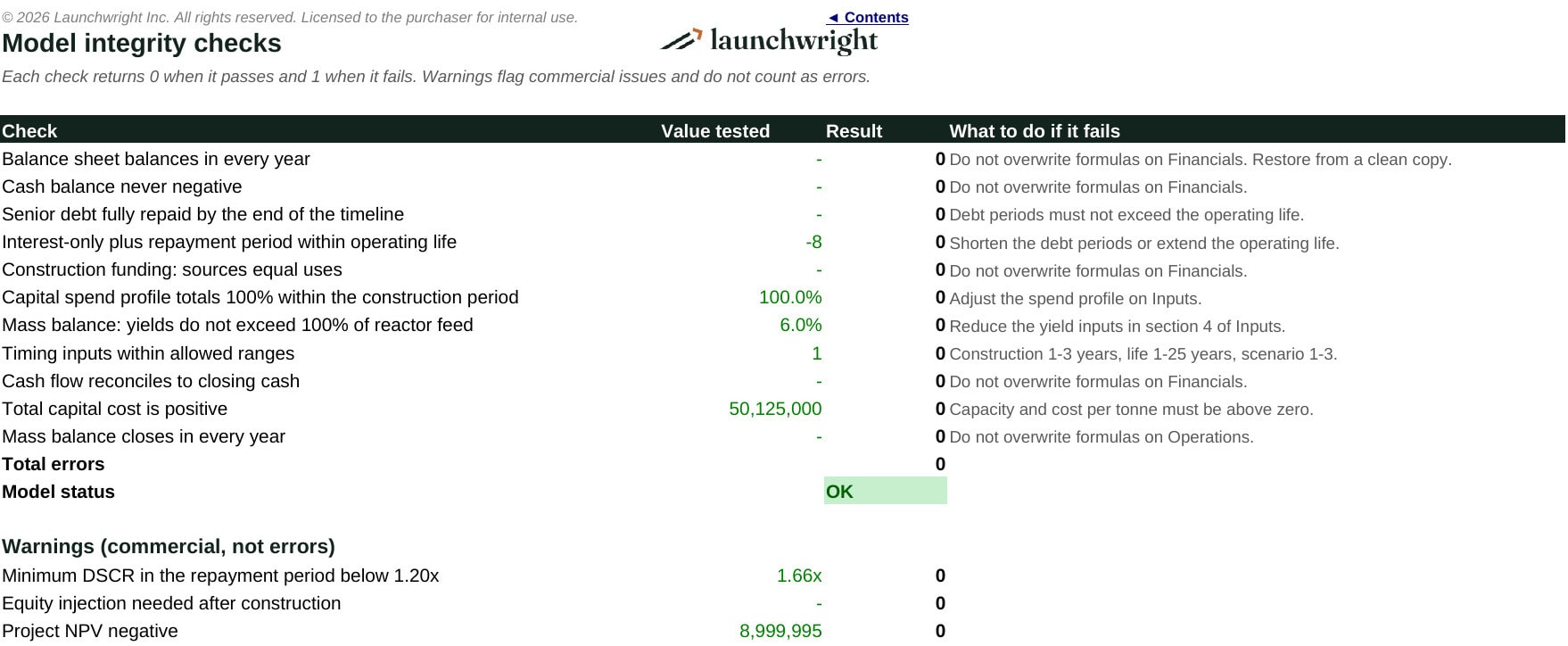
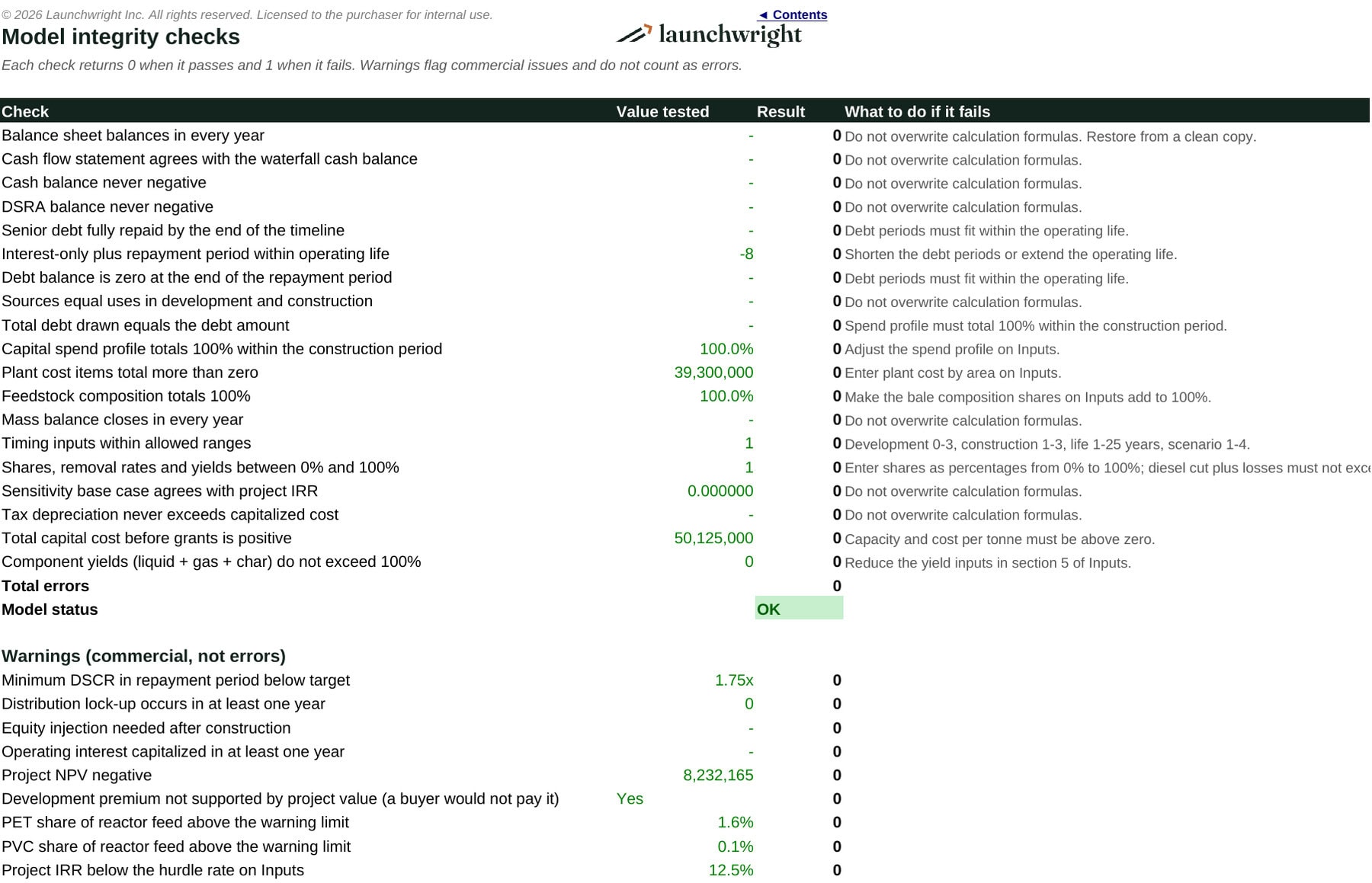
- Checks sheet confirms the balance sheet balances, cash never goes negative, debt is repaid, sources equal uses, composition totals 100% and the mass balance closes
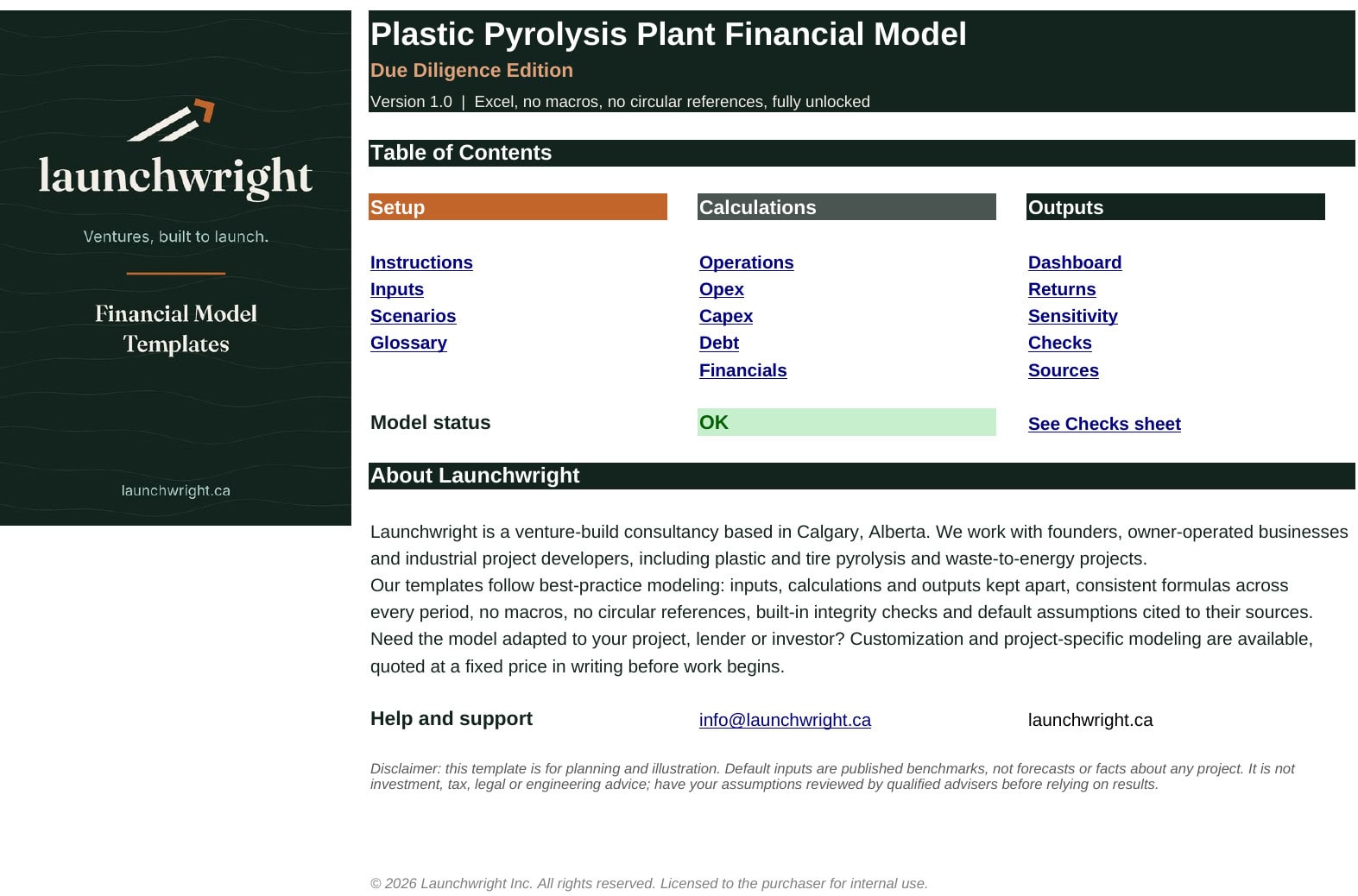
- Contents sheet with links, step-by-step instructions, a glossary of terms and a full source list
Timeline
Annual periods. Up to 3 development years (Due Diligence Edition), 1 to 3 construction years and up to 25 operating years. Prices and costs escalate with separate inflation and indexation inputs.
Default assumptions
Defaults describe three modular 2 tonne-per-hour trains (48,000 tonnes a year of mixed plastic, about 48 tonnes a day per train, the scale of operating modular plants), crude pyrolysis oil at $75 per barrel, plastic delivered free at the gate, and an itemized plant cost of about $39.3 million before owner’s costs, contingency and land, or about $1,040 per tonne of annual capacity all-in. Yields, prices, landfill fees, wages, tax and the capital cost range come from published research, government data and public project announcements, each cited on the Sources tab. Published all-in costs run from about EUR 500 per tonne in a design study to about $2,870 per tonne for a large US plant; the default sits inside that range, and each plant area is a line for you to replace with supplier and EPC quotes. At the defaults the base case returns about 12.5% unlevered and 14% to equity in the Due Diligence Edition, just above the 12% hurdle. Switch the capital cost to the $2,870 per tonne benchmark and the project return falls below zero: capital cost is the item to diligence first, and the model shows it.
Compare the editions
The free PDF demo, the Feasibility Edition ($99) and the Due Diligence Edition ($199) side by side:
What you get
- One Excel workbook (.xlsx) for the edition purchased, built only with functions available since Excel 2010 (no dynamic arrays, no macros)
- A free PDF demo showing the main sheets of the Due Diligence Edition
Support and customization
Questions about how the template works are answered by email. Launchwright can also adapt the model to your project, lender or investor requirements, quoted at a fixed price in writing before work begins. Contact details are inside the model.
Similar ProductsOther customers were also interested in...



 eFinancialModels
Electric Vehicle (EV) Charging Station Financial M...
With this comprehensive 5- or 10-year monthly tool, investors can assess the viability of setting up... Read more

Financial Model for Mobile App | Mobile App Busine...
The Mobile App Financial Plan Template in Excel allows you to develop financial projections when lau... Read more

 HenrySheykin
Food Truck Financial Model Excel Template
The Food Truck Financial Model helps entrepreneurs, founders, business owners, consultants, and anal... Read more

Green Hydrogen Production from Wind Energy Financi...
The Green Hydrogen from Wind Financial Model aims to comprehensively forecast a horizon of 40 years ... Read more

Simple Mutual Non-Disclosure Agreement Template
Protect your business secrets with ease using our Simple Mutual Non-Disclosure Agreement Template. S... Read more

Solar Energy Financial Model
The Solar Energy Financial Model Spreadsheet Template in Excel assists you in preparing a sophistica... Read more

 Peter Graf
The Customer-Centric Financial Model for Restauran...
Starting a restaurant without a financial plan is like driving a car blindfolded. You wouldn´t do i... Read more
You must log in to submit a review.