
0 ITEMS

Recycling
Recycling is the processing of wastes and turning them into new products. It is one of the alternatives to the conventional disposal of garbage, which can help save the usage of fresh raw materials. Recycling is widely promoted by the government and the private sectors to help with the conservation of the environment and issues on waste disposal. Recyclable materials include metals, bottles, plastics, papers, cardboard, textiles, electronics, etc. Recyclables gathered are then sorted, cleaned, and reprocessed into new materials. The financial model templates presented here are related to recycling.
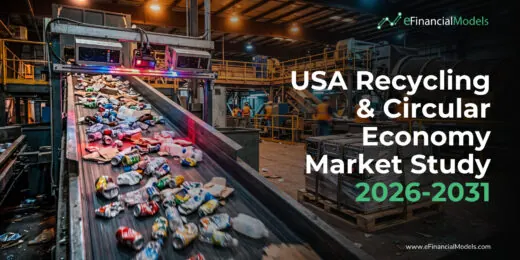

Overview The US recycling sector is at an inflection point.…


Boost your battery startup’s success with this dynamic, ready-to-use Battery…

Financial Model providing a 10-year financial plan for a development…

This detailed financial model for a solar panel recycling company…
A comprehensive editable, MS Excel spreadsheet for tracking Solar Panel…

The Comprehensive financial model for a Recycling business is an…

A comprehensive editable, MS Excel spreadsheet for forecasting and tracking…

A comprehensive, editable, MS Excel spreadsheet for tracking Recycling Centre…


The EV Battery Recycling Plant financial model is a comprehensive…

Financial model providing a dynamic 10-Year Financial Plan for a…
Financial model providing a dynamic 10-Year Financial Plan for a…


Lifetime access to all future templates as well! Here is…

Unlock the Future of Your Manufacturing Business with Our Powerful…
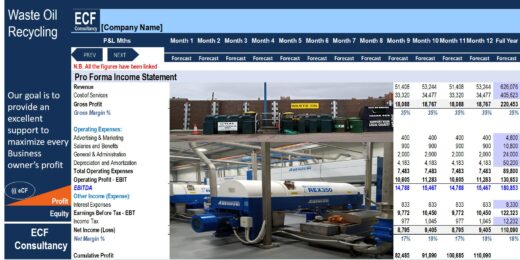

The report is containing full set of financial feasibility study…


Solid Waste Treatment Plant Model is a project finance model…

Waste Water Concession Model is a Project Finance Model for…


3 statement 5 year rolling financial projection Excel model for…
Financial Planning for Recycling Profitability through Data Insight
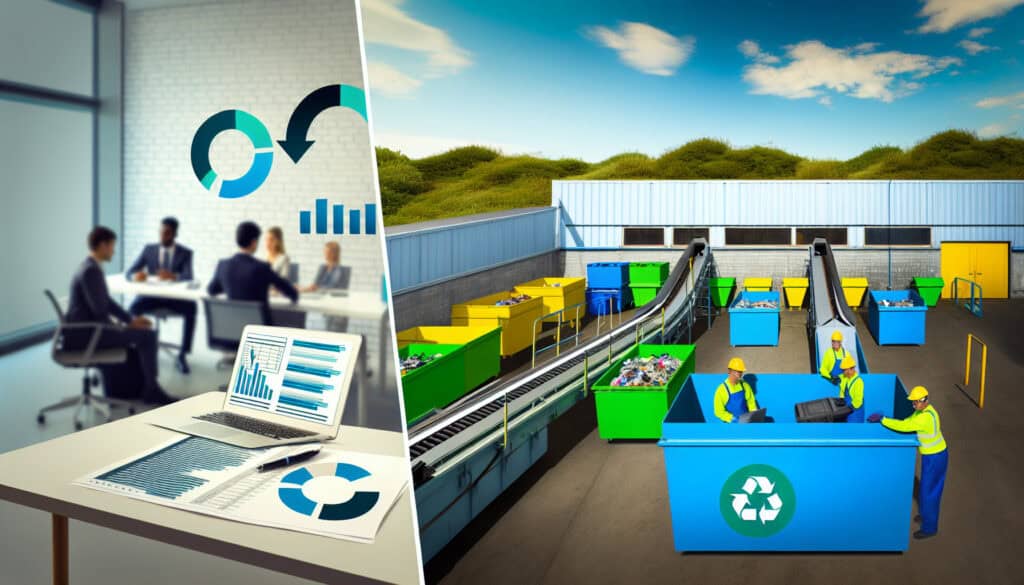
In today's rapidly advancing world, the recycling industry stands as a critical pillar supporting sustainability and environmental conservation. As global environmental concerns escalate, recycling has emerged as a viable solution to mitigate waste, preserve natural resources, and reduce carbon footprints. This has led to increasing interest and investment in recycling operations, but with opportunities come a unique set of challenges. Navigating the recycling landscape with informed financial planning can undeniably pave the way to achieving operational profitability and long-term sustainability. Below, we explore how data insight facilitates this journey and why tools like Excel templates from eFinancialModels are instrumental for success.
Understanding Opportunities and Challenges in Recycling
The recycling industry is undeniably integral to advancing global sustainability efforts. It reduces the burden on landfills, minimizes the exploitation of finite resources, and cuts down greenhouse gas emissions. This sector has gained significant traction globally, with governments and organizations prioritizing the circular economy as a pivotal strategy for a sustainable future. Market projections indicate a steady growth trajectory, driven by innovation and heightened environmental awareness, with advancements in technology expected to streamline recycling processes and enhance efficiency. However, despite promising growth, recycling businesses encounter numerous hurdles that require careful financial planning. Fluctuating commodity prices for recyclable materials pose significant financial risks, impacting profit margins unpredictably. Businesses are also compelled to navigate an ever-evolving regulatory environment, with compliance demands that can drive up operational costs. Furthermore, inefficiencies within operations—ranging from collection to processing—can exacerbate financial strain. Thus, understanding these challenges is crucial for effective financial planning and informed decision-making within the industry.Crucial Performance Metrics for Optimizing Recycling Operations
Identifying and tracking Key Performance Indicators (KPIs) is fundamental to refining recycling operations and maximizing profitability. Key metrics, such as Material Recovery Rate, directly reflect operational efficiency by highlighting the percentage of materials successfully recycled compared to waste collected. Optimizing this rate is crucial for boosting profitability, as higher recovery means more products to be monetized and fewer costs associated with waste disposal. Similarly, Processing Cost per Ton is a pivotal metric providing insights into operational cost-efficiency. By analyzing these costs, businesses can identify areas for improvement and implement strategies to lower expenses, thereby enhancing profit margins. Another essential metric is the Sales Volume of Recycled Materials, which mirrors market demand and competitiveness, directly impacting the business’s bottom line. Beyond financial metrics, monitoring environmental and social impact is increasingly critical. Carbon Footprint Reduction Metrics align financial planning with sustainability goals, ensuring that the business contributes positively to environmental conservation. Similarly, Community Engagement Levels measure social responsibility, significantly affecting brand value and influencing consumer preferences, which can drive business growth.Developing Comprehensive Financial Models for Strategic Planning
Constructing a robust financial model tailored to recycling operations is indispensable for strategic planning. Such a model encompasses several components that collectively provide a comprehensive view of the business's financial health and future potential. One critical aspect is Revenue Forecasting for Different Materials, which involves analyzing revenue streams obtained from various recyclable materials, including plastics, metals, and paper. This forecasting facilitates strategic allocation of resources and aids in planning investments to augment revenue diversification. Additionally, performing a Cost Structure Analysis is vital to detail the fixed and variable costs associated with the business, enabling precise cost control and planning. Investment and Capital Expenditure Planning is another significant dimension, ensuring that expenditures like equipment upgrades and facility improvements align strategically with overarching business objectives. Moreover, scenario analysis and sensitivity testing empower businesses to anticipate and prepare for fluctuations in commodity prices and other unforeseen disruptions, safeguarding profitability even amidst volatility.The Role of Excel Templates in Recycling Financial Planning
In the realm of financial modeling, Excel remains a preferred tool due to its unparalleled flexibility and customization capabilities. It allows businesses to tailor templates to accommodate the specific needs of their recycling operations, facilitating a personalized approach to financial planning. Excel's robust data analysis and visualization functionalities enable recycling businesses to convert complex datasets into intuitive charts and dashboards, offering insights that are essential for effective decision-making. Furthermore, Excel streamlines scenario planning and reporting, simplifying the process of conducting "what-if" analyses and generating comprehensive reports. This flexibility is particularly advantageous in the recycling industry, where businesses often need to simulate various scenarios to plan for uncertainties such as regulatory changes and market dynamics. eFinancialModels offers a range of Excel templates tailored to recycling operations, encompassing industry-specific KPIs, budgeting, forecasting, and feasibility analysis. These ready-to-use templates equip businesses with powerful tools to refine their finance strategies, optimize operations, and drive profitability with informed insights.Conclusion: Leveraging Data to Drive Recycling Profitability
In conclusion, data-driven financial planning is paramount for achieving profitability and sustainability in the recycling industry. Understanding the recycling landscape, coupled with identifying and tracking key performance metrics, empowers businesses to navigate challenges and seize opportunities effectively. Developing comprehensive financial models, supported by versatile tools like Excel, enhances strategic planning and operational efficiency. For recycling businesses striving to optimize profitability, exploring eFinancialModels' specialized Excel templates presents an invaluable starting point, facilitating informed decision-making and aligning financial strategies with industry-specific goals. In an industry marked by constant evolution and challenges, embracing data insight for financial planning can transform recycling operations into profitable ventures while contributing positively to global sustainability efforts. Take the next step toward efficiency and growth, and explore eFinancialModels' offerings to enhance your financial planning and drive your recycling business toward sustained profitability.FAQ
- What are the main advantages of using Excel for financial planning in recycling? Excel offers unparalleled flexibility and customization, enabling tailored financial models. Its data analysis and visualization tools turn complex datasets into intuitive insights, facilitating effective decision-making.
- Why is it crucial to monitor Key Performance Indicators in recycling operations? Monitoring KPIs helps refine operations and maximize profitability. Key metrics like Material Recovery Rate and Processing Cost per Ton provide insights into efficiency and cost-effectiveness, driving informed strategy adjustments.
- How do Excel templates from eFinancialModels benefit recycling businesses? These templates are specifically tailored for the recycling industry, encompassing KPIs, budgeting, and forecasting. They equip businesses with tools to optimize finance strategies, plan investments, and anticipate market fluctuations.
- How can financial models aid in managing financial risks in recycling? Financial models allow businesses to conduct scenario analysis and sensitivity testing, preparing for commodity price fluctuations and unforeseen disruptions, which helps in safeguarding profitability amidst volatility.
- What role does community engagement play in recycling operations? Community engagement measures social responsibility and affects brand value. High engagement levels can influence consumer preferences, enhancing growth and profitability while supporting sustainability goals.
You might also like: