
0 ITEMS

Get the Most Out of a Business Plan Template for Mobile Apps
A well-structured business plan is essential for launching and growing a mobile app business in a competitive market.
- It helps estimate initial development costs, ongoing expenses, and revenue streams to create realistic financial forecasts.
- Identifies key user acquisition channels, including app store optimization, social media, and paid advertising, to drive downloads.
- Outlines effective monetization strategies such as in-app purchases, subscriptions, and advertising to maximize revenue.
- Addresses user retention challenges by planning updates, improving UI/UX, and reducing uninstalls through targeted engagement tactics.
- Ensures investor confidence by presenting a clear roadmap, detailed market analysis, and potential for long-term profitability.
A comprehensive business plan template streamlines these processes, helping mobile app startups avoid common pitfalls and set a solid foundation for growth.
What You Need to Know About Mobile App Businesses
Mobile app businesses deliver their products or services exclusively through mobile applications. These apps are installed on devices like smartphones and tablets, giving users direct access to the business’s offerings at their fingertips. Unlike traditional companies that might have physical locations or websites as primary touchpoints, pure mobile app businesses operate entirely within the app ecosystem. This model relies heavily on mobile devices’ convenience and ubiquity, allowing companies to reach a broad audience efficiently and interact with users in real time.
Prominent examples of mobile app businesses include Uber, which revolutionized the ride-sharing industry by allowing users to book rides via their mobile devices, and Bolt, another popular ride-sharing service that competes in various markets globally. Tinder is a well-known dating app that enables users to connect and meet new people. Other notable examples are Instagram for social networking and photo sharing, WhatsApp for instant messaging, and Spotify for streaming music. These apps highlight the diversity of services that can be offered through mobile platforms and demonstrate the potential for significant user engagement and business growth within the app-only model.
By focusing their operations within an app, mobile app businesses enhance accessibility, streamline user experiences, and often leverage unique mobile features such as push notifications and GPS tracking to deliver personalized services.
Top Challenges When Launching Mobile App Businesses
Launching a mobile app business presents a unique set of challenges that can significantly impact its success and sustainability. From the initial development phase to long-term user retention, entrepreneurs must navigate various hurdles to ensure their app stands out in a highly competitive market.
- Elevated Initial Investment Costs: Launching a mobile app business often requires a significant initial investment due to app development’s complexity and inherent risks. Creating an app typically incurs higher costs compared to developing a website. It is because you must build versions for both iOS and Android platforms, each with unique requirements. Developing web services or APIs to connect the apps to your servers and maintaining a central database adds complexity and cost. These elevated costs make the initial app development phase particularly challenging for new businesses.
- High App Store Costs: Another prominent challenge mobile app businesses face is the high commission fees charged by app stores like the Apple Store and Google Play. These platforms can take commissions ranging from 10% to 30% of the revenue generated from app sales and in-app purchases. Such substantial fees significantly impact profitability, as many of the earnings go directly to the platform providers. This financial burden makes it harder for app developers to achieve and sustain profitability, especially in the initial stages.
- Monetizing the App: Monetizing a mobile app effectively is a critical challenge for businesses. Several options are available, each with its own advantages and disadvantages. Common monetization strategies include add-ons, in-app purchases, subscriptions, and paid apps (where users pay to download). Add-ons and in-app purchases allow users to buy additional features or content, while in-app subscriptions provide ongoing revenue through periodic payments. Paid apps require users to pay an upfront fee to download the app. Selecting the right monetization strategy is crucial for generating revenue while maintaining user satisfaction and engagement.
- Overcoming UI/UX Challenges: Designing a user-friendly and intuitive user interface (UI) and user experience (UX) is paramount for mobile app development startups’ success. Mobile apps must be simple and easy to navigate, as overly complicated designs can deter users and lead to high churn rates. Achieving an optimal balance between aesthetics and functionality is essential to retain users and encourage continued app use. Effective UI/UX design enhances user satisfaction and contributes to better engagement and retention, making it a key challenge for mobile app businesses.
- Standing Out in App Stores: With millions of apps in app stores, standing out and attracting downloads is a significant challenge for mobile app businesses. Achieving visibility requires a combination of effective marketing strategies, such as app store optimization (ASO), engaging app descriptions, appealing screenshots, and positive user reviews. Social media and other digital marketing channels can also drive traffic to the app. The ability to distinguish the app from competitors and persuade users to download it is crucial for its success.
- User Retention: User retention is a critical challenge for mobile app businesses, as getting users to install the app is just the first step. Users are often tempted to uninstall apps that do not provide consistent value. Therefore, it is essential to ensure that users find the app valuable enough to keep installed on their smartphones. It can be achieved by offering regular updates, engaging content, personalized experiences, and responsive customer support. Effective retention strategies help maintain a loyal user base, which is vital for the app’s long-term success.
Why Mobile App Development Startups Need a Business Plan?
Mobile app development startups face unique challenges and opportunities in a dynamic and competitive market. A mobile app business plan is a roadmap guiding the startup’s strategic direction, resource allocation, and growth trajectory. It helps entrepreneurs clarify their vision, set achievable goals, and anticipate potential obstacles. By outlining a clear path to success, mobile app development startups can better position themselves to innovate, thrive, and make a lasting impact in the tech landscape.
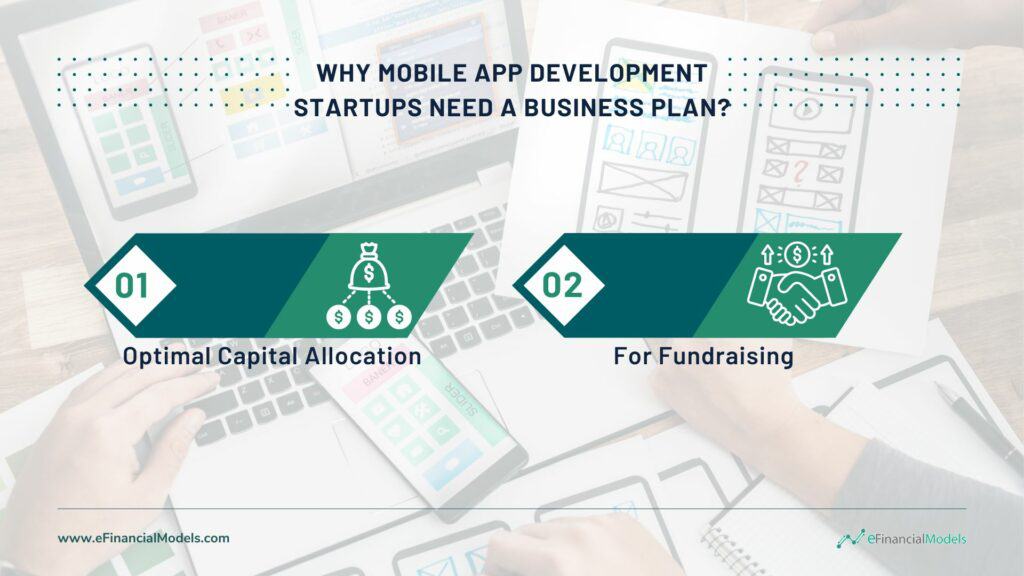
- Optimal Capital Allocation: Mobile app development startups are capital-intensive. Their products or services are inherently expensive, from development to marketing. A well-crafted business plan helps mobile app development startups allocate their capital optimally, ensuring resources are used efficiently to break even as soon as possible. It can minimize financial risks by detailing a budget for all development expenses, including those that might be overlooked, like post-launch maintenance and marketing efforts. Proper planning, with a focus on strategic spending, empowers startups to make informed financial decisions, ensuring that each dollar invested contributes directly to achieving key business milestones and securing a quicker return on investment.
- For Fundraising: A robust business plan is essential for mobile app development startups seeking to attract investors and secure funding. Investors need to see a clear, structured plan that outlines the business’s vision, market potential, revenue models, and growth strategies. A comprehensive business plan demonstrates the startup’s commitment and readiness to scale, providing detailed financial projections and outlining the path to profitability. It serves as a persuasive tool to convince investors of the viability and potential success of the app, thereby facilitating the fundraising process and attracting the necessary capital to fuel development and expansion.





















































Essential Questions a Mobile App Business Plan Can Answer
A well-constructed business plan serves as a vital roadmap in the dynamic world of mobile app businesses. It addresses critical questions that shape the path to success. This strategic blueprint clarifies the mobile app development startups’ vision and objectives and provides a comprehensive framework for execution, ensuring all stakeholders are aligned. A mobile app business plan transforms a conceptual idea into a tangible, actionable strategy by delving into these critical aspects, setting the foundation for a sustainable and profitable mobile app venture. So, what are the essential questions a business plan template for mobile app can answer? Here’s a strategic list:
What are the Sources of App Downloads?
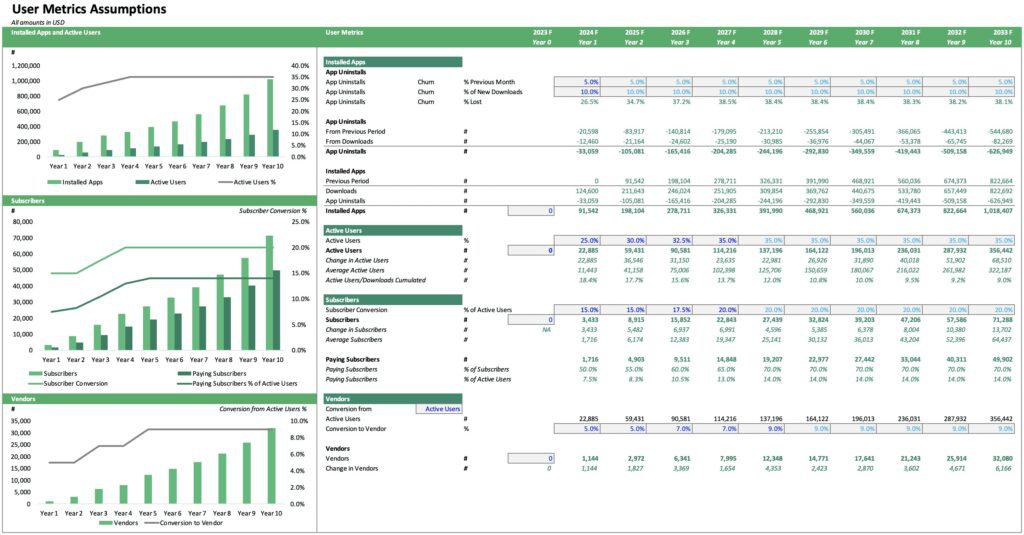
A mobile app business plan can answer the question above by detailing and identifying the various channels and strategies that will be used to attract users. These sources include organic search results on app stores, collaborations with other platforms, content marketing, email campaigns, influencer partnerships, paid advertisements, and social media promotions. The plan should analyze each channel’s potential reach, cost-effectiveness, and expected impact on download numbers, providing a comprehensive overview of how the app intends to achieve significant user acquisition and growth.
Our business plan template for mobile apps employs a bottom-up forecasting approach that begins by estimating the initial download numbers and gradually builds up to project future revenues. This method starts with detailed assumptions about daily or monthly downloads. It then extrapolates these figures to forecast active user growth, in-app purchases, subscription fees, and other revenue streams. Furthermore, it foresees app downloads originating from up to six distinct sources for a period of ten years. By meticulously modeling each user acquisition and monetization step, the template offers a realistic and granular projection of the app’s financial performance over time.
What are the Customer Acquisition Costs?
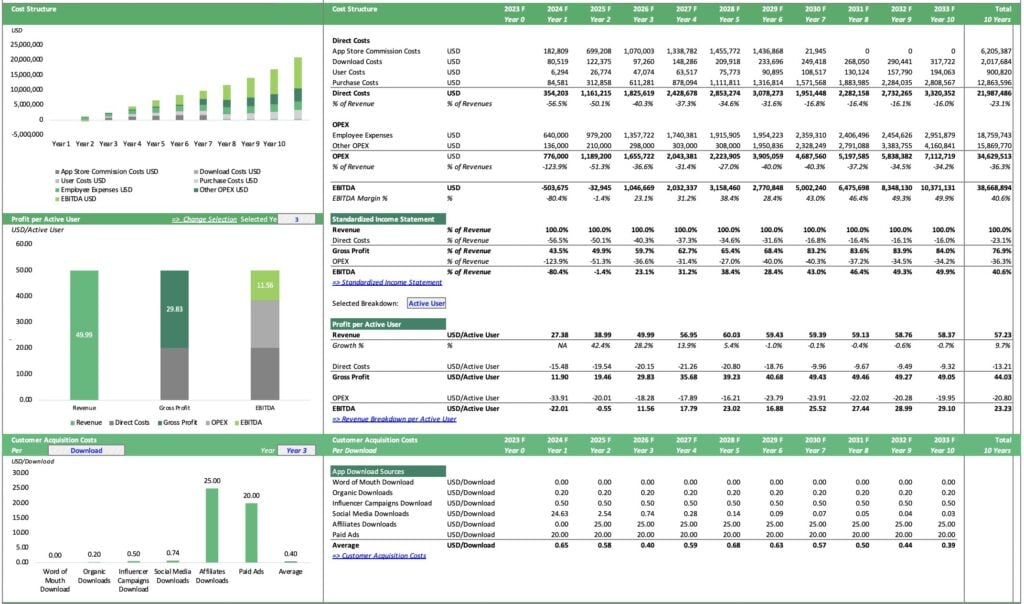
A mobile app business plan details the various expenses of attracting and converting potential users into paying customers or active app users. These include costs associated with marketing and advertising campaigns, such as social media ads, influencer partnerships, search engine marketing, and other promotional activities. Additionally, the plan should account for the costs of promotional offers, referral bonuses, and any other incentives designed to attract new users. The business can determine the average CAC by analyzing the costs of the number of users acquired, which is crucial for assessing the app’s overall financial viability and scalability. The Cost Structure sheet of our business plan template for mobile apps provides a detailed breakdown of direct and customer acquisition costs (CAC) per download. This sheet itemizes all direct expenses related to the development, marketing, and distribution of the app, including development costs, server hosting fees, and maintenance. Specifically, it calculates the CAC by considering the total marketing and promotional expenditures and dividing them by the number of downloads or new users acquired during a specific period. This granular approach allows entrepreneurs to understand the financial outlays involved in user acquisition and optimize their spending strategies for better profitability and growth.
How to Address App Uninstalls and Inactive Users?
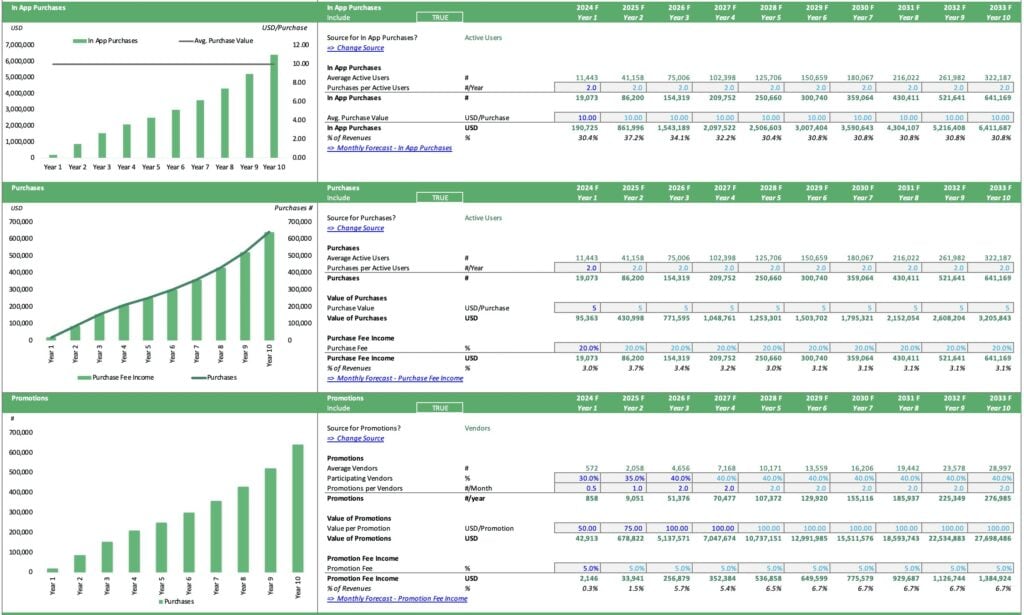
A business plan template for mobile apps outlines how different variables impact user retention and engagement. It simulates various scenarios and assesses how changes in user interface design, feature updates, marketing strategies, or customer support influence user behavior. The business can prioritize and implement targeted interventions by identifying the most critical factors that lead to uninstalls or inactivity. This data-driven approach helps fine-tune strategies to improve user experience, re-engage inactive users, and reduce the likelihood of uninstalls, optimizing overall app performance and user satisfaction. An in-depth analysis of the in-app purchases section of a business plan template for mobile apps provides insights into user behavior and spending patterns. The plan can identify periods of declining engagement or lower spending by analyzing the trends in average purchase value and purchases per active user. This data is crucial for understanding when and why users might lose interest, leading to uninstalls or inactivity.
Which Monetization Strategy Maximizes Long-Term Value Capture?
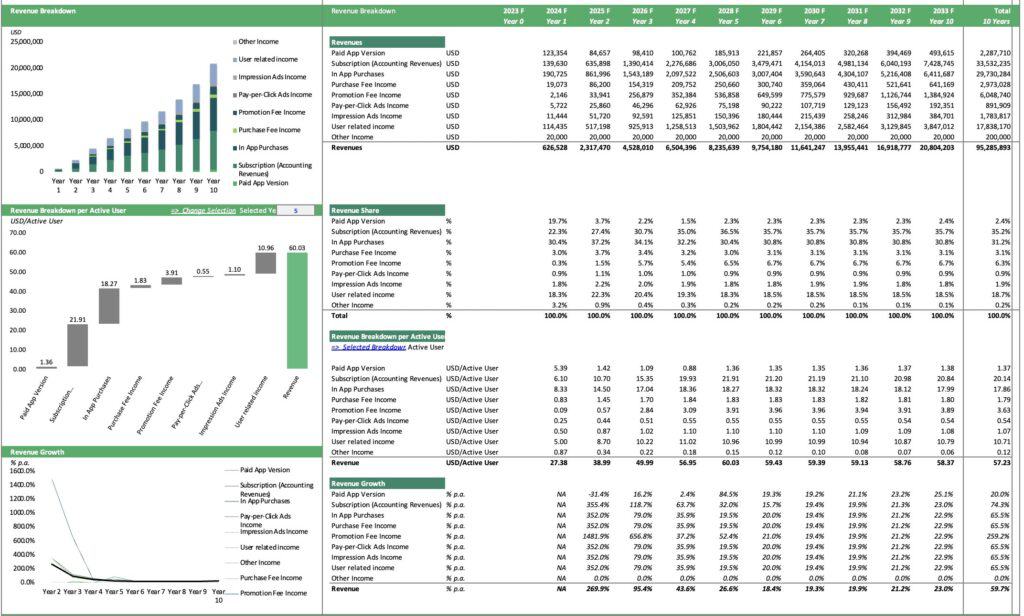
A mobile app business plan compares different revenue models and addresses which monetization strategy maximizes long-term value capture. It should analyze market trends, user behavior, and competitive benchmarks to project potential revenue streams and retention rates. The plan can identify the most sustainable and profitable strategy that aligns with the app’s target audience and business goals by considering factors like user engagement, lifetime value, and scalability. The revenue breakdown section in our business plan template for mobile apps can help assess which monetization strategy maximizes long-term value capture. This section provides a detailed analysis of potential revenue sources, including projections and comparative assessments of different monetization models. By breaking down the revenue expected from each strategy, the template enables businesses to evaluate their effectiveness in terms of profitability, user retention, and growth potential. This approach is crucial for ensuring that the chosen monetization strategy is well-informed and geared towards maximizing the app’s long-term financial success.
Which Metrics are Highly Relevant?
The most common key performance indicators (KPIs) among mobile businesses are:
- Average Revenue per User (ARPU) is the monthly revenue generated per user.
- Monthly Recurring Revenue (MRR) is the consistent monthly income generated from subscriptions.
- Customer Lifetime Value (CLV) is the total revenue expected from customers over their entire relationship with the app.
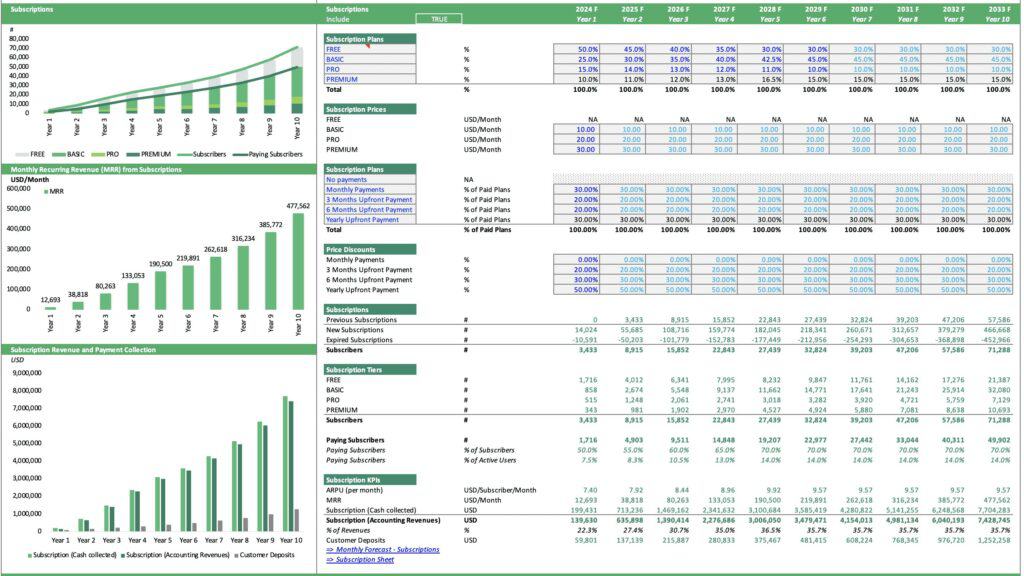
These metrics are crucial for understanding the financial health and growth potential of mobile app businesses. ARPU helps gauge the revenue generated from each user, reflecting the app’s monetization efficiency. At the same time, MRR provides insights into the consistency and predictability of revenue streams from subscriptions, highlighting the app’s ability to retain users and sustain long-term growth. While CLV estimates the total revenue a customer contributes over their lifetime, informing strategies for customer acquisition and retention. Our business plan template for mobile apps includes a Subscription Forecast sheet to analyze highly relevant metrics. The sheet allows businesses to project future revenues based on current and anticipated subscription trends, offering a detailed breakdown of expected ARPU, MRR, and CLV. By utilizing this tool, businesses can make informed decisions, set realistic financial goals, and adjust strategies to optimize user retention and revenue generation, ultimately enhancing the app’s market performance and sustainability.















































What are the Key Factors in Assessing Sensitivities and Risks?
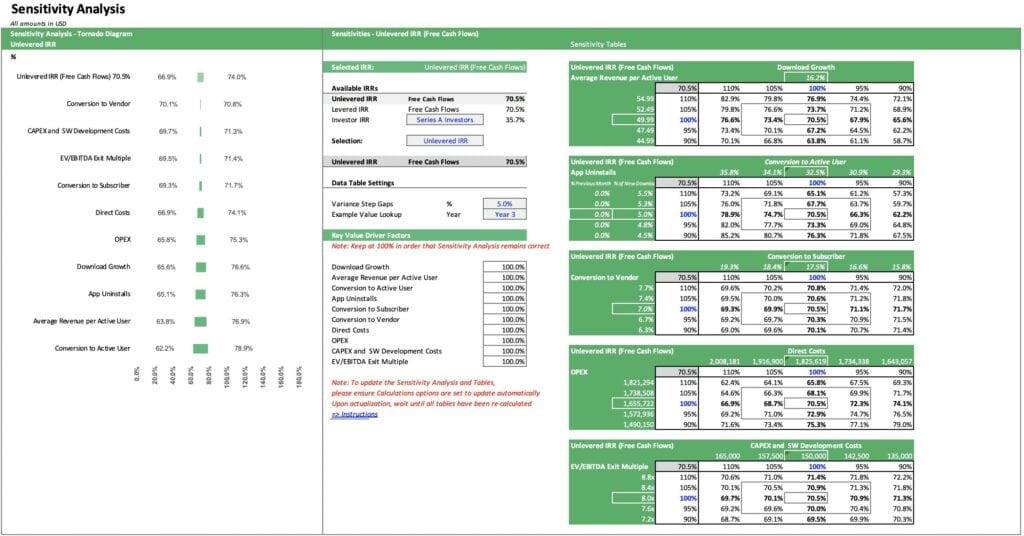
The sensitivity analysis section in our business plan template for mobile apps is crucial for preparing strategies to address app uninstalls and inactive users. This section allows businesses to model various scenarios and assess the impact of different factors on user retention and engagement. By analyzing how changes in-app features, user acquisition costs, or market conditions affect user behavior, businesses can identify the most effective strategies for mitigating uninstalls and re-engaging inactive users.
Why Use an Assumption-Driven Model for Scenario Analysis?
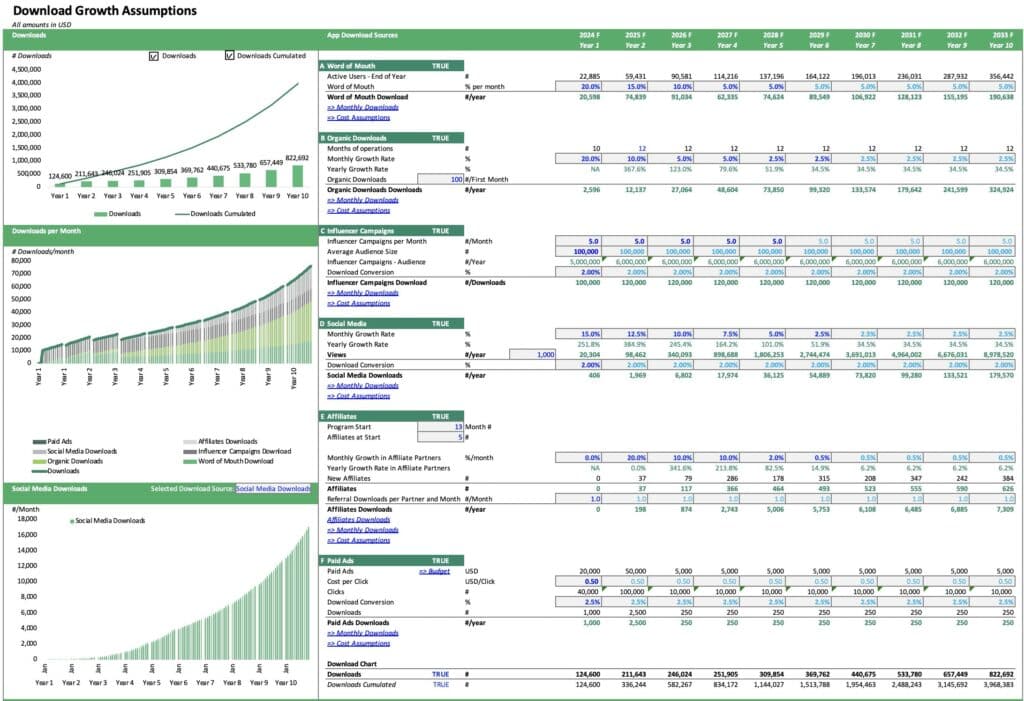
Understanding scenarios requires a dynamic model driven by assumptions to predict outcomes and adapt to changing variables accurately. A mobile app business plan incorporates a robust framework for continuous market analysis and user feedback integration. This framework includes setting up analytics tools to monitor user behavior, conducting regular surveys, and analyzing industry trends to inform decision-making. By establishing a process for regularly reviewing and updating critical assumptions based on real-time data, the plan ensures that the business remains agile and responsive to changing market conditions. This approach allows the company to pivot quickly when new opportunities or challenges arise, ensuring sustained growth and relevance in a competitive landscape.
A download growth assumptions section in our business plan template for mobile apps provides a structured method for dynamically adapting assumptions. This section, which provides guidelines and tools for systematically collecting and analyzing data related to user acquisition, engagement, and retention, reassures you in your decision-making. By leveraging this section, businesses can create a dynamic model where assumptions are regularly tested against actual performance metrics. It ensures that the business strategy’s assumptions are constantly validated and adjusted, allowing for real-time optimization of marketing strategies, product development, and overall business operations. This adaptability is crucial for maintaining a competitive edge in the fast-paced mobile app industry.
How to Develop an Accurate Financial Forecast?
A mobile app business plan provides a detailed roadmap of the app’s revenue generation strategies, market analysis, and user acquisition plans. It includes critical elements such as target audience identification, competitive landscape assessment, and pricing models. Additionally, it outlines the projected growth rates, user engagement metrics, and monetization methods like in-app purchases, subscriptions, or advertising. By integrating these components, the business plan offers a more precise view of potential revenue streams and costs, enabling a realistic financial forecast.
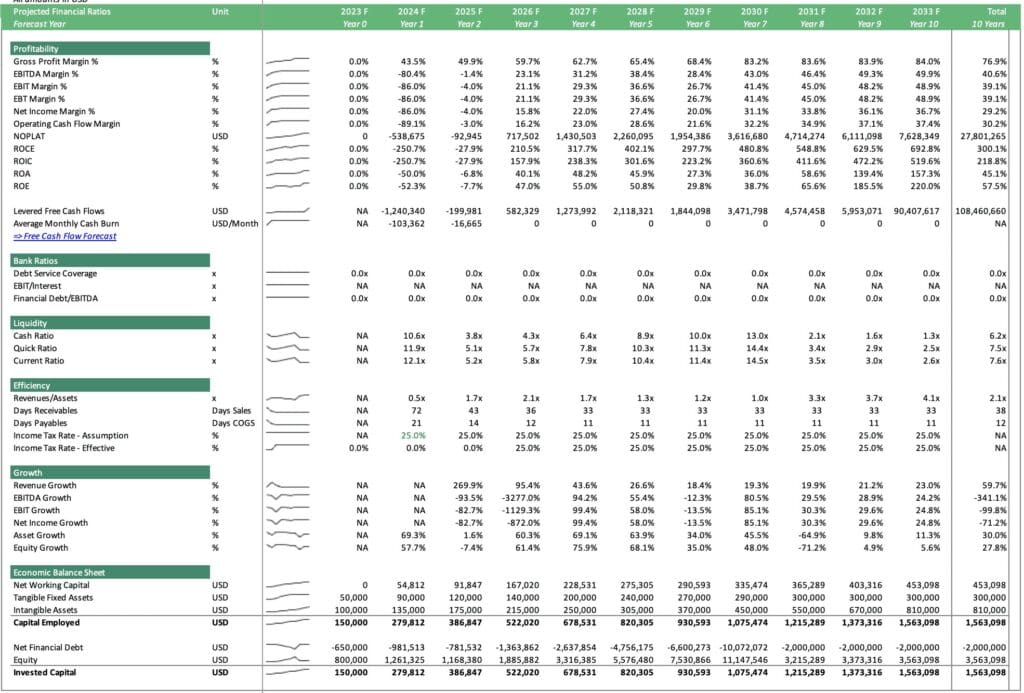
The financial ratios forecast, included in our business plan template for mobile apps, further enhances the accuracy of financial forecasting by offering a systematic analysis of key financial metrics. This forecast includes profitability, liquidity, and efficiency ratios, which provide insights into the app’s financial health and performance over time. Businesses can identify trends, measure financial stability, and make informed decisions by evaluating these ratios alongside the revenue breakdown and cost structure. This holistic approach ensures that all financial aspects are considered, leading to a more accurate and reliable financial forecast.
In summary, a well-crafted business plan for mobile apps is a vital tool for addressing several critical questions critical to the venture’s success. It clarifies the app’s unique value proposition, identifies target audiences, and outlines effective marketing strategies. Furthermore, it provides a detailed financial forecast, ensuring the project’s sustainability while highlighting potential revenue streams.
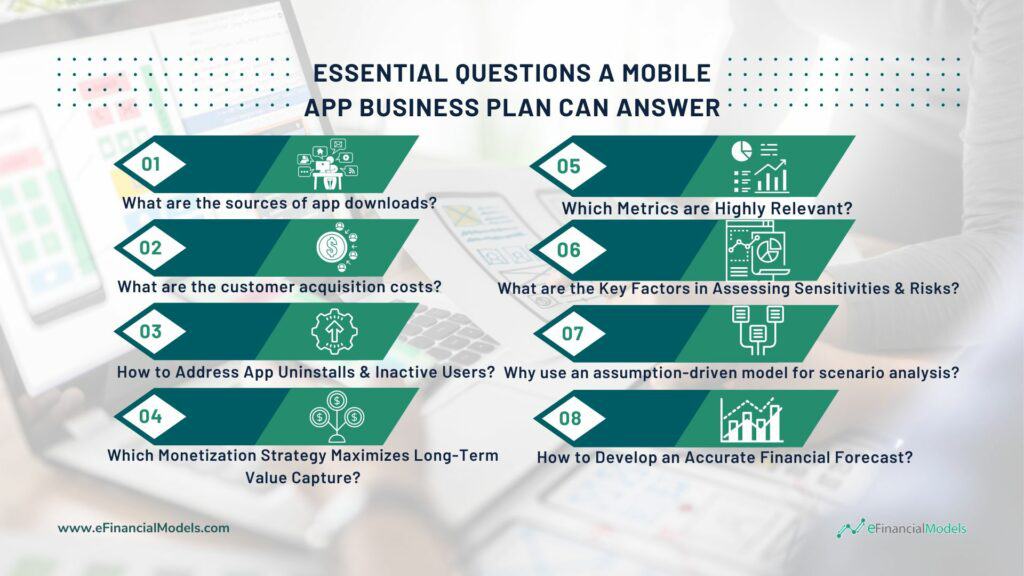
By meticulously answering these questions, the business plan guides the development process, attracts investors, aligns team members, and prepares the app for long-term success in a competitive market.

















Why Use a Business Plan Template for Mobile Apps?
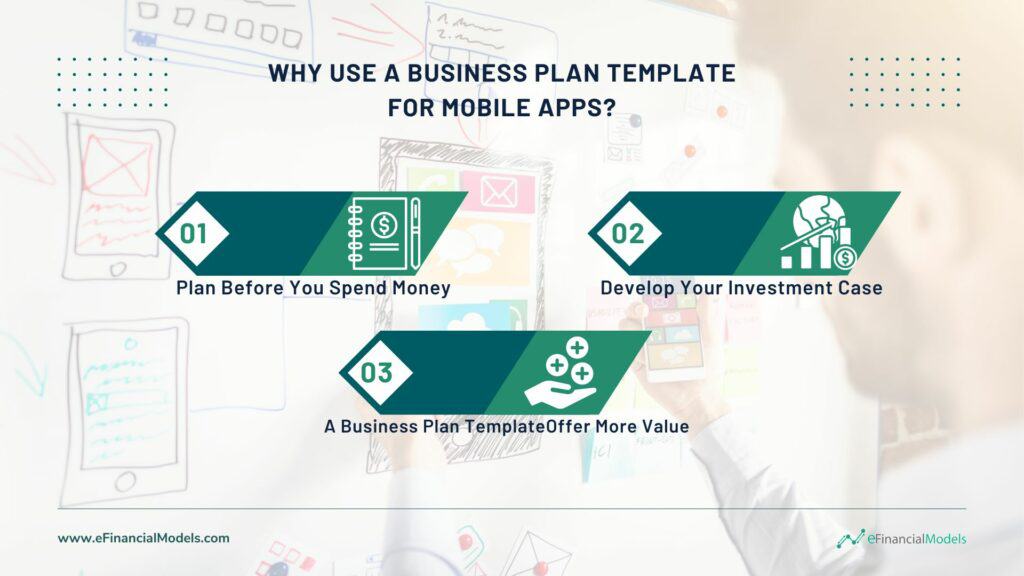
A well-structured business plan template for mobile apps is crucial to your success when developing a mobile application. Optimizing your business plan template can streamline your process, ensure you cover all critical aspects, and set a clear roadmap for your venture.
- Plan Before You Spend Money: A well-structured business plan template for mobile apps is crucial to financial planning. Using a template, developers can accurately outline their projected costs and expected revenues, providing a clear roadmap for financial management. This foresight empowers businesses to allocate resources more effectively and avoid unnecessary expenditures. A detailed financial plan within the template helps identify potential funding gaps and allows for better budgeting and forecasting. Ultimately, planning before spending ensures that every dollar is spent strategically, reducing the risk of financial mismanagement and increasing the likelihood of achieving financial goals.
- Develop Your Investment Case: An investment case is a critical component of a mobile app business plan, detailing how the app will attract users and generate revenue. Using a business plan template for mobile apps can significantly enhance the quality of this section by providing a proven format for articulating the value proposition, market analysis, and revenue model. Templates often include prompts and examples that help clarify the app’s unique selling points and competitive advantages. Developers can create a compelling narrative that resonates with potential investors by clearly outlining where users and revenues will come from. This detailed investment case not only aids in securing funding but also serves as a strategic guide for business growth.
- Using a Template Often Offers More Value Than Developing from Scratch: Creating a business plan from scratch can be daunting and time-consuming, especially for those who may lack experience in business planning. A business plan template for mobile apps simplifies the process by offering a ready-made structure that can be easily customized to fit specific needs. It saves time and reduces the risk of overlooking important details. Moreover, templates are often designed to include best practices and industry standards, ensuring the final plan is comprehensive and professional. Using a template allows mobile app developers to benefit from the expertise and experience embedded in its design, ultimately leading to a more robust and compelling business plan.
Boost Your Business: Leverage a Mobile App Business Plan Template
Mobile app businesses face numerous challenges. Intense competition in a saturated market requires significant innovation and strategic differentiation. Securing adequate funding can take time, as investors often seek proven track records and clear paths to profitability. Technical challenges can strain resources and timelines. Additionally, startups must effectively manage marketing and user acquisition strategies to gain and retain a loyal user base amid constantly evolving consumer preferences.
Balancing these demands while building a cohesive, skilled team and adapting to unforeseen obstacles requires resilience, strategic planning, and continuous iteration. Ultimately, a mobile app business plan template is a valuable tool for streamlining efforts and achieving business goals efficiently.
Leveraging a mobile app business plan template can significantly boost your business by providing a structured roadmap for your app’s development, launch, and growth. This template ensures you cover all critical aspects, including market analysis, financial projections, and marketing strategies, enabling you to make informed decisions and effectively allocate resources. By utilizing a well-crafted plan, you can enhance your app’s chances of success, attract potential investors, and stay ahead of the competition in today’s fast-paced digital landscape.
You might also like:
- 10 Main Elements of a Business Plan
- How to Write a Business Plan Step-by-Step
- How to Build a Capitalization Table
- Mastering Mobile App Success: A Comprehensive Financial Model for Sustainable Growth and Profitability
- How to Calculate Annual Recurring (ARR) Revenue for Sustainable Growth
- How to Make Smart Decisions with 6 Key Financial Metrics?
- Startup Model Templates in Excel that can help your Business Grow
- 5 Practical Tips to Help Raise Funds For Startups
- Understanding the Debt Service Coverage Ratio: An Essential Metric for Financial Analysis
- How to Review a Financial Model?
- Financial Planning for Startups and Small Businesses
- How to use Inflation Projection to Your Advantage
- Financial Modelling PDF Examples
- Financial Model for Mobile App | Mobile App Business Plan
- Business Plans
- Funding Sources for Businesses and Startups
- Mobile Apps
- How to Forecast the Balance Sheet?
- How to Use Excel for Financial Analysis?
- Financial Model Templates Easy to Use