
0 ITEMS

Are EV Charging Stations Profitable?

In the rapidly evolving landscape of sustainable transportation, the electric vehicle (EV) revolution is charging ahead at an unprecedented pace. With this shift comes a burgeoning question in the minds of forward-thinking entrepreneurs: Are EV Charging Stations Profitable?
- The initial setup can range from a few hundred dollars for Level 1 chargers to over $100,000 for DC fast chargers.
- Operating costs include electricity, maintenance, installation, and network fees, which vary by location and station type.
- Business models differ based on charger type, with fee-based, subscription, and advertising revenue options.
- Profit margins for EV charging stations typically range from 10% to 25%, but require careful planning and cost control.
- Financial models and scenario analysis help assess potential earnings and optimize pricing strategies.
Understanding these core elements can help you make informed decisions and build a successful EV charging station business.
What are EV Charging Stations?
Electric Vehicle (EV) Charging Stations, also recognized as electric vehicle supply equipment (EVSE), are vital components in the infrastructure supporting the growing adoption of electric vehicles. These stations are designed to supply electrical power for recharging plug-in electric vehicles (EVs), including battery electric vehicles (BEVs) and plug-in hybrid electric vehicles (PHEVs). The significance of EV charging stations cannot be overstated, as they are the cornerstone that supports the practicality and convenience of using electric vehicles, thus encouraging more consumers to transition from traditional combustion-engine cars to cleaner, more sustainable electric options.
Types of EV Charging Stations
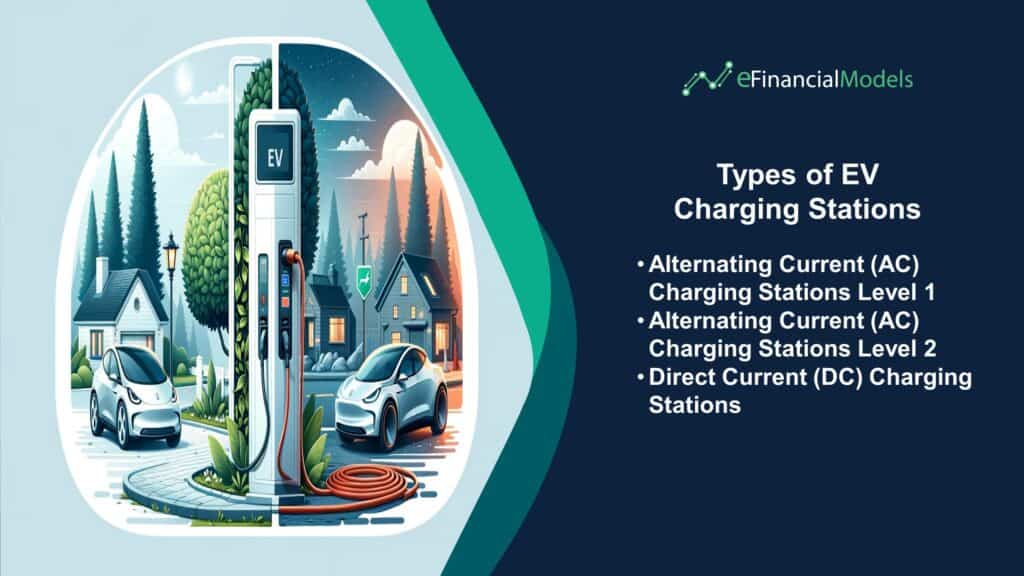
EV charging stations can be broadly categorized into two main types based on the form of electricity they supply:
- Alternating Current (AC) Charging Stations: These types of EV charging stations provide power in alternating current (AC), which is the form of electricity commonly delivered from the power grid. AC charging stations are generally slower than their DC counterparts. They are often used for home charging or at destinations where vehicles can be parked for longer durations (e.g., workplaces and shopping centers). The charging power level of these types of EV charging stations can vary. Level 1 Charging operates on a standard household AC outlet (110-120V) and is the slowest form of EV charging, typically providing about 2 to 5 miles of range per hour of charging. This option is most suitable for overnight charging at home and may be adequate for EV owners with minimal daily driving distances. Level 2 Charging utilizes a higher voltage AC supply (208-240V) and offers a significantly faster charging speed, usually delivering about 10 to 60 miles of range per hour of charging. Level 2 stations are versatile and installed in residential and commercial locations, including public parking areas, workplaces, and shopping centers.
- Direct Current (DC) Charging Stations: DC charging stations supply power in direct current (DC), which is required for battery charging. Since electric vehicle batteries operate on DC, these stations can provide a much faster charging experience than AC stations. DC fast chargers (DCFC) bypass the vehicle’s onboard AC-to-DC converter to directly charge the battery directly, significantly reducing charging time and making them ideal for quick stops during long trips. They are often located along highways and in areas where fast charging is desirable.
The necessity for both types of EV charging stations stems from the fundamental difference in how electric vehicles manage power and the EV charger business model.






















































How Much Does It Cost to Build an Electric Vehicle Charging Station Business?
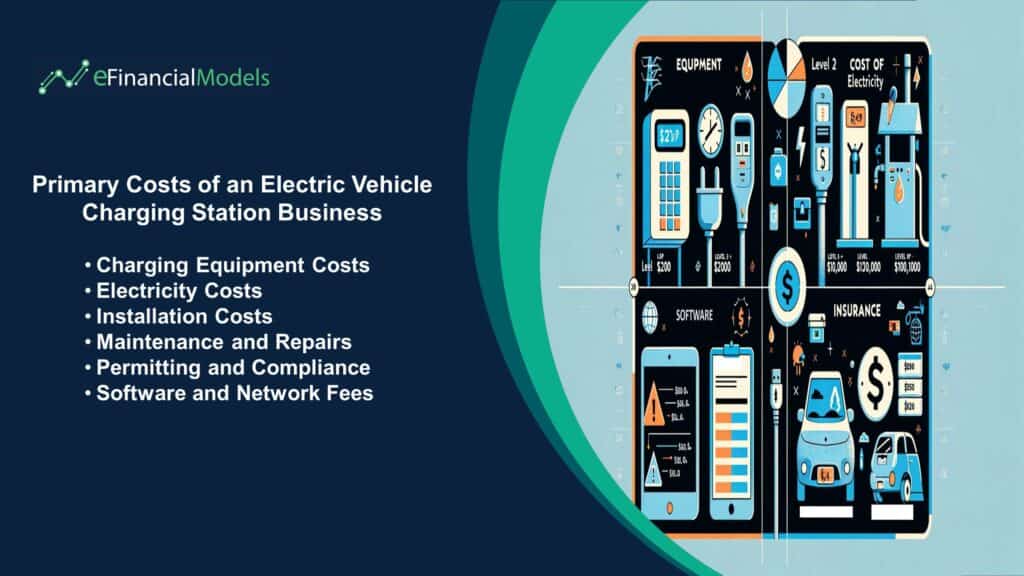
The primary cost calculations of building an electric vehicle charging station business involve various components, ranging from the initial setup of charging equipment to ongoing operational expenses such as electricity costs. Here’s a breakdown of the significant cost factors involved:
- Charging Equipment Costs: Level 1 Charging Stations: These are the most basic and economical options, with prices ranging between $200 and $1,000. Level 2 Charging Stations are priced between $1,500 and $5,000 for the equipment alone. They are suitable for commercial locations, workplaces, and apartment buildings. The costs of DC fast chargers start at $20,000 to $100,000.
- Electricity Costs: Operating a charging station involves continuously purchasing electricity from the grid. The cost of electricity can vary widely based on location, utility rates, and the time of electricity usage. Sometimes, EV charging station operators may negotiate lower rates with utility providers, but more is needed.
- Installation Costs: Installation expenses can significantly vary based on the complexity of the installation, local regulations, and the existing electrical infrastructure. These costs include running electrical wire connections to the charging station site and hiring contractors for installation and construction. In some cases, upgrades to the local electrical grid may be necessary to support the additional load from the charging stations. Overall, installation costs can range from $10,000 to $200,000 per charging station, depending on these variables.
- Maintenance and Repairs: Regular maintenance and occasional repairs will incur additional costs over the life of the charging stations. These typically include routine inspections, cleaning of equipment, and software updates to ensure optimal performance and safety. Occasional repairs may involve fixing or replacing damaged components, addressing electrical issues, or troubleshooting connectivity problems to maintain reliability and service quality.
- Permitting and Compliance: These are fees for obtaining the necessary permits for an electric vehicle charging station business. It ensures that the installation meets all local codes and regulations. Liability insurance and coverage for damage or theft of the charging stations are also essential to consider.
- Software and Network Fees: Many charging stations are part of a network that provides users with access via an app, billing services, and station monitoring. These services often require monthly or annual subscription fees.
The total cost to build an EV charging station business can vary widely based on the scale of the operation, the types of chargers installed, and the location’s specific requirements. Initial costs can be significant; however, with the growing adoption of electric vehicles, the demand for public charging infrastructure is also increasing, potentially offering lucrative opportunities for businesses in this sector.
The Ideal EV Charger Business Model for the Types of EV Charging Stations
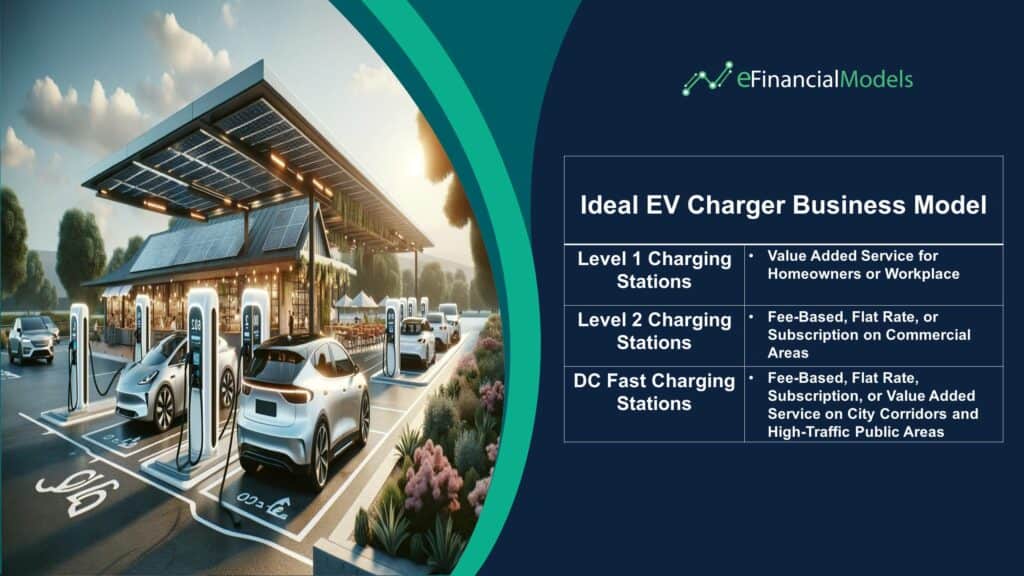
After determining the primary costs of building an electric vehicle charging station business, we can again ask: Are EV charging stations profitable? To answer this, let us discuss the ideal EV charger business model for the types of EV charging stations. An EV charger business model varies depending on the type of EV charging stations deployed. As mentioned, each type serves different user needs and scenarios, shaping their business models.
- Level 1 Charging Stations are ideal for the home or workplace, where cars can be parked for long periods. An electric vehicle charging station business often uses it as a value-added service to attract customers or employees by offering convenience. The investment and operational costs are relatively low, making them a minimal financial risk.
- Level 2 Charging Stations are ideal for commercial areas and public parking lots. Its business model can be under a fee-based usage of per kWh of electricity used. It can also be on a flat rate basis per charging session. Furthermore, subscription services can offer unlimited access to charging stations for a monthly fee. Sometimes, they generate revenue through on-site advertising or partnerships with local businesses.
- DC Fast Charging Stations are ideal for corridors between cities, high-traffic public areas, and locations where drivers must recharge quickly. Due to the higher installation and operational costs, DC Fast Chargers often have higher usage fees than Level 2 chargers. They can implement dynamic pricing that varies by time of day to manage demand and grid impact. Some even collaborate with businesses to provide charging as a service to attract customers. At the same time, others participate in demand response programs or sell ancillary services to the electric grid.
Across all types, a successful EV charger business model often incorporates intelligent charging solutions that optimize charging times based on electricity rates, demand response programs, and vehicle telematics. They also increasingly leverage software platforms that provide users with services such as charger location finding, availability status, and mobile payments.
The Profit Potential of an Electric Vehicle Charging Station Business
So, are EV charging stations profitable? As the adoption of electric vehicles continues to grow, the profit potential of an electric vehicle charging station business is becoming a topic of interest. With an average profit margin ranging from 10% to 25% in the United States, entrepreneurs and investors have a significant opportunity. However, achieving this profit potential requires careful planning, efficient cost management, and strategic pricing.
A comprehensive financial model is invaluable for assessing the profitability of an electric vehicle charging station business. It can help forecast potential earnings based on different pricing strategies and scenarios of usage. It can also project both initial and ongoing expenses to get a clear picture of the financial requirements. Furthermore, performing price sensitivity analysis using these financial models helps understand how changes in key assumptions (like charging fees, operational costs, and usage rates) impact profitability. This analysis can aid in strategic planning and risk management.
In conclusion, while the profit potential of an EV charging station is promising, achieving and maximizing this potential requires a strategic approach to cost management, pricing, and comprehensive financial modeling. By carefully analyzing and planning for these factors, entrepreneurs can position their EV charging station businesses for profitability and long-term growth.





























































You might also like:
- 10 Tips to Develop a First Class Business Valuation Report
- 12 Funding Sources for Businesses and Startups
- Financial Planning for Small Business Owners – Taking an SBA Loan
- Financial Model Templates Easy to Use
- Are Wind Energy Farms Worth the High Initial Cost?
- Financial Forecasting Models by eFinancialModels
- Financial Modeling using Excel
- Funding Your Startup: Key Considerations
- Financial Planning Retirement Tips
- Scenarios of Business Valuation: The Importance of Planning
- How to Make Smart Decisions with 6 Key Financial Metrics?
- Automotive Supplier DCF Valuation Model
- How to Calculate Annual Recurring (ARR) Revenue for Sustainable Growth
- Understanding the Debt Service Coverage Ratio: An Essential Metric for Financial Analysis
- Key Financial Ratios
- How to Calculate Net Present Value (NPV)?
- Dividends Passive Income Model
- Finding Fair Market Value: A Quick Guide to Real Estate Valuation
- Financial Statements – Definition, Uses, Contents and Templates
- How to Optimize the Average Selling Price: Strategies for Higher Profits