
0 ITEMS

Top 5 Risks of Wind Energy Parks

Wind energy parks are a key part of expanding renewable energy and reducing reliance on fossil fuels.
- Building wind parks involves high upfront capital expenditure on turbines, infrastructure, and land acquisition.
- Wind power output varies frequently due to fluctuating wind conditions, making energy prediction challenging.
- Operational maintenance and remote site logistics can cause delays and increase costs over a wind park’s lifespan.
- Integrating variable wind energy into power grids requires advanced infrastructure and storage solutions.
- Environmental considerations include impacts on wildlife, noise levels, and visual landscape changes.
Understanding these risks is essential for making informed investment and development decisions in the wind energy sector.
Wind Energy Parks: Powering Global Sustainability
Wind energy parks are collections of wind turbines that generate electricity by harnessing the power of the wind. These parks are usually located in areas with strong and steady winds, such as coastal regions or open plains. As the wind turns the turbine blades, mechanical energy is converted into electrical energy, fed into the power grid. Wind parks can be both onshore and offshore. Onshore wind parks are built on land, often in open plains, hills, or rural areas with consistent wind conditions. On the other hand, offshore wind parks are located in bodies of water, typically in shallow coastal areas where winds are often stronger and more reliable. By producing clean, renewable energy without emitting greenhouse gases, wind parks play a key role in reducing our reliance on fossil fuels and supporting global sustainability efforts.
In the United States, wind energy is the top source of renewable electricity, supplying about 9.8% of the nation’s electricity and continuing to expand. Furthermore, the Global Wind Report 2024 states that worldwide wind power capacity reached 1021 GW in 2023. The market is projected to grow at a compound annual rate of 9% over the next five years.
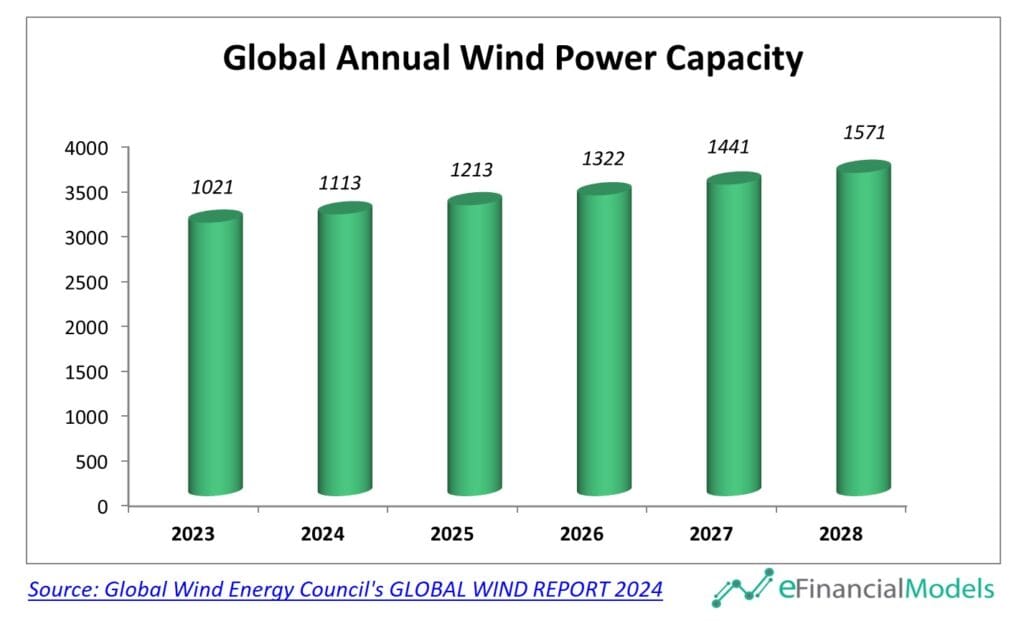
Wind energy parks are at the core of this impressive growth, driving global sustainability by harnessing wind power at scale. As these parks expand onshore and offshore, they contribute to cleaner energy production, helping countries reduce their reliance on fossil fuels. By generating substantial amounts of renewable energy, wind energy parks are not just meeting current energy needs but also setting a foundation for a greener future, fostering energy independence, and mitigating the environmental impacts of traditional power sources.
How Does a Wind Energy Park Work
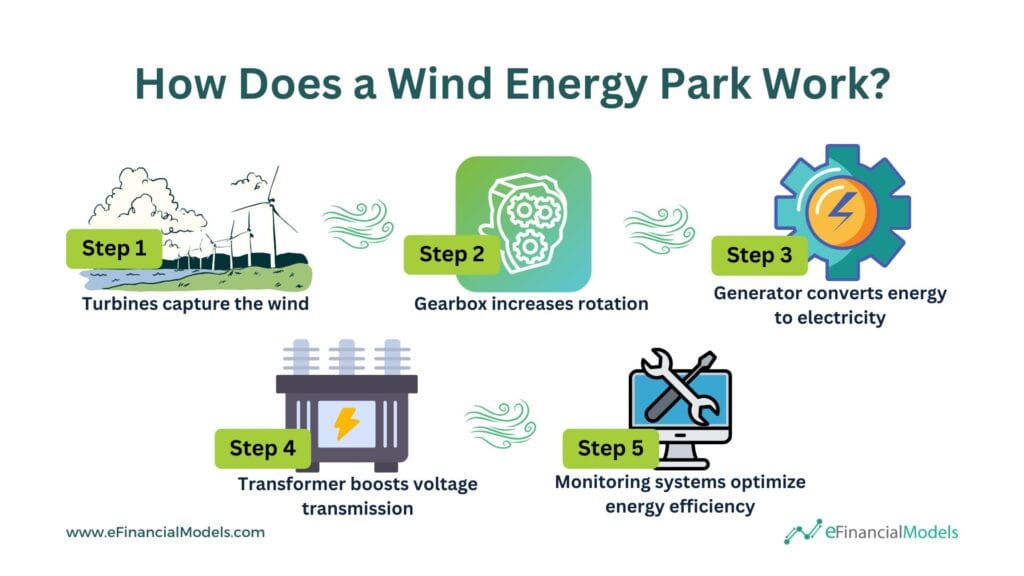
Harnessing the power of a wind energy park involves innovation. It involves transforming the kinetic energy of the wind into electrical energy. The DC power produced then powers homes, businesses, and industries.
- The first step in the process occurs when wind turbines capture the kinetic energy from the wind. Each turbine in a wind energy park consists of large blades attached to a rotor. When the wind blows, the blades are designed to catch the wind and start turning. The movement of these blades depends on wind speed, and the turbine’s efficiency is directly linked to the ability of its blades to harness as much of the wind’s force as possible.
- As the blades rotate, they spin a rotor connected to a gearbox. The gearbox increases the speed of rotation, which is crucial for the next step. Most wind turbines are designed with a system that converts the relatively slow rotation of the blades into a much faster motion required to generate electricity. The gearbox helps to amplify this mechanical power, transferring it to a generator.
- Next, the generator takes over. It converts the mechanical energy from the spinning rotor into electrical energy. The generator functions similarly to a large-scale version of the dynamo on a bicycle, where mechanical motion creates an electrical current. The electricity produced by the generator is then transferred through cables to a transformer, which increases the voltage to make it suitable for long-distance transmission.
- Finally, the electricity produced by the wind turbines is fed into the power grid. The transformer steps up the voltage to ensure minimal energy loss during transportation, allowing the energy to travel efficiently across power lines. From there, the electricity is distributed to homes, businesses, and other consumers.
- A modern wind energy park is equipped with monitoring systems to maximize efficiency and ensure each system component works.
A wind energy park is a testament to how far technology has come in harnessing renewable energy. By understanding each step of the process, it’s easier to appreciate the ingenuity behind turning simple wind into a powerful electricity source that benefits millions worldwide.


















































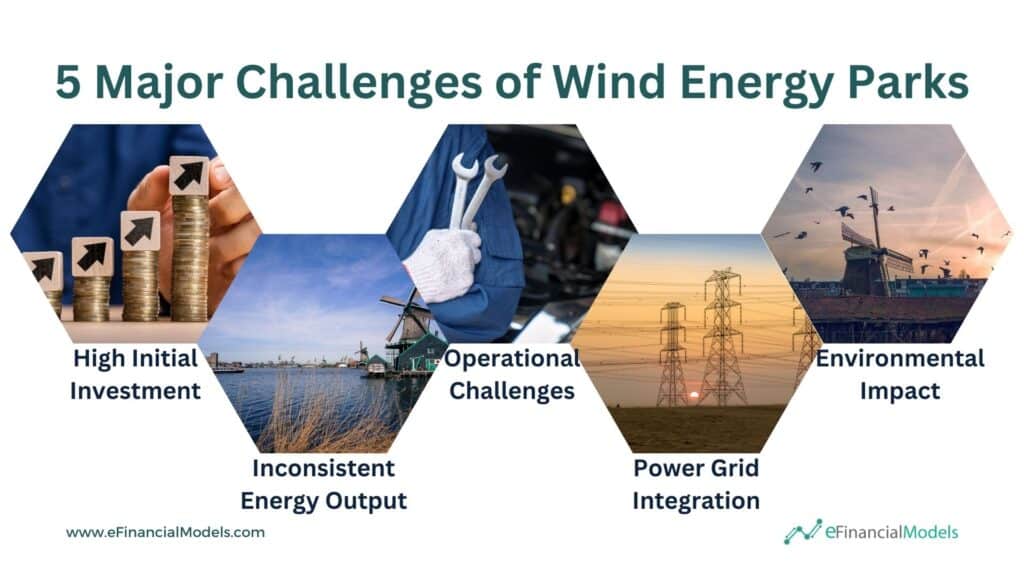
5 Major Challenges of Wind Energy Parks
Wind energy parks are transforming the way we generate electricity. They offer a clean, renewable source of power that doesn’t depend on fossil fuels. But, as with any major energy project, wind energy has risks. Understanding the challenges of wind energy is crucial for investors, developers, and governments looking to expand wind energy.
High Initial Investment
High upfront cost is one of the 5 major challenges of wind energy parks. Setting them up requires substantial financial resources. This capital expenses includes purchasing wind turbines, transporting them to the site, constructing foundations, and the required infrastructure for power transmission. Unlike fossil fuel plants, which often have spread-out expenses, wind parks need a bulk amount upfront.
The cost of materials for new turbines and replacement parts has surged recently. Steel, a turbine core material, saw prices rise by 86% in the U.S. and 53% in Europe in 2022. Many direct-drive turbines also need rare earth elements (REEs) for permanent magnets. However, these products face increasing domestic demand. Another cost that can increase the initial investment is the need for large pieces of land. It means acquiring property rights with high lease or purchase expenses.
Inconsistent Energy Output
One of the most significant challenges of wind energy is the inconsistency of energy output. Wind energy relies heavily on natural conditions, specifically the strength and steadiness of the wind. Unlike solar energy, which can predictably depend on daytime sunshine, wind patterns can be irregular. The wind turbine output power can vary greatly from day to day or even hour to hour.
Wind speed is unpredictable and often out of the developer’s control. In some locations, the wind might not blow for extended periods, leading to little or no energy generation. This inconsistency in energy output makes it challenging to rely on wind as a primary energy source. Wind energy parks are usually connected to a power grid to counteract this challenge, which can balance supply and demand by drawing energy from other sources. However, the intermittent nature of wind energy makes this balancing act complex. Without backup energy storage solutions or hybrid systems, the reliance solely on wind power can lead to energy shortages.
Operational Challenges
Once a wind energy park is operational, managing several technical and logistical issues is challenging. First, wind turbines need regular maintenance to perform at peak performance. These turbines are complex machines with moving parts that subject to wear and tear. Routine maintenance—everything from oiling components to replacing gearboxes—is critical to prevent breakdowns.
Besides routine maintenance, wind turbines are also subject to unforeseen breakdowns and repairs, which could be costly and time-consuming. Because many wind parks are located in remote areas, accessing the site for repairs can also be a logistical nightmare. Getting technicians and equipment to the location often takes time and resources, especially in extreme weather conditions.
Furthermore, wind turbine output power decreases as parts degrade over time. This leads to a gradual decline in efficiency. An unplanned reduction in power generation can make it difficult to fulfill contracts with electricity buyers and hurt the overall profitability of the wind energy park.
Power Grid Integration
Another one of the major challenges of wind energy is power grid integration. Integrating wind energy into an existing grid system is more complex than plugging in a new device. The grid has to be prepared to accept the variable power that wind energy generates, which can be costly and technically complex. Besides, wind energy is inherently variable. Many countries’ current power grid infrastructure must be designed to handle such fluctuations smoothly.
When wind turbine output power fluctuates, the grid must either balance that power with other sources or store the excess energy, which presents challenges. For instance, storage systems, such as batteries, are still very costly at a scale that could support a large wind energy park. In some instances, grid integration delays can push back the commissioning of wind energy parks, leading to increased costs and missed opportunities for generating revenue. Grid integration issues are thus a major deterrent for investors looking to put their money into wind energy.
Environmental Impact
Although wind energy is often celebrated as an environmentally friendly alternative to fossil fuels, it is not without environmental concerns. The construction of wind energy parks involves large-scale land use, which can disturb local ecosystems. This is particularly concerning in ecologically sensitive areas. One of the main environmental issues associated with wind energy parks is their impact on local wildlife. Birds and bats are particularly at risk, as they can collide with the spinning blades of wind turbines. This has led to concerns among environmentalists, who argue that wind energy can negatively impact biodiversity. Noise pollution is another concern. Wind turbines, especially older models, can generate considerable noise. The sound can become a nuisance for residents living near wind energy parks, leading to reduced quality of life. Modern designs aim to reduce noise, but it remains a point of contention in some areas. Visual impact is also an issue. Wind parks often require many turbines spread over a wide area, which can alter the visual landscape. Some communities oppose wind energy projects due to the changes they bring to the natural scenery. This has led to protests and legal challenges, further complicating the development of new wind energy parks.
Mitigating the Challenges of Wind Energy
While the challenges of wind energy parks are significant, solutions are being developed to address these issues.
- Governments and private equity investors increasingly offer grants and incentives for the high initial investment to make the financial burden more manageable. Developers can also spread the financial risk with new financing structures, such as green bonds.
- For inconsistent energy output, improvements in forecasting technology are making it easier to predict wind patterns. Energy storage solutions are also becoming more effective, providing backup power when wind conditions are poor.
- Regarding operational challenges, technological advancements have made turbines more durable and efficient. Scheduled maintenance programs and remote monitoring systems reduce unexpected breakdowns and keep turbines in optimal working condition.
- To address power grid integration issues, smart grids are being developed better to manage the variable energy input from wind energy parks. Governments and private grid operators are investing in infrastructure to make power grids more flexible and better accommodate renewable energy sources.
Example of a Scenario Analysis for Wind Energy Park Planning
Scenario analysis for wind energy park planning helps identify and mitigate risks by testing various “what-if” scenarios, such as fluctuating wind conditions, changes in regulatory policies, or unexpected maintenance costs. By modeling different situations, decision-makers gain a clearer understanding of potential financial impacts and can devise contingency plans to address uncertainties. This approach allows planners to evaluate strategies for mitigating high initial investments, ensuring stable energy output, and overcoming integration issues with the power grid. Ultimately, scenario analysis empowers stakeholders to make informed choices that minimize risk and enhance the overall viability of the project.
Here’s an example of a scenario analysis for wind energy park planning:
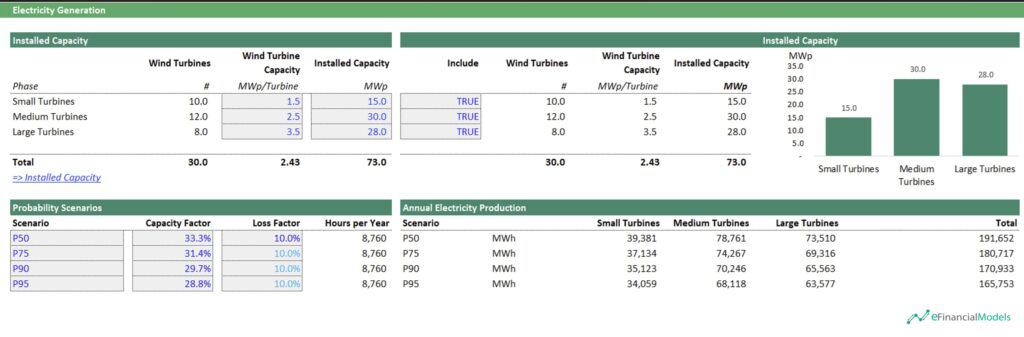
The above chart is an example of a scenario analysis from our Wind Energy Farm Financial Model. It illustrates how different wind turbine sizes, their respective capacities, and the probability scenarios (P50, P75, P90, P95) impact the overall energy production of a wind park. In planning a wind energy park, this example of a scenario analysis is critical in managing risks tied to high initial investment, inconsistent power output, and operational challenges. The financial model calculates annual energy output under varying conditions, helping stakeholders understand potential revenue streams. Analyzing different probabilities helps mitigate uncertainties and support decision-making regarding installed capacity, expected output, and the feasibility of investments, ensuring a more informed approach to overcoming challenges.
Mitigate Wind Energy Risks with Smart Financial Models
Wind energy parks represent a major step forward in sustainable energy production. However, the challenges of wind energy block the path to realizing the potential their potential. Significant hurdles include the high initial investment, inconsistent energy output, operational challenges, power grid integration issues, and environmental impacts. But, these wind energy limitations are manageable. With continued investment in technology, smart policies, and better planning, the challenges of wind energy parks can be managed and mitigated.
Financial modeling is a powerful tool to address the top risks wind energy parks face. Using detailed data analysis, investors and operators can identify potential financial pitfalls early, optimize project costs, and improve decision-making. From assessing fluctuating energy yields to managing maintenance costs, smart models provide a clear picture of financial stability. This proactive approach minimizes risk and helps secure better returns, making wind energy projects more viable and sustainable.
Ready to reduce your risks today?





































You might also like:
- Are Wind Energy Farms Worth the High Initial Cost?
- The Purpose of a Financial Model
- 10 Tips to Develop a First Class Business Valuation Report
- 5 Practical Tips to Help Raise Funds For Startups
- How Does Solar Radiation Affect the Returns of Your Solar Park?
- Financial Modeling for Startups and Small Businesses
- Understanding the Levelized Cost of Energy Formula
- A Step-By-Step Guide to the Transpose Formula in Excel
- How Contribution Margin Analysis Can Drive Your Business to Financial Success
- Why Financial Forecasting Models Are Vital for Your Business
- Renewable Energy
- Wind
- Scenario Analysis
- Financial Planning
- IRR vs NPV in the Context of Financial Decision-Making
- Wind Energy Farm Financial Model
- Business Valuation
- Mastering the Art of IRR Calculation: A Comprehensive Guide for Investors
- How to Effectively Read a Company’s Annual Report
- The Essential Guide to Personal Finance 101