0 ITEMS

The Ultimate Guide to Project Finance

Have you ever wondered how the Burj Khalifa was funded? The world’s tallest building was designed to be the centerpiece of Downtown Dubai. At a certain point, its original developers experienced financial problems. Through Project Finance, the UAE government granted monetary aid to fund the building’s completion.
Large-scale infrastructure projects, such as the construction of power plants, transportation infrastructure, and other capital-intensive endeavors, typically seek project finance. These projects often require significant upfront investment and have a long-term revenue stream that can support debt repayment.
Project finance is a unique financing approach used specifically for capital-intensive projects. This guide will explain everything you need to know about it and the future of project finance.
Project Finance: What is It?
Project finance is a financing approach where a lender provides financing to a specific project, and the project’s cash flows are used to repay the loan. It is commonly used to fund large-scale capital investments, such as infrastructure and energy projects.
Unlike traditional bank loans, project finance focuses on a project’s potential success rather than its sponsors’ creditworthiness. It enables project owners to raise debt and equity financing without risking their balance sheets.
Project finance also includes off-balance sheet financing, which allows companies to acquire funding for a project by setting up special-purpose vehicles (SPVs) that are legally separate from the company and do not appear on its balance sheet. This type of financing provides more flexibility for companies because it does not affect their credit ratings or the debt-to-equity ratio in their financial statements.
Additionally, it can be structured as non-recourse financing, meaning the lenders cannot go after the sponsors if the special purpose vehicle fails to make timely payments on its debts. It provides an alternative form of funding that allows companies to manage risk while taking advantage of higher returns associated with long-term investments.
Basic Project Finance Process
Project finance funds large-scale infrastructure projects that are often too risky or costly for traditional financing methods, such as bank loans. The process of project finance typically involves several stages, as outlined below:
- Project Identification: The first step in project finance is identifying a suitable project. It may involve conducting a market analysis, determining the potential risks and rewards associated with the project, and preparing a financial feasibility study.
- Project Development: Once a suitable project has been identified, the next step is to develop a business and financial plan with a detailed project schedule and budget.
- Structuring the Financing: The next step is to structure the financing for the project. The process involves identifying potential funding sources, such as equity investors, lenders, and other financing partners. The financing structure will typically include a mix of debt and equity financing.
- Due Diligence: Before financing can be secured, potential lenders and investors will typically conduct due diligence to evaluate the project’s feasibility and assess its potential risks and rewards. Due diligence may involve a review of the project plan, financial statements, market analysis, and other relevant documents.
- Negotiation of Terms: The next step is to negotiate the financing terms once due diligence has been completed. It may involve negotiating the interest rate, repayment schedule, covenants, and other key terms of the financing agreement.
- Closing & Disbursement: The next step is to close the financing and disburse the funds once the financing terms have been agreed upon. This stage typically involves the preparation and execution of legal documents, such as loan agreements and security documents.
- Construction & Operation: With financing secured, the project can move into the construction and operation phase. During this phase, the project team will oversee the construction and operation of the project and work to manage any risks or challenges that arise.
- Repayment: As the project generates revenue, the financing partners will be repaid according to the terms of the financing agreement. It is the final stage of debt repayment, dividends distribution to equity investors, and other reimbursement forms.
The project finance process can be complex and time-consuming, but it can also be a highly effective way to fund large-scale infrastructure projects. Successful project finance requires a thorough understanding of the project, careful planning and execution, and effective management of risks and challenges.
















































Common Parties Involved in Project Finance Deals
Financial institutions with a high-risk tolerance are frequently among the sponsors, or investors, in a project finance arrangement. Organizations in the same sector, a contractor interested in the project, the government, or other public institutions may also serve as sponsors. Each project sponsor who participates in a project finance venture has a specific goal that varies based on the sponsor type.
In brief, four types of key parties are very often involved in such transactions:
- Sponsoring contractors are interested in participating in the effort by contributing equity and subordinated debt. Contractors also develop, build, or operate plants. This developer assumes the risk of planning, creating, and building a project. They are responsible for acquiring all essential licenses and legal permissions to complete the project.
- Financial Investors are motivated to put money into high-profit ventures. They tend to take risks and want a significant return on their investments. They act as the asset’s operator, operating and caring for it after construction. These include overseeing employees, managing day-to-day operations, and may even involve marketing initiatives to guarantee optimal utilization of available capacity.
- Industrial Sponsors find a connection between the program and their primary business. They provide products and services to finish building projects on schedule and within budget. These parties are frequently hired as subcontractors by developers or operators.
- Public Sponsors refer to a government or quasi-governmental entity that supports the project through financial assistance, guarantees, or other forms of public backing. Public sponsors play a crucial role in project finance, particularly in large infrastructure projects that require significant investment and have long-term revenue streams.
Project finance deals require collaboration between all parties to ensure that projects are completed on time, within budget, and according to agreed specifications. By understanding their respective roles and responsibilities, stakeholders can minimize risks associated with project finance deals and maximize their chances of success.

Key Elements of a Project Finance Structure
A standard project finance method works under a Build-Operate-Transfer (BOT) structure. In a BOT arrangement, a private entity (the project developer or sponsor) is responsible for the project’s construction, operation, and maintenance for a specified period. At the end of this period, the ownership and operation of the project are transferred to the public sector or the project owner.
Among the key elements of a project finance structure are the following:
- Capital-Intensive Projects
- Off-Balance Sheet Activities
- Non-Recourse Financing
- Special Purpose Vehicle
Funding for Capital-Intensive Projects
When it comes to funding for large, capital-intensive projects, traditional funding can often be inadequate. It is where project finance comes in. Project finance is commonly used for long-term investments, such as infrastructure or construction.
Real estate building & construction is a prime example of capital-intensive projects. Mining, oil fields, and renewable energy (i.e., hydrogen plants, solar parks, etc.) can also benefit from a project finance deal. Its specialized risk assessment process and structured repayment terms can be a well-poised tool to grow its business and expand its reach. It allows them to secure substantial debt financing, allocate risks efficiently, and align debt repayment with the project’s cash flow generation.
Overall, project finance provides a robust financial framework for capital-intensive projects. These benefits make project finance attractive for funding large-scale infrastructure, energy, and other capital-intensive projects.
Off-Balance Sheet Activities
Activities not displayed on a company’s balance sheet are called off-balance sheet activities. Off-balance sheet operations are utilized in project finance to raise lender risk while lowering borrower risk. A special purpose vehicle (SPV), a separate organization that will own and oversee the project, is created to do this. Loan repayment falls on the SPV rather than the borrower.
Off-balance sheet financing refers to arrangements in which no debt or equity is recorded under the company’s general ledger account. It allows companies to avoid the liabilities associated with these projects. When companies take off-balance sheet financing, they can keep their debt off their balance sheet and limit their risk exposure.
Some common examples of this type of financing include capital leasing, joint venture arrangements, and forward contracts. By utilizing these forms of financing, companies can minimize the amount of long-term debt they need to incur to complete their projects. It allows them to focus more resources on other areas of their business that require capital investments. Additionally, using the various off-balance sheet options available, companies can more effectively manage their cash flow and asset structure, thus increasing efficiency and profitability.
The government may employ project finance to keep project liabilities and debt off the balance sheet, freeing up less budgetary headroom. The amount of money the government may spend above what it presently invests in public services like health, welfare, and education is known as the fiscal space. According to the argument, rapid economic growth will raise tax income from more people working and paying more taxes, giving the government more money to spend on public services.
Non-Recourse Financing Option
Non-recourse financing is a primary option for project finance. It limits the amount of recourse lenders have in the event of a borrower’s inability to meet their financial obligations. While this type of financing can be attractive for borrowers with limited capital, it comes with significant risk for lenders. When granting non-recourse financing, lenders do not have the same rights to personal or business assets that traditional creditors are afforded, making it a risk venture.
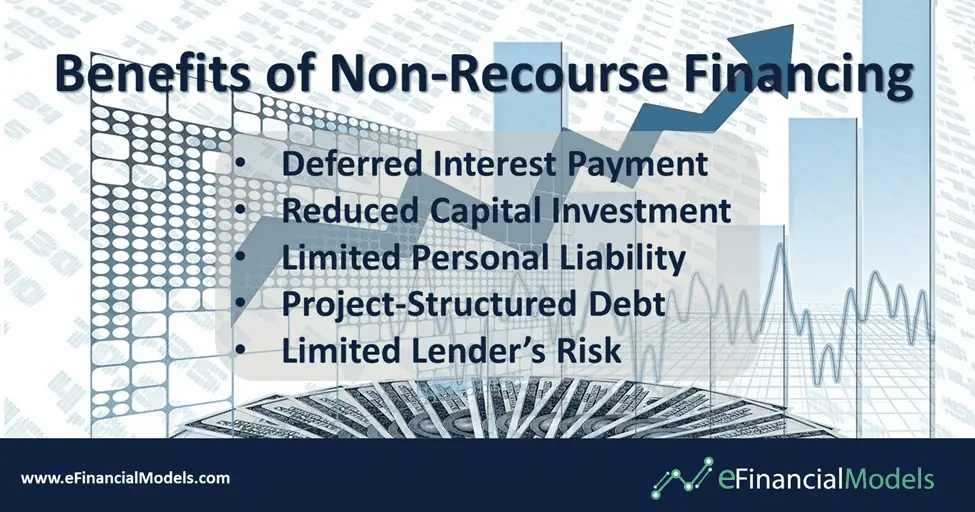
The major benefits of non-recourse financing are:
- Interest payments can be deferred until income is generated from the project
- The amount of capital needed upfront is reduced
- The borrower has limited personal liability
- The debt can be structured in a way that suits the project
- The lender’s risk is limited
Non-recourse financing may be attractive to borrowers, but, as previously mentioned, it can be quite risky for lenders and require careful consideration before being approved. It is important to note that non-recourse loans must still be based on sufficiently strong cash flows and realistic projections in order to guarantee repayments. The special purpose vehicle’s cash flows must be sufficient to pay operating expenses and the debt’s capital repayment and interest obligations. Only any remaining money after operational costs and debt payments have been made can be utilized to pay dividends to the project’s sponsors because those two expenses take up the majority of cash flow.
Setting Up the Special Purpose Vehicle (SPV)
An SPV or special purpose vehicle is a limited-purpose company set up to isolate and help project finance deals. It allows the project to move forward without liability on the parent company’s balance sheet. The SPV then can raise its financing for the project, separate from the parent company’s finances.
The special purpose vehicle is created for each separate transaction so that in case of a failure, any losses can be contained within that single entity. It also helps protect the parent company from potential financial risks and liabilities associated with the project.
The most common form of raising capital for an SPV is through securities such as bonds and shares, which are issued to investors in exchange for financing. The special purpose vehicle can also enter into various financial arrangements with other entities, such as banks or investment funds, providing additional financing. These arrangements are typically secured by tangible or intellectual property assets related to the project.

Financial Modeling – An Essential Aspect of Project Finance
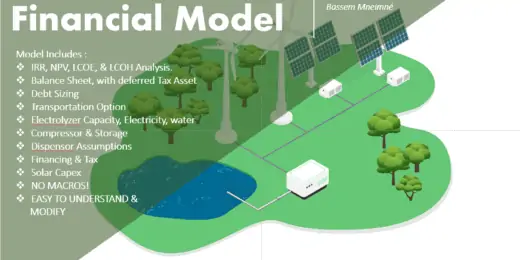
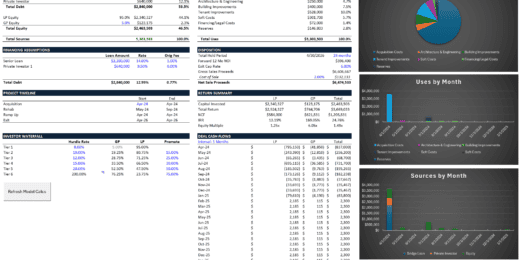
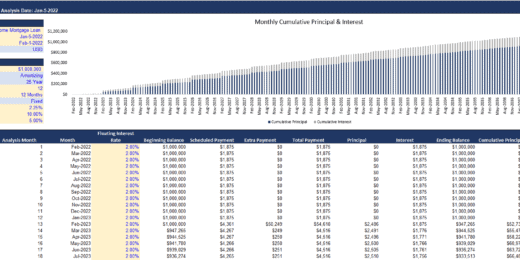
Financial modeling is an essential aspect of project finance. Financial modeling for project finance involves creating a mathematical model of the project’s cash flows to determine the project’s financial feasibility.
Project finance involves financing long-term infrastructure, energy, or other large-scale projects where the repayment of debt and return on investment are primarily based on the project’s cash flow and assets. Financial modeling plays a crucial role in project finance by quantitatively analyzing feasibility, profitability, and risks.
Here are some reasons why project finance modeling is essential:
- Project Feasibility Assessment: Project finance modeling helps assess the feasibility of a project by analyzing its projected revenues, expenses, and cash flows over the project’s lifecycle. It allows stakeholders to evaluate the project’s financial viability and make informed decisions about its potential success.
- Capital Structure Optimization: Financial modeling enables the optimization of the project’s capital structure, including the mix of debt and equity financing. By simulating different scenarios and analyzing their impact on the project’s financial metrics like debt service coverage ratio, return on equity, and internal rate of return (IRR), financial modeling helps determine the optimal capital structure that minimizes the cost of capital while meeting the project’s financial requirements.
- Sensitivity Analysis & Risk Assessment: Project finance modeling allows for sensitivity analysis, which involves testing the impact of various variables and assumptions on the project’s financial performance. By modeling different scenarios and considering factors such as interest rate fluctuations, exchange rate risks, commodity price volatility, and regulatory changes, project stakeholders can assess the project’s resilience to different risk factors and develop risk mitigation strategies.
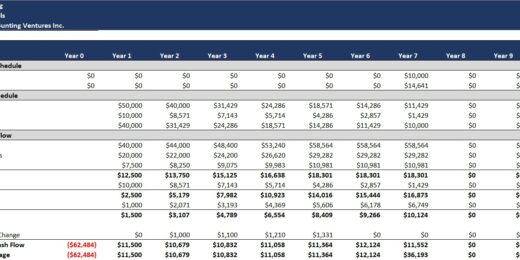
- Cash Flow Forecasting: Financial modeling helps forecast the project’s cash flows over its expected lifespan. It considers various revenue streams, operating costs, capital expenditures, debt service obligations, and tax implications. Accurate cash flow forecasting is crucial for determining the project’s ability to generate sufficient cash flow to repay debt obligations and provide returns to investors.
- Investment Decision-Making: Project finance modeling assists in making smart financial decisions by evaluating key financial metrics such as net present value (NPV), IRR, payback period, and profitability index. These metrics help project sponsors, lenders, and investors assess the project’s attractiveness and compare it with alternative investment opportunities.
- Financial Reporting & Compliance: Financial modeling aids in preparing financial statements, including income statements, balance sheets, and cash flow statements, which are essential for financial reporting and compliance purposes. It ensures that the project’s financial performance is accurately represented and meets the required accounting standards and regulatory requirements.
Project finance modeling is a critical tool in project finance, providing insights into the financial feasibility, risk assessment, capital structure optimization, and investment decision-making process. It allows stakeholders to evaluate the project’s financial viability, optimize its financial structure, and assess its ability to generate cash flows to meet debt obligations and investor expectations.

The Future of Project Finance
As more capital-intensive projects are developed, project finance will continue to be a popular financing approach. Project finance is an important tool for financing capital-intensive projects and can be used to structure investments through the use of a special-purpose vehicle. With proper understanding and consideration of the associated risks, project finance can be a major asset in any company’s long-term strategies. Additionally, as technology improves, financial modeling for project finance will become more sophisticated, making it easier to create accurate financial models. In conclusion, project finance is a unique financing approach that is used specifically for capital-intensive projects.