0 ITEMS

What You Need to Know About Environmental, Social, and Governance (ESG) Funding

In today’s world, investing is no longer just about making a profit. Investors are increasingly interested in making ethical and sustainable investment decisions. Environmental, Social, and Governance (ESG) investing has gained popularity recently as people become more aware of their investments’ impact on the world around them.
If you’re new to ESG investing and want to know more about it, this beginner’s guide is for you. This article covers the basics of ESG investing, including what it is, how it works, and when you should consider it for your business.
What is ESG Investing?
ESG investing, also known as sustainable investing, is an investment approach that seeks to consider environmental, social, and governance factors in addition to traditional financial ratios analysis. ESG investment policy believes these factors directly impact a company’s long-term success and financial performance. So, they also avoid companies engaged in activities that harm people or the planet.
Regarding Environmental, Social, and Governance Funds, investors can approach it in a few different ways. One way is to invest in companies that are industry leaders adhering to ESG practices. Another way is to invest in companies making significant progress toward improving their ESG practices. Finally, investors can invest in companies solving major global challenges like climate change or social inequality.
ESG investment policy involves analyzing a company’s business practices, management, and impact on the environment and society. Companies that score well on ESG factors are considered more sustainable and responsible investments. ESG investors use various ESG data providers and specialist rating agencies to help them assess companies.
Investing in ESG companies can be financially rewarding, as most companies prioritizing ESG practices perform better in the long term. In addition, ESG investing enables investors to contribute to a more sustainable future by aligning their investments with their values.
Difference Between Impact Investing and ESG Investing
Both impact investing and Environmental Social and Governance Funds fall under the umbrella of responsible investing. They allow investors to build more sustainable portfolios, but the specific social and environmental goals and expected returns vary significantly between these strategies.
Environmental Social and Governance Funds focus on not supporting companies that harm the environment, while impact investing stresses backing companies that actively seek to rectify the current situation. ESG funds, for instance, refrain from investing in businesses that produce non-biodegradable garbage that may damage the environment by failing to manage the trash they have. In contrast, impact funds invest in companies promoting waste reduction and management.
Impact investing includes investments across asset classes, from cash equivalents to private equity. Investors can invest directly in companies and projects or through impact investment funds and products. Environmental Social and Governance Funds mostly include publicly traded stocks, bonds, and only some private market investments.
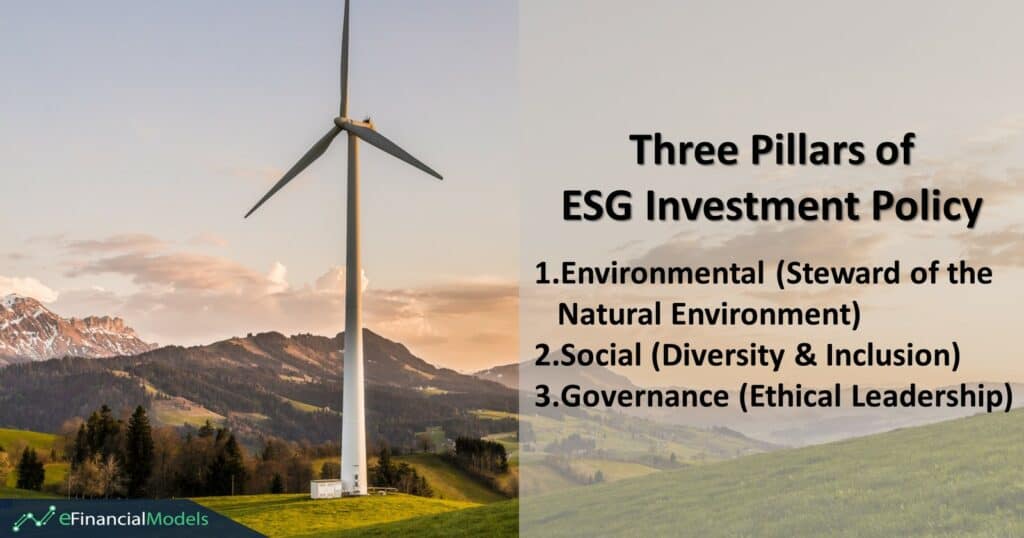
The Three Pillars of ESG Investment Policy
To fully understand ESG investing, you must understand the three pillars of ESG investment policy:
- Environmental factors refer to how a company performs as a steward of the natural environment. Investors evaluate how companies minimize pollution, reduce waste and carbon emissions, and use resources sustainably. Companies with strong environmental practices may have better risk management and be poised to thrive as ecological regulations tighten and renewable energy expands.
- Social factors examine how a company manages relationships with employees, suppliers, customers, and the communities where it operates. Investors look at indicators like employee satisfaction and diversity, data protection and privacy policies, product safety, and fair labor practices across the supply chain. Companies that uphold high social standards have a competitive advantage in attracting top talent and loyal customers.
- Governance factors consider a company’s leadership, executive pay, audits, internal controls, and shareholder rights. Investors favor companies with independent boards, reasonable executive compensation, transparent financial accounting, and policies that prevent fraud and protect shareholder interests. Strong governance is the foundation for ethical behavior and smart long-term strategic decisions that benefit all stakeholders.
While returns are not guaranteed, many ESG funds have matched or exceeded broad market benchmarks through the above ESG investment policy.































































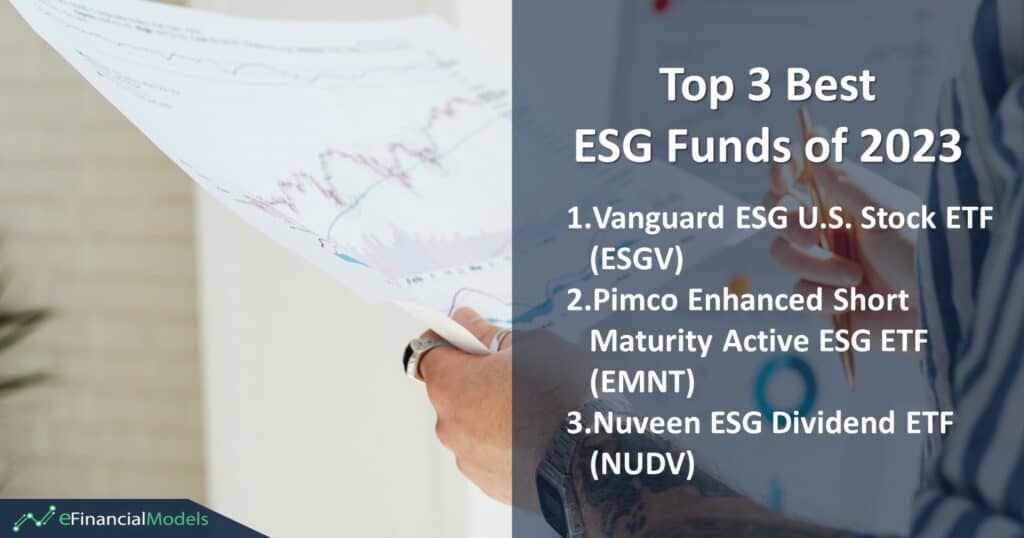
The Top 3 Environmental Social and Governance Funds of 2023
Assessing Environmental, Social, and Governance Funds involves evaluating several factors, including the expense ratio, dividend yield, and average rate of return. The expense ratio represents the annual cost of owning the fund as a percentage of the total assets under management. Lower expense ratios are generally more favorable. Dividend yield measures the annual dividends the fund pays relative to its price and can be a useful metric to assess the income potential of the fund. The average rate of return provides insight into the fund’s historical performance relative to its peers and benchmarks. Based on these factors, Forbes Advisors listed the best ESG funds of 2023:
1) Vanguard ESG U.S. Stock ETF (ESGV)
Expense Ratio: 0.09%
Dividend Yield: 1.26%
Average Rate of Return: 9.91%
Vanguard ESG U.S. Stock ETF (ESGV) is known for its low-cost index funds. It aims to track the performance of the FTSE US All Cap Choice Index, which includes U.S. companies screened for certain environmental, social, and governance criteria. It offers exposure to a diversified portfolio of U.S. stocks that meet specific ESG criteria.
ESGV’s general investment strategies integrate environmental, social, and governance factors into its investment analysis and decision-making process. It evaluates companies based on their ESG performance, which includes factors such as carbon emissions, waste management, labor practices, board diversity, and executive compensation. Companies with better ESG profiles may receive higher weightings in the portfolio. ESGV may exclude certain companies or industries based on specific ESG criteria. For example, it may avoid investing in companies involved in tobacco, firearms, fossil fuels, or other controversial industries. Exclusionary screens help align the portfolio with investors’ values and avoid investments that conflict with their ESG preferences.
2) Pimco Enhanced Short Maturity Active ESG ETF (EMNT)
Expense Ratio: 0.25%
Dividend Yield: 4.01%
Average Rate of Return: 1.20%
Pimco Enhanced Short Maturity Active ESG ETF (EMNT) has been actively managed by PIMCO, a renowned investment management firm, since December 2019. It seeks to provide investors with income and capital preservation while adhering to certain ESG standards. It primarily invests in short-duration, investment-grade fixed-income securities that meet ESG criteria.
EMNT’s general investment strategies focus on short-term fixed-income securities with maturities typically less than one year. The fund aims to minimize interest rate risk and provide investors with stability and capital preservation by investing in shorter-duration securities. EMNT incorporates ESG considerations into its investment process. PIMCO’s research team assesses potential investments’ environmental, social, and governance characteristics and seeks to identify securities that align with their ESG criteria. The fund may consider factors such as carbon emissions, social impact, board diversity, and other relevant ESG metrics.
3) Nuveen ESG Dividend ETF (NUDV)
Expense Ratio: 0.26%
Dividend Yield: 3.00%
Average Rate of Return: -3.34%
Nuveen ESG Dividend ETF (NUDV) is managed by Nuveen, a global investment manager focusing on responsible investing. It aims to track the performance of the TIAA ESG USA Dividend Index, which focuses on U.S. companies with relatively high dividend yields and positive ESG characteristics. It invests in dividend-paying U.S. stocks that meet certain ESG criteria.
NUDV’s general investment strategies seek to identify companies that demonstrate positive ESG characteristics, such as responsible resource management, social inclusivity, ethical business practices, and strong corporate governance. They prioritize companies with sustainable dividend policies and attractive dividend yields. The fund employs exclusionary screening, which may exclude companies involved in industries such as tobacco, weapons, or fossil fuels or those with poor ESG performance.
How ESG Investors Evaluate Companies (Investment Loan Requirements)
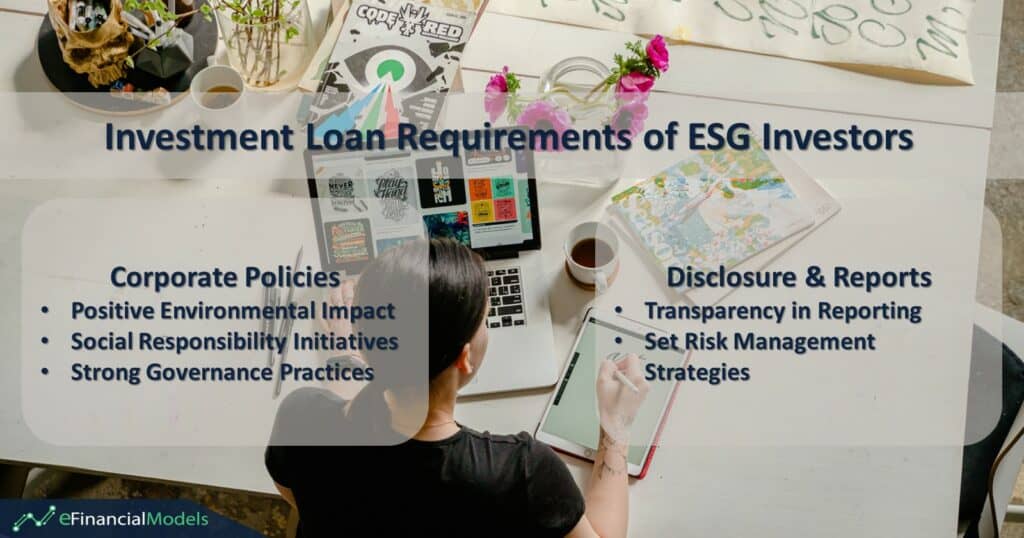
Regarding investment loan requirements, no specific set of criteria universally applies to an ESG investment policy. ESG investors may have their own preferences and expectations when considering investment opportunities. However, here are some general factors that ESG investors might consider when evaluating investment loan requirements:
Corporate Policies & Practices
ESG investors thoroughly analyze a company’s policies, procedures, and practices to determine how well environmental, social, and governance factors are integrated into operations as ESG investment loan requirements.
- Positive Environmental Impact: ESG investors often prioritize companies with a positive environmental impact. They may look for projects or businesses that promote sustainability, energy efficiency, renewable energy, waste reduction, or other environmentally friendly practices.
- Social Responsibility Initiatives: The ESG investment policy also focuses on investments’ social impact. They may consider labor practices, diversity and inclusion, human rights, community engagement, and customer satisfaction. Loan requirements may involve assessing a company’s social responsibility initiatives and their impact on stakeholders.
- Strong Governance Practices: Governance in an ESG investment policy refers to how a company is managed, including transparency, accountability, and ethical behavior. ESG investors often look for companies with strong governance practices, such as independent boards, effective risk management, and responsible executive compensation.
Disclosures & Reports
To gain insights into these areas, ESG investors review company disclosures, reports, and policies such as sustainability reports, proxy voting statements, and codes of conduct. They look for concrete goals, key performance indicators, and transparent reporting on progress.
- Transparency in Reporting: ESG investors value companies that provide comprehensive and transparent reporting on their ESG performance. They may expect companies to disclose their ESG metrics, goals, and progress. Vague or misleading disclosures are viewed negatively. ESG investment loan requirements may involve requesting regular reporting on ESG factors and the impact of the loan on those factors.
- Set Risk Management Strategies: ESG investors may assess a company’s ability to manage ESG-related risks. They might consider factors such as climate change risks, regulatory compliance, supply chain management, and reputation management. ESG investment loan requirements may include evaluating a company’s risk management strategies and practices. Companies that fail to provide stakeholders with meaningful insight into ESG risks and opportunities will likely be passed over in favor of those with a demonstrable commitment to responsible and sustainable business practices.
It’s important to note that the specific loan requirements can vary depending on the investor and their particular ESG criteria. ESG investors may have different priorities and weightings for environmental, social, and governance factors. Therefore, it’s crucial for companies seeking investment from ESG investors to understand their specific requirements and align their loan proposals accordingly.





















































When Should You Consider ESG Funding?
While ESG funding can be a valuable financing option, it’s not necessarily something you should consider only after exhausting all other financing options. Determining whether ESG (Environmental, Social, and Governance) funding is right for your business depends on various factors. ESG funding is typically sought by companies that prioritize sustainability, social impact, and responsible governance practices. Here are some key considerations to help you assess if ESG funding aligns with your business:
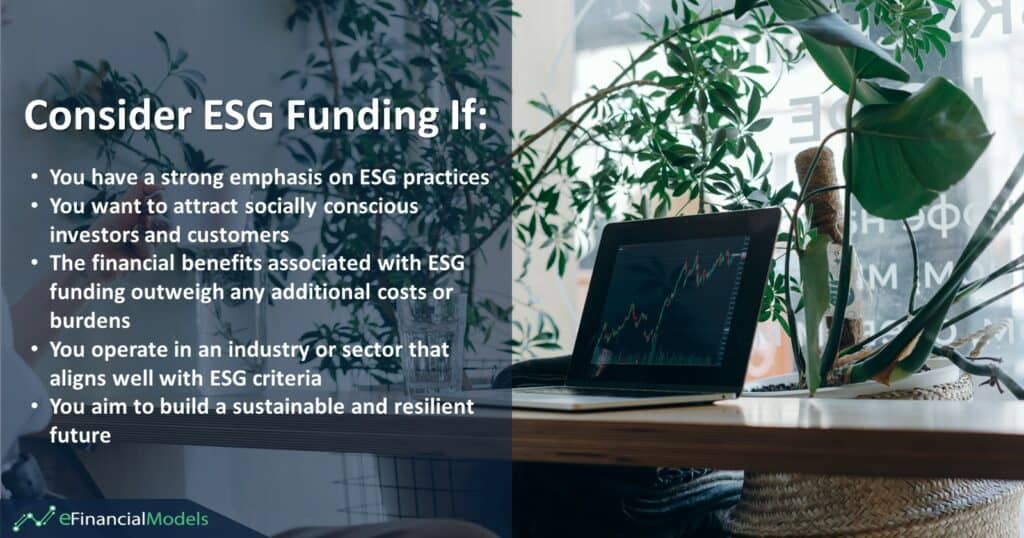
- Alignment with Values: If your company places a strong emphasis on sustainability, social responsibility, and good governance practices, seeking ESG funding early on may be a strategic choice. It can help you attract like-minded investors and stakeholders who share your commitment to these principles.
- Competitive Advantage: Determine if ESG funding can give your business a competitive advantage. By incorporating ESG principles into your operations, you can attract socially conscious investors and customers, differentiate your brand, and potentially enhance your reputation within the industry.
- Financial Impact: Assess the potential financial benefits of ESG funding. While ESG funding can provide access to capital, it may also come with specific requirements or reporting obligations related to sustainability and governance practices. Evaluate whether the financial benefits outweigh any additional costs or burdens associated.
- Market Relevance: Consider whether your business operates in an industry or sector where ESG considerations are highly valued. If your company operates in an industry or sector that aligns well with ESG criteria, exploring ESG funding options can provide access to a growing pool of capital dedicated to these areas.
- Long-Term Strategy: Examine your business’s long-term strategy and goals. If your company aims to build a sustainable and resilient future, ESG funding can provide the necessary resources to support your strategic objectives.
Ultimately, the decision to pursue ESG funding depends on your business’s values, goals, market dynamics, and financial considerations. Evaluating these factors will provide insights into whether seeking ESG funding is the right fit for your business.
Invest in Your ESG Values Through Financial Modeling
Environmental, Social, and Governance (ESG) investing has gained significant popularity recently as investors increasingly consider their investments’ long-term sustainability and ethical impact. Financial modeling can be valuable for analyzing and evaluating potential ESG funding or investments.
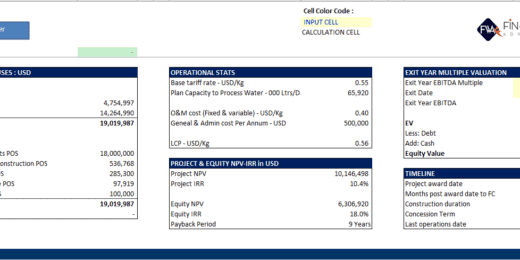
Financial modeling can help companies seeking funding understand the uncertainty associated with ESG-related outcomes and make informed investment decisions. Financial models can clearly articulate investment goals, risk tolerance, and time horizon. They can quantify the financial impact of the identified ESG factors and funding on the investment’s performance.
Additionally, it’s recommended to consult with financial professionals and ESG specialists who can provide expertise and guidance in the financial modeling process specific to ESG investment loan requirements.