
0 ITEMS

Financial Modeling with Excel: Fundraising Plan Tactics

Securing funding is essential for business growth and long-term success, whether launching a startup or expanding an established company.
- Different funding sources include bank loans, venture capital, angel investors, crowdfunding, and grants, each with unique advantages and risks.
- Creating a detailed fundraising plan helps define how much capital to raise, explores potential strategies, and sets clear timelines.
- Financial modeling with tools like Excel enables businesses to assess funding needs accurately and demonstrate financial feasibility to investors.
- A well-structured funding plan increases the chances of attracting investors and ensures the resources needed to reach business objectives.
- Regular review and adjustment of your fundraising approach improve confidence and maximize funding opportunities.
Continuing with the right planning and financial analysis, you can optimize your business’s funding efforts and set the stage for growth.
All About Fundraising
Fundraising involves collecting or soliciting financial support from individuals, corporations, or other organizations. Its main goal is to raise funds to hold up the business’s capital, funding, or operating expenses (OPEX). As it ensures a continuous flow of cash and resources, it helps the company achieve its goals. Whether you’re a startup or an established business, fundraising can provide the financial backing needed to achieve lasting success and growth.
A fundraising procedure will vary from business to business, just like a sales and marketing approach may. When a firm expands, there will be subtle changes in the ideas and processes that underpin the process as well as in communication, practice, and other areas.
Why Need Funding for a Startup Business?
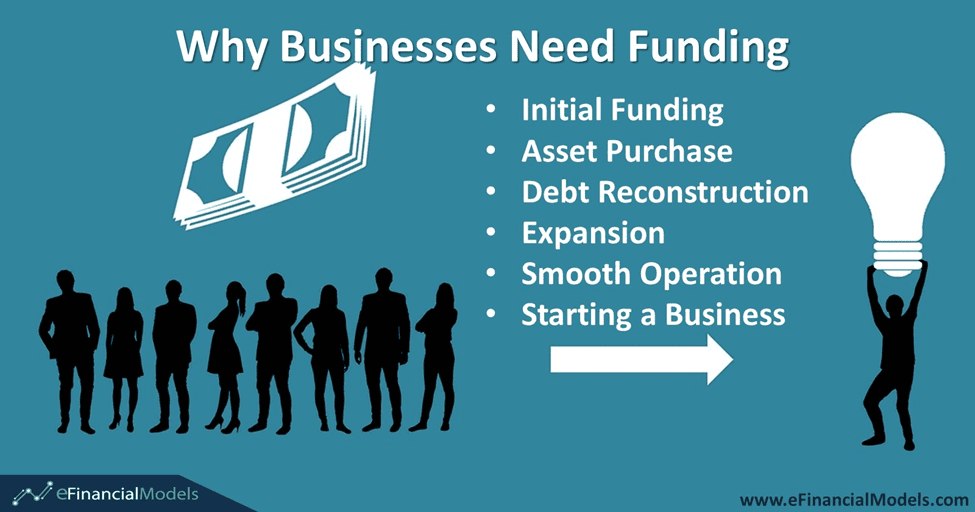
For businesses, fundraising serves as an avenue to achieve different goals. Besides initial funding, the most common reasons why businesses may need to raise funds are:
- Asset purchase. It can be a building, equipment, land, technology, etc.
- Debt Reconstruction. At some point, a business may encounter financial turmoil. Fundraising can help reduce the debt burden to survive.
- Expansion. To increase facility capacity, infrastructure, marketing, production, etc.
- Smooth Operation. Funds are needed to address immediate financial needs and maintain the business operation.
- Starting a Business. A strategy to develop new concepts.
In addition, raising funds allows companies to build relationships with stakeholders, such as investors, donors, and community members. Through this interaction, they can better understand the needs of these individuals and tailor their activities to meet their expectations. Ultimately, fundraising goals for businesses are interconnected, as each objective contributes to the company’s overall success.
Moreover, fundraising supports the growth and sustainability of businesses, helping them provide better products and services to clients and/or customers.















































Types of Funding Sources for Businesses
Funding is the lifeblood of any business, and there are various ways to obtain it. From traditional bank loans to venture capital investments, entrepreneurs have a range of funding sources to choose from for their startup dreams. Some may prefer the stability of a traditional loan, with its predictable payment terms and interest rates. Others may be willing to take more risks in exchange for the potential rewards of equity financing.
1. Bootstrapping
Bootstrapping is the most excellent method of raising capital for those who don’t want to give up any ownership or freedom. It can entail using your savings or getting a mortgage on your possessions. A bootstrapping startup starts a new business with little to no capital. It reinvests its first profits to achieve growth. It puts the entrepreneur in a tough spot as he has to spend every penny carefully without external funding. Yet, its reward is complete control of the business. The key to successful bootstrapping funding is a cost-effective financial plan.
2. Family, Friends, and Fools Funding (3Fs)
The most convenient way to fund a business is through the 3Fs funding sources. Many startups struggle to gain the trust of banks, investors, and lenders because they are new to the industry. With zero credibility, family, friends, or fools can be potential first investors. Most family members and friends will be willing to support an entrepreneur’s business affairs. Fools are not literally dumb individuals. Instead, they are reasonable enough to take the risk of investing at the early stage of a business. The only downside of getting 3Fs funding is that they may lead to ugly conflicts or disputes due to personal differences.
3. Crowdfunding
Use the power of the internet to raise the money you require if you are passionate about a cause. In recent years, crowdfunding websites like GoFundMe have become popular among businesses, inventors, and the general public. They’re simple to set up, and if you can express your enthusiasm in the description of your fundraiser, you can win the support of individuals worldwide. Financing using a pool of interested investors can work under a debt, donation, product-based, or equity scheme. Its main advantage is attracting an audience of potential customers besides getting funds. Yet crowdfunding may be subject to capital market rulings and extensive compliance requirements.
Crowdfunding may not apply to all businesses. A crowdfunding platform business plan model can help you with the financial feasibility study if that funding source fits your company.
4. Angel Investors
In exchange for convertible debt or ownership equity, angel investors can contribute money to a startup company. Angel investors, often known as business angels, are typically wealthy private individuals more experienced with the entrepreneurial path and its common difficulties. They invest for personal reasons, like the excitement of being part of innovative ideas, witnessing entrepreneurial journeys, or targeting abnormal returns in exchange for higher-risk investments. The drawback is that the ticket sizes could be small, and it might take numerous angel investors to provide the needed money.
5. Startup Grants for Small Businesses
Startup grants for small businesses don’t need to be paid back. They are usually available from endowment funds, governments, or non-profit organizations. Grants are easier to obtain and have different criteria from traditional banks and lenders. However, they are limited to specific and very strict compliance requirements.
6. Venture Capitalists
Venture capitalists (VC), like angel investors, fund emerging businesses and startups with significant development potential. Yet, they often offer finance that frequently has greater rates of return. Typically, a VC invests as a General Partner under a Limited Partnership scheme for 7 to 10 years. It is essential to note that the scheme may require an exit event where the VC can sell the company to realize a financial return.
7. Private Equity
Investment partnerships that acquire and run businesses before selling them are private equity (PE) firms. They manage investment funds from accredited and institutional investors. A private equity firm typically engages in buyouts to overhaul a company and sell them. Depending on the abilities and goals of the private equity firm, an acquisition may increase a company’s competitiveness or burden it with unmanageable debt. It is also essential to note that investing in a private equity firm takes significant financial due diligence.
8. Bank Financing
Banks provide capital to businesses, consumers, and investors through debts, loans, or financing arrangements. Such a funding source allows companies to purchase products and resources to achieve their goals. Yet bank financing can be challenging because of the standard criteria they follow. These may include:
- a solid business and financial plan
- collaterals
- guarantees or guarantors
- track record of stable cash flows and profits
Whether you’re looking to bootstrap your business with your savings or secure a loan through a government program, the key is understanding your options and choosing the funding strategy that makes the most sense for your unique situation. Ultimately, the correct type of funding can be the difference between success and failure for your business.

Creating a Solid Fundraising Plan
Creating a fundraising plan is essential for any business because it helps ensure the company has the necessary resources to achieve its goals and objectives. With a solid funding plan, a business may obtain the capital required to start and grow, or it may be able to sustain its operations over time.
A fundraising plan outlines how you are going to raise funds. It is ideally a written document that will guide you with your fundraising strategies. It doesn’t have to be elaborate or too long. A simple fundraising model calculates the funding required and returns each investor can expect. At the very least, a plan for fundraising should answer these three questions:
- How much capital will you raise?
- How will you go about raising funds?
- When are you raising capital?
Step 1 – Identify Your Resources
Are you operating your business without a funding plan? Seriously, sitting for a few days or a week and materializing it is worth your time. Ideally, you must revise or rewrite your fundraising plan yearly. The management or development team should write the fundraising plan and execute it. Other companies can seek help from a custom financial modeling professional.
The first step is identifying what you currently have to help you with your fundraising plan. Identifying your resources is essential, as these will help you determine your financial needs and funding options. Here are some steps to identify your resources:
Start by creating a comprehensive list of all your tangible and intangible assets, including brand recognition, cash in the bank, equipment, intellectual property, product inventory, physical properties, etc.
Then you must identify your revenue streams and operating expenses to assess your creditworthiness. Most banks, investors, lenders, and other funding institutions may require you to present the following financial statements:
- Income Statement: An annual income statement shows the company’s revenues and expenses during a specific period, usually a month or a year. It helps investors understand the profitability of the business.
- Balance Sheet: The balance sheet shows the company’s assets, liabilities, and equity at a specific point in time. It helps lenders evaluate the financial health and liquidity of the business.
- Cash Flow Statement: A cash flow projection template shows the company’s inflows and outflows of cash during a specific period, usually a month or a year. It helps investors understand the company’s ability to generate and manage cash flow.
- Financial Ratios: Lenders may also calculate various financial ratios to evaluate the company’s performance and creditworthiness, such as the debt-to-equity ratio, the current ratio, and the return on investment.
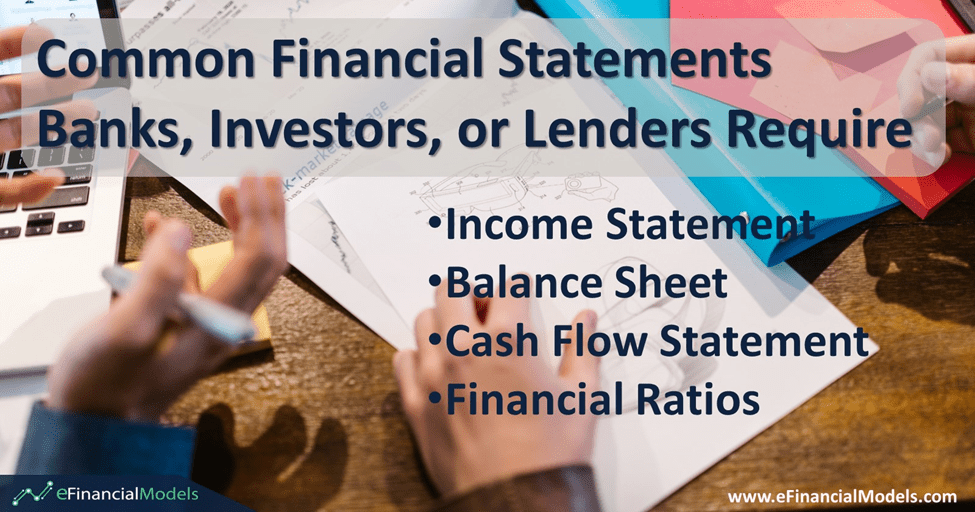
These financial statements will help you make accurate and informed decisions on how much your company needs and can pay for funding capital projects. They can also increase the chances of securing the financing you need to grow and succeed.
Step 2 – Define Your Fundraising Strategies
The next step is determining how, when, and who will raise the total amount. You must go into detail here and define a goal for each strategy. There is plenty of ways to raise funds. The key is determining what will give the most value to your investment. Knowledge of the different types of funding sources can help.
Defining your funding strategies involves identifying your financial goals, understanding your funding options, and developing a plan to achieve those goals. Here are some steps you can take to define your funding strategies:
- Determine what you want to achieve, such as raising capital to start a business, financing a new project, or expanding an existing operation.
- Understand your funding options based on their pros and cons and suitability for your business needs.
- Outline your funding needs and sources.
- Set the timeline for raising the necessary funds and identify who’s in charge.
The key to defining your funding strategies is to be strategic, flexible, and proactive in identifying and pursuing funding opportunities that align with your financial goals and business needs.

Step 3 – Put Your Fundraising Plan in a Financial Model Template
Many organizations stumble here. They typically assess their existing resources and define their fundraising strategies but need a project management template to track their implementation. It’s like putting your fundraising plan on the calendar.
A funding plan template can help you track and implement your funding plan by providing a structure to organize your thoughts and ideas. It can help you identify the information you’ll need to track and report back on as you implement your plan. When you map out the work over time, a fundraising plan feels much more doable. Set deadlines—think of them as mileposts where you can gauge your success.
Use whatever tool works best for you. For example, you can use a blockbuster product financial fundraising model template to raise funds and set up the production capacity for market launch. You can also use an Excel fundraising project plan template to map a fundraising event. You can also use downloadable spreadsheets or paper calendars, whatever may work best for you.
Step 4 – Confidently Implement Your Fundraising Plan
Be prepared to pitch your business ideas to potential investors and lenders. Confidently reach out to them and showcase your business potential using your feasibility study and financial analysis. Implementation does not stop with execution. You should carefully monitor and adjust your fundraising plan as needed.
Creating an accountability system while implementing your fundraising plan can lead to success. Hold regular check-ins to share information and unblock challenges. Once you do succeed, let everyone on the team celebrate the victory. If you fall short, take it as a time to assess what needs improvement in your approach.

Set Yourself Up for Success with a Solid Fundraising Plan
No matter where you’re in your fundraising journey, having an organized funding plan is integral for increasing the likelihood of achieving financing. A solid business funding plan that outlines the apparent purpose of the venture and details on how to use the capital is essential for success. Such a plan can make all the difference when presenting to investors and help distinguish your proposal from others.
Creating a funding strategy should be seen as something other than a one-time task; entrepreneurs should develop multiple plans with different focus areas to cover their bases and capitalize on any opportunity to make their pitch most captivating to investors. Although this process requires significant effort, the return can be substantial.
However, if you feel you need more confidence in creating one yourself, plenty of valuable resources like fundraising model templates are available. Don’t let a lack of confidence stop you from raising funds for your business. Take advantage of existing tools that are accessible to you and use them to create the best pitch possible!














You might also like:
- 10 Tips to Develop a First Class Business Valuation Report
- 10-Step Financial Planning Checklist for Smart Executives
- 12 Funding Sources for Businesses and Startups
- 5 Practical Tips to Help Raise Funds For Startups
- How to Build a Capitalization Table
- How to Raise Series A Funding?
- Cash Flow Analysis in Excel
- Financial Planning for Small Business Owners – Taking an SBA Loan
- Financial Forecasting Models by eFinancialModels
- Financial Modeling for Startups and Small Businesses
- Business Valuation
- Investment Management
- Renewable Energy
- Scenario Analysis
- Startups Financial Models
- Simple Fundraising Model
- How to Prepare a Financial Plan for a Chicken Egg Farm?
- Achieve Financial Success By Knowing Your Business Plan Model
- Financial Modeling using Excel
- Funding Strategies for a Sustainable Business