0 ITEMS

Bespoke vs DIY Financial Models: When Founders Should Hire
Yes, eFinancialModels develops bespoke financial models from scratch, and the right moment to commission one is when the business stops fitting a do-it-yourself template or an investor is about to test every assumption. This guide sets out how the two routes differ, what a bespoke build adds, and what the decision costs in an illustrative scenario.
Key Takeaways
- A template is designed for an average business and bent to fit, while a bespoke model takes its shape from the company’s own revenue logic.
- A bespoke build can be designed around scenario switches, documented assumptions and built-in checks, the points an investor review tends to probe.
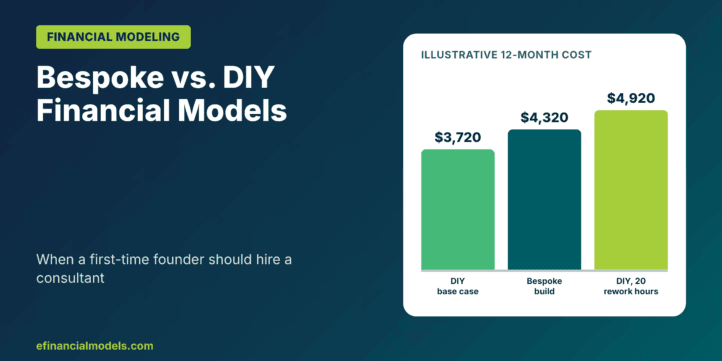
- In the illustrative 12-month scenario ($60 per hour, $120 template, $3,000 fee covering revisions, stated hours), bespoke costs less once rework passes 10 hours.
- Several revenue streams, an imminent investor review, board-level scenarios or scarce founder hours are the four signals to hire.
- eFinancialModels offers customized modeling services, from refining an existing model to developing a new one from scratch, scoped after a consultation.
How a DIY Template Differs From a Bespoke Model
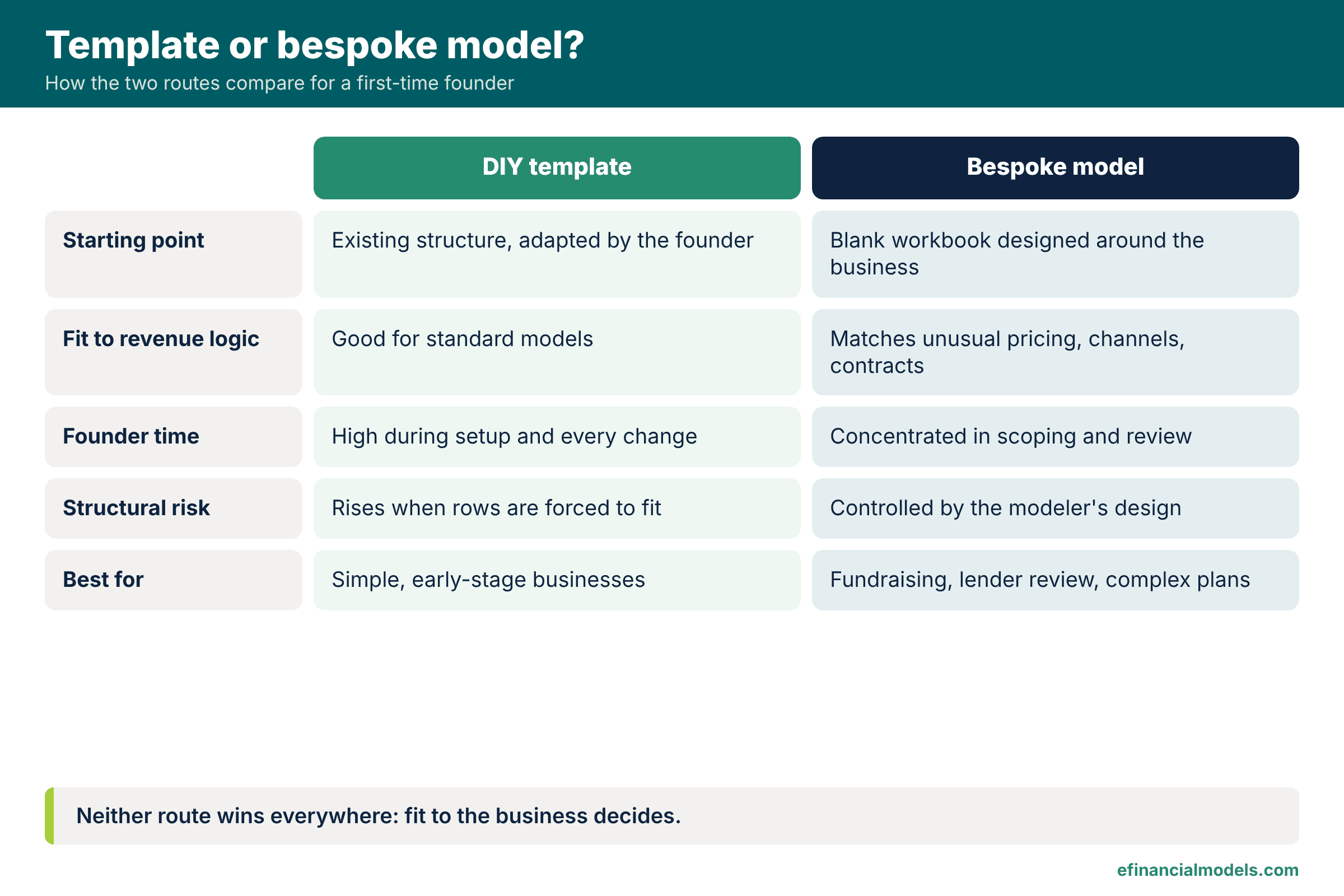
A do-it-yourself (DIY) template is a finished workbook built for a typical business: fixed revenue lines, a standard cost block and a set layout. The founder’s job is to make the company fit the rows. A bespoke model works the other way round. The modeler starts from a blank workbook and lets the structure follow the business: how customers are won, priced, billed and retained, and how costs climb as volume grows.
What a DIY Template Does Well
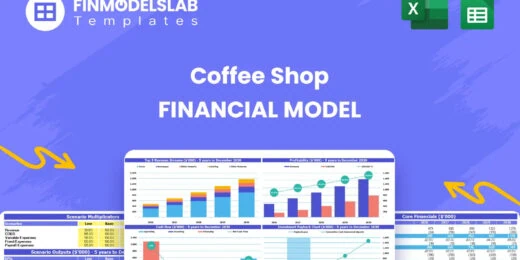
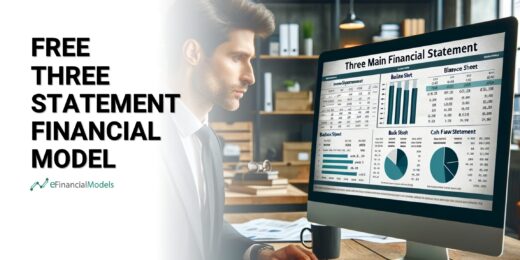
Templates win on speed and price. A founder who fills one in learns first-hand which assumptions move the result, and a conventional business rarely needs more than a clean layout covering the income statement, balance sheet and cash flow statement. The startup financial model collection on eFinancialModels gives those founders a structured starting point.
The trouble begins when the business outgrows the structure. A subscription company that also sells hardware, for example, soon carries hand-typed overrides that nobody can audit, and each override is a place where a figure can quietly go wrong until an investor asks.
What a Bespoke Model Offers
A bespoke model reduces those weak points by design rather than by patching. Five features set it apart:
- Revenue logic that matches the contract. Usage tiers, annual prepayments, milestone billing or marketplace commissions each get their own driver instead of a forced fit into a generic sales line.
- Scenario switches. Base, downside and funding-round cases run from a single input sheet, so a board question is answered by changing a switch rather than rebuilding the model.
- Separated inputs, calculations and outputs. A reviewer can trace every number to its origin and change an assumption without touching a formula.
- Built-in checks. A balance check and a cash reconciliation flag an error before an investor finds it.
- Documented assumptions. Each input carries a source and an owner, the two things a reviewer asks about first.
These features earn their keep because cash is a founder’s first problem, not the last one. In the Federal Reserve’s 2024 Small Business Credit Survey, more than half of small employer firms cited paying operating expenses (56 percent) or uneven cash flows (51 percent) as challenges. A monthly cash line that follows the actual billing terms, rather than a template’s straight-line sales row, is the part of a bespoke build that answers that problem, and a forecast a lender can trace line by line is the founder’s strongest lever when the next financing round comes.
Illustrative Scenario: Template Rework Versus a Scoped Build
This scenario is hypothetical and uses assumed inputs, not data from a real client. Founder A buys a template and maintains it alone. Founder B pays a modeler an assumed project fee, quoted once the scope is agreed, for a custom build and then reviews the result. The fee is assumed to cover any revisions needed before fundraising.
Assume a founder’s time is worth $60 per hour and that both founders run the model for 12 months. The DIY base case assumes the template fits the business; the rework case allows for the overrides and structural fixes an ill-fitting template tends to need.
| Assumption | DIY template | Bespoke build |
|---|---|---|
| Purchase price or assumed project fee | $120 | $3,000 |
| Setup or scoping and review hours | 12 | 10 |
| Upkeep hours per month | 4 | 1 |
The calculation follows from those inputs:
| Line | DIY template | Bespoke build |
|---|---|---|
| Founder hours | 12 + (4 × 12) = 60 | 10 + (1 × 12) = 22 |
| Time cost at $60 per hour | 60 × $60 = $3,600 | 22 × $60 = $1,320 |
| Purchase price or assumed project fee | $120 | $3,000 |
| Total cost | $3,600 + $120 = $3,720 | $1,320 + $3,000 = $4,320 |
- Gap: $4,320 − $3,720 = $600.
- Break-even rework: $600 ÷ $60 = 10 hours.
Now assume the template needs 20 extra rework hours before a fundraising round, on top of the base case:
| Line | DIY template with rework |
|---|---|
| Founder hours | 60 + 20 = 80 |
| Time cost at $60 per hour | 80 × $60 = $4,800 |
| Total cost | $4,800 + $120 = $4,920 |
| Difference from the bespoke total of $4,320 | $4,920 − $4,320 = $600 |
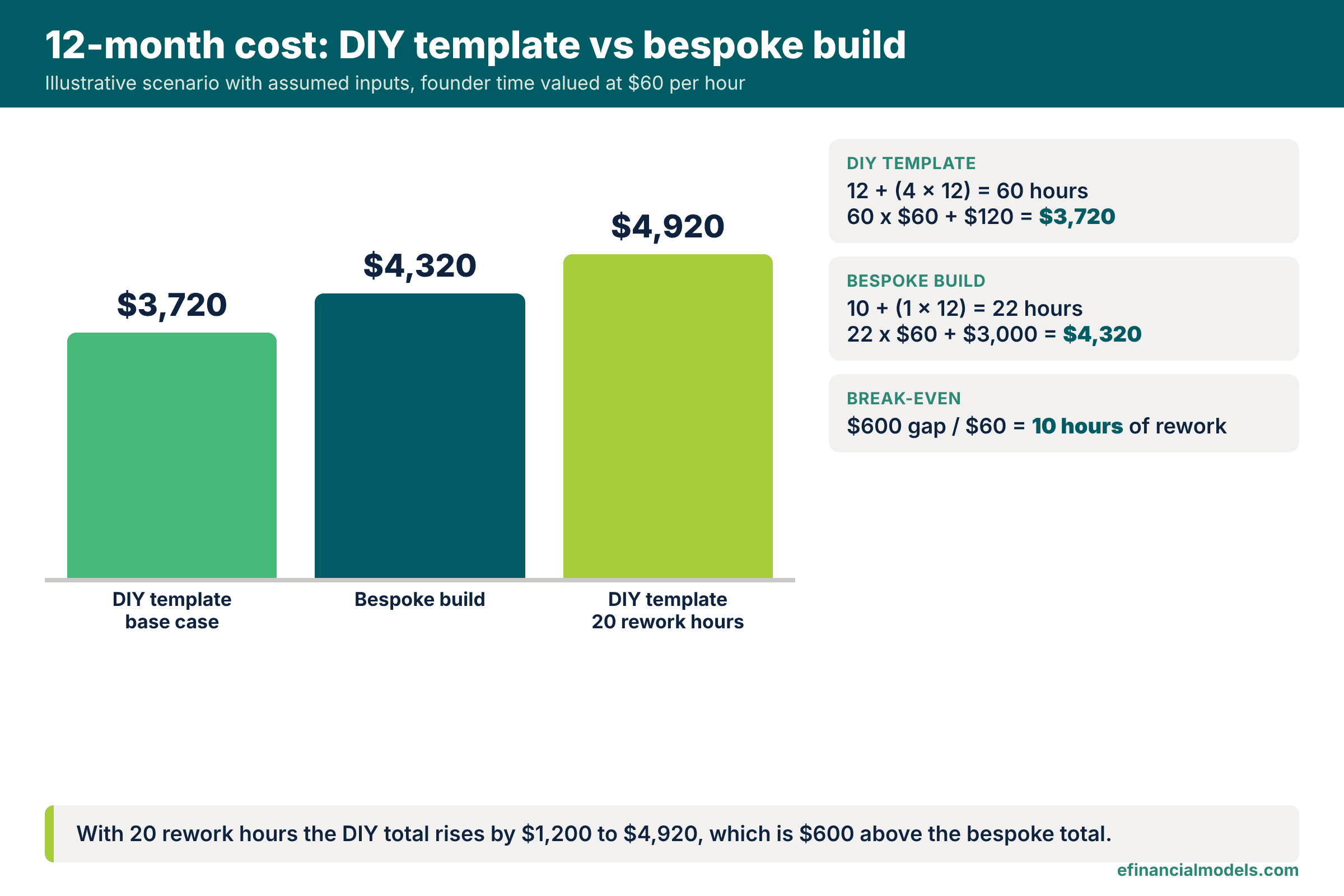
Founder A comes out ahead while the template fits and rework stays under 10 hours. Founder B comes out ahead once rework passes the 10-hour break-even, and the margin widens with every hour after that.
When a First-Time Founder Should Hire a Modeler
Hiring makes sense when at least one of these triggers applies:
- An investor or lender will review the model within weeks.
- The revenue model combines several streams, such as subscriptions, services and hardware.
- The model must support board-level scenarios rather than a single forecast.
- The founder’s hours are worth more on product and sales than on spreadsheet maintenance.
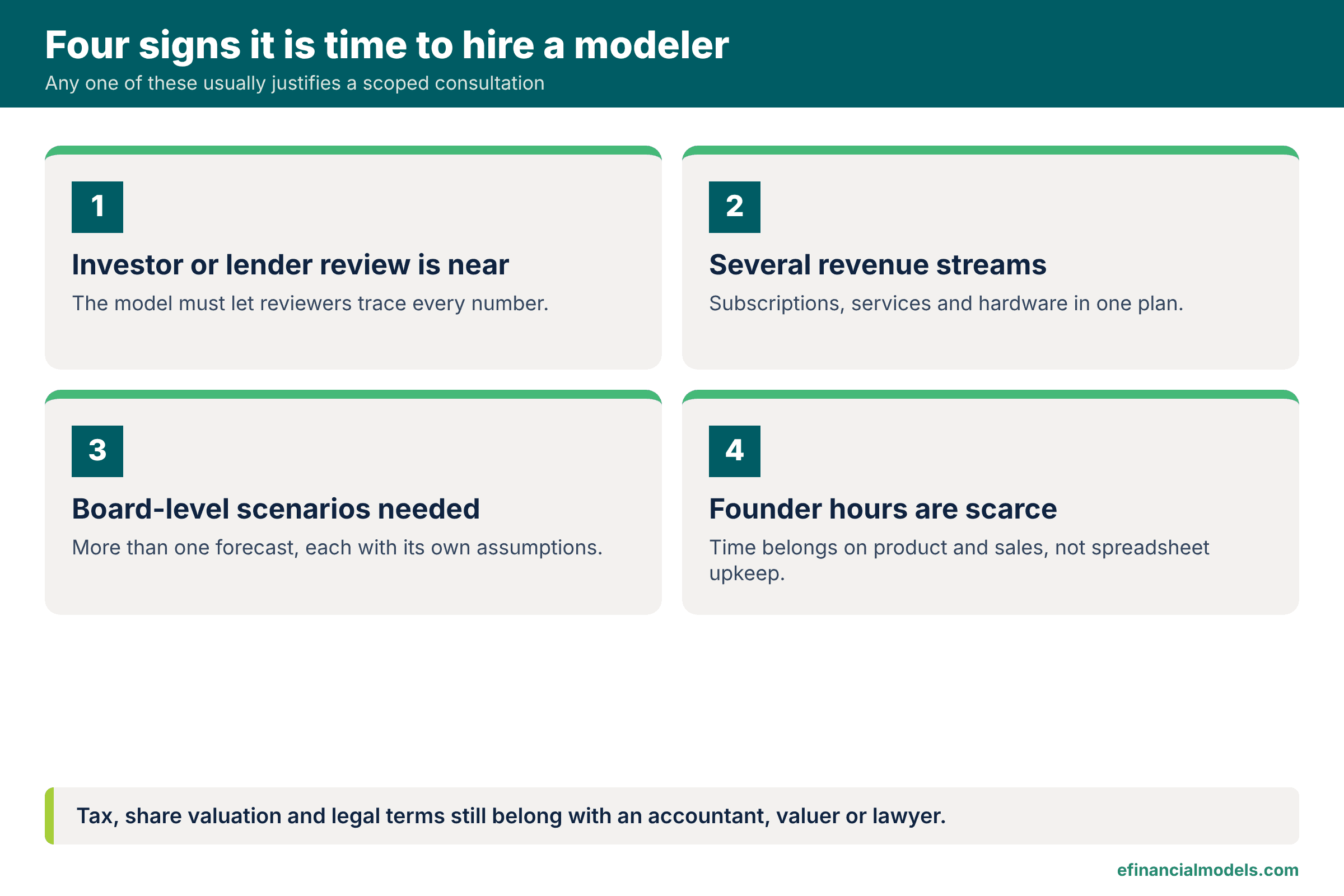
Whichever trigger applies, the brief should state who owns the assumptions and confirm that the founder keeps full editing rights after delivery. A fixed-scope fee suits a full build, whereas hourly blocks suit small fixes. Tax treatment, formal valuation opinions for tax or regulatory purposes, and legal terms fall outside a modeler’s remit, so those questions belong with an accountant, a licensed valuer or a lawyer.
Does eFinancialModels Build Fully Bespoke Models From Scratch?
Yes. The Expert Financial Modeling Services listing offers customized financial modeling services from the eFinancialModels team, whether a founder needs to refine an existing model or develop a new one from scratch. The work is sold in blocks of time, from a single hour to two full days, and three service types are available: a quick review of an existing model with a discussion call, a half-day or full-day modeling service, and a custom development service.
Every engagement starts with a consultation about assumptions and requirements. The founder uploads any existing files, and the team confirms the estimated time and budget before work begins. Final pricing follows that estimate, so the $3,000 project fee in the scenario above is an assumption for illustration, not a quoted price. Founders who want to compare scopes can also browse the services listed under Custom Financial Modeling Services.
Conclusion
A template suits a simple business and a founder with spare hours. A bespoke model suits a company whose pricing, billing or funding plan will not squeeze into fixed rows, and it gives investors a workbook they can audit. First-time founders can request a scoped consultation through the Expert Financial Modeling Services listing on eFinancialModels, which covers reviewing an existing model, refining it, or developing a new one from scratch.
Frequently Asked Questions
How long does a bespoke model take to build?
No single duration fits every project, because the timeline depends on how many revenue streams, scenarios and statements the workbook must contain. A modeler normally gives a time estimate only after reading the founder’s specifications and any existing files. Founders can shorten the process by sending a one-page summary of pricing, costs, hiring plans and funding goals before the first call, since the modeler cannot start without them.
Can a founder start with a template and upgrade later?
A founder can start with a template and upgrade later, and many do. The template teaches which assumptions matter, and a modeler can then adjust it or rebuild the weak parts instead of starting blind. The main risk is the stack of hand-typed overrides accumulated during early use. Founders should log every manual change in a short notes sheet so the modeler can separate genuine business logic from temporary patches.
What should a founder prepare before contacting a modeler?
Preparation should cover four items: current pricing and expected sales volumes, a list of fixed and variable costs, a hiring and funding timeline, and any existing spreadsheet. A short description of the audience also helps, such as a seed investor, a bank or an internal board. Clear answers let the modeler quote a fixed scope and avoid open-ended hourly work during the build.
How can a founder check a delivered model for quality?
A founder can run three quick tests. First, change one input, such as the monthly price, and confirm that every dependent figure moves as expected. Second, look for a check cell that confirms the balance sheet balances. Third, ask the modeler for a walkthrough call and request that each formula cell remain live, not pasted as values. A model that fails any of these tests needs revision before investors see it.
How should a founder vet a modeler’s past work?
Testimonials prove little unless they name the scope, the deliverable and the outcome. Founders can ask for a reference call with a past client, a sample of the workbook layout with confidential figures removed, a description of what changed after delivery, and confirmation that the model survived investor review. A modeler who cannot show a structured sample is a risk regardless of price.