

0 ITEMS

Small Business Acquisition Financial Model: SBA 7(a) Loan, Seller Note, Earn-Out, DSCR, Canada BDC and Vendor Take-Back (HVAC, Plumbing, Home Services)
Monthly Excel model for buying an owner-operated business with debt. Six deal structures in one file for the United States and Canada: SBA 7(a) with a standby or amortizing seller note, a bank loan with seller note and earn-out, a Canadian bank loan with BDC and a vendor take-back, and an investor-backed purchase. Built on the SBA rules in force from October 1, 2026, with lender tests, a side-by-side comparison of all six structures and trade presets for HVAC, plumbing, electrical and landscaping.
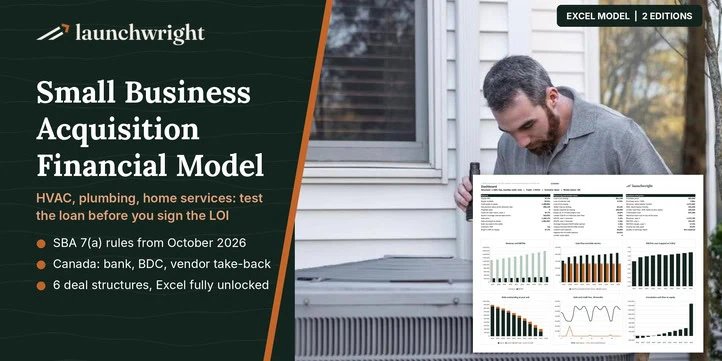
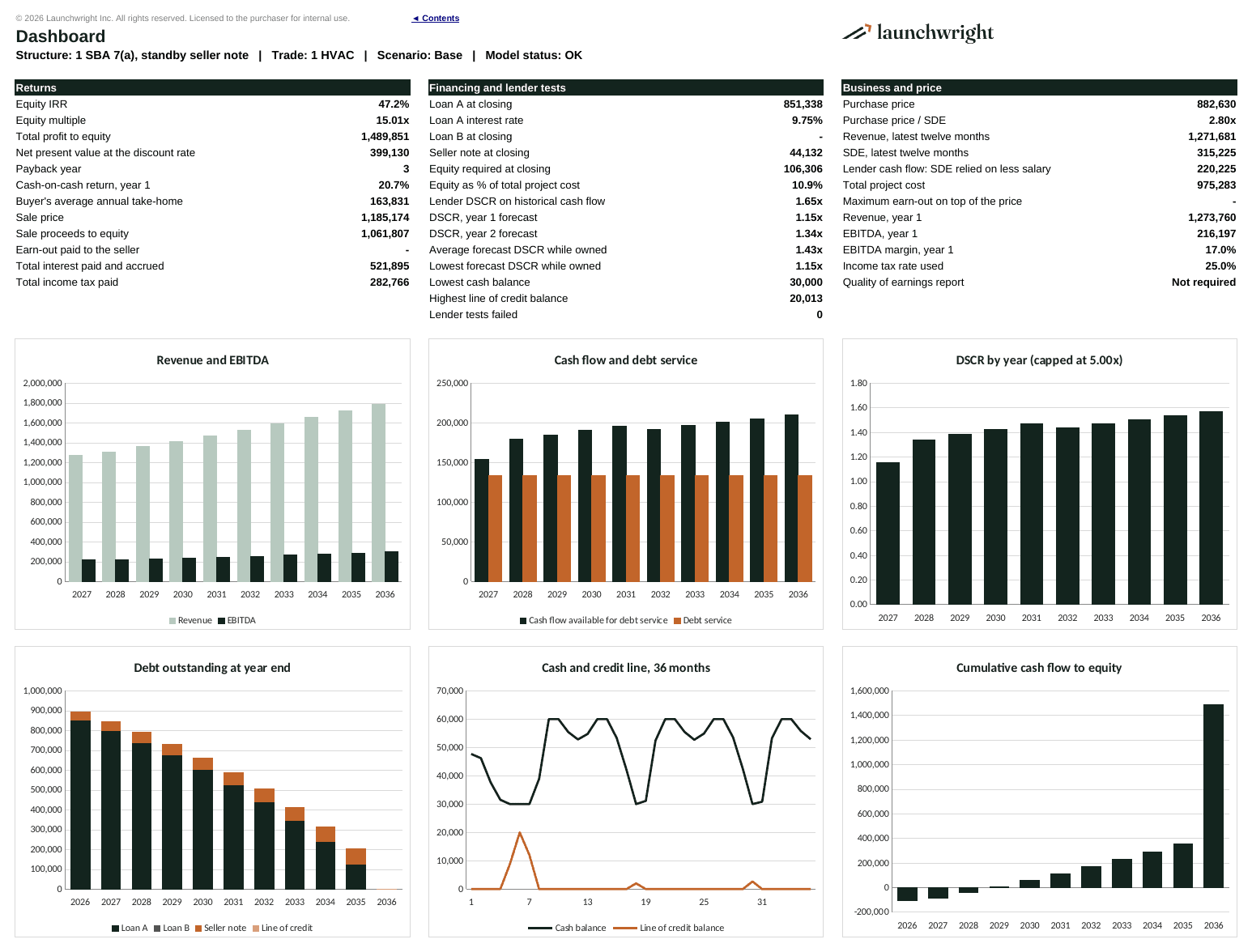
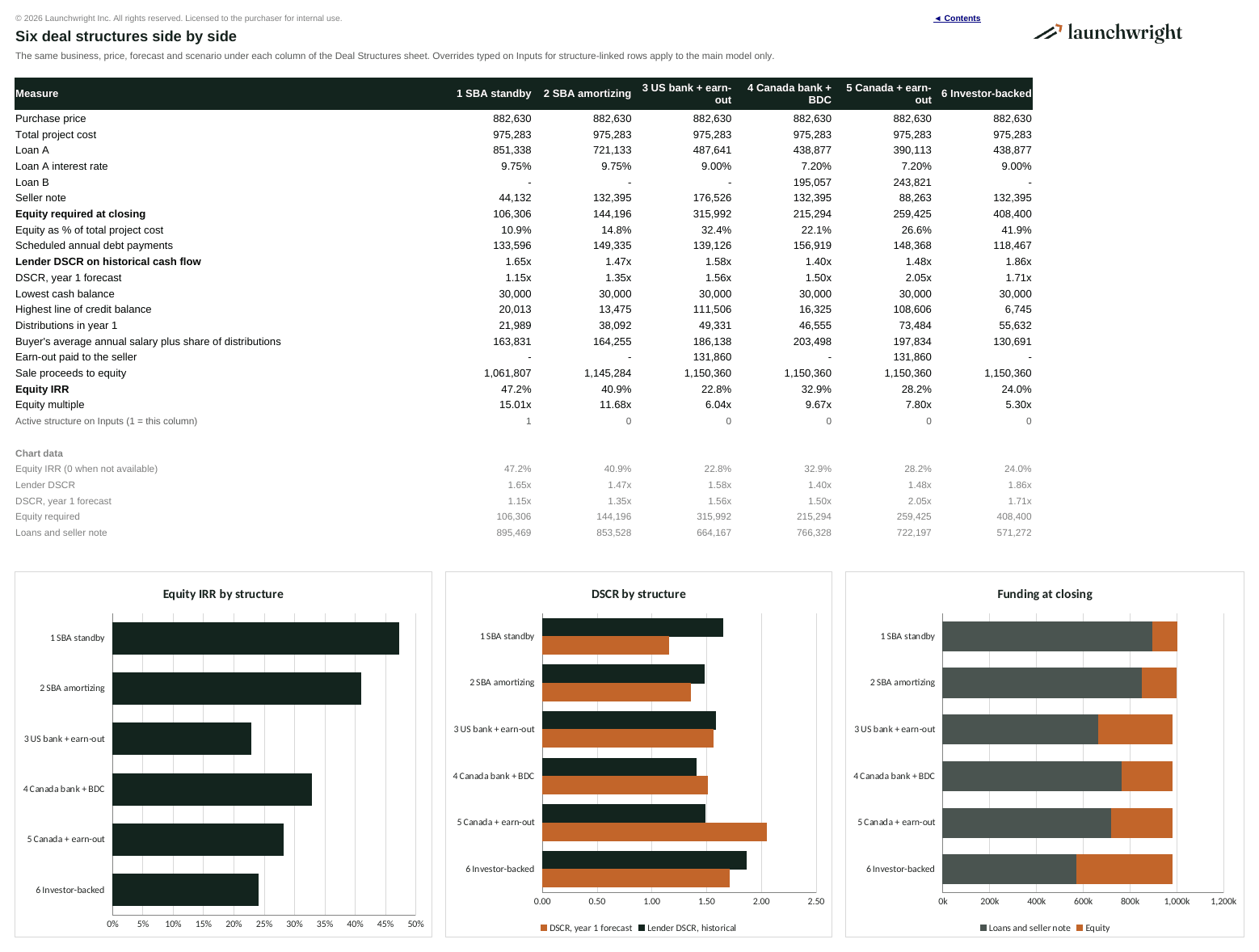
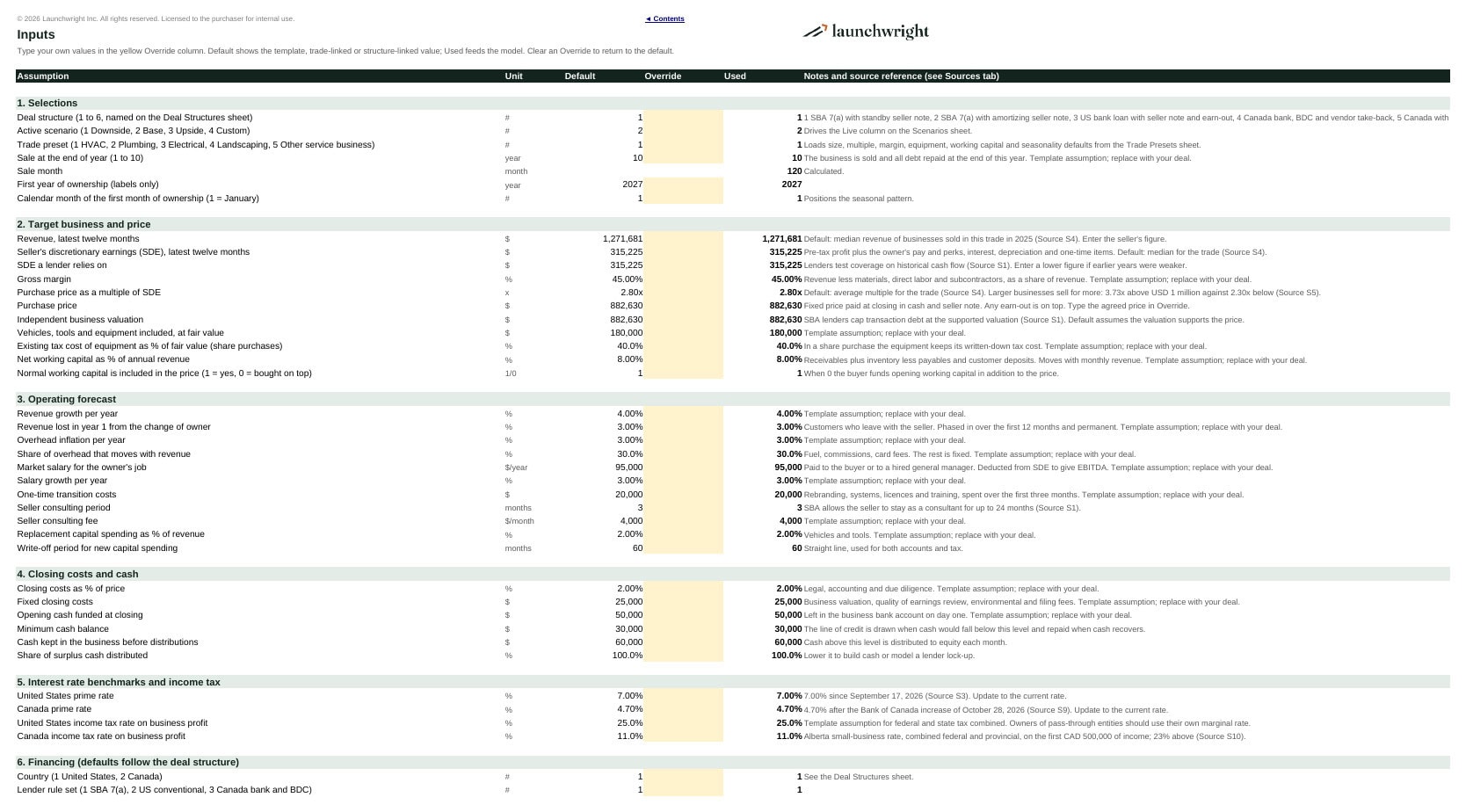
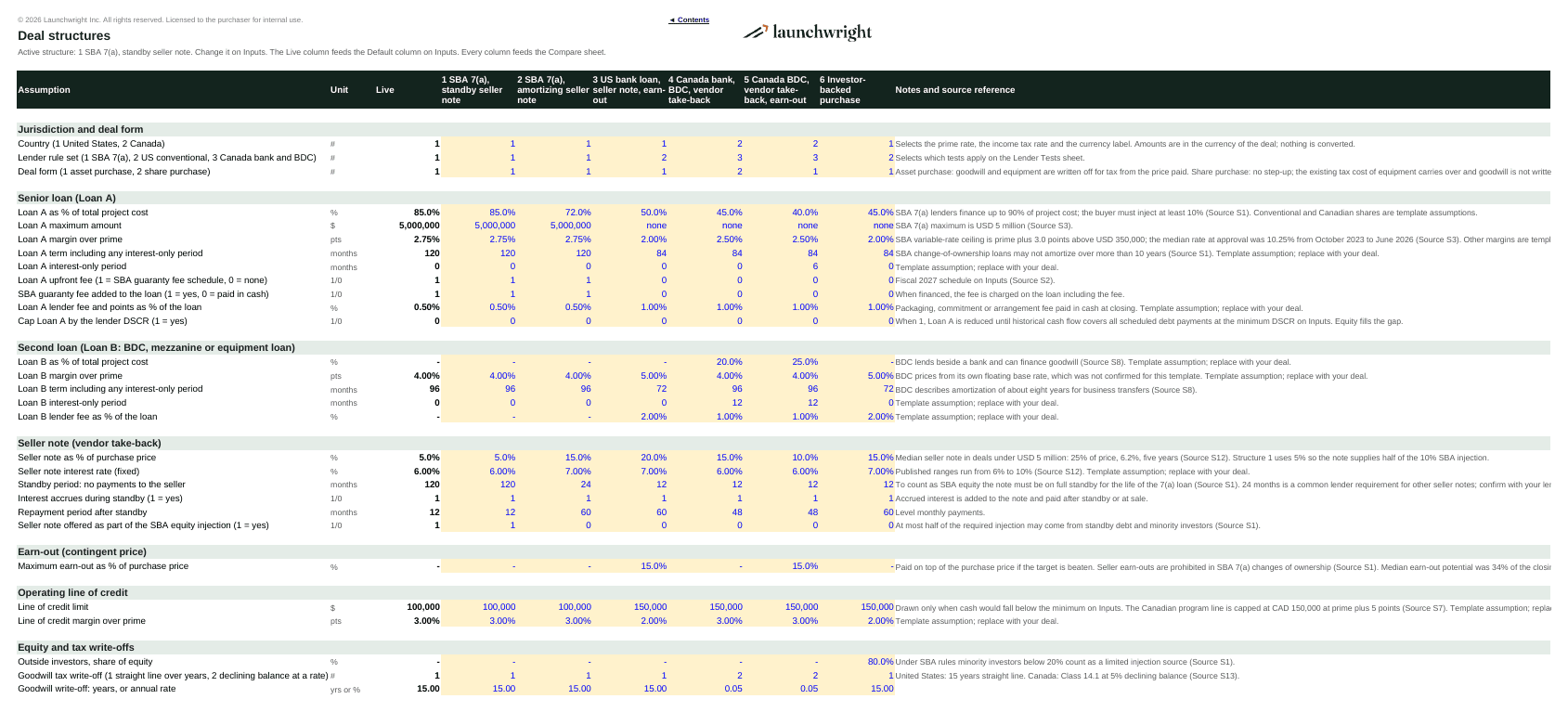
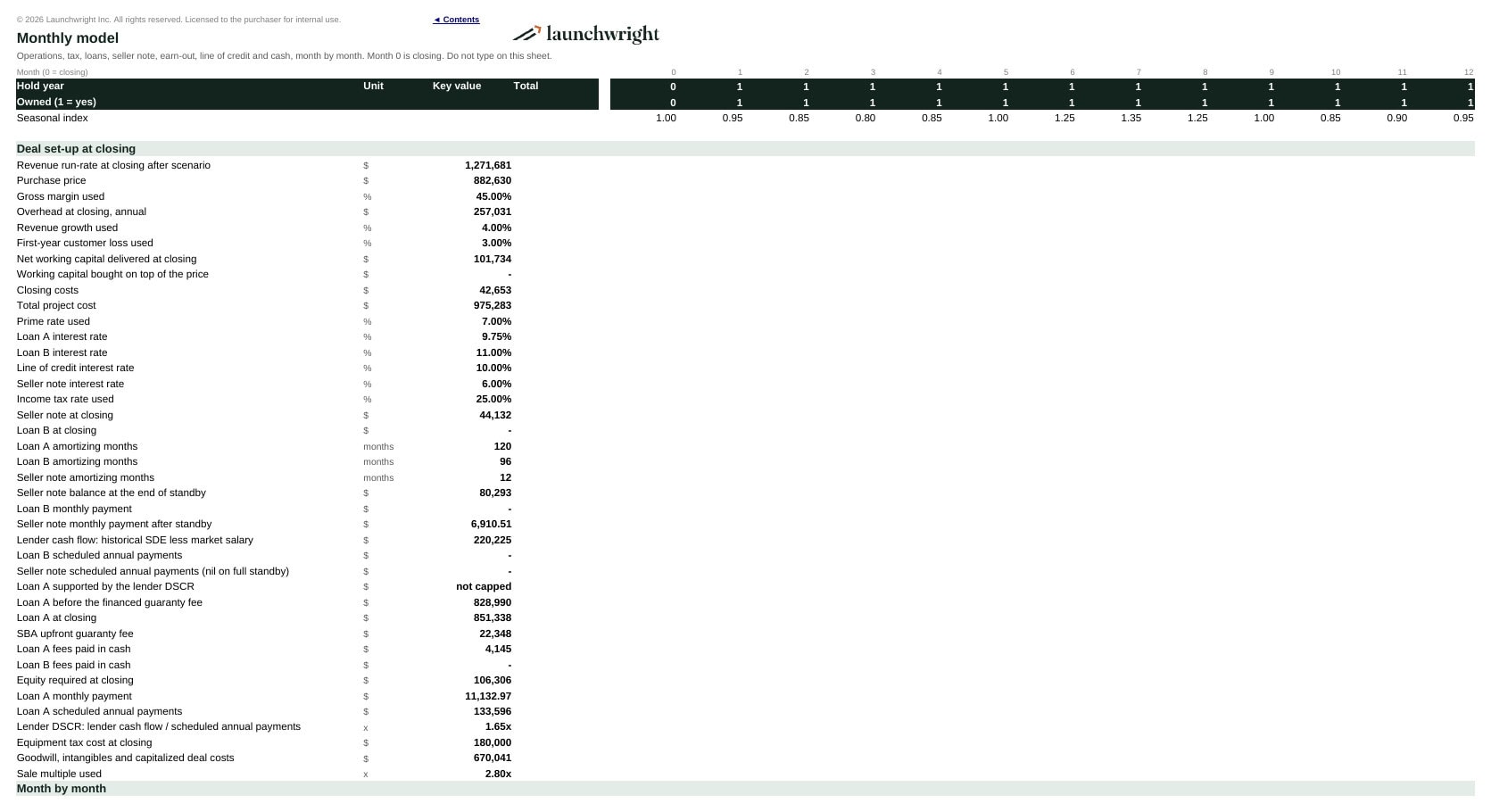
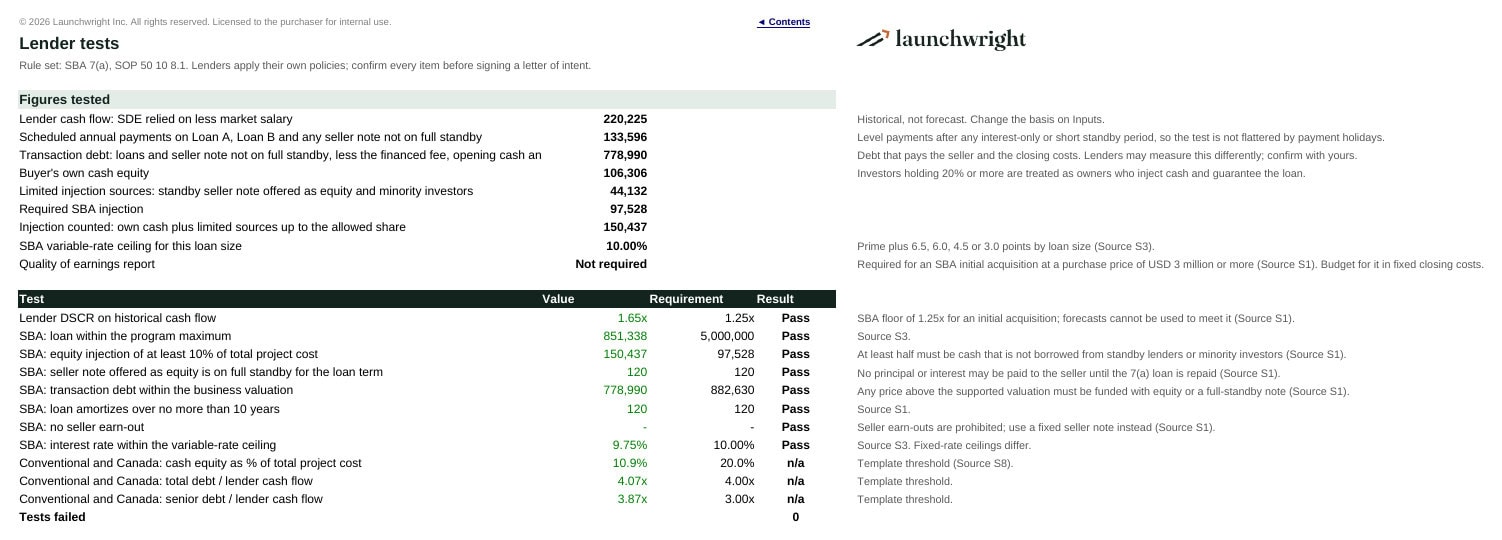
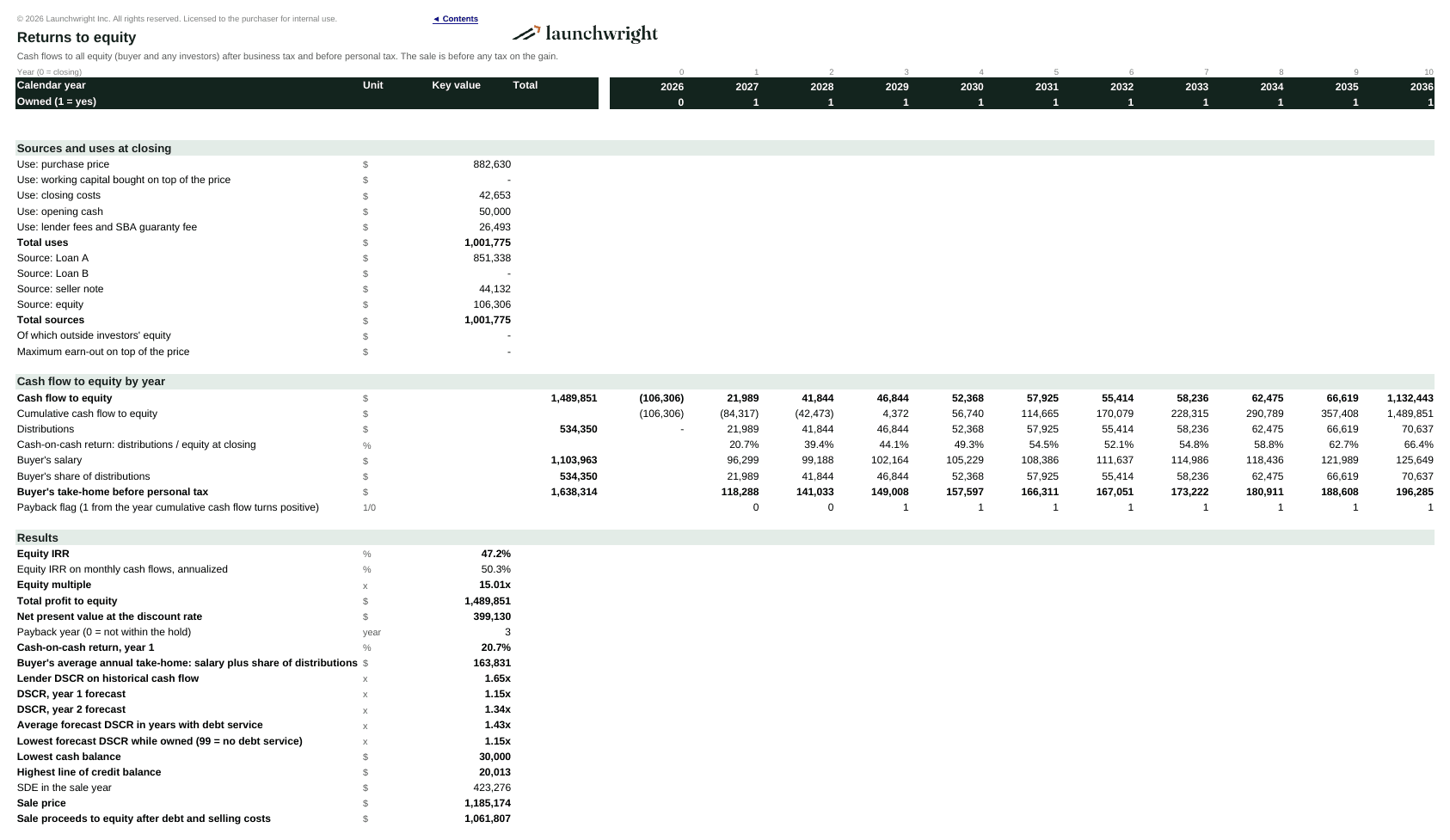
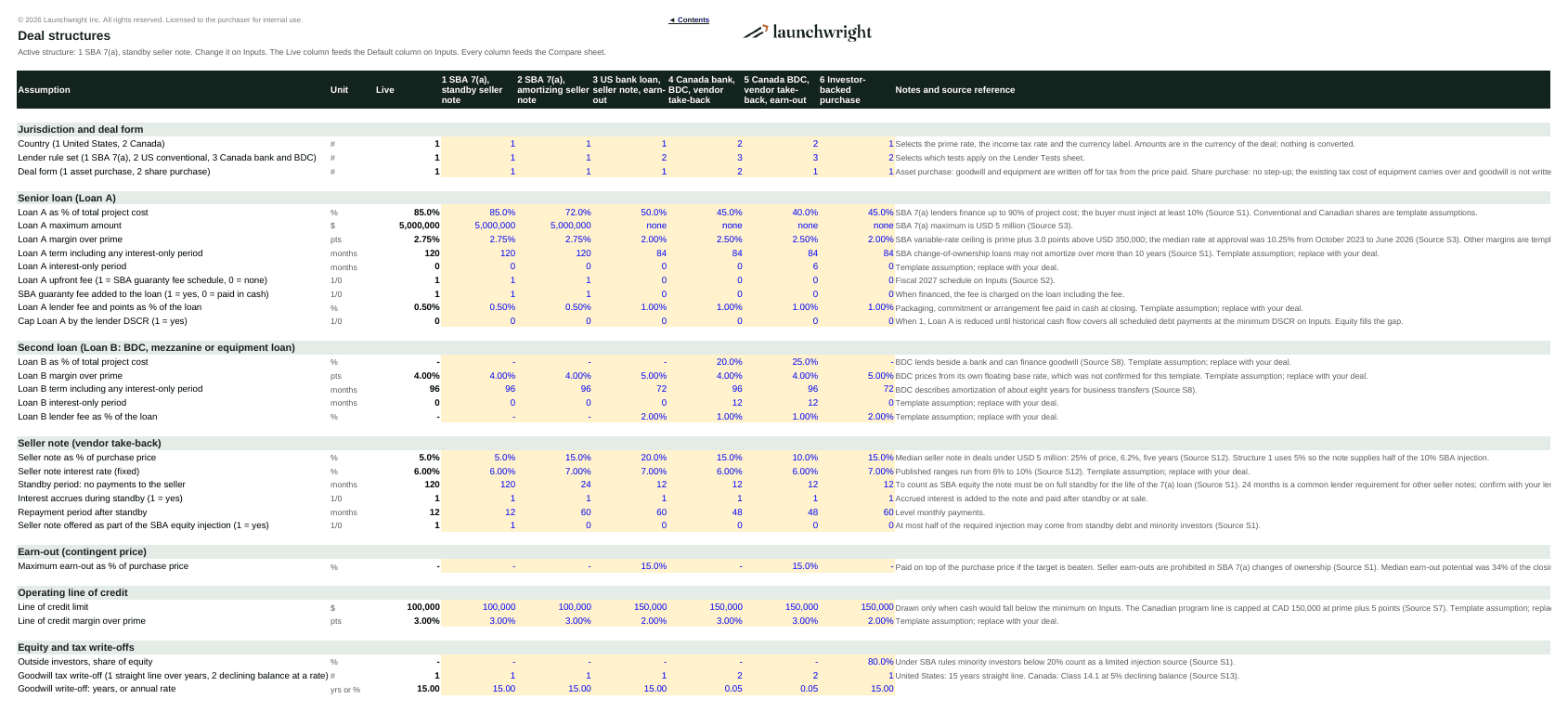
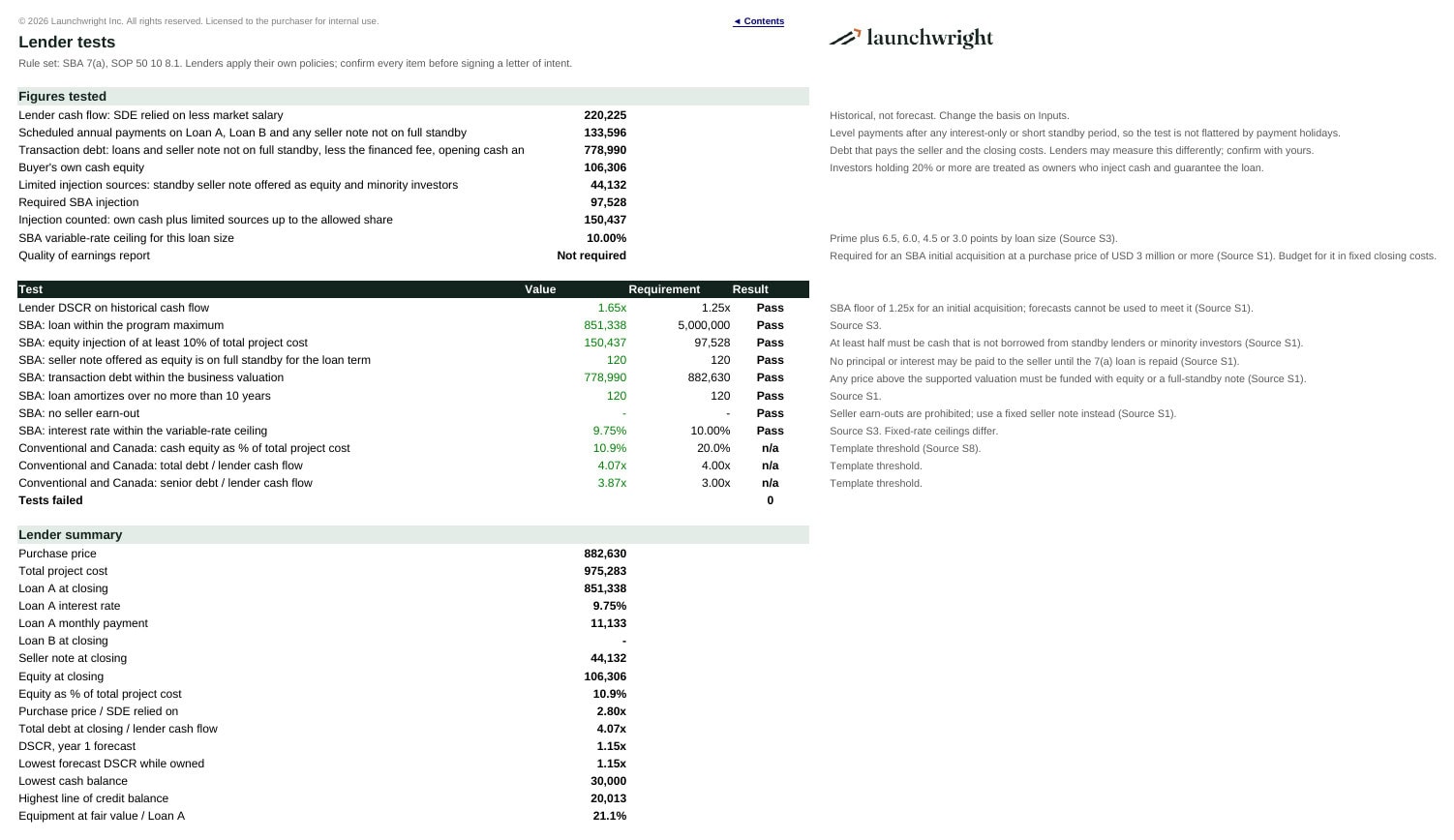
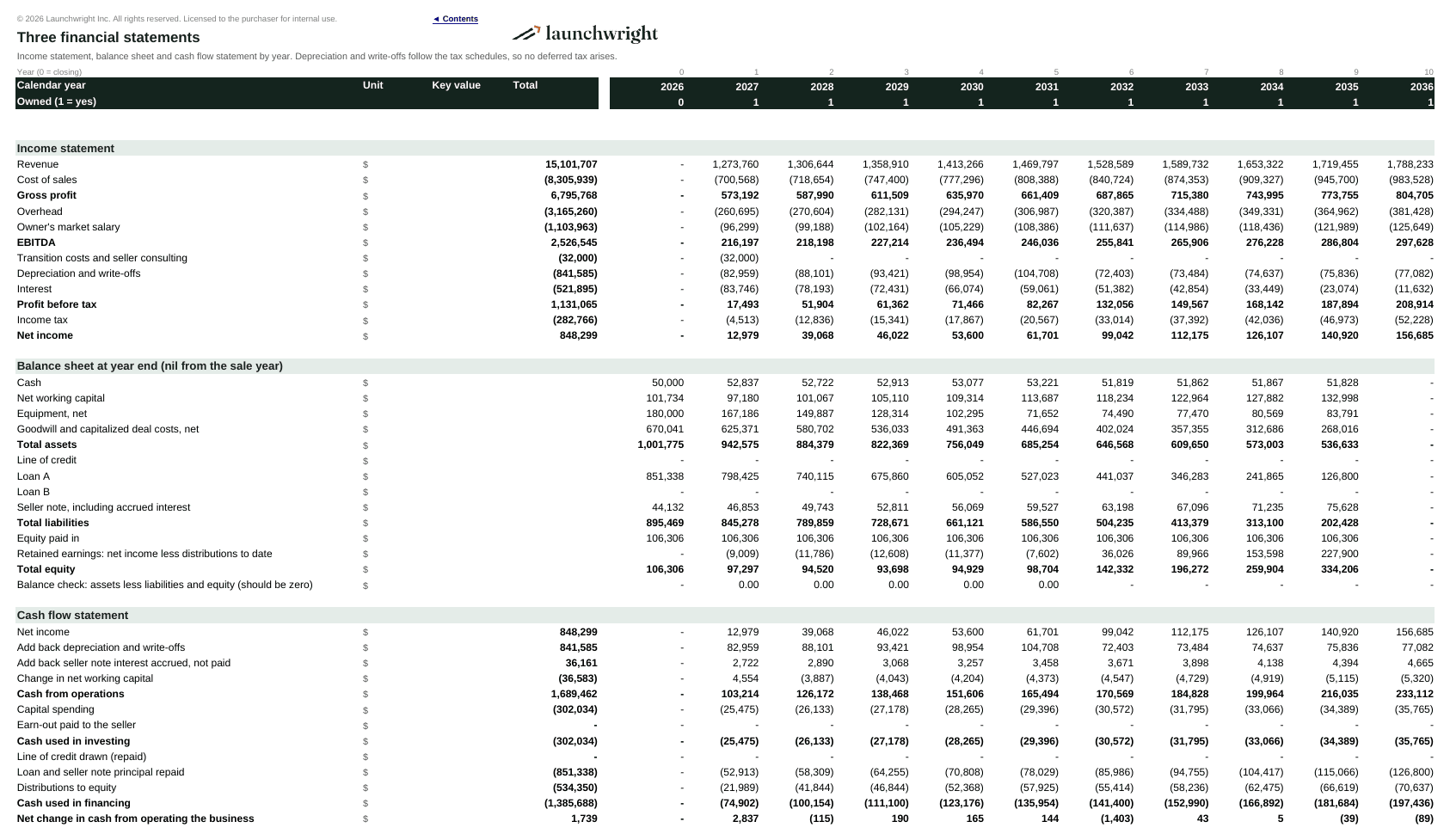
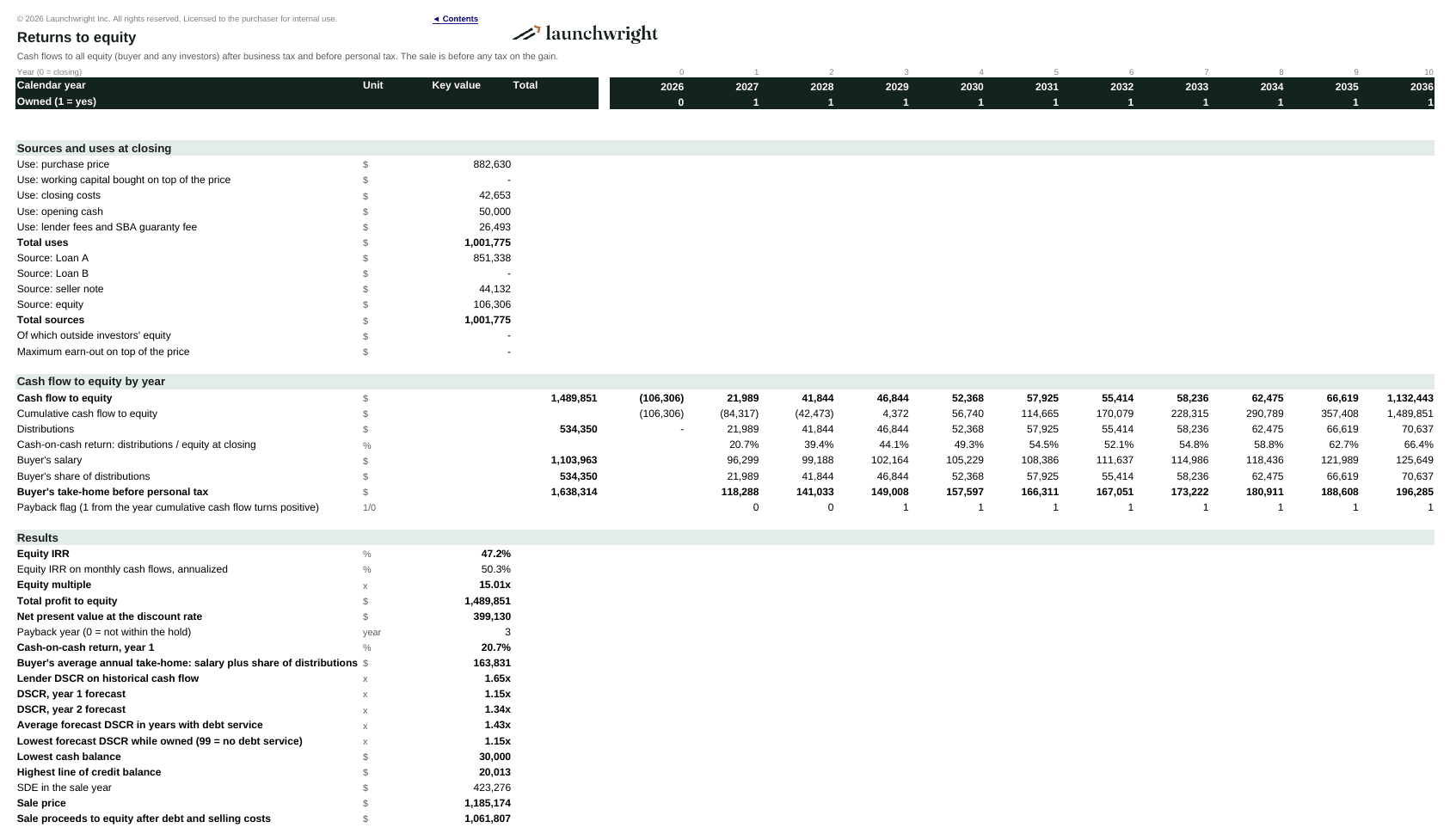
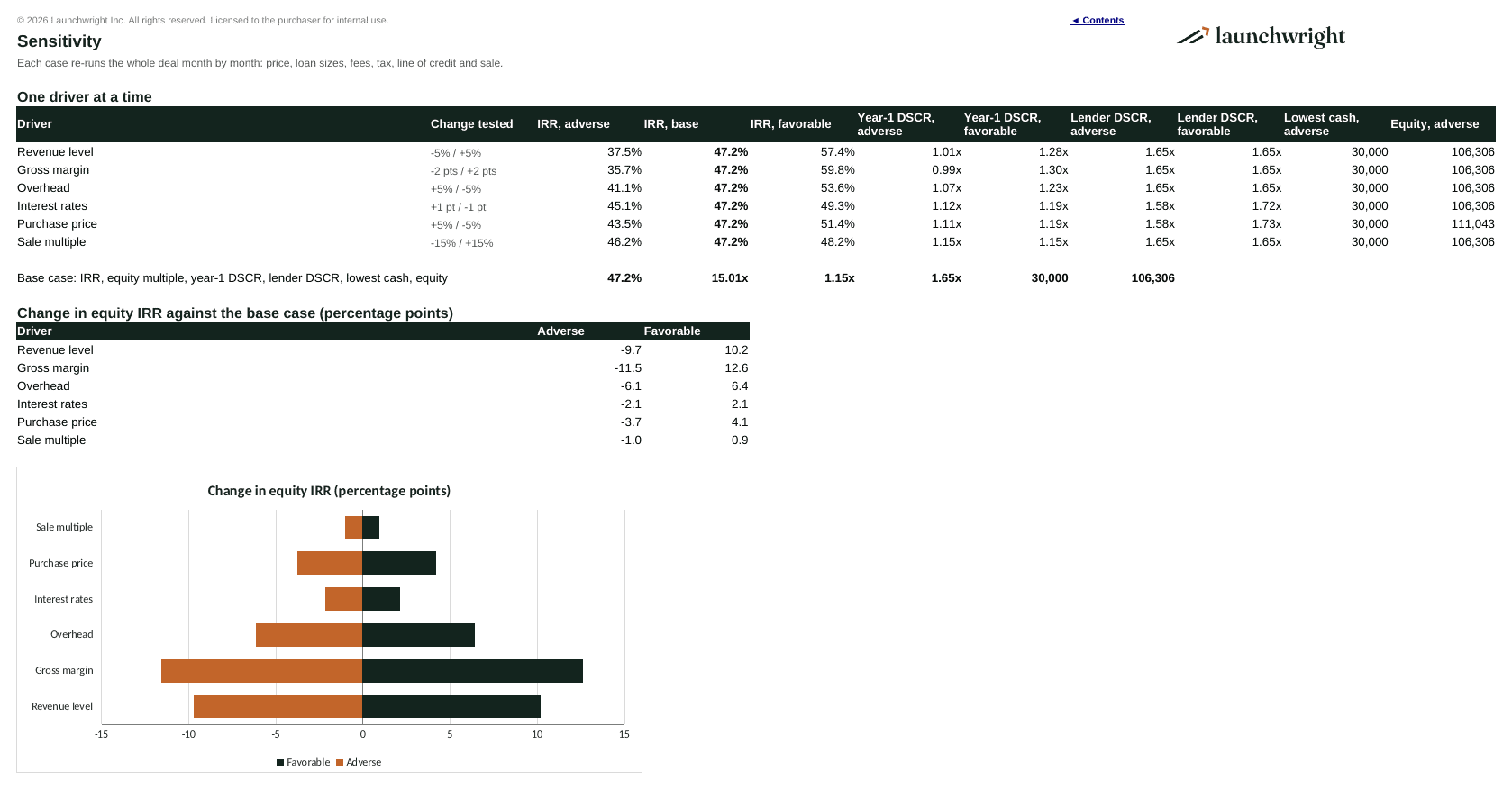
Most small businesses are bought with borrowed money, and the deal lives or dies on whether cash flow covers the debt. This model lets a buyer, broker or lender set up the same business under six financing structures and see, month by month, what each one requires in equity, what it leaves the buyer to live on, and whether it passes the tests a lender will apply.
What makes it different
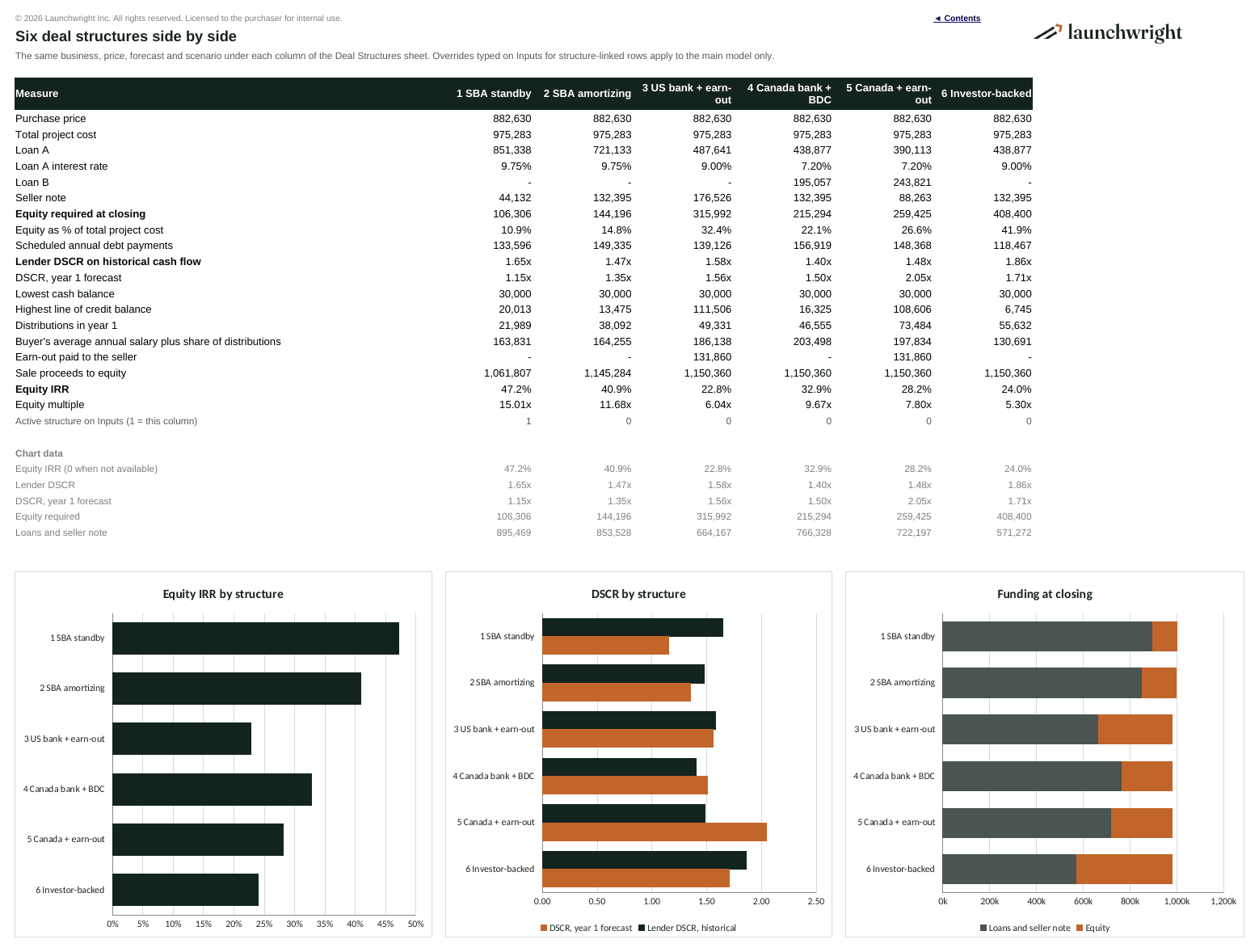
- Six deal structures in one file, for the United States and Canada. Two SBA 7(a) structures (full-standby and amortizing seller note), a conventional bank loan with seller note and earn-out, a Canadian bank loan with BDC and a vendor take-back, a Canadian structure with an earn-out, and a purchase backed by outside investors. One switch changes the structure; the Compare sheet runs all six side by side on the same deal.
- Built on the SBA rules in force from October 1, 2026 (SOP 50 10 8.1): the 10% equity injection and the limit on how much of it can come from a standby seller note, 1.25x coverage on historical cash flow, the cap on debt at the business valuation, the 10-year amortization limit, the ban on seller earn-outs and the quality of earnings trigger at a USD 3 million price. Each rule is a pass or fail line on the Lender Tests sheet.
- The fiscal 2027 SBA guaranty fee schedule, either added to the loan or paid in cash.
- Monthly, with seasonality. A heating and cooling business does not earn the same in March as in July. The model applies a seasonal pattern, draws a line of credit when cash runs low and repays it when cash recovers.
- Honest year-one cash flow. Lender coverage is measured on the seller’s history; the forecast then deducts customer loss after the change of owner, transition costs, seller consulting, replacement vehicles and tax, so you see both figures.
- Seller note with a standby period and accrued interest, and an earn-out based on revenue, gross profit or EBITDA with a threshold, a share and a yearly maximum.
- Asset purchase or share purchase, with the tax write-off of goodwill and equipment for each country.
- Trade presets for HVAC, plumbing, electrical contracting, landscaping and other service businesses, taken from published 2025 sale data: median revenue, median cash flow and average sale multiple.
How it works
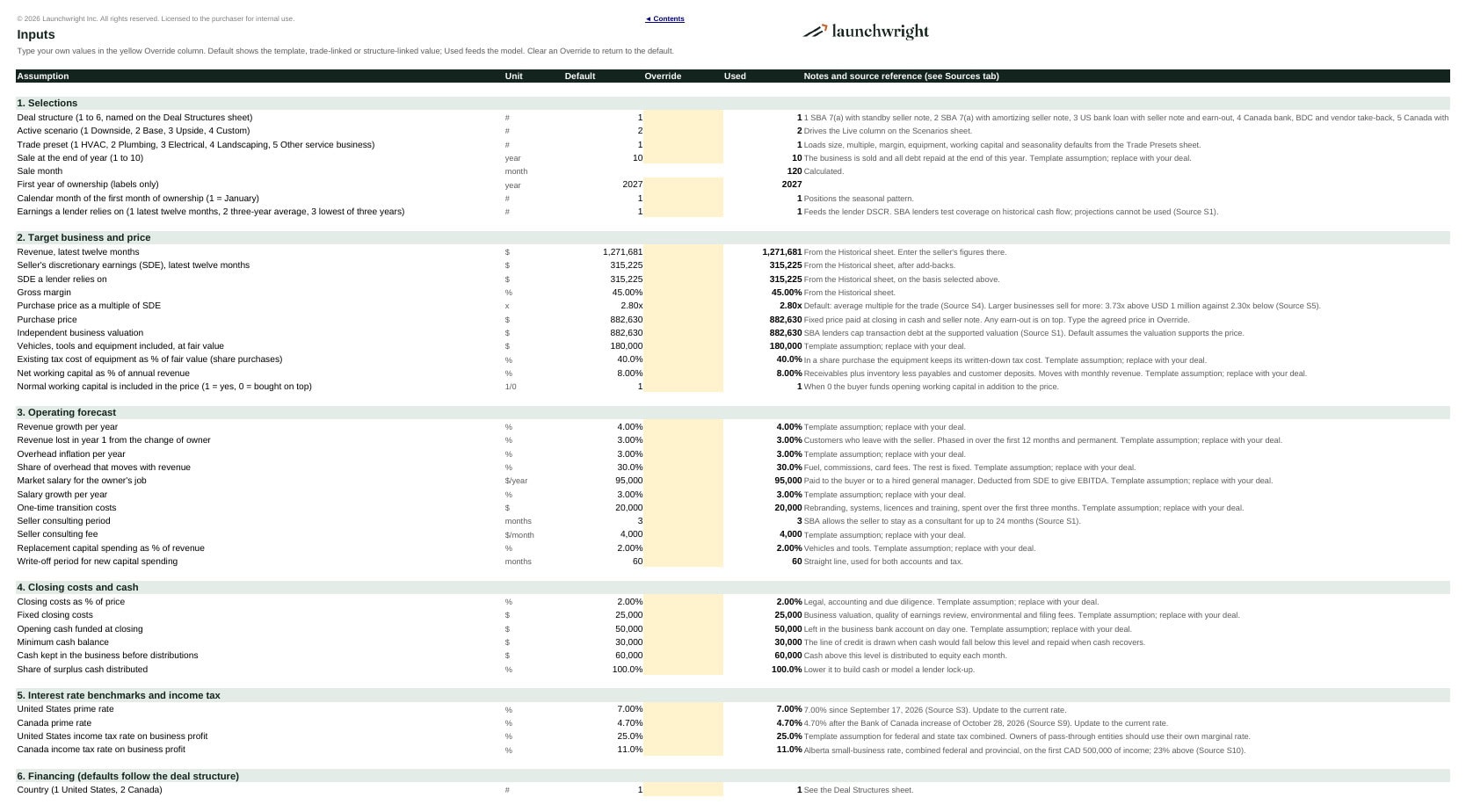
Enter the seller’s revenue and discretionary earnings (SDE), choose the deal structure and the price. The model builds sources and uses, sizes each loan, runs 120 months of operations, tax, debt service, line of credit and distributions, and sells the business at the end of the year you choose. Every input has a Default and an Override column, so you can always see what you changed and return to the default.
Outputs
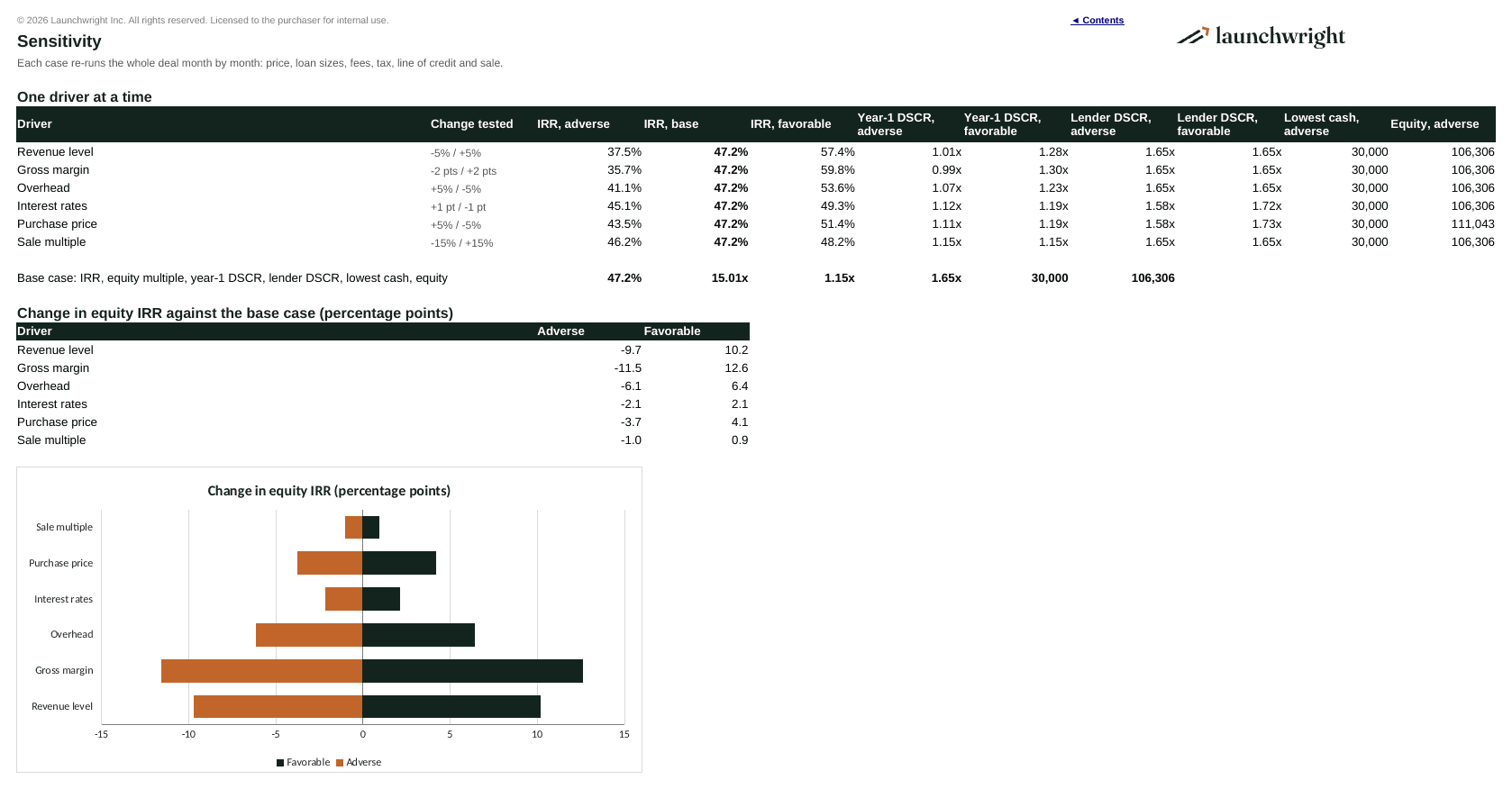
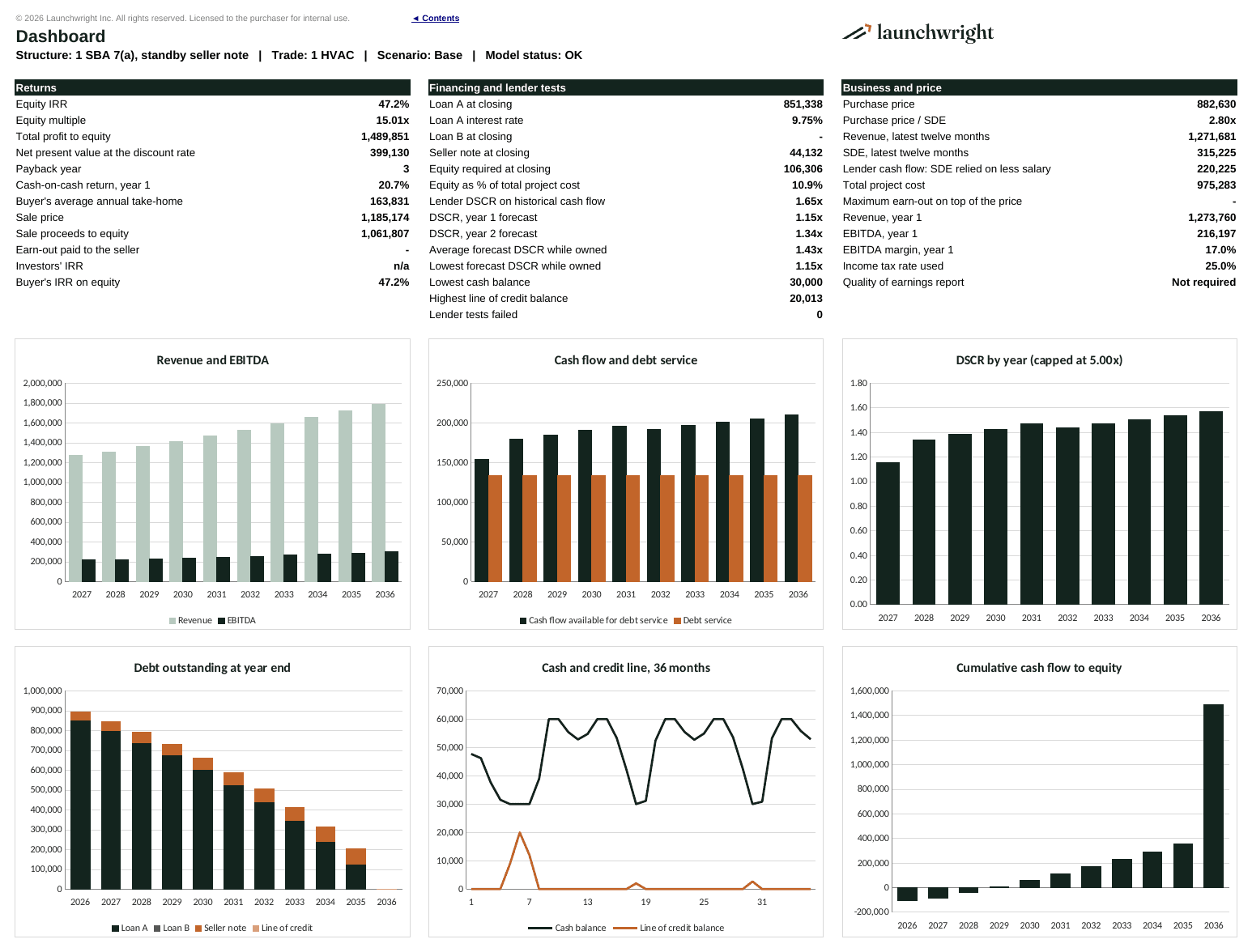
Equity required at closing, lender DSCR, forecast DSCR by year, lowest cash balance, peak line of credit, equity IRR, equity multiple, NPV, payback, cash-on-cash return, the buyer’s annual take-home (salary plus distributions) and sale proceeds. A dashboard with six charts, a tornado chart of six drivers, and checks that confirm the file is internally consistent.
Due Diligence Edition
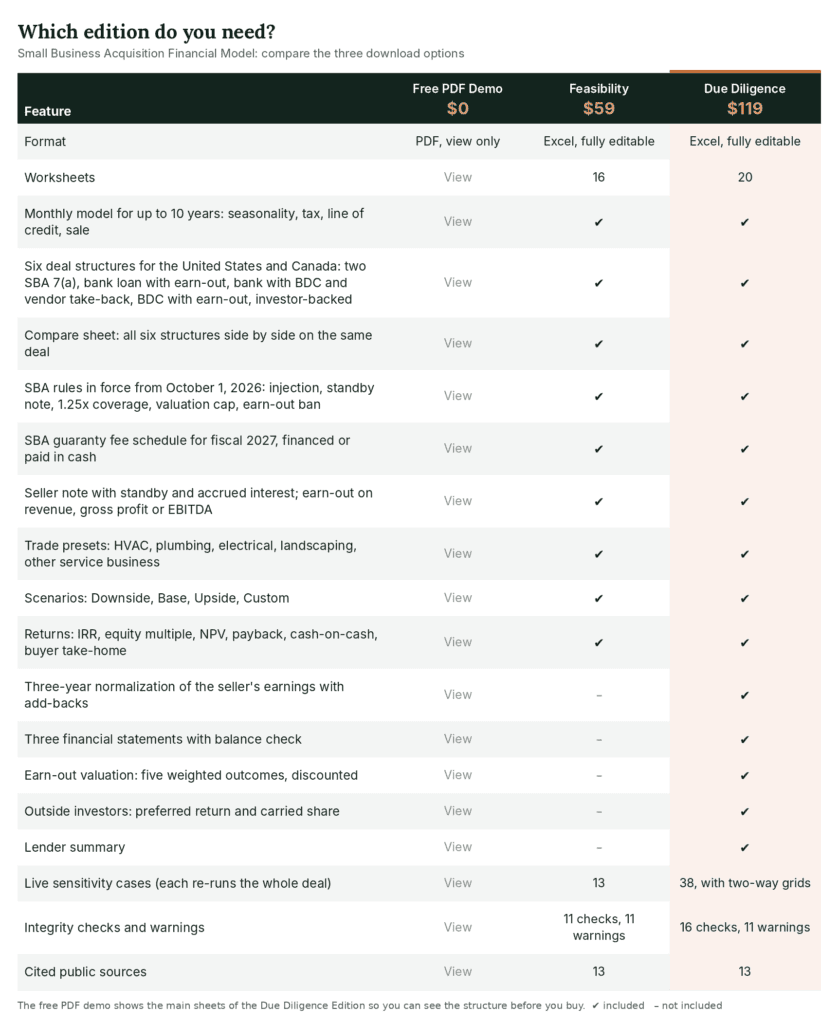
Adds a Historical sheet that normalizes three years of the seller’s results with add-backs and lets you choose the earnings a lender relies on; an income statement, balance sheet and cash flow statement with a balance check; a probability-weighted earn-out valuation; a waterfall for outside investors with a preferred return and a carried share; a lender summary; and two-way grids of purchase price against revenue.
Quality
Fully unlocked, no macros, no external links, no hidden sheets. Thirteen cited public sources; every other default is labelled a template assumption. The model was recalculated independently outside Excel across 45 input cases for the Feasibility Edition and 47 for the Due Diligence Edition, and the results agreed.
Defaults are benchmarks and template assumptions, not advice. Loan program rules change; confirm them with your lender, lawyer and tax adviser.
Edition comparison
FAQs
Does it work for businesses other than HVAC and plumbing? Yes. The presets only load starting figures. Enter your own revenue, earnings, margin, equipment and seasonality for any owner-operated business.
Which SBA rules does it follow? SOP 50 10 8.1, in force from October 1, 2026, as summarized in published lender and legal commentary listed on the Sources sheet. The thresholds are inputs, so you can update them when the rules change.
Can I model an earn-out with an SBA loan? The model will calculate it, and the Lender Tests sheet will show a fail, because seller earn-outs are prohibited in SBA change-of-ownership loans. Use a seller note instead, or one of the conventional structures.
Is the Canadian side a full tax model? No. It applies one corporate tax rate, the 5% write-off of goodwill and a declining-balance write-off of equipment. The Canada Small Business Financing Program cannot fund share purchases, so it appears only as a line of credit benchmark.
What currency does it use? The currency of the deal. Nothing is converted. Enter a Canadian business in Canadian dollars.
Does it include real estate? No. It assumes the business leases its premises.
Are there macros or locked cells? No. Every formula is visible and every cell can be edited.
Which Excel version do I need? Excel 2010 or later. The model uses only long-standing functions.
Can I get help? Questions about how the template works are answered using the Contact Author button or via the Support chat. For custom modelling, use the custom service on eFinancialModels.
Similar ProductsOther customers were also interested in...


 eFinancialModels
Electric Vehicle (EV) Charging Station Financial M...
With this comprehensive 5- or 10-year monthly tool, investors can assess the viability of setting up... Read more

Financial Model for Mobile App | Mobile App Busine...
The Mobile App Financial Plan Template in Excel allows you to develop financial projections when lau... Read more

 HenrySheykin
Food Truck Financial Model Excel Template
The Food Truck Financial Model helps entrepreneurs, founders, business owners, consultants, and anal... Read more

Green Hydrogen Production from Wind Energy Financi...
The Green Hydrogen from Wind Financial Model aims to comprehensively forecast a horizon of 40 years ... Read more

Simple Mutual Non-Disclosure Agreement Template
Protect your business secrets with ease using our Simple Mutual Non-Disclosure Agreement Template. S... Read more

Solar Energy Financial Model
The Solar Energy Financial Model Spreadsheet Template in Excel assists you in preparing a sophistica... Read more

 Peter Graf
The Customer-Centric Financial Model for Restauran...
Starting a restaurant without a financial plan is like driving a car blindfolded. You wouldn´t do i... Read more
You must log in to submit a review.