
0 ITEMS

Mergers and Acquisitions Model
A Mergers and Acquisitions model helps businesses assess the financial impact of buying or merging with another company. It calculates key metrics like synergies, deal value, and potential risks. The model shows if the deal makes sense. It also tests different scenarios to prepare for uncertainties.
Our Mergers and Acquisitions (M&A) financial templates simplify deal analysis with structured calculations. It includes income statements, cash flow forecasts, and valuation metrics to assess profitability. Users can adjust assumptions to test different deal scenarios and risks. The template highlights synergies, financing needs, and potential returns. It helps investors and executives make data-driven decisions with confidence. A well-built M&A template saves time and ensures accuracy in financial planning.
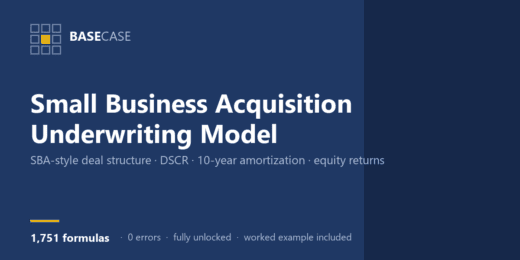

Underwrite a small-business acquisition the way a lender will: SBA…
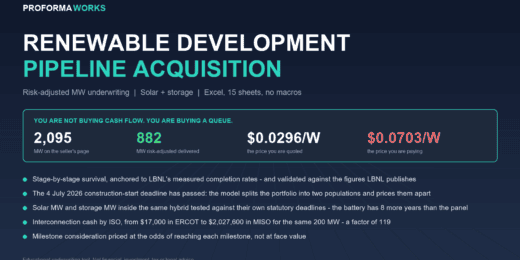

Converts a seller's nameplate megawatts into risk-adjusted delivered megawatts through…

Buying a wealth-management book or RIA? Underwrite it the way…

Underwrite the purchase of an independent retail pharmacy the way…

Underwrite a hotel/motel acquisition the way an SBA lender does:…

A professional Excel and Google Sheets financial model built for…

A professional Excel and Google Sheets financial model built for…

A professional Excel and Google Sheets financial model built for…

A professional Excel and Google Sheets financial model built for…

A professional Excel and Google Sheets financial model built for…
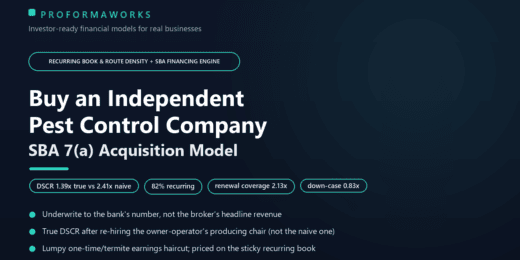
A professional Excel and Google Sheets financial model built for…

A professional Excel and Google Sheets financial model built for…

A professional Excel and Google Sheets financial model built for…

A professional Excel and Google Sheets financial model built for…

A professional Excel and Google Sheets financial model built for…

A professional Excel and Google Sheets financial model built for…


🏦 Leveraged Buyout Financial Model Bundle — Lite + Pro…

🚀 A professional Private Equity Buy-and-Build Roll-Up M&A Financial Model…

A professional Excel and Google Sheets financial model built for…


Stop guessing your company's value. This Excel-based Monte Carlo simulation…
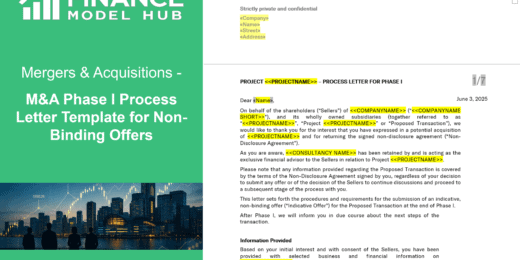

A professional M&A Phase I Process Letter template used to…
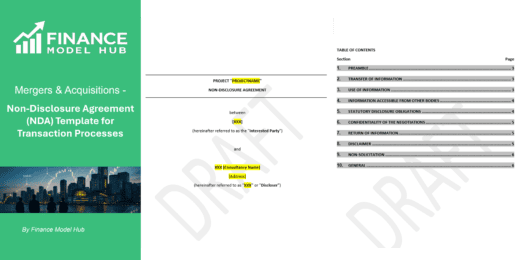
A professional M&A Non-Disclosure Agreement template for sharing confidential information…

A practical Excel template to build M&A longlists, evaluate strategic…

A professional Excel financial model suite for M&A merger analysis,…


Investment-banking style M&A merger model built for fast deal screening…

LBO Pro (Excel) – 12-Tab Model with Debt Schedule, Credit Metrics, IRR/MOIC, Sensitivity & Dashboard
Professional 12-tab Excel leveraged buyout (LBO) model with 400+ formulas…


This financial model presents a comprehensive analysis of a hypothetical…


Prepare your next M&A deal negotiation with this Mergers &…


This comprehensive financial model provides a sophisticated analytical framework for…

This comprehensive Excel model provides sophisticated analysis tools for evaluating…
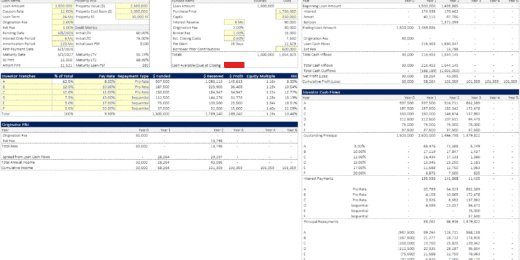
Professional Syndicated Note Template Excel Model. Transform your real estate…
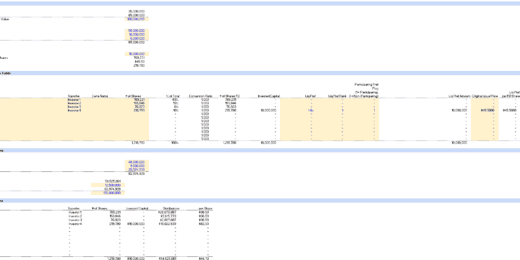
Introducing the **New Equity Raise Template (Debt-to-Equity Rollover Included)**—an essential…





Creating an Effective Mergers & Acquisitions Model

Mergers and acquisitions have reshaped industries and redefined corporate landscapes. Some of the largest deals in history are Disney’s $71 billion acquisition of 21st Century Fox and the $130 billion Dow-DuPont merger. They demonstrate the transformative power of strategic consolidation. However, while these headline-making deals capture attention, their success hinges on a meticulous mergers and acquisitions model that evaluates synergies, valuation, and risk exposure. This article outlines key M&A model components to help entrepreneurs, finance professionals, and investors navigate corporate acquisitions confidently.
Understanding the Mergers & Acquisitions Process
Mergers and acquisitions (M&A) combine two companies into one stronger business.Acquisition
An acquisition is simply the purchase of a company by either another company or a group of investors. It happens when one company buys most or all of another company's shares. Businesses pursue acquisitions to expand, reduce costs, gain market share, or enter new industries. Some aim for synergy, combining strengths for better efficiency. Others acquire firms to eliminate competition or secure valuable assets. Strategic goals and long-term growth plans drive each deal. Acquisitions come in different forms.- A friendly acquisition happens when both companies agree on the deal.
- A hostile takeover occurs when the target company resists the buyout.
- In a leveraged buyout, the buyer uses borrowed money to fund the purchase. Each type impacts ownership, strategy, and control differently.
Merger
A merger happens when two firms join as equals, while an acquisition occurs when one company buys another. Companies use M&A to grow faster, enter new markets, or gain a competitive edge. Successful deals create synergies, boosting profits and efficiency. However, M&A can also bring risks like culture clashes and high costs. Smart planning and strong execution make the difference between success and failure. Mergers come in several types.- A horizontal merger happens between competitors to boost market share.
- A vertical merger joins companies along the supply chain to improve efficiency.
- A conglomerate merger combines unrelated businesses to diversify risk.
- A market extension merger expands into new regions.
- While a product extension merger adds related products. Each type serves a unique strategic goal.
Mergers and Acquisitions Process
- Strategy & Target Selection: The process begins with defining the M&A strategy and selecting target companies that align with business objectives. Companies assess potential synergies, market opportunities, and financial viability.
- Due Diligence: A thorough due diligence process occurs once a target is identified. This involves evaluating the financial, legal, and operational risks to ensure the acquisition is sound and aligns with strategic goals.
- Deal Signing & Approval: After successful due diligence, both parties negotiate the terms of the deal, including price, structure, and conditions. Regulatory approvals may be required before finalizing the agreement.
- Deal Closing: Once all agreements are signed and approvals are obtained, the deal is officially closed. Ownership of the acquired company is transferred, and financial transactions are completed.
- Integration: The final step involves merging operations, systems, and teams to realize synergies. Effective integration ensures that the acquisition achieves its intended strategic and financial benefits.

Normally, the acquirer will build a financial model to analyze the deal. It should result in a consolidated financial model that can show the expected financial situation of the two companies combined – target and acquirer; this allows us to understand if the acquirer will be better off with or without the acquisition. The model must also capture expected synergies and all related costs due to the transaction. If debt financing is needed, the model should also outline the debt schedule and how the debt raised during the transaction can be repaid. If equity is issued, an EPS analysis will be needed to understand the possible effects of dilution when issuing new company shares with the target shareholders to pay for the transaction.
Building a merger and acquisition model helps companies prepare competitive bids, make informed decisions, and lower risks. It provides a clear financial picture, forecasts potential outcomes, and highlights key synergies. With solid data, businesses can negotiate better deals and avoid costly mistakes.
Key Reasons Companies Engage in Mergers and Acquisitions Deals
Companies pursue mergers and acquisitions deals as strategic moves to create value, strengthen industry influence, and enhance long-term growth prospects. Furthermore, stronger financial performance and competitive positioning drive mergers and acquisitions deals as firms seek synergies that boost profits.- Synergies: Mergers and acquisitions create synergies by combining strengths and eliminating inefficiencies. Companies cut costs by sharing resources, streamlining operations, and reducing redundancies. Revenue grows as they cross-sell products, expand market reach, and enhance innovation. Stronger together, they achieve more than they could separately.
- Growth: Organic growth takes time, and market saturation can slow expansion. Mergers and acquisitions deals offer a faster path to scaling operations, entering new regions, and increasing market share. Instead of building from scratch, companies gain immediate access to customers, products, and infrastructure, accelerating their success.
- Eliminate Competition: Acquiring rivals reduces market threats and strengthens industry dominance. Companies gain pricing power, control over key resources, and a larger customer base. By eliminating direct competitors, they secure a stronger foothold and create a more favorable market environment for long-term profitability.
- Diversification: Mergers and acquisitions deals allow companies to expand beyond their core business by acquiring new skills, products, and innovations. It reduces reliance on a single market and spreads risk across different industries or regions. By integrating fresh expertise and cutting-edge technology, businesses stay competitive and adaptable in changing markets.
- Create Shareholders' Value: Successful mergers and acquisitions deals boost earnings, improve efficiency, and enhance market positioning. Shareholders benefit from increased stock value, stronger financial performance, and higher returns. Companies executing M&A deals effectively unlock new opportunities that drive long-term wealth creation.

Why Do Mergers and Acquisitions Fail?
Before creating an effective mergers and acquisitions model, we must first understand why do mergers and acquisitions fail. Mergers and acquisitions promise growth, but many deals collapse due to avoidable mistakes. Poor planning, rushed decisions, and unrealistic expectations create costly setbacks. Cultural differences, financial miscalculations, and integration struggles weaken the deal's value. Regulatory roadblocks and hidden risks further complicate the process. Success requires thorough preparation, clear strategy, and disciplined execution to avoid failure. Below are the top 5 reasons why do mergers and acquisitions fail:- Poor Due Diligence: Poor due diligence is one of the main reasons why do mergers and acquisitions fail. Rushing the process leads to missed financial risks, hidden liabilities, or overestimated synergies. Buyers may overlook operational inefficiencies, legal issues, or declining market conditions. Without a thorough review, unexpected problems surface post-deal, eroding value. Proper due diligence ensures accurate valuation and minimizes costly surprises.
- Cultural Clashes: Merging two companies with different cultures creates major challenges. Employees resist change when values, work styles, or leadership approaches clash. Poor communication, low morale, and slow productivity lead to high turnover and integration stalls without a clear mergers and acquisitions strategy to unify teams. Strong leadership and cultural alignment prevent internal friction and drive post-merger success.
- Overpaying: Overpaying in a merger destroys shareholder value. As one of the top reasons why do mergers and acquisitions fail, smart valuation and disciplined negotiation prevent this costly mistake. Companies driven by competition or growth ambitions often inflate purchase prices. Unrealistic synergy projections justify excessive spending, leading to financial strain. The deal becomes a burden if expected cost savings or revenue boosts fail.
- Integration Problems: Smooth integration is key to a successful merger. Many deals fail due to poor planning in combining systems, processes, and teams. Confusion over roles, incompatible technology, and leadership disputes slow progress. Without a structured roadmap, businesses struggle to realize expected benefits. A clear integration strategy ensures efficiency and stability.
- Regulatory Issues: Regulatory hurdles can derail mergers. Antitrust concerns, industry restrictions, or foreign investment rules may block or delay deals. Governments intervene to prevent monopolies or protect national interests. Companies must navigate compliance requirements and secure approvals to move forward. Early legal assessment reduces risks and ensures a smooth transaction.

Steps to Build a High-Impact M&A Model
A clear, data-driven approach is essential for mergers and acquisitions strategy in the fast-moving market to maximize value and ensure long-term success. A well-built M&A model is crucial for making smart acquisition decisions. It helps investors and executives assess deal value, risks, and potential synergies with clarity. By effectively structuring financial projections and key assumptions, businesses can forecast outcomes and avoid costly mistakes. A high-impact model improves decision-making and strengthens negotiations by providing solid financial insights. Without it, companies risk overpaying or missing hidden pitfalls.Step 1: Collect Key Data for Target Analysis
A well-defined mergers and acquisitions strategy sets the foundation for accurate projections and decision-making. Clarify the purpose of the M&A model. This aligns the model with the deal strategy to ensure relevant financial analysis. Collect both companies' historical financial statements, revenue breakdowns, cost structures, and balance sheet details. Ensure accuracy and completeness to avoid misleading projections. The next step is to analyze the target company and forecast its financials. Start by modeling the target's current financial statements without any M&A adjustments. Focus on historical trends, revenue drivers, cost structure, and profitability. Identify key financial metrics and assess risks. This baseline sets the foundation for assessing profitability, liquidity, and overall financial health after the deal. Afterward, define critical inputs such as revenue growth, cost synergies, financing terms, and integration expenses. Use realistic assumptions based on industry benchmarks and past performance. Strong data quality improves the reliability of your M&A analysis.
Step 2: Build a Consolidated Financial Model
Start by modeling the acquirer’s financials, including statements and free cash flow. Then, merge the target and acquirer data to see the combined company’s financial outlook. Build the financial statements by merging both companies' income statements, balance sheets, and cash flow statements. Adjust for key changes, including new debt, equity issuance, and asset depreciation from the acquisition. Ensure all figures align to reflect the post-merger financial position accurately. Model the M&A deal mechanics by outlining key financial details. Create tabs for purchase price allocation, goodwill calculation, and financing structure. Define how the deal is funded through cash, debt, or equity. Determine the payment structure and any earn-out provisions. Ensure all components align to reflect the transaction’s true impact. This step helps assess deal feasibility and its effect on the combined company’s financials.Step 3 – Value the Target Company
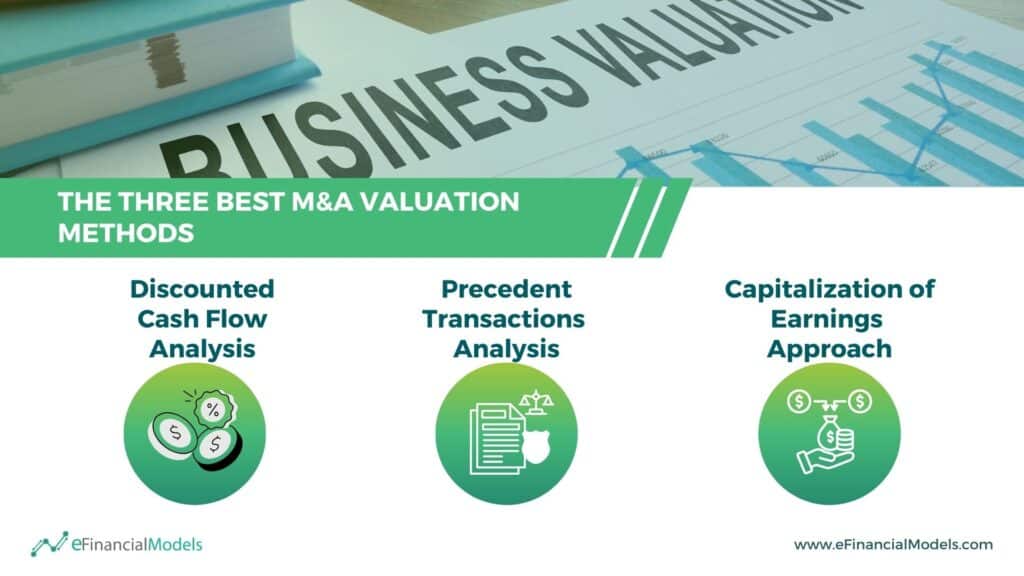
The third step in building a high-impact M&A model is valuing the target. The three best valuation methods for mergers & acquisitions deals are discounted cash flow (DCF), precedent transactions, and capitalization of earnings.- DCF provides a detailed, forward-looking valuation by estimating future cash flows and discounting them to present value. It considers the company's growth potential, risk, and cost of capital, making it highly accurate when reliable projections are available.
- Precedent Transaction analysis benchmarks the target against past M&A deals in the same industry. It reflects real-world pricing based on market conditions, buyer appetite, and deal trends, making it useful for assessing fair market value in competitive environments.
- The Capitalization of Earnings approach values a business's ability to generate consistent earnings. It is simple and effective for stable, profitable companies, offering a quick estimate of value based on normalized earnings and an appropriate capitalization rate.
Step 4: Incorporate Synergies and Costs
The best mergers and acquisitions strategy is to identify potential cost savings, revenue synergies, and operational efficiencies. A thorough assessment ensures realistic expectations and risk mitigation. Build a clear timeline for synergy realization to track financial benefits over time. Identify revenue synergies like cross-selling and cost synergies like shared operations. Estimate savings and growth realistically. Model one-time integration costs separately to avoid distorting ongoing profitability. This step ensures a realistic view of cost savings and post-merger expenses, helping to assess the deal’s true value.Step 5: Evaluate Deal Value with Valuation Analysis
Evaluate M&A deal value with valuation analysis to measure financial impact, assess synergies, and ensure the deal creates shareholder value. Assess how the acquisition impacts the acquirer’s value. Add the target’s value and expected synergies to the acquirer’s valuation. Calculate the total value of the combined business by adding the acquirer’s value, the target’s value, and expected synergies. Adjust for deal structure, including cash, stock, or debt financing—factor in dilution, interest costs, and balance sheet changes. Reassess key valuation metrics like EV/EBITDA and Price-to-Earnings (P/E) ratio. A clear valuation helps confirm if the deal creates real value.EBITDA Bridge: Clarifying M&A Earnings
The EBITDA Bridge in Mergers & Acquisitions (M&A) Valuation is a structured way of explaining the difference between two EBITDA figures—typically the historical EBITDA and the adjusted EBITDA used for valuation. It is crucial in M&A valuation because it explains the gap between reported and adjusted EBITDA, making earnings clearer for buyers. Historical EBITDA is based on financial statements. The Adjusted EBITDA is used for valuation, reflecting the company’s sustainable earnings potential. It can be achieved through the following:- Normalization Adjustments: Adjustments made to eliminate one-time or non-recurring expenses (e.g., litigation settlements, restructuring costs).
- Pro Forma Adjustments: Forward-looking changes reflecting synergies, anticipated cost savings, or integration costs post-transaction.
- Run-Rate Adjustments: Adjustments for revenue or cost structure changes that have already occurred but aren’t fully reflected in historical financials.
Step 6: Explore Financing Options for the Best Deal
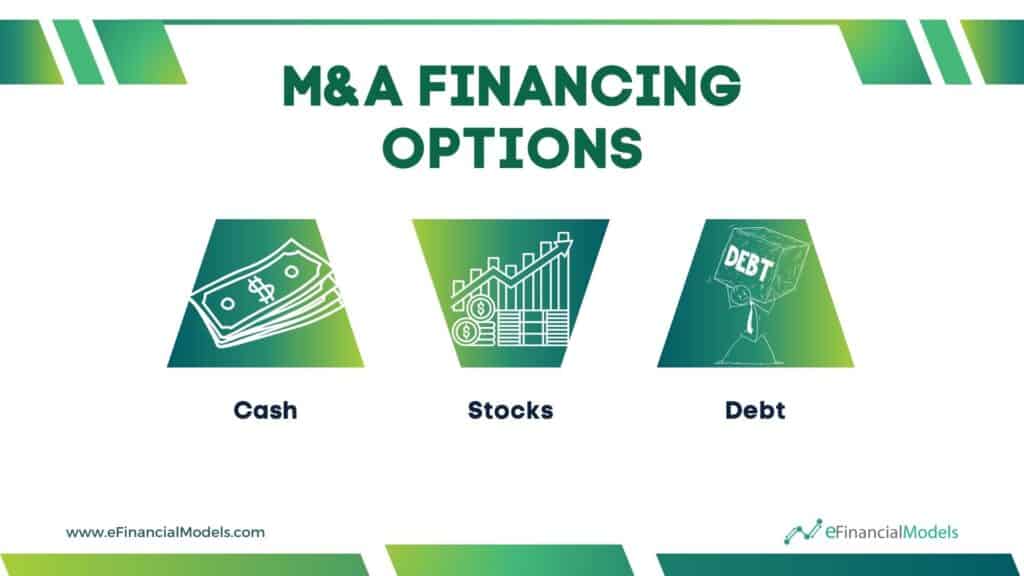
Selecting the right financing method is crucial for structuring a strong M&A deal. Each option has advantages and drawbacks that affect valuation, risk, and long-term sustainability.- Cash Deals provide speed, certainty, and simplicity. The buyer pays the agreed price upfront, eliminating market fluctuations or dilution concerns. However, cash can significantly reduce liquidity and limit financial flexibility for future investments or operational needs. This approach works best when the acquirer has ample reserves and wants to avoid complex share-based negotiations.
- Stock Transactions as a payment method allow the acquirer to conserve cash and share the financial risk with the target’s shareholders. This approach aligns interests, as both parties benefit from future growth. However, issuing new shares dilutes existing shareholders’ ownership, and the final deal value depends on stock market fluctuations. If the acquirer’s stock price drops, the deal could become more expensive than anticipated.
- Debt Financing can enhance returns by maintaining ownership control and preserving cash for other strategic needs. Debt financing also provides tax benefits through interest deductions. However, it adds financial pressure, requiring regular interest payments and increasing the risk of overleveraging. If revenues decline, debt obligations may strain the company’s financial health.
Step 7: Perform EPS and Dilution Analysis
Earnings Per Share (EPS) and dilution analysis assess how a merger or acquisition affects the acquiring company’s profitability per share. This analysis helps assess shareholder value, guide financing decisions, and shape market perception. Accretive deals boost investor confidence, while dilutive ones may raise concerns. It also supports negotiations by ensuring the deal improves financial performance. This step is crucial for making informed M&A decisions and structuring deals effectively. Performing EPS and dilution analysis to measure the deal’s effect on earnings per share. Calculate whether the transaction increases (accretive) or decreases (dilutive) EPS. Show how changes in share count and net income impact shareholder value. This step helps investors assess whether the merger strengthens or weakens financial performance.Step 8: Integrate Financial Ratios
Integrating financial ratios is essential because it provides a clear, quantifiable way to assess the impact of a merger or acquisition. Key ratios, such as EBITDA margin, debt-to-equity, return on investment, and interest coverage, highlight financial strengths and potential risks. Compare the company's performance before and after the deal using these ratios. This step helps identify risks, measure efficiency, and ensure the acquisition strengthens the business. Integrating financial ratios also involves valuation analysis. Estimate the target company's value using discounted cash flow (DCF), comparable company analysis, and precedent transactions. Compare valuations to determine a fair purchase price. Solid valuation work helps justify the deal's financial viability.Step 9: Run Scenario Analysis
Scenario testing improves confidence in decision-making and deal feasibility. Run sensitivity and scenario analysis to test how key assumptions impact the deal. Model different outcomes based on interest rate changes, synergy delays, or slower revenue growth. Test assumptions like economic shifts, cost variations, or revenue fluctuations. Evaluate best-case, worst-case, and base-case scenarios. Identify potential weaknesses and adjust strategies to protect value. This step ensures the deal remains strong under various market conditions. Furthermore, the model accuracy can be checked by validating calculations and financial relationships. Stress-test assumptions under extreme conditions to assess risk exposure. Ensuring a robust model minimizes errors and enhances reliability.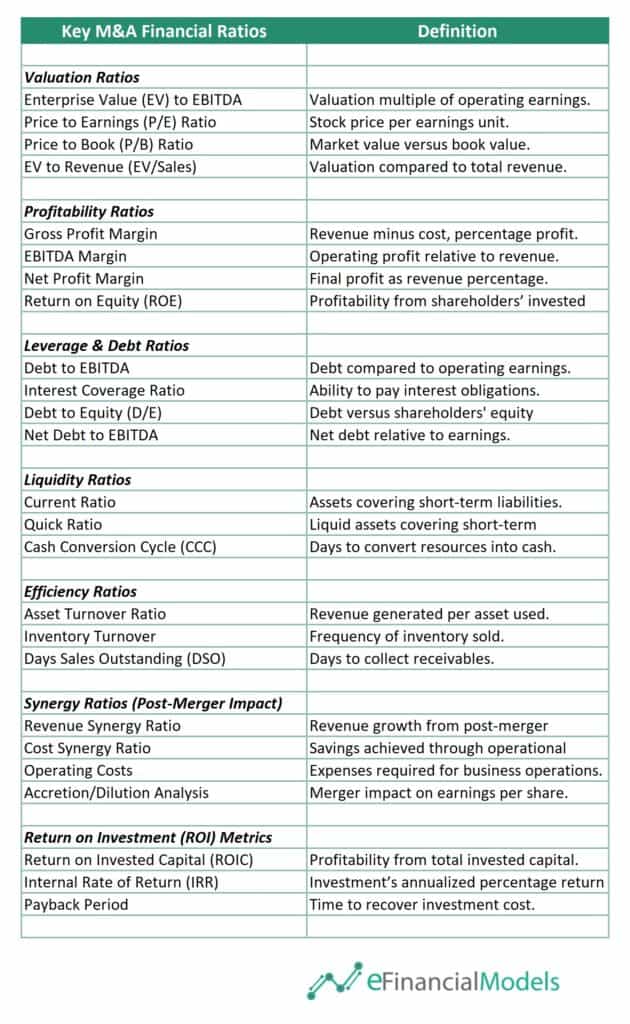
Step 10: Submit an M&A Bid
Submitting a strong bid is the final step in building a high-impact M&A model. Use your analysis to determine the right offer, balancing risk and reward. Ensure your bid reflects valuation insights, synergy potential, and deal structure. Present it clearly to maximize approval chances. A well-prepared bid increases your odds of closing a successful deal. A Letter of Intent (LOI) is commonly used to submit an M&A bid, serving as a non-binding proposal that outlines key terms such as purchase price, deal structure, payment terms, due diligence requirements, and contingencies. It signals serious interest, sets a framework for negotiations, and may include binding provisions like confidentiality or exclusivity. The LOI helps facilitate due diligence and provides a foundation for drafting the definitive purchase agreement, making it a critical step in the M&A process.Financial Modeling: Your Key to a Mergers and Acquisitions Strategy
Building a high-impact M&A model requires a structured approach. Start by collecting key data and consolidating financials. Accurately value the target and factor in synergies and costs. Assess deal value with valuation methods and explore financing for the best terms. Analyze EPS impact and dilution risks, then integrate key financial ratios. Use scenario analysis to test outcomes before submitting a strong M&A bid. A well-prepared model ensures informed decisions, maximizing deal success.
Financial modeling is the backbone of a strong Mergers and Acquisitions strategy. It helps assess risks, project financial outcomes, and evaluate deal success. Businesses can make smarter decisions by structuring data, analyzing key metrics, and testing scenarios. A well-built model ensures clarity, reduces uncertainty, and drives better negotiations. With the right financial model, companies can unlock value and execute M&A deals with confidence. Need help with your M&A valuation? Our expert financial modelers can guide you through the process. We offer tailored valuation services to ensure accurate analysis and smart decision-making. Check out our Valuation Services here!
You might also like:
- A Step-By-Step Guide to the Merger and Acquisition Process
- How to Value a Business Using a Discounted Cash Flow Model
- Effectively Write a Letter of Intent to Close a Business Deal
- 10 Tips to Develop a First Class Business Valuation Report
- 12 BUSINESS VALUATION METHODS
- Finding Fair Market Value: A Quick Guide to Real Estate Valuation
- How to Request for Custom Financial Models
- Financial Modeling for Startups and Small Businesses
- Revenue Model Templates and their Characteristics
- Financial Ratios Analysis and Its Importance
- The Purpose of a Financial Model
- Financial Ratios Cheat Sheet
- Why Should You Use Excel for Financial Modeling?
- Top 10 Mistakes in DCF Valuation Models