
0 ITEMS

Fresh Flowers Subscription Financial Model Excel Template
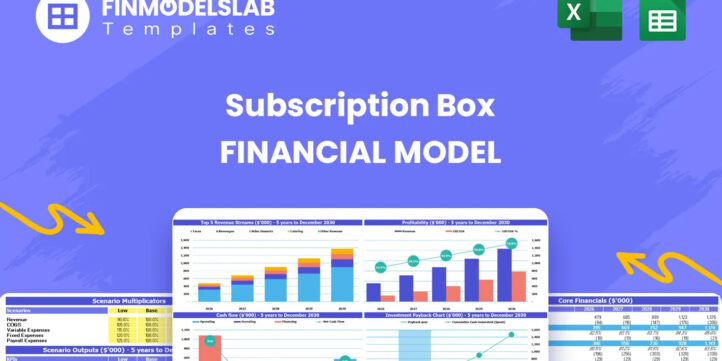
The Subscription Box Financial Model Template helps entrepreneurs, founders, analysts, consultants, and business owners turn a subscription box concept into a structured financial forecast. Instead of building a model from scratch, users can start with a ready-to-use planning tool designed around recurring subscription revenue, customer acquisition, add-on purchases, fulfillment costs, inventory needs, payroll, and long-term profitability. It gives users a practical way to estimate startup costs, operating expenses, cash flow requirements, and financial performance before launching, raising capital, or scaling an existing subscription business. Built for business planning, funding preparation, and internal decision-making, this template connects the most important assumptions behind a subscription box company. Users can adjust pricing tiers, subscriber growth, churn, customer acquisition cost, product costs, packaging, shipping, staffing, marketing spend, and other drivers to see how each change affects revenue, margins, cash flow, and profit. The model supports up to five years of projections, making it useful for preparing investor presentations, loan applications, business plans, and management forecasts. The template is especially useful for anyone evaluating whether a monthly subscription box can become financially sustainable. It helps users understand how revenue assumptions translate into gross profit, how startup investments affect early cash needs, how operating expenses influence burn rate, and when the business may reach break-even. By organizing the numbers into a clear, editable structure, it supports better decision-making around pricing, marketing budgets, supplier negotiations, inventory planning, and growth strategy. With built-in dashboards, scenarios, charts, key performance indicators, and financial reports, the Subscription Box Financial Model gives users a professional view of the business from both an operating and investor perspective. It is fully customizable and compatible with Excel and Google Sheets, allowing teams to update assumptions, review outputs, and share results with stakeholders. Whether used for a new subscription box launch, an e-commerce subscription expansion, or a funding-ready business plan, this financial model template provides a clear framework for planning revenue, costs, cash flow, profitability, and break-even performance.


Financial Model Overview
The Subscription Box Financial Model Template is a ready-to-use planning tool built for entrepreneurs, founders, business owners, consultants, and analysts who need to forecast the financial performance of a recurring subscription box business. A subscription box company depends on more than simple sales projections, because revenue is shaped by subscriber acquisition, churn, pricing tiers, add-on purchases, fulfillment costs, inventory purchases, packaging, shipping, marketing efficiency, and customer lifetime value. This financial model brings those drivers together in one structured workbook so users can estimate revenue, startup costs, operating expenses, cash flow, profitability, funding needs, and investor returns. It is designed to support business planning, investor presentations, lender discussions, internal budgeting, and strategic decision-making. By using editable assumptions and automated calculations, the model helps users test whether their subscription box concept can scale profitably, identify key financial risks, and communicate the opportunity in a professional format.
All-in-One Dashboard
The all-in-one dashboard gives users a centralized view of the most important inputs and outputs in the Subscription Box Financial Model. This section is useful because subscription box planning involves many moving parts, including pricing, subscriber growth, churn, customer acquisition cost, product cost, packaging, shipping, payroll, marketing, startup investment, and cash runway. The dashboard brings these assumptions and results into one place so users can quickly understand how the business is expected to perform without reviewing every detailed worksheet individually. It may summarize revenue, gross margin, EBITDA, net profit, cash balance, funding needs, payback period, return metrics, and other core outputs. For planning and decision-making, this dashboard helps users see whether their current assumptions create a viable business model, whether the company has enough cash to execute the launch plan, and whether the forecast is strong enough for investors, lenders, or internal stakeholders. It is especially helpful when comparing different operating plans, reviewing business plan updates, or preparing for a funding discussion where clear financial answers are required.
Low, Base, and High Scenario Analysis
The low, base, and high scenario analysis component allows users to test how different assumptions affect the financial outlook of the subscription box business. A base case can represent the expected plan, while the low case can reflect slower subscriber acquisition, higher churn, lower conversion rates, higher customer acquisition costs, or increased fulfillment expenses. The high case can show the upside from stronger marketing performance, better retention, higher average order value, increased add-on purchases, or faster movement into premium subscription tiers. This section is valuable because subscription businesses are highly sensitive to small changes in customer behavior, particularly churn, acquisition cost, and recurring revenue per subscriber. By switching between scenarios or adjusting scenario inputs, users can see the impact on revenue, cash flow, profitability, break-even timing, and funding requirements. This makes the model more useful for risk assessment, investor conversations, contingency planning, and operational decision-making. Instead of presenting only one optimistic forecast, users can show a more credible range of outcomes and demonstrate that they understand both downside risks and growth opportunities.
Professional Charts and Visual Reports
The professional charts and visual reports component turns the financial forecast into clear, presentation-ready visuals. Subscription box financials can become complex when a model includes monthly recurring revenue, customer acquisition, churn, product costs, fulfillment expenses, cash movement, and profitability trends over several years. Charts help simplify those outputs by showing the direction and scale of performance in a way that is easier for stakeholders to understand. This section may visualize revenue growth, subscriber count, gross margin, EBITDA, net profit, cash balance, burn rate, funding needs, return metrics, or scenario comparisons. For entrepreneurs preparing a pitch deck, business plan, board update, or lender package, visual reports make the financial story more accessible and persuasive. They also help management spot trends that may not be obvious in a table of numbers, such as rising cash pressure, improving margins, slowing subscriber growth, or the point when operating leverage begins to improve profitability. Because the charts are connected to the model assumptions, users can update inputs and quickly generate refreshed visuals for new plans, revised forecasts, or stakeholder presentations.
ROE Components and DuPont Analysis
The ROE components and DuPont analysis section helps users understand what drives return on equity in the subscription box business. Rather than looking only at a single return percentage, this component breaks performance into the underlying factors that influence shareholder returns, such as profitability, asset efficiency, and leverage. For a subscription box company, this can be useful because high growth may require investment in inventory, fulfillment capacity, technology, marketing, and working capital. The section may use inputs from the income statement, balance sheet, and financing structure to evaluate how margins, asset utilization, and capital strategy contribute to overall return. This helps founders and investors determine whether projected returns are coming from strong operating performance, efficient use of assets, or financial leverage. It is also useful for comparing the subscription box business against alternative investment opportunities or internal performance targets. By showing the drivers of ROE in a structured way, the model supports more informed decisions about pricing, cost control, reinvestment, debt, equity funding, and growth pace. For investor-ready planning, this analysis adds depth beyond basic profit and loss forecasting.
Revenue Inputs and Assumptions
The revenue inputs and assumptions section is the foundation of the Subscription Box Financial Model because it translates the commercial strategy into a measurable revenue forecast. A subscription box business typically depends on monthly recurring subscriptions, pricing tiers, customer acquisition, retention, churn, upgrades, downgrades, add-on sales, and special edition purchases. This component allows users to enter or edit assumptions such as subscription plan pricing, new subscriber acquisition, marketing spend, customer acquisition cost, conversion rate, churn rate, average add-on purchase value, and the mix between standard, premium, and luxury box tiers. The outputs can include monthly recurring revenue, total subscription revenue, add-on revenue, average revenue per user, subscriber growth, and revenue by plan. This section is critical for planning because small changes in revenue assumptions can materially affect cash flow and profitability. It helps users test pricing strategies, evaluate marketing efficiency, estimate revenue potential, and understand how customer retention impacts long-term value. For business plans and funding documents, a clearly structured revenue assumption section also helps stakeholders see how the forecast was built and whether the growth plan is realistic.
Bank-Ready Financial Reports
The bank-ready financial reports component organizes the forecast into lender-friendly financial outputs that can support loan applications, financing discussions, and formal business planning. Lenders and professional stakeholders typically want to review structured financial statements, including profit and loss projections, cash flow forecasts, balance sheet forecasts, capital requirements, and repayment capacity. This section helps present those outputs in a clean and logical format, making it easier to assess whether the subscription box business can generate enough cash to support operating needs and debt obligations. Inputs from revenue, costs, payroll, startup investments, financing assumptions, and working capital flow into the financial reports automatically, reducing the need for manual report preparation. For a subscription box company, this is especially useful because cash requirements may increase before revenue is collected, particularly when inventory, packaging, shipping, and marketing expenses must be funded upfront. The bank-ready reports help users show how the business plans to manage liquidity, cover expenses, reach profitability, and maintain financial stability. This component is valuable for entrepreneurs seeking startup loans, working capital facilities, investor funding, or internal approval for expansion.
Revenue Breakdown by Stream
The revenue breakdown by stream component gives users a more detailed view of where sales are coming from within the subscription box business. Instead of showing only total revenue, this section separates revenue into meaningful categories such as monthly subscription tiers, premium plans, luxury plans, add-on product sales, one-time purchases, special edition boxes, setup fees, or other monetization streams. This level of detail is important because each revenue stream may have different pricing, customer behavior, margins, and growth potential. For example, recurring subscriptions may provide predictable monthly revenue, while add-ons may increase average order value and improve profitability if product margins are attractive. The model may use assumptions for plan mix, subscriber count, add-on adoption, average order value, and growth rates to calculate revenue by category. This helps users identify which offerings contribute most to growth, which tiers should receive more marketing support, and whether higher-priced plans can improve margins. It also supports strategic decisions around product bundling, upselling, seasonal promotions, and supplier sourcing. For investors and lenders, a detailed revenue breakdown makes the forecast more transparent and easier to evaluate.
KPI Dashboard and Benchmarking
The KPI dashboard and benchmarking component helps users monitor the performance metrics that matter most in a subscription box business. Recurring revenue models are often evaluated through metrics such as customer acquisition cost, churn rate, monthly recurring revenue, average revenue per user, customer lifetime value, gross margin, contribution margin, payback period, cash runway, retention, and subscriber growth. This section organizes those indicators into a practical dashboard so users can track whether the business is moving in the right direction. Benchmarking can help compare key assumptions and outputs against industry standards or target ranges, making the forecast more credible and easier to defend. For example, if customer acquisition cost is too high relative to lifetime value, the model can highlight a potential profitability issue. If churn is above a reasonable benchmark, users can test how improved retention would affect revenue and cash flow. This component is useful for founders preparing investor materials, operators managing monthly performance, and consultants reviewing a subscription business plan. By focusing on measurable KPIs, the model supports better decision-making around marketing spend, pricing, customer experience, retention strategy, and growth priorities.
Startup Cost and Operating Expense Planning
The startup cost and operating expense planning component helps users estimate how much capital is required to launch and run the subscription box business. Startup costs may include warehouse setup, equipment, website development, subscription management software, branding, product photography, launch marketing, legal fees, licenses, packaging design, initial inventory, and working capital reserves. Operating expenses may include rent, software subscriptions, fulfillment support, customer service, salaries, marketing, payment processing, insurance, professional services, and general administrative costs. This section separates one-time launch costs from recurring monthly expenses, allowing users to understand both the initial funding requirement and the ongoing cost structure. For a subscription box business, this is especially important because inventory, packaging, and fulfillment activities often create cash needs before customer revenue fully scales. The outputs may include total startup investment, monthly overhead, variable cost assumptions, burn rate, and funding gap estimates. This component supports budgeting, fundraising, cost control, and launch planning by helping users avoid underestimating early-stage expenses. It also gives founders a clearer view of which costs are fixed, which scale with volume, and which can be adjusted if cash flow becomes tight.
Cash Flow and Break-Even Analysis
The cash flow and break-even analysis component helps users understand when the subscription box business may become self-sustaining and how much liquidity is needed along the way. Cash flow forecasting is essential in a subscription model because customer payments, inventory purchases, supplier terms, shipping costs, marketing spend, payroll, and capital expenditures may occur at different times. This section may calculate monthly cash inflows, cash outflows, ending cash balance, minimum cash position, burn rate, runway, financing needs, and operating cash flow. The break-even analysis helps identify the point at which revenue and gross profit are sufficient to cover fixed and variable costs, showing how many subscribers, how much recurring revenue, or what level of contribution margin may be needed to reach profitability. Users can test how changes in churn, customer acquisition cost, pricing, product cost, shipping cost, or payroll affect the break-even timeline. This is valuable for funding preparation because investors and lenders want to know when the business can stop relying on outside capital. It also supports day-to-day decision-making by helping founders plan marketing budgets, supplier negotiations, hiring schedules, and cash reserves with a clearer understanding of financial risk.
File types:
Excel – Single-User: .xlsx
Excel – Multi-User: .xlsx
Similar ProductsOther customers were also interested in...


 HenrySheykin
Pre-Made Meal Subscription Box Financial Model Exc...
The Pre-Made Meal Subscription Financial Model Template helps entrepreneurs and planners turn a meal... Read more

 JILL LIU
Subscription Meal Kit Financial & DCF Valuatio...
We are glad to present our new integrated, dynamic and ready-to-use Subscription Meal Kit Financial ... Read more
Equipment Rental Subscription Financial Model Exce...
The Equipment Rental Subscription Financial Model helps users turn an equipment-as-a-service busines... Read more
Human Resource Software Financial Model Excel Temp...
The HR Software Financial Model Financial Model Template helps founders, business owners, consultant... Read more
Customer Service Software Financial Model Excel Te...
The Customer Service Software Financial Model helps founders, operators, consultants, and analysts t... Read more

 Jason Varner
Product + Subscription Financial Model
Build a strategy for adding recurring revenues services to your product. Includes financial statemen... Read more

Product-as-a-Service (PaaS) Financial Model
This is a true PaaS model with flexible build-out assumptions, capacity sanity checks, and direct sa... Read more

Subscription Box Financial Model – Up to 72 ...
Test many variables in this financial model for a subscription box company. Includes up to six prici... Read more

 Pushkar
Online Car Rental – 3 Statement Financial Mo...
Online Car Rental Platform Business Plan Model is a perfect tool for a feasibility study on launchin... Read more

Data-as-a-Service Financial Feasibility Study
This model is built for data-as-a-service startups. If you have valuable data to monetize, this temp... Read more
You must log in to submit a review.