
0 ITEMS

SaaS
Discover the blueprint for SaaS success with our SaaS Financial Model Templates. Tailored for the dynamic world of subscription businesses, a SaaS Financial Model Template is more than just a spreadsheet. It's a comprehensive toolkit designed to navigate the nuances of recurring revenues, customer acquisition costs, and churn rates.
Perfect for entrepreneurs, startup visionaries, and financial experts, our SaaS Financial Model Templates provide deep insights, enabling you to forecast growth, manage cash flow, and optimize your business strategy effectively. Embrace the power of informed decision-making and confidently steer your SaaS venture toward sustainable growth and profitability. Join us on the journey to financial clarity and success.
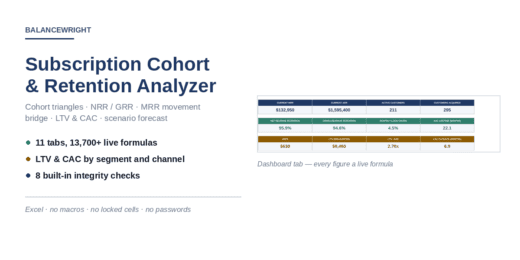

Give this workbook one row per customer per month and…
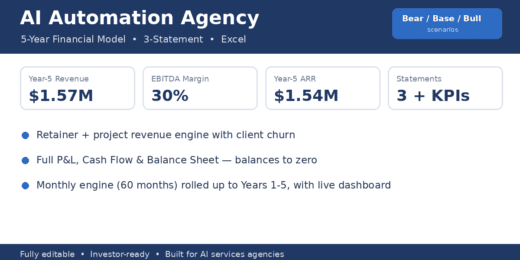

A 5-year, fully editable Excel model built specifically for AI…


The UK is Europe's AI leader. The question for modelers…

Why this study US enterprises spent roughly US$37 billion on…

A 36-page, data-rich outlook on India's software-as-a-service market for financial…

A 37-page, data-rich outlook on Israel-origin cybersecurity and developer-tools SaaS…

A 36-page, data-rich outlook on the United Kingdom fintech and…

A 34-page, data-rich outlook on the United States vertical B2B…

A 37-page, data-rich outlook on the German industrial and B2B…

A 38-page, data-rich outlook on the Canadian HRTech and workflow…
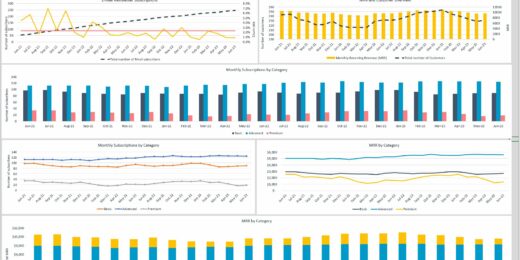

SaaS Metrics Dashboard Excel Template is designed to facilitate the…
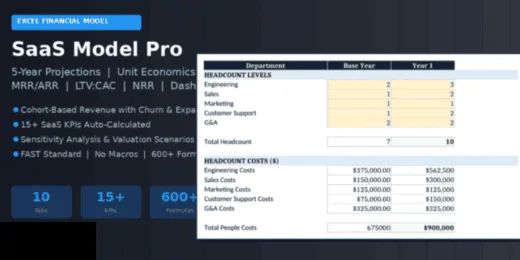

Professional 10-tab Excel SaaS financial model with 547 formulas, covering…


This fully unlocked 5 Year, 12-tab institutional-grade Excel template is…
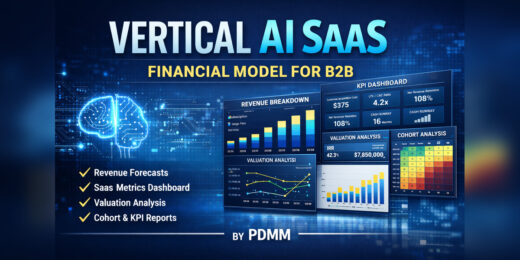

Professional Vertical AI SaaS Financial Model Template for B2B businesses…

The model is designed to provide SaaS founders, finance teams,…


This SaaS Financial Model is a professionally structured, fully integrated…

Highly versatile Excel model for building 5-year, monthly RaaS financials…
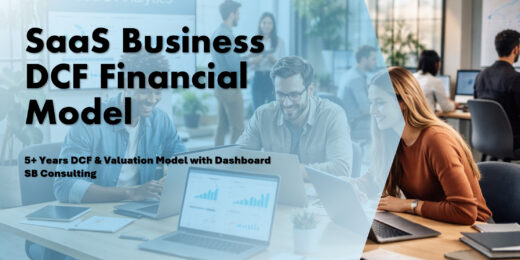

Provides a comprehensive framework for valuing a SaaS business based…
A premium, investor-ready SaaS Financial Model (Excel) built for founders,…


AI SaaS companies represent the future of scalable software –…

The ultimate 5-year SaaS financial model for startups. Build a…
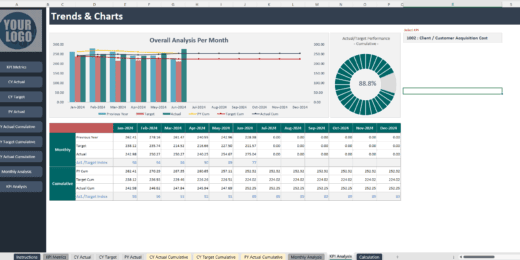


A comprehensive editable, 5-year 3 statement MS Excel spreadsheet for…


A simple startup model for agent-based SaaS businesses. Includes fundraising…

This dynamic Early Stage Startup SaaS Financial Model, built by…

This Crypto Trading Platform - App Financial Model is designed…
The Software Development Business Financial Model is a robust Excel…
Highly versatile Software development 5-Year financial projection model offering ongoing,…

Comprehensive AI-Native Platform 5-Year financial projection model offering subscriptions and/or…

A complete financial model, including income statement, balance sheet, and…
Tailored for BNPL platform operators, fintech entrepreneurs, and financial analysts,…
Optimize your fintech payment business’s financial planning with our Fintech…
Tailored for SaaS (Software-as-a-Service) business, this dynamic financial model streamlines…

This mobile app financial model template is designed for app…

A comprehensive editable 20-year 3-statement, MS Excel spreadsheet for tracking…
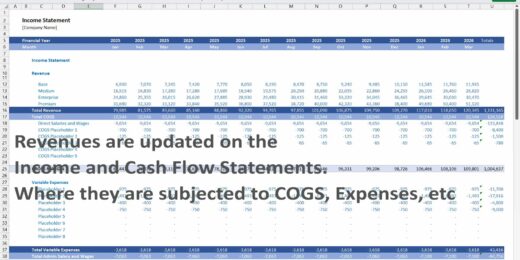
A comprehensive editable, 5-year 3 statement MS Excel spreadsheet for…
A comprehensive editable, 5-year 3 statement MS Excel spreadsheet for…

A comprehensive editable, 5-year 3 statement MS Excel spreadsheet for…
The Video Streaming Financial Model Template is a comprehensive tool…

A comprehensive editable, MS Excel spreadsheet for tracking Data Center…


The Car Subscription Service Financial Model with a 10+ Years…

The SaaS B2C Business Financial Model for Irregular Renewal Periods…
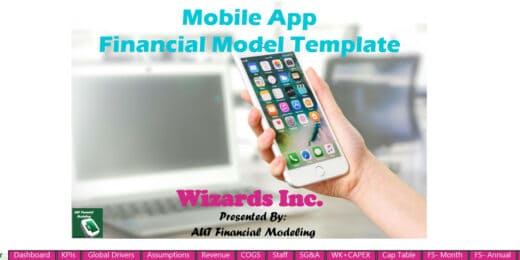

The Mobile App Financial Model Template is a comprehensive tool…
The P2P Equipment Rental Platform Financial Model with a 10+…
A financial model framework designed for an AI platform that…

Very comprehensive 5-Year 3 Statement Excel Financial Model bundle for…

Highly versatile SAAS 5-Year financial projection model offering subscription and/or…

Human Resource Management (HR / HRM) SaaS Financial Model Template…
This Payment Gateway and Billing Solutions SaaS Financial Model Template…
This Communication Platform SaaS Financial Model Template has been built…
This Content Management System (CMS) SaaS Financial Model Template has…
This Customer Relationship Management (CRM) SaaS Financial Model Template has…
This Enterprise Resource Planning (ERP) SaaS Financial Model Template has…
Subscription-Based B2C SaaS Financial Model Template has been built for…
This SaaS Startup Financial Model Template (Income Statement, Balance Sheet,…
Software as a Service: Providing Scalable Solutions
What is Software as a Service?
Software as a service (SaaS) offers cloud-based software applications that allow remote access to software and its functions as an on-demand, web-based service. It is a cloud-based service model where applications are hosted and maintained by a service provider and made available to customers over the Internet. Other cloud-based software applications are:- Infrastructure-As-A-Service
- On-Premises Packaged Software
- Platform-As-A-Service
- Software as a Service
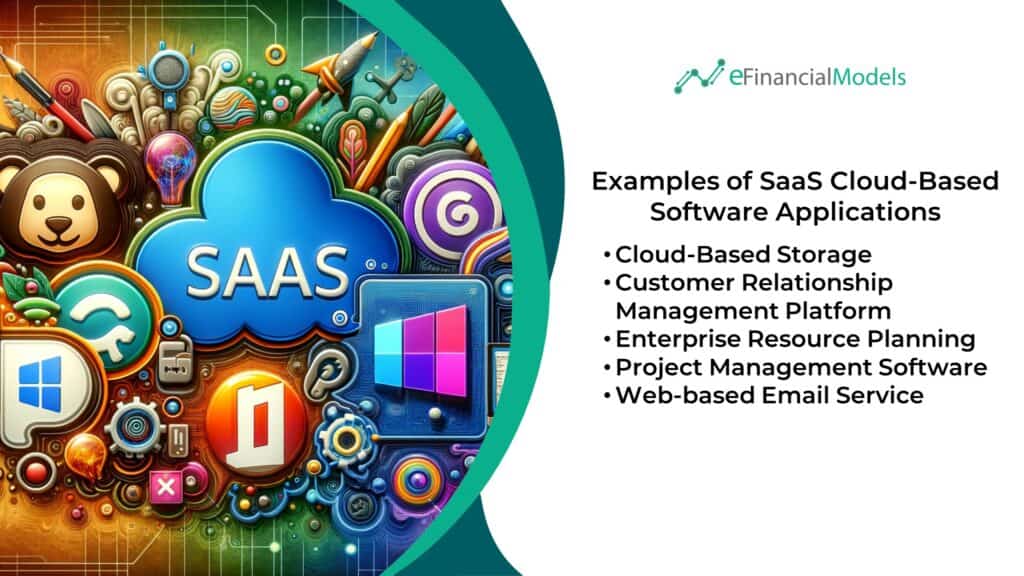
Popular Examples of SaaS Cloud-Based Software Applications
SaaS cloud-based software applications are on-demand software solutions hosted online, providing users access to internet functionality without needing local installation or maintenance. They offer accessible, scalable, and maintenance-free solutions for businesses and individuals to enhance their operations and communication. The most famous examples include:- Cloud-Based Storage: Cloud-based storage services like Google Drive, Dropbox, and Microsoft OneDrive offer users storage space and tools on their servers. Users can access their files from any internet-connected device, collaborate with others, and use various integrated tools.
- Customer Relationship Management (CRM) Platform: CRM platforms are among the most common SaaS applications. Services like Salesforce provide cloud-based solutions to manage a company's interactions with current and potential customers, helping to streamline processes and improve profitability.
- Enterprise Resource Planning (ERP): ERP software helps organizations manage business functions within a centralized and integrated system. ERP can cover various operations such as finance, HR, services, procurement, and supply chain management. Systems like SAP and Oracle offer cloud-based ERP solutions that provide flexibility and real-time insights.
- Project Management Software: Online project management tools like Asana, Trello, and Monday.com are excellent examples of SaaS. They allow teams to collaborate on various projects from anywhere in the world, track progress, assign tasks, and manage resources.
- Web-based Email Service: Mail is also a SaaS application. Services like Gmail, Outlook.com, and Yahoo! allow users to send, receive, and manage email over the Internet without installing any software on their devices.
How Does Software as a Service Work
Software as a service (SaaS) delivers software where the applications are maintained by a provider and offered to users through the Internet. SaaS Multi-Tenant Architecture is a fundamental architectural feature of many SaaS applications. In SaaS multi-tenant architecture, a single instance of the software and its supporting infrastructure serves multiple customers. Each customer is called a tenant and is isolated from other tenants, though they share the underlying resources. Core resources like databases, servers, and application instances are shared across multiple tenants, leading to cost efficiencies because resources are used more effectively. Despite the shared environment, each tenant's data is isolated and remains invisible to other tenants. SaaS multi-tenant architecture allows for easy scaling. As new tenants are added, they utilize the same application and resources without needing separate instances. Centralizing the application means that updates and patches are rolled out to all tenants simultaneously, simplifying the maintenance process.Software as a Service Business Model
The Software as a service business model is predicated on the idea of providing software applications as a service rather than a product. The critical characteristics of a Software-as-a-service business model are as follows:- Accessibility: Being cloud-based, Software as a service business model is accessible from anywhere with an internet connection, often through web browsers or dedicated apps.
- Centralized Hosting: The software is hosted centrally by the provider, eliminating customers needing to install, update, or maintain it.
- Focus on Service: Providers not only deliver software but also take responsibility for its reliability, security, and performance, essentially offering it as a continuous service.
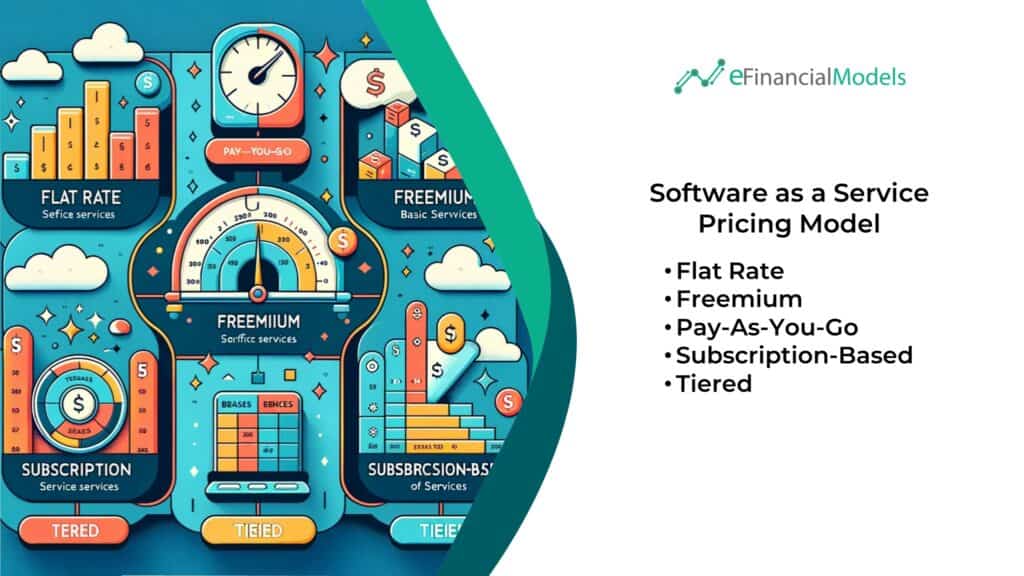
Software as a Service Pricing Model
Software as a service pricing model varies, allowing providers to cater to different market segments and usage patterns. Common models include:- Flat Rate: A simple, one-size-fits-all pricing where all features and services are available at a single price. This is straightforward but might only suit some customers, especially if their needs vary significantly.
- Freemium: Users can access a basic software version for free but must pay for advanced features or additional resources. This software-as-a-service pricing model is popular as it allows users to try the service before committing financially.
- Pay-As-You-Go: Users pay based on their usage of services, resources, or features. This can ideal for fluctuating needs be and ensures users only pay for what they use.
- Subscription-Based: Users pay a recurring fee to access the software. This software-as-a-service pricing model can be further tailored with different tiers, offering varying service levels, features, or user limits at different price points.
- Tiered: Customers choose from various tiers, each offering a different set of features, capacities, or support levels. This allows users to select the level that best fits their needs and budget.
Important Metrics for SaaS Businesses
In the Software as a Service (SaaS) industry, specific metrics are crucial for assessing a company's health, growth potential, and long-term sustainability. Tracking essential metrics for SaaS businesses is vital because they are vital for scaling and maintaining a competitive edge in the dynamic SaaS market. These metrics help identify trends, allocate resources effectively, and optimize the product and customer experience. Here are some of the critical metrics for Software as a service company:Average Revenue Per User (ARPU)
Average Revenue Per User provides insights into how much average revenue a SaaS company generates from each of its customers or users. It is the average monthly or annual revenue that a SaaS company earns from each customer or user account. It is typically calculated by dividing the total revenue generated in a specific time period by the total number of active customers or users during that same period. The standard ARPU value can vary widely depending on the nature of the SaaS business, its pricing model, and the industry it serves. Some SaaS companies may have higher ARPUs due to premium pricing or serving enterprise-level customers. Others may have lower ARPUs if they target smaller businesses or offer lower-cost plans.Burn Rate
Burn Rate is when a company spends its capital to finance overhead before generating positive cash flow from operations. It measures how quickly a company uses its venture capital to cover overhead before becoming profitable. To calculate the burn rate for a SaaS business, subtract the total monthly expenses from the monthly recurring revenue to determine the net cash amount spent each month. A healthy burn rate depends on the company's stage and market conditions. However, a company typically aims to have enough cash to last 12 to 18 months. Companies are often encouraged to reduce the burn rate to extend their runway (before they run out of money).Churn Rate
Churn Rate is the percentage of subscribers who discontinue their subscriptions within a given time period. This metric is vital for understanding customer retention and satisfaction. To calculate the churn rate for a SaaS business, divide the number of customers lost during a specific period by the total number of customers at the start and multiply the result by 100 to get a percentage. While the acceptable churn rate varies widely depending on the industry and business model, a monthly churn rate of 5-7% annually is often cited as the benchmark for SaaS businesses. Lower rates are generally preferable.Customer Acquisition Cost (CAC)
CAC represents the expense incurred to persuade a prospective customer to purchase a product or service. It is a crucial business metric that evaluates the efficiency of a company's marketing efforts. To calculate the Customer Acquisition Cost (CAC) for a SaaS business, divide the total costs of acquiring new customers (including marketing and sales expenses) by the number of new customers acquired in the same period. The ideal CAC varies greatly, but standard practice aims for a ratio of CLV to CAC of at least 3:1, indicating that each customer's value is three times more than the cost of acquiring them.Customer Lifetime Value (CLV)
CLV is the total revenue a business can expect from a single customer account throughout the business relationship. It reflects the total amount of money a customer is expected to spend. To calculate Customer Lifetime Value (CLV) for a SaaS business, multiply the average revenue per user (ARPU) by the customer lifespan, subtracting the acquisition and service costs per customer. A higher CLV indicates more value per customer and is indicative of a healthy, growing business. As mentioned, a CLV to CAC ratio of 3:1 is often seen as healthy, indicating that the value of a customer is three times the cost of acquiring them.Monthly Recurring Revenue (MRR)
MRR measures the total predictable and recurring revenue a business generates monthly, reflecting the steady income from its subscription-based model. It is a predictable revenue a business can expect to receive monthly. It's a key metric for understanding the scale and growth of a SaaS business. To calculate Monthly Recurring Revenue (MRR) for a SaaS business, multiply the total number of paying customers by the average revenue per user (ARPU) for a given month. While there's no "standard" MRR, growth trends are crucial. A steady or increasing MRR indicates good health and scalability. Many businesses also track the growth rate of MRR to understand momentum and forecast future revenues.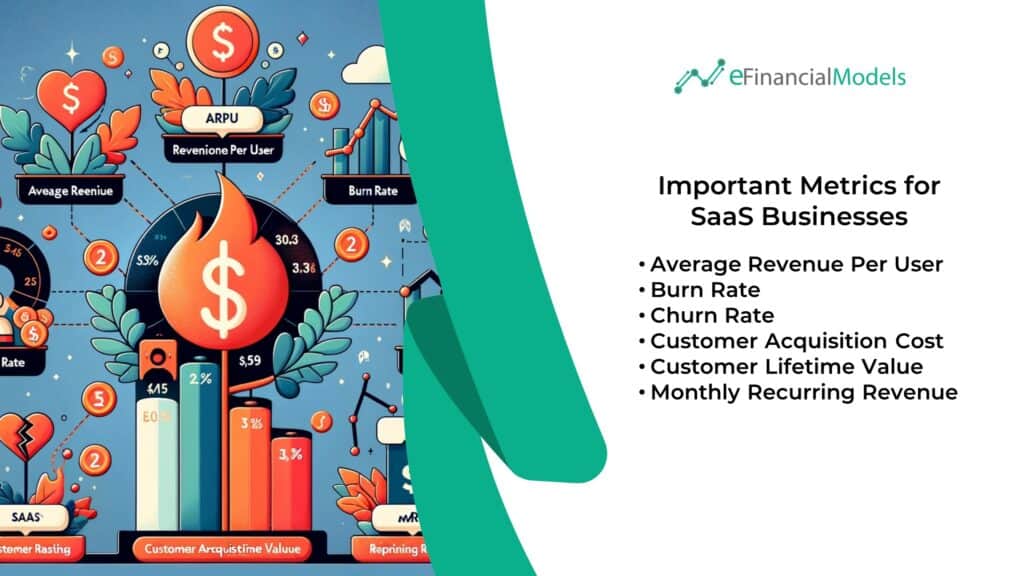
Strategize. Analyze. Achieve. Succeed: Using SaaS Financial Model Templates
SaaS is the model of the future for business software. It allows companies to focus on their core competencies instead of IT management. With SaaS, you can choose best-of-breed solutions for each business need and integrate them to enable optimized business processes. SaaS provides the scalability and flexibility required to adapt to today's fast-changing markets and business environments. For these reasons, SaaS should be essential to any company's business and technology strategy in the future. Software as a Service (SaaS) companies utilize financial models to project growth, costs, and profitability. A SaaS financial model template provides a strategic framework to analyze current performance, identify key metrics, and determine a path to success. It offers pre-built assumptions and formulas so you can focus on your unique business variables. You can customize a SaaS financial model template with your company's pricing, customer details, expense structure, and growth projections. Review and revise the models regularly based on your evolving business strategy and key performance indicators (KPIs). A SaaS financial model template empowers your team to make data-driven decisions to optimize growth and achieve sustainable success. Your SaaS company can scale strategically and succeed with a suitable SaaS financial model template.
You might also like: