
0 ITEMS

Due Diligence Tools and Methods
A suite of best practices to perform financial and commercial due diligence. Use it if you are considering a company for potential acquisition or analysing your existing company’s operations. The publication is available in two versions: 1. A free demo version with all formulas replaced with hard numbers and charts – with pictures. 2. A full version with all formulas and charts. Also includes a detailed text guide with details and explanations.


A prospective investor is concerned about the target’s:
1. Quality of earnings
2. Adequacy of working capital
3. Unrecorded or contingent liabilities.
We call upon due diligence to analyze these areas and, in a broader context, to understand the business of a company, its risks, and prospects. These objectives define the scope of due diligence and bring about a range of tools, methods, and techniques to perform the analysis.
The attached bundle includes forms and templates which I have developed during my years in buy-side private equity and investment advisory. Many of them are quite cross-functional and can be used in regular reviews of business performance. They will serve as transaction price adjustments, areas for further investigation, or a negotiation piece in your discussions with sellers.
A few highlights to mention:
● Complex Financial Statement Analysis
– DuPont Analysis
– Profit Variance Analysis (Bridge Charts)
– Sources and Uses of Liquidity
● Income Statement Analysis – Overall Sales Analysis (Quality of Earnings Schedule, Like-for-Like Analysis) – Seasonality (creating a cycle plot chart, de-seasonalizing sales, and calculating seasonal adjustments) – Product Analysis (Key Portfolio Statistics, Product Profitability Distribution, Profit Variance Analysis by Product, Price-Volume-Mix Analysis, Product Ramp-up) – Customer Analysis (Attrition (Churn) Analysis, Contract Expirations, and Pipeline, Customer Concentration) – Employee Analysis (Employee Cost Summary Schedule, Headcount and Salaries, Employee Turnover and Retention, Employee Headcount Statistics) – Budgeting And Forecasting (Assessing Budget Accuracy, Defining Scenarios Based on Historic Volatilities, Building a Trend Forecast, Interim Budgets, Current Forecast Status by Products, Estimating Reasonableness of the Outlook)
● Balance Sheet Analysis
– Fixed Assets (Fixed Asset Roll Forward, Capex Detalization Schedule)
– Inventory (Inventory Structure, Inventory Movements, and Balances, Days Inventory Outstanding, Inventory Seasonality, Inventory Aging)
– Cash (Cash Conversion Cycle (CCC))
– Net Working Capital
– Net Debt (Debt and Debt-Like Items)
As such, you will find it useful if you are:
– considering a target for potential acquisition
– assisting your client with a potential M&A transaction
– analyzing the performance of a company you work for
– trying to understand your business better
– learning how to carry out due diligence
The Excel file is accompanied by a detailed text guide. Feel free to reach out if you have any questions about any of my products.
Similar ProductsOther customers were also interested in...




 Giorgos
Accounting Firm – 10 Year Financial Model
10-year financial model for an accounting firm providing forecasts, profitability analysis, and insi... Read more
Consulting Firm – 10 Year Financial Model
10-year financial model for a consulting firm providing forecasts, profitability analysis, and insig... Read more
 HenrySheykin
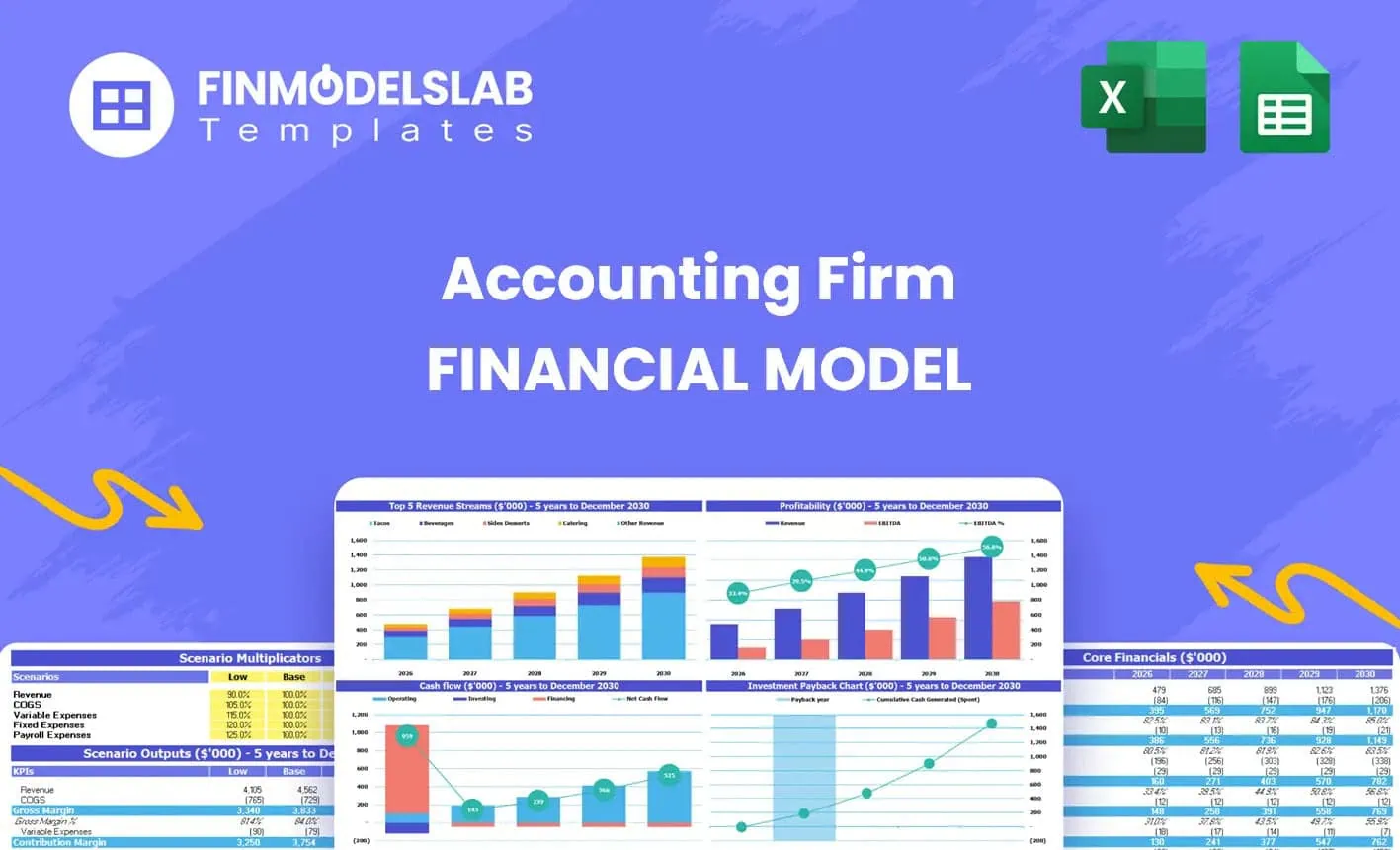
Bookkeeping Agency Financial Model Excel Template
The Accounting Firm Financial Model Template helps founders, practice owners, consultants, analysts,... Read more
 David
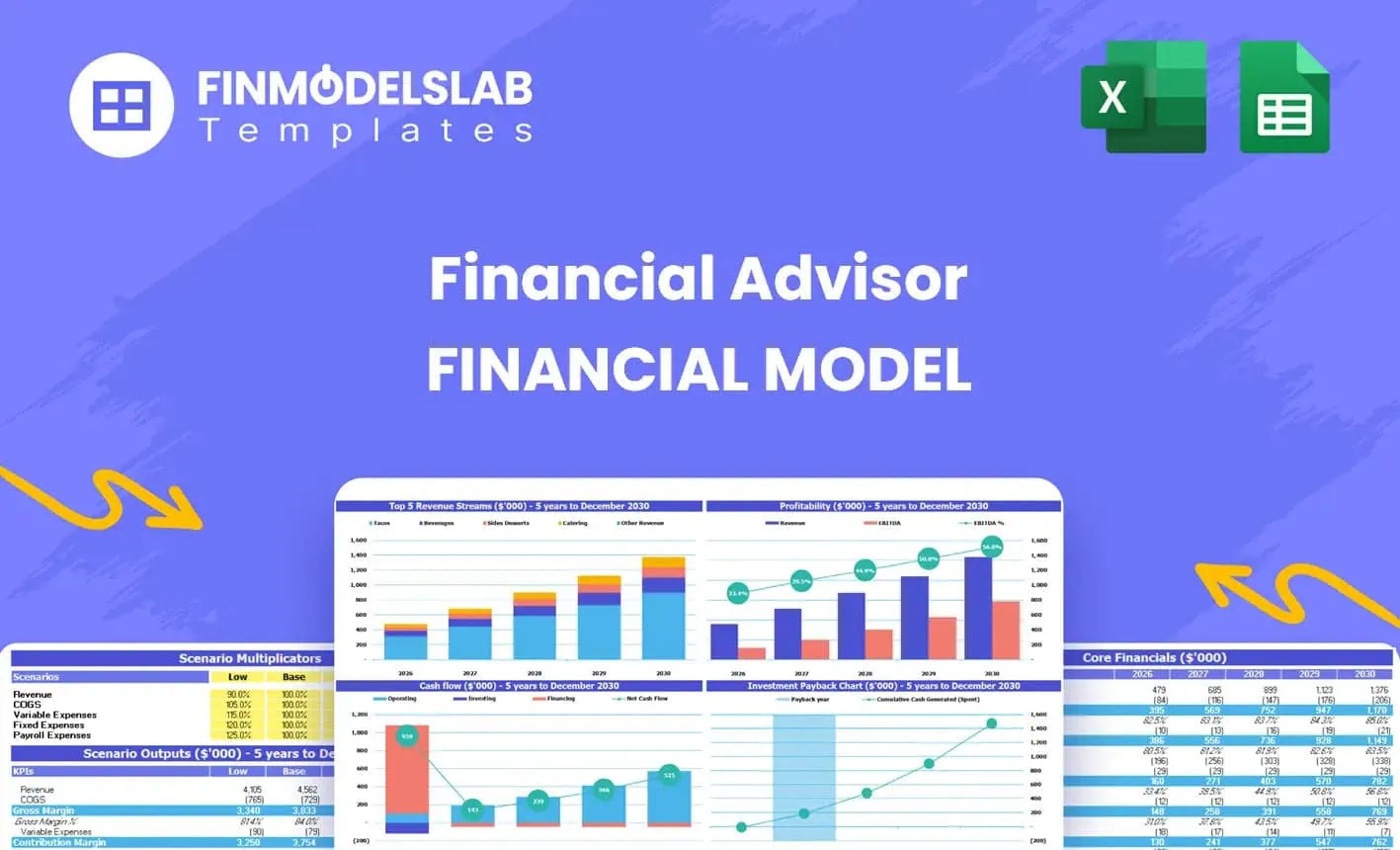
Financial Advisor / Financial Planner Financial Pr...
5-Year 3-Statement Excel projection model for Financial Advisor / Financial Planner business generat... Read more
 ECF Consultancy
Startup Business Plan – Consulting Firm
If you dream to start a Consulting Firm Business, the template is the first step in making your drea... Read more
Financial Advisors Agency Financial Model Excel Te...
The Financial Advisor Financial Model is a ready-to-use financial model template built for planning,... Read more
 Anuj
Private Equity Fund Model (Investor Cashflows)
The Private Equity Fund Cashflows Model helps LPs and GPs analyze fund cash flows, returns, and dist... Read more
Law Firm – 10 Year Financial Model
10-year financial model for a law firm providing forecasts, profitability analysis, and insights to ... Read more
 eFinancialModels
Fiduciary Service Business Financial Planning
The Fiduciary Service Business Financial Model aims to plan the financial feasibility and profitabil... Read more
 Excellent Product