
0 ITEMS

Yoga Studio Financial Model Excel Template
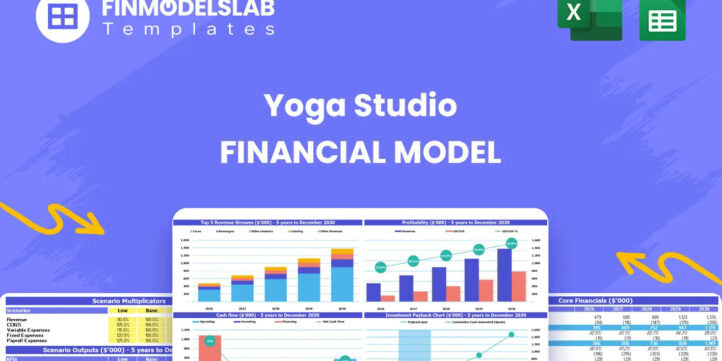
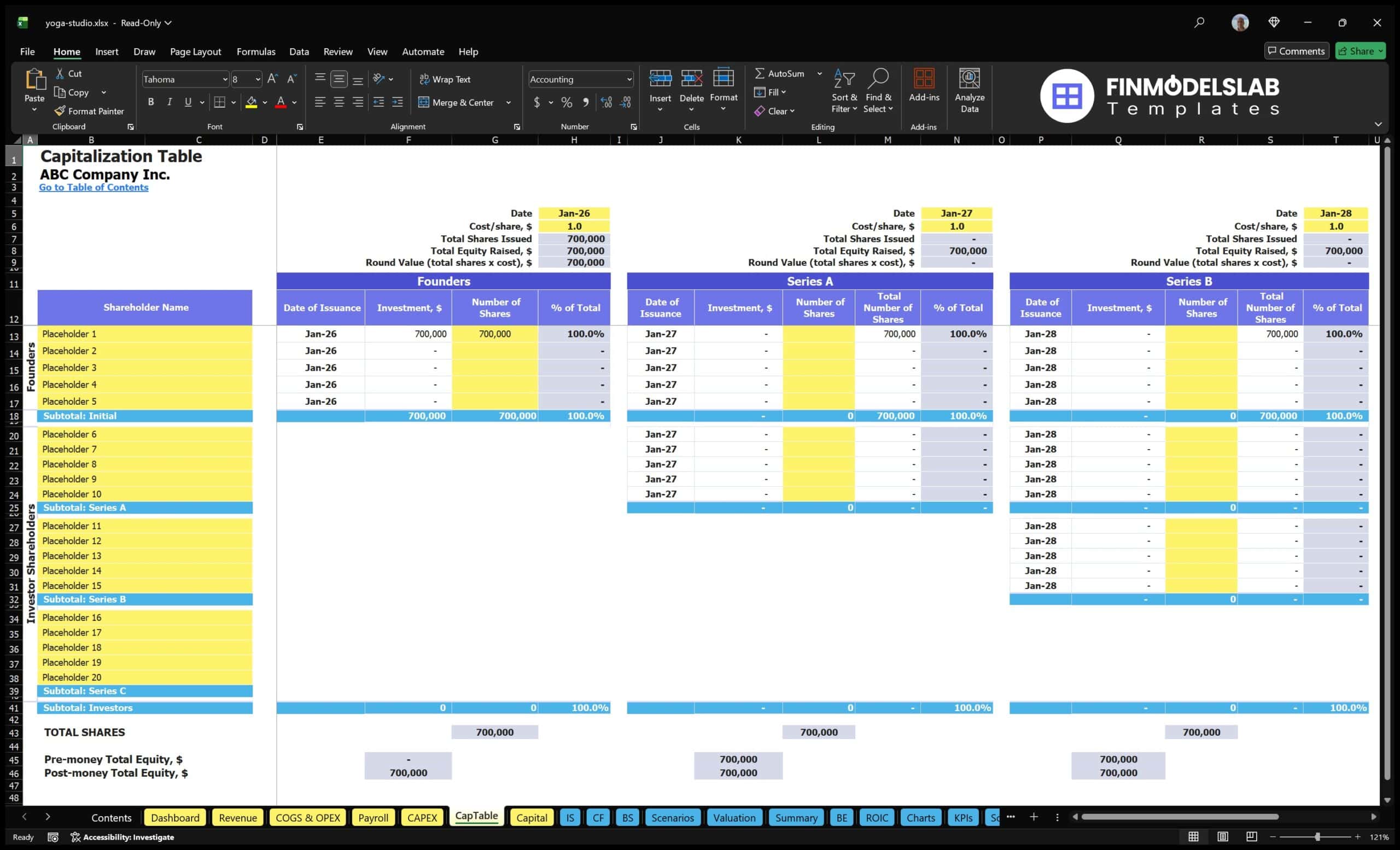
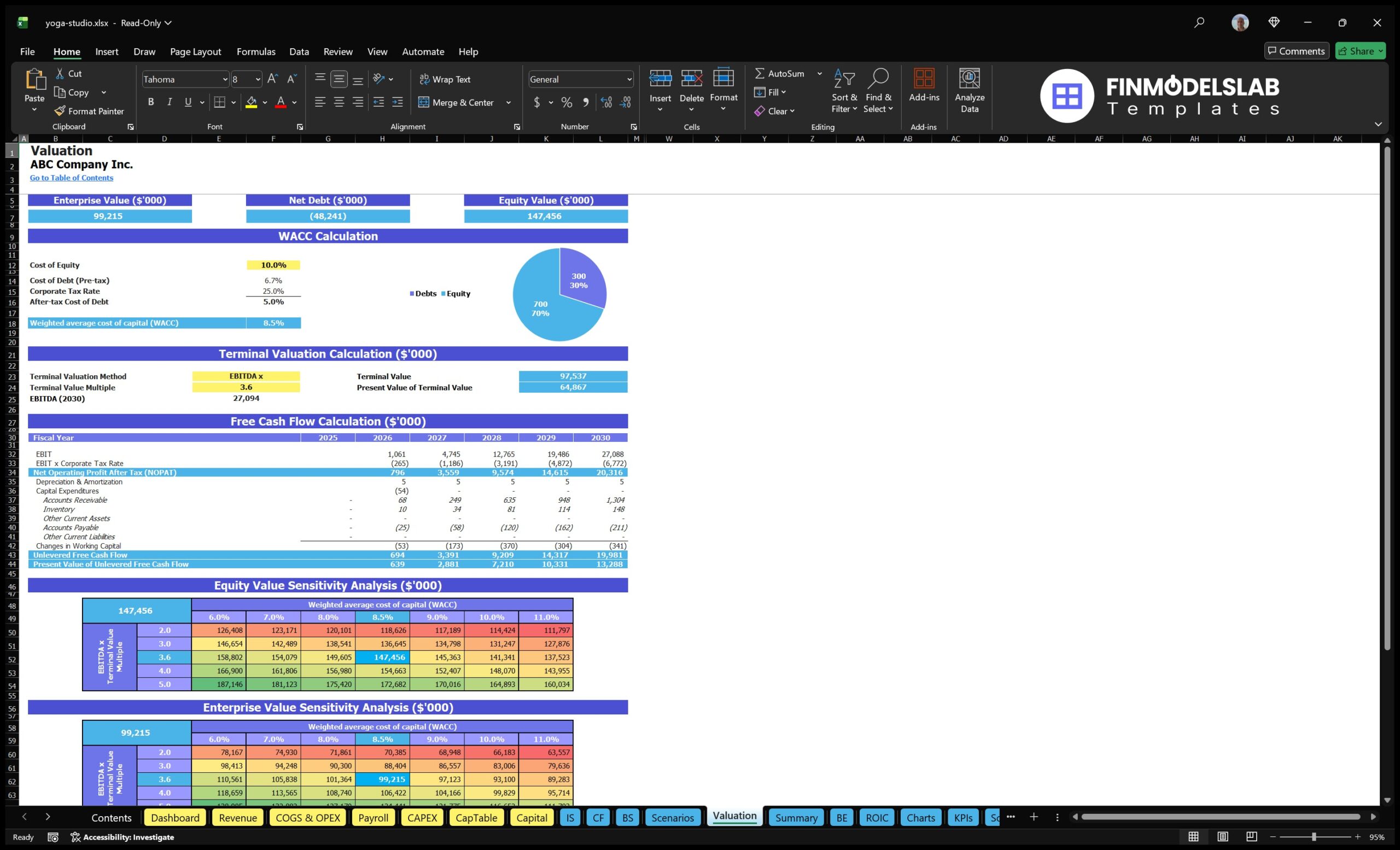
The Yoga Studio Financial Model helps entrepreneurs, founders, studio owners, consultants, and financial planners turn a yoga studio concept into a structured financial forecast. Instead of relying on disconnected spreadsheets or rough estimates, users can work from a ready-made model designed around the economics of a yoga studio, including class capacity, memberships, class packs, drop-in passes, workshops, retail sales, staffing, rent, marketing, and operating expenses. The template supports practical financial planning by connecting revenue assumptions with costs, cash flow, profitability, and funding requirements. This financial model template is useful for anyone preparing a yoga studio business plan, lender package, investor presentation, internal budget, or expansion plan. It gives users a clear way to estimate startup costs, forecast monthly and annual revenue, review payroll requirements, model operating expenses, and understand how different assumptions affect the business. By adjusting key drivers such as occupancy rates, pricing, instructor compensation, membership mix, and growth expectations, users can evaluate whether the studio has enough revenue potential to support its cost structure and reach sustainable profitability. The template is built to support decision-making before launch and during operations. It helps users answer important questions such as how much capital is needed, how quickly the studio may become profitable, which revenue streams matter most, whether cash flow remains healthy, and what happens under conservative, base, or optimistic scenarios. The model also helps clarify break-even analysis, giving users a better understanding of how many members, classes, or sales may be required to cover fixed and variable costs. Designed for Excel and Google Sheets, the Yoga Studio Financial Model is editable, presentation-friendly, and structured for both non-financial users and experienced analysts. It can be customized for a boutique yoga studio, wellness space, membership-based studio, or growing fitness concept. With built-in reports, dashboards, charts, and assumption areas, the template saves time while helping users create a more credible financial plan for funding, budgeting, strategy, and ongoing performance review.
Financial Model Overview
The Yoga Studio Financial Model is a ready-to-use financial model template designed to help users plan, forecast, and evaluate the financial performance of a yoga studio. It brings together the main drivers of the business, including class capacity, membership pricing, class pack sales, drop-in revenue, workshops, retail sales, instructor costs, rent, payroll, marketing, startup investment, and ongoing operating expenses. For a yoga studio, financial clarity is especially important because profitability depends on balancing class occupancy, pricing, instructor compensation, schedule efficiency, and recurring membership revenue. This template gives entrepreneurs, studio owners, consultants, analysts, and business plan writers a structured way to test assumptions, prepare funding documents, and make more confident decisions before launch or expansion. Instead of building a complex workbook from scratch, users can start with an editable model that organizes inputs, automates projections, and presents outputs in a format suitable for internal planning, lender discussions, investor presentations, and management review.
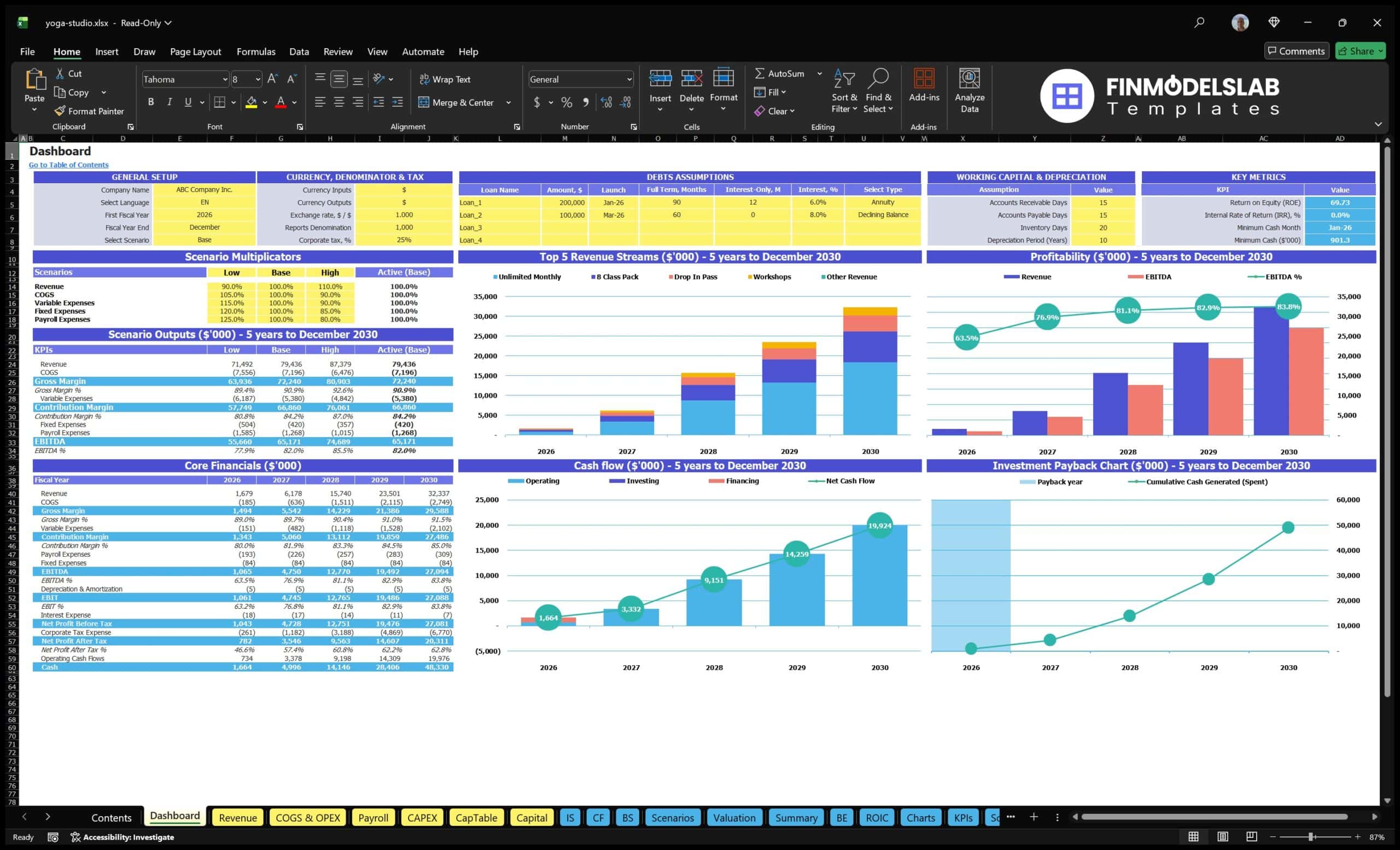
All-in-One Dashboard
The all-in-one dashboard gives users a central place to review the core inputs and outputs of the Yoga Studio Financial Model. It is designed to summarize the most important financial assumptions and results without forcing users to search through multiple tabs or separate calculations. Inputs may include membership pricing, class pack volume, drop-in attendance, workshop participation, retail assumptions, staffing levels, rent, marketing spend, and opening costs. Outputs may include projected revenue, gross profit, EBITDA, cash balance, payback timing, profitability indicators, and other headline metrics. This component is useful because it connects the operating logic of a yoga studio with the financial results that owners, lenders, and investors want to see. A founder can quickly understand whether the business plan is financially viable, while a consultant or analyst can use the dashboard to review the impact of assumption changes and explain the overall financial story in a clear, professional format.
Low, Base, and High Scenario Analysis
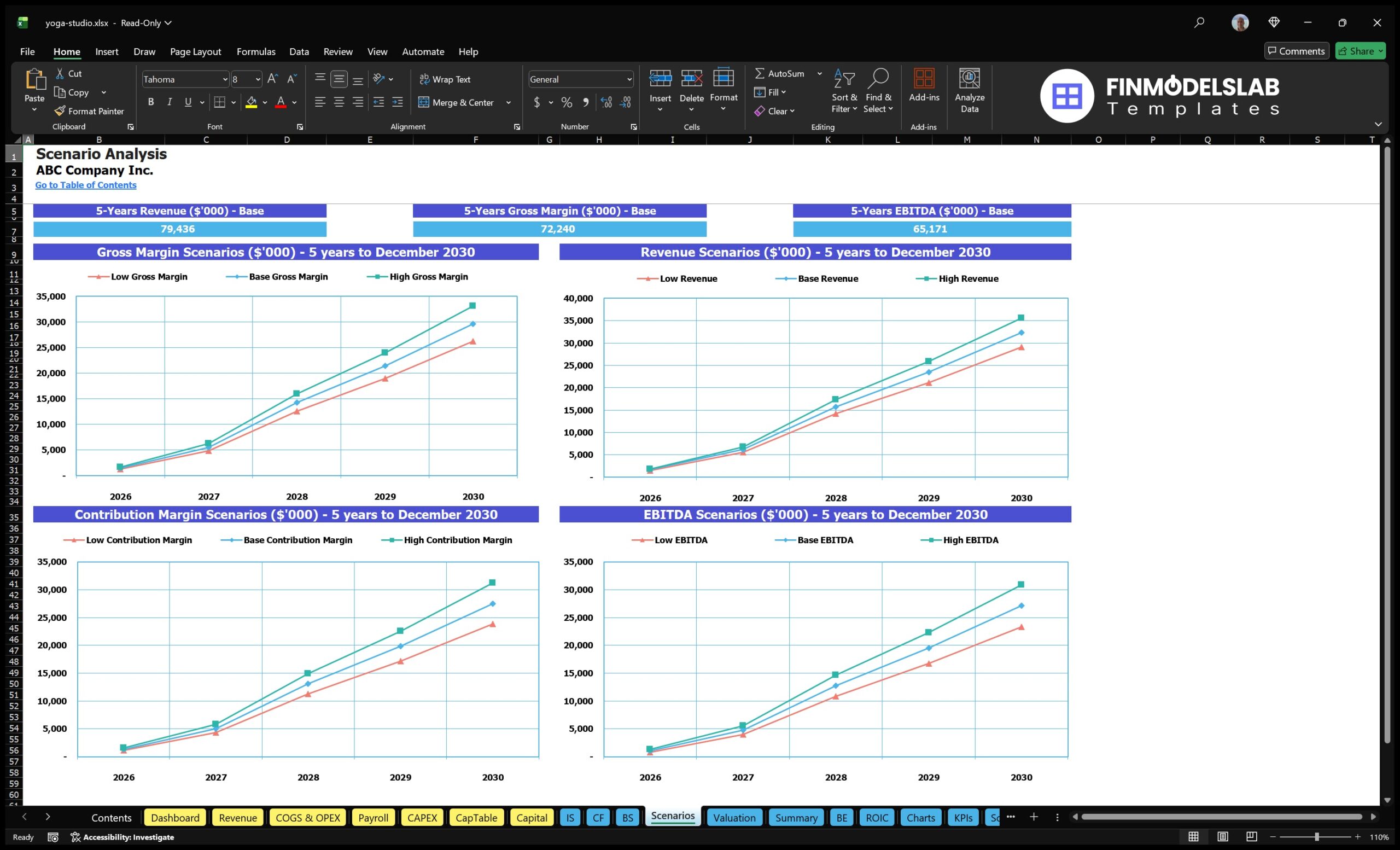
The low, base, and high scenario analysis component helps users compare how the yoga studio may perform under different business conditions. A low scenario may reflect slower membership growth, lower occupancy, reduced workshop attendance, or more conservative pricing. A base scenario can represent the expected operating plan, while a high scenario may model stronger demand, better class utilization, higher retention, or successful premium offerings. By adjusting assumptions such as occupancy rates, class package sales, instructor costs, rent levels, marketing efficiency, or retail margins, the template shows how revenue, profitability, cash flow, and funding needs change across scenarios. This is especially useful for yoga studio planning because demand can vary by location, schedule, seasonality, brand positioning, and community engagement. Scenario analysis helps users prepare for risk, set realistic expectations, support contingency planning, and present stakeholders with a more complete view of potential outcomes instead of a single static forecast.
Professional Charts
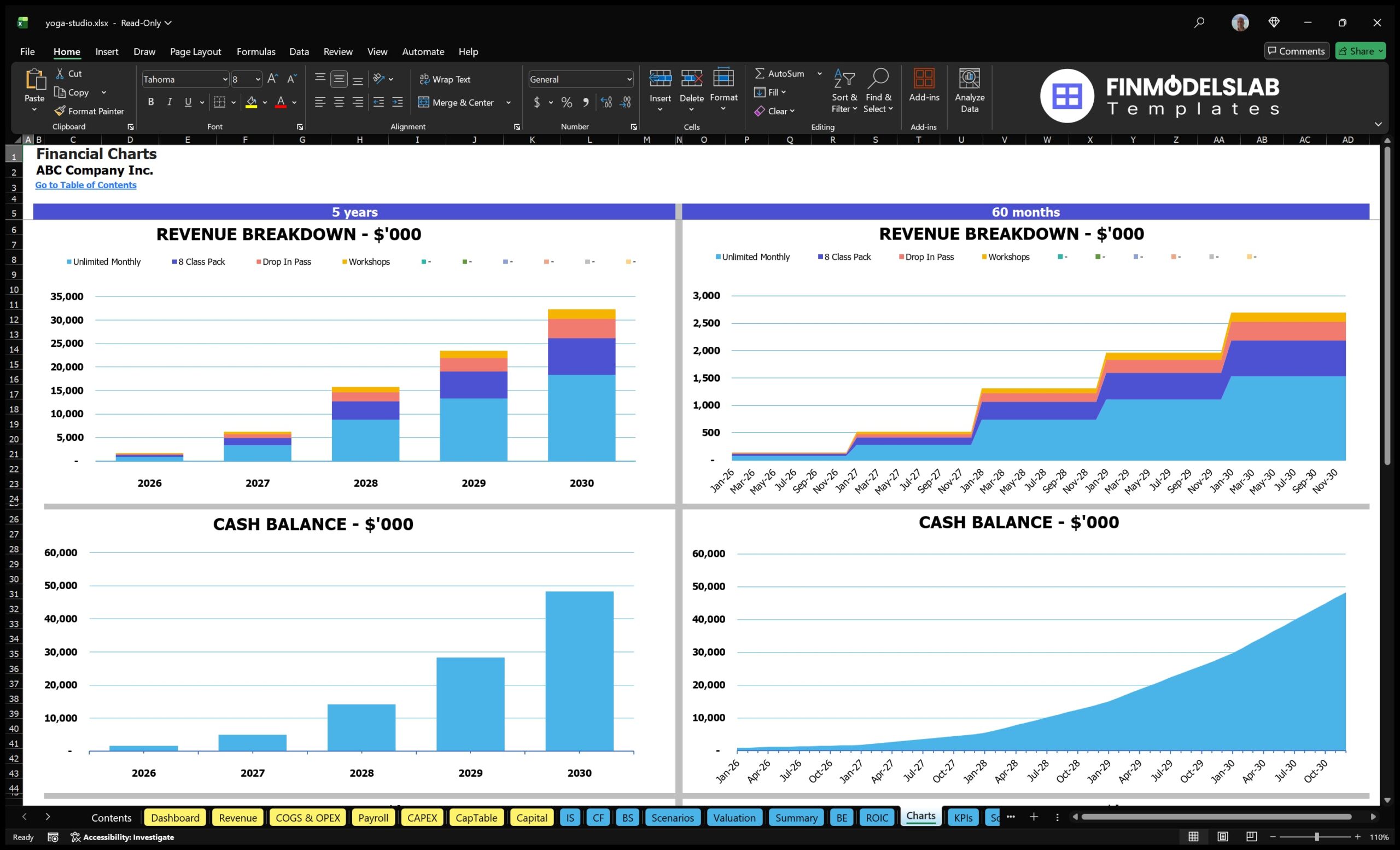
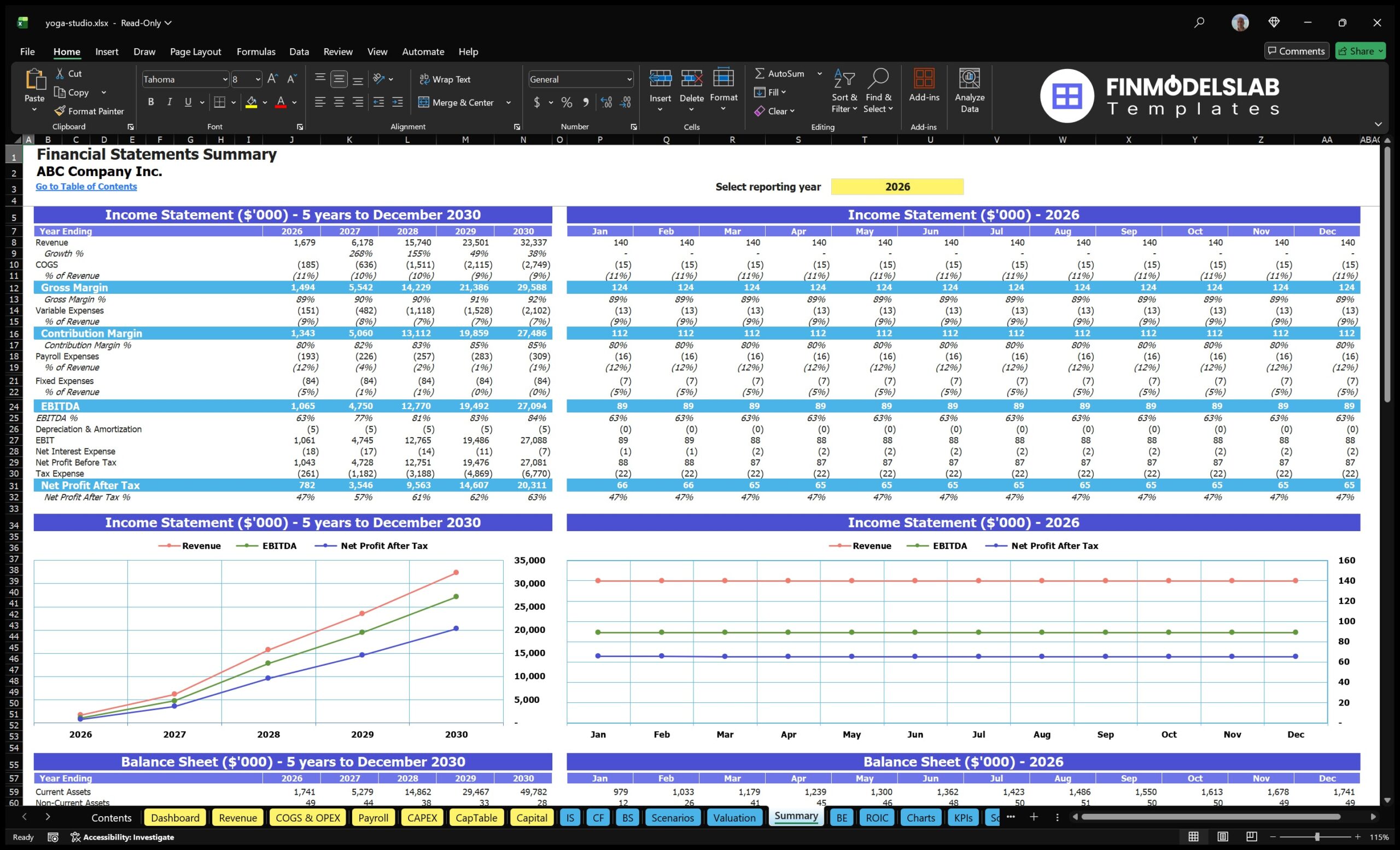
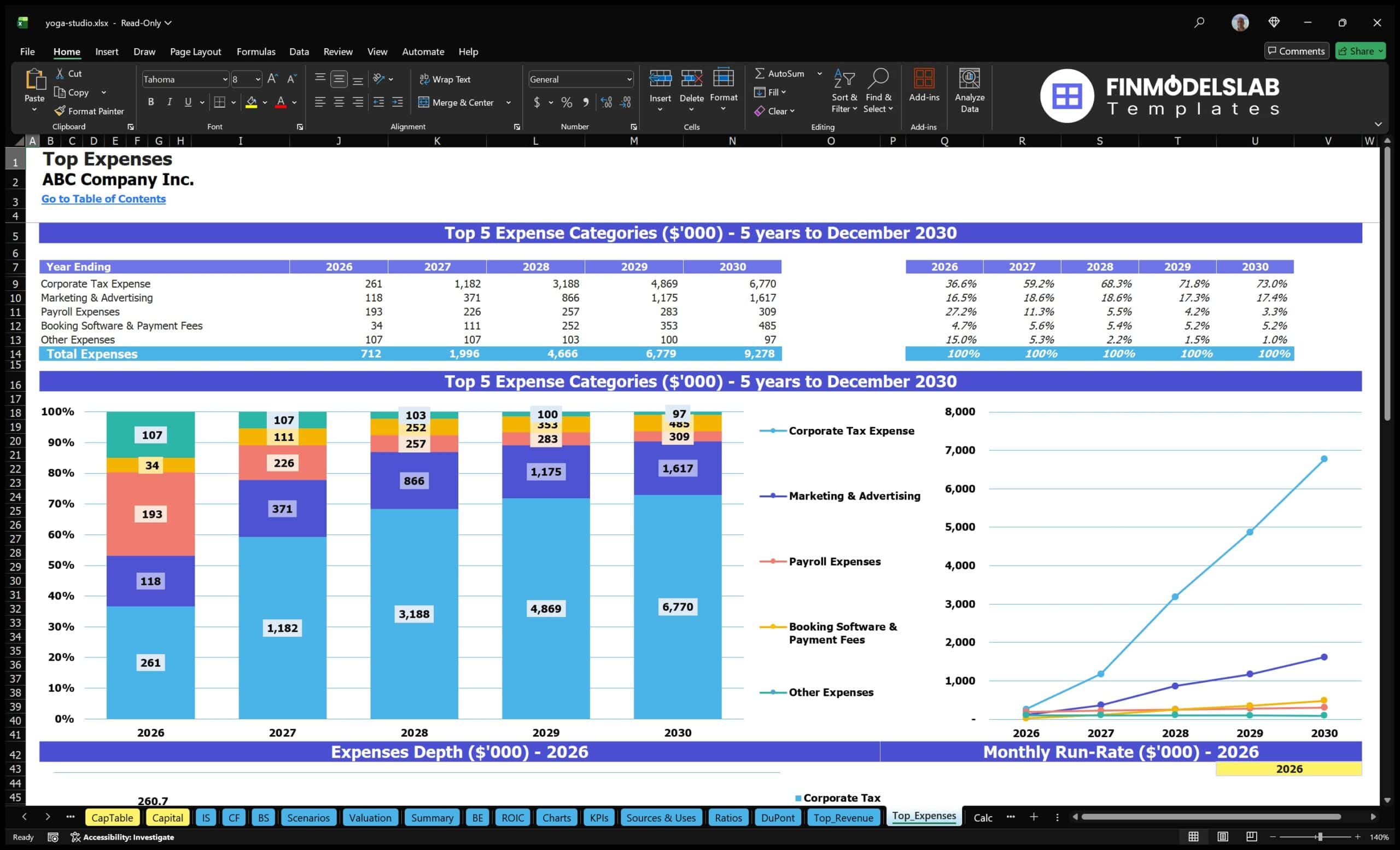
The professional charts component converts the financial forecast into presentation-ready visuals that make the model easier to understand and share. Charts may display revenue growth, expense trends, EBITDA development, cash flow movement, revenue mix, profit margins, or key performance indicators over time. For a yoga studio business plan, visual reporting is valuable because stakeholders often need to grasp the financial direction quickly, especially during lender meetings, investor conversations, partner discussions, or internal planning sessions. Instead of relying only on detailed tables, users can show the relationship between revenue streams, costs, and profitability in a clear visual format. The charts also help identify patterns that may be missed in raw numbers, such as rising payroll pressure, improving cash position, changing revenue mix, or margin expansion as occupancy increases. This component supports better communication, faster review, and more polished financial presentations for both startup and growth planning.
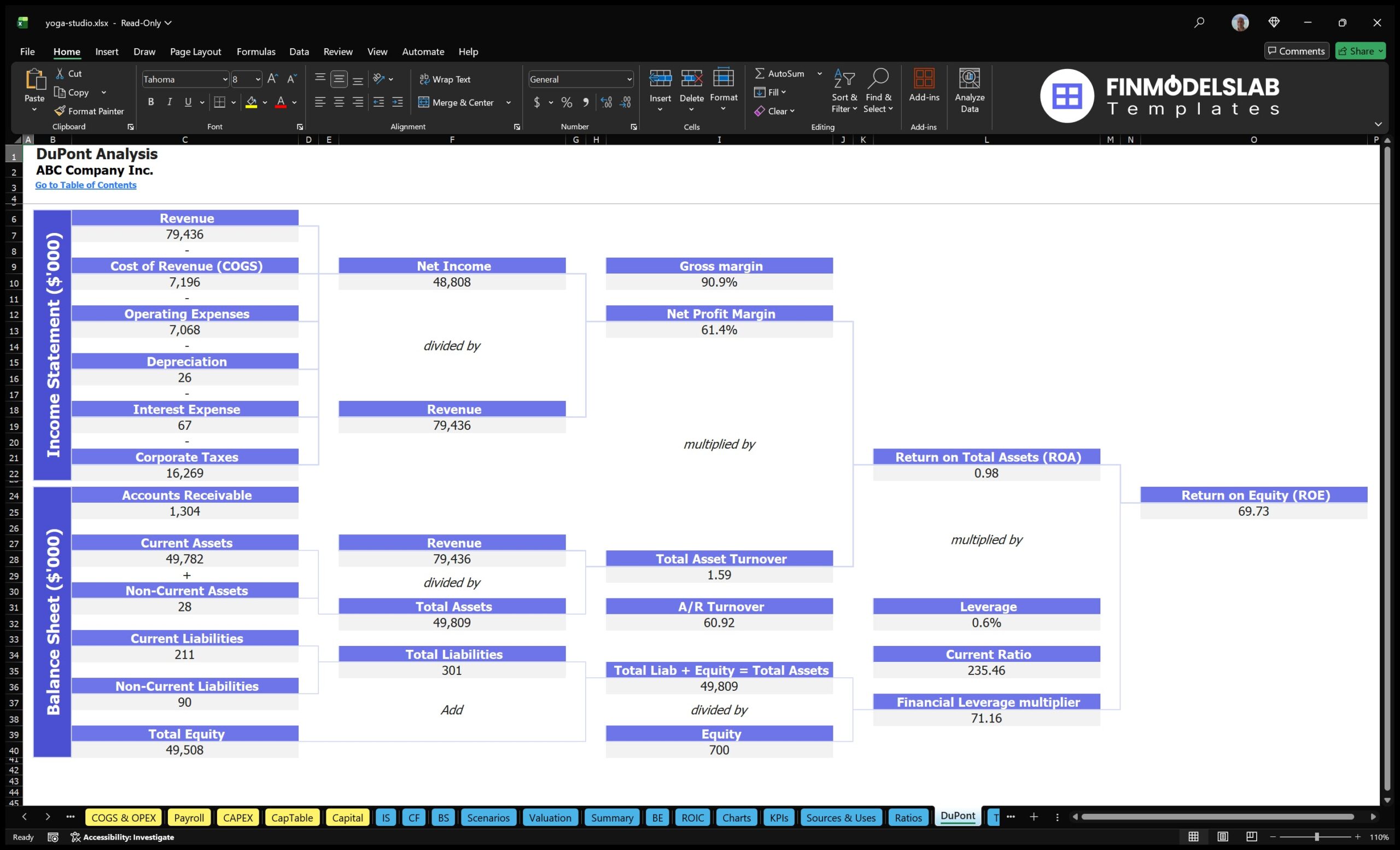
ROE Components and DuPont Analysis
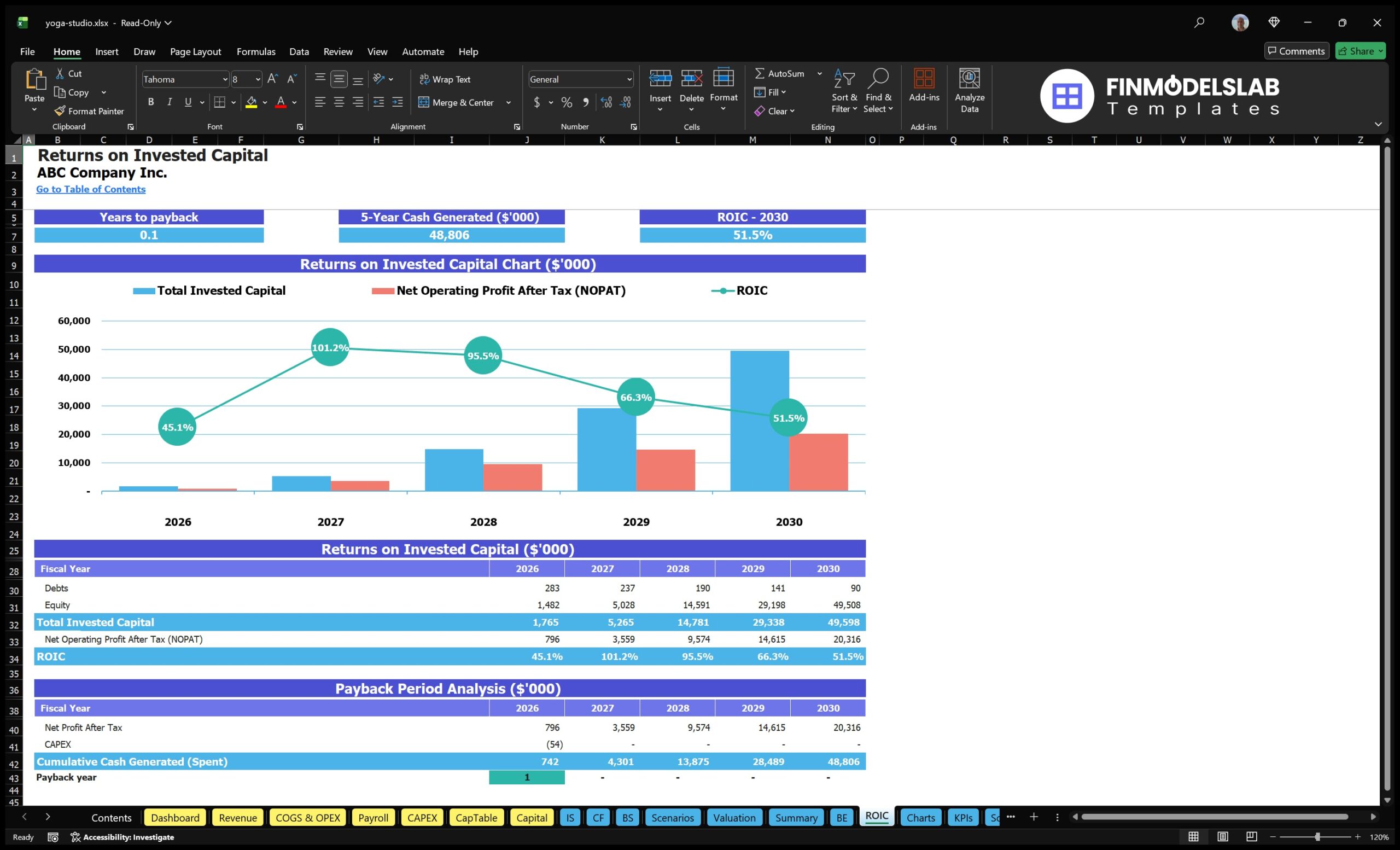
The ROE components and DuPont analysis section helps users understand what is driving return on equity and overall investor returns in the Yoga Studio Financial Model. Rather than looking at return on equity as a single output, this component breaks performance into underlying drivers such as profitability, asset efficiency, and leverage. Inputs and calculations may connect net income, revenue, assets, equity, and debt assumptions to show how operational choices affect financial returns. For a yoga studio, this can help users assess whether returns are being driven by healthy margins, efficient use of startup capital, strong recurring revenue, or financial structure. This is useful for entrepreneurs seeking investment, owners comparing expansion options, and analysts evaluating whether the studio can generate attractive returns relative to the capital invested. By showing the components behind ROE, the model helps users move beyond headline profitability and understand the quality, sustainability, and risk profile of projected returns.
Revenue Inputs
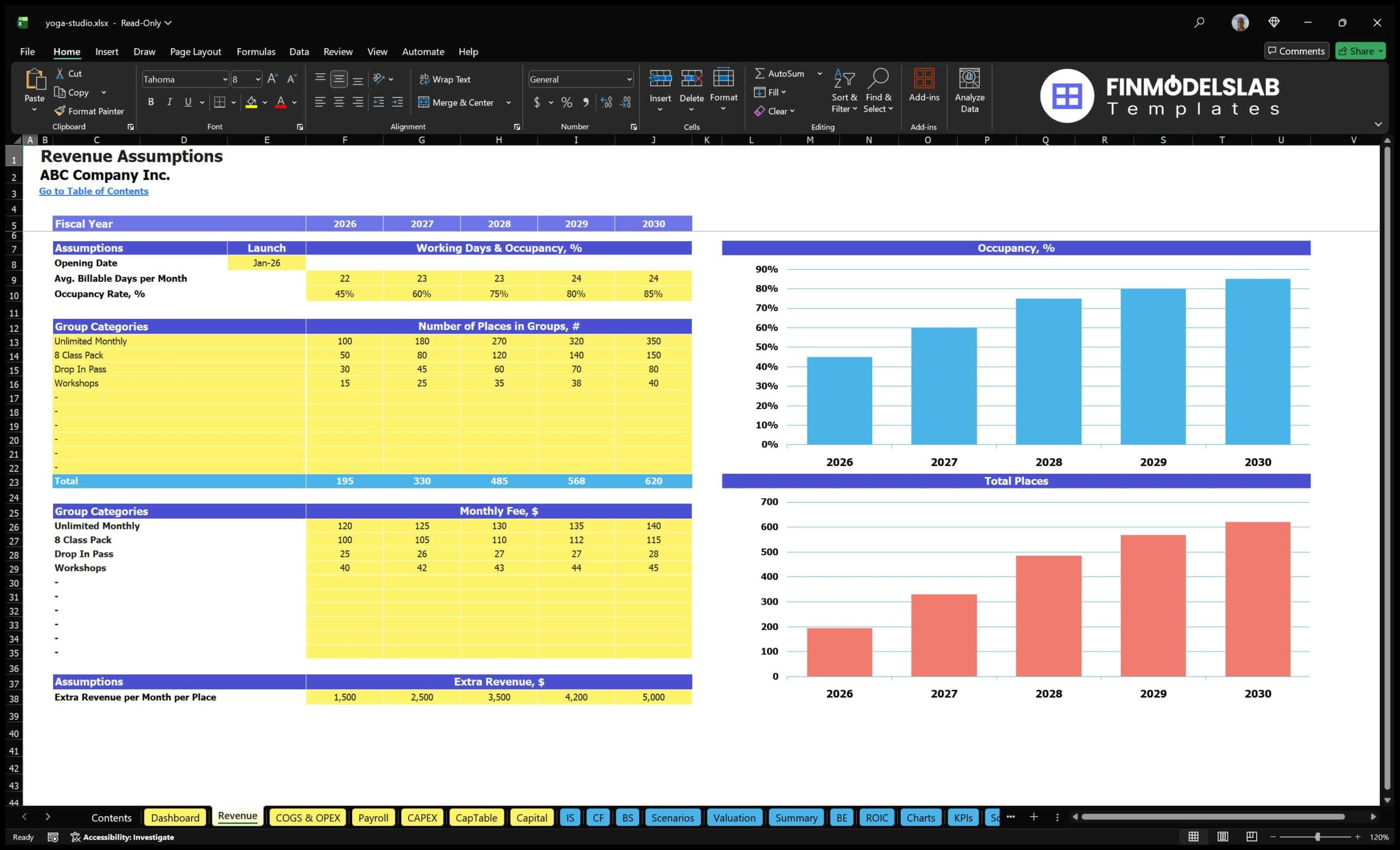
The revenue inputs component allows users to define the commercial assumptions that drive the yoga studio forecast. It may include inputs for unlimited monthly memberships, class packs, drop-in passes, specialty workshops, private sessions, events, retreats, and retail sales. Users can enter assumptions such as available spots, occupancy rates, package prices, expected sales volume, utilization, growth rates, and seasonal changes. The model then uses these assumptions to calculate monthly and annual revenue projections. This section is especially important because yoga studio revenue depends heavily on capacity management and customer behavior. A studio with strong pricing but low occupancy may underperform, while a studio with balanced membership sales, workshops, and retail may generate more stable income. By making the revenue drivers explicit, this component helps users test pricing strategies, evaluate membership targets, identify high-value offerings, and build a more defensible financial plan for business planning, funding, or operating decisions.
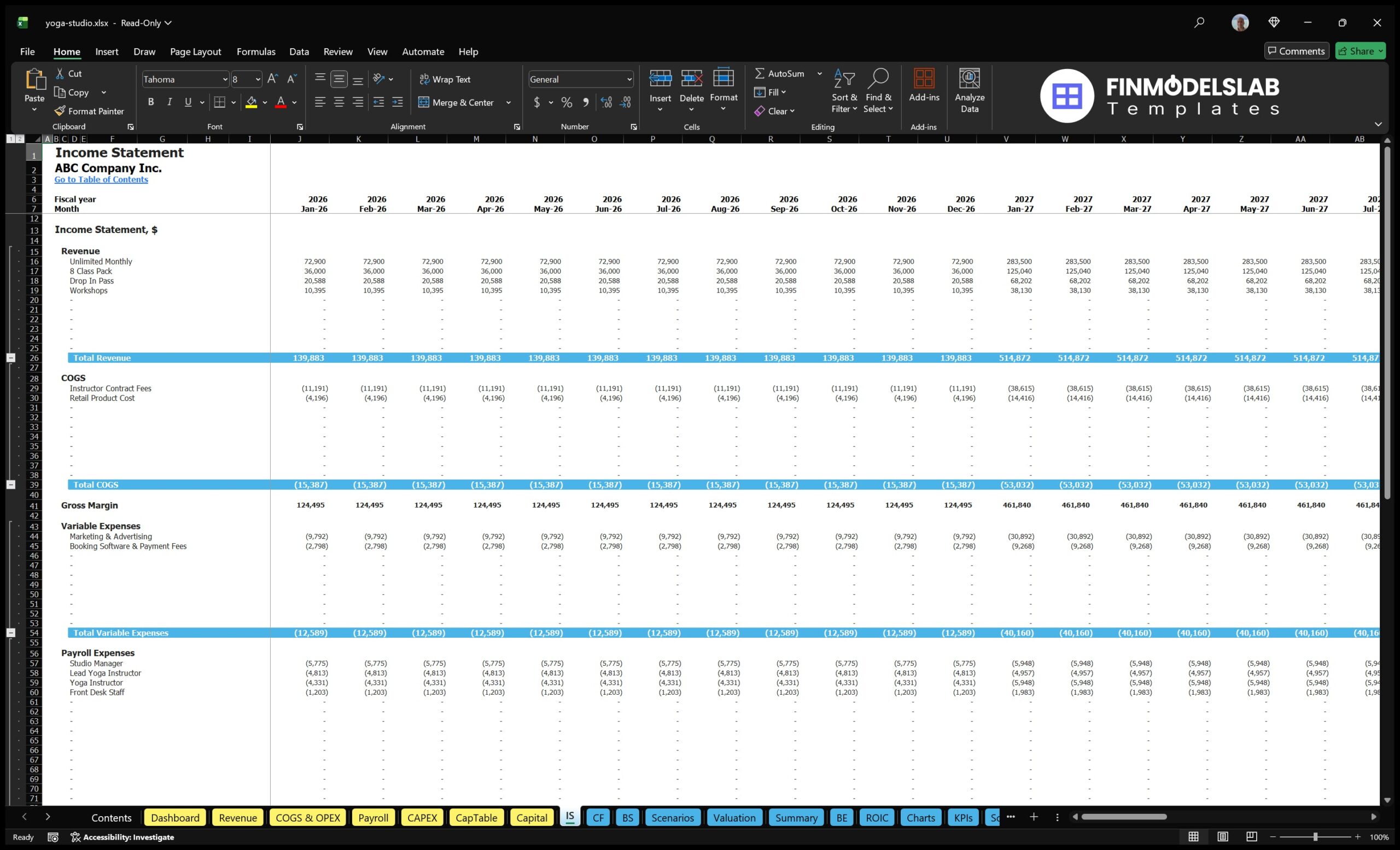
Bank-Ready Financial Reports
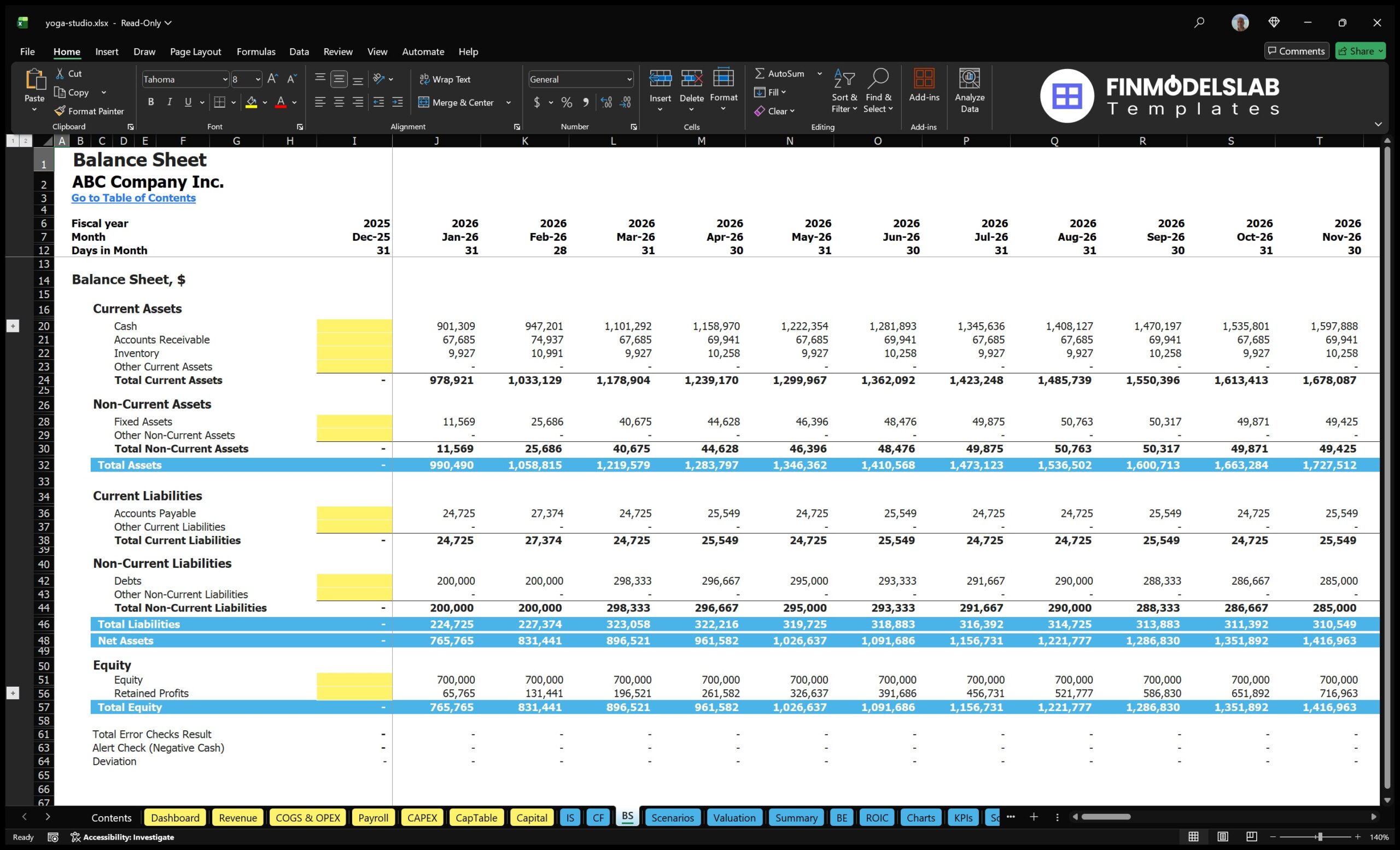
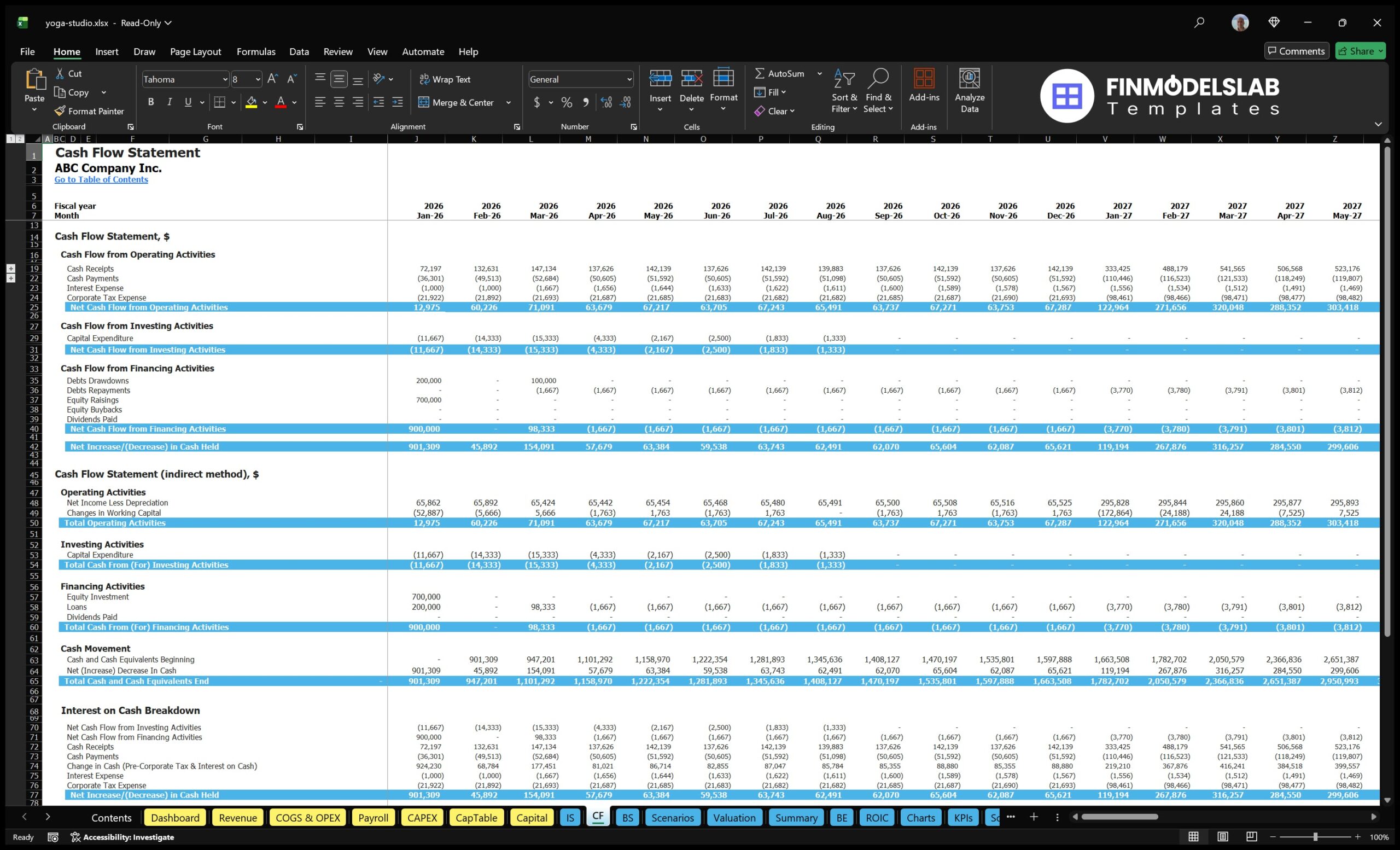
The bank-ready financial reports component organizes the model outputs into lender-friendly and investor-ready statements and summaries. It may include projected profit and loss, cash flow, balance sheet summaries, revenue and expense schedules, funding needs, and key assumptions. These reports are formatted to help stakeholders understand how the yoga studio expects to generate revenue, manage expenses, repay obligations, maintain liquidity, and reach profitability. For users preparing a loan application or funding package, this component is valuable because lenders typically want clear financial statements, realistic assumptions, and evidence that the business can cover costs and debt service. The reports also help founders and owners communicate the plan professionally without needing to manually rebuild statements from the underlying forecast. By connecting assumptions to financial outputs, the Yoga Studio Financial Model supports more credible conversations with banks, investors, landlords, partners, and advisors.
Revenue Breakdown
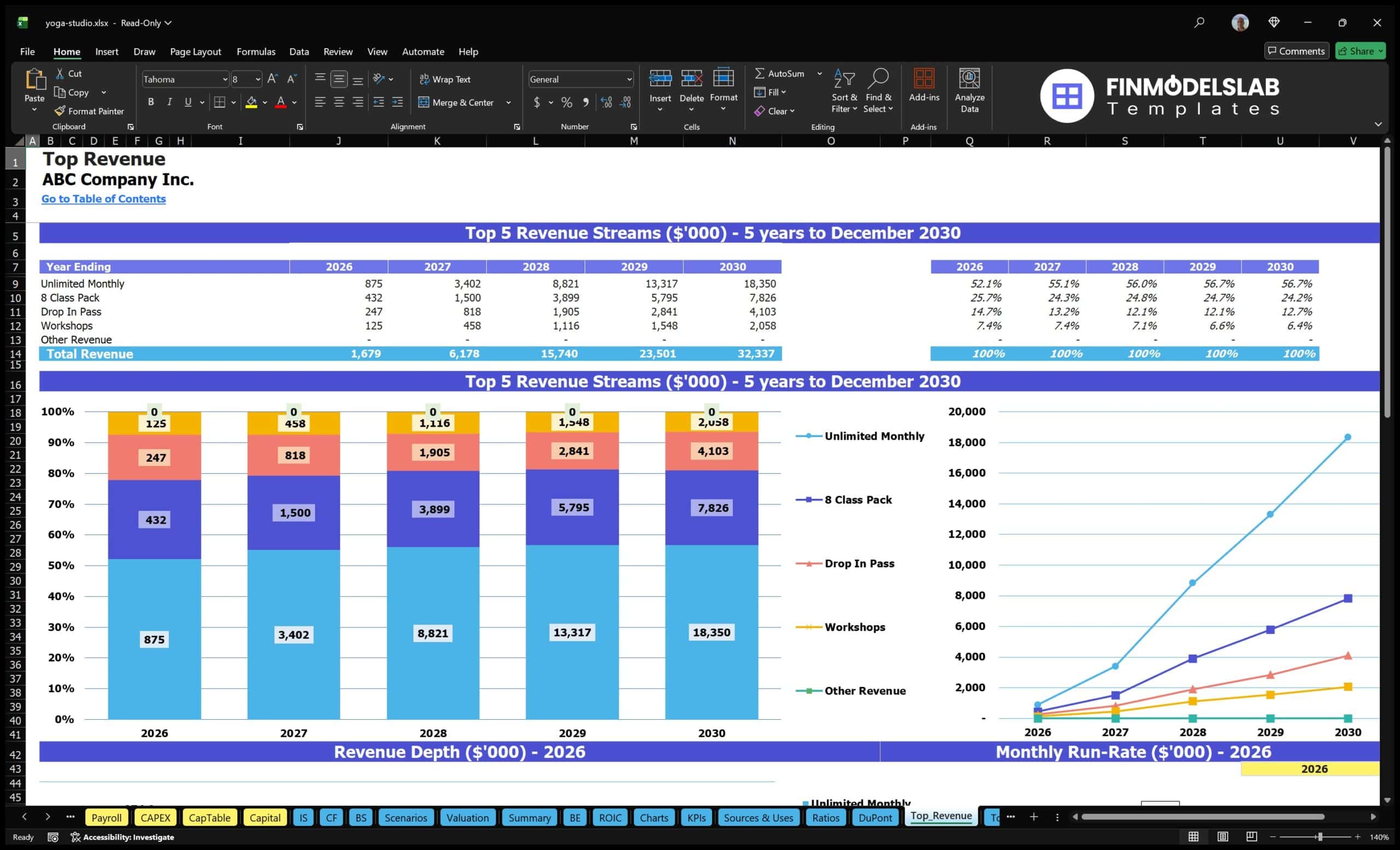
The revenue breakdown component gives users a detailed view of how each revenue stream contributes to total studio income. It separates income from memberships, class packs, drop-in passes, workshops, retail sales, and other services so users can understand which activities drive the business model. This section may calculate monthly revenue by multiplying capacity, utilization, pricing, and expected volume for each stream. It can also help users review the changing mix of revenue over time as the studio grows, adds programs, improves occupancy, or expands premium offerings. For a yoga studio, this is useful because not all revenue streams have the same margin, predictability, or operational impact. Memberships may provide recurring income, drop-ins may reflect local traffic and brand awareness, workshops may create higher-margin opportunities, and retail may supplement customer value. A detailed revenue breakdown helps users refine pricing, prioritize growth initiatives, evaluate service mix, and explain the business model more clearly in financial planning documents.
KPI Dashboard
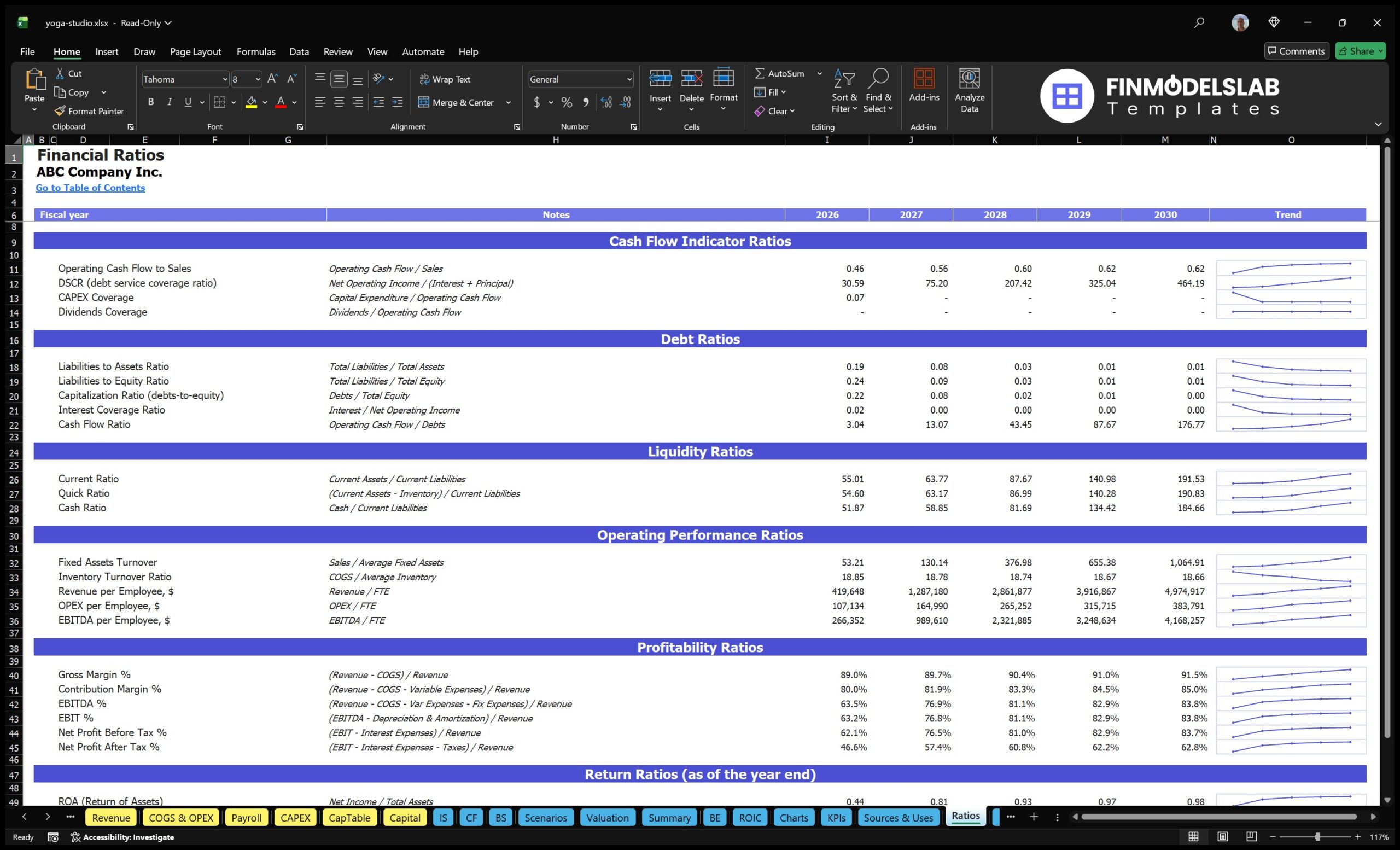
The KPI dashboard component focuses on performance metrics and benchmarks that help users monitor the health of the yoga studio. It may include metrics such as revenue growth, gross margin, EBITDA margin, cash balance, class occupancy, membership levels, revenue per customer, payroll as a percentage of revenue, operating expense ratios, break-even progress, and return indicators. For users comparing their plan against industry expectations, the KPI dashboard provides a practical way to validate assumptions and identify potential weaknesses. A studio may appear profitable on the income statement, but KPI review can reveal whether margins are too thin, occupancy assumptions are too aggressive, or staffing costs are growing faster than revenue. This component is useful for both planning and ongoing management because it turns the financial forecast into measurable targets. Owners can use it to track performance against goals, consultants can use it to benchmark the plan, and stakeholders can use it to evaluate whether the studio is financially disciplined.
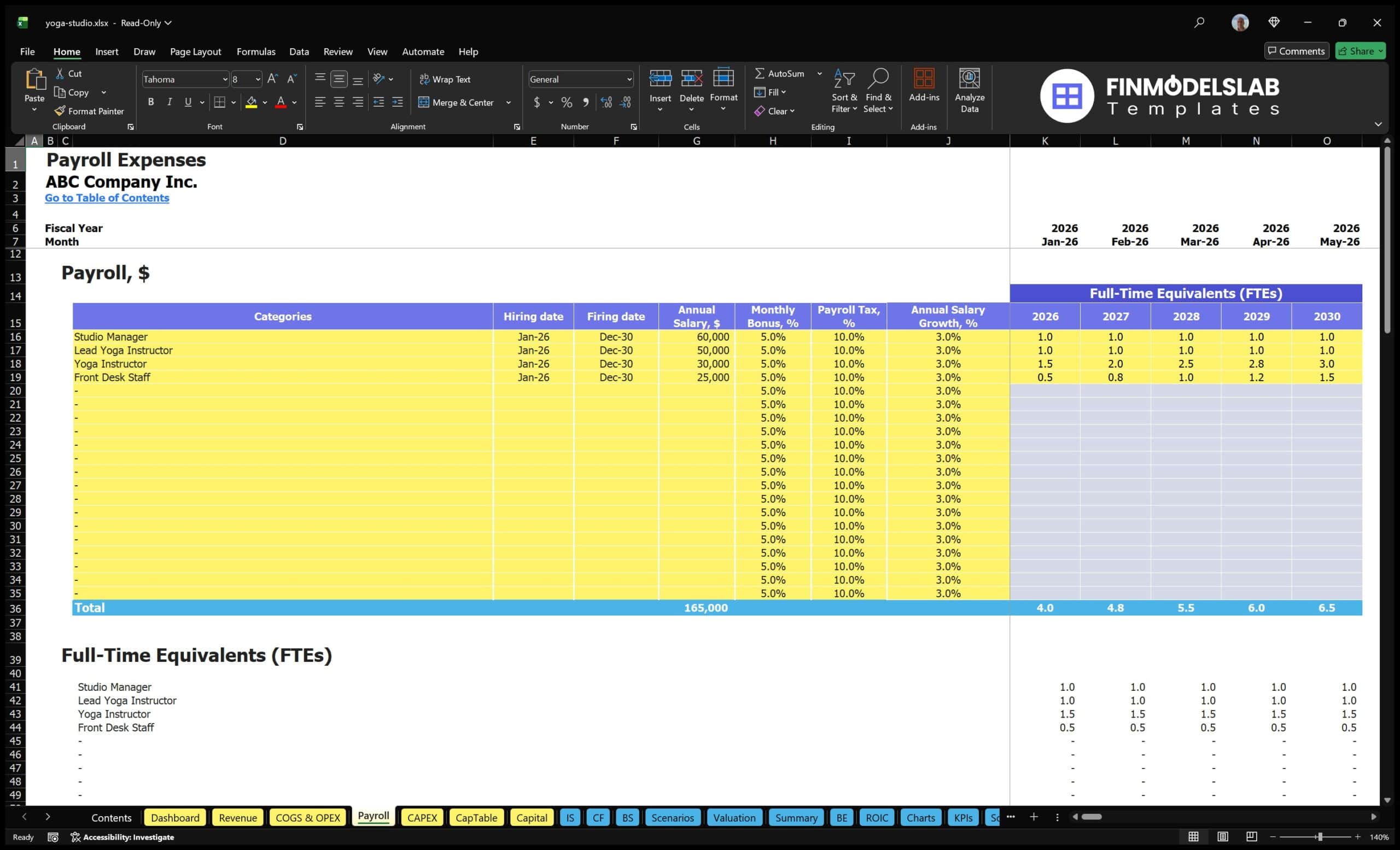
Startup and Operating Cost Planner
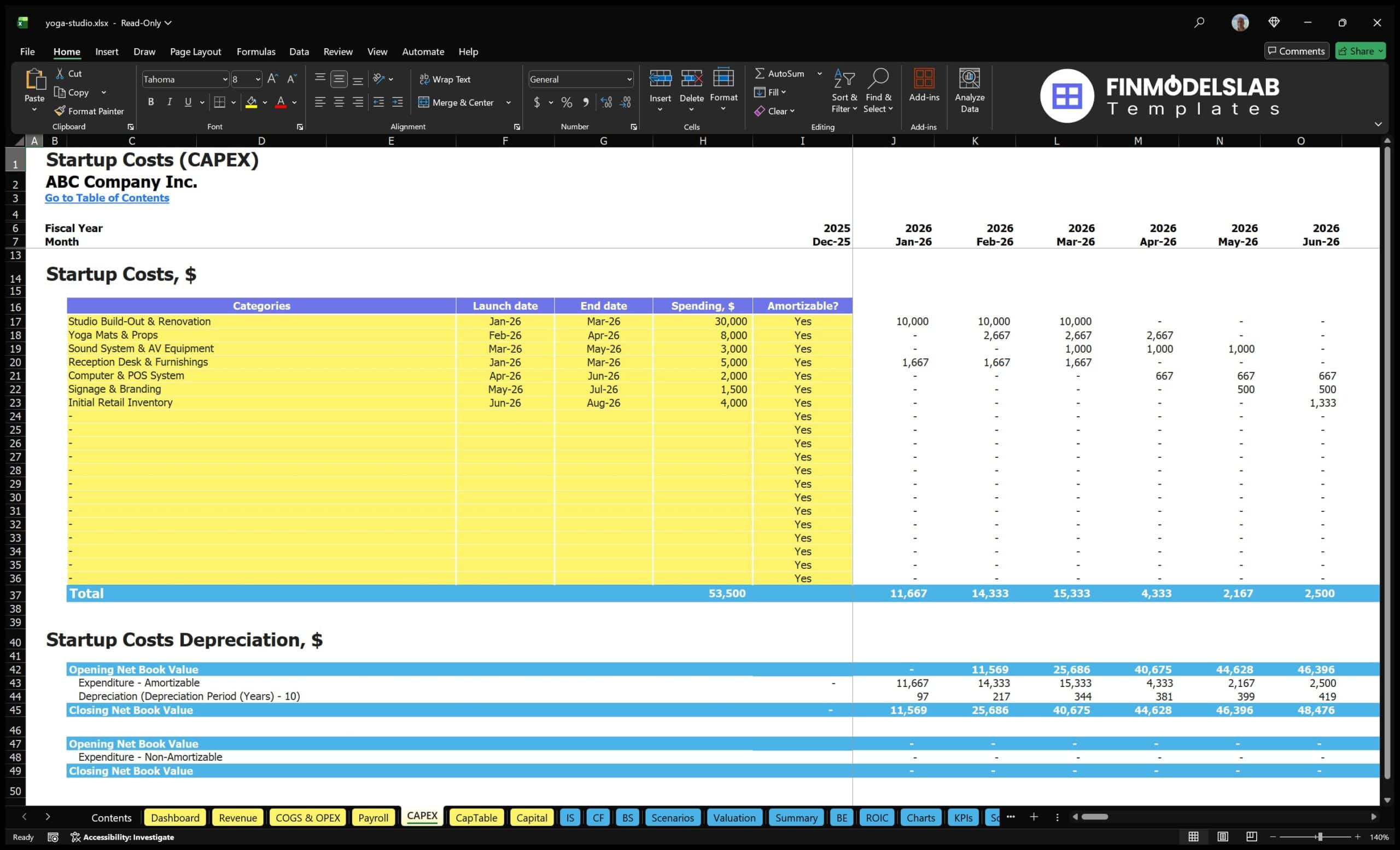
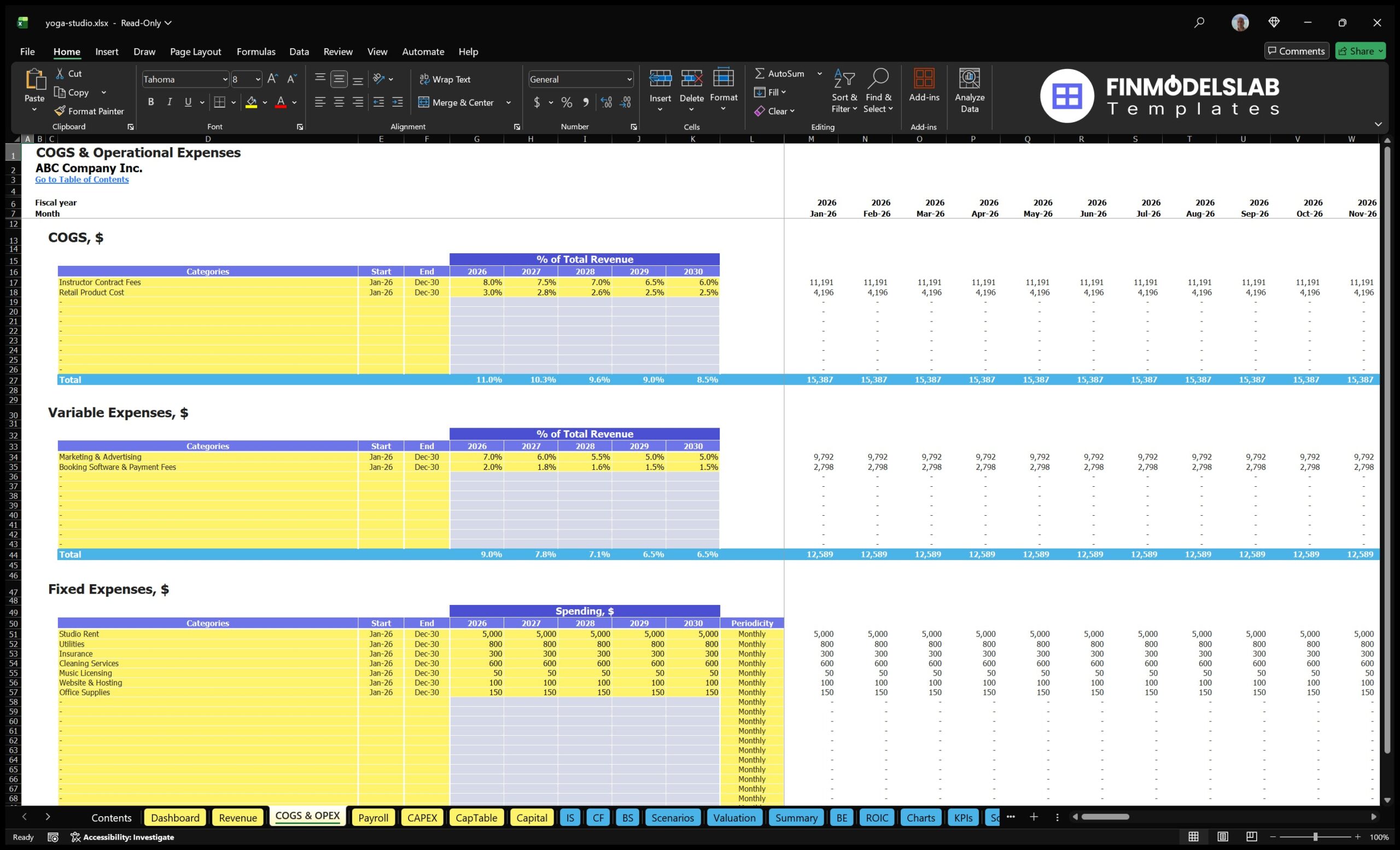
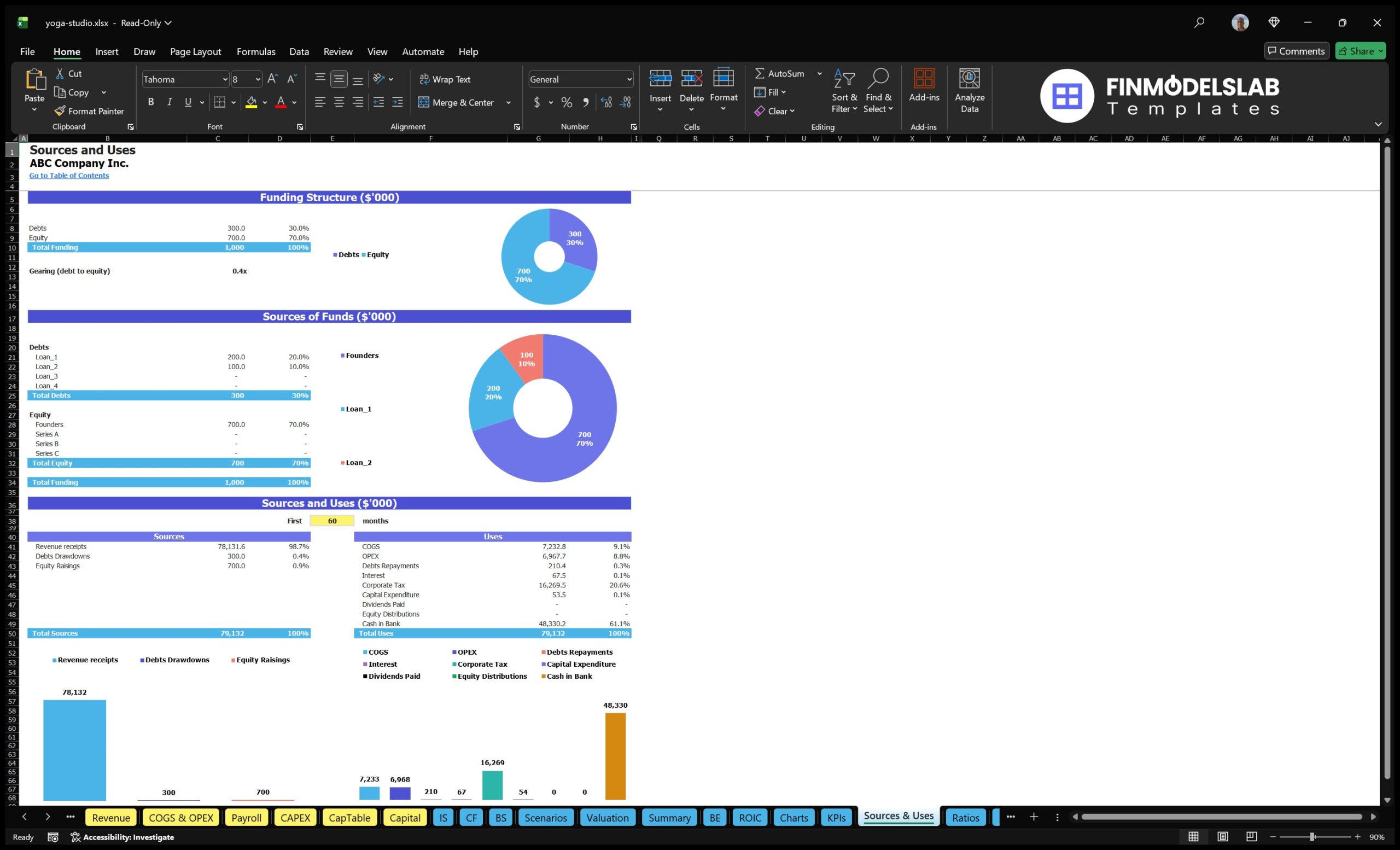
The startup and operating cost planner helps users estimate the investment required to open the yoga studio and the recurring expenses needed to run it. Startup costs may include studio build-out, renovation, yoga mats, props, reception furnishings, initial retail inventory, deposits, licenses, technology setup, signage, launch marketing, and working capital. Operating expenses may include rent, utilities, instructor fees, staff salaries, software, insurance, cleaning, marketing, payment processing, maintenance, and administrative costs. This component is useful because many yoga studio plans underestimate the cash needed before revenue stabilizes. By separating one-time startup costs from recurring monthly costs, the model helps users calculate total funding requirements, build a realistic budget, and avoid early cash pressure. It also supports decision-making around lease negotiations, equipment purchases, hiring plans, and marketing spend. For funding documents, this section gives lenders and investors a transparent view of how capital will be used and why the requested amount is necessary.
Break-Even Analysis
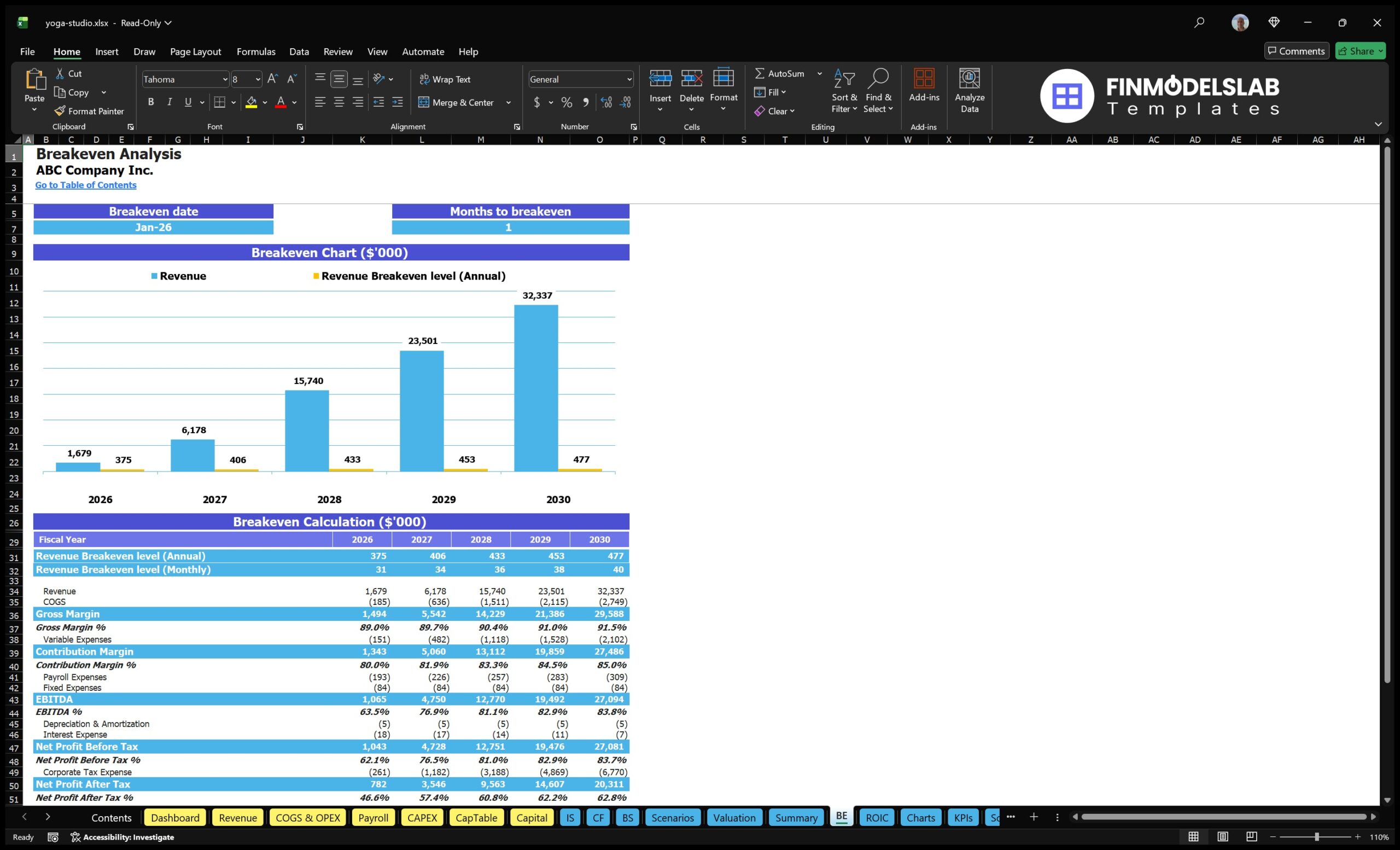
The break-even analysis component helps users understand when the yoga studio’s revenue is expected to cover its fixed and variable costs. It connects sales assumptions, occupancy levels, membership volume, class package purchases, pricing, instructor costs, rent, payroll, marketing, and other expenses to estimate the point at which the studio becomes profitable. This is one of the most important planning tools for a yoga studio because owners need to know how many members, drop-ins, workshops, or class packages are required to sustain operations. The section can help users test whether their pricing strategy and capacity assumptions are realistic, whether fixed overhead is too high, and how quickly the studio may move from launch to profitability. For lenders and investors, break-even analysis provides a clear answer to a key funding question: how much activity is needed for the business to support itself. For owners, it creates a practical target for launch campaigns, founding memberships, sales goals, and monthly performance management.
File types:
Excel – Single-User: .xlsx
Excel – Multi-User: .xlsx
Similar ProductsOther customers were also interested in...









 HenrySheykin
Mental Health Center Financial Model Excel Templat...
The Mental Health Clinic Financial Model helps users build a structured financial forecast for a the... Read more
Orthopedic Center Financial Model Excel Template
The Orthopedic Clinic Financial Model helps users build a structured five-year forecast for a capita... Read more
Drug Treatment Center Financial Model Excel Templa...
The Residential Treatment Center Financial Model helps users turn a live-in behavioral health, menta... Read more
Hypnotherapy Center Financial Model Excel Template
The Hypnotherapy Practice Financial Model helps users turn a wellness practice concept into a struct... Read more
Weight Loss Center Financial Model Excel Template
The Weight Loss Center Financial Model helps entrepreneurs, clinic owners, consultants, and analysts... Read more
Sports Therapy Financial Model Excel Template
The Sports Medicine Clinic Financial Model helps users turn a clinic concept, launch plan, or expans... Read more
Tai Chi Center Financial Model Excel Template
The Martial Arts School Financial Model helps founders, school owners, consultants, and business pla... Read more
Osteopathic Center Financial Model Excel Template
The Holistic Health Center Financial Model helps entrepreneurs, founders, consultants, analysts, and... Read more
Oriental Medicine Center Financial Model Excel Tem...
The Traditional Chinese Medicine Clinic Financial Model helps entrepreneurs, clinic owners, consulta... Read more
Naturopathy Center Financial Model Excel Template
The Naturopathic Clinic Financial Model Template helps practitioners, founders, consultants, and bus... Read more
You must log in to submit a review.