
0 ITEMS

Osteopathic Center Financial Model Excel Template
The Holistic Health Center Financial Model helps entrepreneurs, founders, consultants, analysts, and wellness business owners turn an integrative healthcare concept into a structured financial forecast. It is built for a mind-body-spirit business model that may include primary care consultations, acupuncture, psychotherapy, dietitian services, yoga, mindfulness coaching, and other complementary wellness offerings. Instead of starting with a blank spreadsheet, users can work from a ready-to-use framework that connects revenue assumptions, service capacity, pricing, utilization, startup costs, operating expenses, payroll, cash flow, and profitability in one editable model. This financial model template is useful for business planning, funding preparation, lender discussions, investor presentations, internal budgeting, and strategic decision-making. It helps users estimate how much capital may be required to launch or expand a holistic health center, how monthly revenue could develop as practitioner utilization increases, and how fixed and variable costs may affect the path to sustainable profit. The template is designed to support practical planning by showing the financial impact of assumptions such as number of practitioners, treatment volume, service pricing, marketing spend, staffing levels, payroll costs, rent, equipment, technology, and other operating needs. The model also helps users evaluate profitability and cash flow over a multi-year forecast period. By reviewing projected profit and loss, cash movement, investor return indicators, and break-even timing, buyers can better understand whether the business can support its cost structure, repay funding, and grow with confidence. This is especially valuable for wellness entrepreneurs preparing a business plan, consultants building client forecasts, or operators who need a clearer view of liquidity, burn rate, and funding requirements before committing resources. Because the Holistic Health Center Financial Model is fully editable, it can be customized for different clinic sizes, service mixes, pricing strategies, and growth scenarios. Users can adjust the assumptions to reflect a boutique wellness studio, an integrative medical clinic, a multidisciplinary therapy center, or an expanding holistic health practice. The template saves time, improves organization, and provides a professional structure for testing decisions before they are made, helping users move from broad vision to measurable financial planning.
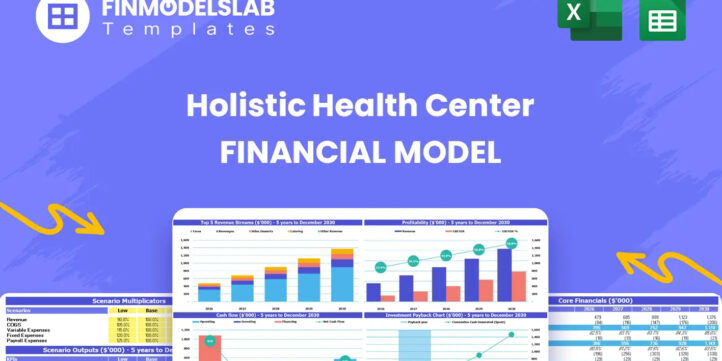


Financial Model Overview
The Holistic Health Center Financial Model is a ready-to-use financial model template designed to help entrepreneurs, wellness founders, clinic owners, consultants, and analysts evaluate the financial potential of an integrative health and wellness business. A holistic health center often combines multiple service lines, practitioner types, treatment schedules, pricing structures, patient acquisition efforts, and facility costs, which can make financial planning difficult without a structured model. This template brings those assumptions into one organized forecast so users can estimate revenue, startup investment, operating expenses, payroll, cash flow, profitability, investor returns, and break-even timing. It is especially useful for preparing a business plan, applying for financing, presenting to investors, budgeting a launch, or comparing strategic growth options. The model is editable, compatible with Excel and Google Sheets, and built to help users replace guesswork with a clearer view of how the business may perform under realistic assumptions.
All-in-One Dashboard
The all-in-one dashboard gives users a central view of the core inputs and core outputs that drive the Holistic Health Center Financial Model. Instead of searching through separate tabs to understand the business, users can review key assumptions such as revenue drivers, service mix, operating costs, payroll, startup investment, and financing needs alongside high-level results such as total revenue, EBITDA, net income, cash balance, and projected profitability. This component is useful because holistic health centers depend on many interconnected decisions, including how many practitioners are hired, how many treatments they can deliver, how quickly utilization ramps up, and how much overhead the clinic can support. A dashboard view helps users quickly see whether the plan is financially balanced and where the most important pressure points are. For business planning and funding discussions, it also creates a more professional way to communicate the forecast to lenders, investors, partners, and advisors without forcing them to interpret raw spreadsheet data.
Low, Base, and High Scenario Analysis
The low, base, and high scenario analysis component helps users test how the holistic health center may perform under different operating conditions. The base case can represent the expected plan, while the low case can reflect slower patient growth, lower utilization, pricing pressure, higher expenses, or delayed hiring efficiency. The high case can reflect stronger demand, better practitioner productivity, improved conversion rates, higher package sales, or faster patient retention. This section may use assumptions such as practitioner capacity, treatment pricing, monthly utilization, marketing efficiency, payroll levels, and overhead costs to show how revenue, margins, cash flow, and funding needs change when the business environment changes. Scenario analysis is valuable because wellness businesses often face uncertainty during launch and expansion, especially when patient volume and referral networks are still developing. By comparing outcomes side by side, users can make more informed decisions about staffing, marketing, pricing, cash reserves, and the amount of capital needed to withstand a slower ramp-up period.
Professional Charts
The professional charts component converts the financial forecast into visual reports that are easier to interpret and present. Charts may show revenue growth, EBITDA trends, net income, cash balance, cost structure, investment needs, or changes in key performance indicators over the forecast period. For a holistic health center, visualizing the numbers is important because many stakeholders want to understand how the business moves from early investment and operating losses toward stronger utilization, stable margins, and positive cash flow. This component helps users identify trends that may not be obvious in rows of numbers, such as a seasonal cash dip, a period of rapid revenue growth, or a point where overhead begins to scale more efficiently. Professional charts are also useful for pitch decks, lender conversations, board updates, and internal planning meetings because they summarize complex financial results in a cleaner and more accessible format. By pairing detailed calculations with presentation-ready visuals, the model supports both analysis and communication.
ROE Components and DuPont Analysis
The ROE components and DuPont analysis section helps users understand what is driving return on equity rather than only viewing the final return figure. This component breaks performance into underlying elements such as profitability, asset efficiency, and leverage, allowing users to see whether investor returns are being influenced by operating margin, revenue generation, cost control, capital intensity, or the financing structure. For a holistic health center, this is useful because the business may require meaningful upfront investment in renovation, medical and wellness equipment, treatment rooms, technology, and working capital before it reaches stable profitability. By reviewing ROE components, users can evaluate whether returns improve because the clinic is generating healthier margins, using assets more efficiently, or relying too heavily on financing assumptions. This helps founders and investors assess the quality of the projected returns and identify operational levers that can strengthen the financial case. It also supports more thoughtful discussions about capital allocation, expansion timing, investor expectations, and long-term sustainability.
Revenue Inputs
The revenue inputs section is where users define the assumptions that shape the income forecast for the holistic health center. These inputs may include service lines such as primary care consultations, acupuncture sessions, psychotherapy sessions, dietitian consultations, yoga and mindfulness coaching, and other wellness services. The model can use assumptions such as number of practitioners, monthly treatment capacity, utilization rate, price per treatment, ramp-up timing, and service mix to calculate projected revenue. This is one of the most important components because revenue in a wellness center is closely tied to practitioner availability and patient demand. A single change in utilization, pricing, or staffing can materially affect monthly sales, profitability, cash flow, and break-even timing. By organizing the revenue assumptions in a structured way, the template helps users build a forecast that reflects the actual mechanics of the business rather than relying on broad top-down estimates. It also allows users to test pricing strategies, service expansion plans, bundled offerings, and capacity constraints before making operational decisions.
Bank-Ready Reports
The bank-ready reports component produces the formal financial outputs that lenders, investors, and stakeholders typically expect to review. These reports may include projected profit and loss statements, cash flow forecasts, balance sheet summaries, revenue detail, expense detail, and key financial metrics. For a holistic health center seeking funding, professional reporting is essential because banks and investors need to understand how the business will generate revenue, cover operating costs, manage debt or equity funding, and maintain liquidity. This component helps users present financial information in a clean and organized format rather than relying on informal estimates or disconnected calculations. It also supports due diligence by connecting assumptions to forecasted results, making it easier to explain how practitioner utilization, treatment pricing, payroll, rent, marketing, and startup costs flow through the financial statements. Bank-ready reporting saves time, improves credibility, and helps users prepare for questions from lenders, investors, landlords, grant providers, or strategic partners.
Revenue Breakdown
The revenue breakdown component provides a detailed view of how each service line contributes to total revenue. A holistic health center may generate income from multiple offerings, and each may have different pricing, practitioner capacity, utilization patterns, margins, and growth potential. This section helps users see whether revenue is being driven primarily by medical consultations, acupuncture, psychotherapy, nutrition services, yoga, mindfulness coaching, packages, memberships, or other wellness programs. It may show monthly and annual revenue by stream, allowing users to compare performance across services and identify which areas deserve more investment or operational focus. This is useful for planning because not all revenue is equally profitable or scalable. Some services may require specialized staff, dedicated rooms, expensive equipment, or higher marketing support, while others may be easier to expand through group sessions or recurring packages. A clear revenue breakdown helps users refine the service mix, prioritize high-value offerings, improve scheduling, and build a more resilient financial plan.
KPI Dashboard
The KPI dashboard component tracks key performance indicators that help users evaluate whether the holistic health center is operating according to plan. Metrics may include revenue growth, practitioner utilization, average revenue per treatment, gross margin, EBITDA margin, cash balance, burn rate, payback period, return on equity, patient volume, and cost ratios. This section is useful because financial statements show the outcome of the business, while KPIs help explain what is causing that outcome. For example, if revenue is below forecast, the dashboard may help users determine whether the issue is pricing, utilization, practitioner capacity, patient acquisition, or service mix. If cash flow is tight, the KPIs may highlight burn rate, overhead levels, or delayed profitability. The dashboard can also include benchmark-style comparisons to help users assess whether assumptions are reasonable against wellness industry expectations. For founders, consultants, and operators, this component supports ongoing decision-making by turning the model into a performance management tool rather than just a one-time forecast.
Startup Costs and Funding Requirements
The startup costs and funding requirements section helps users estimate the capital needed before the holistic health center can open, operate, and grow through the early ramp-up period. Inputs may include facility renovation and build-out, medical and diagnostic equipment, wellness and therapy equipment, treatment room setup, office furniture, decor, technology, software, licenses, insurance, legal costs, initial marketing, deposits, pre-opening payroll, and working capital reserves. This component is important because many wellness clinics require significant upfront spending before revenue begins, and underestimating startup costs can create cash pressure shortly after launch. The model helps users organize one-time investments separately from ongoing operating expenses, making it easier to understand how much funding is required and how funds may be allocated. It can also support discussions with lenders and investors by showing a clear use of funds and connecting the initial capital plan to projected revenue, cash flow, and break-even timing. For decision-making, this section helps users evaluate whether to launch with a full-service center, phase in services gradually, lease or purchase equipment, or adjust the opening budget to reduce risk.
Break-Even Analysis
The break-even analysis component helps users identify when the holistic health center may begin covering its costs and moving toward sustainable profitability. This section may use revenue forecasts, gross margin assumptions, fixed overhead, payroll, marketing costs, variable costs, startup investment, and cash flow timing to estimate the point at which the business no longer depends on outside capital to support ongoing operations. For a holistic health center, break-even timing is especially important because the business may operate at a loss during the early months while building patient volume, recruiting practitioners, establishing referral relationships, and increasing utilization. The analysis helps users understand how many treatments, clients, or monthly revenue dollars may be needed to cover costs, and how changes in pricing, staffing, service mix, or marketing efficiency can accelerate or delay the break-even point. This component is valuable for funding preparation, risk assessment, and operational planning because it gives founders and stakeholders a measurable milestone for judging whether the business model is becoming financially viable.
File types:
Excel – Single-User: .xlsx
Excel – Multi-User: .xlsx
Similar ProductsOther customers were also interested in...

 HenrySheykin
Mental Health Center Financial Model Excel Templat...
The Mental Health Clinic Financial Model helps users build a structured financial forecast for a the... Read more
Orthopedic Center Financial Model Excel Template
The Orthopedic Clinic Financial Model helps users build a structured five-year forecast for a capita... Read more
Drug Treatment Center Financial Model Excel Templa...
The Residential Treatment Center Financial Model helps users turn a live-in behavioral health, menta... Read more
Hypnotherapy Center Financial Model Excel Template
The Hypnotherapy Practice Financial Model helps users turn a wellness practice concept into a struct... Read more
Yoga Studio Financial Model Excel Template
The Yoga Studio Financial Model helps entrepreneurs, founders, studio owners, consultants, and finan... Read more
Weight Loss Center Financial Model Excel Template
The Weight Loss Center Financial Model helps entrepreneurs, clinic owners, consultants, and analysts... Read more
Sports Therapy Financial Model Excel Template
The Sports Medicine Clinic Financial Model helps users turn a clinic concept, launch plan, or expans... Read more
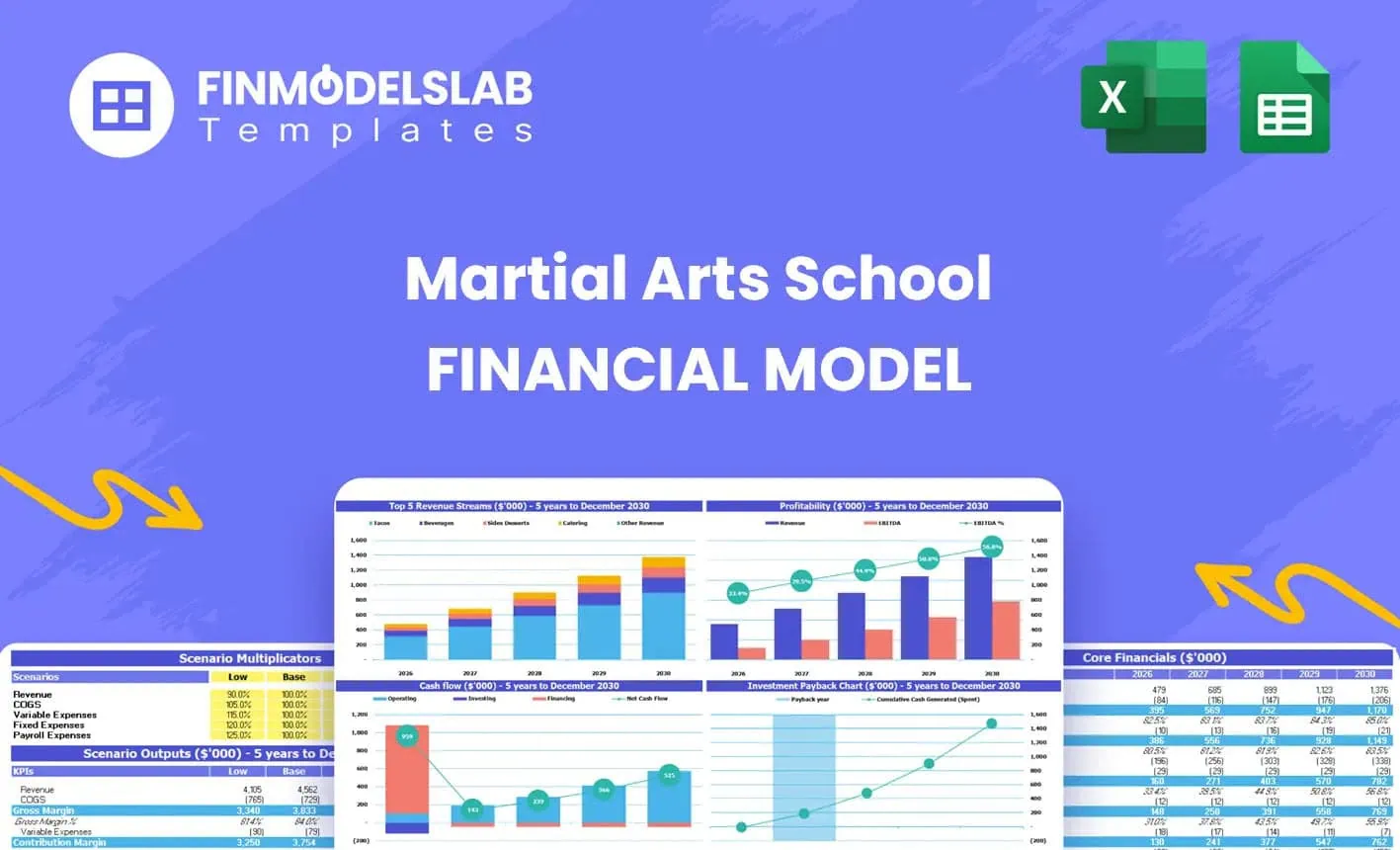
Tai Chi Center Financial Model Excel Template
The Martial Arts School Financial Model helps founders, school owners, consultants, and business pla... Read more

Oriental Medicine Center Financial Model Excel Tem...
The Traditional Chinese Medicine Clinic Financial Model helps entrepreneurs, clinic owners, consulta... Read more

Naturopathy Center Financial Model Excel Template
The Naturopathic Clinic Financial Model Template helps practitioners, founders, consultants, and bus... Read more
You must log in to submit a review.