
0 ITEMS

Which Is the Best Method for Calculating Interest Expense?

Calculating interest expense accurately is essential for proper financial reporting and effective debt management.
- Different methods like straight-line, simple, compound, and effective interest rate each have specific use cases and calculations.
- The straight-line method evenly allocates interest over the loan term, ideal for fixed-rate, predictable payments.
- Simple interest multiplies the principal by the rate and time, suitable for short-term loans.
- Compound interest accounts for the accumulation of interest on interest, common for long-term investments and savings.
- The effective interest rate method adjusts for changes in debt value over time, reflecting real borrowing costs under GAAP standards.
Understanding and applying the right interest expense formula helps improve budgeting, ensures compliance, and supports smarter financial decisions.
What is Interest Expense?
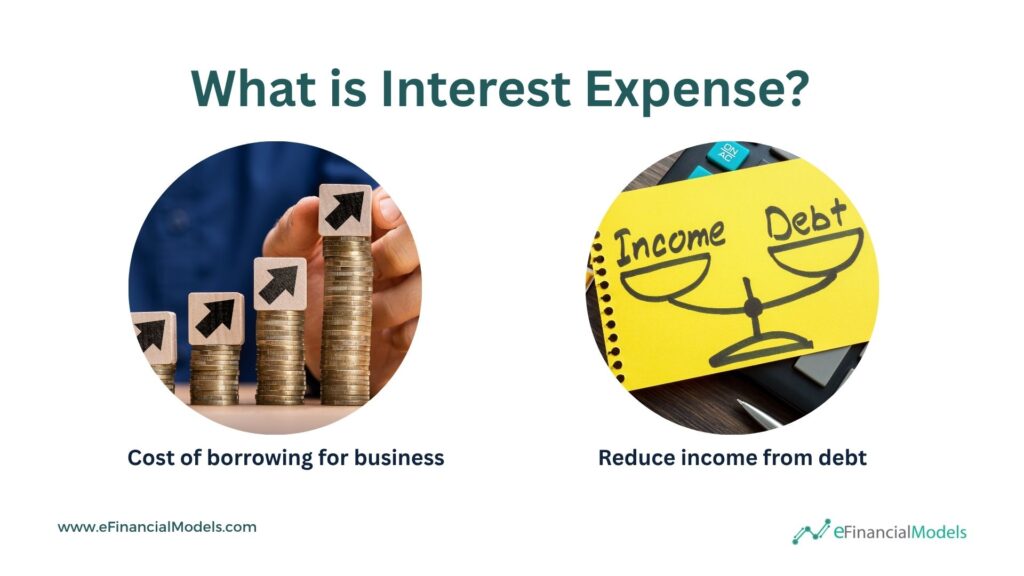
Interest expense is the cost a business pays for using borrowed money to fund its operations, investments, or growth. It applies to various forms of debt, such as bank loans, corporate bonds, or revolving credit lines, and is a key part of financial reporting. The amount depends on factors like the interest rate, principal balance, and the period involved. This cost accumulates over time and must be accounted for in each reporting period. To ensure accuracy and consistency, companies rely on an interest expense formula that reflects the terms of the debt agreement and complies with accounting standards.
On the income statement, interest expense appears as a separate line item, usually listed under “Other Expenses,” and directly impacts net income. It lowers a company’s net income and is typically listed below operating income. This placement highlights that interest is not part of core business operations but still has a direct impact on overall profitability. Beyond reducing net income, interest expense also lowers a company’s taxable income, creating a valuable tax benefit often referred to as the interest tax shield. This means the company pays less in income taxes simply by deducting its interest payments.
Why Calculating the Interest Expense Formula Matters?
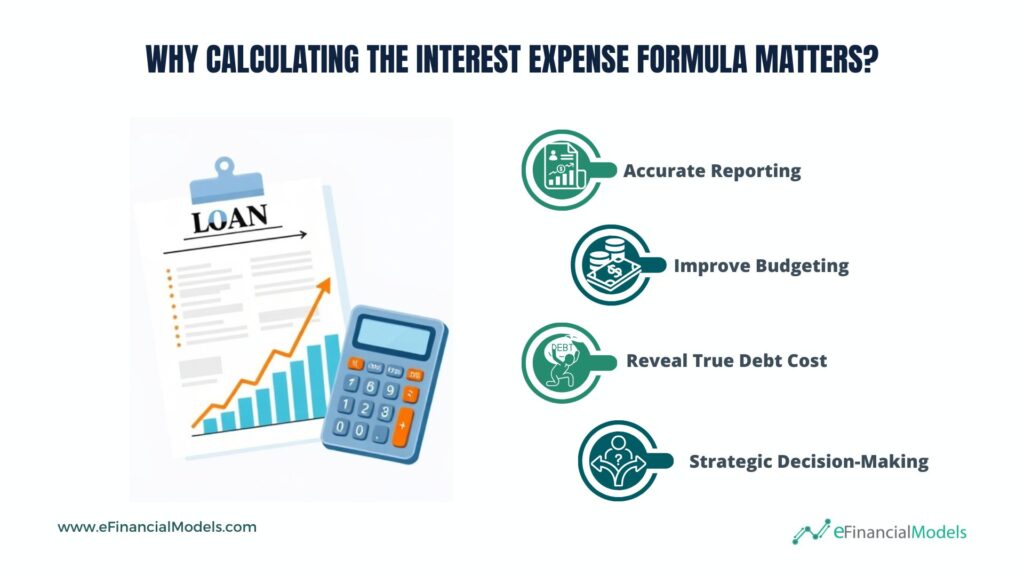
When businesses borrow money, they must know exactly how much that debt costs over time. Calculating the interest expense formula is crucial because it directly impacts a company’s financial results and tax liability. Even small errors can lead to misstated profits, poor cash flow planning, or missed tax deductions. Using the right formula helps ensure accurate reporting, better budgeting, and smarter financial decisions. Without it, companies risk making costly mistakes that could hurt growth or credibility with investors and lenders.
- Accurate Reporting: Knowing how to calculate interest expense ensures that your financial statements accurately reflect the true cost of borrowing. It prevents errors that can mislead investors, disrupt audits, or trigger compliance issues. Accurate reporting builds trust and keeps your books clean and reliable.
- Improves Budgeting: Using the right interest expense formula helps you project future payments more clearly. It keeps your cash flow plans on track and avoids surprises. That means you can set budgets with confidence and adjust early if loan costs rise.
- Reveals the True Cost of Debt: Interest isn’t just a payment—it’s a cost that affects profits. Calculating it correctly reveals the true cost of your loan over time. This clarity helps you compare financing options and avoid hidden expenses.
- Supports Strategic Decision-Making: Every major move—whether it’s expansion, investment, or refinancing—depends on solid numbers. When you know your real debt cost, you make smarter choices. That insight can guide when to borrow, how much, and on what terms.
No Downloads found
How to Calculate Interest Expense?
Understanding how to calculate interest expense depends on several key factors, including the type of debt and the method of interest charging. Some loans have fixed rates, while others vary over time. The method used often reflects the terms of the loan agreement and accounting practices. This makes it crucial to examine the loan details closely before calculating anything.
Straight-Line Method
The straight-line method of calculating interest expense spreads the total Interest evenly over the loan term. It gives the same interest cost each period, making it easy to plan and report. This method keeps things simple and predictable, especially for fixed-rate loans. To calculate Interest using the straight-line method, apply this simple interest expense formula:
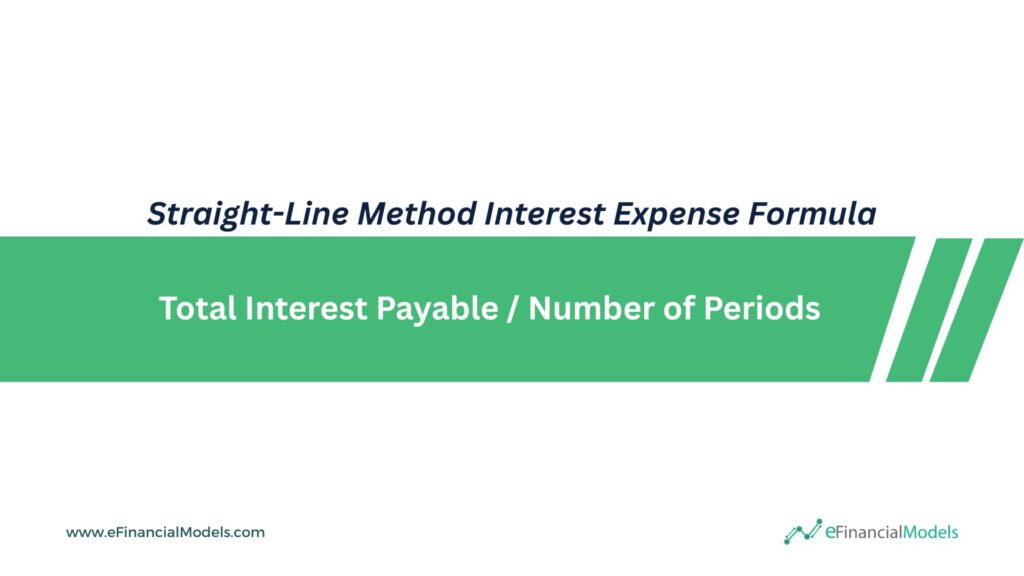
Where:
- Total Interest Payable: The full amount of Interest the borrower agrees to pay over the life of the loan.
- Number of Periods: The total number of equal time intervals, usually years, used to divide the interest cost.
This interest expense formula gives you a fixed amount of interest expense for each period. For example, if the total Interest on a loan is $10,000 over five years, the annual interest expense is $2,000.
Simple Interest Method
The simple interest method calculates interest based only on the original loan amount. It uses a fixed rate and period to maintain clarity and simplicity. You don’t add interest to the balance over time. Instead, you multiply the principal by the rate and time. This method is most effective for short-term or straightforward loans.
To understand how to calculate interest expense using the simple interest method, use the formula:
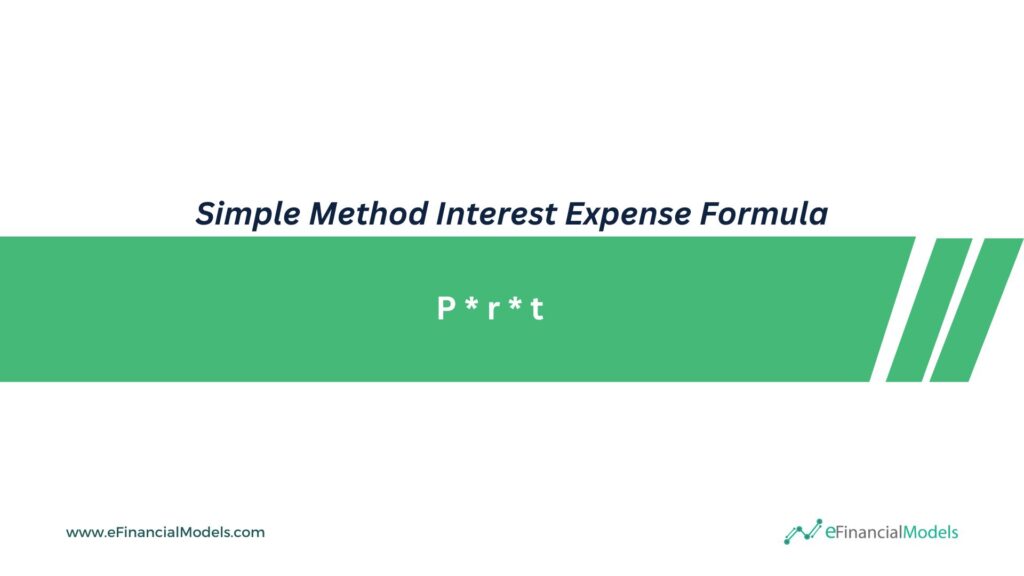
Where:
- P is the loan amount
- r is the yearly interest rate
- t is the loan period in years or a fraction
This provides a fast and accurate way to determine how much interest you owe. Say you borrow $5,000 at an annual interest rate of 6% for 2 years. Using the formula Interest Expense = P × r × t, you get $5,000 × 0.06 × 2 = $600. So, the total interest expense is $600 over the loan period.
Compound Interest Method
The compound interest method calculates interest on both the original loan amount and the accumulated interest from previous periods. Unlike simple interest, this method allows the interest balance to grow over time. Each period, interest is added to the balance, and future interest is based on this new total. This leads to a faster increase in total interest owed. It’s commonly used for long-term loans, savings, and investments.
The compound method interest expense formula is:
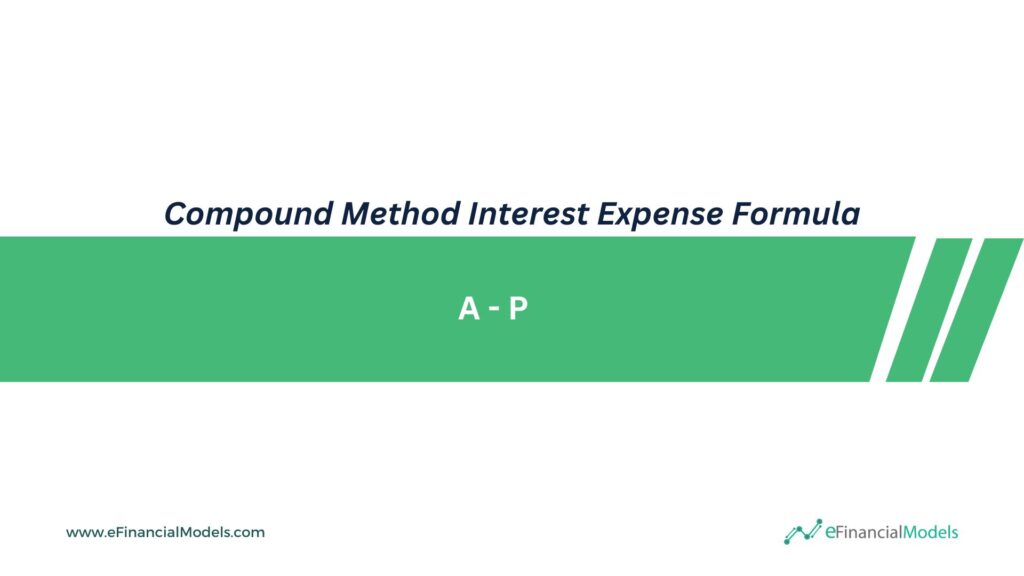
Where:
- A is the total amount due at the end of the period using the formula P × [(1 + r/n) n*t. It calculates the total amount due with compound interest.
- P is the principal loan amount.
This formula increases the amount each time interest is added, showing how your balance grows faster with more frequent compounding. For example, you invest $2,000 at an annual interest rate of 5%, compounded monthly, for 3 years.
A = 2,000 × [(1 + 0.05/12)]^(12 × 3)
A ≈ 2,000 × (1.004167)^36 ≈ 2,000 × 1.1616 ≈ $2,323.20
So, the total amount due is about $2,323.20, and the interest earned is $323.20.
Effective Interest Rate Method
The effective interest rate method is a method for spreading interest expense or income over time. It matches the actual cost or return of a financial instrument to each period. Instead of using a fixed rate, it applies a constant percentage to the carrying amount of the asset or liability. This method provides a more accurate representation of interest over time, particularly when premiums or discounts are involved. It’s commonly used in accounting for bonds and loans to show true financial performance.
The formula to calculate interest expense using the effective interest rate method is:

Where:
- Carrying Amount of Debt is the net value of the debt on the balance sheet, including any unamortized discounts or premiums.
- Effective Interest Rate is the true annual rate of cost or return that exactly discounts future cash flows to the net carrying amount of the debt.
This rate reflects the true cost of borrowing, not just the stated coupon rate. As the carrying amount changes over time, so does the interest expense. This method ensures interest is matched with the debt balance each period, giving a clearer picture of the cost. It’s especially useful when the debt is issued at a discount or premium.
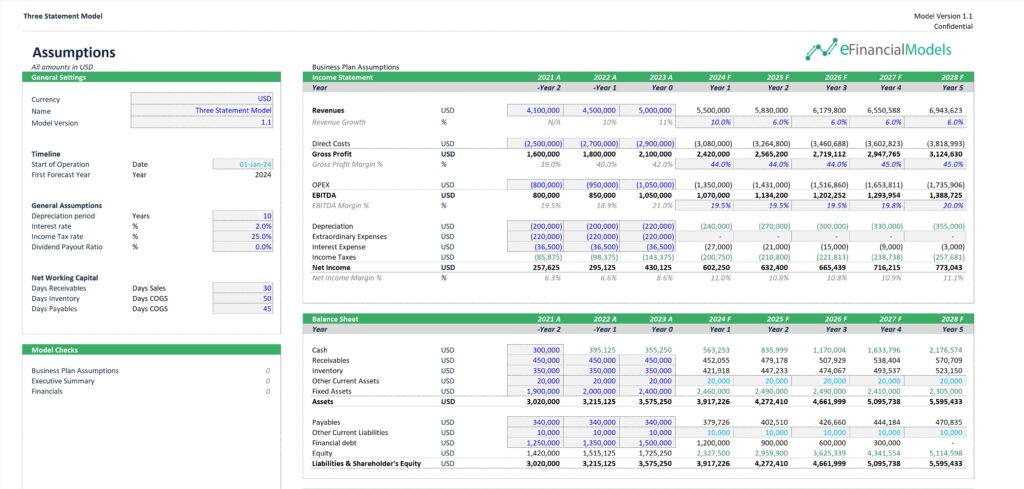
Our Three-Statement Financial Model calculates interest expense using the effective interest rate method. As shown above, it multiplies the financial debt balance by the annual interest rate. For example, in 2024, the financial debt is $1,200,000, and the effective interest rate is 2%, resulting in an interest expense of $24,000. This method updates interest expense annually based on the current carrying amount of the debt, not the original amount. As the debt value changes across years—such as increasing to $1,350,000 in 2025—the interest expense also adjusts accordingly. For example, 2% of $1,350,000 equals $27,000. This provides a more precise estimate of borrowing costs over time.
Why the Effective Interest Rate Method Is Best for Calculating Interest Expense?
The effective interest rate method is most suitable for calculating interest expense because it accurately reflects the true cost of borrowing. It adjusts interest each period based on the debt’s current balance, not just the face value. This gives a more accurate picture, especially when the loan includes premiums, discounts, or fees. It also matches interest expense with the value of the liability over time. This method enables businesses to track costs accurately and stay compliant with accounting standards. Furthermore, the effective interest rate method is the most suitable for calculating interest expense because it adheres to Generally Accepted Accounting Principles (GAAP) rules. GAAP approves it because it matches expenses with the life of the debt, making financial reports more accurate and reliable.
Smart Debt Planning with Financial Modeling
You can calculate interest expense using various methods, including the straight-line, simple interest, compound interest, and effective interest rate methods. Each offers a basic way to measure cost, but the first three often miss key changes over time. The most accurate approach is the effective interest rate method. It adjusts for the real cost of debt and adheres to Generally Accepted Accounting Principles (GAAP). This method provides a clear and reliable view of interest, making it the best choice for informed financial reporting.

Smart debt planning starts with clear numbers. Utilize financial modeling to visualize interest costs, payment schedules, and long-term implications. It helps you test different loan options and see how each affects cash flow. With the right model, you can spot risks early and make informed decisions. This approach keeps your debt under control and your strategy sharp.
Build smarter debt strategies—start modeling your finances today!













































You might also like:
- 10 Tips to Develop a First Class Business Valuation Report
- 10-Step Financial Planning Checklist for Smart Executives
- Understanding the Debt Service Coverage Ratio: An Essential Metric for Financial Analysis
- 5 Tips To Help Startups Stay Financially Healthy
- How to Calculate Net Present Value (NPV)?
- Financial Ratios Analysis and Its Importance
- Why Financial Forecasting Models Are Vital for Your Business
- How to Build a Capitalization Table
- Financial Modeling for Startups and Small Businesses
- Understanding the Levelized Cost of Energy Formula
- Loans and Debt
- Financial Modeling Best Practices
- Cash Flow Analysis in Excel
- Business Valuation
- Renewable Energy Financial Model Bundle
- Financial Statements – Definition, Uses, Contents and Templates
- How to Request for Custom Financial Models
- Commercial Real Estate Valuation Methods
- Financial Spreadsheet – A Key Tool for Entrepreneurs
- Understanding the Levelized Cost of Energy Formula