
0 ITEMS

Startup Restaurant Business Plan: Flavors Redefined

A well-crafted business plan is essential for starting a restaurant and ensuring long-term success.
- It acts as a detailed roadmap guiding every stage from market research to financial projections.
- A comprehensive plan helps attract investors by clearly demonstrating profitability and operational strategy.
- It includes an analysis of competitors, target market, and unique selling points to differentiate the restaurant.
- Financial forecasts, staffing plans, and marketing strategies ensure operational efficiency and steady growth.
- Developing a solid business plan helps identify potential challenges early and creates solutions to stay competitive.
Continuing to read will reveal practical steps and key components for building an effective restaurant business plan.
What is a Startup Restaurant Business Plan?
A startup restaurant business plan acts as a detailed roadmap, guiding entrepreneurs through each phase of launching and managing their restaurant. This plan outlines the steps necessary to bring the restaurant from a mere concept to a fully operational establishment, helping to foresee potential challenges and prepare solutions in advance. By addressing each stage of the business lifecycle, this plan ensures that restaurant owners have a clear vision of their objectives and strategies.
Moreover, a startup restaurant business plan should be comprehensive and articulate, effectively demonstrating how the entrepreneur intends to transform their vision of a restaurant into a tangible, successful business. It should detail the restaurant’s concept, theme, cuisine, target market, and unique selling propositions. Financial projections, marketing strategies, and operational plans are also vital components, providing a holistic view of how the restaurant aims to generate revenue, attract and retain customers, and streamline its operations. This level of detail not only aids in startup restaurant funding but also serves as a continual reference point to measure progress against original goals.
As a written document, the startup restaurant business plan communicates everything the entrepreneur brings to the table and what they plan to implement to ensure the restaurant’s ongoing success. It also includes an analysis of the competitive landscape, identifying opportunities for differentiation and strategies for overcoming potential obstacles. Essentially, this plan is the foundation upon which the restaurant is built, offering stakeholders a thorough overview of its operational, financial, and marketing aspects and providing a structured approach to achieving sustained success in the competitive food industry.







































Importance of a Business Plan for a Startup Business
Creating a business plan for a startup business, specifically a restaurant, is crucial for several reasons, each of which is important to the success and sustainability of the venture.
Aid in Making Informed Investment Choices
A comprehensive business plan for a startup business helps potential investors or restaurant owners understand the restaurant’s feasibility and potential profitability. By presenting detailed insights into the restaurant’s concept, location, and unique selling proposition, the plan helps assess risks and rewards, guiding initial investment decisions and ongoing financial management. It enables informed decisions about where and how to invest resources.
Maintain a Well-Defined Financial Plan
A well-structured business plan for a startup business outlines the financial projections, including startup costs, operating expenses, revenue forecasts, and break-even analysis. This financial plan is vital for maintaining budget discipline, ensuring the restaurant can manage cash flow effectively, and staying solvent. It also provides benchmarks for financial performance, helping the management track progress, adjust operations, and manage expenses in alignment with projected income, thereby safeguarding the restaurant’s financial health.
Overcome Challenges and Competition
The restaurant industry is highly competitive and fraught with challenges ranging from fluctuating customer preferences to economic downturns. A thorough startup restaurant business plan includes a SWOT analysis (Strengths, Weaknesses, Opportunities, Threats) that identifies potential challenges and competitive pressures. This preparation enables restaurant owners to develop strategies for differentiation, customer engagement, and quality service that can help overcome these obstacles and carve out a niche in the market.
Secure Startup Restaurant Funding
Securing startup restaurant funding is one of the most significant challenges for new restaurants. A detailed and convincing business plan for a startup busines is essential for attracting investors, lenders, or other financial backers. It should articulate the restaurant’s vision, operational strategy, and revenue model compellingly and realistically. A strong business plan demonstrates to potential financiers that the restaurant has a clear path to profitability, making it a worthwhile investment.
Translate Your Vision Into a Tangible Document
Developing a startup restaurant business plan translates the abstract idea of the restaurant into a concrete, actionable document. This process involves detailing every aspect of the restaurant, from the concept, menu design, and customer experience to operational logistics like supply chain management, staffing, and daily operations. By putting the vision into writing, it becomes easier to communicate it to potential partners, investors, employees, and other stakeholders.
In summary, a business plan for a startup business is indispensable for navigating the complex landscape of the hospitality industry. It provides a roadmap for making informed investment choices, maintaining financial discipline, facing industry challenges head-on, and securing the necessary funding to launch and sustain the business. Without such a plan, a restaurant risks navigating the competitive and ever-changing market without direction, jeopardizing its success and longevity.

How to Write a Business Plan for Opening a Restaurant
Writing a business plan for opening a restaurant is an extensive process that requires detailed planning and research. Here’s a step-by-step guide on how to do it:
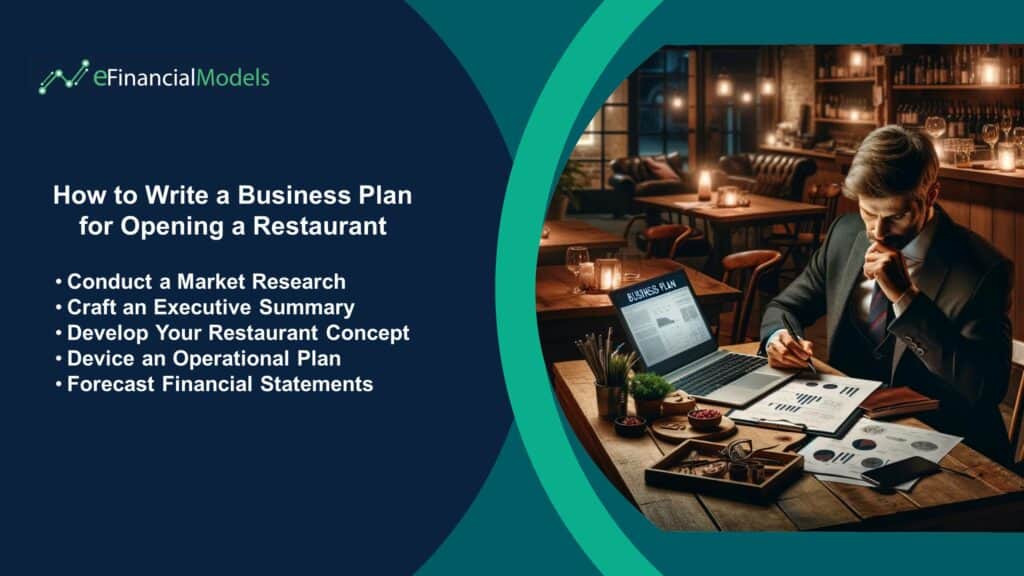
Step 1 – Conduct a Market Research
The first step in crafting a startup restaurant business plan involves conducting thorough market research. This phase is critical as it lays the foundation for your business strategy. It would help if you analyzed the competition to understand the market landscape and identify who your direct and indirect competitors are, what they offer, and their strengths and weaknesses. Equally important is defining your target market; this means pinpointing who your ideal customers are based on demographics, psychographics, and buying habits. Understanding the competitive environment and your target audience will guide you in making informed decisions regarding your restaurant’s concept, menu, pricing, and marketing strategy.
Step 2 – Craft an Executive Summary
The executive summary serves as the overview of your business plan, highlighting the critical aspects of your restaurant concept, market opportunity, unique selling proposition (USP), and financial projections. It should be concise, compelling, and written after the other sections of the plan are completed. The purpose of the executive summary is to capture the interest of potential investors or partners by briefly outlining what makes your restaurant a viable business opportunity. It should include your mission statement, brief descriptions of your products or services, basic information about the leadership team, and a summary of your financial goals.
Step 3 – Develop Your Restaurant Concept
Developing your restaurant concept involves detailing the overall theme, location, menu offerings, service style, and unique selling proposition (USP). This section should paint a vivid picture of the restaurant’s atmosphere, the dining experience you aim to provide, and how your establishment will differ from competitors. The location choice should consider factors like foot traffic, parking accessibility, and proximity to your target market. The menu should align with your theme and be designed to appeal to your identified target audience. The services you plan to offer (e.g., dine-in, takeout, delivery) should also be outlined here. Finally, your USP sets your restaurant apart and should be emphasized as a critical factor in attracting customers.
Step 4 – Device an Operational Plan
The operational plan outlines the day-to-day running of your restaurant, covering marketing strategies, policies, procedures, and staffing requirements. It includes how you plan to promote your restaurant, the operational policies you will implement to ensure smooth functioning, and the procedures for critical aspects like customer service, food preparation, and hygiene standards. Staffing plans must detail the roles and responsibilities of your team members, hiring criteria, and training programs. This section ensures you have a roadmap for managing the restaurant efficiently and creating a quality dining experience for your guests.
Step 5 – Forecast Financial Statements
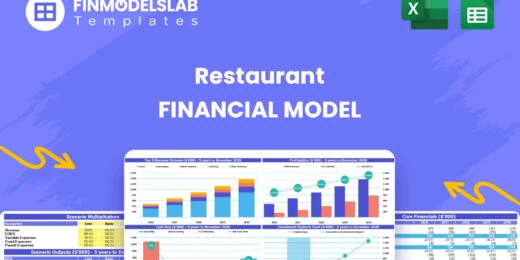
Forecasting financial statements involves creating projections for your revenue streams, operating costs, financial metrics, and capital expenditures (CAPEX). This section should provide a detailed financial model that includes startup costs, break-even analysis, profit and loss projections, cash flow analysis, and a balance sheet. Revenue streams should be identified, whether from dine-in sales, takeout, catering, or other services. Operating costs must account for food ingredients, labor, rent, utilities, marketing, and other expenses. Financial metrics such as gross profit margin, net profit margin, and return on investment (ROI) will help assess the financial viability of your restaurant. CAPEX details the initial investment for kitchen equipment, renovations, and other significant expenses.
Each section of the business plan is interconnected, with market research informing the development of your restaurant concept, which influences your operational plan and financial forecasts. By meticulously preparing each part, you will create a comprehensive and realistic business plan that can guide your restaurant to success and attract potential investors.













Flavor Beyond Borders: Business Plan Examples for Restaurants
In the dynamic hospitality industry landscape, a restaurant can be profitable, provided it is approached with astute planning and management. A startup restaurant’s profitability depends on various factors, including location, uniqueness of cuisine, customer service, and effective cost management. A well-crafted business plan is not just a road map for the business’s operational strategies but also a critical tool for financial planning and attracting potential investors. It aids in identifying the target market, setting realistic goals, budgeting, and forecasting financial performance. This comprehensive approach ensures the restaurant is well-equipped to face competition, adapt to market trends, and achieve sustainable growth.
eFinancialModels showcase business plan examples for restaurants that emphasize market analysis, competitive edge, marketing strategies, and detailed financial projections. These examples serve as invaluable resources for aspiring restaurateurs, demonstrating how to articulate a vision, identify potential challenges, and strategize for profitability. Our business plan examples for restaurants introduce innovative and global cuisines to the local market. Drawing inspiration from these examples, you can position yourself as a pioneering establishment, offering a diverse and delectable dining experience that transcends traditional culinary boundaries.
You might also like:
- 10 Main Elements of a Business Plan
- 10 Tips to Develop a First Class Business Valuation Report
- 5 Practical Tips to Help Raise Funds For Startups
- Financial Modeling for Startups and Small Businesses
- Startup Model Templates in Excel that can help your Business Grow
- How to Write a Business Plan Step-by-Step
- Understanding the Levelized Cost of Energy Formula
- Financial Model Templates Easy to Use
- 12 Funding Sources for Businesses and Startups
- Restaurant Business
- Business Valuation
- Financial Projections Templates – The Easy Way
- Developing a 5 Year Financial Projection Template
- Creating a Business Plan for your Food Truck Business
- Key Financial Ratios
- Financial Statements – Definition, Uses, Contents and Templates
- Financial Planning for Small Business Owners – Taking an SBA Loan
- Financial Planning Retirement Tips
- Cash Flow Analysis in Excel
- How to Start a Distillery Business: What You Need to Know?