
0 ITEMS

Book Subscription Box Financial Model Excel Template
The Book Subscription Box Financial Model helps founders and planners turn a monthly book box idea into a structured, editable financial forecast. Instead of relying on scattered estimates, the template brings revenue assumptions, startup costs, operating expenses, payroll, cash flow, profitability, and investor metrics into one organized model. It is designed for a subscription business where recurring sales, subscriber growth, customer acquisition cost, churn, pricing tiers, shipping costs, inventory, and fulfillment expenses all need to work together. This financial model template is useful for entrepreneurs launching a curated book delivery service, business owners expanding an existing e-commerce brand, consultants preparing client forecasts, analysts reviewing subscription economics, and founders building business plans or funding documents. Users can adjust assumptions for monthly subscription tiers, trial conversions, marketing spend, customer acquisition cost, cost of goods sold, shipping, staffing, software, warehouse needs, and other operating drivers to see how changes affect the forecast. The template supports practical financial planning by helping users understand how much capital may be required before launch, how revenue may grow over time, when the business may become profitable, and where cash flow pressure may appear. It also helps evaluate profitability, break-even timing, and investment return, giving founders a clearer view of whether the business model can support growth, hiring, inventory purchases, and marketing campaigns. Because it is built around a five-year projection structure, it can support both early launch planning and longer-term expansion decisions. For anyone preparing to present a book subscription box business to investors, lenders, partners, or internal stakeholders, this ready-to-use model offers a professional starting point. The dashboard, scenarios, charts, reports, revenue breakdowns, KPI views, and editable inputs make it easier to explain the financial story behind the business. Users can save time, test decisions before committing resources, and build a more credible forecast for funding, budgeting, and day-to-day decision-making.
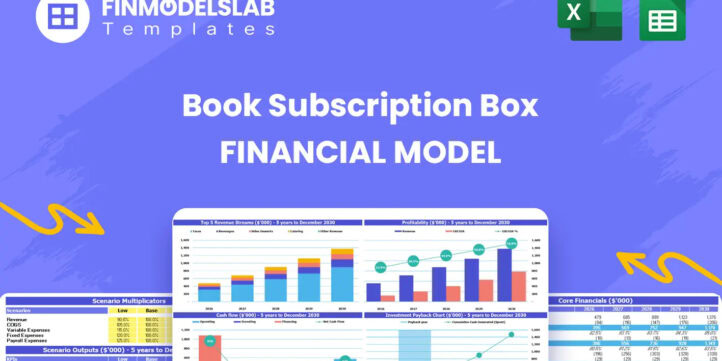


Financial Model Overview
The Book Subscription Box Financial Model is a ready-to-use financial model template created for entrepreneurs, founders, consultants, analysts, and business owners planning a curated book subscription service. A book box business depends on recurring subscription revenue, customer acquisition, retention, pricing tiers, inventory purchasing, shipping costs, packaging, fulfillment, marketing, and team capacity, so a simple sales estimate is not enough. This model gives users a structured way to connect those assumptions and see how the business may perform over time. It can be used to prepare a business plan, support a funding conversation, evaluate launch feasibility, compare growth strategies, or manage an existing subscription box operation. The model is designed to be editable, presentation-ready, and practical, helping users forecast revenue, expenses, cash flow, profitability, startup capital needs, break-even timing, and key performance indicators without building a complex spreadsheet from scratch.
All-in-One Dashboard
The all-in-one dashboard gives users a central view of the core inputs and core outputs of the Book Subscription Box Financial Model. This section is useful because a subscription box business has many moving parts, including subscriber growth, pricing tiers, customer acquisition cost, monthly recurring revenue, cost of goods sold, shipping, fulfillment, payroll, marketing spend, and cash balance. The dashboard brings the most important assumptions and results together so users can quickly understand how the business is performing without searching through every worksheet. Inputs may include launch date, subscription pricing, starting customers, marketing budget, trial conversion rates, churn assumptions, cost percentages, staffing plans, and initial investment. Outputs may include total revenue, gross margin, EBITDA, net profit, cash flow, payback period, break-even timing, and return metrics. For planning and decision-making, this dashboard acts as the model’s control center, helping founders update assumptions, review the financial impact, and communicate the forecast clearly to investors, lenders, partners, or internal teams.
Low Base High Scenario Analysis
The Low Base High scenario analysis component helps users test how the book subscription box business may perform under different market and operating conditions. A single forecast can create false confidence, especially in a subscription model where small changes in customer acquisition cost, churn, conversion rate, pricing, shipping expense, or inventory cost can significantly affect cash flow and profitability. This section allows users to compare a conservative case, a realistic base case, and an optimistic growth case in one structure. Inputs may include lower or higher subscriber acquisition, changes in marketing efficiency, different conversion rates from trial to paid plans, changes in average subscription price, cost of goods sold, fulfillment cost, and retention levels. Outputs may show how each case affects revenue, EBITDA, net income, cash runway, break-even timing, and investor returns. This is especially useful for funding preparation because investors and lenders often want to understand downside risk as well as upside potential. By seeing how the forecast changes across multiple cases, users can make better decisions about launch budgets, growth targets, hiring plans, inventory commitments, and fundraising needs.
Professional Charts
The professional charts component turns the financial forecast into presentation-ready visuals that make the business easier to understand. Book subscription box founders often need to explain their model to people who may not want to read every spreadsheet detail, such as investors, lenders, advisors, partners, or internal decision-makers. This section can visualize key financial outputs such as revenue growth, monthly recurring revenue, subscriber growth, gross profit, EBITDA, net income, cash balance, cost structure, and investment performance. The underlying inputs come from the model’s assumptions and forecast calculations, so the charts update as users revise pricing, marketing spend, customer acquisition cost, subscription mix, churn, payroll, or operating expenses. The output is a clearer financial story that shows where revenue is coming from, how margins develop, when losses may turn into profits, and whether cash remains sufficient through the growth period. These charts are useful for business plans, pitch decks, board updates, loan discussions, and internal strategy meetings because they simplify complex financial information into visuals that can be reviewed quickly and discussed with confidence.
ROE Components and DuPont Analysis
The ROE components and DuPont analysis section helps users understand the drivers behind return on equity rather than looking at a single return figure in isolation. For a book subscription box business, investor return is influenced by profitability, asset efficiency, working capital needs, startup investment, and the way the business is financed. This component breaks return on equity into understandable pieces, often connecting profit margin, asset turnover, and financial leverage so users can see what is really driving performance. Inputs may include net income, revenue, equity investment, assets, liabilities, working capital, inventory requirements, and financing assumptions. Outputs may show how operating margin, sales efficiency, and capital structure contribute to the overall return profile. This is useful because a subscription box company may appear attractive due to recurring revenue, but weak margins, high inventory requirements, high customer acquisition costs, or slow payback can reduce returns. By using the DuPont-style view, founders and analysts can identify whether they need to improve pricing, reduce shipping costs, negotiate better book purchasing terms, increase retention, manage assets more efficiently, or adjust the funding structure to create a stronger investment case.
Revenue Inputs
The revenue inputs section is where users define the commercial assumptions that drive the Book Subscription Box Financial Model. Because the business depends on recurring subscriptions, this section should be carefully customized to reflect the founder’s actual strategy. Inputs may include subscription tiers, monthly prices, starting subscriber counts, new signups, trial-to-paid conversion rates, cancellation or churn assumptions, marketing spend, customer acquisition cost, renewal behavior, and the expected mix between basic, standard, and premium boxes. Users can also adjust assumptions around how subscriber growth changes over time, such as higher acquisition in launch months, improved marketing efficiency, or a gradual shift toward higher-priced plans. The outputs from this section feed into monthly and annual revenue projections, recurring revenue trends, subscriber base growth, average revenue per user, and revenue by plan type. This component is valuable because it connects marketing decisions directly to financial outcomes. It helps users answer whether the planned advertising budget can generate enough subscribers, whether pricing is strong enough to cover inventory and shipping costs, and whether the subscription mix can support sustainable profitability.
Bank-Ready Reports
The bank-ready reports component provides lender-friendly financial outputs that help users present the business in a clear and professional format. Banks and lenders typically want to see more than a revenue forecast. They need to understand profitability, cash flow, debt service capacity, startup funding requirements, repayment ability, and the assumptions behind the plan. This section organizes the financial model’s outputs into structured reports such as projected profit and loss, cash flow forecast, balance sheet, funding summary, and key lending metrics. Inputs may include loan amounts, interest rates, repayment terms, capital expenditures, startup costs, working capital needs, revenue assumptions, operating expenses, payroll, and tax assumptions. Outputs may show annual and monthly financial performance, cash balance movement, debt repayment, EBITDA, net income, and potential coverage indicators. For a book subscription box business seeking a loan for inventory, website development, warehouse setup, marketing, or working capital, this section helps transform the forecast into a format that lenders can review efficiently. It also helps founders identify whether the business can support repayment before taking on debt.
Revenue Breakdown
The revenue breakdown component provides a detailed view of how income is generated across the book subscription box business. Instead of showing only one total revenue line, this section separates revenue streams so users can understand which parts of the business contribute most to growth and margin. For a subscription box company, revenue may come from monthly subscription fees across multiple tiers, premium box upgrades, direct-paid signups, trial-to-paid conversions, annual plans, gift subscriptions, add-on products, limited edition boxes, or other book-related offers. Inputs may include pricing for each plan, subscriber counts by tier, conversion assumptions, renewal rates, cancellation rates, and expected mix changes over time. Outputs may include revenue by tier, total recurring revenue, average revenue per subscriber, growth by product line, and the percentage contribution of each revenue stream. This is useful for planning because the most profitable growth path may not always come from the largest customer segment. A founder may discover that premium boxes, annual subscriptions, or add-ons improve cash flow and margin, while lower-priced boxes require more volume to cover costs. This section supports pricing strategy, marketing allocation, inventory planning, and margin improvement decisions.
KPI Dashboard
The KPI dashboard component focuses on the performance metrics that matter most for a subscription-based book box business. While financial statements show overall results, KPIs help users understand the operating behavior behind those results. This section may track metrics such as monthly recurring revenue, total subscribers, new subscribers, churn rate, customer acquisition cost, lifetime value, LTV to CAC ratio, average revenue per user, gross margin, contribution margin, payback period, fulfillment cost per box, shipping cost as a percentage of revenue, and cash runway. Inputs come from the revenue assumptions, cost structure, marketing plan, subscriber movement, and expense forecast. Outputs provide a concise view of whether the business is becoming more efficient, whether customer acquisition is sustainable, and whether retention is strong enough to justify the marketing spend. This is useful for both startup planning and ongoing management because subscription businesses can grow revenue while still losing money if churn is high or acquisition costs are too expensive. The KPI dashboard helps users monitor the health of the model, compare performance against targets or industry benchmarks, and make faster decisions about pricing, marketing, retention, fulfillment, and growth.
Startup Cost Breakdown
The startup cost breakdown component helps users estimate the initial capital required to launch the book subscription box business before recurring revenue becomes reliable. A subscription box startup often requires spending before the first customer receives a box, including website and e-commerce development, branding, packaging design, initial book inventory, warehouse or office setup, fulfillment equipment, software subscriptions, legal setup, licenses, launch marketing, photography, payment processing setup, and working capital reserves. Inputs may include one-time setup costs, deposits, pre-launch payroll, professional fees, inventory buffers, technology expenses, and contingency amounts. Outputs may include total initial investment, startup cost categories, funding required before launch, and the amount of cash needed to cover early operating losses. This section is valuable because underestimating launch costs can create cash flow stress just as the company is trying to acquire subscribers and build trust. For funding documents, it gives investors or lenders a clear view of how capital will be used. For founders, it helps prioritize spending, identify costs that can be delayed, and determine whether the business should launch lean, raise more capital, or phase growth over time.
Break-Even Analysis
The break-even analysis component helps users estimate when the Book Subscription Box Financial Model shows the business reaching a point where revenue covers its costs. For a subscription box company, break-even depends on subscriber volume, average subscription price, cost of goods sold, shipping and fulfillment costs, marketing efficiency, churn, payroll, software, rent, and other fixed operating expenses. Inputs may include gross margin assumptions, monthly fixed costs, variable cost per box, customer acquisition cost, subscriber growth, pricing tiers, and startup investment. Outputs may include break-even month, required subscriber count, required revenue level, cumulative profit or loss, and the gap between current projections and sustainable profitability. This section is useful because it gives founders a concrete target rather than a vague goal of becoming profitable. It can show whether the business needs more subscribers, a higher percentage of premium plans, lower inventory costs, reduced shipping rates, better retention, or a slower expense ramp. For investors and lenders, break-even timing is an important sign of viability. For operators, it supports practical decision-making around marketing budgets, hiring schedules, pricing changes, and cost control.
File types:
Excel – Single-User: .xlsx
Excel – Multi-User: .xlsx
Similar ProductsOther customers were also interested in...


 HenrySheykin
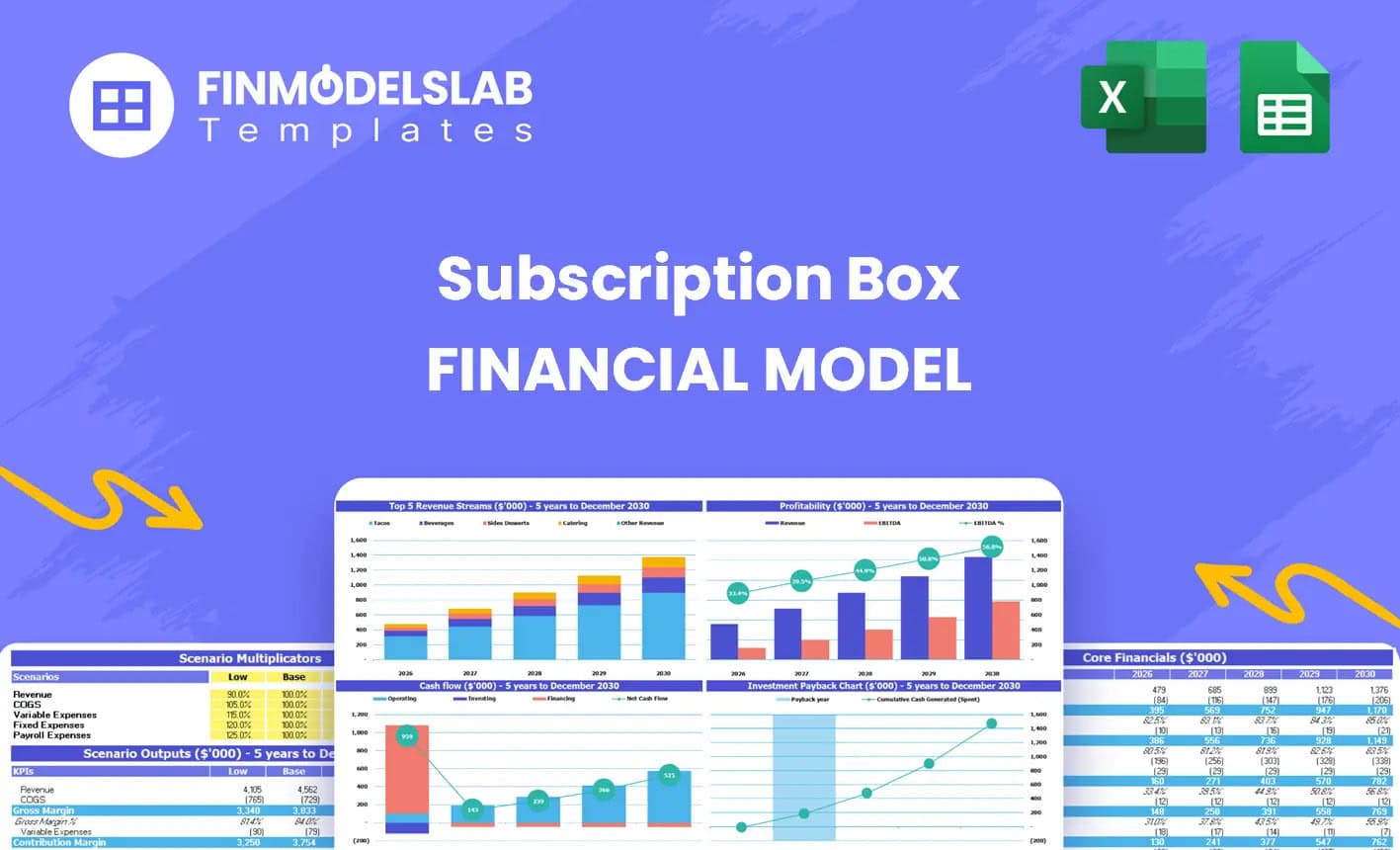
Surprise Subscription Box Financial Model Excel Te...
The Subscription Box Financial Model Template helps entrepreneurs, founders, analysts, consultants, ... Read more
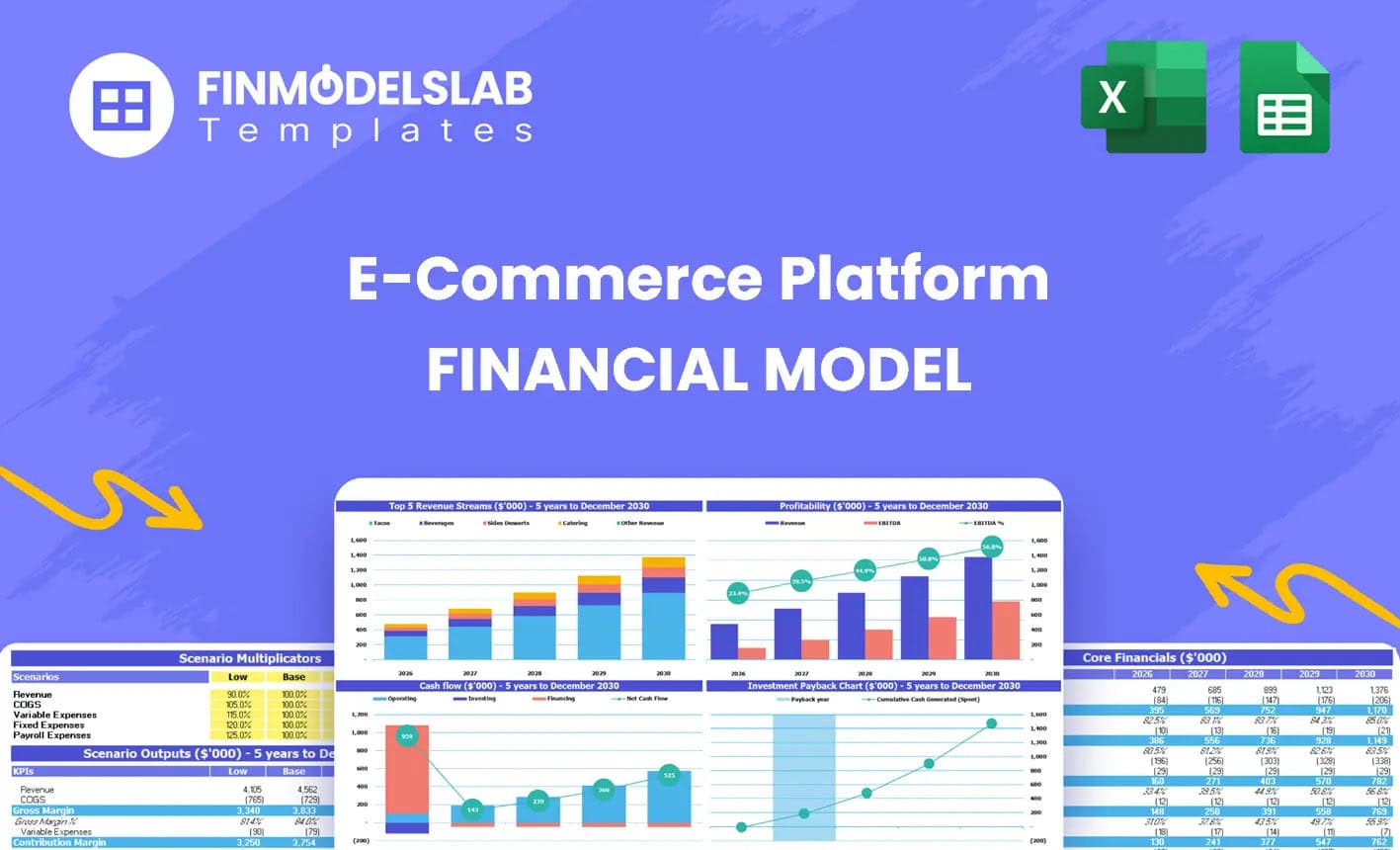
E-Commerce Software Financial Model Excel Template
The E-Commerce Platform Financial Model Financial Model Template helps founders, entrepreneurs, cons... Read more

SaaS Model Templates – Small Bundle Version
Since you are planning to start your very own SaaS business, you will certainly need to prepare a ... Read more

SaaS Model Templates – Big Bundle Version
Since you are planning to start your very own SaaS business, you will certainly need to prepare a ... Read more

 Giorgos
Subscription Business – 10 Year Financial Model
Financial Model providing a 10-year financial plan for a startup or operating Subscription Business.... Read more
 Andreas
Online Businesses Bundle (6 Models)
This is a collection of selected financial model templates for projects or ventures in the Online Bu... Read more
 eFinancialModels
Online Businesses Financial Model Bundle
This is a collection of financial model templates for businesses in the Information technology Indus... Read more
You must log in to submit a review.