
0 ITEMS

Depreciation Schedule Calculator
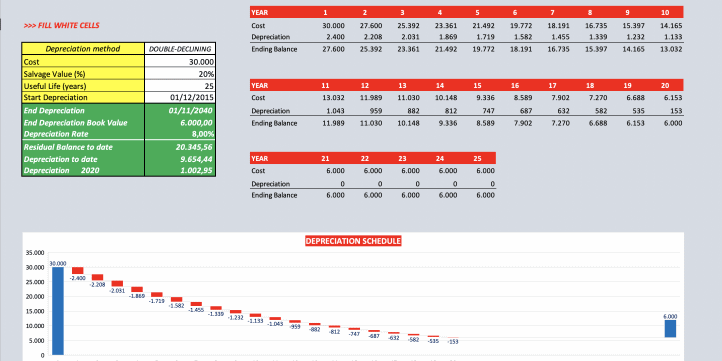
CALCULATE DEPRECIATION OF A TANGIBLE ASSET USING 4 OF THE MOST POPULAR DEPRECIATION METHODS. This excel tool will calculate the depreciation expense of an asset, based on the selected depreciation method, generating a depreciation schedule for the full term, also in chart form.
| Accounting, Financial Model, General Excel Financial Models, Personal Finance |
| Accounting, Amortization, Bookkeeping, CFO, Controlling, Excel, Financial Model, Free Financial Model Templates |

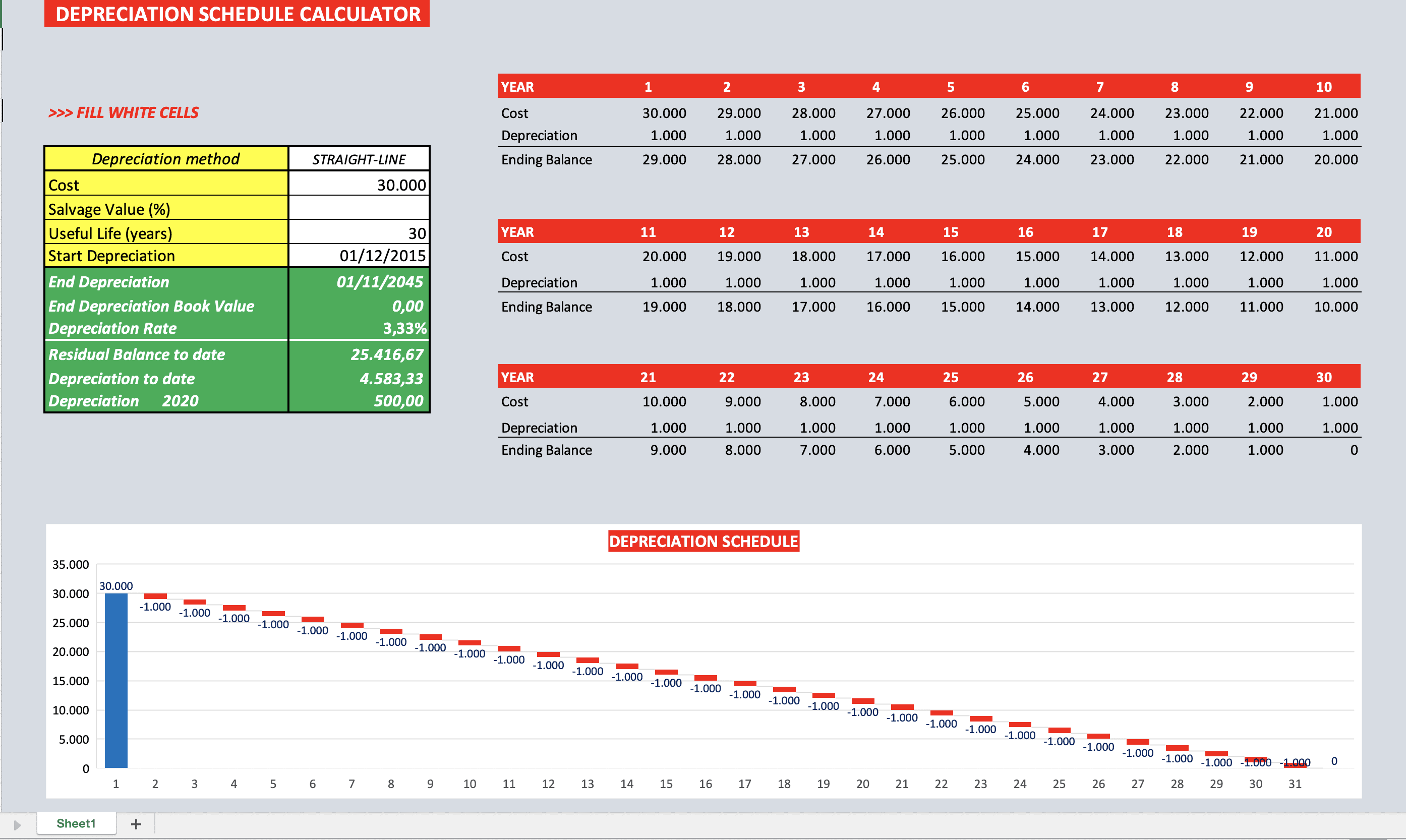
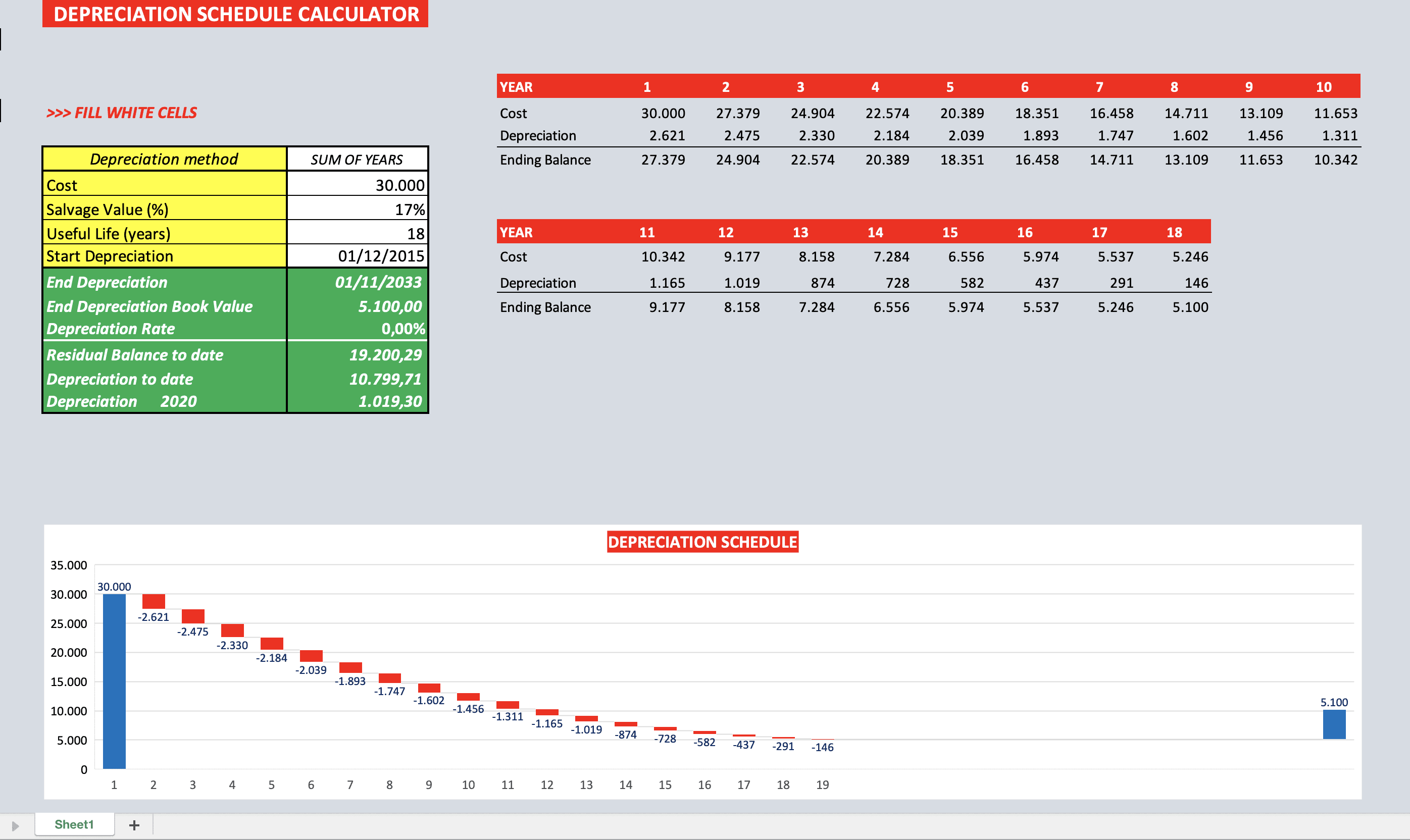


Depreciation is an accounting process by which a company allocates an asset’s cost throughout its useful life. In other words, it is the reduction in the value of an asset over time, due to usage, wear, and tear, or obsolescence.
According to generally accepted accounting principles, several methods of depreciation can be used. Among the most common:
• Straight-Line Depreciation
• Declining (Double Declining) Balance Depreciation
• Sum-of-the-Years’ Digits Depreciation
• Units of Production Depreciation
STRAIGHT-LINE DEPRECIATION
The straight-line method is the simplest, calculating depreciation by subtracting from the original cost the estimated salvage value and dividing the difference by the number of years of the estimated useful life of the asset. Therefore the same amount of depreciation expense is booked every year and the book value of the asset at the end of useful life will be its salvage value.
DECLINING BALANCE DEPRECIATION
The declining balance method is a type of accelerated depreciation used to write off depreciation costs more quickly and minimize tax exposure. This method can be popular if an asset is expected to have greater utility in its earlier years. It also helps to create a larger realized gain if the asset is actually sold. Some companies may also use the double-declining balance method which is an even more aggressive depreciation methodology for early expense management.
SUM-OF-THE-YEARS’ DIGITS DEPRECIATION
The sum-of-the-years’ digits method offers a depreciation rate that accelerates more than the straight-line method, but less than the declining balance method. Annual depreciation is separated into fractions, using the number of years of the business asset’s useful life. Such assets may include buildings, machinery, furniture, equipment, vehicles, and electronics.
To cite an example, consider an asset with a useful life of five years, which will have a sum-of-the-years value of 15 (5 + 4 + 3 + 2 + 1). The first year is assigned a value of 5, the second year value of 4, and so on. The depreciation rate for the first year is the straight-line value multiplied by the first year’s fraction (5 ÷ 15, or one-third).
Sometimes called the “SYD” method, this approach is also more appropriate than the straight-line depreciation model if an asset depreciates more quickly or has greater production capacity during its earlier years.
UNITS OF PRODUCTION DEPRECIATION
Units of production assign an equal expense rate to each unit produced, which makes it most useful for assembly or production lines. The formula involves using historical costs (the price of an asset based on its nominal or original cost when acquired by the company) and estimated salvage values, and then determines the expense for the accounting period multiplied by the number of units produced or the number of hours used.
(including quotes from investopedia.com and corporatefinanceinstitute.com)
Similar ProductsOther customers were also interested in...


 Jason Varner
Accounting Financial Model Bundle
This is a combined collection of Excel and Google Sheets financial model templates for Accounting an... Read more
 Giorgos
Amortization Schedules Template (Loans, Mortgages,...
User friendly template including Amortization Schedules for Loans, Mortgages, Operating and Finance ... Read more
Top 16 Google Sheet Templates
This is a bundle of all the most useful and efficient google sheet templates I have built over the y... Read more
 Pierre-AlexandreHeur...
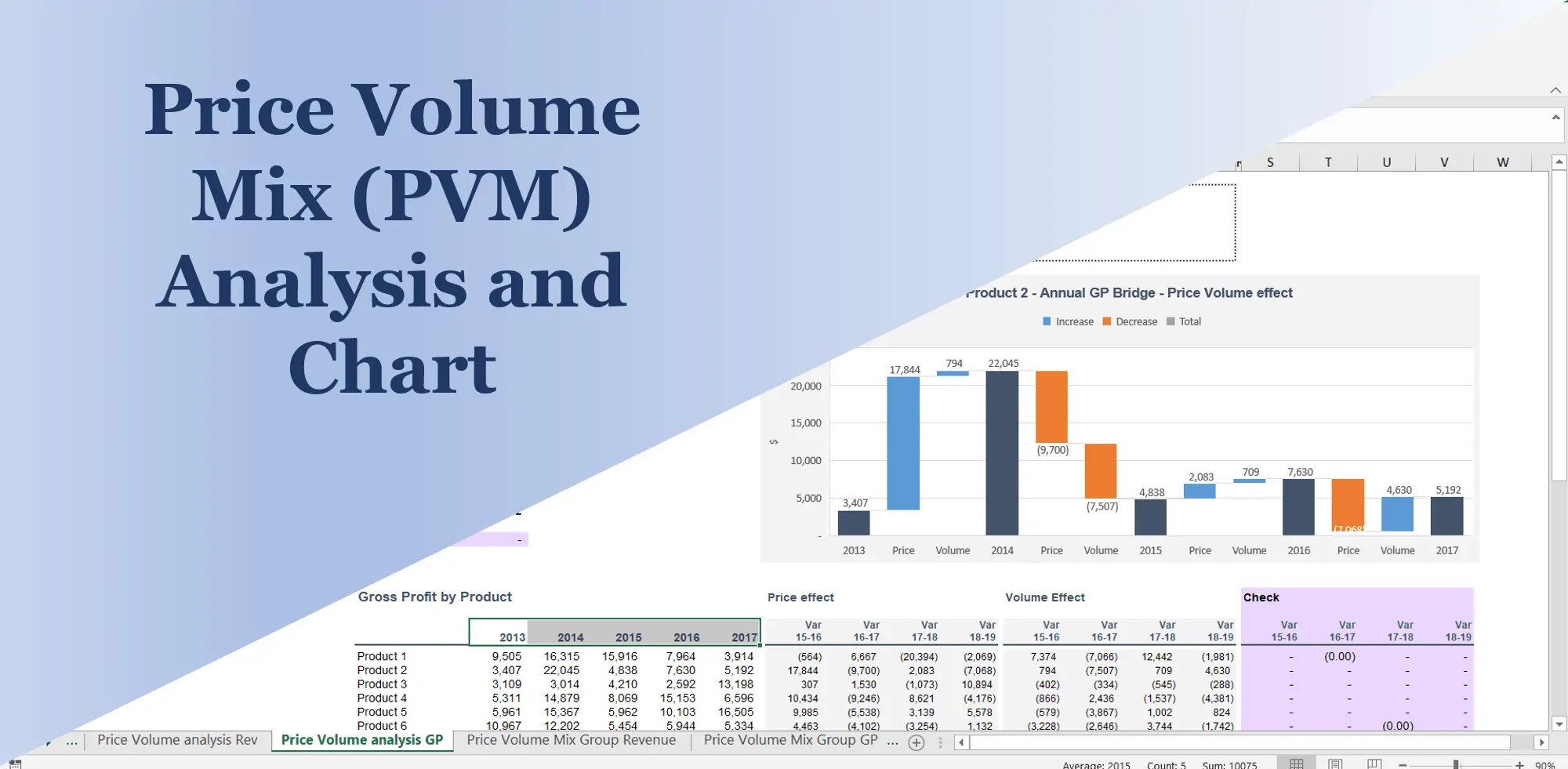
Price Volume Mix Charts and Analysis – On re...
Best practice model for a complete Price Volume Mix (PVM) analysis on revenue and on gross profit by... Read more
 Pushkar
3 Statement Financial Modeling with DCF & Rel...
Financial Modeling Tutorial guides user via step by step approach on how to build financial models w... Read more
 HenrySheykin
Auditor Financial Model Excel Template
The Auditing Firm Financial Model helps founders, consultants, analysts, and business owners turn an... Read more
Financial Advisors Agency Financial Model Excel Te...
The Financial Advisor Financial Model is a ready-to-use financial model template built for planning,... Read more

 Anuj
Anuj
Private Equity Fund Model (Investor Cashflows)
The Private Equity Fund Cashflows Model helps LPs and GPs analyze fund cash flows, returns, and dist... Read more
All My Financial Models, Spreadsheets, Templates, ...
Lifetime access to all future templates as well! Here is a set of spreadsheets that have some of the... Read more
Due Diligence P&L – Exhaustive Revenue a...
Model for in depth understanding of high level profit and loss and revenue analysis. Big-4 like chec... Read more
You must log in to submit a review.