

0 ITEMS

Upstream Oil & Gas Financial Model: Canada & US Drilling Program, Well Economics, Type Curves, Alberta Royalty, DSCR Debt
Screen and finance an oil or gas drilling program in Canada or the US. Pick one of six play presets (Montney, Duvernay, Clearwater, Midland, Bakken, Haynesville) for cited type curves, well costs, Alberta MRF royalties or US production taxes, single-well and field NPV10, IRR, payout and breakeven. The Due Diligence Edition adds a DSCR-sculpted loan and three financial statements.
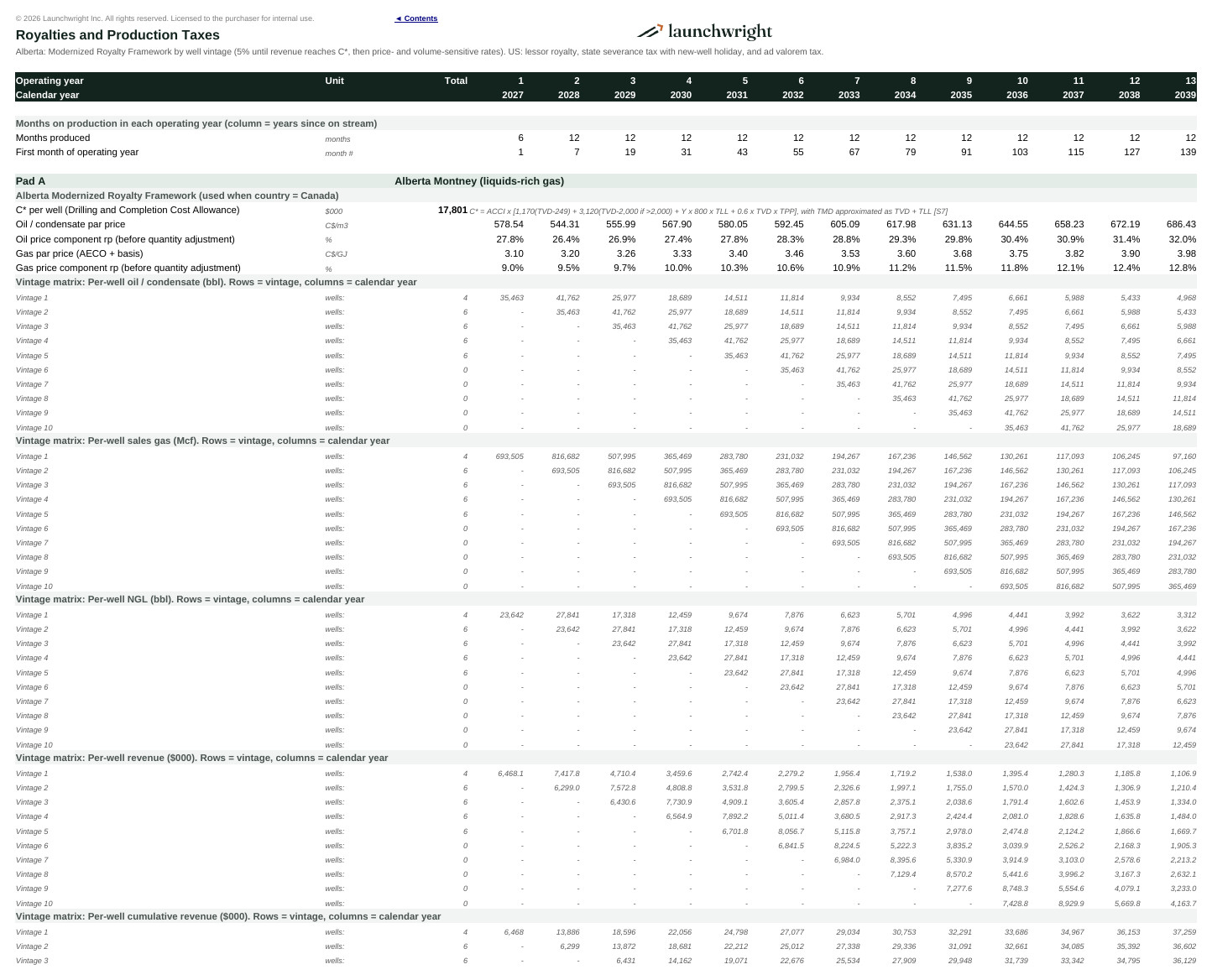
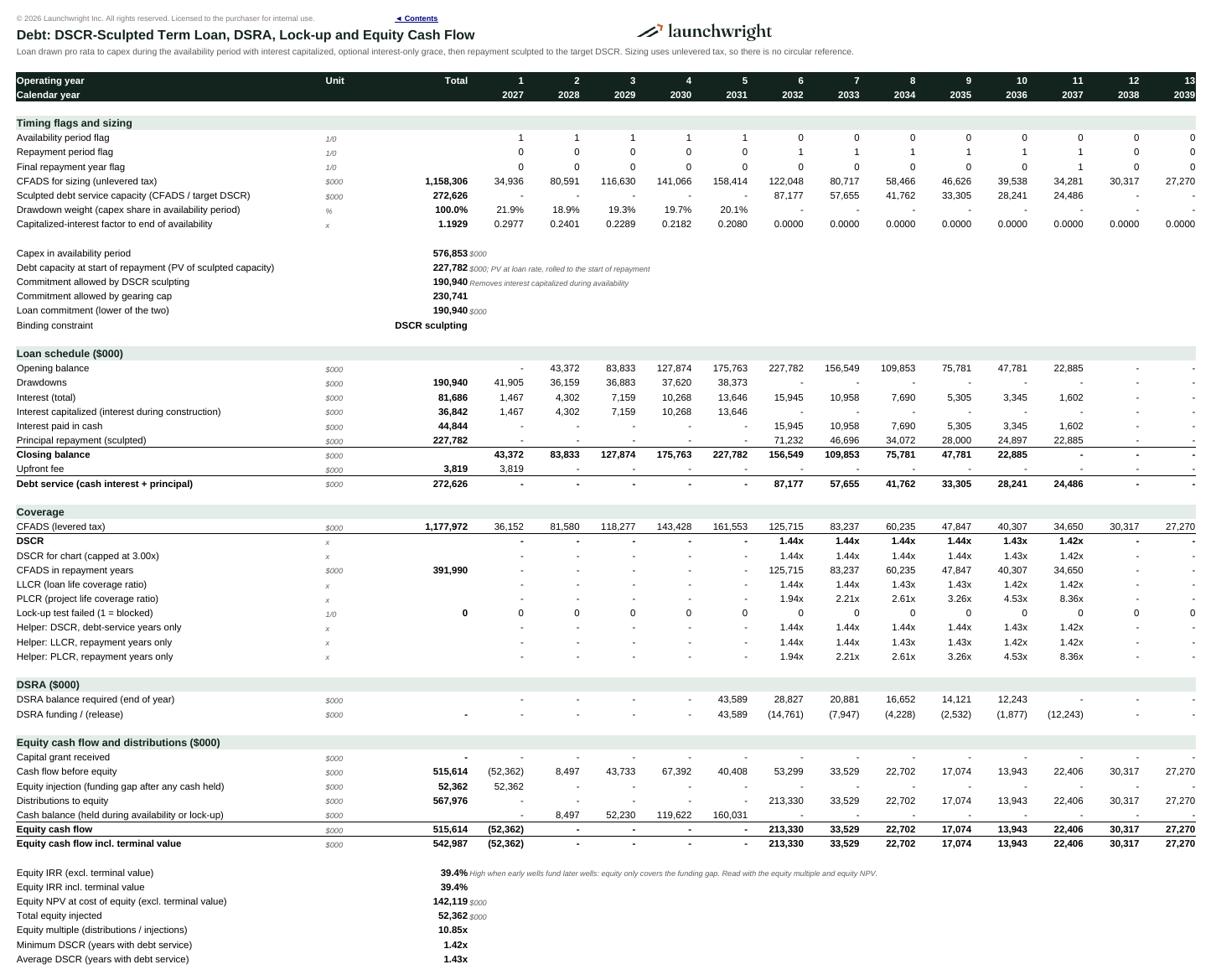
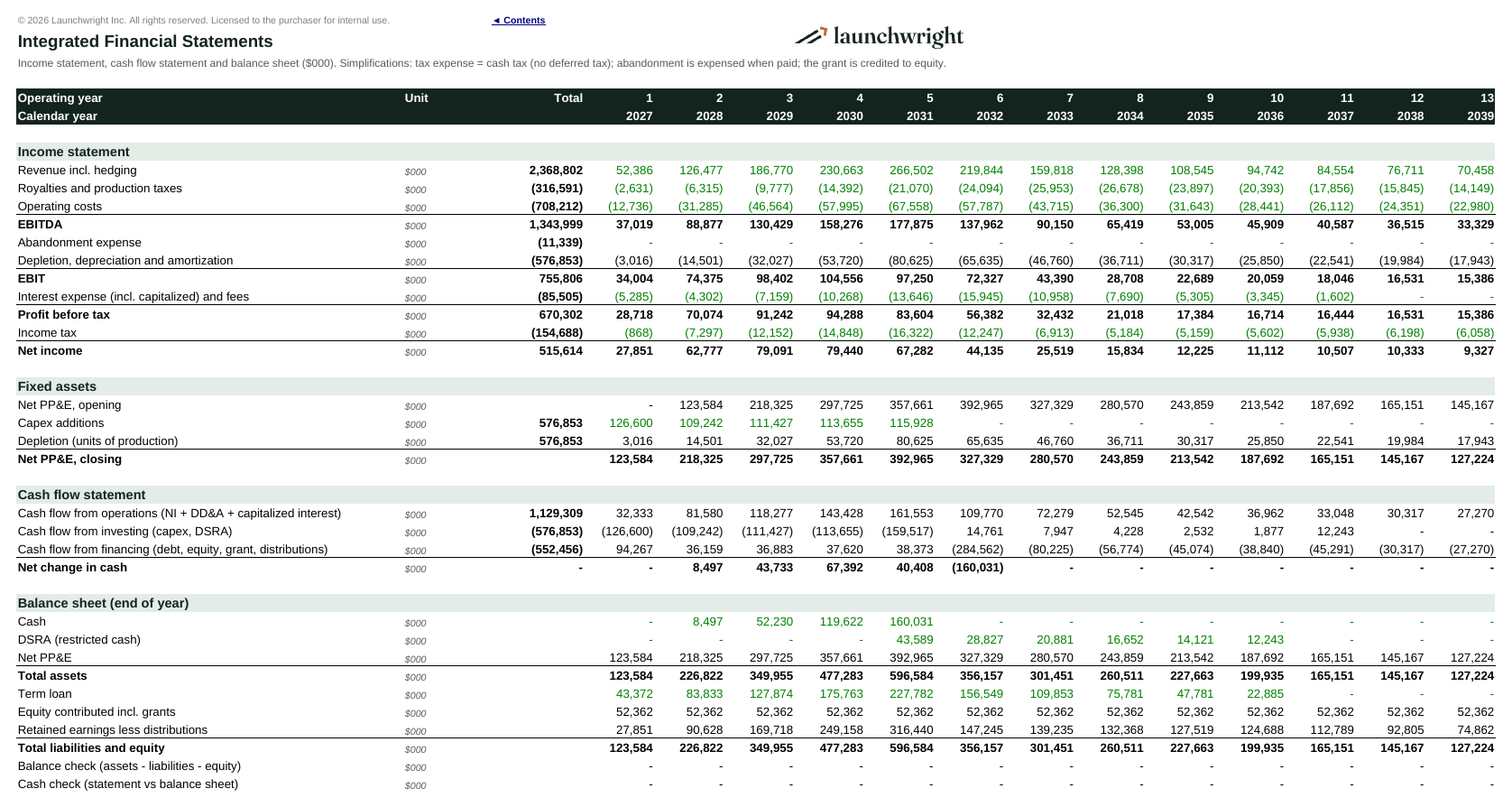
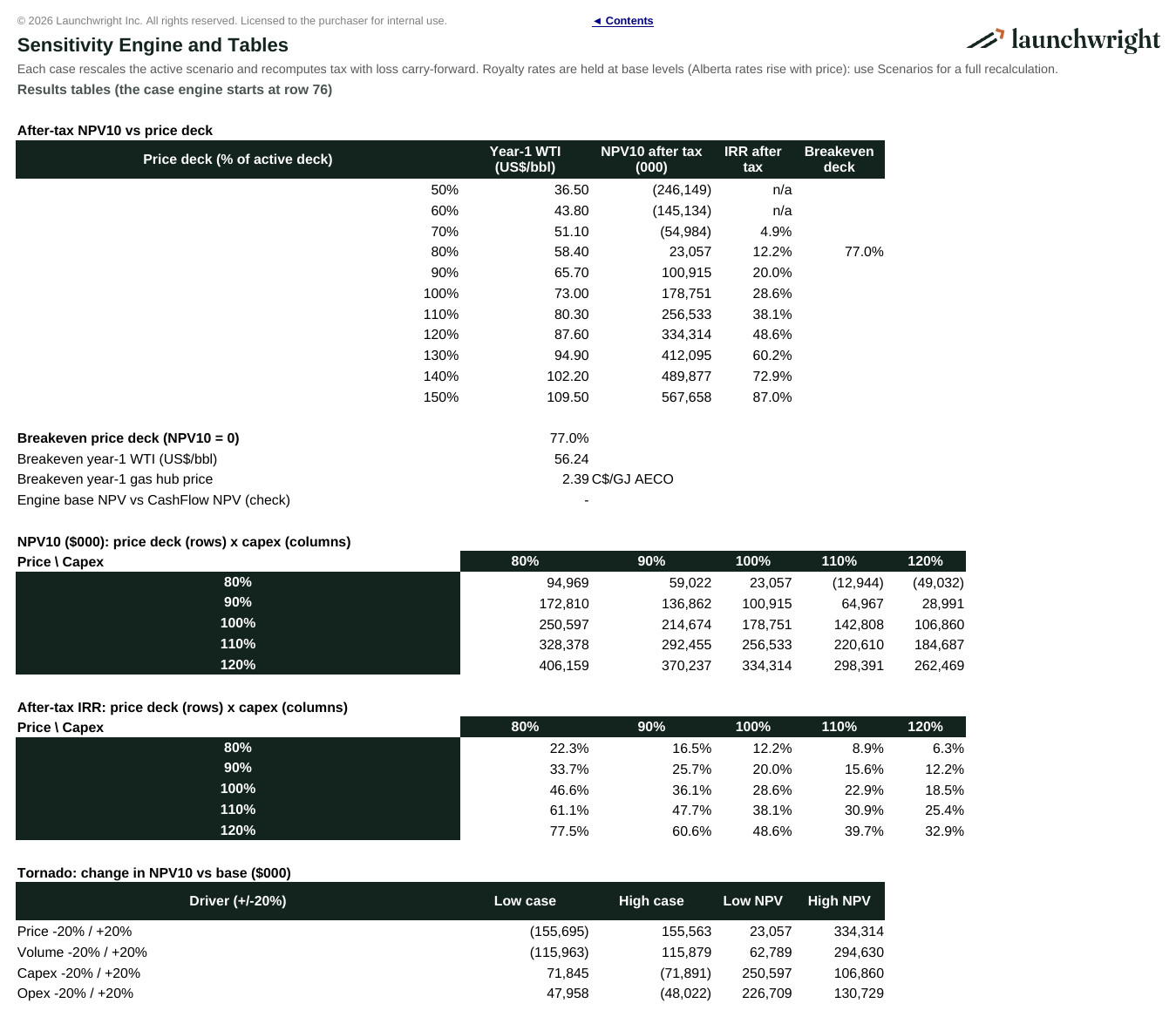
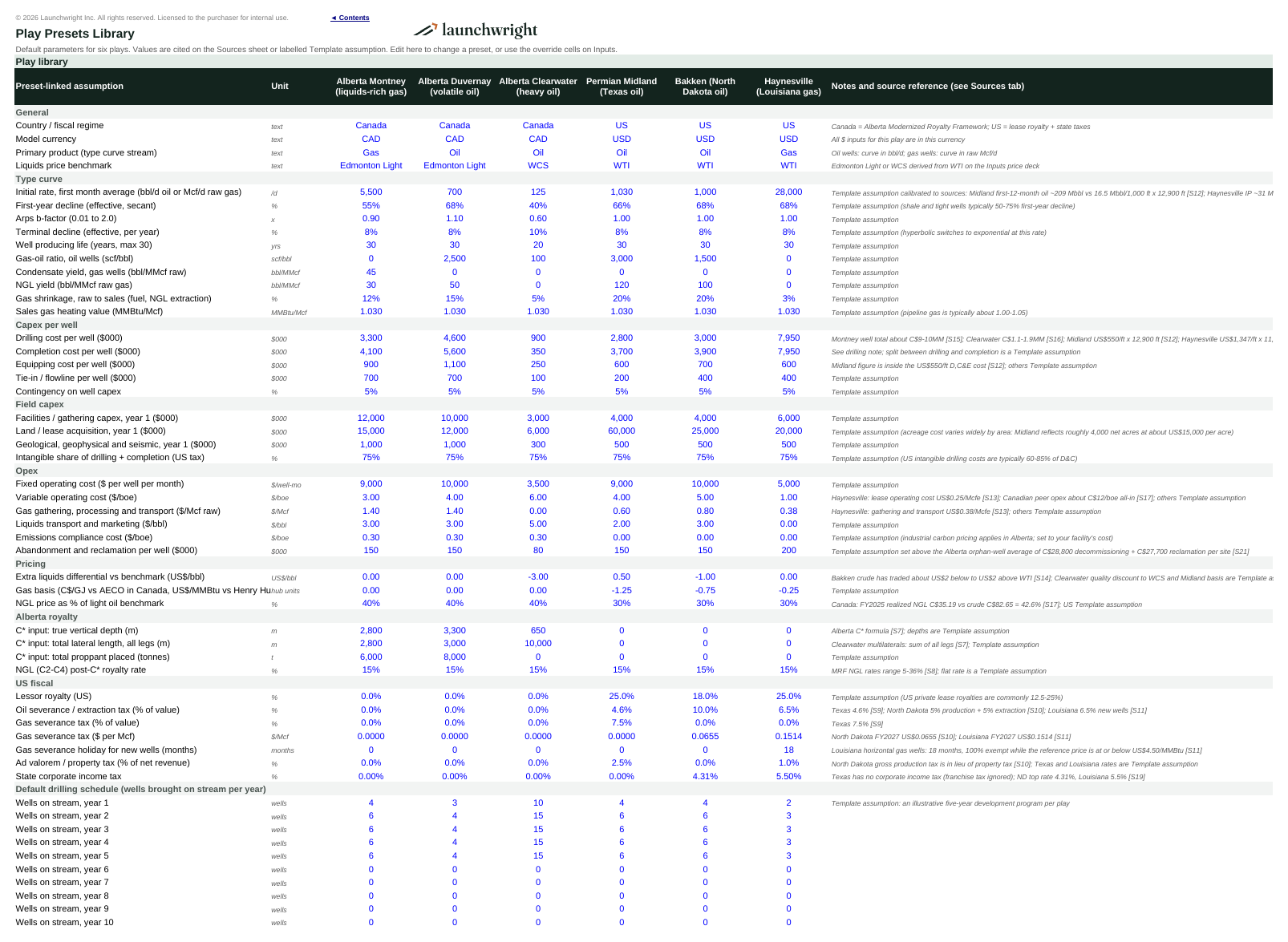
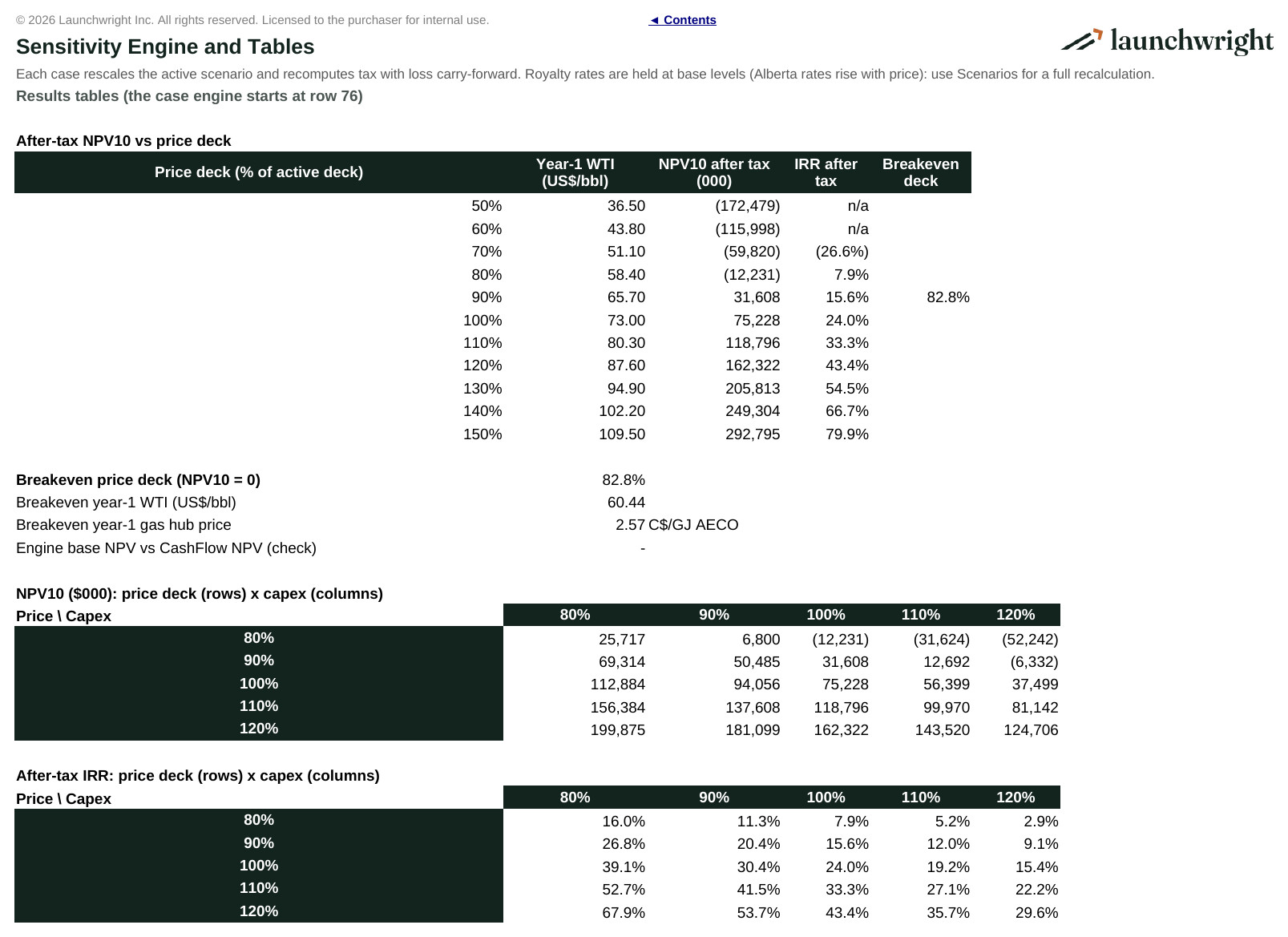
✔ Screen any drilling program in minutes: pick one of six play presets and the type curve, well costs, price links and fiscal regime fill in, every default cited.
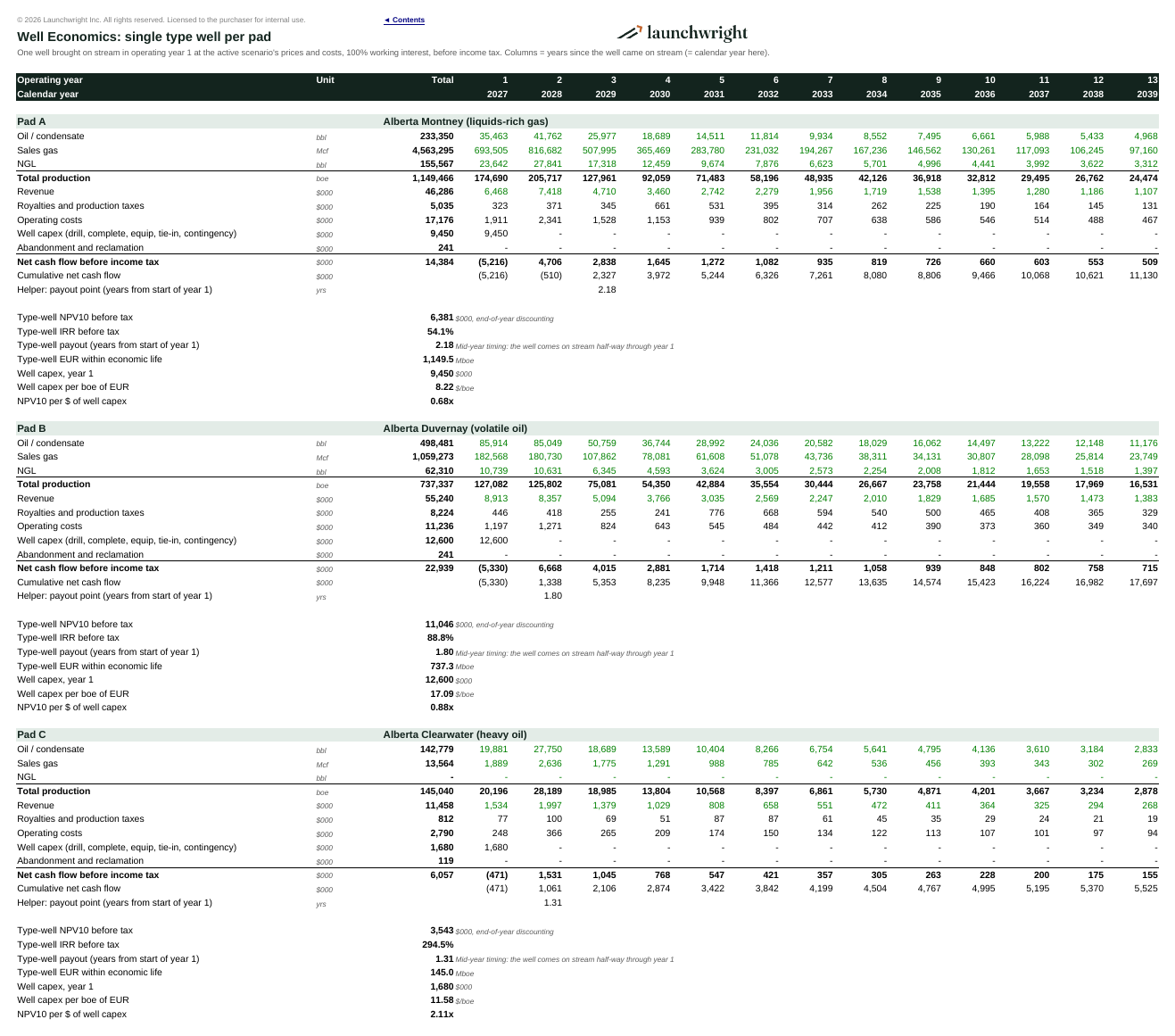
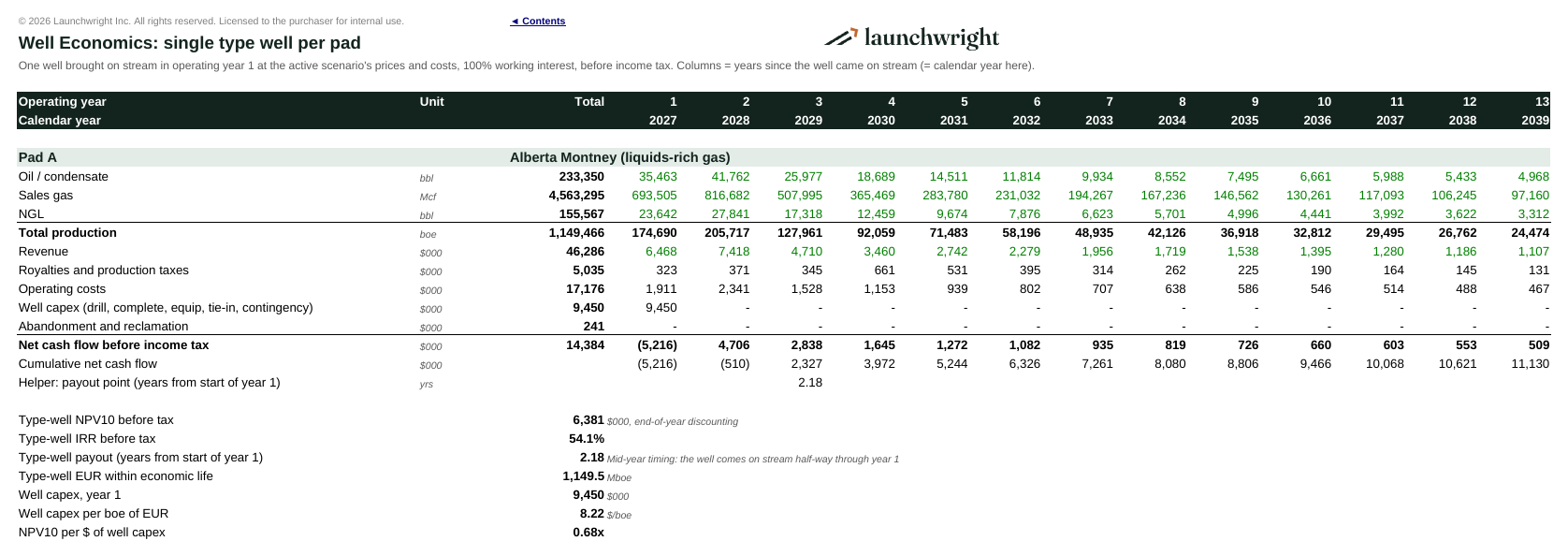
✔ Know what one well is worth before you commit to forty: type-well NPV10, IRR, payout, EUR and capex per boe on their own sheet.
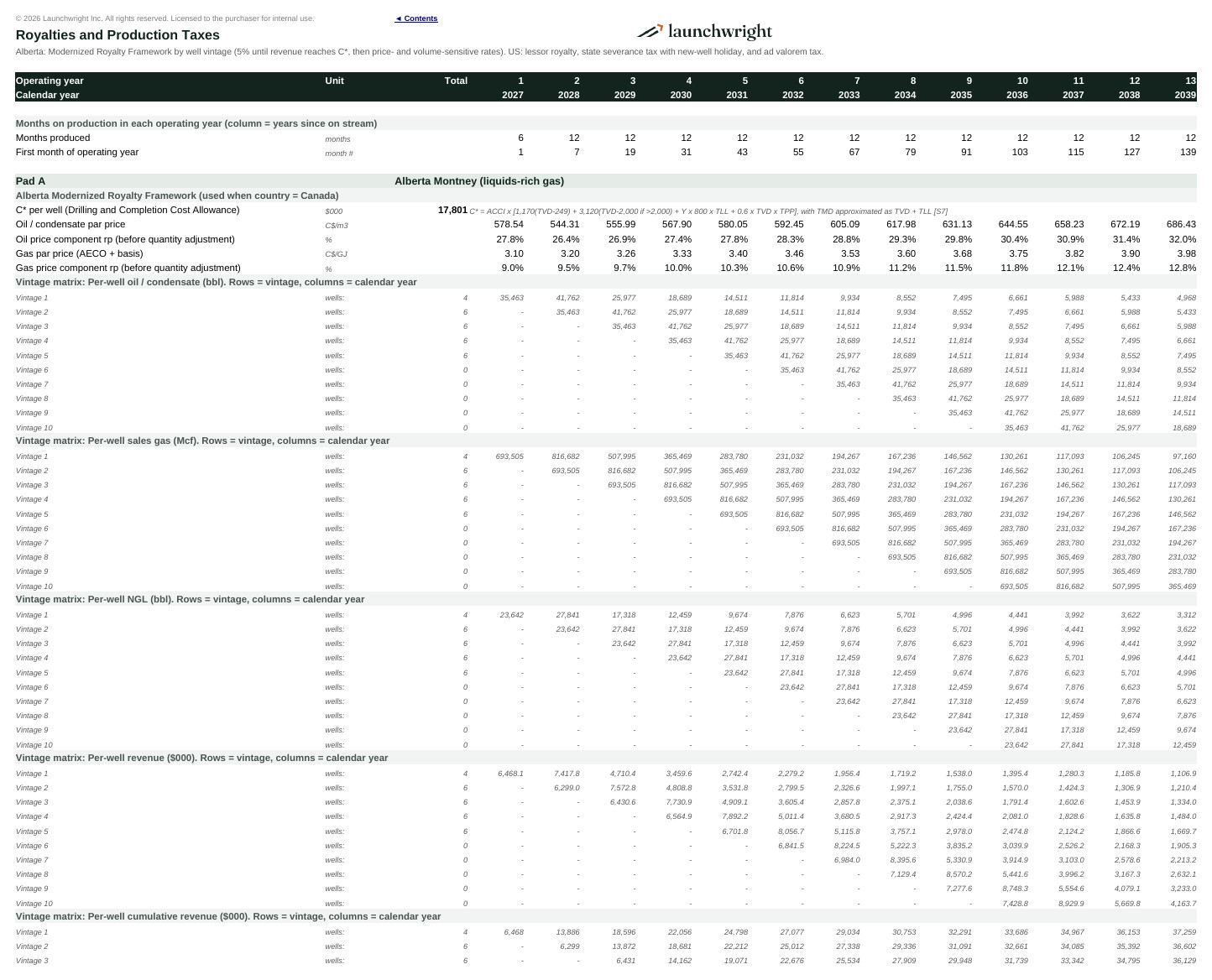
✔ Get the royalty right: Alberta’s Modernized Royalty Framework is calculated by well vintage (C*, price and volume terms), or US lessor royalty, severance and ad valorem tax.
✔ Take it to a lender (Due Diligence Edition): a loan sculpted to a target DSCR with DSRA, lock-up, LLCR and PLCR, equity returns and three linked statements.
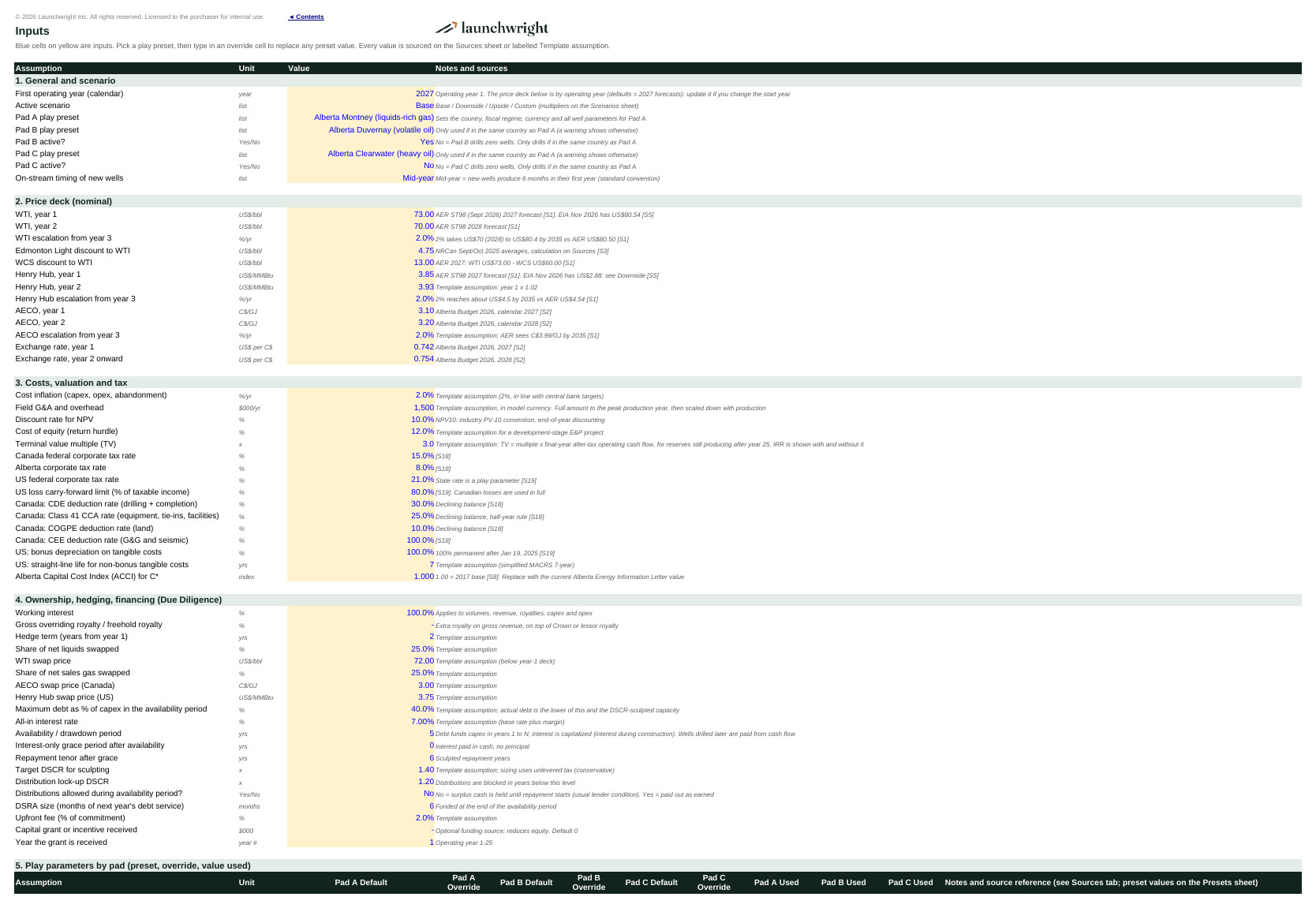
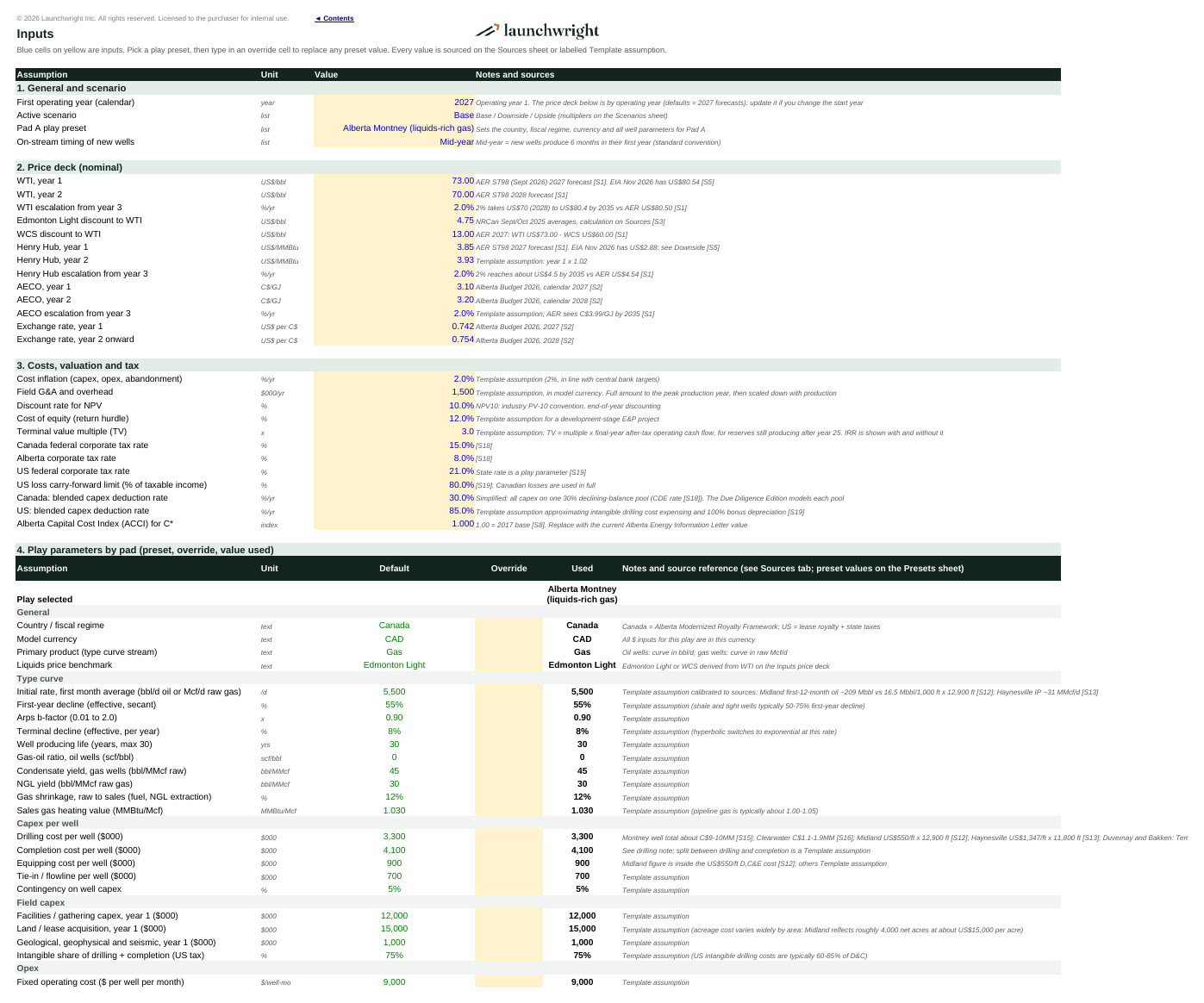
This Excel model values an upstream oil or gas development from the single well up to the field. It has six play presets: Alberta Montney (liquids-rich gas), Alberta Duvernay (volatile oil), Alberta Clearwater (heavy-oil multilaterals), Permian Midland (Texas), Bakken (North Dakota) and Haynesville (Louisiana). Each preset sets the type curve, gas-oil ratio or condensate and NGL yields, shrinkage, itemized well costs, operating costs, price differentials and the fiscal regime. Every value has its own override cell, and the Inputs sheet shows the preset value, your override and the value used side by side.
Production starts from a monthly Arps type curve per well: hyperbolic decline that switches to exponential at the terminal rate. Wells stop at the lower of their input life and their economic limit. A drilling schedule of up to 10 years is built up by vintage over a 25-year annual forecast, with mid-year or start-of-year timing. Prices come from a cited deck: WTI, Edmonton Light and WCS discounts, Henry Hub, AECO and the exchange rate, based on the Alberta Energy Regulator’s ST98 outlook (September 2026) and Alberta Budget 2026. Canadian presets run in C$ and US presets in US$.
The Well Economics sheet shows one type well brought on stream at the active scenario’s prices and costs: production, revenue, royalties, operating cost, well capex and abandonment year by year, with NPV10, IRR and payout. It reconciles exactly to the field model run with a single well.
For Alberta, the model applies the published MRF formulas to every well vintage: 5% until a well’s revenue reaches its C* allowance (from depth, lateral length and proppant), then price- and volume-sensitive rates for oil and condensate (up to 40%) and gas (up to 36%). For the US, it applies lessor royalty, state severance tax (including Louisiana’s holiday for new horizontal gas wells) and ad valorem tax.
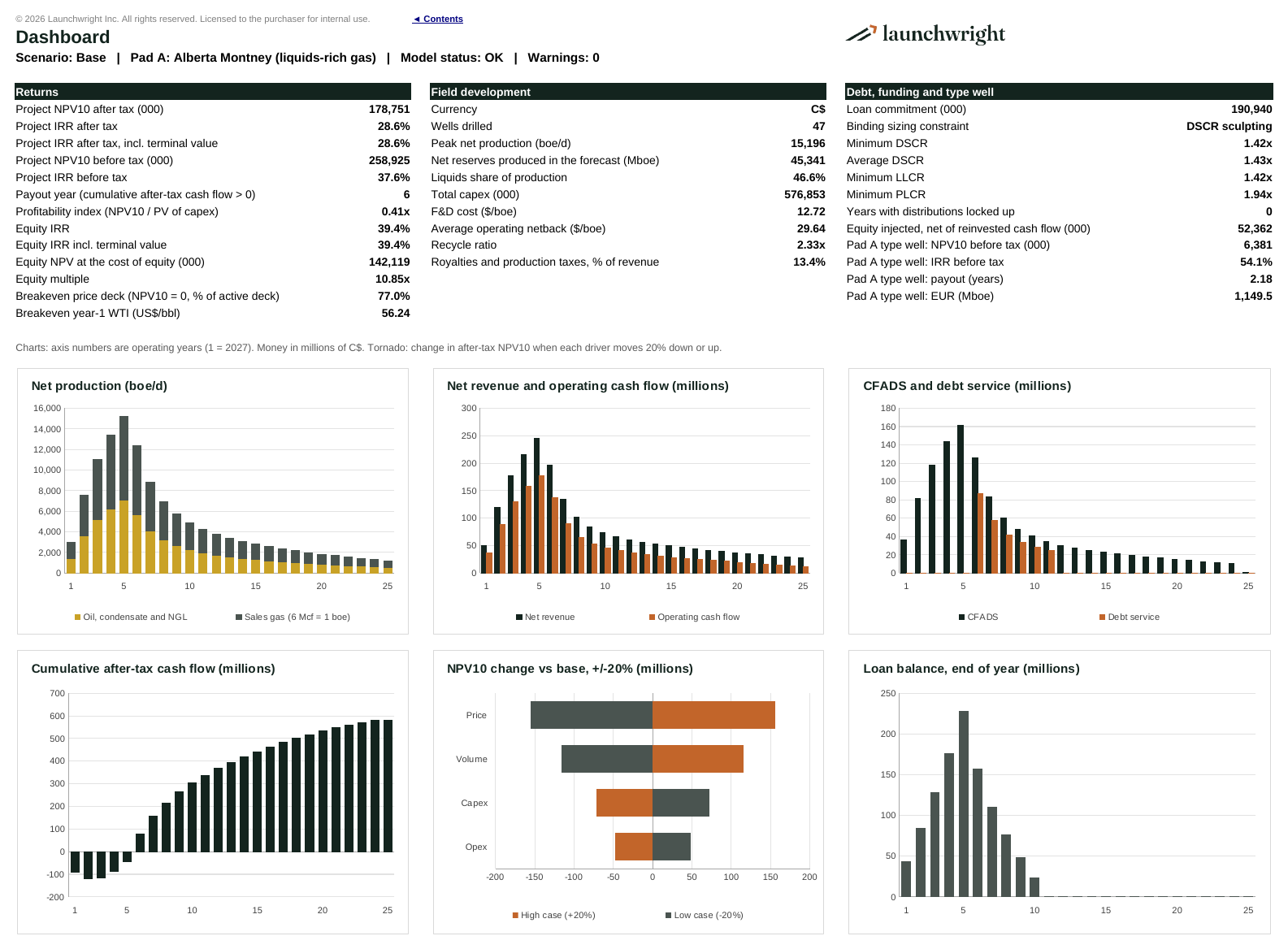
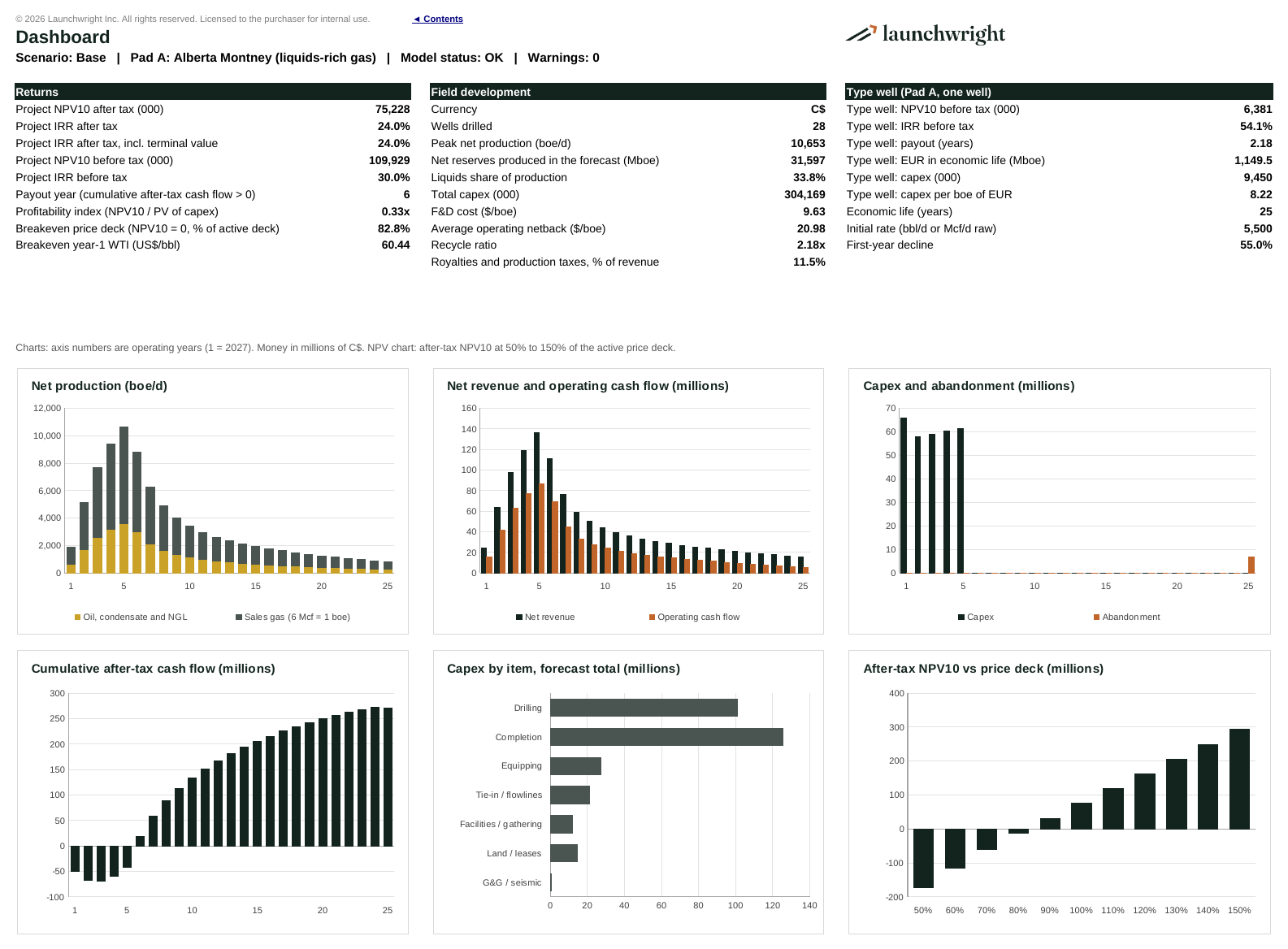
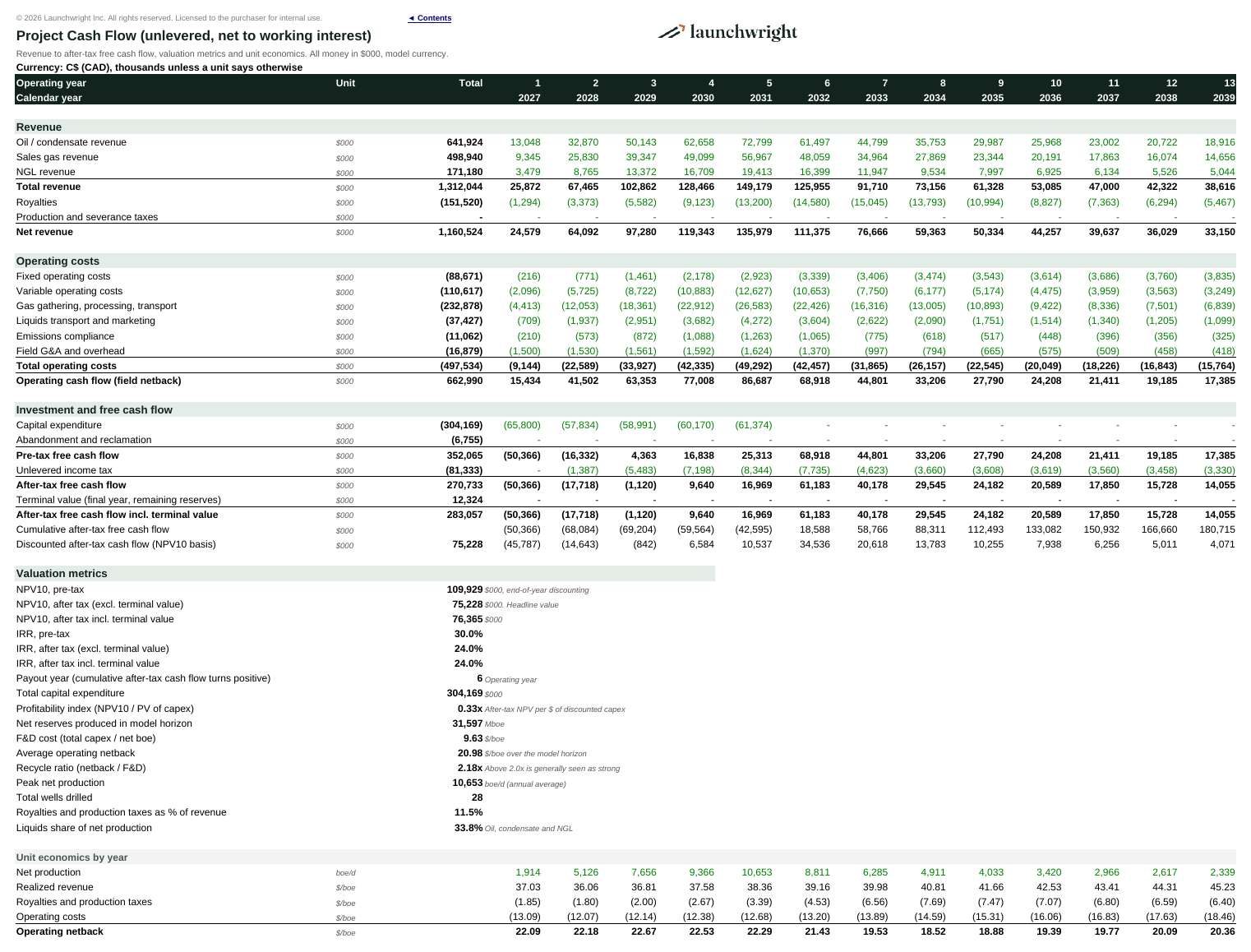
Outputs include NPV10 and IRR before and after tax, with and without a terminal value, payout year, profitability index, F&D cost, operating netback, recycle ratio, peak production and the breakeven price deck and WTI price. Base, Downside and Upside scenarios move prices, well productivity, capex and opex in one click.
Why this model
Most oil and gas templates on the market either value a single well or run a generic project cash flow with a flat royalty. This model connects the two: the type well, the drilling program and the field are one calculation, and the royalty is the actual Alberta formula by vintage rather than a fixed percentage. The Due Diligence Edition adds the financing structure a lender tests, with no circular references. Every default is cited to a public source or labelled as a template assumption.
Two editions
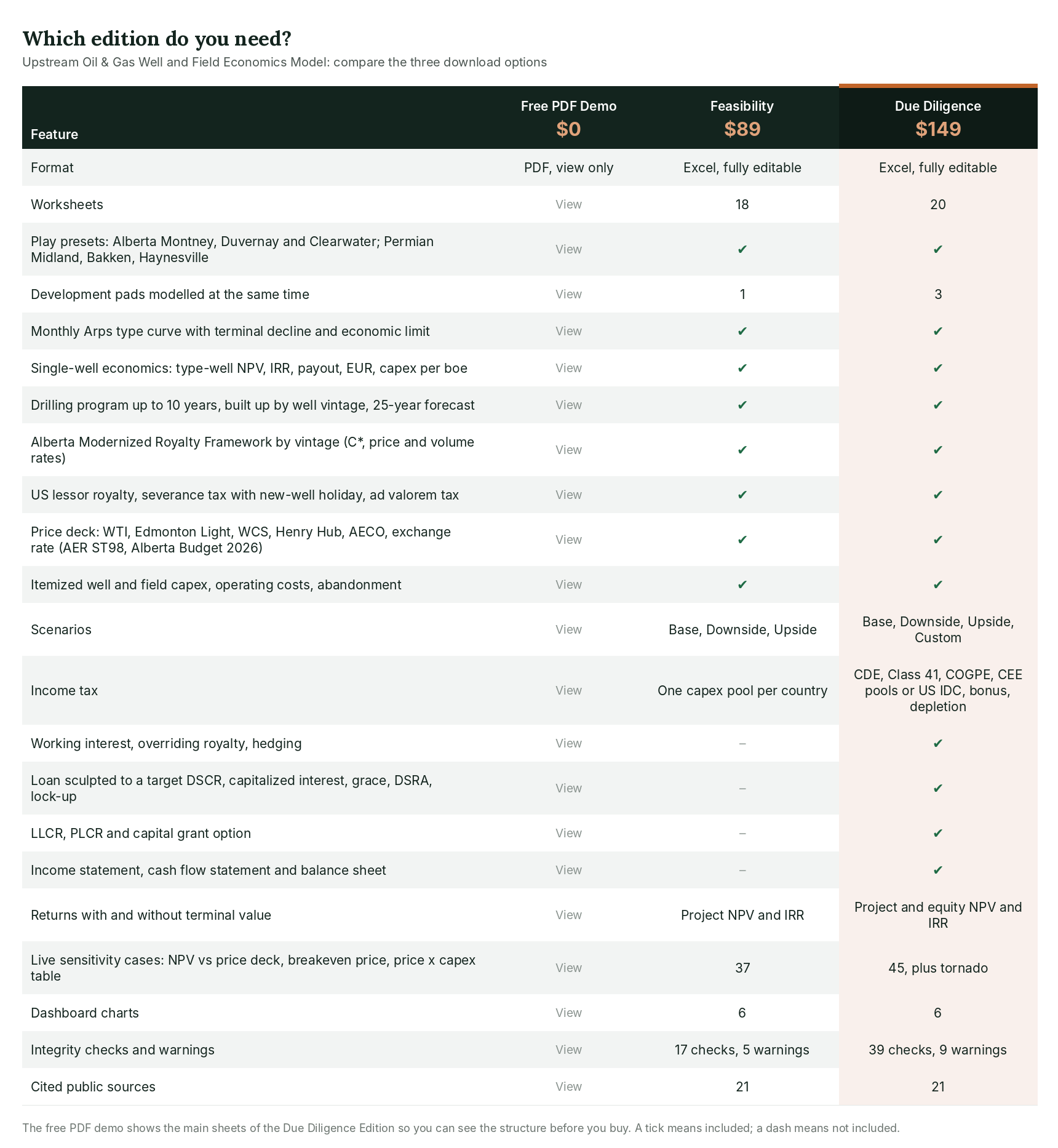
Feasibility Edition: a fast annual screening model for one pad. The six play presets, monthly type curve, drilling schedule, Alberta MRF or US production taxes, itemized capex, opex and abandonment, single-well economics, income tax with one capex pool per country, project NPV and IRR, three scenarios, 37 live sensitivity cases and a dashboard with six charts.
Due Diligence Edition: everything in the Feasibility Edition, plus:
- up to three pads at once, each with its own play, type curve and drilling schedule
- working interest, an overriding royalty, and oil and gas swaps for the first years
- Canadian resource pools (CDE, Class 41, COGPE, CEE) or US intangible drilling costs, bonus depreciation, straight-line depreciation and leasehold depletion, with loss carry-forward
- a term loan sculpted to a target DSCR and capped by gearing, with interest capitalized during the drawdown years, an interest-only grace option, a DSRA, a distribution lock-up test, LLCR and PLCR
- a lender-style distribution rule: surplus cash is held until repayment starts (switchable), so the equity IRR is not flattered by payouts during drawdown
- a capital grant option, equity IRR, NPV and multiple, and an income statement, cash flow statement and balance sheet that balance every year
- 45 live sensitivity cases, including a tornado chart and a price-by-capex table
Compare the editions
Key outputs
- Project NPV10 and IRR before and after tax, with and without terminal value; payout year and profitability index
- Type-well NPV10, IRR, payout, EUR and capex per boe for each pad
- F&D cost, operating netback, recycle ratio, peak production, liquids share and royalty rate
- Breakeven price deck and breakeven WTI; NPV across 50% to 150% of the price deck
- Loan size and binding constraint, minimum and average DSCR, LLCR, PLCR, lock-up years, equity IRR, NPV and multiple (Due Diligence Edition)
- Charts of production by stream, revenue and operating cash flow, capex, cumulative cash flow, and either capex by item and NPV by price (Feasibility) or CFADS against debt service, a tornado and the loan balance (Due Diligence)
Built to modeling best practice
- Inputs, calculations and outputs on separate, colour-coded sheets; Default, Override and Used columns for every play parameter
- No macros, no circular references, no iterative calculation, no external links, no hidden or protected sheets
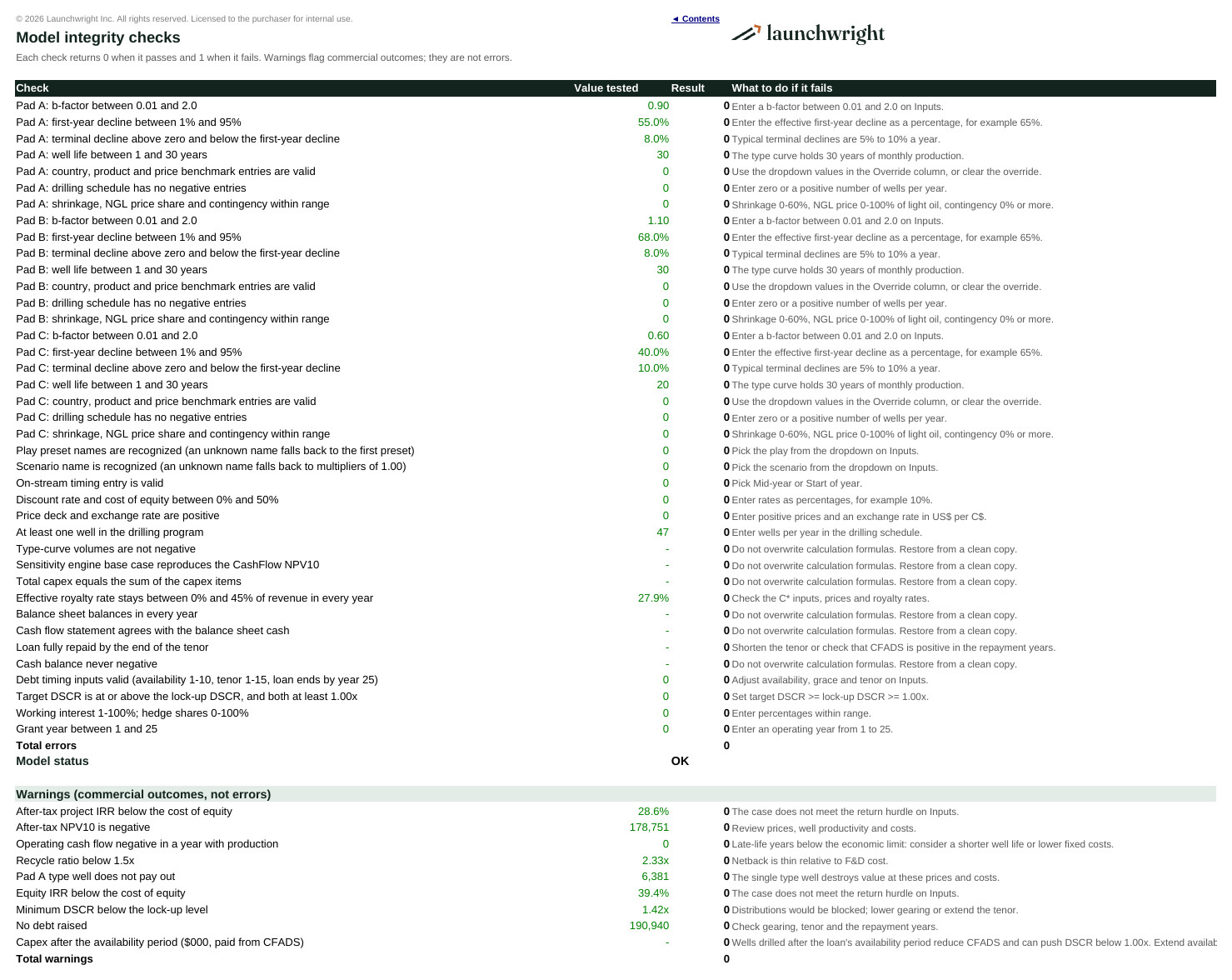
- A Checks sheet that tests the inputs, the capex and royalty logic, the sensitivity engine against the base case and, in the Due Diligence Edition, the balance sheet, cash and loan repayment, plus commercial warnings
- Instructions, a glossary and a list of 21 cited public sources
Timeline
Annual periods over 25 operating years, with up to 10 drilling years. The type curve is monthly. Money in thousands of the model currency.
Default assumptions
The default case is an Alberta Montney liquids-rich gas pad: 28 wells over five years, each starting at 5,500 Mcf/d of raw gas with 45 bbl/MMcf of condensate and 30 bbl/MMcf of NGLs, at a well cost of about C$9.45 million including 5% contingency. Prices follow the AER ST98 2026 outlook (WTI US$73/bbl in 2027) and Alberta Budget 2026 (AECO C$3.10/GJ). Several inputs are template assumptions and are labelled as such. At these defaults the Feasibility Edition shows an after-tax NPV10 of about C$75 million and an after-tax IRR of 24.0%, and one type well has a before-tax NPV10 of about C$6.4 million. The Due Diligence Edition default adds a Duvernay pad and a C$191 million loan, with an after-tax project NPV10 of about C$179 million, project IRR of 28.6%, equity IRR of 39.4% and a minimum DSCR of 1.42x. These results are illustrations, not a forecast; replace the defaults with your reserves report, AFEs and tax advice.
What you get
- One Excel workbook (.xlsx) for the edition purchased
- A free PDF demo showing 19 pages from the Due Diligence Edition
Support
Questions about how the template works are answered by email at the address inside the file. For custom work, use the eFinancialModels custom service.
Frequently asked questions
Which plays are included?
Alberta Montney, Duvernay and Clearwater, and Permian Midland, Bakken and Haynesville. You can model another play by overriding the preset values or editing a column on the Presets sheet.
Is the Alberta royalty exact?
It uses the published MRF formulas by well vintage on annual averages. The C* allowance uses the government formula with total measured depth approximated as depth plus lateral length, the gas par price uses AECO plus basis rather than the Alberta Gas Reference Price, and natural gas liquids use a flat post-C* rate you can change. Enter the current Alberta Capital Cost Index on Inputs.
Does it cover British Columbia or Saskatchewan royalties?
No. Canadian presets use the Alberta framework. US percentage depletion and state franchise taxes are also not modelled.
Is the forecast monthly?
The type curve is monthly. The cash flow is annual over 25 years.
Which currency does it use?
C$ for the Alberta presets and US$ for the US presets. US$ benchmarks are converted at the exchange rate on the price deck.
Why is the equity IRR higher than the project IRR?
In the Due Diligence Edition, operating cash flow from early wells pays for later wells, so equity only covers the funding gap and the loan covers part of the rest. The model shows the equity multiple and equity NPV next to the IRR so you can judge it.
Are there circular references?
No. The loan is sized on tax calculated without interest, so there is no circular reference or iterative calculation.
Are the default prices a forecast?
No. They are cited public outlooks and template assumptions, for illustration. The Henry Hub default follows the AER outlook (US$3.85/MMBtu for 2027), which is above the US EIA’s November 2026 outlook (US$2.88); the Downside scenario cuts gas prices by 20%. Replace them with your own price deck.
Which Excel versions does it work in?
Desktop Excel 2010 or later on Windows or Mac. It uses only long-standing functions, with no macros and no dynamic arrays. It was recalculated and tested in LibreOffice Calc as well. It has not been tested in Google Sheets.
Is the file locked?
No. There are no locked cells, passwords, hidden sheets or macros. Every formula is visible.
What is the difference between the two editions?
The Feasibility Edition screens one pad with project returns and simplified tax. The Due Diligence Edition adds three pads, working interest and hedging, full tax pools, the sculpted loan, equity returns, the statements and the tornado. See the comparison table.
Similar ProductsOther customers were also interested in...



 eFinancialModels
Electric Vehicle (EV) Charging Station Financial M...
With this comprehensive 5- or 10-year monthly tool, investors can assess the viability of setting up... Read more

Financial Model for Mobile App | Mobile App Busine...
The Mobile App Financial Plan Template in Excel allows you to develop financial projections when lau... Read more

 HenrySheykin
Food Truck Financial Model Excel Template
The Food Truck Financial Model helps entrepreneurs, founders, business owners, consultants, and anal... Read more

Green Hydrogen Production from Wind Energy Financi...
The Green Hydrogen from Wind Financial Model aims to comprehensively forecast a horizon of 40 years ... Read more

Simple Mutual Non-Disclosure Agreement Template
Protect your business secrets with ease using our Simple Mutual Non-Disclosure Agreement Template. S... Read more

Solar Energy Financial Model
The Solar Energy Financial Model Spreadsheet Template in Excel assists you in preparing a sophistica... Read more

 Peter Graf
The Customer-Centric Financial Model for Restauran...
Starting a restaurant without a financial plan is like driving a car blindfolded. You wouldn´t do i... Read more
You must log in to submit a review.