
0 ITEMS

Medical Center (Centre) Clinic Financial Model 5 Year 3 Statement
A comprehensive editable, MS Excel spreadsheet for tracking private Medical Center finances, including development channels, and summary tabs, integrates Income Statements, Balance Sheets, and Cash Flow Statements, providing a comprehensive view of financial performance.



Track specialised funding that is frequently used for Medical Clinics and their subsequent infrastructure. Comprehensive Private Medical Clinic Financial Model and Valuation, Online and Offline Marketing % Opportunities, Development Channels, Cash Flow, Income Statements, Balance Sheets, Statement Summaries, Break Even Analysis (BEA), Top Expenses, Top Revenue, Salary Assumptions, Services Assumptions, COGS Assumptions, ROI For Projected Contracts, Development Projections, and a breakdown of seasonal Assumptions.
Financial Model for a Medical Center
A comprehensive financial model for a medical center is essential for evaluating its financial performance, strategic planning, and decision-making. This model includes three primary financial statements: the Income Statement, the Cash Flow Statement, and the Balance Sheet. Each of these components provides unique insights into the medical center’s financial health and operational efficiency.
1. Income Statement
The Income Statement, also known as the Profit and Loss Statement, outlines the medical center’s revenues, expenses, and profits over a specific period. It helps in assessing the profitability and operational performance of the medical center.
Key Components:
Revenues: This includes all sources of income such as patient services revenue (inpatient, outpatient, emergency services), grants, donations, and other ancillary services.
Cost of Goods Sold (COGS): Direct costs related to providing medical services, such as medical supplies, pharmaceuticals, and lab costs.
Operating Expenses: Salaries and wages, benefits, rent, utilities, administrative expenses, and depreciation.
Operating Income: The difference between operating revenues and operating expenses, indicating the medical center’s ability to cover its operating costs.
Non-Operating Items: Gains or losses from investments, interest expenses, and any other non-operating income or expenses.
Net Income: The overall profitability after accounting for all revenues, expenses, and non-operating items.
2. Cash Flow Statement
The Cash Flow Statement provides insights into the medical center’s cash inflows and outflows over a specific period, highlighting the center’s liquidity and cash management practices. Key Components: Operating Activities: Cash flows related to the center’s core operations, including cash receipts from patients and insurance companies and cash payments for medical supplies, salaries, and other operating expenses.
Investing Activities: Cash flows related to the acquisition or sale of property, equipment, and other long-term investments.
Financing Activities: Cash flows related to borrowing, repaying loans, and other financing activities such as issuing or repurchasing equity.
Net Increase/Decrease in Cash: The overall change in cash position, indicating whether the center is generating sufficient cash to maintain and expand its operations.
3. Balance Sheet
The Balance Sheet provides a snapshot of the medical center’s financial position at a specific point in time, detailing its assets, liabilities, and equity.
Key Components: A. Assets: – Current Assets: Cash and cash equivalents, accounts receivable, inventory, and other short-term assets that can be converted to cash within a year.
Non-Current Assets: Property, plant, and equipment (PPE), long-term investments, and intangible assets such as patents or proprietary technologies.
Liabilities: – Current Liabilities: Short-term obligations due within a year, including accounts payable, short-term loans, and other accrued expenses.
Non-Current Liabilities: Long-term debts and other long-term obligations.
Equity: The residual interest in the assets of the medical center after deducting liabilities, including retained earnings and any other equity contributions.
4. MRR and ARR Revenue Tracking
Focuses on tracking the recurring revenue that forms the backbone of a subscription-based business.
Monthly Recurring Revenue (MRR): Total monthly revenue generated from active subscriptions.
MRR = (Number of subscribers in each tier × Tier price).
Annual Recurring Revenue (ARR): Total expected revenue over a year from recurring subscriptions.
ARR = MRR × 12.
Metrics to Monitor
Subscriber Growth Rate:
(New Subscribers – Cancellations) / Starting Subscribers.
Churn Rate:
(Number of Cancellations / Starting Subscribers).
Lifetime Value (LTV):
Average Revenue Per User (ARPU) × Average Subscriber Lifetime.
Customer Acquisition Cost (CAC):
Total Sales & Marketing Costs / Number of New Subscribers.
LTV/CAC Ratio:
Indicates the ROI on customer acquisition.
Dashboard Components
MRR by Tier:
Breakdown of MRR across different subscription plans ().
MRR Growth:
Month-over-month MRR change percentage.
Churn Analysis:
Identify patterns or reasons for subscriber cancellations.
ARR Projections:
Forecast ARR based on historical MRR trends and growth rates.
Integration and Analysis
The financial model integrates these three statements to provide a holistic view of the medical center’s financial health.
By analyzing these statements together, stakeholders can:
Evaluate Profitability:
Through the Income Statement, assess the center’s ability to generate profit from its operations.
Assess Liquidity: Using the Cash Flow Statement, determine if the center has the adequate cash flow to meet its short-term obligations.
Understand Financial Position:
The Balance Sheet will clearly show the center’s overall financial stability and long-term solvency. Additionally, the model can incorporate key financial ratios and metrics such as gross margin, operating margin, current ratio, and debt-to-equity ratio to facilitate deeper analysis and benchmarking against industry standards. Usage This financial model is a vital tool for management, investors, and other stakeholders to make informed decisions regarding budgeting, forecasting, investment, and strategic planning. It enables the medical center to proactively manage its finances, ensure sustainability, and plan for future growth and expansion.
Similar ProductsOther customers were also interested in...


 City Finance
Physiotherapy Clinic Finance Model 5 Year 3 Statem...
A comprehensive editable, MS Excel spreadsheet for tracking Physiotherapy Clinic finances, integrate... Read more
 HenrySheykin
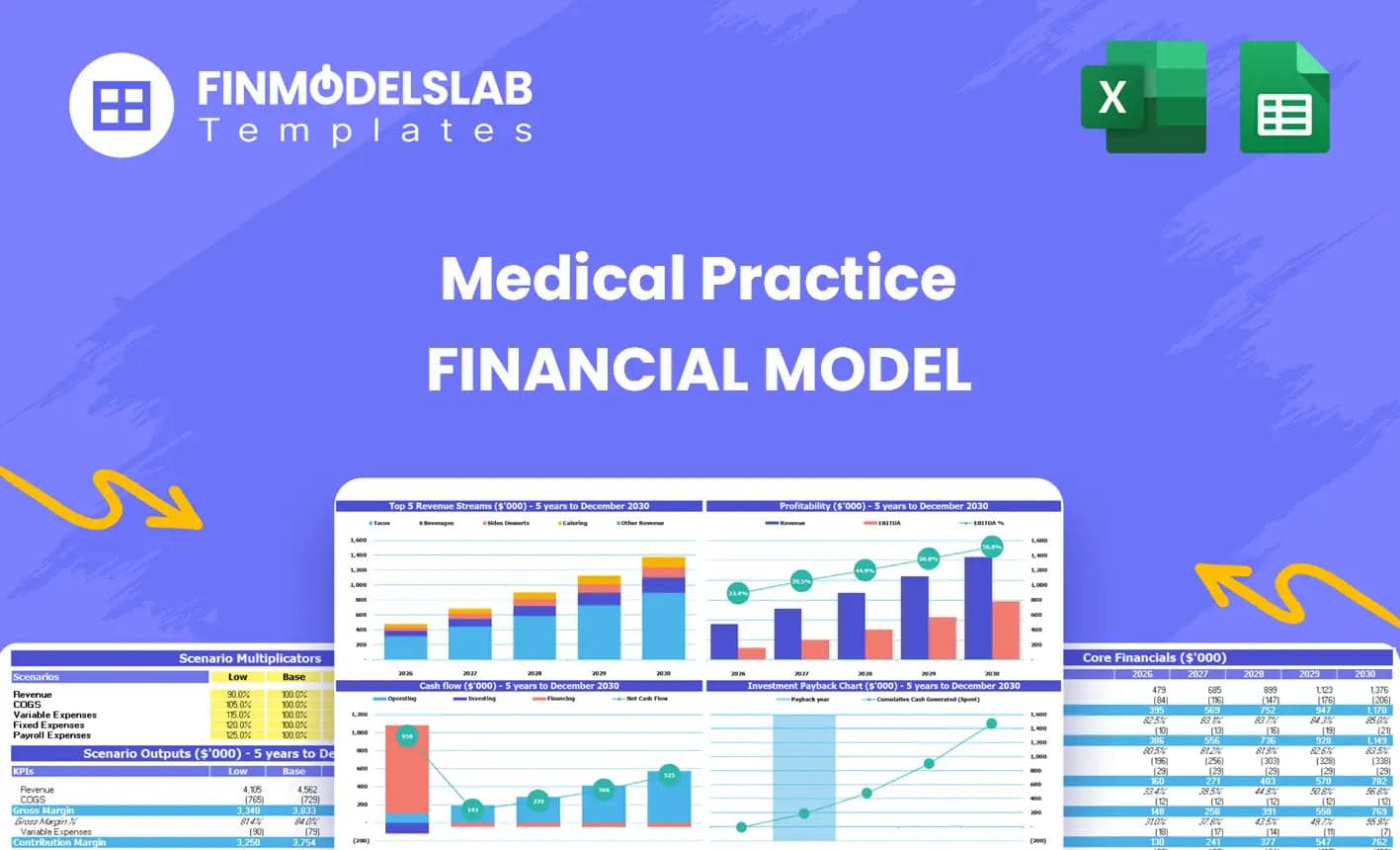
Medical Practice Financial Model Excel Template
The Medical Practice Financial Model helps users turn a clinic concept, expansion plan, or healthcar... Read more
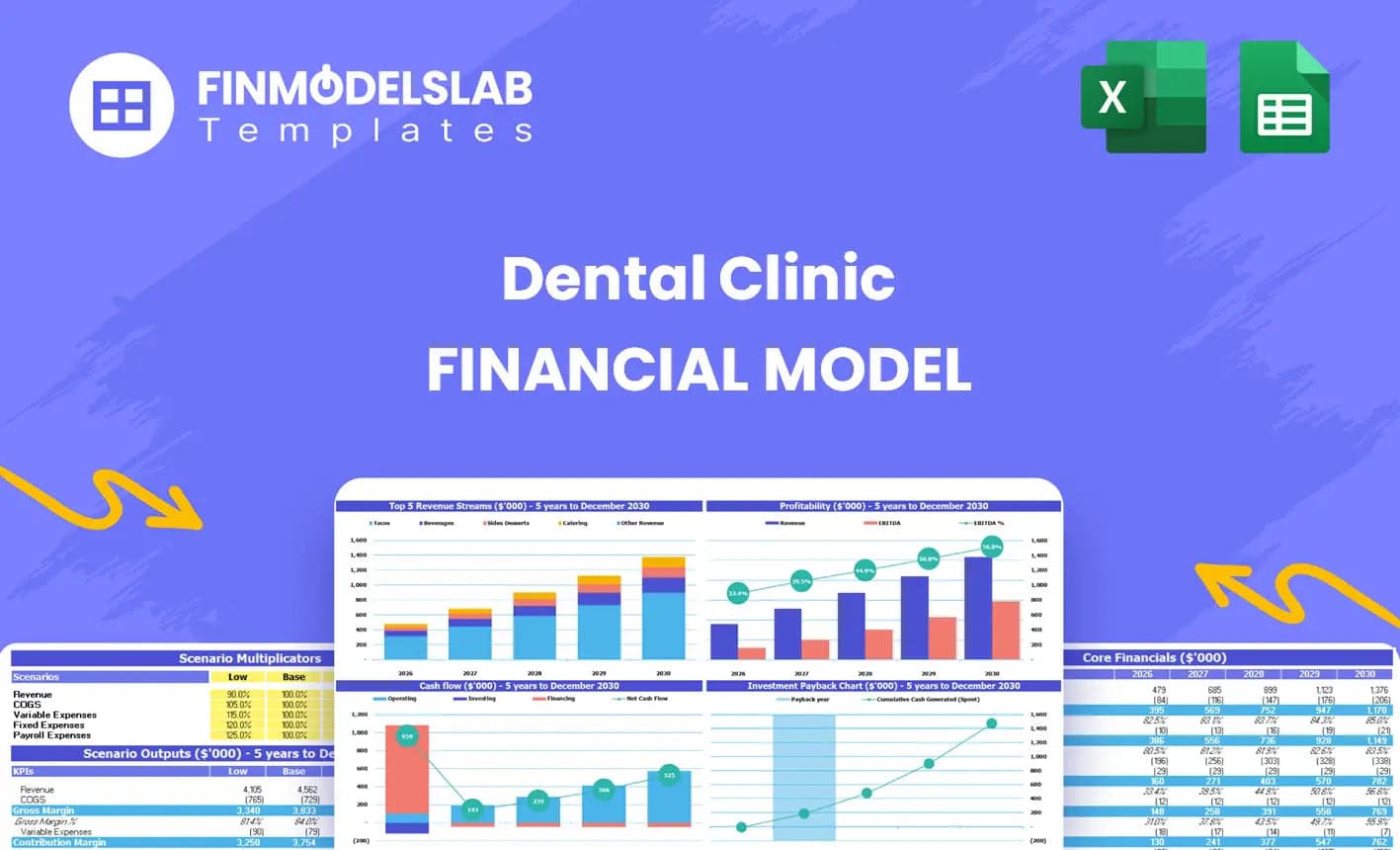
Dental Practice Financial Model Excel Template
The Dental Clinic Financial Model helps users turn a dental practice concept, launch plan, or expans... Read more

 strategyfinancialmod...
HOSPITAL Financial Model Template
A comprehensive and customizable financial template that captures all the key aspects of the hospita... Read more
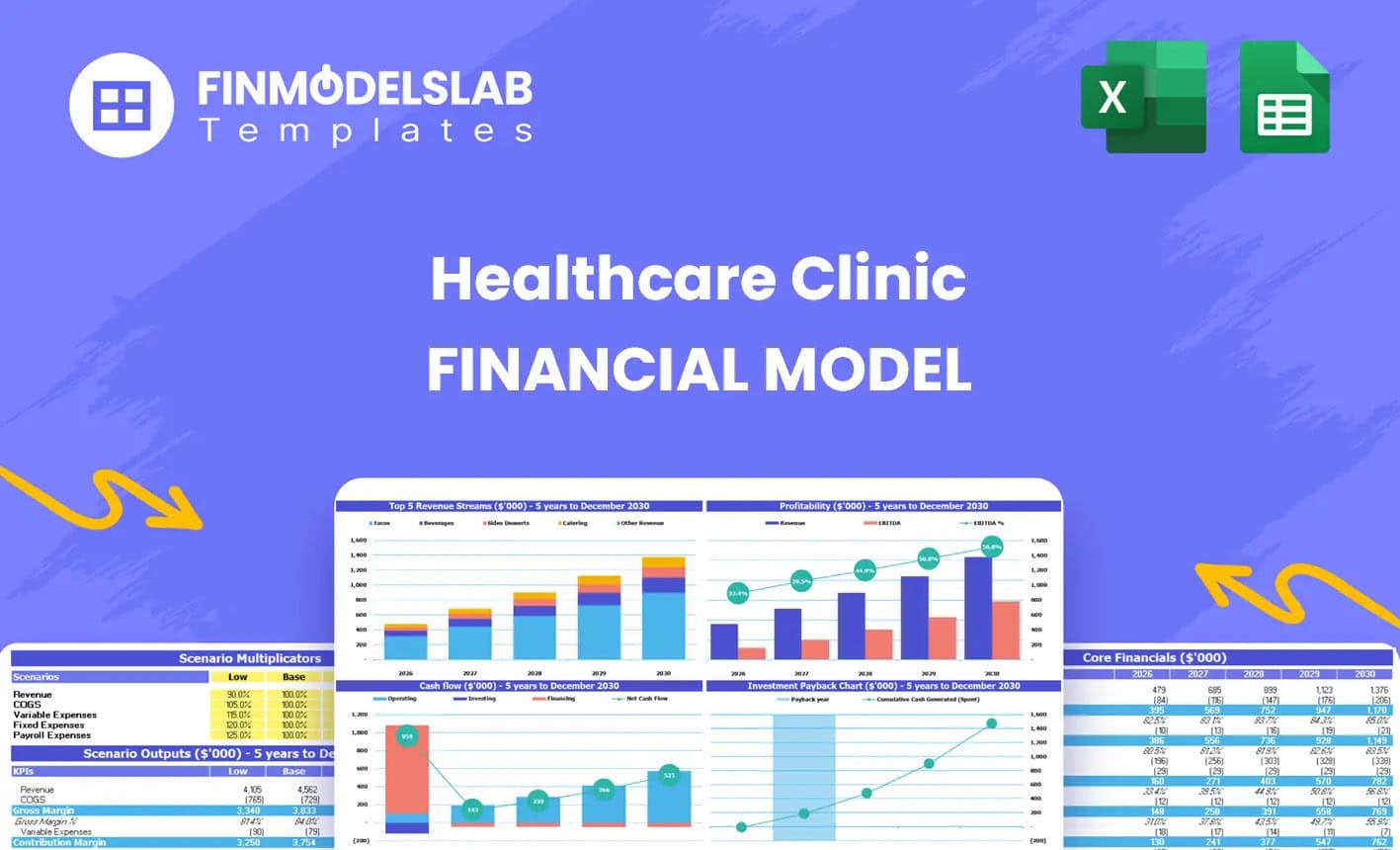
Clinic Financial Model Excel Template
The Healthcare Clinic Financial Model helps founders, clinic owners, consultants, analysts, and busi... Read more

Ophthalmology Financial Model Excel Template
The Ophthalmology Clinic Financial Model is a ready-to-use financial model template designed to help... Read more
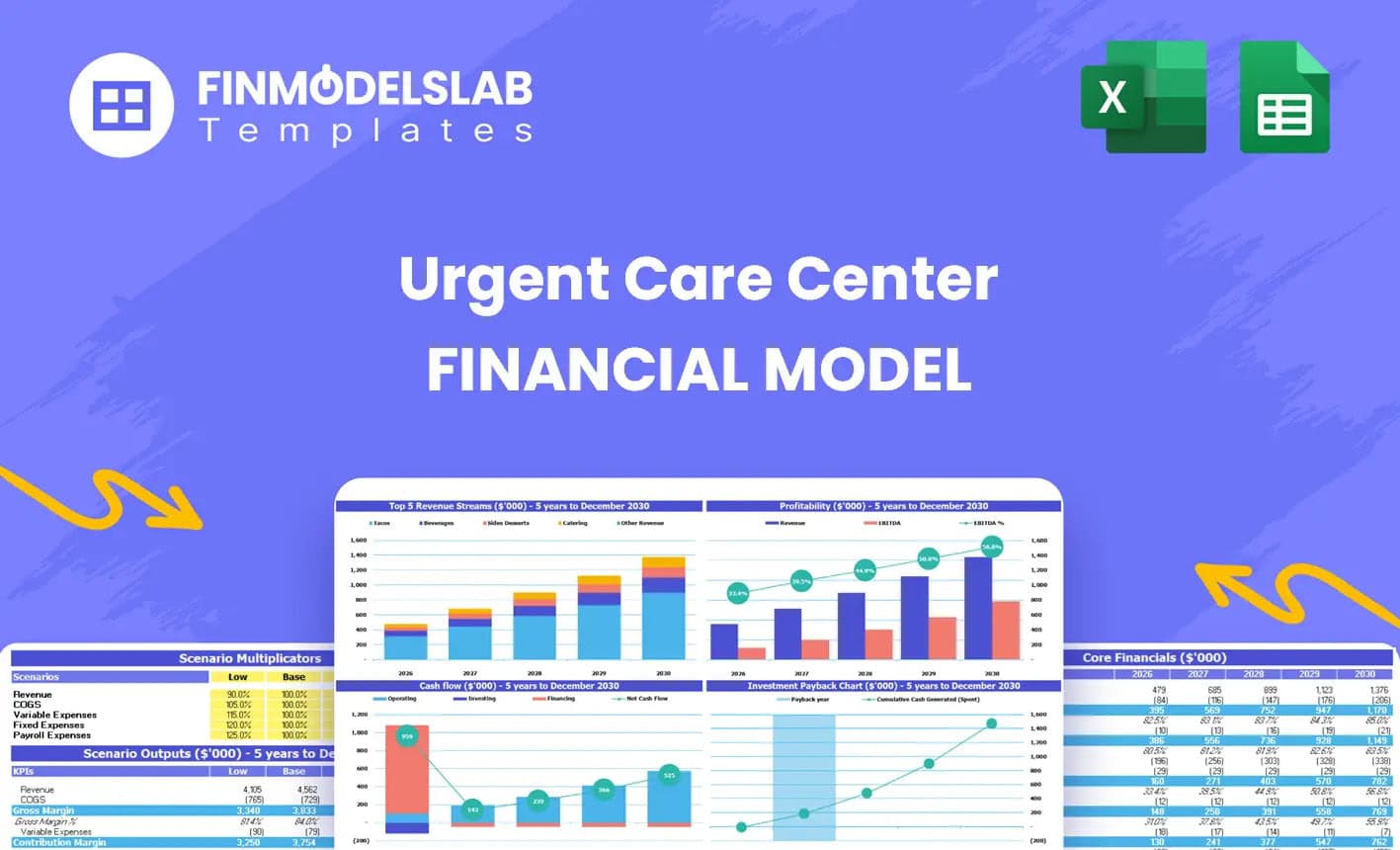
Urgent Care Center Financial Model Excel Template
The Urgent Care Center Financial Model helps users turn a walk-in clinic concept into a structured f... Read more

Physiotherapy Financial Model Excel Template
The Physiotherapy Clinic Financial Model helps founders, clinic owners, consultants, analysts, and b... Read more
 Andreas
General Hospital Financial Model
General Hospital Financial Model consists of a financial model related to the start-up and operation... Read more
Veterinary Financial Model Excel Template
The Veterinary Clinic Financial Model Financial Model Template helps entrepreneurs, clinic owners, c... Read more
You must log in to submit a review.