
0 ITEMS

What You Need to Know About Private Equity Funding
Private equity funding is a way for businesses to raise capital from investors who buy ownership stakes to support growth and expansion.
- It involves raising capital from limited partners and deploying it over several years to acquire and improve companies.
- Private equity firms target businesses with steady cash flow and high growth potential, not startups.
- Preparing a detailed financial model is crucial to demonstrate potential returns and gain investor confidence.
- Matching your business with the right private equity firm based on size, industry, and growth stage increases deal success.
- Negotiating terms with a clear, data-driven pitch helps secure investment and align expectations.
Keep reading to see how these steps can help you successfully attract private equity funding.
What Is Private Equity Funding?
Private equity funding refers to money invested in private companies that are not listed on stock markets. Investors purchase stakes to help these businesses grow, improve, or turn around. They often bring in new ideas, fresh capital, and better management. The goal is to boost the company’s value and sell it later for a profit. It’s popular among firms seeking high returns. If you’re asking what private equity is, it’s a smart way to invest in potential while staying out of public markets.
Private equity funding originated in the mid-20th century when investors began acquiring private companies to improve and resell them for a profit. It took off in the 1980s with the rise of leveraged buyouts (LBOs), in which firms used borrowed money to acquire businesses. Over time, private equity has grown into a major force in global finance, reshaping industries through ownership changes and strategic investments. Today, it fuels innovation and expansion in both startups and established companies. For those wondering what private equity is, it’s a form of investment that helps businesses grow while offering high returns to investors.
Private equity firms can be categorized based on deal size and target company revenues as follows:
- Large: Firms seeking investments in companies with revenues over $100 million.
- Medium: Firms targeting companies with revenues above $30 million to $100 million.
- Small: Firms targeting companies with revenues between $5 million and $30 million.
Below is a list of the Top 10 Largest Private Equity Firms in 2025 from Private Equity International, a global publication in private equity investing:

How Does Private Equity Work?
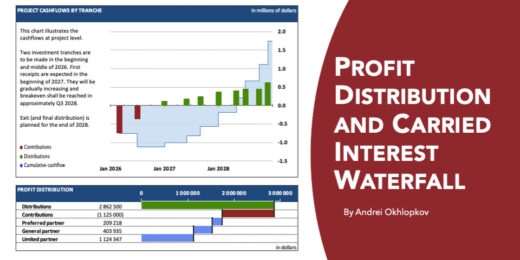
Private equity funding operates through a structured partnership, where investors (Limited Partners) provide the bulk of the capital, and fund managers (General Partners) utilize that capital to acquire and grow companies. The GP actively identifies deals, invests in businesses, and optimizes operations to enhance returns. Meanwhile, LPs stay hands-off but earn profits when the fund exits its investments.
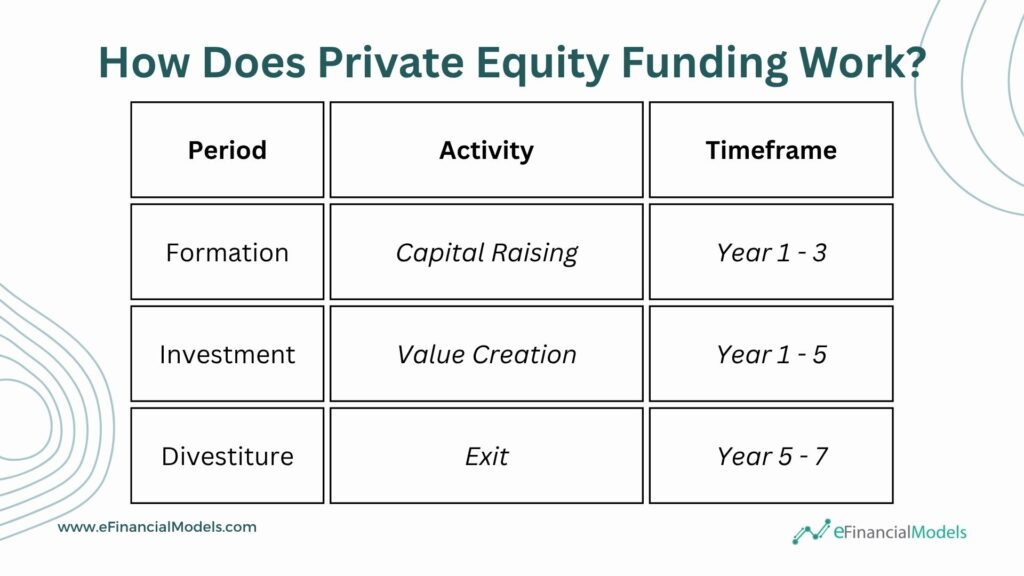
Private equity funding operates through a structured process, where general partners raise capital from limited partners—such as pension funds or wealthy individuals—to invest in companies. Once the fund is formed, capital is deployed over a period of five to seven years to acquire and grow businesses.
- Formation Period: The formation period, from Years 1 to 3, is when capital is raised from investors, such as pension funds and wealthy individuals. The private equity firm, acting as the general partner, collects this money to establish a fund.
- Investment Period: After raising capital, the private equity firm enters the investment period, typically spanning from Year 1 to Year 5. During this stage, it buys companies, takes control, and works to grow their value. This can involve changing leadership, reducing costs, or introducing new products. The goal is to strengthen and increase the profitability of the business.
- Divestiture: Private equity funding typically ends with the divestiture, usually between Years 5 and 7. This is when the firm sells its stake to cash in on the value it helped create. Common exits include selling to another company, going public, or undergoing a recapitalization. The goal is to earn strong returns for investors.


























































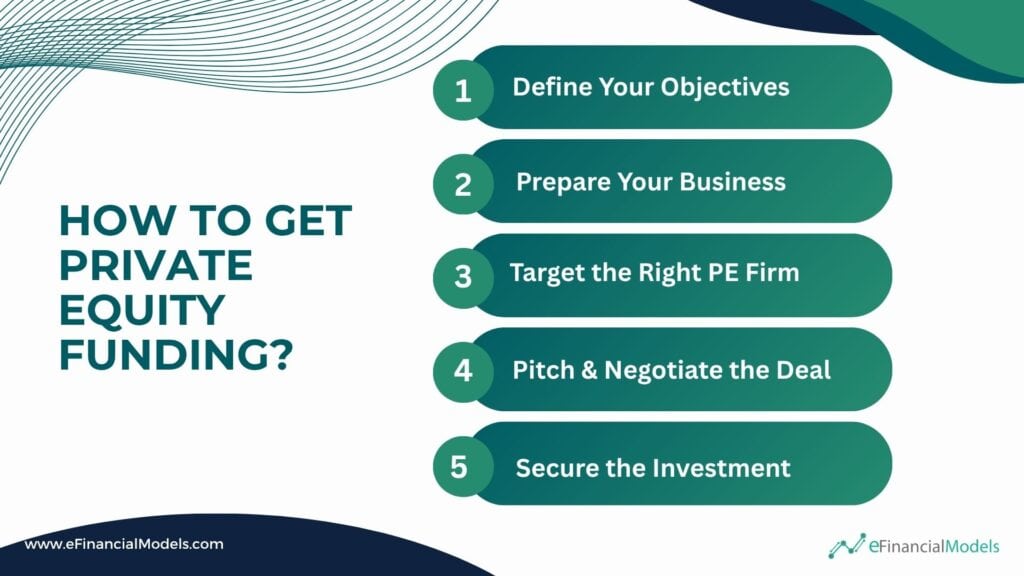
How to Get Private Equity Funding?
Securing capital from private equity firms requires more than just a great idea—it demands a clear plan, a scalable business model, and solid financials. If you’re wondering how to secure private equity funding, the goal is to demonstrate that you’re not just a good business but a high-return opportunity. To secure private equity funding, businesses must understand the entire funding cycle and what investors are looking for. Most private equity firms seek established companies with steady cash flow and strong growth potential rather than early-stage startups. By knowing this, businesses can better prepare for due diligence, negotiate terms, and build a solid financial plan. This knowledge enables them to stand out and align with investor goals, thereby increasing their chances of securing funding.
Step 1: Define Your Objectives
Before you seek outside investment, define your goals. Know how much funding you need, what you’ll use it for, and what you’re willing to offer in return. Are you scaling rapidly, entering new markets, or expanding your product line? Clear objectives show direction, reduce risk, and build investor trust. Without a solid reason to raise capital, your pitch will fall flat.
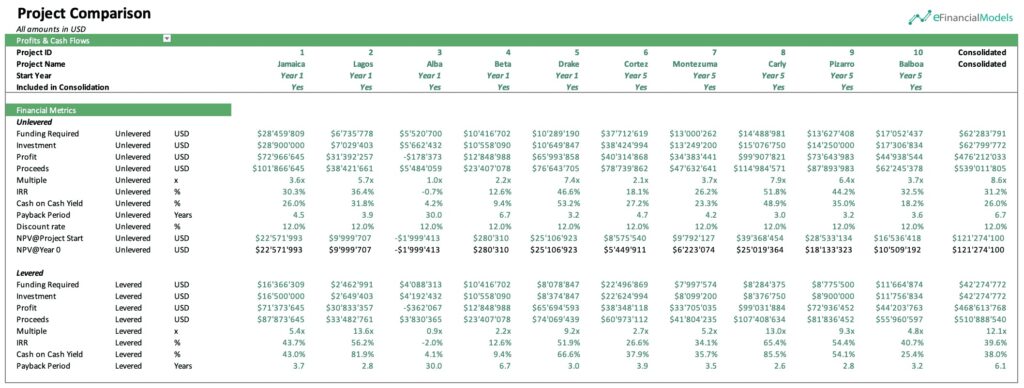
The above Project Comparison Table from our Private Equity Oil and Gas Financial Model plays a key role in defining clear investment objectives by offering a side-by-side view of key financial metrics for multiple ventures. This structured comparison streamlines decision-making by illustrating how each project performs across both unlevered and levered free cash flows. Metrics such as IRR, NPV, and payback period instantly highlight which projects deliver faster returns or better profitability.
Step 2: Prepare Your Business
Next, get your business ready for investor scrutiny. Tighten your operations, organize your financial statements, and address any areas for improvement. Build a strong team and sharpen your competitive edge. A well-run business proves you’re investment-worthy. This preparatory work lays the foundation for securing private equity funding and makes your case more convincing.
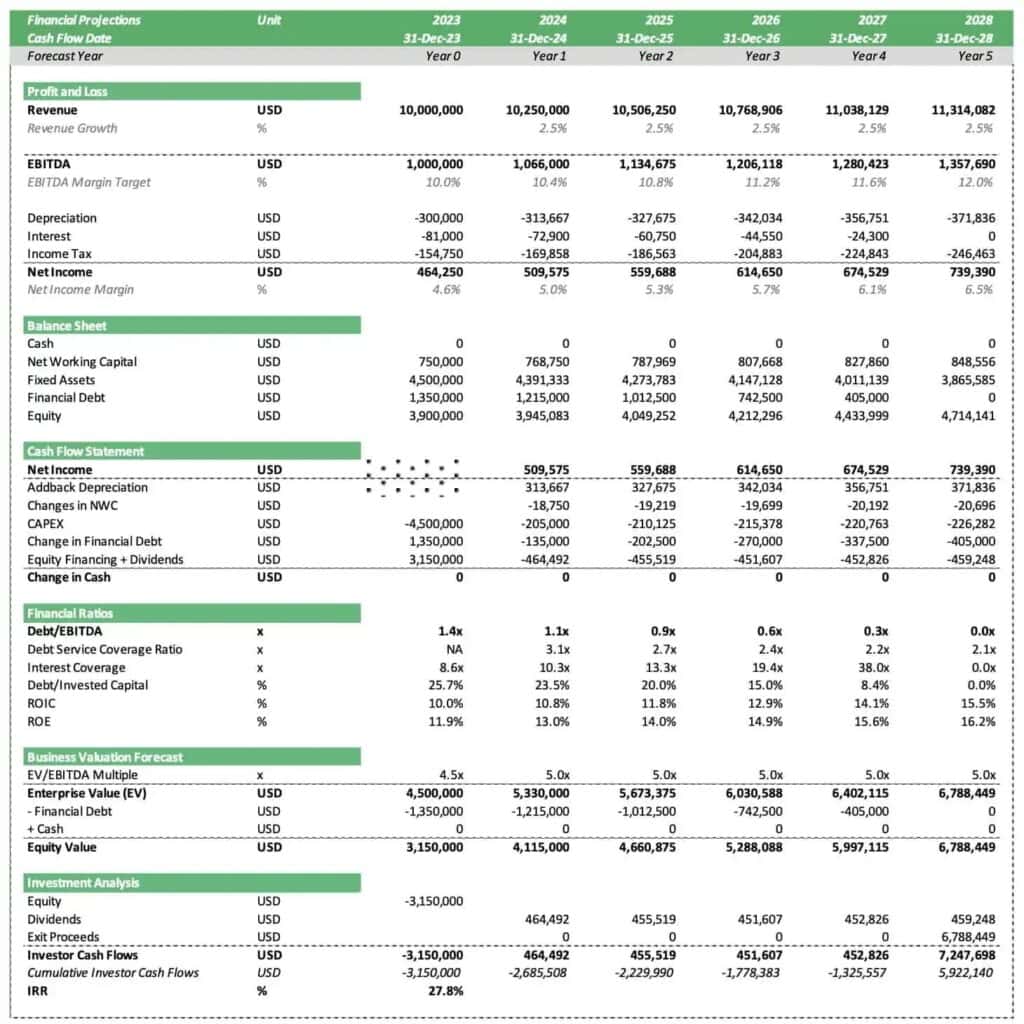
The financial projections above are from our Simple Private Equity Deal Template. This private equity financial model helps you prepare your business and financials for investors by organizing key data in a clear, consistent layout. It projects revenue, EBITDA, and net income over five years while tying in cash flows, balance sheets, and valuation metrics. This structure shows how cash is generated, how it’s spent, and what return investors can expect. With built-in IRR and equity value calculations, it answers the big question—what’s in it for investors?
Step 3: Target the Right PE Firm
Find a private equity firm that aligns with your business size, industry, and growth stage. Don’t waste time pitching to firms outside your niche. Do your homework. Look for firms that have backed businesses like yours and have a deep understanding of your industry. A good fit increases your chances of closing a deal.
To target the right PE firm, match your business needs with their investment style.
- Growth capital suits companies that are ready to scale rapidly.
- Leveraged buyouts are suitable for firms that need a turnaround or a value boost.
- Succession deals help owners exit smoothly with expert support.
- Distressed funds back struggling businesses with recovery plans.
Knowing these paths is essential if you’re learning how to secure private equity funding that aligns with your stage and goals.
Step 4: Pitch and Negotiate the Deal
When it’s time to pitch, make it clear, confident, and data-driven. Show your growth story, team strength, and market traction. Back it up with a solid private equity financial model that highlights returns and exit potential. Be ready to answer tough questions and negotiate terms. Transparency through due diligence and preparation go a long way.
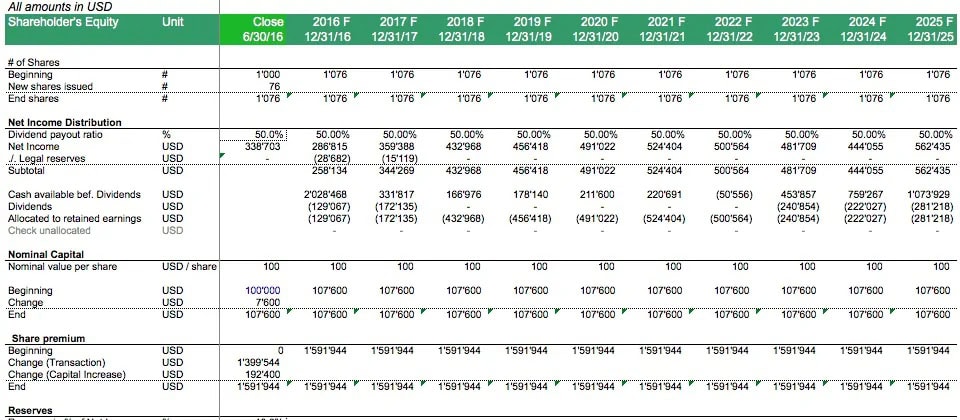
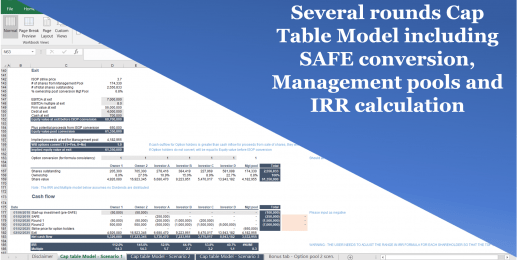
The table above is from our Private Equity – Leveraged Buyout Model. It helps you pitch and negotiate with facts, not fluff. It clearly shows share movements, dividend plans, and how profits are distributed—key points investors want upfront. Laying out equity structure, retained earnings and capital changes builds trust and sets expectations. This private equity financial model demonstrates that you’ve thoroughly considered ownership, returns, and cash flow, making your pitch sharper and your negotiations smoother.
Step 5: Secure the Investment
Once you agree on terms, seal the deal and focus on execution. The funding is just the beginning. Use the capital wisely, hit your milestones, and communicate openly with your new partners. A strong start builds long-term value and sets the stage for future success.
Why a Private Equity Financial Model Is Essential for Success?
Why a Private Equity Financial Model Is Essential for Success?
Private equity can be a powerful growth tool if used wisely. Now that you understand what is private equity and how it works, you can decide if it fits your goals. These investors don’t just bring money—they bring insight, networks, and speed. But you must be ready to share control. Knowing how to get private equity funding—from defining your goals to sealing the deal—puts you on the path to a smart partnership that can take your business to the next level.
A private equity financial model helps you plan, pitch, and profit. It shows investors how your business grows, earns, and exits. It keeps your numbers clear and your goals in sight. With it, you build trust, speed up deals, and avoid surprises. In short, it’s your roadmap to private equity success. Ready to raise capital with confidence? Build your private equity financial model today and turn investor interest into solid deals.
You might also like:
- IRR vs NPV in the Context of Financial Decision-Making
- IRR vs ROI Analysis – Which one should you choose when?
- Mastering the Art of IRR Calculation: A Comprehensive Guide for Investors
- How to Value a Business Using a Discounted Cash Flow Model
- Understanding the Levelized Cost of Energy Formula
- A Step-By-Step Guide to the Merger and Acquisition Process
- Cash Flow Analysis in Excel
- Top 5 Principles of Corporate Finance
- Financial Planning for Small Business Owners – Taking an SBA Loan
- 10-Step Financial Planning Checklist for Smart Executives
- Real Estate Financial Modeling in Excel
- Finding Fair Market Value: A Quick Guide to Real Estate Valuation
- 10 Tips to Develop a First Class Business Valuation Report
- How Contribution Margin Analysis Can Drive Your Business to Financial Success
- Financial Model Templates Easy to Use
- Developing a 5 Year Financial Projection Template
- Finding a Valuation Model for Your Business
- Business Valuation Service
- Understanding the Debt Service Coverage Ratio: An Essential Metric for Financial Analysis
- Monthly Annity Calculator
Tags: Financial Plan, funding sources