
0 ITEMS

Workout Gym Financial Model Excel Template
The Gym Financial Model Template helps entrepreneurs, gym owners, consultants, analysts, and business planners turn a fitness business idea into a structured five-year financial forecast. Instead of starting with a blank spreadsheet, users can work from a ready-to-use model designed around the economics of a gym, including membership revenue, setup fees, add-on services, staffing, rent, equipment investment, operating expenses, cash flow, profitability, and funding needs. The template is built to support both new gym launches and expansion planning for existing fitness businesses. This financial model template gives users a practical way to organize assumptions and understand how the business may perform under different operating conditions. Users can adjust membership pricing, customer growth, conversion rates, customer acquisition costs, payroll, rent, capital expenditures, and other inputs to reflect their own strategy. The model then connects those assumptions to revenue forecasts, profit and loss projections, cash flow planning, balance sheet outputs, and investor-facing metrics. This makes it useful for preparing business plans, lender discussions, investor presentations, internal budgeting, and strategic decision-making. For a gym business, financial planning is especially important because large upfront startup costs and fixed monthly expenses must be supported by recurring membership revenue. This template helps users estimate the initial investment required for facility build-out, equipment, locker rooms, working capital, and launch preparation while also planning ongoing costs such as salaries, instructors, marketing, software, utilities, maintenance, and lease payments. By reviewing projected cash flow and profitability month by month, users can better understand how long it may take to reach break-even and what level of membership growth is needed to sustain operations. The Gym Financial Model is designed to be editable, presentation-ready, and practical for non-financial users as well as finance professionals. It helps replace guesswork with a more organized planning process, allowing users to test assumptions, compare scenarios, identify financial risks, and evaluate whether the gym can generate sustainable returns. Whether the goal is to open a new fitness center, raise startup capital, apply for financing, or improve an existing business plan, this template provides a structured foundation for confident financial decision-making.


Financial Model Overview
The Gym Financial Model Financial Model Template is a ready-to-use planning tool designed to help entrepreneurs, founders, gym owners, consultants, analysts, and business planners forecast the financial performance of a fitness center. A gym business typically combines high upfront investment, fixed monthly costs, recurring membership revenue, staffing requirements, and ongoing marketing needs, so a structured financial model is essential before launching, expanding, or presenting the opportunity to investors or lenders.
This template brings the most important assumptions into one editable model, helping users estimate revenue, startup costs, operating expenses, payroll, cash flow, profitability, returns, and break-even timing over a multi-year forecast period. It is useful for preparing a business plan, validating a gym concept, evaluating funding needs, reviewing investment returns, or managing an existing fitness business with greater financial discipline. Instead of building formulas and reports from scratch, users can enter their own assumptions and use the pre-built structure to generate clearer financial outputs for budgeting, planning, and decision-making.
All-in-One Dashboard
The all-in-one dashboard gives users a central view of the Gym Financial Model by connecting core inputs with the most important financial outputs. This section is designed to make the model easier to use because gym planning involves many moving parts, such as membership tiers, monthly customer growth, setup fees, personal training revenue, payroll, rent, marketing spend, capital expenditures, and working capital.
The dashboard helps users review major assumptions and immediately see how those assumptions affect revenue, EBITDA, cash balance, profit, payback, and other key results. For a gym business, this is especially useful because owners need to understand both the operating engine and the investment profile at the same time. A change in pricing, conversion rate, customer acquisition cost, or staffing level can quickly affect profitability and cash flow, and the dashboard makes those relationships easier to interpret. It also provides a more professional way to summarize the forecast for investors, lenders, advisors, or internal stakeholders without requiring them to navigate every detailed worksheet in the model.
Low, Base, and High Scenario Analysis
The low, base, and high scenario analysis section helps users evaluate how the gym may perform under different business conditions. A gym forecast depends heavily on assumptions such as member acquisition, trial-to-paid conversion, customer acquisition cost, retention, pricing, add-on purchases, staffing efficiency, and monthly operating costs. The scenario structure allows users to compare a conservative case, a realistic base case, and an upside case without rebuilding the financial model each time.
For example, a lower conversion rate or higher marketing cost may delay profitability and increase working capital needs, while stronger membership growth or improved retention may accelerate payback and improve cash reserves. This component is valuable for planning because it shows the financial guardrails of the business rather than relying on one fixed projection. Entrepreneurs can use it to prepare contingency plans, investors can use it to understand risk and upside, and managers can use it to set operating targets. By testing multiple outcomes, users can make more informed decisions about funding, hiring, marketing, pricing, and growth strategy.
Professional Charts and Visual Reports
The professional charts and visual reports section translates financial data into presentation-ready visuals that are easier to interpret than rows of spreadsheet numbers. A gym financial forecast includes important trends such as membership growth, monthly recurring revenue, operating expenses, EBITDA, cash balance, profitability, and investment returns, and visual reports help users communicate those trends clearly. This component may include charts for revenue development, cash flow movement, expense structure, profit performance, scenario comparisons, and key operating metrics.
For business planning and funding conversations, visuals can make the financial story more understandable and credible, especially when speaking with stakeholders who do not want to review the full model line by line. Charts also help users identify issues quickly, such as a cash trough in the early months, an expense category growing too quickly, or a revenue mix that depends too heavily on one membership tier. For internal decision-making, these visual outputs help owners and managers track progress against the plan and explain financial results in meetings, pitch decks, loan applications, or board updates.
ROE Components and DuPont Analysis
The ROE components and DuPont analysis section helps users understand the drivers behind return on equity rather than looking only at the final return percentage. This component breaks return performance into underlying financial factors, such as profitability, asset efficiency, and leverage, so users can see why the gym produces a certain level of return. In a fitness business, return on equity can be influenced by many decisions, including how much capital is invested in build-out and equipment, how quickly memberships ramp up, how efficiently the facility is used, how payroll and rent are controlled, and how debt or investor capital is structured.
DuPont-style analysis is useful because it turns investor metrics into actionable insights. If returns are weaker than expected, users can evaluate whether the issue comes from margins, underused assets, excessive startup investment, or the financing structure. If returns are strong, the model helps explain which parts of the business are creating value. This makes the component especially helpful for investor presentations, strategic reviews, and decisions about whether to expand, refinance, or adjust the operating plan.
Revenue Inputs
The revenue inputs section gives users a structured place to define how the gym will generate income. A gym business is often built around recurring memberships, but the full revenue model may also include setup fees, premium access tiers, class packages, personal training sessions, add-on transactions, corporate memberships, merchandise, nutrition products, or other services. This section allows users to enter assumptions for membership pricing, customer volume, conversion rates, member growth, retention, transaction values, and the mix between revenue streams.
Because gym profitability depends heavily on recurring revenue quality, the revenue input area helps users test whether their pricing and volume assumptions are strong enough to support rent, staffing, equipment, marketing, and other operating costs. It also helps identify which revenue levers have the greatest impact on the forecast, such as raising average monthly membership fees, increasing the share of premium members, improving trial-to-paid conversion, or growing personal training revenue. By documenting the logic behind revenue projections, this component makes the forecast easier to defend in a business plan, funding document, or investor discussion.
Bank-Ready Financial Reports
The bank-ready financial reports section organizes the model’s outputs into financial statements and summaries that are suitable for lenders, investors, advisors, and other stakeholders. A gym seeking financing often needs to show more than a revenue estimate, because lenders want to understand profitability, cash flow, balance sheet position, debt capacity, and the ability to cover fixed obligations. This component can include forecasted profit and loss statements, cash flow statements, balance sheets, operating summaries, and key financing metrics across the planning period.
For a gym, these reports are important because the business may require significant upfront capital for renovation, equipment, lease deposits, technology, and working capital before revenue fully ramps up. The bank-ready format helps users present a clear picture of how funds will be used, when the business is expected to become profitable, and whether cash flow can support ongoing obligations. It also saves time by giving users organized outputs that can be attached to a business plan, loan package, investor presentation, or internal financial review.
Revenue Breakdown
The revenue breakdown section provides a detailed view of how total gym revenue is built across different income streams. Instead of showing only one top-line number, this component helps users separate recurring membership income, one-time setup fees, higher-tier packages, class access, all-inclusive memberships, personal training, and other add-on revenue.
This level of detail is useful because not all revenue streams behave the same way. Monthly memberships may create predictable recurring revenue, setup fees may provide early cash during customer acquisition, and personal training or add-on services may create higher-margin opportunities but depend on member engagement and staff capacity.
By reviewing the revenue mix, users can understand which products or services are driving growth and whether the gym is overly dependent on one source of income. The section also supports pricing decisions, marketing planning, and capacity management, because it can show how changes in membership tiers or service usage affect overall revenue. For investors and lenders, a clear revenue breakdown makes the forecast more transparent and easier to evaluate.
KPI Dashboard
The KPI dashboard focuses on the key performance indicators that matter most for managing and evaluating a gym business. While financial statements show overall results, KPIs help users understand operational performance behind those results. This section may track metrics such as monthly recurring revenue, member count, average revenue per member, customer acquisition cost, conversion rate, churn or retention, lifetime value, EBITDA margin, cash balance, payback timing, and revenue per square foot. These indicators are useful because gym owners need to monitor both growth and efficiency.
A business may increase revenue while still struggling if acquisition costs are too high, retention is weak, or payroll is not aligned with member volume. The KPI dashboard helps users benchmark performance, identify early warning signs, and make faster decisions about marketing, pricing, staffing, and capacity. It is also useful for presentations because it summarizes the health of the business in a format that stakeholders can understand quickly. For ongoing management, this component can become a practical monthly review tool for comparing actual performance against the original plan.
Startup Cost and Capital Expenditure Planning
The startup cost and capital expenditure planning section helps users estimate the total investment required to open or expand a gym before operations begin. A fitness facility can require substantial upfront spending on build-out, renovation, cardio equipment, strength equipment, flooring, locker rooms, showers, signage, software systems, deposits, permits, furniture, branding, initial marketing, and working capital.
This component organizes those costs into a clear planning structure so users can determine how much funding is needed and how the capital will be allocated. It also helps distinguish between one-time launch expenses, long-term capital assets, and ongoing operating costs, which is important for building accurate financial statements and cash flow forecasts.
For entrepreneurs, the section reduces the risk of underestimating the cash required before the first month of meaningful revenue. For lenders and investors, it provides a transparent use-of-funds summary that explains why capital is needed and how it supports the gym launch. By adjusting the assumptions, users can compare different facility sizes, equipment plans, build-out scopes, and launch strategies before committing to major expenditures.
Break-Even Analysis
The break-even analysis section helps users estimate when the gym can generate enough contribution margin to cover its fixed monthly costs. This is one of the most important planning questions for a gym because expenses such as rent, salaries, instructors, utilities, insurance, cleaning, software, and marketing often begin before the membership base is fully developed. The break-even component uses assumptions for membership pricing, member mix, variable costs, setup fees, add-on revenue, gross margin, and fixed operating expenses to estimate the level of activity required to reach profitability.
It can help users understand how many members are needed, how pricing changes affect the break-even point, and how improvements in conversion or retention may shorten the path to profitability. This is valuable for funding preparation because it shows investors and lenders when the business may stop relying on startup capital and begin supporting itself through operations. It is also useful for management because it turns the financial forecast into a practical operating target, helping the team focus on the membership volume, revenue mix, and cost control required to reach sustainable profitability.
File types:
Excel – Single-User: .xlsx
Excel – Multi-User: .xlsx
Similar ProductsOther customers were also interested in...

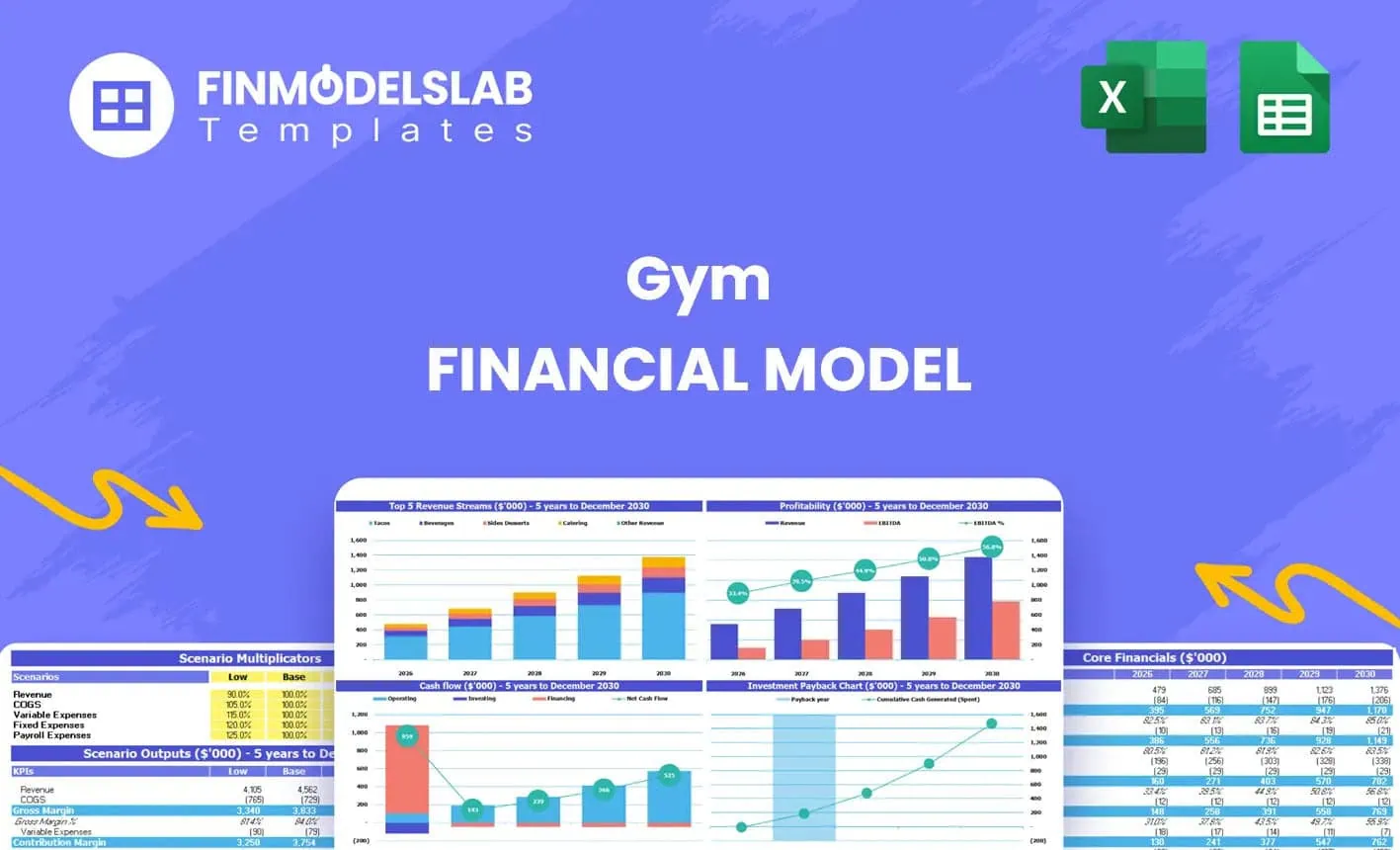
 HenrySheykin
Gym Financial Model Excel Template
The Gym Financial Model Financial Model Template helps entrepreneurs, gym owners, consultants, analy... Read more
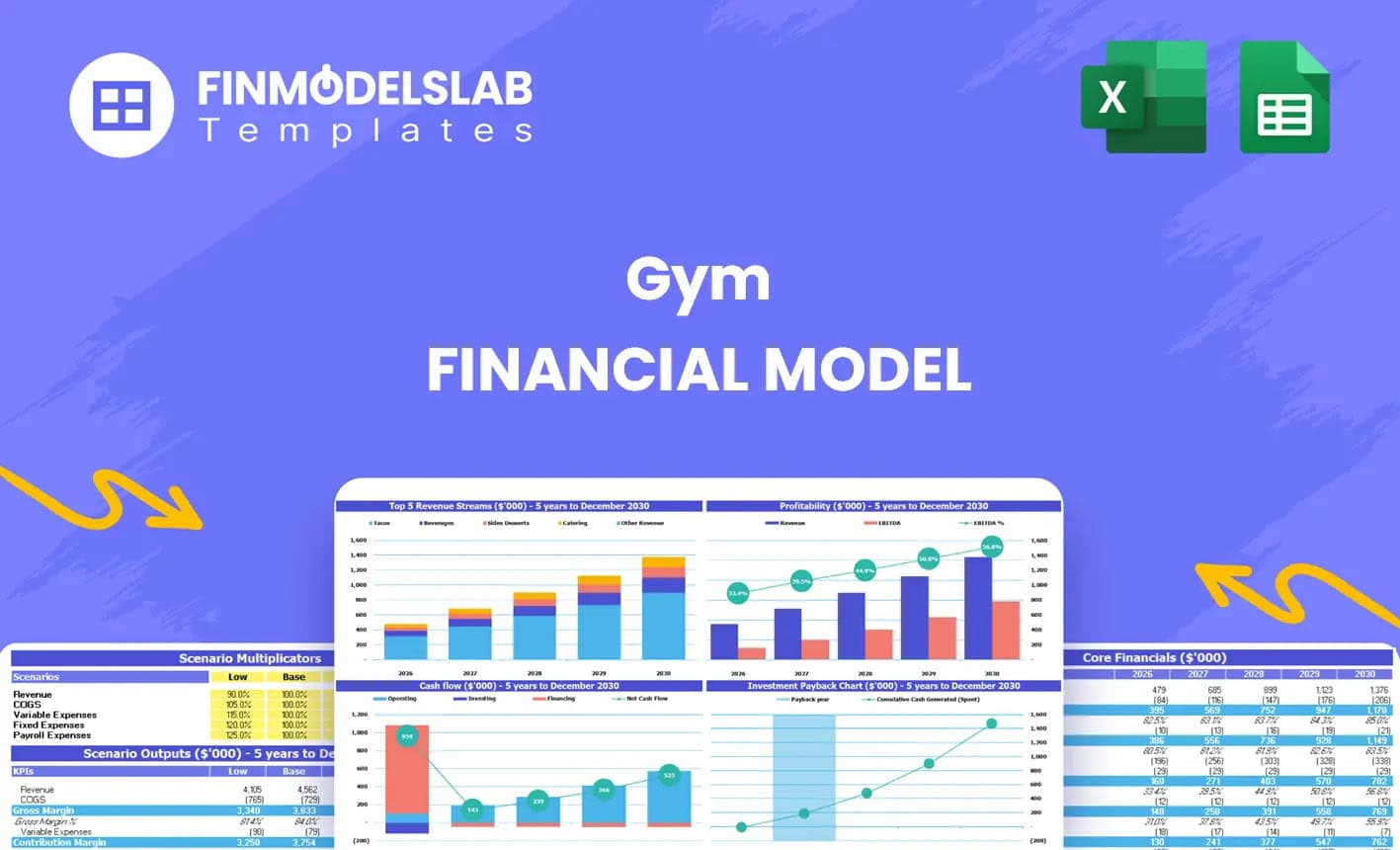
Physical Fitness Gym Financial Model Excel Templat...
The Gym Financial Model Template helps entrepreneurs, gym owners, consultants, analysts, and busines... Read more

Golf Course Financial Model Excel Template
The Golf Course Financial Model Financial Model Template helps entrepreneurs, owners, consultants, a... Read more

Tennis Club Financial Model Excel Template
This Tennis Club Financial Model Template helps users turn a sports facility concept into a structur... Read more

Martial Arts School Financial Model Excel Template
The Martial Arts School Financial Model helps founders, school owners, consultants, and business pla... Read more
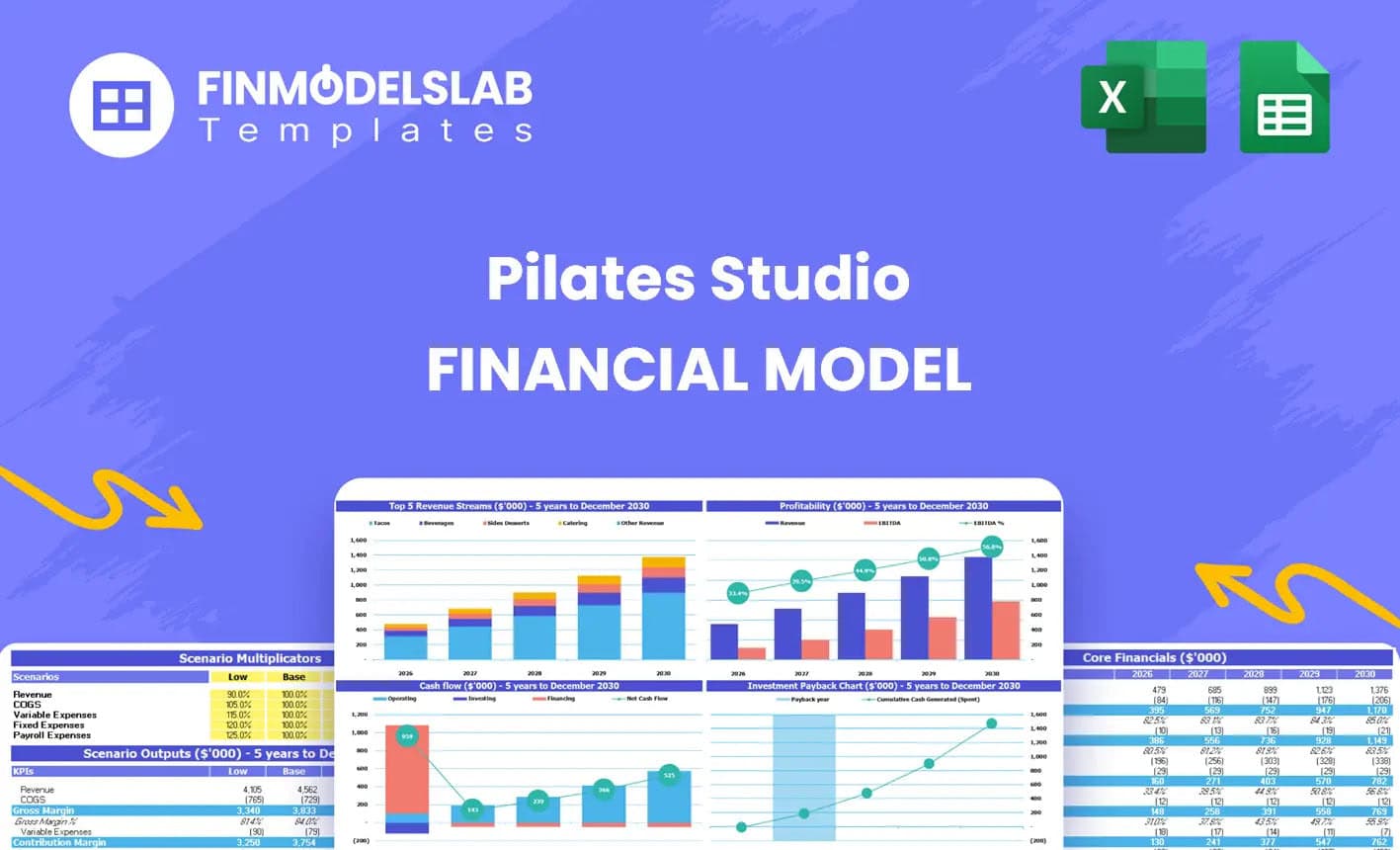
Pilates Studio Financial Model Excel Template
The Pilates Studio Financial Model helps entrepreneurs, studio owners, consultants, analysts, and bu... Read more
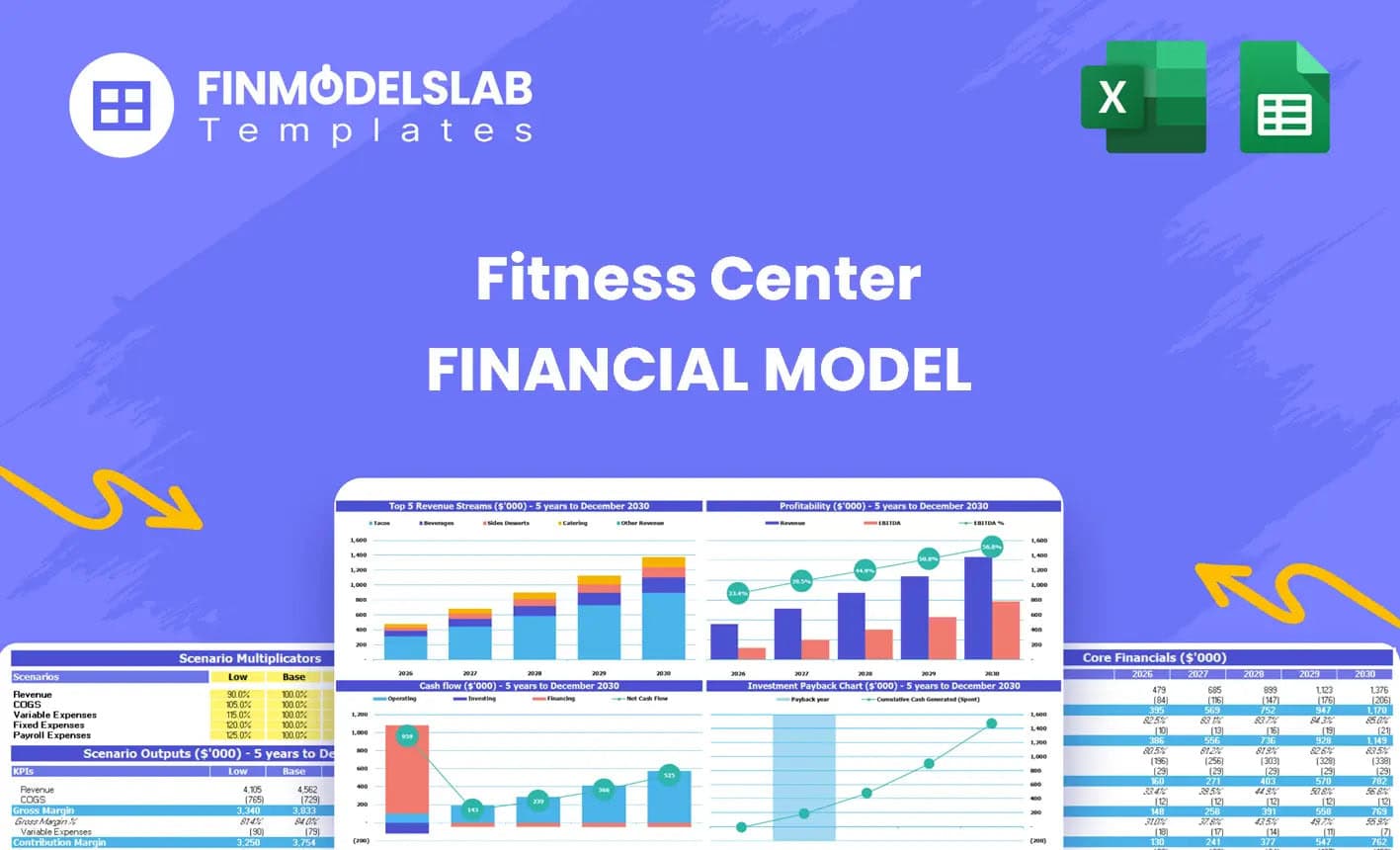
Fitness Center Financial Model Excel Template
The Fitness Center Financial Model Template helps entrepreneurs, gym owners, consultants, analysts, ... Read more

Rock Climbing Gym Financial Model Excel Template
The Rock Climbing Gym Financial Model helps founders, operators, consultants, and analysts turn a cl... Read more

Personal Training Service Financial Model Excel Te...
The Personal Training Financial Model helps entrepreneurs, fitness studio owners, consultants, analy... Read more

Personal Training Financial Model Excel Template
The Personal Training Financial Model helps entrepreneurs, fitness studio owners, consultants, analy... Read more
You must log in to submit a review.