
0 ITEMS

Solar PV Ultimate Model — Build a Bankable Business Case in Minutes, Not Weeks
If you develop, advise on or finance utility-scale solar PV projects, you know the problem: every new deal requires rebuilding the same financial model — recalibrating CAPEX assumptions, hunting for market prices, restructuring the debt schedule, explaining your methodology to a lender or partner. It takes days. Sometimes weeks. And the risk of a formula error is always there. This model eliminates that problem.
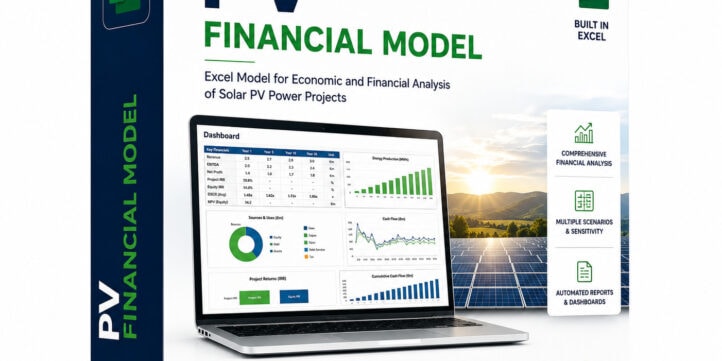
If you develop, advise on or finance utility-scale solar PV projects, you know the problem: every new deal requires rebuilding the same financial model — recalibrating CAPEX assumptions, hunting for market prices, restructuring the debt schedule, explaining your methodology to a lender or partner. It takes days. Sometimes weeks. And the risk of a formula error is always there.
This model eliminates that problem.
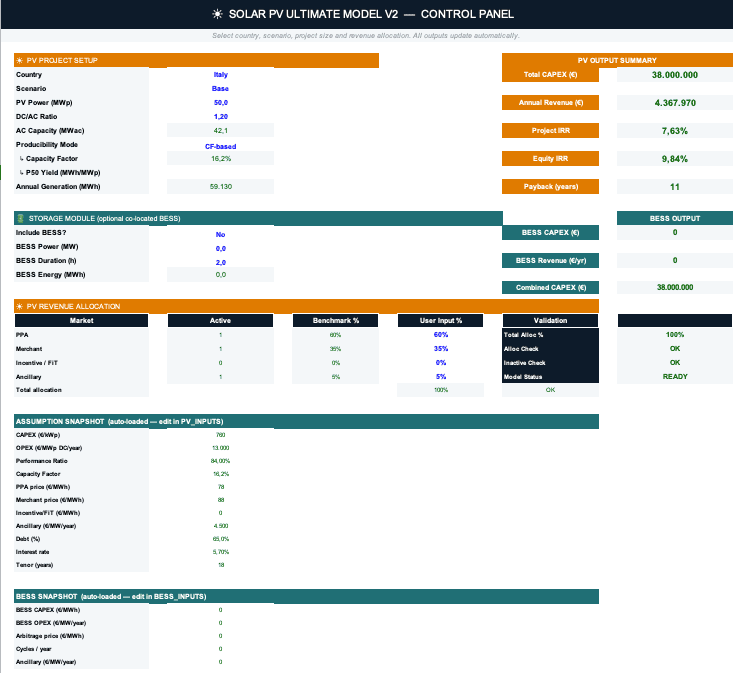
Open it, select your country and scenario, enter your project size and revenue allocation — and every output updates automatically. Project IRR, Equity IRR, NPV, payback. A full 20-year cash flow with panel degradation, OPEX escalation and a complete debt schedule. Ready to present, ready to share, ready to defend.
What makes it different from a generic DCF template
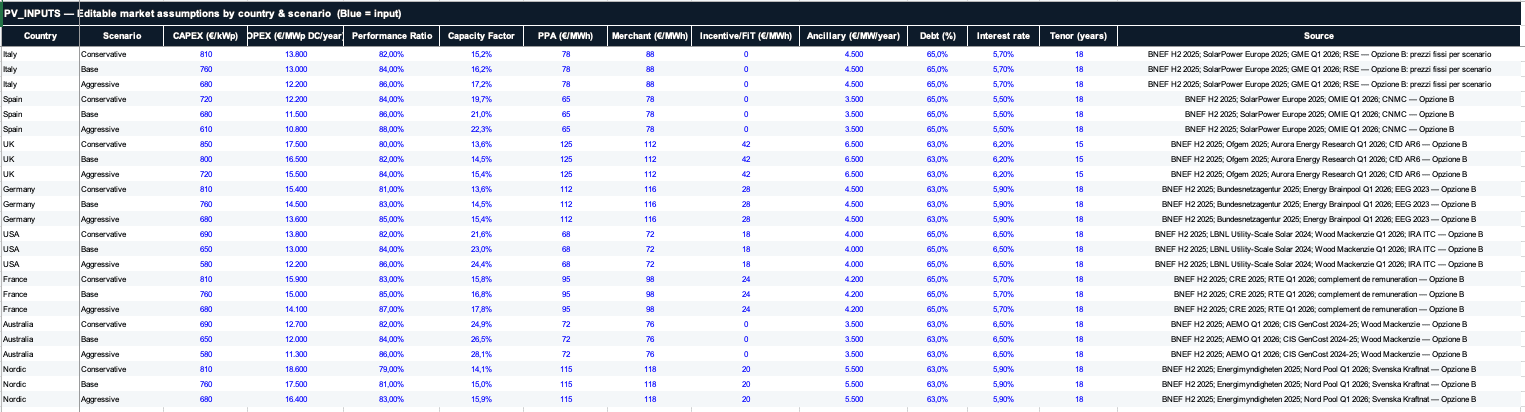
The assumptions are already calibrated for your market. 8 countries — Italy, Spain, UK, Germany, USA, France, Australia, Nordic — each with Conservative, Base and Aggressive scenarios built from BNEF H2 2025, SolarPower Europe 2025, Aurora Energy Research and national regulatory sources. You are not starting from a blank sheet and guessing at capacity factors. You are starting from a credible, sourced baseline and adjusting from there.
The revenue engine reflects how projects actually get financed. PPA, Merchant, Incentive/FiT and Ancillary streams are each configurable independently, with country-specific benchmark allocations pre-loaded. Active streams and benchmark splits differ by country — because they differ in reality.
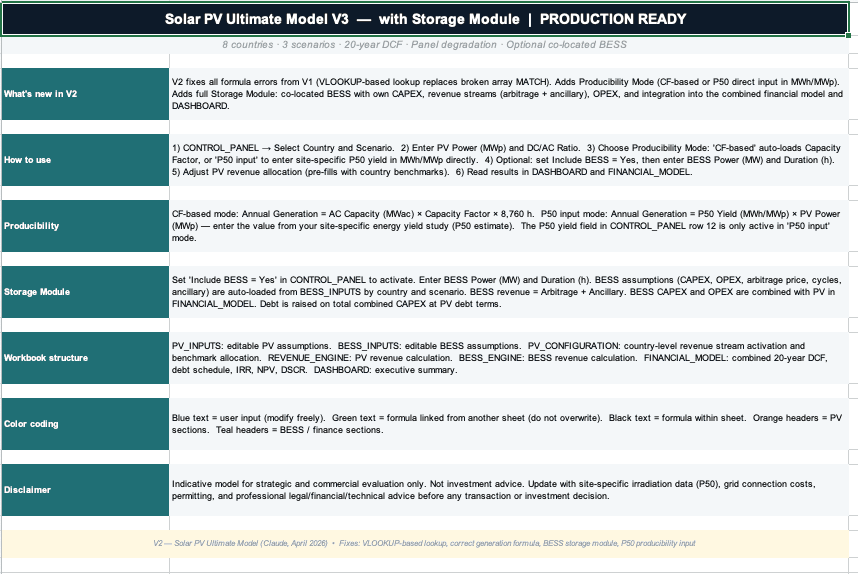
Two producibility modes are available. If you have a P50 yield study, feed it in directly in MWh/MWp. If you are at screening stage, the CF-based mode gives you a calibrated estimate immediately.
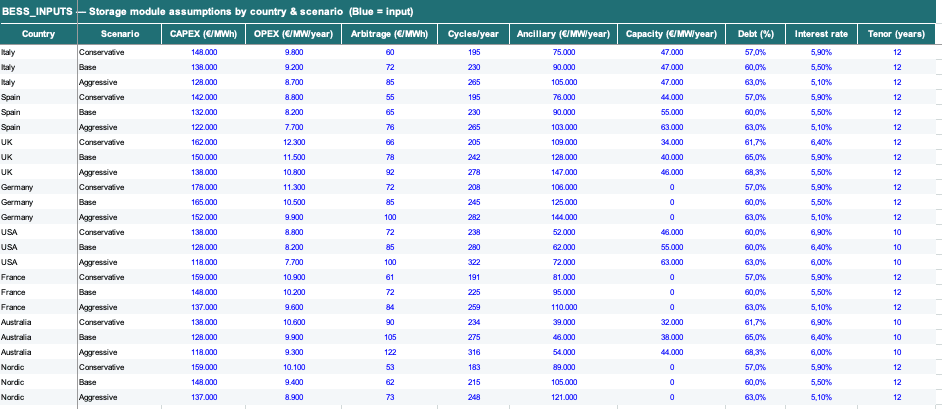
The optional BESS module lets you evaluate co-located battery storage with a single toggle. BESS CAPEX, OPEX, arbitrage and ancillary revenues load automatically by country and scenario, giving you a fully integrated PV+BESS financial picture without building a second model.
Similar ProductsOther customers were also interested in...


 eFinancialModels
Electric Vehicle (EV) Charging Station Financial M...
With this comprehensive 5- or 10-year monthly tool, investors can assess the viability of setting up... Read more

Financial Model for Mobile App | Mobile App Busine...
The Mobile App Financial Plan Template in Excel allows you to develop financial projections when lau... Read more

 HenrySheykin
Food Truck Financial Model Excel Template
The Food Truck Financial Model helps entrepreneurs, founders, business owners, consultants, and anal... Read more

Green Hydrogen Production from Wind Energy Financi...
The Green Hydrogen from Wind Financial Model aims to comprehensively forecast a horizon of 40 years ... Read more

Simple Mutual Non-Disclosure Agreement Template
Protect your business secrets with ease using our Simple Mutual Non-Disclosure Agreement Template. S... Read more

Solar Energy Financial Model
The Solar Energy Financial Model Spreadsheet Template in Excel assists you in preparing a sophistica... Read more

 Peter Graf
The Customer-Centric Financial Model for Restauran...
Starting a restaurant without a financial plan is like driving a car blindfolded. You wouldn´t do i... Read more
You must log in to submit a review.