
0 ITEMS

Deli Restaurant Financial Model Excel Template
The Deli Cafe Financial Model Template helps turn a cafe, sandwich shop, or deli concept into a structured financial forecast that can be used for planning, budgeting, funding discussions, and internal decision-making. Instead of relying on a generic spreadsheet, this model is designed around the operating realities of a deli cafe, including customer traffic, average order value, menu-based revenue streams, food and beverage costs, labor planning, startup investment, and cash flow timing. It gives users a practical way to estimate how the business may perform before opening, expanding, or presenting the opportunity to investors, banks, partners, or management teams. This template is useful for entrepreneurs, founders, cafe owners, restaurant consultants, analysts, and anyone preparing a deli cafe business plan or funding document. Users can adjust assumptions for weekday and weekend traffic, pricing, revenue mix, cost of goods sold, payroll, rent, marketing, utilities, equipment, and other operating expenses. The model connects those assumptions to financial statements and performance outputs, helping users understand the relationship between sales volume, margins, staffing levels, cash reserves, and profitability over a multi-year forecast period. The Deli Cafe Financial Model supports more confident financial planning by organizing the key questions that matter before committing capital. It helps users estimate startup costs, forecast revenue, review operating expenses, plan payroll, assess cash flow, and evaluate when the business may reach sustainable profitability. Built-in break-even analysis and scenario planning make it easier to test different outcomes, such as slower customer growth, stronger beverage sales, higher food costs, or changes in average order value. This allows users to identify risks early and make better decisions about pricing, staffing, funding, and growth. Because the template is editable and ready to use, buyers can save time compared with building a complete restaurant financial model from scratch. It is suitable for Microsoft Excel and Google Sheets, making it flexible for solo planning, team collaboration, or professional presentation. Whether the goal is to validate a new deli cafe idea, prepare a lender-ready forecast, compare business scenarios, or communicate the financial case to stakeholders, this model provides a clear framework for turning assumptions into actionable financial projections.


Financial Model Overview
The Deli Cafe Financial Model Template is a ready-to-use planning tool built for the financial realities of a deli cafe, cafe-deli hybrid, sandwich shop, breakfast and lunch concept, or casual food service business. It helps users estimate revenue, startup investment, operating costs, payroll, cash flow, profitability, and funding needs in one structured model. Instead of starting with a blank spreadsheet, entrepreneurs, business owners, consultants, and analysts can work from a model that reflects the key drivers of a deli cafe, including daily customer traffic, average order value, menu sales mix, food and beverage costs, labor by operating needs, opening capital expenditures, and monthly financial performance. The template is designed to support business planning, investor presentations, lender discussions, internal budgeting, and strategic decision-making. Because the assumptions are editable, users can adapt the model to a small neighborhood deli, a higher-volume urban cafe, a breakfast and lunch counter, a grab-and-go sandwich shop, or an established operation planning expansion. The result is a practical financial planning framework that connects operating assumptions to revenue forecasts, cost projections, cash flow, profitability, and performance metrics over a multi-year forecast period.
All-in-One Dashboard
The all-in-one dashboard brings the most important inputs and outputs into a single view so users can quickly understand how the deli cafe financial plan is performing. This section typically connects core assumptions such as launch timing, sales growth, customer volume, average order value, food cost percentages, beverage mix, payroll assumptions, rent, utilities, marketing, and other operating expenses to key forecast outputs such as revenue, gross profit, EBITDA, net income, cash balance, and funding requirements. For a deli cafe, this is especially useful because many operational decisions affect profitability at the same time. A change in weekend traffic, average check size, ingredient costs, or staffing levels can quickly alter margins and cash flow. The dashboard helps users avoid getting lost in separate tabs by summarizing the business case in a concise, decision-friendly format. It is helpful for founders who want a quick read on feasibility, for consultants reviewing assumptions with clients, and for lenders or investors who need a clear overview of financial performance before studying the detailed schedules.
Low, Base, and High Scenario Analysis
The Low, Base, and High scenario analysis section allows users to compare multiple versions of the deli cafe forecast without rebuilding the model. The Low case may reflect slower customer adoption, lower average order value, higher food costs, or more cautious revenue growth. The Base case can represent the most realistic operating plan based on current assumptions, while the High case can show the upside from stronger foot traffic, successful marketing, improved catering demand, higher-margin beverages, or better cost control. This component is valuable because deli cafe performance can vary significantly depending on location, menu positioning, opening buzz, seasonality, delivery demand, and customer retention. By adjusting key assumptions such as daily covers, average ticket, revenue mix, wage rates, rent, and cost of goods sold, users can see how revenue, profit margins, cash balance, break-even timing, and return metrics change under different conditions. Scenario analysis supports better decision-making by helping users prepare for uncertainty, set realistic targets, and understand which assumptions have the greatest impact on financial results.
Professional Charts and Visual Reports
The professional charts and visual reports section turns financial projections into presentation-ready visuals that are easier for stakeholders to understand. Instead of relying only on rows of numbers, this component can display trends for revenue growth, expense categories, gross profit, EBITDA, cash flow, net income, and other important metrics over the forecast period. For a deli cafe business plan, visual reporting is useful because it helps show how the operation ramps up after launch, how costs behave as revenue grows, and when the business begins to produce stronger margins and cash flow. Charts can also make it easier to communicate the financial story to investors, banks, landlords, partners, or internal teams. A founder can use this section to explain why startup capital is needed, how revenue streams develop, and how profitability improves as the cafe reaches stable customer volume. This component improves the usability of the model by making outputs clearer, more concise, and suitable for meetings, funding submissions, and strategic planning discussions.
ROE Components and DuPont Analysis
The ROE components and DuPont analysis section helps users understand the drivers behind return on equity rather than looking at a single return metric in isolation. DuPont analysis breaks return on equity into underlying elements such as profitability, asset efficiency, and leverage, allowing users to see whether returns are being generated from strong margins, effective use of assets, or the capital structure of the business. For a deli cafe, this can be especially useful when evaluating whether the investment in kitchen equipment, bar equipment, dining furniture, interior improvements, and working capital is producing adequate returns. The section may use inputs and outputs from the income statement, balance sheet, and financing assumptions to calculate return metrics and show how changes in net margin, asset turnover, or debt levels influence equity returns. This is helpful for owners and investors who want to evaluate not only whether the business is profitable, but whether the capital invested in the cafe is being used efficiently. It also supports more informed discussions about expansion, reinvestment, debt financing, and investor expectations.
Revenue Inputs and Assumptions
The revenue inputs and assumptions section is where users define the commercial engine of the Deli Cafe Financial Model. It may include assumptions for weekday and weekend customer traffic, average order value, sales mix, menu categories, dine-in sales, takeaway orders, delivery revenue, beverages, breakfast items, lunch meals, brunch demand, catering, or other relevant revenue streams. For a deli cafe, revenue is not just a single sales number. It is driven by how many customers visit, when they visit, what they buy, how much they spend, and how the menu mix affects margin. This section allows users to adjust those assumptions in a structured way and see the impact on monthly and annual revenue forecasts. It can also help users test pricing decisions, evaluate the benefit of increasing high-margin beverage sales, estimate the effect of extending hours, or determine whether a planned marketing push can generate enough volume to support the cost structure. Strong revenue assumptions are essential for a credible business plan because they form the foundation for staffing, inventory, profitability, cash flow, and funding needs.
Bank-Ready Financial Reports
The bank-ready financial reports section organizes the forecast into outputs that lenders, investors, and professional stakeholders expect to see. This may include projected profit and loss statements, cash flow forecasts, balance sheet summaries, revenue schedules, expense summaries, EBITDA calculations, debt service considerations, and other lender-friendly financial outputs. For a deli cafe seeking a loan, investor contribution, equipment financing, landlord approval, or partner commitment, professional reporting can make the difference between a rough idea and a credible financial plan. This component helps users present assumptions and results in a clear format that supports funding discussions. It also helps identify whether the business can generate enough operating profit and cash flow to cover monthly obligations, maintain working capital, and support repayment or returns. Because the reports are connected to the model assumptions, updates to revenue, costs, startup expenses, or financing inputs can automatically flow through to the financial statements. This saves time and reduces the risk of inconsistent numbers across a business plan, pitch deck, or loan application.
Revenue Breakdown by Stream
The revenue breakdown by stream section gives users a detailed view of where sales are expected to come from across the deli cafe concept. Instead of showing one total revenue line, this component separates the business into more meaningful categories such as food sales, beverage sales, breakfast, brunch, lunch, dinner, takeaway, delivery, catering, or other menu-driven revenue lines depending on the user’s plan. This is important because each stream can have different pricing, volume, margin, and growth characteristics. For example, beverages may provide higher margins than certain food items, while catering may add meaningful revenue but require different labor and preparation assumptions. By breaking revenue into streams, users can understand which parts of the business drive the most income and which categories are most important for profitability. This section also supports better menu planning, marketing decisions, staffing schedules, and operational focus. If the model shows that a specific revenue category has strong margin potential, the owner can prioritize promotions, merchandising, supplier negotiations, or menu design around that opportunity.
KPI Dashboard and Benchmark Metrics
The KPI dashboard and benchmark metrics section helps users track performance indicators that matter for a deli cafe and compare planned performance against useful standards. It may include metrics such as gross margin, food cost percentage, beverage mix, labor cost percentage, EBITDA margin, average order value, revenue per customer, monthly cash balance, payback period, return on equity, and other financial or operational ratios. Benchmarks are useful because they help validate whether assumptions are realistic. A forecast may look attractive at first glance, but if food costs, labor costs, rent burden, or profit margins are far outside expected ranges, the business plan may need to be revised. This component gives entrepreneurs and analysts a clearer way to assess whether the deli cafe is financially balanced and operationally feasible. It is also useful after launch because the same KPIs can guide management decisions, such as adjusting menu pricing, reducing waste, improving staffing efficiency, increasing average check size, or renegotiating supplier terms. For stakeholders, KPI reporting provides a concise way to evaluate business health beyond total revenue alone.
Startup Cost and Capital Expenditure Planning
The startup cost and capital expenditure planning section helps users estimate the initial investment required to open or expand the deli cafe before regular operations begin. This component may include kitchen equipment, refrigeration, ovens, display cases, coffee or beverage equipment, bar equipment, point-of-sale systems, furniture, fixtures, interior buildout, signage, permits, licenses, deposits, professional fees, initial inventory, pre-opening payroll, launch marketing, and working capital reserves. For a deli cafe, startup costs can be substantial because the business needs a functional food preparation area, customer-facing space, reliable equipment, and enough cash to operate during the early ramp-up period. This section helps users organize those costs into a clear funding requirement rather than estimating them informally. It also supports conversations with lenders, investors, landlords, and partners by showing what the capital will be used for. By connecting startup investment to the broader financial model, users can understand how opening costs affect cash flow, financing needs, payback period, and investor returns. This makes it easier to decide whether the concept is properly funded before launch.
Break-Even Analysis
The break-even analysis section helps users identify when the deli cafe is expected to cover its fixed and variable costs and begin generating profit. It may use assumptions such as revenue, gross margin, food and beverage costs, labor, rent, utilities, marketing, insurance, software, loan payments, and other operating expenses to calculate the sales level or timing needed to reach break-even. For a deli cafe, this is one of the most important planning outputs because early-stage businesses often face cash pressure while customer traffic is still building. The break-even analysis helps users understand whether the business needs more daily customers, a higher average order value, improved gross margin, lower labor costs, or reduced overhead to reach profitability sooner. It can also support pricing decisions, staffing plans, and funding strategy by showing how much revenue is required to sustain the operation. For investors and lenders, break-even timing provides a practical indicator of risk and financial viability. For owners, it creates a clear target that can guide marketing, operations, cost control, and performance monitoring after launch.
File types:
Excel – Single-User: .xlsx
Excel – Multi-User: .xlsx
Similar ProductsOther customers were also interested in...

 HenrySheykin
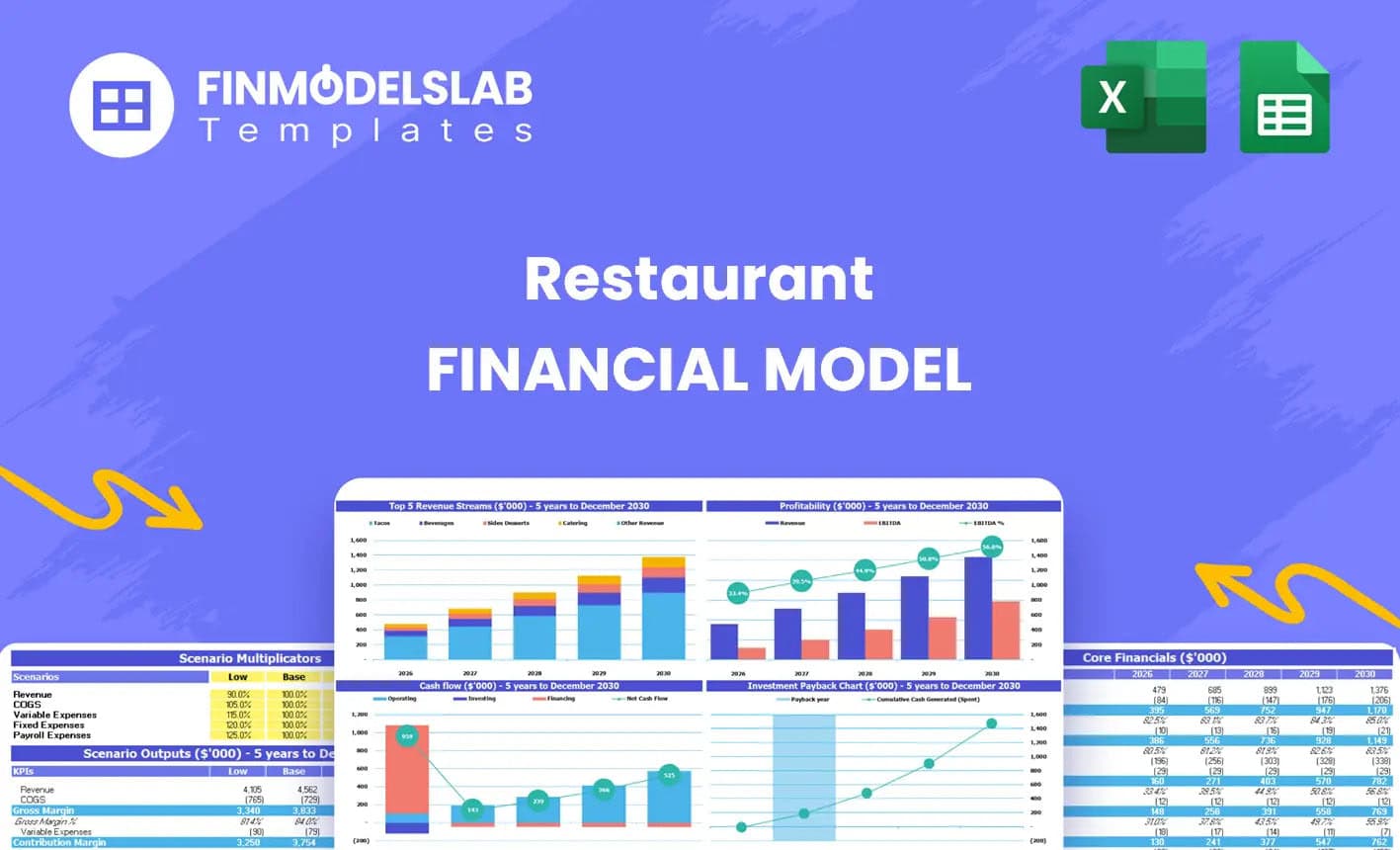
Restaurant Financial Model Excel Template
" The Restaurant Financial Model helps users turn a restaurant concept into a structured, editable f... Read more
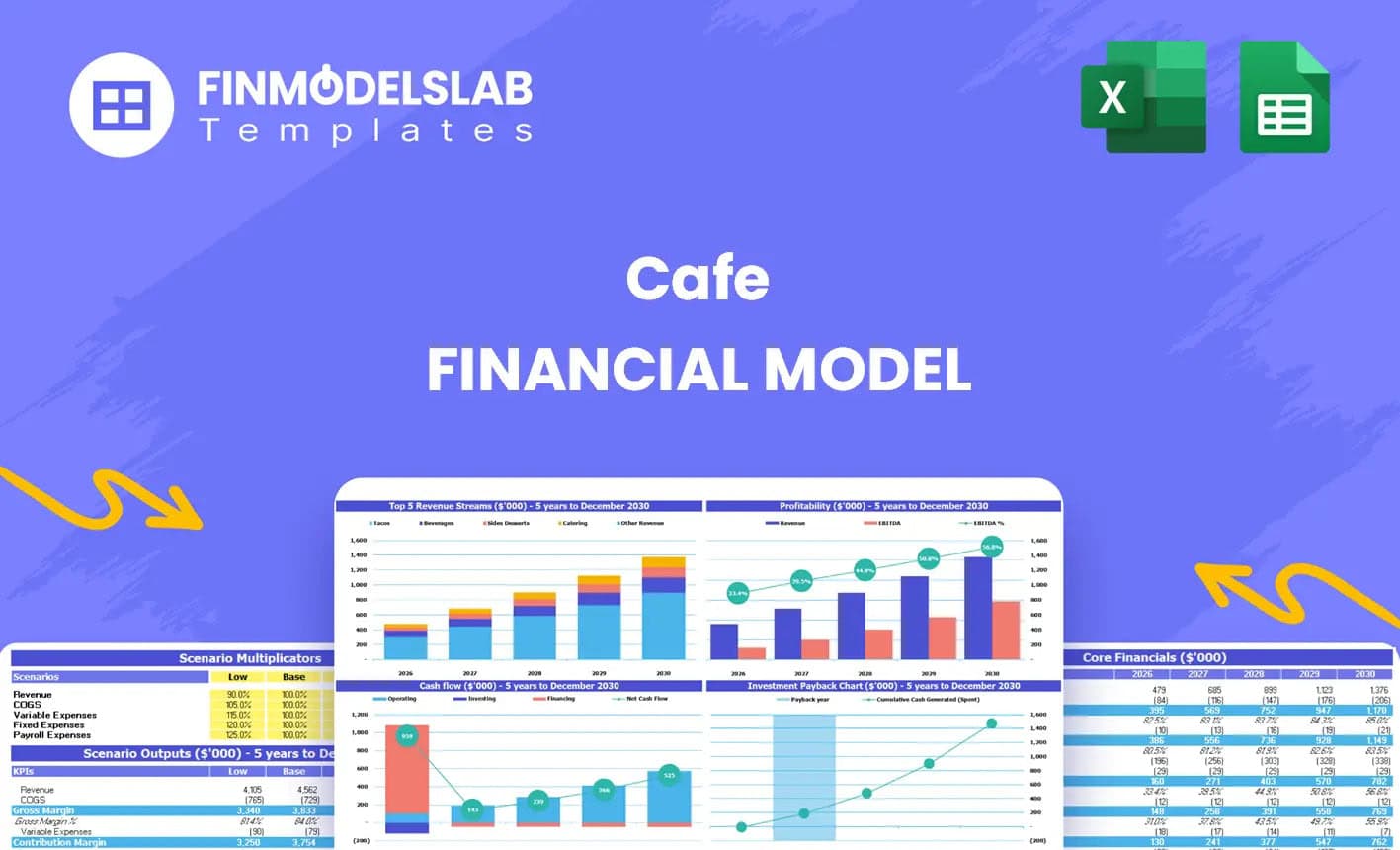
Cafe Financial Model Excel Template
The Cafe Financial Model is a ready-to-use financial model template designed to help entrepreneurs, ... Read more
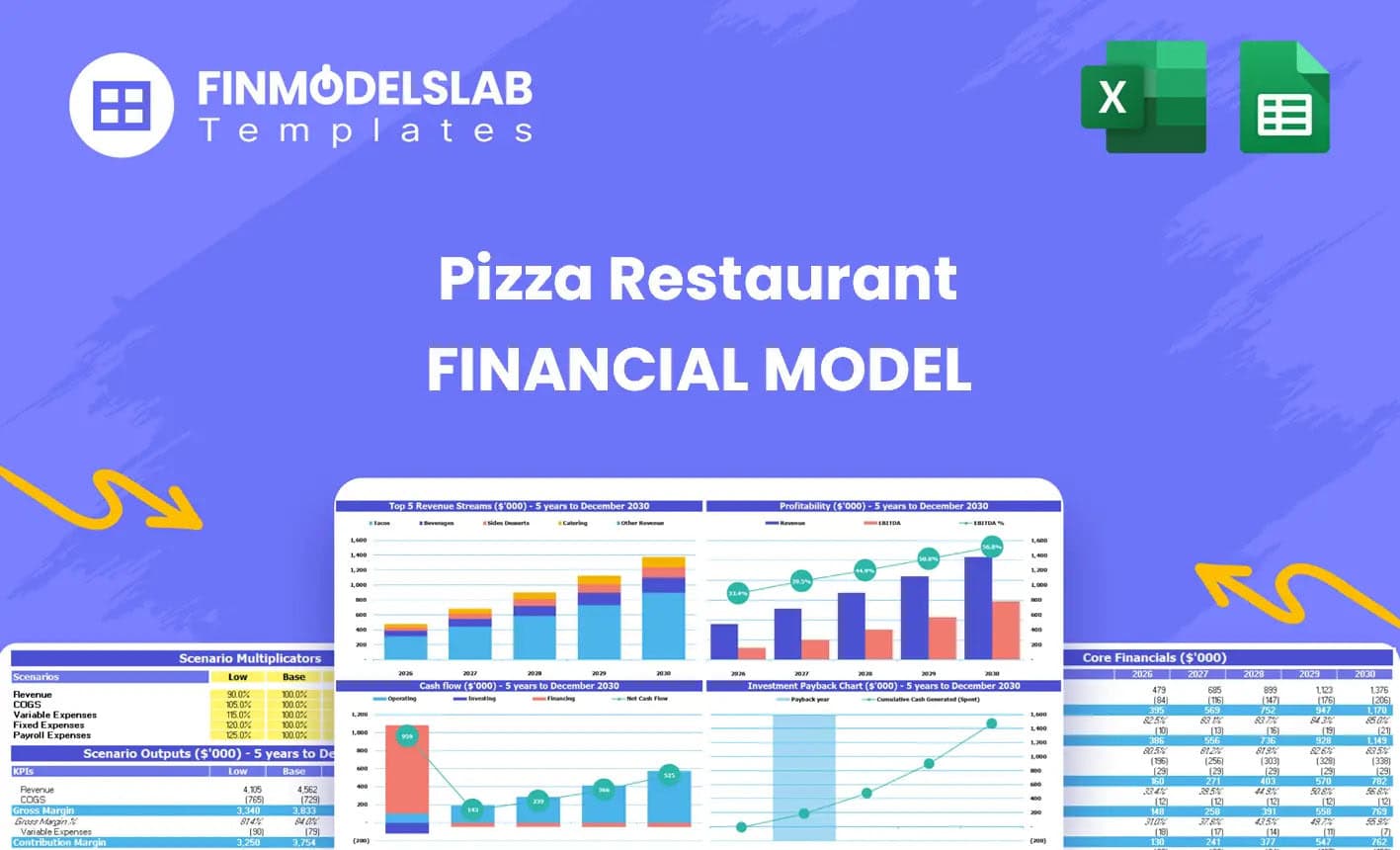
Pizzeria Financial Model Excel Template
The Pizza Restaurant Financial Model Template helps entrepreneurs, restaurant owners, consultants, a... Read more

Fast Casual Restaurant Financial Model Excel Templ...
The Fast Casual Restaurant Financial Model helps entrepreneurs, restaurant owners, consultants, anal... Read more

Pub Financial Model Excel Template
The Pub Financial Model helps entrepreneurs, pub owners, consultants, analysts, and business planner... Read more

Fine Dining Restaurant Financial Model Excel Templ...
The Fine Dining Restaurant Financial Model helps entrepreneurs, restaurant owners, consultants, anal... Read more

A La Carte Restaurant Financial Model Excel Templa...
The A La Carte Restaurant Financial Model Financial Model Template helps entrepreneurs, restaurant o... Read more
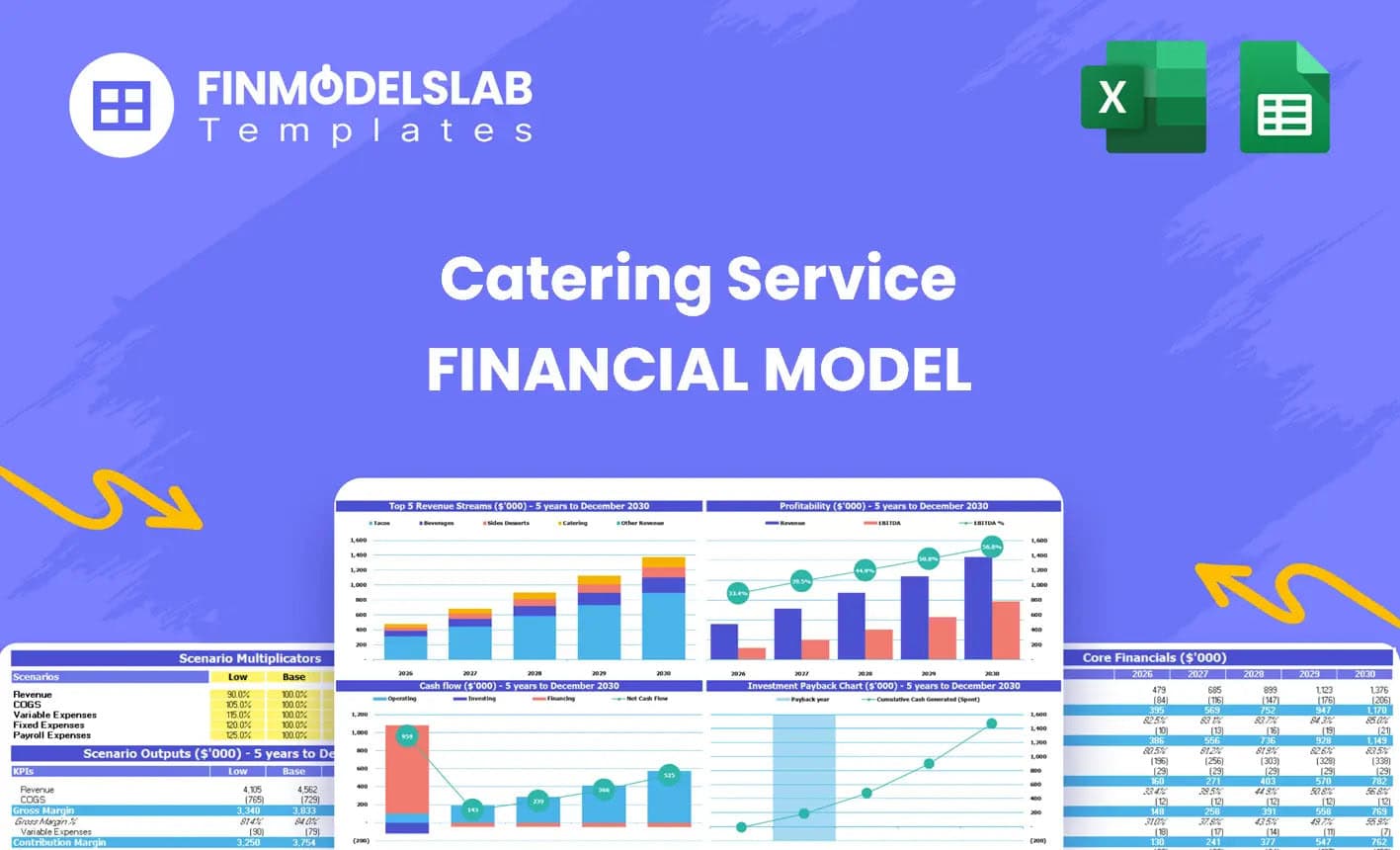
Catering Financial Model Excel Template
The Catering Service Financial Model helps users turn a catering business plan into a structured, ed... Read more
Gourmet Food Store Financial Model Excel Template
The Gourmet Food Store Financial Model helps entrepreneurs, founders, business owners, consultants, ... Read more
Banquet Hall Financial Model Excel Template
The Banquet Hall Financial Model helps entrepreneurs, venue owners, consultants, analysts, and busin... Read more
You must log in to submit a review.