
0 ITEMS

Retail Stocktake Variance Model — Shrinkage at Cost & Retail, Tolerance Bands, ABC Analysis
Most stocktake sheets report variance one way and quietly mislead you. This one values shrinkage at both cost and retail, separates count noise from real loss with a tolerance band, benchmarks against target, and ranks lines by ABC. Fully unlocked, 340 live formulas.
| Financial Model, Retail, Supermarkets & Grocery Stores |
| Cost Calculation, Dashboard, Excel, Inventory, Inventory Management, Performance Tracking, Profitability Analysis, Variance Analysis |
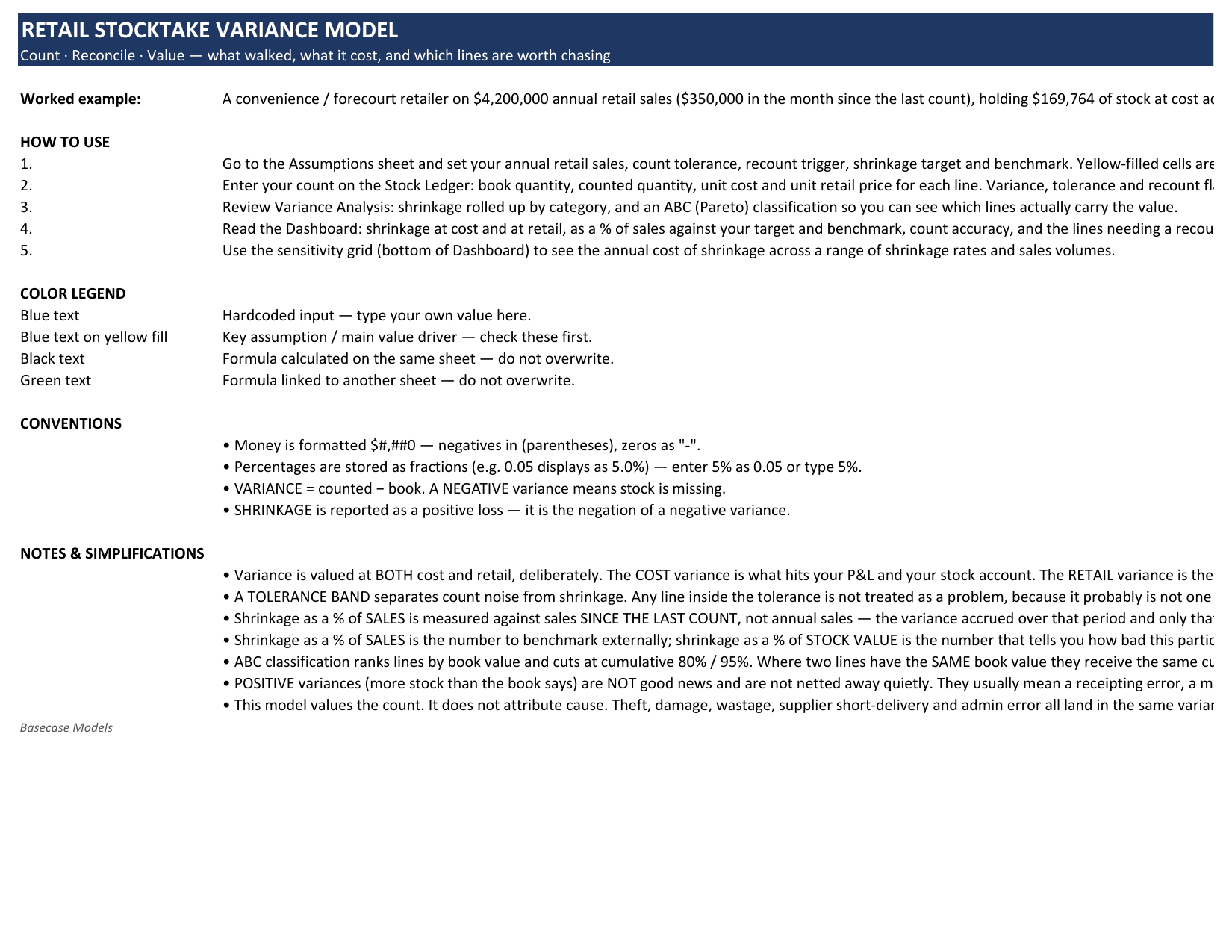
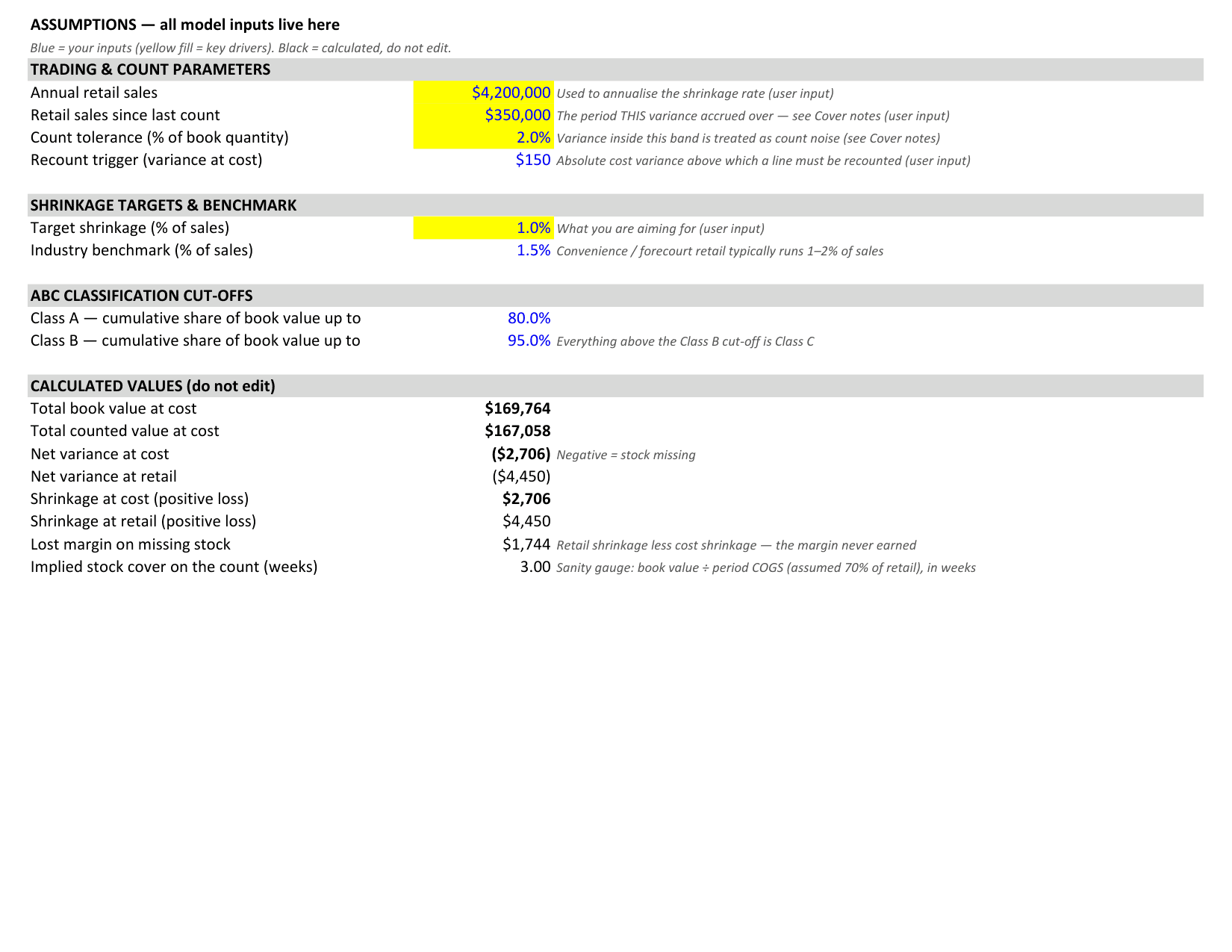
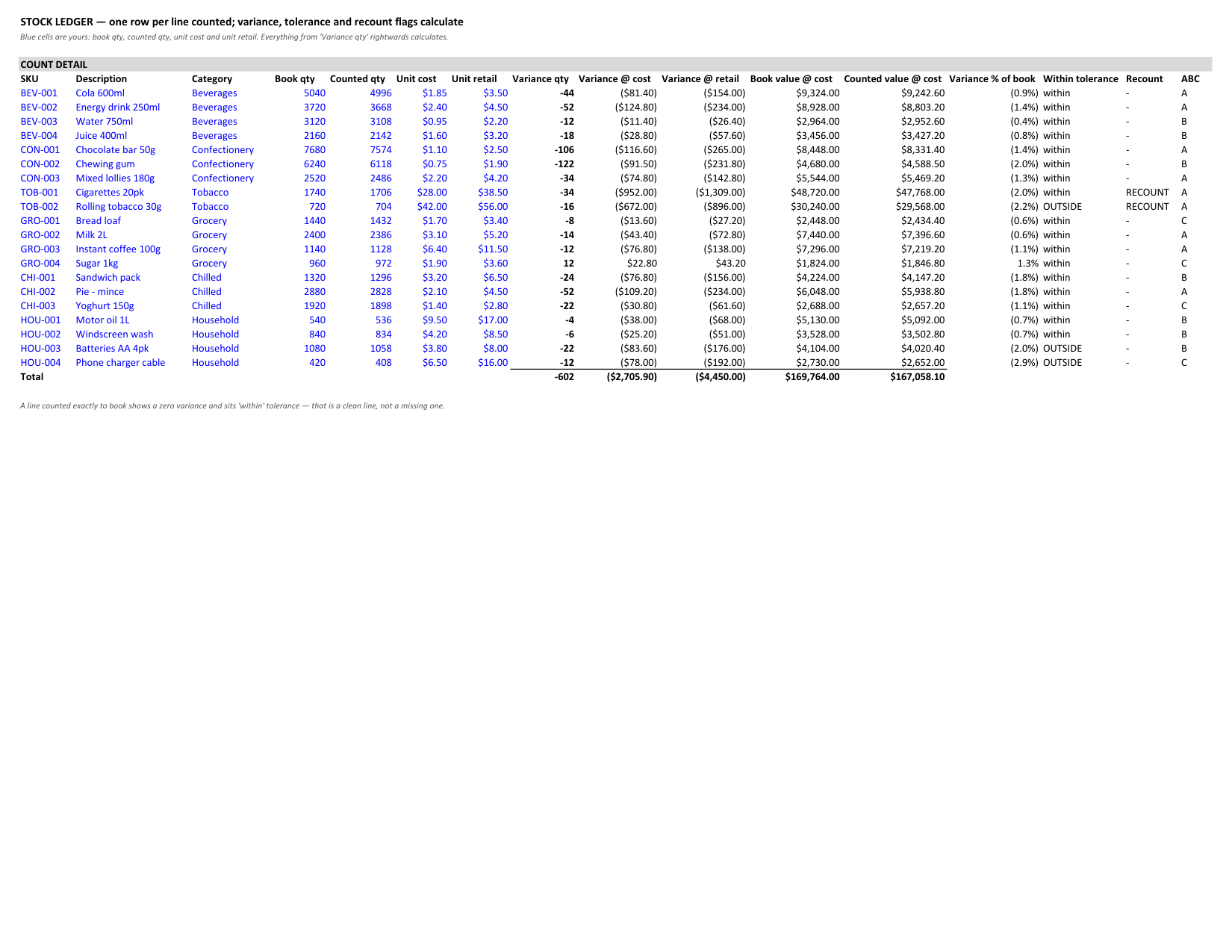
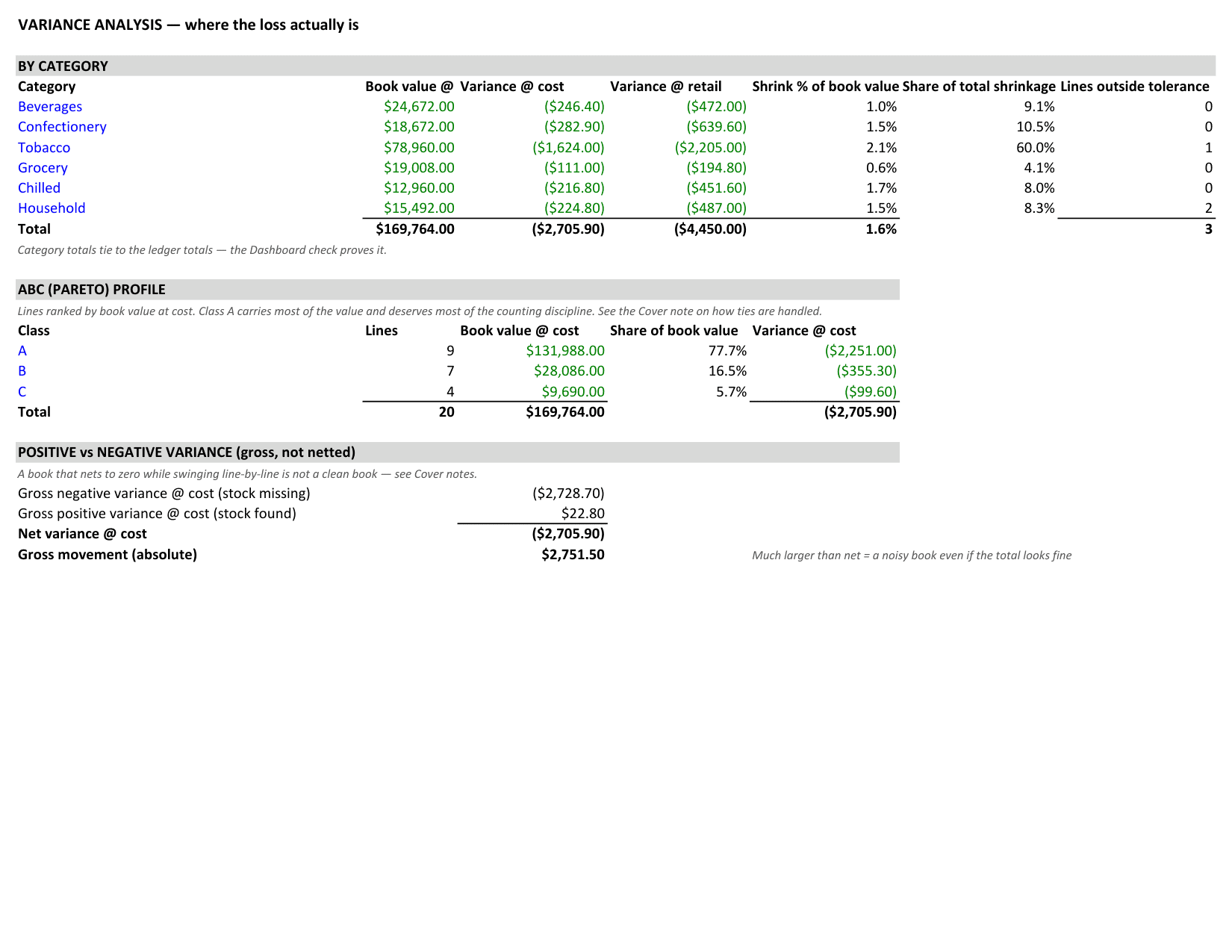
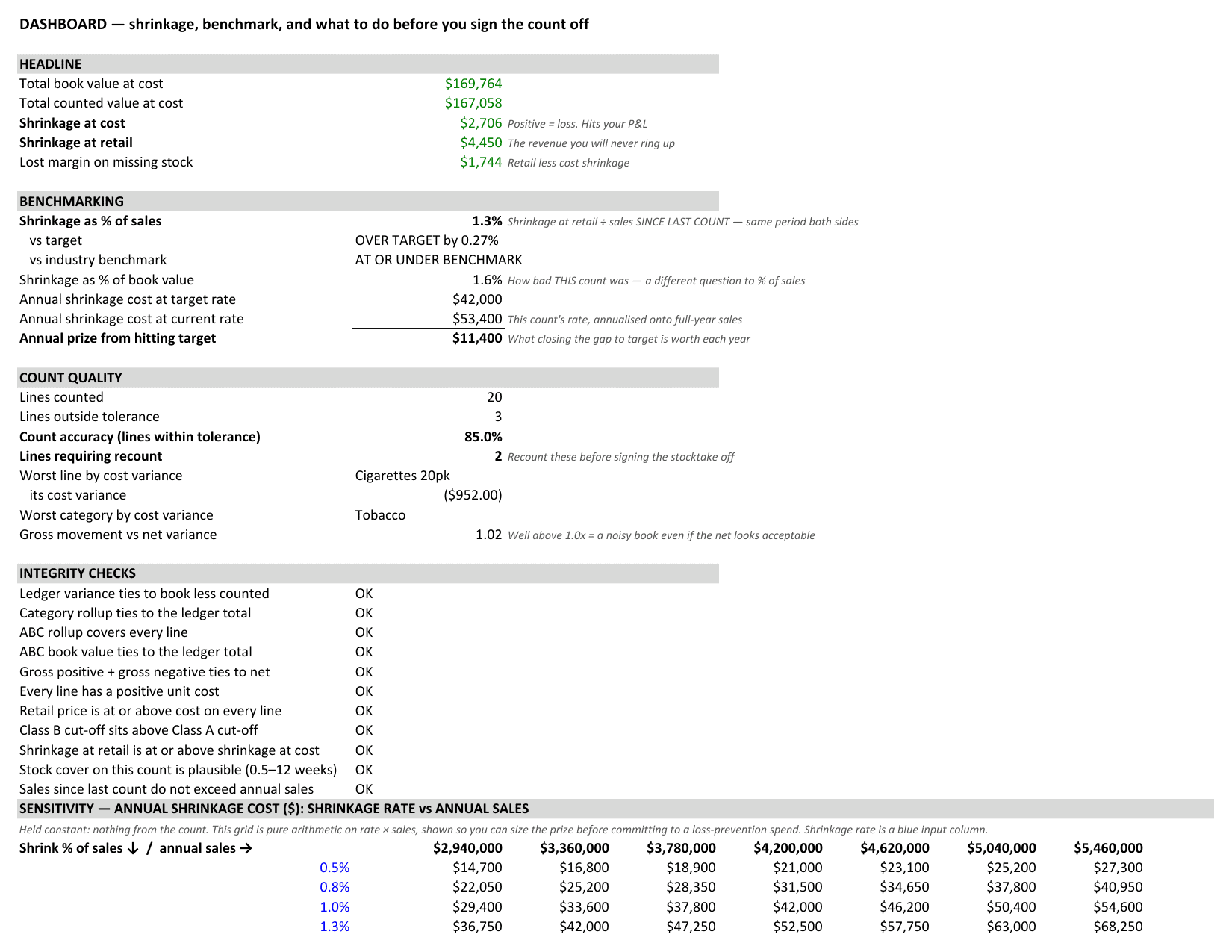
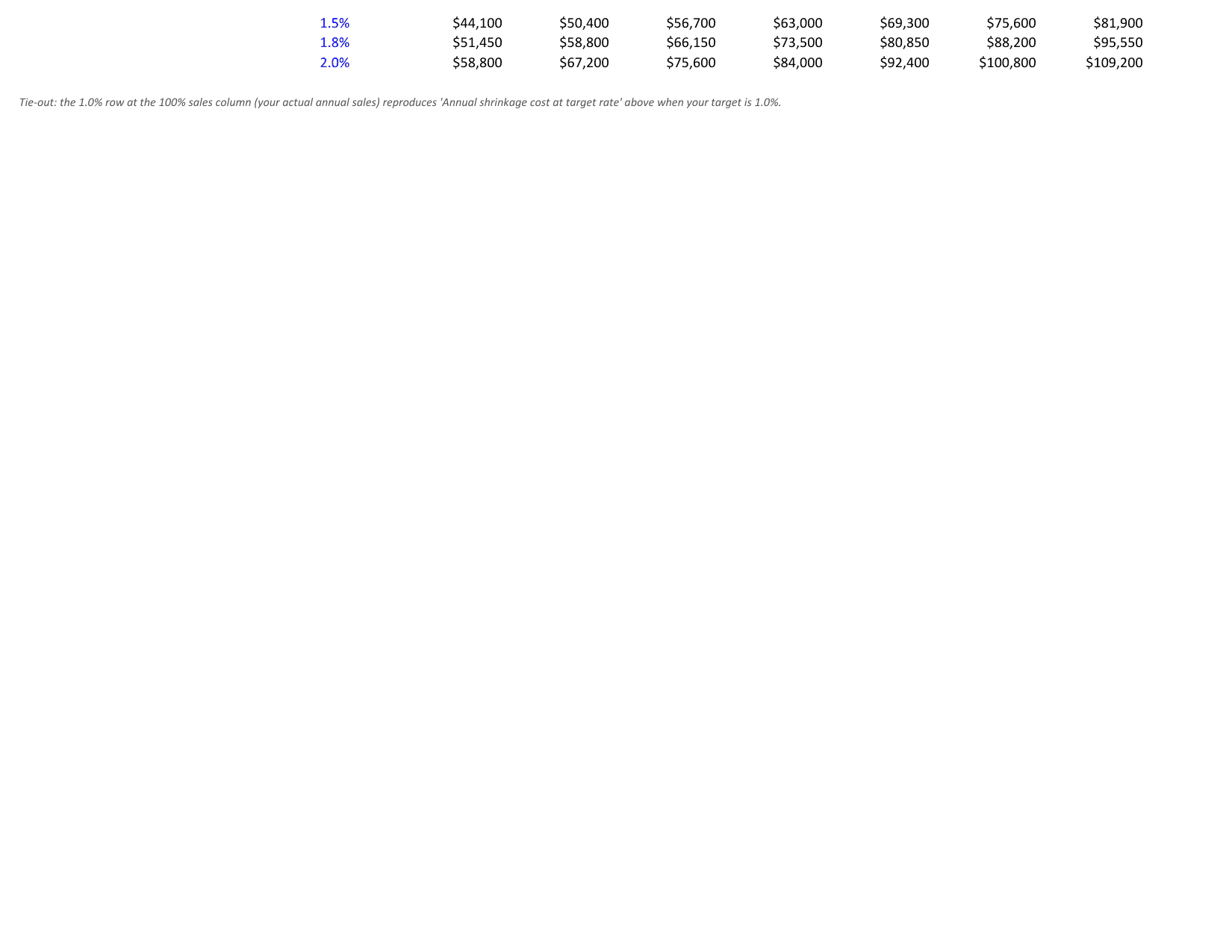
The Retail Stocktake Variance Model tells a convenience, forecourt or grocery operator what walked, what it cost, and which lines are worth chasing. Most stocktake sheets report variance one way and quietly mislead; this one reports it both ways, because both are true and they answer different questions.
What it does: it values variance at COST (what hits your P&L and stock account) and at RETAIL (the revenue you’ll never ring up), and shows the gap between them — the margin you lost. A tolerance band separates genuine count noise from real shrinkage, so not every line looks like theft. Shrinkage is expressed as a percentage of sales measured against sales since the last count (not annual sales — the single most common way this metric gets quoted wrong), and benchmarked against your target and an industry rate, with the annual prize from closing the gap. An ABC (Pareto) classification ranks lines by value so counting discipline goes where the money is, positive and negative variances are reported separately rather than netted, and recount flags mark the lines to re-check before you sign the count off.
Main features: variance at cost and retail with lost margin; a tolerance band; shrinkage as a % of sales, benchmarked; ABC analysis; gross-versus-net variance; recount flags; and eleven integrity checks including a scale sanity check. 340 live formulas, zero formula errors.
How to work with it: enter your annual and period sales, tolerance and targets, then your counted lines (book qty, counted qty, unit cost, unit retail) in the blue cells; everything else calculates. A worked example is preloaded.
Why you need it: it is honest — the model values the count but doesn’t attribute cause; theft, wastage and admin error all land in the same variance. Fully unlocked, every formula visible. Currency-agnostic; treat $ as your currency. For analysis only.
Similar ProductsOther customers were also interested in...



 eFinancialModels
Electric Vehicle (EV) Charging Station Financial M...
With this comprehensive 5- or 10-year monthly tool, investors can assess the viability of setting up... Read more

Financial Model for Mobile App | Mobile App Busine...
The Mobile App Financial Plan Template in Excel allows you to develop financial projections when lau... Read more

 HenrySheykin
Food Truck Financial Model Excel Template
The Food Truck Financial Model helps entrepreneurs, founders, business owners, consultants, and anal... Read more

Green Hydrogen Production from Wind Energy Financi...
The Green Hydrogen from Wind Financial Model aims to comprehensively forecast a horizon of 40 years ... Read more

Simple Mutual Non-Disclosure Agreement Template
Protect your business secrets with ease using our Simple Mutual Non-Disclosure Agreement Template. S... Read more

Solar Energy Financial Model
The Solar Energy Financial Model Spreadsheet Template in Excel assists you in preparing a sophistica... Read more

 Peter Graf
The Customer-Centric Financial Model for Restauran...
Starting a restaurant without a financial plan is like driving a car blindfolded. You wouldn´t do i... Read more
You must log in to submit a review.