
0 ITEMS

Invest Smart With a Surfboard Rental Business

Starting a surfboard rental business involves balancing seasonal demand with ongoing operational costs.
- Demand peaks in tourist-heavy coastal areas, offering high rental income during peak seasons.
- Different surfboard types, such as soft-tops and epoxy boards, cater to various skill levels and surfing conditions.
- Equipment maintenance and repairs are common, requiring careful planning to avoid downtime.
- High initial investment and overhead expenses can limit profit margins, especially off-season.
- Strategic financial modeling helps forecast revenue, optimize inventory, and manage cash flow throughout the year.
Understanding these factors can help you make informed decisions and grow a sustainable surfboard rental business.
An Overview of the Surfing Board Rental Industry
The surfing board rental industry has become a crucial component of the global surfing ecosystem. It serves as an entry point for newcomers and a convenience for travelers who need help to bring their own boards. This industry thrives in coastal areas worldwide, particularly in locations renowned for their surf breaks. The first recorded instances of surfing date back to early Polynesian cultures. The sport eventually found its way to Hawaii, where it was practiced as both a sport and a religious ritual. The ancient Hawaiians used boards called “Alaia,” crafted from local woods. However, as we understand it today, the concept of renting surfing boards likely didn’t exist in these early periods.
The modern concept of surfing and surfboard rentals emerged much later, mainly as surfing gained popularity in the early 20th century. While specific records about the “first” surfboard rental are hard to pinpoint, the practice likely started in the early to mid-20th century in places like Waikiki, Hawaii, and California, USA, where surfing culture began to thrive. Surf shops and beachside vendors would rent boards to tourists and locals alike, eager to try the sport. These early rentals helped to democratize the sport, making it accessible to those who didn’t own a surfboard.
Today, the International Surfing Association’s estimate of 23 million surfers worldwide indicates a large potential market for board rentals. Surf tourism has significantly contributed to this growth, with many surfers traveling to famous surf spots around the globe.
Different Types of Surfboard
Rental businesses typically offer different types of surfboards to cater to different skill levels and surfing styles. Surfboards come in a diverse array of materials, shapes, and sizes, each tailored to suit different surfing styles, wave conditions, and skill levels. From traditional fiberglass to innovative carbon fiber composites and from shortboards for quick maneuvers to longboards for graceful glides, the variety ensures a perfect board for every surfer.
Different Types of Surfboards According to Material
- Soft-top surfboards are constructed with a polystyrene foam core covered by a soft, sponge-like outer layer. Beginners favor these boards for their buoyancy, stability, and the added safety of the smooth surface, which reduces the risk of injuries during falls. They are ideal for learning and can be used in various wave conditions. However, their soft construction may offer a different level of performance or durability than harder boards, and they might not satisfy the demands of more experienced surfers seeking to execute sharp maneuvers or ride more giant waves.
- Wooden surfboards, made from materials like balsa, cedar, or paulownia, hark back to the origins of surfing with their traditional craftsmanship and aesthetic appeal. These boards are praised for their environmental sustainability, longevity, and unique riding feel, offering a sense of connection to the history of surfing. Wooden boards can be custom-shaped for various surfing styles and wave types. On the downside, they tend to be heavier and more expensive than their foam counterparts, and their maintenance can require more effort due to the need to protect the wood from water damage.
- Polyurethane (PU) surfboards feature a polyurethane foam core, making them the traditional choice for many surfers. They are coated with fiberglass and polyester resin, balancing durability and performance flexibility. PU boards are appreciated for their classic feel, ease of paddling, and ability to generate speed in various wave conditions. However, they could be more environmentally friendly due to the toxic nature of polyurethane foam and the manufacturing process. Additionally, they can be prone to yellowing and water absorption over time, which may affect performance and longevity.
- Epoxy surfboards are constructed with a foam core (often EPS-expanded polystyrene) and then coated with epoxy resin, making them lighter and more durable than traditional polyurethane boards. They offer excellent buoyancy, making paddling and catching waves easier. Epoxy boards are suitable for all levels of surfers and perform well in a wide range of wave conditions. They are also more environmentally friendly compared to PU boards. However, some surfers may find the lighter and more buoyant nature of epoxy boards to translate into a less connected feel with the wave, and they can be more susceptible to damage from impacts.
Different Types of Surfboards According to Shape & Size
- Shortboards are characterized by their pointed nose and thin rails, designed for quick and sharp maneuvers on the wave. Typically ranging from 5 to 7 feet, they are ideal for experienced surfers looking to perform aggressive turns, aerials, and cutbacks. The compact size and shape allow optimal control in large, powerful waves. However, shortboards are not well-suited for beginners due to their lack of stability and buoyancy, making them challenging to paddle and catch waves with compared to larger board types.
- Fish boards, usually between 5 and 6.5 feet long, are distinguished by their wider, shorter build and a distinctive fish-like notched tail. This design enhances the board’s ability to maintain speed in smaller or mushier waves, making it a favorite for surfers in less-than-ideal wave conditions. The added volume and wider shape offer better stability than traditional shortboards, making them more accessible to intermediate surfers. However, their unique shape can limit performance in larger, more powerful waves and may not be the best choice for beginners seeking stability.
- Longboards, with 9 feet and above lengths, feature a larger surface area and are the board of choice for a classic surfing style. Their size offers excellent stability and buoyancy, making them perfect for beginners to learn and for more experienced surfers who enjoy a graceful, smooth ride on smaller waves. Longboards excel in nose riding and cross-stepping techniques. The main drawbacks are their reduced maneuverability in quick turns and the difficulty in handling them in giant, more powerful waves due to their size.
- Funboards, ranging in length from 6.5 to 9 feet, strike a balance between shortboards’ maneuverability and longboards’ stability. This versatility makes them an excellent choice for surfers of all skill levels, especially those transitioning from a longboard to a shortboard or vice versa. They are easier to paddle than shortboards and can catch waves more readily yet allow for playful maneuvering of a shorter board. The downside is that they may need to excel in the performance characteristics of shortboards or longboards.
- Guns are long, narrow boards explicitly designed for big-wave surfing, typically 7 to 11.5 feet. They feature pointed noses and are built to paddle fast and drop into steep, large waves where stability and speed are crucial. Their length and shape help surfers manage the power of big waves, making them indispensable for charging at spots known for sizable surf. However, guns are not suitable for everyday conditions due to their size and specialized design, making them difficult to maneuver in small to medium waves and challenging for beginners.
























































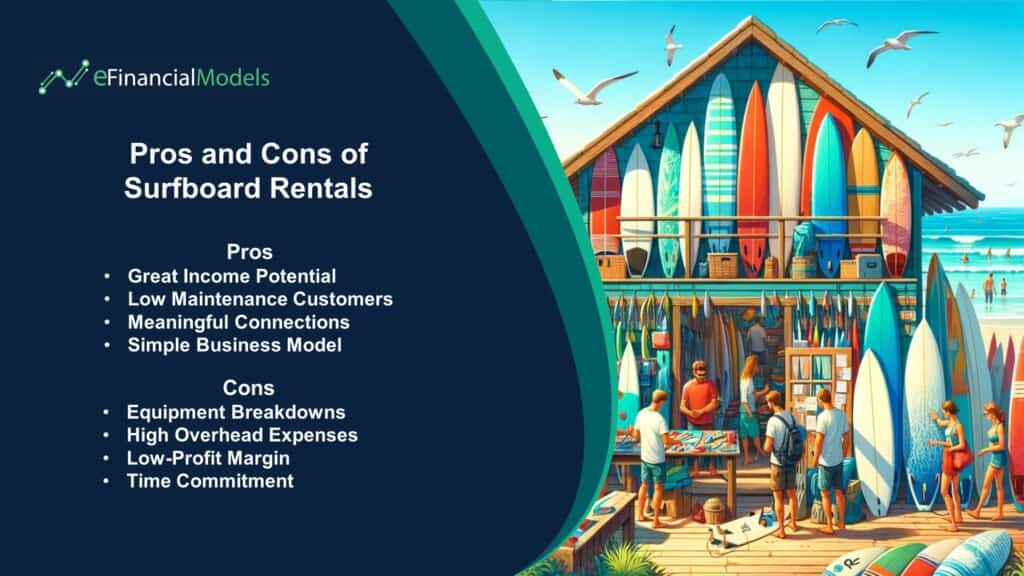
The Pros and Cons of Surfboard Rentals
Surfboard rentals offer beachgoers and tourists the convenience of enjoying surfing without the commitment of purchasing their own board. They provide a flexible and cost-effective solution for occasional surfers and those trying out the sport. However, these businesses also face several challenges. Here are its most common pros and cons.
Pros
- Great Income Potential: Surfing board rental businesses have the potential to generate significant rental income, especially in tourist-heavy coastal areas where surfing is a popular activity. The demand for surfboard rentals can be exceptionally high during peak seasons, allowing for premium rental rates. Additionally, these businesses can scale up by increasing their inventory or expanding their services to include surfing lessons, apparel sales, and equipment rentals beyond just surfboards. The high turnover rate of rentals can lead to a steady stream of revenue, making it a lucrative venture for entrepreneurs willing to invest in a well-located operation.
- Low Maintenance Customers: Customers of surfboard rental businesses typically require minimal assistance beyond the initial transaction and a brief overview of safety practices. Most renters are either experienced surfers familiar with the equipment or tourists looking for a short-term recreational activity, which minimizes the need for extensive customer service. This aspect allows business owners to operate with relatively low overhead regarding staffing and customer management. Additionally, the straightforward nature of the transactions simplifies operations, reducing potential complications and the need for specialized staffing.
- Meaningful Connections: Operating a surfboard rental business offers the unique opportunity to make meaningful connections with people from various backgrounds and cultures. Owners and staff frequently interact with customers who share a love for the ocean and surfing, creating a community atmosphere that can enhance customer loyalty and word-of-mouth marketing. These interactions can also lead to valuable feedback on improving the business and expanding offerings to meet customer needs. Furthermore, integrating into the local surfing community can open doors to partnerships, events, and initiatives promoting sustainability and beach conservation, aligning business interests with environmental stewardship.
- Simple Business Model: The surfboard rental business model is straightforward, focusing on providing customers with surfboards for a predetermined amount of time in exchange for a fee. This simplicity makes managing and operating easier than more complex business models. It allows for precise financial planning, inventory management, and marketing strategies. The ease of understanding and implementing the business model makes it an attractive option for first-time entrepreneurs or those looking for a business that doesn’t require a steep learning curve. The business can run efficiently with basic operational procedures, such as surfboard maintenance schedules and customer service protocols, allowing owners to focus on growth and optimization strategies.
Cons
- Equipment Breakdowns: A notable disadvantage of surfboard rentals is the risk of equipment breakdowns. Surfboards and related equipment are prone to wear and tear, especially when used frequently and in the harsh marine environment. Repairs and maintenance can become a significant expense and logistical challenge, potentially leading to downtime when the equipment is unavailable for rent. This issue affects the business’s ability to generate revenue and can negatively impact customer satisfaction if high-quality equipment is not consistently available.
- High Overhead Expenses: The operational costs associated with a surfing board rental business can be quite high. Initial expenses include purchasing a diverse inventory of surfboards and safety gear to cater to different skill levels and preferences, which requires a substantial upfront investment. Additionally, ongoing costs include rental space (if operating near popular surfing spots), maintenance, repairs, insurance, and possibly staffing. These overhead expenses can significantly reduce the business’s profitability, especially during off-peak seasons when rental demand decreases.
- Low-Profit Margin: Surfboard rental businesses typically face low-profit margins. The market’s competitive nature often limits how much can be charged for rentals, especially in areas with multiple rental options. With the high overhead expenses and the need for continuous equipment maintenance and replacement investment, achieving a high-profit margin can take time and effort. This reality makes it essential for business owners to carefully manage expenses and look for ways to add value to their offerings to justify higher rental rates or generate additional revenue streams.
- Time Commitment: Running a surfing board rental business demands a significant time commitment. Owners must manage daily operations, maintain and repair equipment, handle customer inquiries and bookings, and potentially supervise staff. During peak season, the business can require long hours to accommodate early risers and sunset surf sessions. This commitment can be especially challenging for those with other responsibilities or seeking a more passive investment. The seasonal nature of the business may also necessitate flexible scheduling to ensure profitability year-round, adding to the time management challenges.
Optimizing Surfboard Rentals with Strategic Financial Modeling
Starting a surfboard rental business presents a unique blend of opportunities and challenges that appeal to entrepreneurs who are passionate about water sports and keen on tapping into the lucrative tourism market. On the upside, the business capitalizes on seasonal demand spikes, offering significant revenue potential during peak periods. This business model benefits from relatively low ongoing expenses, as surfboards and related equipment have long lifespans when adequately maintained. Additionally, it caters to a growing trend of experiential tourism, where visitors seek unique and memorable experiences, such as surfing, enhancing its appeal. However, the venture has its drawbacks. It faces pronounced seasonality, leading to inconsistent revenues and necessitating adept financial management. Moreover, the need for prime locations near surf spots can translate into high rental costs, and the business must navigate the complexities of insurance and liability for rental equipment.
Developing a robust financial model is indispensable to navigate the financial ebbs and flows inherent in a surfboard rental business. A surfboard rental business financial model enables owners to forecast revenue, manage expenses, and anticipate cash flow challenges associated with the seasonal nature of the company. It provides a framework for scenario planning, helping to strategize for peak seasons while preparing for slower periods. A well-constructed financial model aids in making informed purchasing decisions regarding inventory, determining optimal rental pricing strategies, and evaluating the profitability of potential locations. Additionally, it is a critical tool for securing financing, as it demonstrates to investors and lenders a clear path to profitability and financial sustainability.
Ultimately, strategic financial modeling is not just about ensuring the surfing board rental business can survive the off-season; it’s about optimizing operations to maximize profitability year-round, allowing surfboard rentals to ride the waves of success rather than getting caught in financial uncertainty.
You might also like:
- 5 Practical Tips to Help Raise Funds For Startups
- Achieve Financial Success By Knowing Your Business Plan Model
- Best in Class Property Appraisal Methods and What to Look Out for
- 12 Funding Sources for Businesses and Startups
- How to Write a Business Plan Step-by-Step
- Fundraising
- Car Rental Business
- Mastering the Art of IRR Calculation: A Comprehensive Guide for Investors
- Why Do You Need a Financial Model?
- The Key Differences Between Levered and Unlevered Free Cash Flow
- How to Optimize the Average Selling Price: Strategies for Higher Profits
- 10-year Financial Projections
- Mastering Business Finance: The Three-Statement Financial Model
- Airbnb
- Financial Model for Mobile App | Mobile App Business Plan
- Top 10 Mistakes in DCF Valuation Models
- How to Prepare a Financial Feasibility Study?
- The Purpose of a Financial Model
- How to Set up a Car Rental Business: A Roadmap to Success
- Exploring the Benefits of a Rental Property Excel Spreadsheet