
0 ITEMS

Pre-Made Meal Subscription Box Financial Model Excel Template
The Pre-Made Meal Subscription Financial Model Template helps entrepreneurs and planners turn a meal delivery subscription concept into a structured, editable financial forecast. Instead of starting with a blank spreadsheet, users get a ready-made planning tool built around the economics of recurring meal plans, customer acquisition, pricing tiers, add-on sales, food costs, staffing, overhead, cash flow, and profitability. It is designed to help users understand what the business may require to launch, how revenue may build over time, and whether the model can support sustainable growth. This template is useful for founders, business owners, consultants, analysts, and anyone preparing a business plan, investor presentation, loan application, or internal operating budget for a pre-made meal subscription service. It helps organize the main financial planning assumptions behind the business, including subscriber growth, subscription pricing, trial-to-paid conversion, customer acquisition cost, monthly recurring revenue, cost of goods sold, payroll, startup costs, operating expenses, and working capital needs. By connecting these assumptions to projected financial statements, the model gives users a clearer view of cash flow, profit margins, funding requirements, and long-term performance. The model supports practical decision-making by allowing users to test assumptions before committing capital. Users can review different revenue assumptions, evaluate how marketing spend affects new customer acquisition, estimate the cost structure required to prepare and deliver meals, and understand how fixed and variable costs influence profitability. It also helps assess break-even analysis, expected payback, and the impact of changing prices, conversion rates, food costs, and operating overhead. This makes it especially helpful for comparing growth strategies, preparing investor-ready financial projections, and identifying the key levers that can improve business performance. Because the template is fully customizable, buyers can adapt the forecast to their own market, pricing strategy, operating model, staffing plan, and launch timeline. It is suitable for new startups as well as existing food service businesses expanding into subscription meal plans. With built-in reports, dashboards, charts, scenario analysis, and financial outputs, the Pre-Made Meal Subscription Financial Model Financial Model Template gives users a professional framework for planning, budgeting, fundraising, and communicating the financial story behind the business.
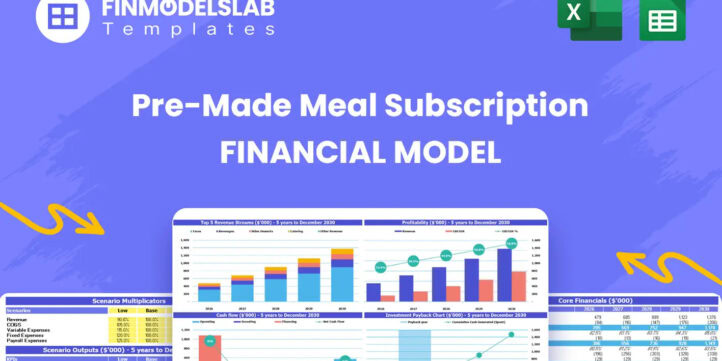


Financial Model Overview
The Pre-Made Meal Subscription Financial Model Financial Model Template is a ready-to-use planning tool for evaluating the financial potential of a recurring meal delivery or ready-to-eat meal subscription business. It is built to help founders, operators, consultants, analysts, and business plan writers translate the key drivers of the business into structured projections, including subscriber growth, subscription pricing, add-on revenue, food costs, staffing, fulfillment expenses, startup investment, cash flow, and profitability. A pre-made meal subscription service depends on recurring customer demand, efficient production, disciplined ingredient purchasing, and strong retention, so the model focuses on the assumptions that directly affect whether the business can grow profitably. Users can edit the inputs, replace the pre-filled assumptions with their own figures, and generate a financial view that supports planning, fundraising, lender discussions, investor presentations, and internal decision-making. Rather than building formulas, statements, charts, and dashboards from scratch, this template gives users a professional framework for testing the business model, reviewing financial outcomes, and understanding the funding and operational requirements behind a scalable meal subscription concept.
All-in-One Dashboard
The all-in-one dashboard brings the model’s core inputs and core outputs into a single planning view so users can quickly understand the financial direction of the pre-made meal subscription business. This section is useful for reviewing major assumptions such as subscriber growth, pricing tiers, conversion rates, marketing spend, customer acquisition cost, churn, food cost percentage, payroll, overhead, and initial funding requirements. It also summarizes important outputs such as revenue, gross profit, EBITDA, net profit, cash balance, and return metrics, allowing users to see how changes in assumptions flow through the rest of the forecast. For a meal subscription business, this is especially valuable because small changes in customer acquisition, retention, pricing, ingredient cost, and production efficiency can have a major impact on monthly recurring revenue and profit margins. The dashboard helps users avoid getting lost in separate worksheets by giving them an executive-level view of financial performance. It can be used during planning meetings, investor conversations, or internal reviews to explain the business model clearly and identify which assumptions need more research, refinement, or stress testing before launch or expansion.
Low, Base, and High Scenario Analysis
The low, base, and high scenario analysis section helps users evaluate how the pre-made meal subscription business may perform under different operating conditions. Instead of relying on one static forecast, users can compare conservative, expected, and optimistic cases by adjusting important drivers such as new customer sign-ups, trial-to-paid conversion, average subscription price, churn, customer acquisition cost, food costs, packaging costs, delivery costs, and overhead. The low scenario may reflect slower adoption, higher marketing costs, or weaker conversion rates, while the high scenario may reflect stronger demand, improved retention, or more efficient operations. The base scenario can then serve as the main planning case for the business plan or investor model. This component is helpful because subscription food services are sensitive to customer behavior, marketing efficiency, and operational execution. Scenario planning allows users to identify downside risks, estimate how much cash may be needed if growth is slower than expected, and understand which levers create the greatest upside. It also supports more credible stakeholder discussions because investors and lenders often want to know not only what management expects to happen, but also what happens if assumptions change.
Professional Charts
The professional charts section converts the model’s financial projections into visual outputs that are easier to understand, present, and discuss. These charts may show revenue growth, profitability trends, cash balance, expense composition, customer growth, margin performance, and other key financial movements over the forecast period. For a pre-made meal subscription service, visual reports are useful because the business combines subscription revenue, direct food production costs, delivery or fulfillment expenses, payroll, marketing spend, and working capital needs. Charts make it easier to see how these elements interact over time, such as whether revenue growth is outpacing costs, whether margins improve with scale, or whether cash flow remains stable during periods of expansion. This section is especially helpful for investor presentations, loan applications, board updates, and founder planning sessions because it turns spreadsheet outputs into presentation-ready insights. Users can use the charts to communicate the business story more clearly, highlight the path from customer acquisition to profitability, and support data-driven conversations with stakeholders who may not want to review every formula or detailed worksheet in the model.
ROE Components and DuPont Analysis
The ROE components and DuPont analysis section helps users understand what is driving return on equity by breaking performance into its underlying financial parts. Instead of looking only at a final return percentage, this component connects profitability, asset efficiency, and leverage to show how the business generates value for owners or investors. Inputs may include revenue, net income, total assets, equity, operating margins, and balance sheet assumptions, while outputs may include return on equity, margin analysis, asset turnover, and leverage-related metrics. For a pre-made meal subscription business, this is useful because investor returns can be influenced by several factors, including subscription margins, production efficiency, equipment investment, technology spending, cash requirements, and the amount of external funding used to launch or scale. DuPont-style analysis helps users determine whether returns are being created by strong operating profitability, efficient use of assets such as kitchen equipment and technology platforms, or a capital structure that relies more heavily on outside financing. This section can support investor discussions by giving a more analytical view of return potential and helping users explain not just whether the business appears attractive, but why the returns are expected to occur.
Revenue Inputs
The revenue inputs section is where users define the commercial assumptions that drive sales for the Pre-Made Meal Subscription Financial Model. This may include marketing spend, customer acquisition cost, website or app conversion rates, trial-to-paid conversion, subscription tier pricing, number of meals per plan, add-on purchases, setup fees, retention assumptions, and subscriber growth over time. Because the pre-made meal subscription business is built around recurring revenue, the accuracy of this section is critical. A small change in conversion rate, churn, average monthly subscription fee, or add-on purchase behavior can significantly change total revenue, cash flow, and profitability. This component helps users connect marketing activity to new sign-ups, allocate subscribers across plan types, and estimate how much recurring revenue each customer segment may generate. It also supports pricing strategy by allowing users to compare different plan levels, such as basic, standard, and premium subscriptions, and assess how each tier contributes to revenue. By documenting revenue assumptions clearly, the model gives users a more credible basis for business planning, funding requests, and management decisions around customer acquisition, menu strategy, and growth targets.
Bank-Ready Reports
The bank-ready reports section organizes the financial forecast into outputs that can be shared with lenders, investors, advisors, or internal stakeholders. These reports may include projected profit and loss statements, cash flow statements, balance sheets, summary financials, funding requirements, and other lender-friendly views. For a pre-made meal subscription business, this is important because external financing may be needed for commercial kitchen equipment, e-commerce platform development, initial inventory, delivery setup, packaging, deposits, marketing launch costs, and working capital. Banks and funding partners generally want to see whether the business can generate enough revenue and cash flow to support repayment obligations, cover operating expenses, and maintain liquidity. This component helps users present the forecast in a structured and professional format rather than relying on disconnected assumptions or informal estimates. It supports funding conversations by showing revenue projections, cost structure, profitability, cash flow dynamics, and expected financial position over time. It also helps users prepare for questions about debt capacity, capital needs, repayment risk, and whether the business has a realistic path to stable operations.
Revenue Breakdown
The revenue breakdown section provides a detailed view of how total revenue is built across the business’s individual income streams. In a pre-made meal subscription model, revenue may come from monthly subscription fees, different meal plan tiers, premium plan upgrades, add-on meals, snacks, beverages, special diet options, delivery fees, one-time setup fees, corporate meal programs, or other ancillary sales. This component helps users separate revenue sources instead of treating all sales as one blended number. By doing so, users can see which products or services contribute most to top-line growth, which plan types may produce stronger margins, and how customer mix affects overall performance. Inputs may include pricing by tier, subscriber count by plan, purchase frequency, add-on take rates, and optional fee assumptions. Outputs may include revenue by category, revenue share by stream, monthly recurring revenue, annual revenue, and revenue growth trends. This section is valuable for strategic decision-making because it helps founders identify which offerings deserve more marketing focus, which pricing levels may need adjustment, and how upsells or add-ons can improve average revenue per customer without relying only on acquiring more subscribers.
KPI Dashboard
The KPI dashboard tracks the operating and financial metrics that matter most for managing a pre-made meal subscription business. Key performance indicators may include monthly recurring revenue, active subscribers, new sign-ups, churn rate, customer acquisition cost, customer lifetime value, average revenue per user, gross margin, food cost percentage, EBITDA margin, cash balance, burn rate, and payback period. These metrics help users monitor whether the business is performing according to plan and whether the economics of acquiring, serving, and retaining customers are sustainable. For subscription food services, KPI tracking is especially important because growth can look strong on the surface while underlying metrics reveal problems such as high churn, expensive acquisition, weak gross margins, or rising fulfillment costs. This component helps users connect operational activity to financial outcomes and provides a clear performance benchmark for ongoing management. It can also support investor updates by showing the business in terms that professional stakeholders understand, such as recurring revenue quality, unit economics, margin improvement, and cash efficiency. With KPI visibility, users can make better decisions about pricing, marketing spend, retention programs, menu planning, and cost control.
Startup Costs and Operating Expense Planning
The startup costs and operating expense planning section helps users estimate the investment required to launch and run the pre-made meal subscription business. Startup costs may include commercial kitchen equipment, food preparation tools, refrigeration, packaging equipment, e-commerce platform or app development, brand design, licenses, permits, legal setup, initial inventory, deposits, launch marketing, and working capital reserves. Operating expenses may include rent, utilities, payroll, kitchen staff, delivery coordination, software subscriptions, insurance, accounting, marketing, customer support, maintenance, and general administrative costs. This component is useful because many food subscription businesses require significant upfront preparation before revenue begins, and ongoing expenses must be managed carefully to protect margins. The model helps users separate one-time capital expenditures from recurring monthly costs, making it easier to estimate funding needs and understand the cost base required to operate. It also supports budgeting by showing how fixed costs, variable costs, payroll, and cost of goods sold affect profitability as the customer base grows. For founders seeking funding, this section provides a clear explanation of how capital will be used and whether the planned budget is sufficient to support the launch phase and early growth period.
Break-Even Analysis
The break-even analysis section helps users identify when the pre-made meal subscription business is expected to become profitable and what level of revenue or customer volume is needed to cover costs. This component may use inputs such as subscription pricing, gross margin, food costs, packaging costs, delivery expenses, fixed overhead, payroll, marketing spend, and customer acquisition assumptions to estimate the point at which revenue exceeds total expenses. For a recurring meal subscription model, break-even analysis is especially important because the business must balance customer acquisition spending with retention, production capacity, and cost control. If the model requires too many subscribers to cover fixed expenses, users can adjust pricing, reduce overhead, improve margins, change plan mix, or refine the launch strategy before committing funds. If break-even appears achievable within a realistic timeframe, the analysis can strengthen investor and lender confidence by demonstrating a clear path to sustainability. This section also supports decision-making after launch by giving management a target for subscriber count, recurring revenue, and margin performance. It helps users understand not just whether the business can become profitable, but what operational conditions must be met to get there.
File types:
Excel – Single-User: .xlsx
Excel – Multi-User: .xlsx
Similar ProductsOther customers were also interested in...


 HenrySheykin
Fresh Flowers Subscription Financial Model Excel T...
The Subscription Box Financial Model Template helps entrepreneurs, founders, analysts, consultants, ... Read more

 JILL LIU
Subscription Meal Kit Financial & DCF Valuatio...
We are glad to present our new integrated, dynamic and ready-to-use Subscription Meal Kit Financial ... Read more
Equipment Rental Subscription Financial Model Exce...
The Equipment Rental Subscription Financial Model helps users turn an equipment-as-a-service busines... Read more
Human Resource Software Financial Model Excel Temp...
The HR Software Financial Model Financial Model Template helps founders, business owners, consultant... Read more
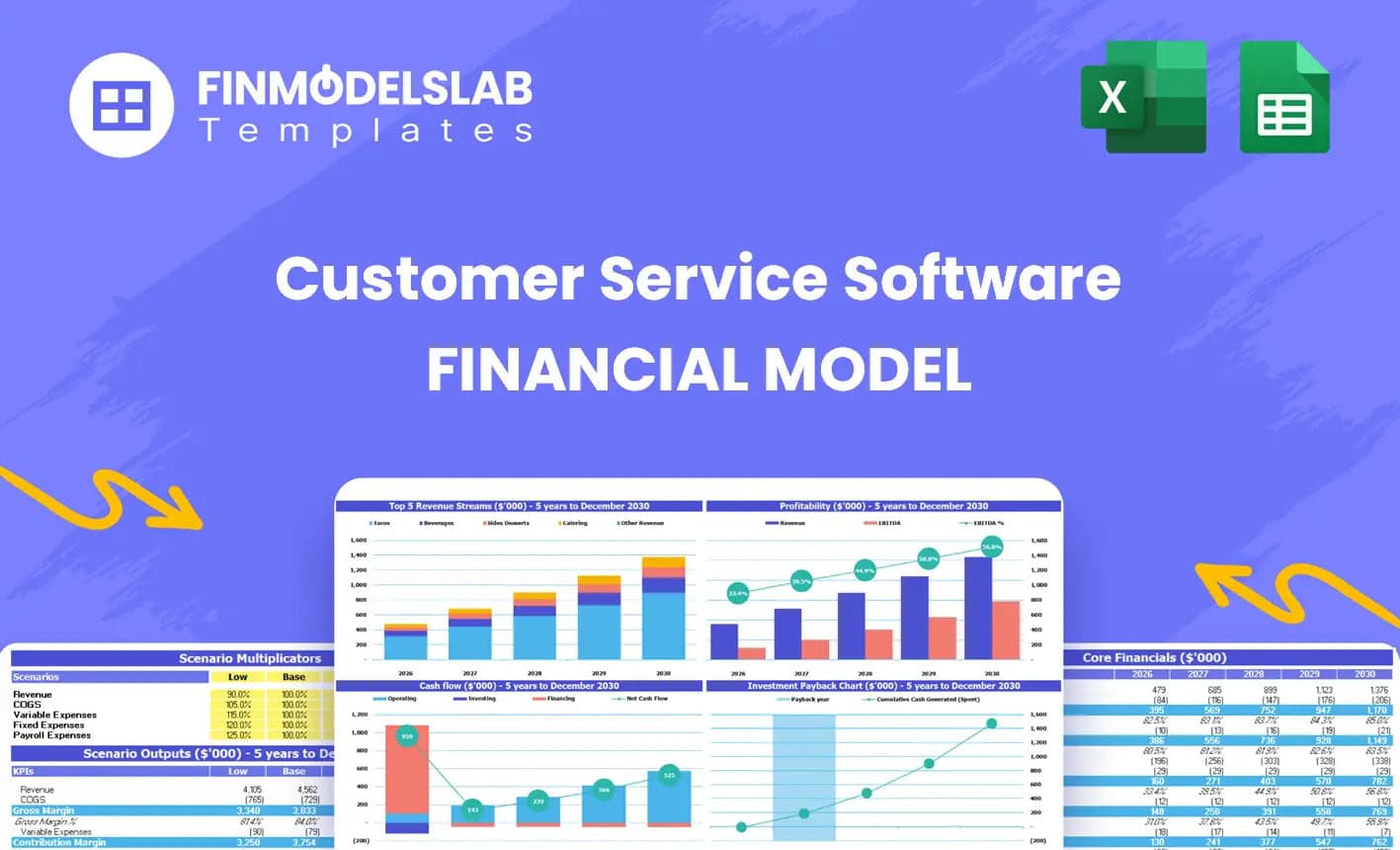
Customer Service Software Financial Model Excel Te...
The Customer Service Software Financial Model helps founders, operators, consultants, and analysts t... Read more
“Netflix for Gadgets” – Consumer-Tech Subscr...
An integrated, dynamic and ready-to-use financial model for Consumer-Tech Subscription/Rental Busine... Read more
You must log in to submit a review.