
0 ITEMS

Football Stadium Development – 20 Year Financial Model
Dynamic and investor-focused 20-year financial model, for the development, financing, and operation of a multi-purpose football stadium, featuring diversified revenue streams, optimized funding structure, and detailed return analysis.

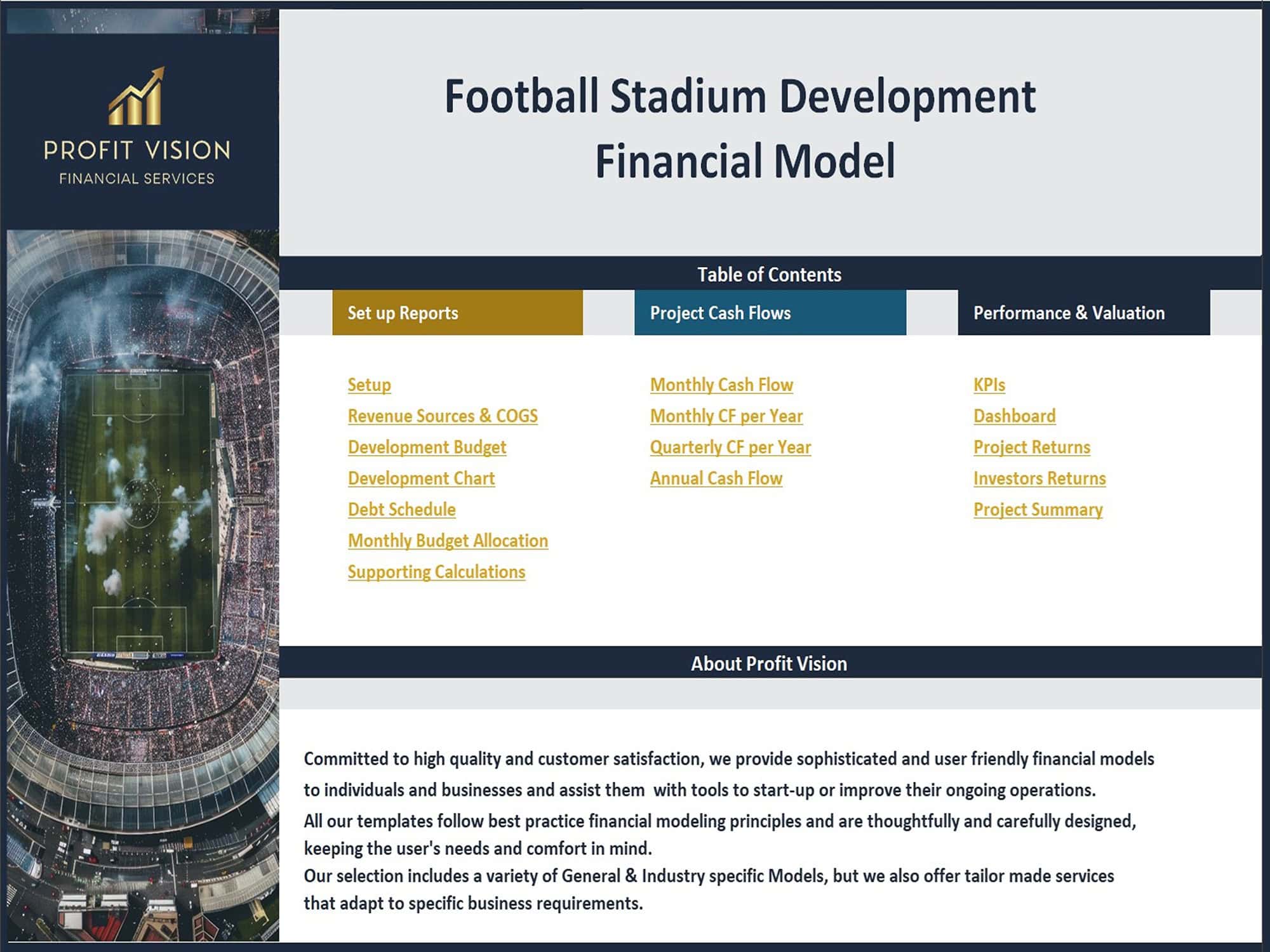








A football stadium is a large, purpose-built venue designed to host football matches and accommodate thousands of spectators. It typically features a playing field, tiered seating, locker rooms, media facilities, and amenities like concessions and merchandise shops. Modern stadiums may also include VIP boxes, large video screens, and advanced lighting systems. Beyond sports, football stadiums often serve as multipurpose venues for concerts, events, and community gatherings.
Project Description – Football Stadium Development & Operations
This financial model evaluates the development, financing, and operation of a modern, multi-purpose football stadium. The stadium is designed to host domestic league matches, international fixtures, and a range of non-football events, including concerts, exhibitions, and corporate gatherings. The model incorporates a detailed development budget, diversified revenue streams (matchday, hospitality, sponsorships, F&B, retail, events, tours, museum), and a structured financing plan combining grants, debt, pre-opening cash deposits, and equity. The model delivers detailed cash flow forecasts, operational performance metrics, and investor return analysis, enabling stakeholders to make informed decisions on viability, funding structure, and long-term value creation.
The model supports two ownership scenarios:
- Team-Owned – The stadium is developed, financed, and operated by the football club. The team retains 100% of stadium-related revenues.
- Third-Party-Owned – The stadium is developed and financed by an independent investor or consortium and leased to the football club under a long-term agreement. Certain revenue streams are retained by the stadium owner, while others are shared or kept by the team.
Development Phase
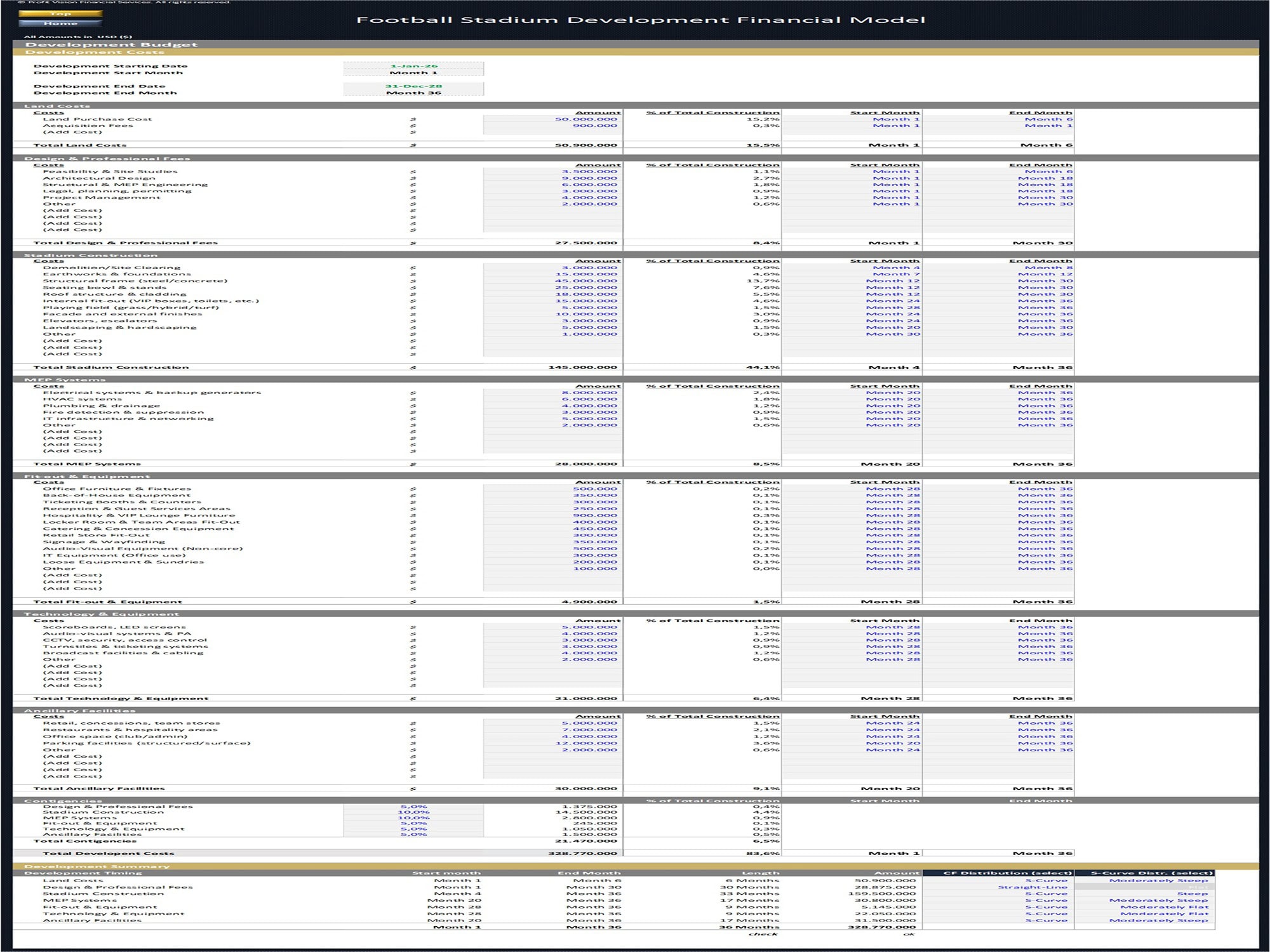
The project includes a detailed development budget, covering:
- Land acquisition and site preparation
- Stadium construction and fit-out
- Ancillary facilities (parking, retail spaces, restaurants, hospitality areas)
- Professional fees and permitting
- Professional fees and permitting
Financing sources include:
- Government grants
- Construction Loan
- Operational cash deposits (naming rights, sponsorship prepayments, season ticket sales)
- Equity
The model incorporates a progressive funding drawdown sequence to minimize equity exposure and interest during construction. Development timelines and financing costs are calculated on a monthly basis.
Operations Phase
Once completed, the stadium will operate 365 days a year, generating revenue from multiple sources:
- Matchday ticket sales (season tickets & single match tickets)
- VIP & premium hospitality
- Naming rights and sponsorships
- Concessions and catering
- Restaurants & cafés
- Retail & merchandising
- Non-matchday events
- Stadium tours
- Museum
The operational model includes:
- Detailed seat category breakdown (Low, Mid, High, Premium price tiers)
- Per-capita spending assumptions for F&B
- Seasonal revenue allocation
- Revenue share adjustments based on ownership structure
Model Outputs
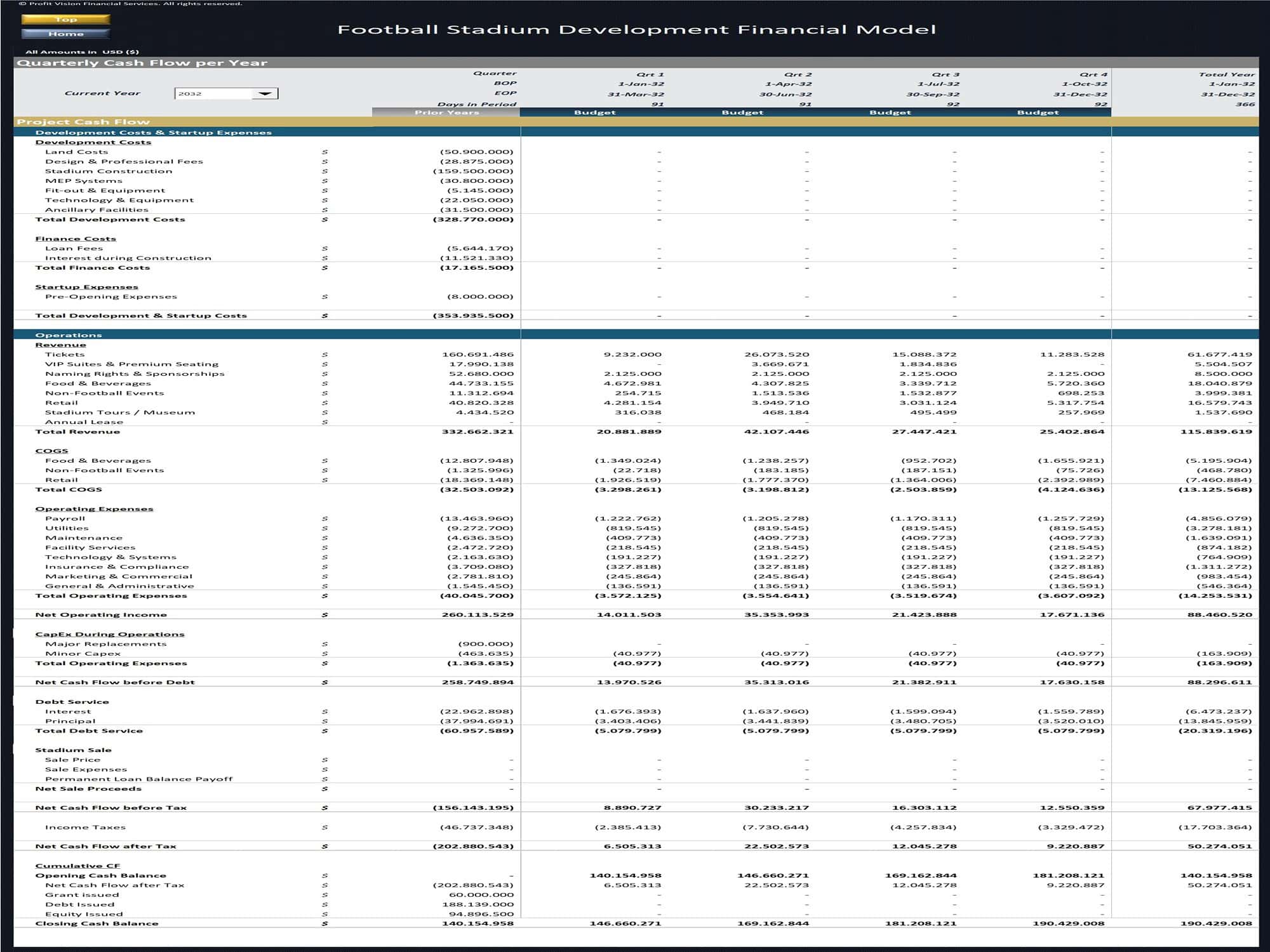
- Monthly and Quarterly Project Cash Flow per Year
- Annual Project Cash Flow
- Financing and Tax Supporting Schedules, including Debt Service Coverage Ratio (DSCR)
- Key Performance Indicators
- Unlevered & Levered Project Return Metrics (IRR, MOIC, Payback, NPV)
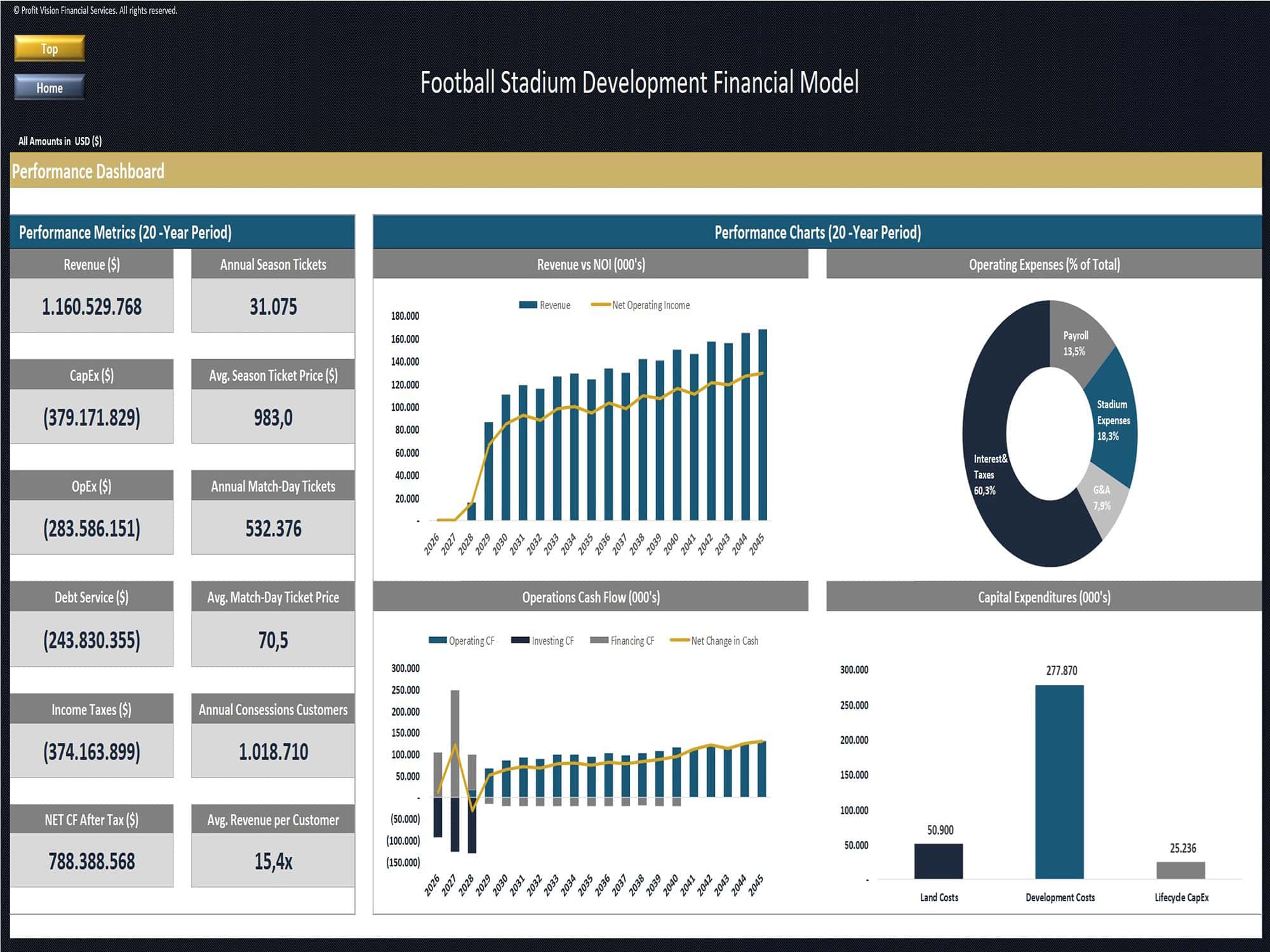
- Project Dashboard including performance metrics and charts
- Private Equity 2-Tier Investors Distribution Waterfall Model including LPs Preferred Return (Hurdle Rate)
- Project Summary including high-level proect metrics and returns
Model Purpose
This model is designed for use by:
- Football clubs evaluating stadium self-development
- Investors and infrastructure funds assessing stadium as an income-producing asset
- Lenders conducting project finance analysis
- Government bodies considering grant participation in sports infrastructure projects
Detailed instructions on the use of the model are included in the Excel file.
Help & Support
Committed to high quality and customer satisfaction, all our templates follow best practice financial modeling principles and are thoughtfully and carefully designed, keeping the user’s needs and comfort in mind.
No matter if you have no experience or you are well versed in finance, accounting, and the use of Microsoft Excel, our professional financial models are the right tools to boost your business operations!
If you however experience any difficulty while using this template and you are not able to find the appropriate guidance in the provided instructions, please feel free to contact us for assistance.
If you need a template customized for your business requirements, please e-mail us and provide a brief explanation of your specific needs.
Similar ProductsOther customers were also interested in...



 eFinancialModels
Electric Vehicle (EV) Charging Station Financial M...
With this comprehensive 5- or 10-year monthly tool, investors can assess the viability of setting up... Read more

Financial Model for Mobile App | Mobile App Busine...
The Mobile App Financial Plan Template in Excel allows you to develop financial projections when lau... Read more

 HenrySheykin
Food Truck Financial Model Excel Template
The Food Truck Financial Model helps entrepreneurs, founders, business owners, consultants, and anal... Read more

Green Hydrogen Production from Wind Energy Financi...
The Green Hydrogen from Wind Financial Model aims to comprehensively forecast a horizon of 40 years ... Read more

Simple Mutual Non-Disclosure Agreement Template
Protect your business secrets with ease using our Simple Mutual Non-Disclosure Agreement Template. S... Read more

Solar Energy Financial Model
The Solar Energy Financial Model Spreadsheet Template in Excel assists you in preparing a sophistica... Read more
 Peter Graf
The Customer-Centric Financial Model for Restauran...
Starting a restaurant without a financial plan is like driving a car blindfolded. You wouldn´t do i... Read more
You must log in to submit a review.