
0 ITEMS

Financial Model for a Smart City Project
This is a financial model to identify various components of a Smart City, schedule a project development plan, estimate infrastructure size, estimate investment, plan sources of funds, estimate period wise cash requirement for the Government, estimate revenue streams for the Government.


Many cities are currently exploring the possibilities to make better use of the current urban fabric and its infrastructure, with the aim of enhancing local quality of life and improving urban sustainability. The wealth of urban data, the increased connectivity of urban objects through the Internet of Things, and advanced energy and mobility technologies have opened new avenues for the application of smart solutions and the transition to clean energy and mobility in cities.
The start of any smart city project planning process is a smart city plan or strategy. There is a wide range of highly diverging plans being the point of departure for development of concrete projects, often having different scopes and covering different fields of expertise.
This is a financial model to identify various components of a Smart City, schedule a project development plan, estimate infrastructure size, estimate investment, plan sources of funds, estimate period-wise cash requirement for the Government, and estimate revenue streams for the Government.
More than 50% of the area has been set for natural open areas, including forests, water bodies, open fields, etc. The rest of the area has been allocated to various components – residences, industry, commercial, shopping, government buildings, hospitals, educational facilities, sports, water, power, hotels, shopping, fire fighting, etc. All these area allocations are dynamic and can be changed to estimated infra size and cost.
All Smart cities have in common is to reduce the carbon footprint of cities by using advanced ICT-based solutions in combination with measures addressing the physical energy and transport infrastructure and building stock of cities and the behavior of its users. In this financial model, data centers, fiber optics, CCTV, and control centers have been planned with investment size and cost.
This model has a built-in currency converter. The base costs are in US $, but the currency selector converts all the values into another currency. The model is structured into thirty-nine (39) tables which are easy to understand. The bulk of the data input is in one single tab (“Input”). The model doesn’t include power plants and waste management.
Similar ProductsOther customers were also interested in...


 Giorgos
Public-Private Partnership (PPP) Financial Model
Financial Model for a Public-Private Partnership (PPP) project outlining the long-term costs, revenu... Read more
 eFinancialModels
Real Estate Financial Model Templates Package
This is a collection of ready-made Excel financial model templates for real estate businesses and it... Read more
 HenrySheykin
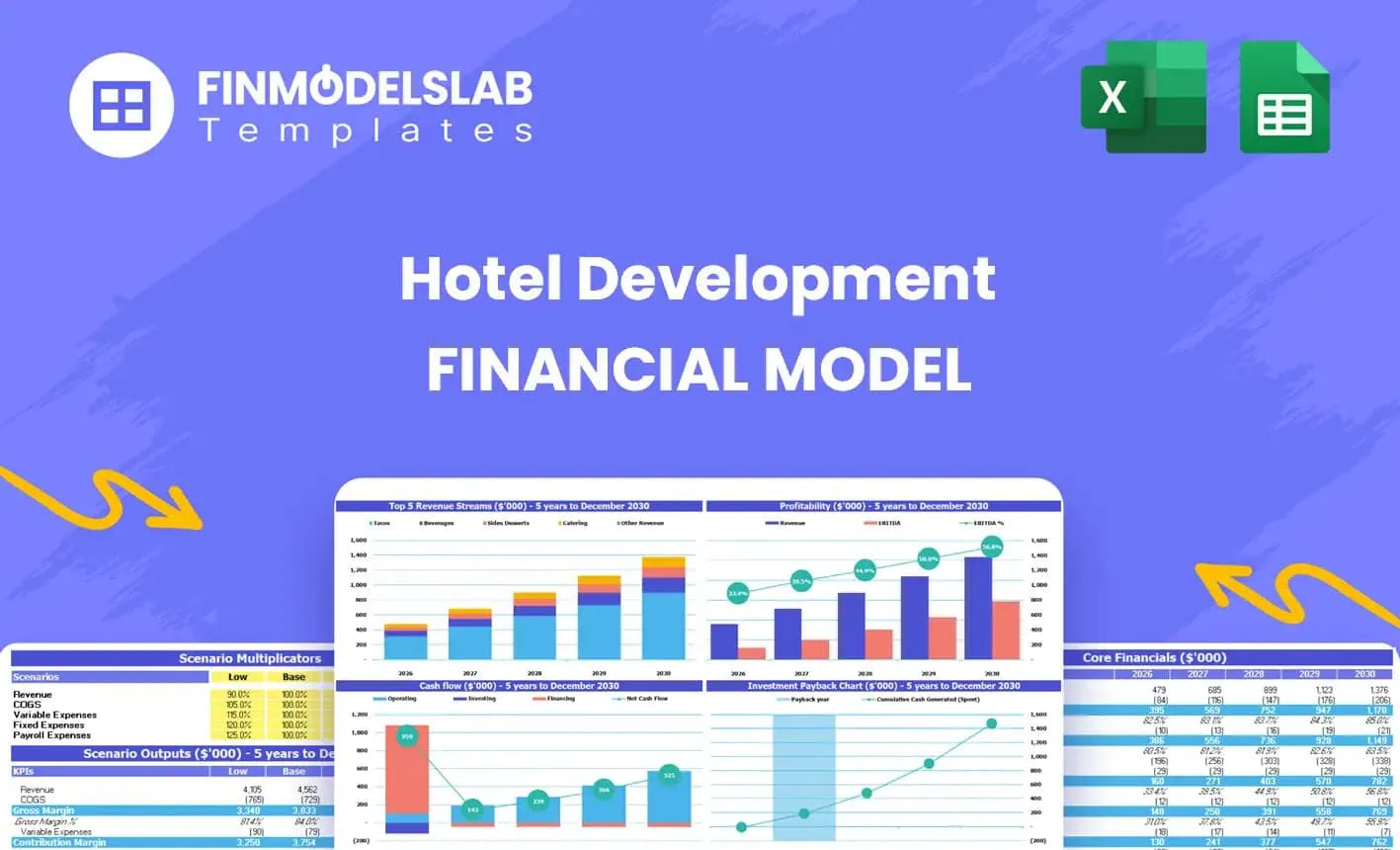
Hotel Development REIT Financial Model Excel Templ...
The Hotel Development Financial Model helps users evaluate a hotel construction or expansion project... Read more
 D'Errico Financial S...
Multi-Family Housing Rental Renovation Model
The Multi-Family Housing Rental Renovation model projects monthly future cash flows from the renovat... Read more

 Jason Varner
Real Estate Financial Model Bundle
This is a collection of financial model templates that provides the financial projections and valuat... Read more
Theme Park & Hotel Financial Model (Construct...
Financial model presenting a development scenario for a Theme Park & Hotel project including con... Read more

Shopping Center Development – 10 Year Financ...
Financial model presenting a development scenario for a Shopping Center including construction, oper... Read more

Condominium Development – Dynamic 10 Year Fi...
A condominium (or condo for short) is a building structure divided into several units that are each ... Read more
Multi Sports Complex Financial Model – Dynam...
Financial Model presenting a development and operating scenario of an Indoor Multi-Sports & Fitn... Read more

Industrial Building Development – 10 Year Fi...
Financial model presenting a development scenario for a Multi-Tenant Industrial Building including c... Read more
You must log in to submit a review.